


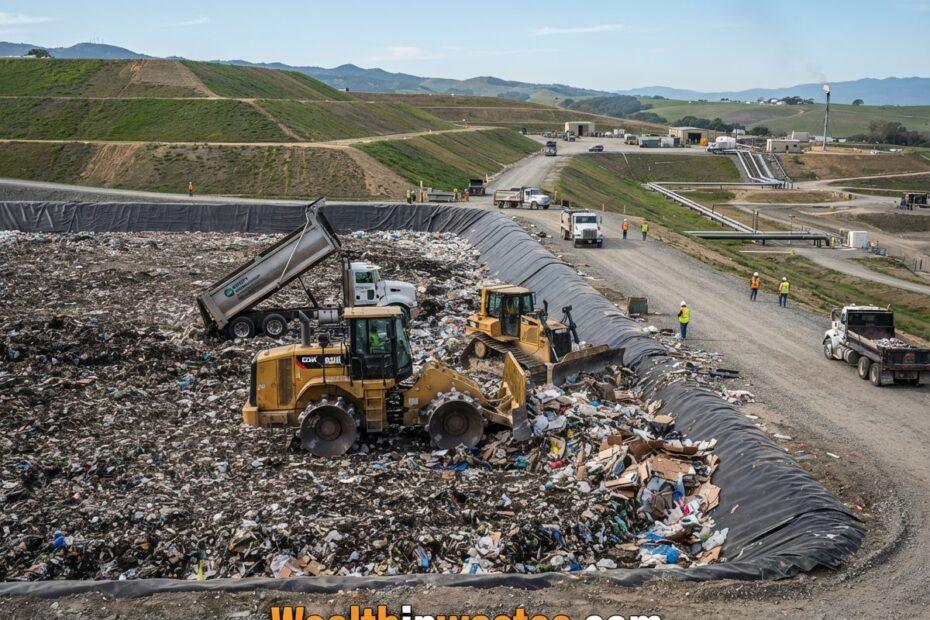
County landfills provide an organised, permitted destination for residual household, commercial, institutional, and construction waste that cannot reasonably be prevented, reused, recycled, composted, or recovered through available local programmes and services.
Although people may associate landfills with simple dumping, modern sanitary facilities use planned cells, compaction, daily cover, drainage, monitoring, and access controls to manage waste more safely for nearby communities and ecosystems.
A county landfill also connects household collection, commercial hauling, recycling, transfer stations, and public drop-off services, giving local authorities a dependable final destination for remaining rubbish that residents and businesses generate.
Its responsibilities extend beyond receiving waste: operators must protect groundwater, control odours and pests, manage stormwater, monitor landfill gas, maintain records, and plan for eventual closure and post-closure care.
The indispensable role of county landfills is therefore practical and environmental: they help communities stay clean while supporting broader systems that prioritise waste prevention, recycling, treatment, and responsible disposal of residual materials.

County Landfills as Regional Waste Hubs
County landfills function as regional waste hubs, accepting residual rubbish from homes, shops, offices, public facilities, building projects, and licensed hauliers across a defined service area under agreed operating rules.
These facilities form the final stage of the integrated waste management system, linking collection and transport with reuse, recycling, treatment, and safe disposal of what remains after practical recovery options.
County authorities must plan service areas, access roads, operating hours, and disposal capacity so collection vehicles deliver waste predictably instead of leaving rubbish in streets, waterways, or vacant land near homes.
A dependable disposal destination allows councils to coordinate collectors, transfer stations, recycling services, and public drop-off points, while giving residents clear instructions about where different waste materials belong after sorting at source.
The objectives of solid waste management include protecting public health, reducing pollution, conserving resources, and maintaining clean surroundings. County landfills help local authorities meet these objectives when operators manage facilities responsibly.
For councils experiencing population growth, a landfill offers planned disposal capacity that supports everyday services and commercial activities. The broader solid waste management framework helps coordinate these responsibilities across communities.
Read Also: Components of a Landfill and Landfill Operation
County Landfill Environmental Safeguards
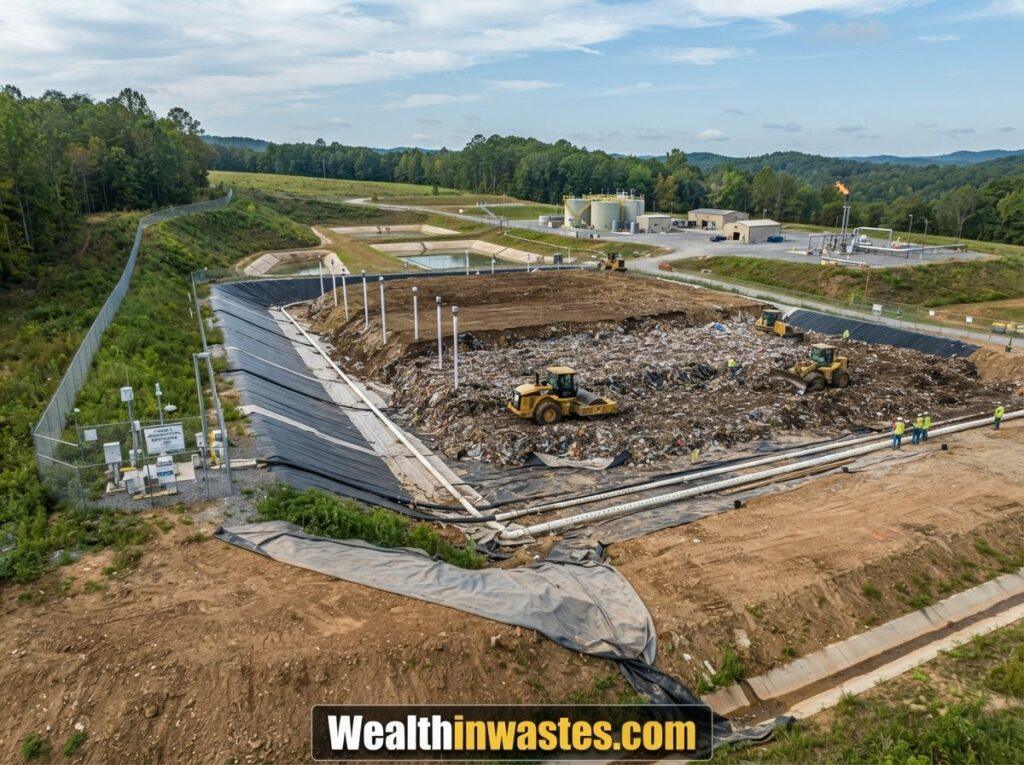
1. Protective Liners: A suitable site and protective liner system separate waste from surrounding soil and help control pollutant movement. Design requirements vary by facility and the types of waste accepted, as explained in guides to different landfill types.
2. Leachate Collection: Rainwater moving through waste can carry dissolved pollutants into liquid called leachate. Collection pipes, drainage layers, storage points, and suitable treatment help prevent uncontrolled releases into nearby groundwater or streams.
3. Groundwater and Stormwater Protection: Monitoring wells, drainage channels, and regular inspections help operators identify unusual changes, manage rainfall, and respond to potential pollution before environmental problems spread beyond the disposal site.
4. Daily Cover and Access Control: Workers compact waste and apply suitable cover to reduce litter, odours, pests, and exposure. These measures form part of proper sanitary landfill management, alongside controlled access and routine maintenance.
Effective safeguards also require trained operators, inspection schedules, accurate records, and compliance with applicable permits. The wider principles of proper waste control help facilities maintain consistent operational and environmental standards.
County Landfills and Public Health
Properly managed county landfills help communities maintain cleaner surroundings by giving waste collectors a designated disposal destination. This reduces the likelihood of rubbish accumulating along roadsides, drainage channels, abandoned plots, and public spaces.
When operators control exposed waste, odours, litter, and pest activity, they reduce several conditions that can contribute to public health concerns. The environmental and health effects of waste show why responsible disposal matters.
Uncontrolled waste accumulation can attract flies, rodents, and other disease vectors while contaminating nearby land and water. Effective waste management for environmental sanitation combines reliable collection with appropriate treatment and final disposal.
Landfills cannot eliminate every environmental or health risk. Poor maintenance, inadequate drainage, escaping landfill gas, and leaking leachate can still create problems, reinforcing the need to address the wider challenges of solid waste management.
Community awareness also strengthens public protection. Residents should separate recyclable and hazardous materials, follow local disposal instructions, report illegal dumping, and avoid burning rubbish in streets or unauthorised locations near homes.
Daily County Landfill Operations
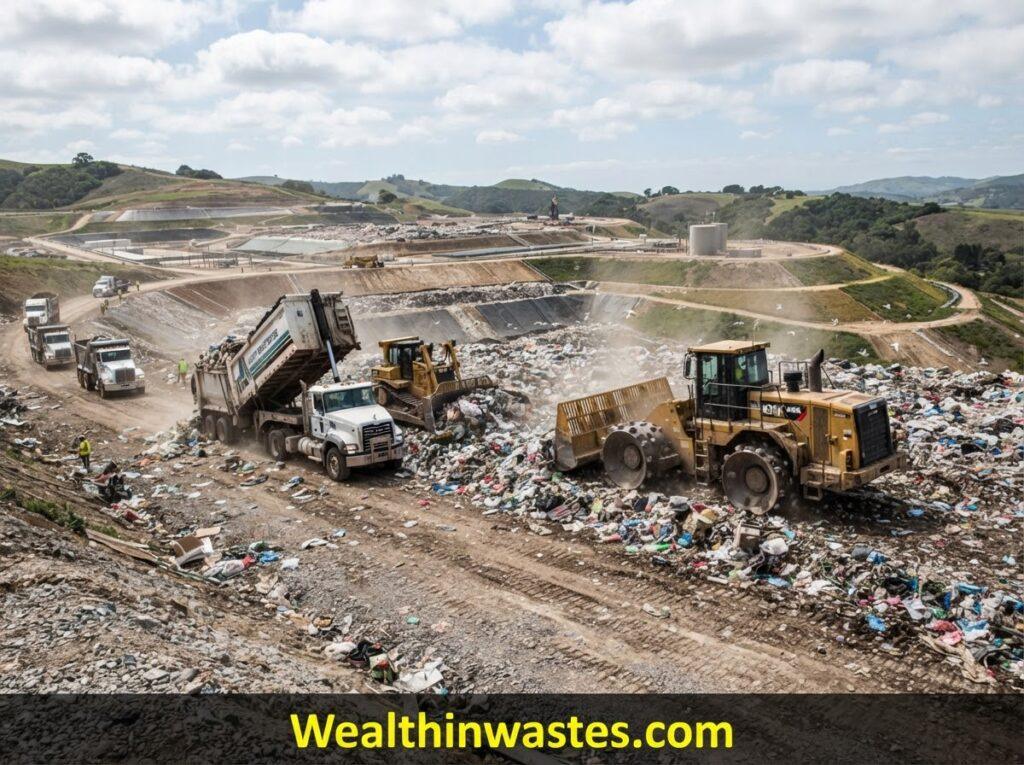
1. Waste Reception and Weighing: Staff receive waste vehicles, record incoming loads, and use weighing systems where available. Accurate records help operators track disposal volumes, manage capacity, and plan daily site activities.
2. Load Inspection and Separation: Workers check deliveries for unacceptable materials and direct suitable recyclable or recoverable items towards authorised services. The available waste disposal methods differ according to material characteristics and environmental risks.
3. Waste Placement and Compaction: Trained equipment operators spread waste in designated cells, compact it, and maintain stable working surfaces. These activities improve space utilisation and support safer vehicle movement within the landfill.
4. Public Drop-Off and Special Waste Services: Some facilities provide approved drop-off arrangements for bulky rubbish, selected household materials, or designated collection events. Specialist waste, including certain human waste and sanitation-related materials, requires appropriate handling and treatment rather than automatic acceptance at ordinary landfills.
Operational planning also covers equipment maintenance, staff training, emergency procedures, signage, road upkeep, and site security. Consistent supervision enables county facilities to serve residents and commercial waste collectors more reliably throughout the year.
Landfill Gas and Resource Recovery
Organic materials break down inside landfills and produce gas containing methane and carbon dioxide. Operators can use appropriate collection systems to capture some of this gas and manage it through controlled treatment.
Suitable facilities may flare captured methane or use it to generate electricity, heat, or other energy products. The application of biotechnology to waste management illustrates how biological processes can support waste treatment and resource recovery.
Energy recovery depends on landfill design, gas production, infrastructure, project costs, and applicable regulations. Collection systems also require inspection and maintenance because uncontrolled gas movement can create environmental and safety concerns.
County authorities should not rely on energy recovery alone. The waste management hierarchy places prevention, reuse, recycling, and suitable organic treatment ahead of disposal wherever practical and environmentally appropriate.
Composting offers one useful alternative for suitable biodegradable waste, including selected food scraps and garden residues. The benefits of waste composting include producing useful organic material while reducing pressure on landfill capacity.
County Landfill Planning and Capacity
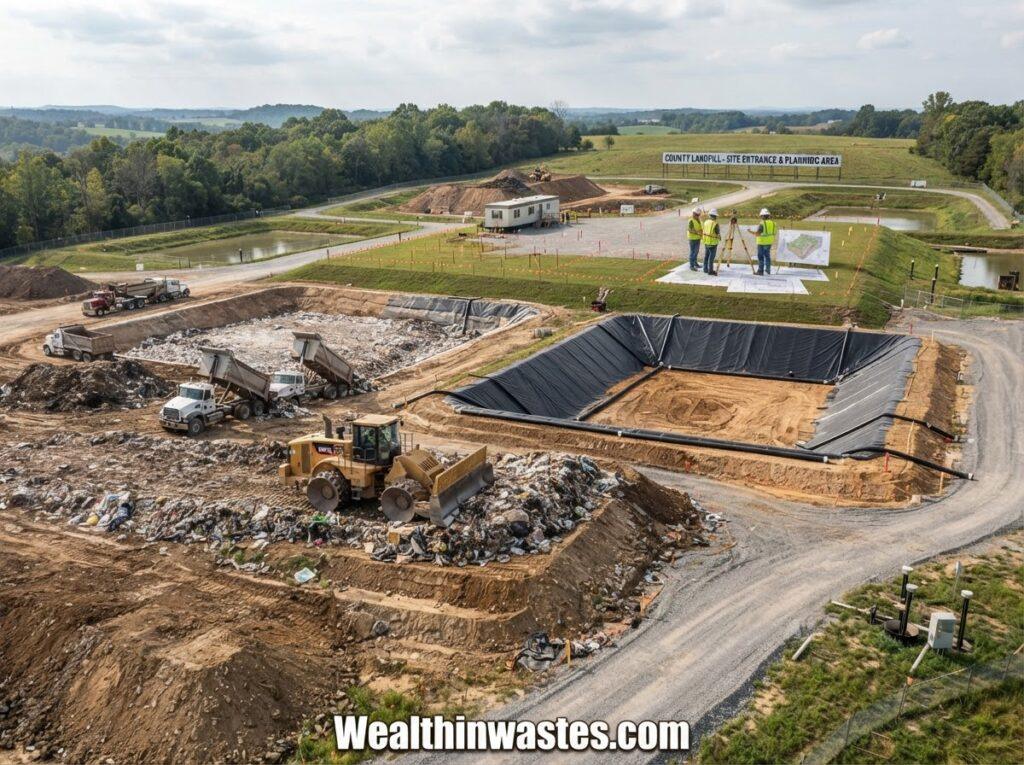
1. Long-Term Capacity Planning: County authorities assess waste volumes, population trends, available land, transport routes, and expected facility life. This planning helps identify future disposal needs before existing landfill capacity becomes insufficient.
2. Budgeting and Infrastructure: Landfill budgets must account for equipment, fuel, staff, environmental monitoring, repairs, drainage, permits, and eventual closure. Good financial planning helps maintain essential services while preparing for long-term environmental responsibilities.
3. Waste Prevention and Diversion: Authorities can extend landfill life by encouraging reuse, source separation, recycling, and composting. Practical environmental waste-reduction measures help reduce incoming waste and protect disposal capacity.
4. Recycling Partnerships: Councils can coordinate local businesses, community groups, collectors, and recycling operators to recover suitable materials before disposal. Understanding the steps involved in waste recycling helps improve sorting and resource recovery.
Public education should explain accepted materials, collection schedules, restricted waste, and available recovery services. A practical beginner’s guide to recycling can help households participate confidently and reduce unnecessary landfill deliveries.
Challenges and Sustainable County Landfill Management
1. Environmental Risks: Poorly managed facilities may generate odours, litter, methane emissions, and contaminated liquids. Understanding the environmental impact of landfills helps operators identify risks and strengthen protective measures.
2. Financial and Land Constraints: Counties must balance construction costs, operating expenses, available land, transport distances, and community needs. The advantages and disadvantages of landfills should inform realistic infrastructure and budget decisions.
3. Community Concerns: Nearby residents may worry about traffic, noise, odours, litter, or pollution. Authorities can build trust through transparent reporting, accessible complaint procedures, community consultation, and timely responses to legitimate environmental concerns.
4. Sustainable Waste Management: Counties should combine safe final disposal with prevention, reuse, recycling, composting, and appropriate treatment. This balanced approach helps conserve resources, extend landfill capacity, and reduce avoidable environmental pressures over time.
Landfill closure also requires careful preparation, including suitable final covering, drainage, gas management, environmental monitoring, and maintenance. Authorities must provide for post-closure responsibilities because waste decomposition and associated environmental risks may continue after operations end.
Summary on The Indispensable Role of County Landfills in Waste Control
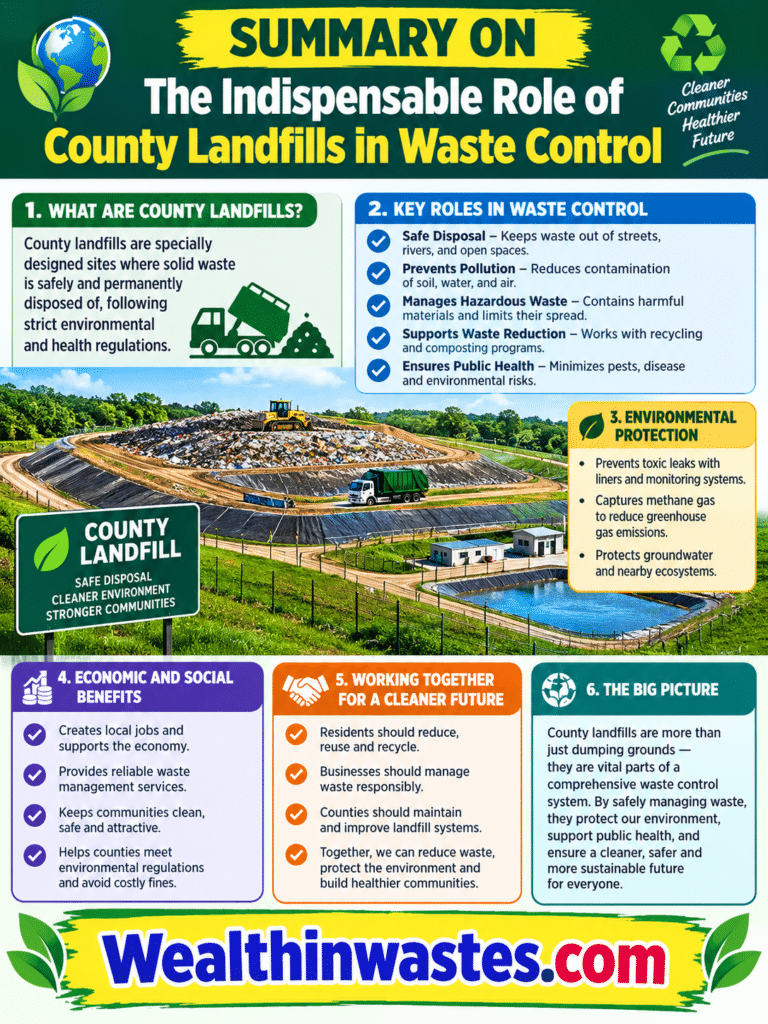
| Area | Summary |
|---|---|
| Regional Waste Management | Provides a designated destination for residual waste from households, businesses, institutions, and other approved sources. |
| Environmental Protection | Uses liners, leachate collection, drainage, gas control, and monitoring to reduce environmental risks. |
| Public Health | Helps limit uncontrolled waste accumulation, litter, pests, and unsanitary surroundings. |
| Daily Operations | Includes weighing, inspection, waste placement, compaction, covering, record-keeping, and site maintenance. |
| Resource Recovery | May support landfill gas energy projects and works alongside recycling, composting, and other recovery methods. |
| Planning and Capacity | Requires investment, suitable land, long-term planning, trained staff, and adequate operational budgets. |
| Sustainable Management | Combines safe disposal with waste prevention, reuse, recycling, appropriate treatment, closure, and post-closure monitoring. |
Frequently Asked Questions About The Indispensable Role of County Landfills in Waste Control
1. What is a county landfill?
A county landfill is a designated facility where residual solid waste receives controlled disposal under applicable operating and environmental requirements.
2. Why are county landfills important?
They provide organised disposal capacity, support sanitation services, and help prevent uncontrolled waste accumulation in communities.
3. Are county landfills the same as open dumps?
No. Properly engineered landfills use planned disposal areas and environmental controls, unlike uncontrolled open dumps.
4. What is landfill leachate?
Leachate is contaminated liquid formed when water passes through waste, collecting dissolved or suspended substances that require suitable management.
5. Can landfill gas produce energy?
Yes. Suitable facilities can capture landfill gas and use it for electricity, heating, or other approved energy applications.
6. Can residents deliver rubbish directly to a county landfill?
Some facilities accept public drop-offs, but residents should check local access rules, opening hours, fees, and accepted materials beforehand.
7. How can communities reduce landfill waste?
Communities can prevent waste, reuse products, recycle suitable materials, compost biodegradable waste, and separate hazardous items correctly.
8. What happens when a county landfill closes?
Operators complete closure measures and continue required monitoring, maintenance, drainage management, and gas control during the post-closure period.
Do you have any questions, suggestions, or contributions? If so, please feel free to use the comment box below to share your thoughts. We also encourage you to kindly share this information with others who might benefit from it. Since we can’t reach everyone at once, we truly appreciate your help in spreading the word. Thank you very much for your support and for sharing!