


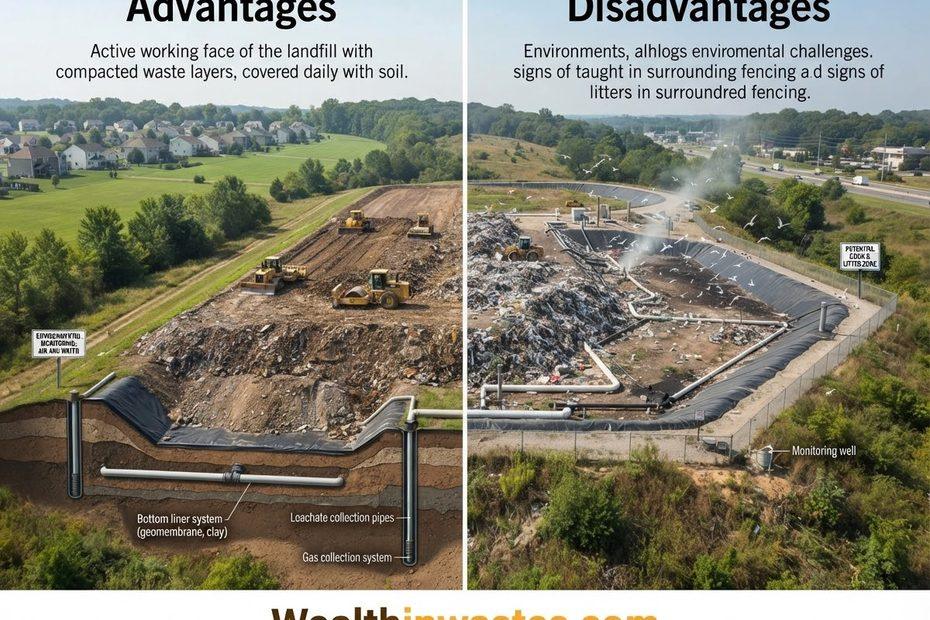
Sanitary landfill remains an important option for managing residual solid waste after communities consider prevention, reuse, recycling, composting, recovery, and other practical treatment methods for materials that remain unsuitable.
Unlike open dumping, a sanitary landfill uses planned site design, controlled waste placement, compaction, covering, drainage, and monitoring to reduce nuisance conditions and protect surrounding land and water resources effectively.
Modern facilities may also collect landfill gas, manage leachate, control stormwater, restrict unauthorized access, and maintain records that support environmental supervision throughout the active and post closure management periods.
However, sanitary landfill does not make waste disappear. It contains waste within an engineered area while decomposition continues, creating responsibilities for gas control, leachate management, monitoring, closure, and maintenance.
Understanding the advantages and disadvantages of sanitary landfill helps communities, environmental managers, policymakers, businesses, and students judge when this disposal method provides a practical service and where significant limitations deserve attention.
What Is a Sanitary Landfill?
A sanitary landfill is an engineered facility where waste managers place, compact, cover, and monitor solid waste within carefully selected areas designed to control environmental and public health risks.
The basic purpose is controlled final disposal rather than uncontrolled accumulation. Site engineering can include protective liners, leachate collection, drainage channels, gas management, access controls, monitoring systems, and final closure measures.
Readers seeking a broader explanation can review the detailed explanation of sanitary landfills and compare their operation with the wider waste management hierarchy used for choosing preferred disposal and recovery methods.
Sanitary landfill belongs within a larger waste system that begins with generation and storage. Effective solid waste management objectives emphasize sanitation, environmental protection, efficient collection, resource recovery, and responsible disposal.
Read Also: Traditional Solid Waste Disposal Methods
Advantages of Sanitary Landfill
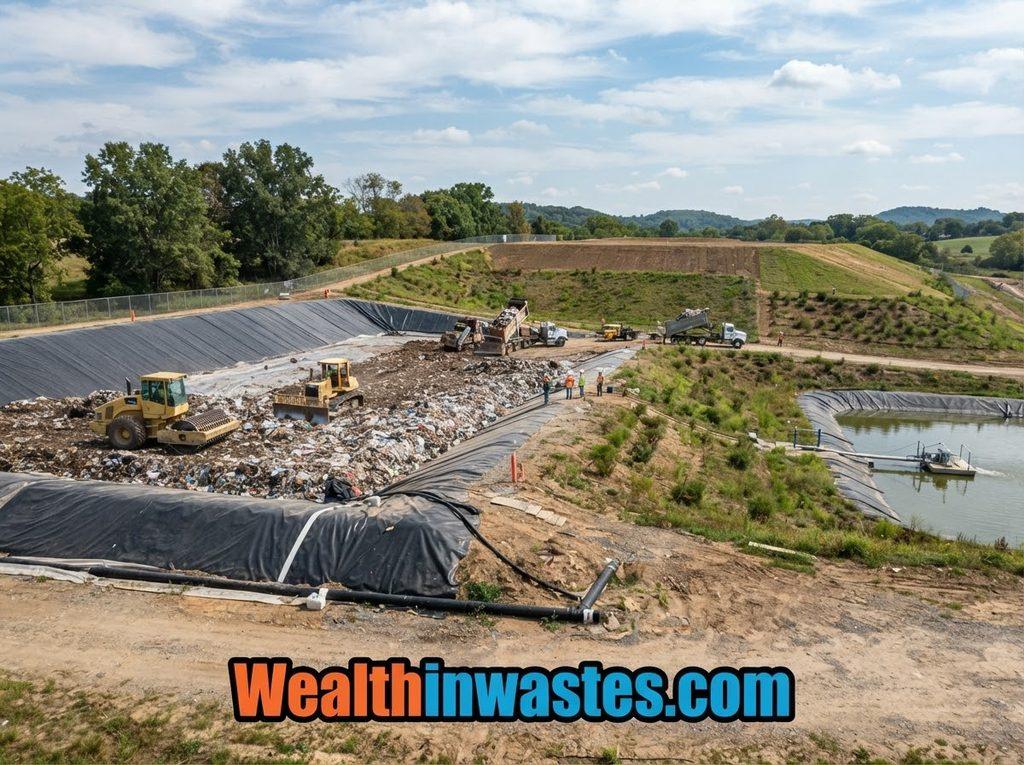
1. Controlled Waste Disposal: A sanitary landfill gives communities a designated facility where workers can place, compact, cover, and monitor waste systematically, reducing the disorder associated with uncontrolled dumping.
2. Reduced Pest Problems: Regular waste compaction and daily covering can reduce exposed food materials that attract flies, rats, birds, and other animals, helping communities maintain cleaner surroundings around disposal facilities.
3. Better Environmental Control: Engineered drainage, liners, leachate management, and monitoring systems can reduce pollution pathways. Proper waste identification and source knowledge also improves disposal decisions before materials arrive.
4. Landfill Gas Recovery: Decomposing organic materials generate landfill gas, including methane. Collection systems can capture part of this gas for beneficial energy use while reducing uncontrolled atmospheric emissions.
5. Employment Opportunities: Landfill facilities create demand for drivers, equipment operators, technicians, engineers, environmental officers, security personnel, maintenance workers, and administrative staff, supporting jobs throughout waste management operations.
6. Suitable Final Disposal: Some residual materials cannot reasonably undergo recycling, composting, or other treatment. A properly managed landfill provides a practical destination for these materials after recovery options receive proper consideration.
Environmental Benefits of Sanitary Landfill
Proper landfill operation can reduce the environmental problems associated with open dumping, including scattered waste, uncontrolled burning, direct exposure, pest activity, and unmanaged contact between waste and surrounding communities.
A major benefit involves pollution control. Landfill engineering can direct contaminated liquids toward collection systems instead of allowing unrestricted movement through soil, while surface drainage limits excessive stormwater entering waste cells.
Landfill management also connects with broader pollution prevention. Communities can use proper solid waste classification and comprehensive waste management planning to determine which materials need recovery, treatment, or disposal.
Environmental benefits become stronger when landfill capacity receives less unnecessary material. Effective recycling practices can divert valuable materials from disposal and conserve space that would otherwise support additional waste storage.
Organic materials also deserve special attention because many can undergo biological treatment. Separating non-biodegradable materials from recoverable organic waste can improve landfill performance and strengthen the wider resource recovery system.
Disadvantages of Sanitary Landfill
1. High Construction Cost: Developing a sanitary landfill requires substantial investment in land preparation, protective systems, drainage, leachate controls, gas equipment, roads, machinery, monitoring facilities, and operational infrastructure.
2. Large Land Requirement: Landfill sites need space for waste cells, access roads, drainage structures, equipment areas, buffer zones, temporary facilities, and future closure activities, which can create serious land-use pressures.
3. Potential Groundwater Contamination: A damaged liner, poor leachate control, inadequate maintenance, or weak monitoring can permit pollutants to migrate through soil and threaten nearby groundwater resources.
4. Landfill Gas Risks: Organic waste decomposition produces methane and other gases. Without effective collection and control, these gases can contribute to climate impacts, unpleasant odours, fire risks, and operational hazards.
5. Traffic and Community Pressure: Frequent movement of heavy collection vehicles can increase traffic, road wear, dust, vibration, and noise, while nearby residents may also object to odours and visual impacts.
6. Long-Term Responsibilities: Landfill management continues beyond daily waste placement. Operators may need long-term monitoring, gas control, leachate management, environmental inspections, maintenance, and site restoration after closure.
Environmental Risks of Sanitary Landfill
Sanitary landfill reduces environmental risks when operators follow sound engineering practices, but the facility still requires constant attention because waste decomposition produces liquids and gases long after placement.
Landfill emissions deserve careful control because gases can escape when collection systems perform poorly. The environmental effects of landfill emissions demonstrate why gas monitoring and recovery remain important.
Leachate also requires continuous management because rainwater and decomposition processes can produce contaminated liquids. Communities should understand the wider problems created by poor waste management to appreciate why containment systems matter.
Risk control also depends on reducing the quantity of waste that reaches disposal cells. waste reduction and household minimization can preserve landfill capacity while reducing environmental pressures associated with continuous waste accumulation.
Land, Cost, and Community Impacts
Landfill economics involve more than construction expenses. Authorities must consider land acquisition, equipment replacement, staff costs, monitoring programmes, energy requirements, environmental compliance, closure activities, and long-term maintenance obligations.
Land availability can create another challenge because suitable sites need enough capacity, appropriate geology, safe access, drainage conditions, and sufficient separation from sensitive locations and densely populated communities.
Because landfill space is limited, communities benefit when households apply the three basic waste reduction principles. These practices reduce disposal volumes and conserve valuable resources before waste reaches final disposal facilities.
Organic waste diversion can also lower landfill pressure. composting suitable biodegradable materials converts part of the waste stream into useful products while reducing the amount requiring burial.
Community acceptance remains important because residents may worry about odour, transport movements, property values, noise, pollution, or future land use. Transparent monitoring and meaningful public communication can improve trust significantly.
Good storage and collection practices can also reduce community complaints before waste reaches a landfill. Hygienic waste storage and collection help keep neighbourhoods cleaner and support smoother transport operations.
Read Also: Traditional Solid Waste Disposal Methods
Sanitary Landfill in Integrated Waste Management
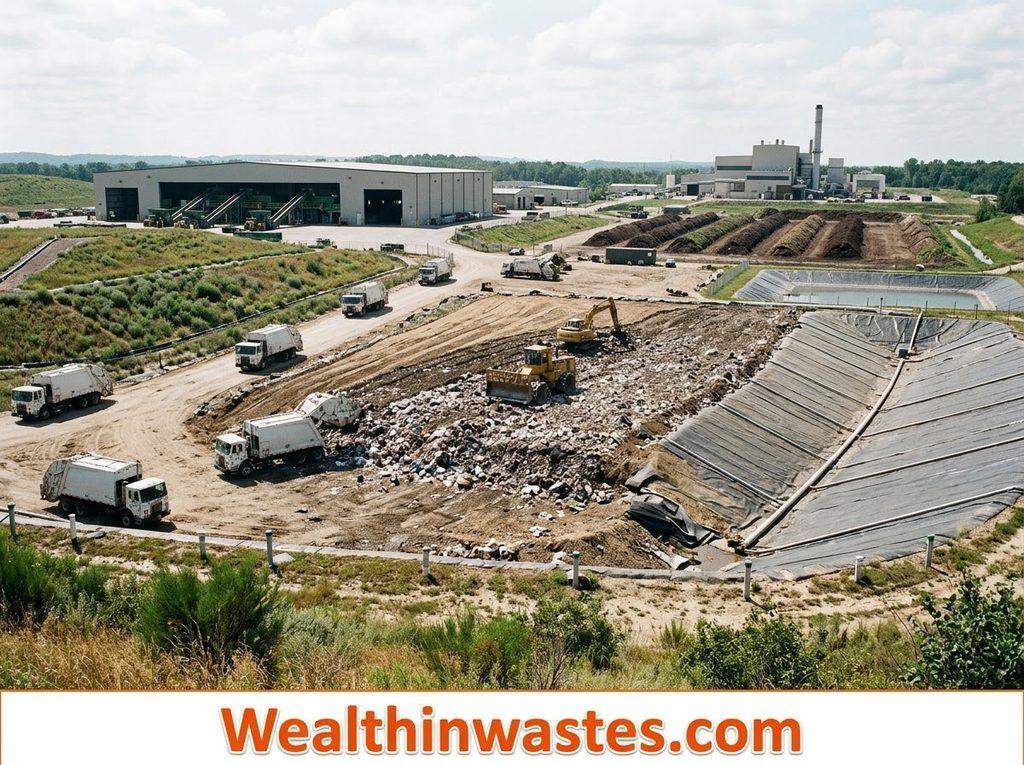
1. Reduce Waste First: Communities should prevent unnecessary waste generation wherever practical because every material avoided at source reduces collection demands, transportation requirements, treatment costs, and pressure on landfill capacity.
2. Reuse Suitable Materials: Reuse extends product life and delays disposal. It also reduces demand for replacement products, helping communities conserve resources while decreasing the volume of waste requiring final management.
3. Recycle Recoverable Materials: recycling systems can recover paper, plastics, glass, metals, and other materials that would otherwise occupy landfill space and represent lost economic value.
4. Compost Organic Waste: Food scraps, leaves, and other suitable organic materials can enter biological treatment systems. community composting approaches can divert biodegradable waste before disposal becomes necessary.
5. Treat Special Waste: Some materials require methods other than ordinary landfill disposal. alternative waste treatment technologies can support recovery, energy production, or safer management of materials unsuitable for routine landfilling.
6. Dispose of Residual Waste: After practical recovery and treatment options have been considered, sanitary landfill can receive residual materials under controlled conditions. This approach supports a balanced modern waste management system.
How to Improve Sanitary Landfill Performance
Landfill performance improves when authorities select suitable locations, design facilities carefully, train workers, maintain equipment, monitor environmental conditions, control access, and respond quickly whenever operational problems appear.
Waste collection systems also influence landfill efficiency because poor collection can increase illegal dumping, street litter, and uncontrolled disposal. A reliable waste removal system helps direct materials toward authorized facilities.
Authorities can further reduce landfill demand by encouraging practical resource recovery and supporting businesses that handle recyclable and reusable materials. waste management business opportunities can strengthen both environmental services and local economic activity.
Households and businesses can support these efforts by recognizing value in discarded materials. turning selected waste materials into economic opportunities can increase recovery while reducing unnecessary disposal.
Landfill operators should also maintain strong records covering waste quantities, environmental monitoring results, equipment performance, complaints, maintenance activities, and closure planning. These records support accountability and help managers identify emerging problems early.
Effective management therefore treats sanitary landfill as one component of an integrated system rather than the only solution. Waste prevention, reuse, recycling, composting, treatment, and recovery should reduce dependence on burial.
Summary on Advantages and Disadvantages of Sanitary Landfill: A Guide
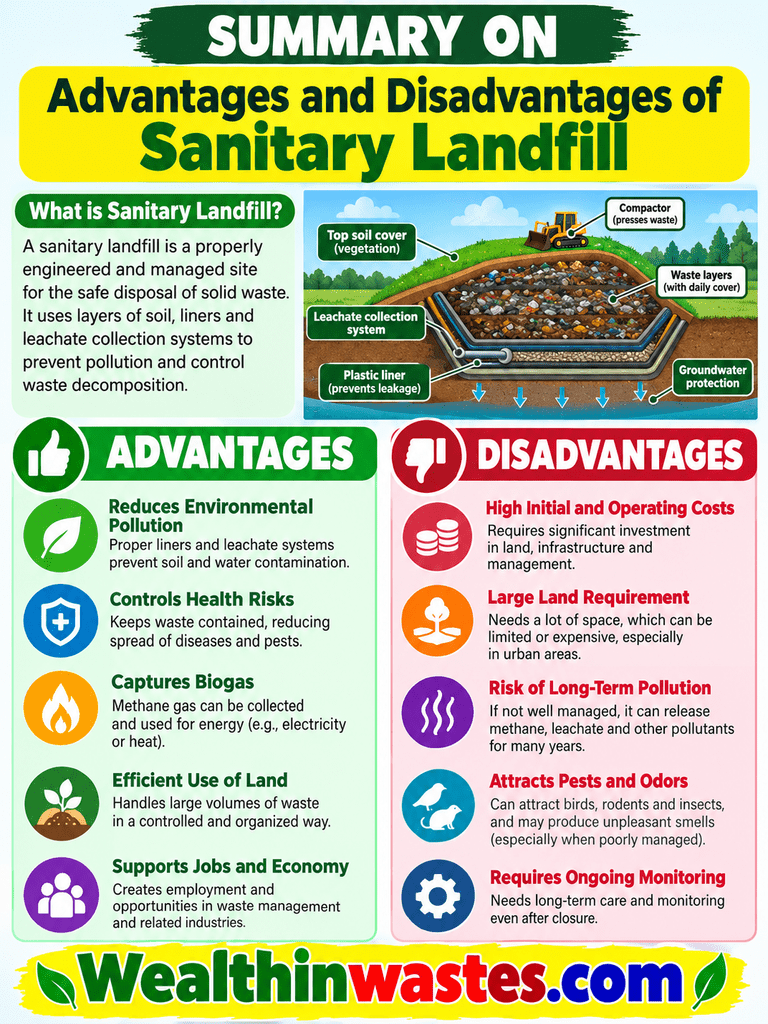
| Aspect | Summary |
|---|---|
| Purpose | Provides controlled final disposal for residual waste that remains after practical prevention, reuse, recycling, composting, recovery, and treatment opportunities receive consideration. |
| Main Advantage | It provides systematic waste containment while reducing uncontrolled dumping, pest activity, odours, scattered waste, and several pollution pathways. |
| Environmental Benefit | Engineered systems can manage leachate, surface water, landfill gases, waste placement, and environmental monitoring more effectively than open dumping. |
| Energy Opportunity | Landfill gas, particularly methane, can be collected from suitable facilities and used for beneficial energy recovery. |
| Main Disadvantage | Sanitary landfills require significant investment, suitable land, trained personnel, equipment, monitoring, maintenance, and long-term environmental management. |
| Major Risk | Operational failures can contribute to leachate pollution, gas emissions, odours, pests, traffic impacts, and community concerns. |
| Best Approach | Landfilling should manage residual waste within an integrated system that prioritizes prevention, reuse, recycling, composting, recovery, and suitable treatment. |
Frequently Asked Questions About Advantages and Disadvantages of Sanitary Landfill: A Guide
1. What is a sanitary landfill?
A sanitary landfill is an engineered facility that receives solid waste under controlled conditions while managing placement, compaction, covering, drainage, leachate, gases, environmental monitoring, and final closure activities.
2. What is the main advantage of sanitary landfill?
Its main advantage is controlled final disposal. Proper engineering helps reduce uncontrolled dumping, pest activity, odours, scattered waste, and pollution risks while providing organized management for residual materials.
3. Can sanitary landfills pollute groundwater?
Yes. Pollution can occur when liners, leachate collection systems, drainage structures, monitoring programmes, or maintenance practices fail, allowing contaminated liquids to move through surrounding soil.
4. Why does methane occur in landfills?
Methane forms when biodegradable organic materials decompose under oxygen-limited conditions. Landfill gas collection systems can capture some methane and direct it toward controlled energy recovery or safe management.
5. What are the major disadvantages of sanitary landfill?
Major disadvantages include high development costs, large land requirements, possible groundwater contamination, landfill gas emissions, traffic impacts, odours, community concerns, and long-term monitoring and maintenance responsibilities.
6. Does sanitary landfill eliminate waste completely?
No. Landfill disposal primarily contains waste within an engineered facility. Materials continue decomposing, and operators may need to manage leachate, gases, drainage, monitoring, and maintenance for many years.
7. How can landfill impacts be reduced?
Impacts can decrease through suitable site selection, strong engineering, daily covering, waste compaction, leachate control, gas recovery, environmental monitoring, proper closure, public communication, and reduced waste generation.
8. Should all solid waste enter a landfill?
No. Communities should prioritize prevention, reuse, recycling, composting, recovery, and suitable treatment before final disposal. Landfills should mainly handle residual materials that remain after practical recovery options.
Do you have any questions, suggestions, or contributions? If so, please feel free to use the comment box below to share your thoughts. We also encourage you to kindly share this information with others who might benefit from it. Since we can’t reach everyone at once, we truly appreciate your help in spreading the word. Thank you very much for your support and for sharing!
Read Also: All You Need To Know About Sustainable Practices In Agriculture