


The environment consists of connected natural and human-made elements that support life, shape human activities, and influence ecological balance. Land and living organisms form essential parts of this larger system.
The land environment includes rocks, minerals, soil, landforms, and other geological materials beneath our feet. These resources provide space for settlements, farms, industries, roads, and natural habitats that sustain people and wildlife.
The biological environment, often described as the biosphere, includes microorganisms, plants, animals, and human beings. Organisms survive through relationships with one another and with non-living elements such as soil, water, air, and sunlight.
Although land and living systems can be studied separately, neither functions in isolation. Soil supports roots and soil organisms, while vegetation protects the ground and contributes organic matter during growth and decomposition.
Understanding these connections helps explain how environmental damage spreads, why conservation matters, and how communities can use natural resources responsibly. These relationships also influence agricultural productivity, public wellbeing, and ecological stability.
Land Environment and Its Natural Resources
The land environment comprises the Earth’s solid surface and the geological materials that form it. Its major components include rocks, minerals, soil, sediments, and landforms that shape terrestrial habitats and human settlements.
Rocks and minerals supply materials for construction, manufacturing, transportation, and industrial production. Their responsible use requires an understanding of geological resources, extraction practices, and the environmental consequences associated with excessive resource exploitation.
Soil forms another essential component because it supports vegetation, stores moisture, provides nutrients, and accommodates countless organisms. Understanding soil structure and composition helps explain why different land areas support different forms of plant and animal life.
The land environment also contains deposits of coal, petroleum, natural gas, and other resources that support human activities. Effective management of soil and mineral resources helps reduce depletion and unnecessary environmental disturbance.
Landforms such as mountains, plains, valleys, plateaus, and hills influence drainage, soil formation, vegetation distribution, and settlement patterns. Their physical characteristics determine how water moves across landscapes and how organisms occupy different habitats.
However, careless land use can reduce soil fertility, destroy habitats, and contaminate groundwater. Understanding the relationship between land contamination and environmental quality encourages responsible waste disposal and sustainable land management.
Read Also: Proper Methods of Disposal of Dilute Pesticide Waste
Biological Environment and the Biosphere

The biological environment consists of all living organisms found on Earth, including bacteria, fungi, microscopic algae, larger plants, animals, and humans. These organisms interact continuously with their surroundings through complex ecological relationships.
The biosphere represents the global ecological system in which life exists and interacts. It includes living communities across terrestrial and aquatic habitats, together with their relationships with air, water, soil, and other environmental components.
The biological environment contains enormous diversity, ranging from single-celled microorganisms to complex plants and animals. Scientists examine the conditions that shape species distribution to understand why particular organisms thrive in specific habitats.
Microorganisms break down organic materials, release nutrients, and support many ecological processes. Historical and scientific records of biological diversity also help researchers understand changes in species populations and ecosystem composition.
Plants capture sunlight through photosynthesis and provide food for many organisms. Animals contribute through pollination, seed dispersal, grazing, and predation, while decomposers return nutrients to the environment through the breakdown of dead materials.
Humans also belong to the biological environment because they depend on ecological systems for food, water, materials, and other essentials. Understanding the benefits of biological diversity encourages decisions that protect living resources.
Why Land Resources Matter
1. Agricultural Production: Land provides the soil, physical space, and environmental conditions required for crop cultivation and livestock production. Healthy agricultural land supports food supplies, rural employment, household income, and long-term food security.
2. Construction and Industry: Rocks, sand, clay, and minerals supply important raw materials for buildings, roads, machinery, and infrastructure. Responsible extraction helps meet development needs while reducing avoidable landscape damage and resource depletion.
3. Water Regulation: Soil and vegetation influence infiltration, runoff, and the movement of water through landscapes. Understanding forest removal and changing land cover explains why vegetation loss can increase erosion and flooding.
4. Habitat and Recreation: Forests, grasslands, mountains, and other land areas provide shelter for wildlife and opportunities for recreation, research, and education. Protecting these landscapes helps preserve ecological diversity and important cultural and natural heritage.
5. Environmental Protection: Productive land supports vegetation, stores organic carbon, and maintains essential ecological processes. Preventing harmful substances from entering soil protects agricultural productivity, surrounding habitats, groundwater, and organisms that depend on healthy terrestrial environments.
Major Components of the Biological Environment
1. Microorganisms: Bacteria, fungi, and microscopic algae perform essential ecological functions. They decompose organic matter, recycle nutrients, assist plant growth, and support biological processes that maintain soil fertility and ecosystem functioning.
2. Plants: Trees, shrubs, grasses, crops, and aquatic plants provide food, shelter, oxygen, and organic material. Their roots stabilize soil, while their leaves moderate temperatures and create suitable conditions for many other organisms.
3. Animals: Insects, birds, fish, reptiles, amphibians, and mammals participate in food chains, pollination, seed dispersal, and population regulation. Protecting the conditions necessary for animal survival strengthens ecological stability.
4. Humans: Human beings depend on the biosphere for food, medicine, clothing, shelter, and other resources. Through agriculture, industry, conservation, and community activities, people can either strengthen ecological systems or accelerate environmental degradation.
5. Genetic and Ecosystem Diversity: Genetic variation, different species, and diverse habitats form interconnected levels of biodiversity. These biological differences support adaptation, reproduction, ecological recovery, and natural processes that maintain environmental stability.
Links Between Land and Living Systems
The land environment and biological environment maintain reciprocal relationships. Land provides habitats, minerals, and soil, while organisms modify these resources through growth, decomposition, nutrient cycling, and other biological activities essential for ecosystem functioning.
Plants obtain mineral nutrients and water from soil, while their roots reduce erosion and improve soil structure. Fallen leaves and decaying roots add organic matter, supporting microorganisms that release nutrients for further plant growth.
Animals depend on land for shelter, breeding sites, and food resources. In return, many animals disperse seeds, pollinate plants, control populations, and contribute organic materials that support soil fertility and ecosystem productivity.
These interactions also connect with wider environmental processes, including water movement, atmospheric conditions, and energy transfer. The effects of climate-related environmental changes can therefore influence both terrestrial habitats and the organisms that occupy them.
Natural cycles connect biological activity with the availability of water, carbon, nitrogen, and other essential substances. When these cycles function properly, ecosystems can maintain productivity, support diverse organisms, and recover from many ordinary environmental disturbances.
However, severe pollution, excessive extraction, and habitat destruction can weaken these connections. Learning practical ways to protect Earth’s environment helps communities reduce damage and maintain the natural processes that sustain life.
Human Impacts on Land and Biodiversity
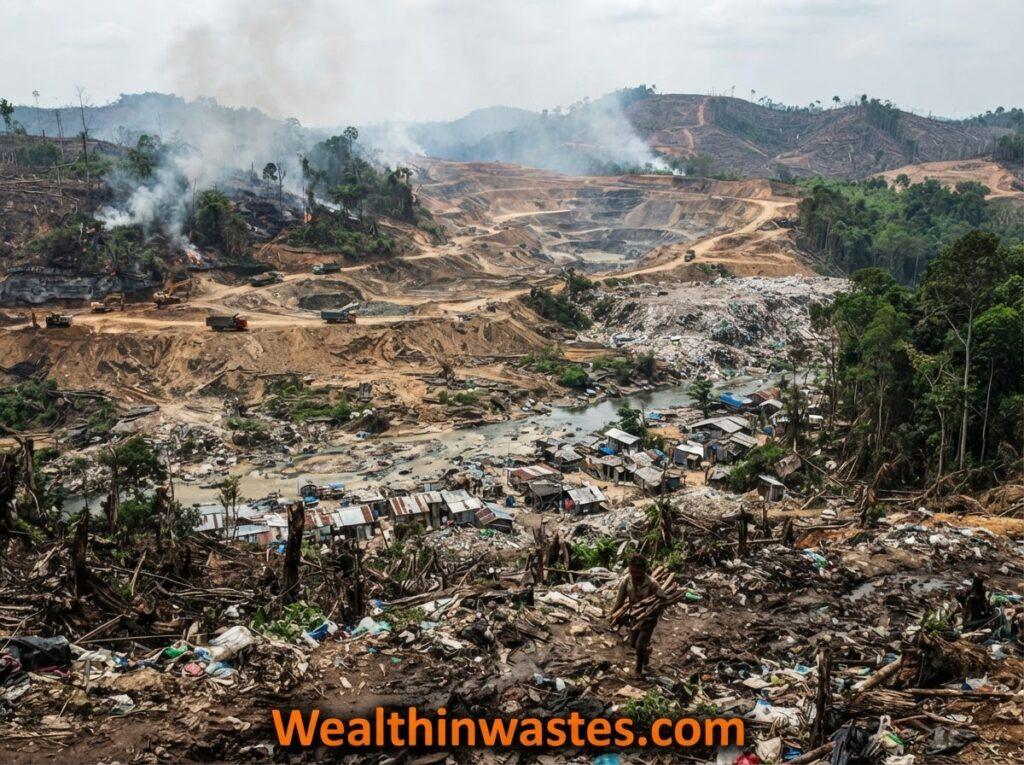
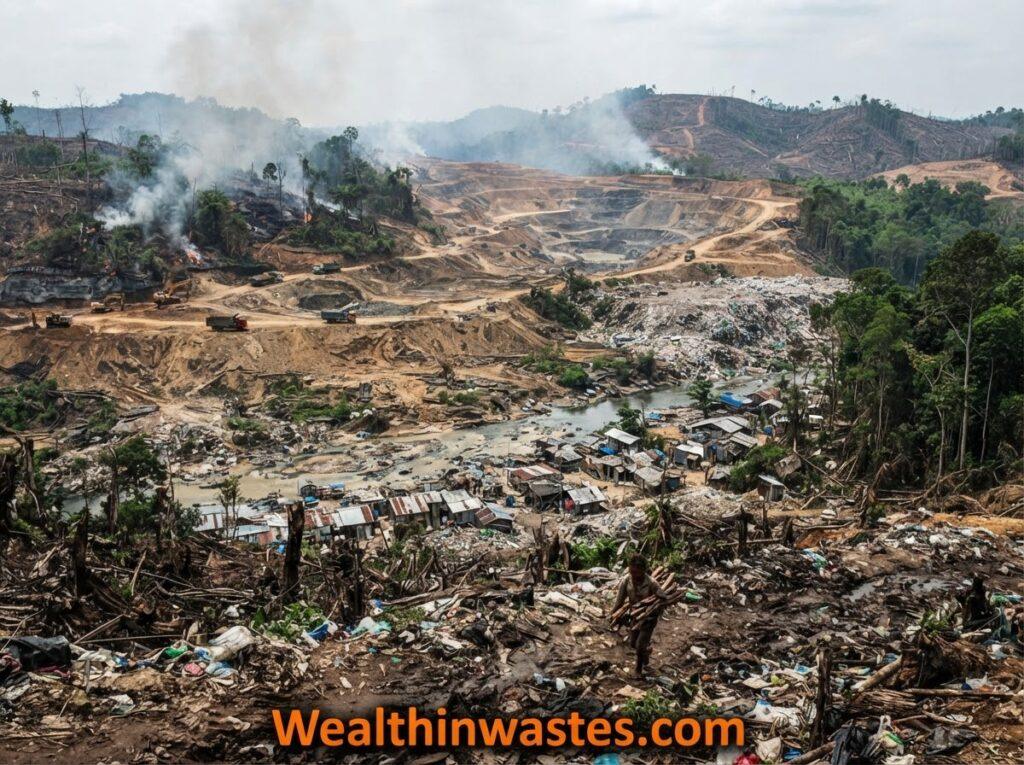
1. Deforestation and Land Conversion: Clearing vegetation for farming, logging, roads, and settlements removes habitats and exposes soil. These changes can fragment wildlife populations, increase erosion, and reduce the ability of ecosystems to recover.
2. Pollution and Industrial Waste: Poor waste disposal introduces plastics, toxic chemicals, petroleum residues, and other contaminants into natural environments. Understanding community responses to pollution highlights the importance of prevention, public awareness, and collective action.
3. Agricultural Chemical Misuse: Excessive or poorly managed pesticides and fertilizers may harm beneficial organisms and contaminate surrounding resources. The risks associated with industrial waste and related pollution pressures also demonstrate why chemical handling and disposal require proper controls.
4. Mining and Construction: Uncontrolled extraction removes vegetation, alters landforms, disturbs soil, and can introduce pollutants into nearby ecosystems. Poorly managed operations may also damage water sources, displace wildlife, and reduce the productivity of surrounding land.
5. Overexploitation of Natural Resources: Excessive hunting, overgrazing, intensive harvesting, and unsustainable extraction place pressure on biological and geological resources. These practices can reduce species populations, damage habitats, and threaten the availability of essential resources for future generations.
Ways to Protect Land and Biological Resources
1. Sustainable Land-Use Planning: Governments and communities should direct development toward suitable locations while protecting sensitive habitats and productive agricultural areas. Effective pollution-control institutions and environmental policies support responsible decisions.
2. Soil and Vegetation Conservation: Farmers can maintain ground cover, practise crop rotation, use suitable mulching methods, and manage grazing carefully. These measures protect soil structure, retain moisture, reduce erosion, and support healthy biological communities.
3. Habitat Restoration: Planting native vegetation, restoring degraded land, protecting wetlands, and reconnecting fragmented habitats can help wildlife populations recover. Appropriate biological treatment of organic waste can also support resource recovery when managed correctly.
4. Pollution Prevention: Individuals, industries, and farmers should reduce waste, manage hazardous materials safely, treat wastewater, and prevent harmful releases. Understanding responsibility for environmental damage encourages accountability and stronger preventive measures.
5. Biodiversity Protection and Education: Communities can protect wildlife habitats, avoid unnecessary vegetation removal, support conservation projects, and participate in environmental education. Continued monitoring and cooperation help identify ecological problems early and improve long-term conservation outcomes.
Read Also: Effects of Hazardous Substances on Water and Aquatic Life
Environmental Interdependence and Sustainability

The land environment and biological environment demonstrate that nature functions as an integrated system. Changes in one component can influence several others, making environmental management more effective when decisions consider the relationships between living organisms and their surroundings.
Healthy land supports agriculture, natural vegetation, wildlife, and numerous human activities. Conversely, degraded land can reduce food production, damage habitats, and increase the wider economic costs associated with pollution.
Biological systems also help maintain environmental quality through decomposition, nutrient cycling, pollination, carbon storage, and other ecological functions. These processes have limits, however, and cannot compensate indefinitely for pollution, habitat loss, or excessive resource consumption.
Responsible waste management remains essential because discarded materials can affect soil organisms, vegetation, wildlife, surface water, and groundwater. Avoiding unsafe disposal practices helps reduce contamination and protects both people and ecological communities.
Environmental sustainability requires people to use natural resources carefully while maintaining the ecological processes that support life. Governments, researchers, farmers, industries, and households all contribute through conservation, responsible production, environmental monitoring, and pollution prevention.
Protecting land and biological resources therefore safeguards more than individual species or physical materials. It preserves ecological relationships, supports livelihoods, and maintains the environmental conditions required for present and future generations to live productively.
Summary on Structure of Land Environment and Biological Environment
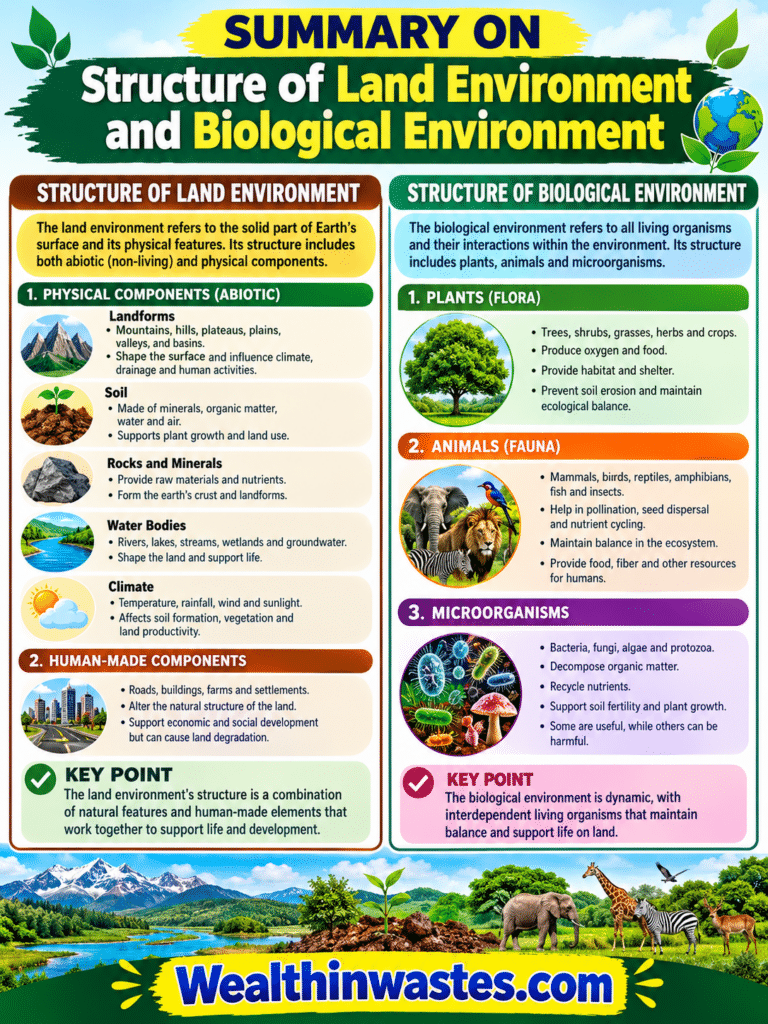
| Environmental Component | Main Characteristics | Importance |
|---|---|---|
| Land Environment | Includes soil, rocks, minerals, landforms, and geological materials. | Provides resources, habitats, agricultural land, and space for development. |
| Biological Environment | Includes microorganisms, plants, animals, humans, and their interactions. | Supports biodiversity, nutrient cycling, food webs, and ecological processes. |
| Land Resources | Supply minerals, construction materials, soil, and places for human activities. | Support agriculture, industries, settlements, livelihoods, and economic development. |
| Environmental Interdependence | Connects organisms, land, water, climate, and natural cycles. | Maintains ecological balance, resource availability, and ecosystem functioning. |
| Environmental Threats | Include pollution, deforestation, habitat loss, and unsustainable extraction. | Can reduce biodiversity, soil fertility, and environmental quality. |
| Conservation Measures | Include restoration, sustainable land use, pollution prevention, and habitat protection. | Preserve resources, protect living organisms, and support future generations. |
Frequently Asked Questions About Land Environment and Biological Environment Explained
1. What Does the Land Environment Include?
The land environment includes the Earth’s solid surface and its materials, such as rocks, minerals, soil, landforms, and geological deposits, alongside the habitats and resources associated with them in different regions.
2. What Is the Biological Environment?
The biological environment, or biosphere, comprises all living organisms, from microorganisms to plants, animals, and humans, together with relationships that connect them to each other and their surroundings across terrestrial and aquatic ecosystems.
3. How Does Land Support Biological Life?
Land supplies soil, nutrients, physical habitats, shelter, and places for organisms to grow and reproduce. Vegetation supports food webs, while healthy soils help regulate water and store carbon.
4. Why Is Biodiversity Important?
Biodiversity maintains varied genes, species, and ecosystems, supporting pollination, nutrient cycling, food supplies, natural pest control, and resilience. Losing species can disrupt ecological relationships and reduce useful resources for people.
5. How Can People Protect Both Environments?
People can protect both environments by conserving vegetation, preventing erosion, using land responsibly, disposing of waste safely, reducing pollution, restoring damaged habitats, and supporting conservation rules and education in their communities.
6. What Human Activities Threaten Land and Biodiversity?
Major threats include deforestation, mining without rehabilitation, urban expansion, contamination, poorly managed waste, excessive chemical use, overgrazing, habitat fragmentation, and unsustainable extraction of natural resources from land and ecosystems over time.
Do you have any questions, suggestions, or contributions? If so, please feel free to use the comment box below to share your thoughts. We also encourage you to kindly share this information with others who might benefit from it. Since we can’t reach everyone at once, we truly appreciate your help in spreading the word. Thank you very much for your support and for sharing!
Read Also: Meaning and Components of Environment for Agricultural Projects