


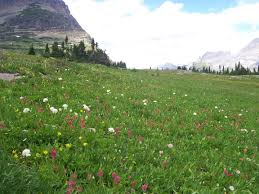
The sun supplies the primary energy that supports most life on Earth, while plants and photosynthetic organisms convert light into chemical energy through photosynthesis, sustaining food chains within diverse ecosystems.
Animals depend directly or indirectly on plants for food, making light an important ecological factor that influences population distribution, daily activity, reproduction, migration, and relationships among organisms across contrasting habitats.
Environmental conditions influence where organisms survive, grow, reproduce, and compete for resources. Differences in these conditions create distinct habitats that support different communities, population sizes, and ecological relationships.
Understanding biodiversity requires examining how organisms respond to their surroundings because environmental conditions continually shape survival, adaptation, abundance, and distribution within natural ecosystems.
Important environmental factors include light, temperature, atmospheric pressure, rainfall, humidity, wind, salinity, and pH. These factors rarely operate independently because their combined effects determine habitat suitability for organisms.
Scientists and environmental managers can measure many of these conditions using instruments and field observations, helping them understand ecological patterns and identify changes that may threaten biodiversity.
Light and Biodiversity Distribution
1. Energy Source: Light provides energy for photosynthesis, allowing green plants and algae to manufacture organic compounds that support food webs and influence the abundance of organisms occupying different ecological communities.
2. Light Intensity: Light intensity influences plant productivity, growth, and competitive ability. Species requiring strong illumination often dominate open habitats, whereas shade-tolerant plants succeed beneath dense vegetation and forest canopies.
3. Light Quality: Light quality refers to available wavelengths, which can affect photosynthesis and plant development differently. Variation in spectral quality therefore contributes to differences in plant performance across habitats.
4. Light Duration: The duration of daylight influences flowering, germination, seasonal growth, animal activity, and reproductive timing. Changes in daylight duration help organisms synchronize important biological processes with seasonal environmental conditions.
5. Vegetation Structure: Dense forest vegetation reduces direct sunlight reaching lower layers, creating shaded microhabitats where specialized plants, insects, fungi, and other organisms can establish successfully.
6. Conservation Importance: Differences in light availability influence vegetation patterns, habitat complexity, and food resources. Protecting natural habitats therefore supports biodiversity conservation by maintaining diverse ecological conditions.
Read Also: Wastewater Treatment Options
Temperature and Biodiversity Patterns

1. Physiological Processes: Temperature regulates enzyme activity, metabolism, respiration, growth, and reproduction. Each species has preferred and tolerance ranges that influence its ability to maintain populations within particular environments.
2. Seasonal Variation: Temperature changes between seasons and throughout each day. These fluctuations influence flowering, dormancy, migration, feeding, reproduction, and other activities that affect population abundance and distribution.
3. Latitude and Altitude: Temperature generally declines with increasing latitude and altitude, creating broad environmental gradients. Species distributions often follow these gradients because organisms respond differently to changing thermal conditions.
4. Aquatic Moderation: Water usually changes temperature more slowly than land, reducing sudden thermal fluctuations. This buffering effect helps many aquatic organisms experience relatively stable conditions compared with terrestrial habitats.
5. Species Adaptation: Organisms survive temperature extremes through behavioural, physiological, or structural adaptations, including shelter-seeking, altered activity periods, water conservation, metabolic adjustments, and specialized body coverings.
6. Climate Change: Altered temperature patterns can shift habitat suitability and species ranges. climate change and global warming may therefore influence biodiversity through changing thermal and seasonal conditions.
Read Also: On-site Municipal Wastewaters Treatment
Atmospheric Pressure Across Habitats

Atmospheric pressure results from the weight of air above Earth’s surface, and it generally decreases as altitude increases. This change creates environmental differences that affect organisms occupying elevated habitats.
At high elevations, reduced atmospheric pressure lowers the partial pressure of oxygen, potentially making respiration more demanding. Species living there often possess adaptations that improve oxygen acquisition and utilization.
Atmospheric pressure also interacts with temperature, humidity, wind, and other environmental variables. Their combined influence helps determine the physical conditions that organisms experience within specific geographic locations and habitats.
Animals living at different elevations may show changes in breathing patterns, activity levels, body structure, or metabolism. Plants can also respond through altered growth patterns and physiological adjustments to elevation.
Researchers should assess physical habitat conditions alongside atmospheric pressure because water depth, vegetation structure, elevation, and other environmental features can operate together.
Understanding pressure gradients becomes particularly useful when studying mountain ecosystems, where altitude changes can occur over short distances and create multiple habitats supporting distinct biological communities.
Rainfall and Water Availability
1. Water Supply: Rainfall supplies water to soils, plants, animals, and freshwater ecosystems. Its amount, timing, intensity, and seasonal distribution influence vegetation growth and ecological productivity across regions.
2. Vegetation Patterns: Regions receiving abundant rainfall can support dense forests, while areas with lower or strongly seasonal rainfall commonly support grasslands, savannas, or other drought-adapted vegetation communities.
3. Effective Rainfall: Not all rainfall becomes available to plants because evaporation, runoff, and drainage remove water. Therefore, effective rainfall depends on temperature, soil characteristics, vegetation cover, and topography.
4. Soil Retention: soil resource management influences how much rainwater remains available for plant roots. Good soil structure and organic matter can improve infiltration, storage, and vegetation productivity.
5. Erosion Risk: Intense rainfall falling on bare soil can increase runoff and erosion. soil erosion factors can reduce fertile topsoil, disturb habitats, and limit plant establishment.
6. Regional Biodiversity: Rainfall differences across Nigeria help create contrasting vegetation zones, which support different wildlife communities. Changes in rainfall can therefore alter habitat conditions and affect biodiversity patterns.
Humidity, Wind, and Biodiversity

Humidity describes the amount of water vapour in the atmosphere, and it influences evaporation, transpiration, sweating, cooling, and water balance. Organisms respond differently according to their moisture requirements.
High humidity can reduce evaporative water loss, while low humidity can increase drying. These differences influence the distribution of plants, animals, fungi, and microorganisms across terrestrial habitats.
A hygrometer measures atmospheric humidity and can help researchers identify local microclimates. Humidity measurements become more informative when combined with temperature, vegetation cover, rainfall, and other environmental observations.
Wind moves air across landscapes and can increase evaporation, transport heat, and create mechanical stress. Strong winds may bend, break, or restrict plant growth in exposed locations.
Wind also supports dispersal by carrying seeds, spores, pollen, and small organisms between habitats. This movement can promote colonization, genetic exchange, and the expansion of populations into suitable areas.
Human activities can intensify environmental stress through pollution and atmospheric emissions. industrial waste impacts may spread beyond discharge points and affect organisms through contaminated air, soil, or water.
Salinity and Aquatic Biodiversity
1. Salt Concentration: Salinity refers to the concentration of dissolved salts in water. Differences in salinity help distinguish freshwater, estuarine, and marine environments and influence which species can survive there.
2. Osmotic Balance: Organisms experience osmotic pressure because water moves across membranes according to differences in solute concentration. Species therefore require adaptations that help maintain internal water and salt balance.
3. Species Tolerance: Freshwater species generally tolerate lower salt concentrations, while marine organisms tolerate higher levels. Estuarine organisms often possess flexible osmoregulatory mechanisms that help them cope with changing salinity.
4. Community Changes: Sudden salinity changes can stress sensitive organisms, alter reproduction, and change community composition. Monitoring water chemistry characteristics helps identify such environmental shifts.
5. Pollution Effects: Dissolved substances can change aquatic conditions and affect organisms already living near their tolerance limits. polluted water characteristics can therefore influence aquatic biodiversity directly.
6. Monitoring Importance: Salinity measurements support environmental assessment in rivers, lakes, wetlands, estuaries, and coastal waters. Regular monitoring helps detect changes that could alter aquatic habitats and species distribution.
Read Also: On-site Municipal Wastewaters Treatment
pH and Habitat Suitability

pH indicates the acidity or alkalinity of soil and water, and many organisms survive within relatively specific pH ranges. Conditions outside those ranges can interfere with physiological processes.
Soil pH strongly influences nutrient availability, microbial activity, and plant performance. Changes can result from weathering, leaching, fertiliser use, contamination, or prolonged soil degradation.
Some plants and microorganisms prefer acidic environments, while others thrive under neutral or alkaline conditions. Such differences help explain why particular species dominate specific soils and habitats.
Water pH also affects aquatic organisms because extreme acidity or alkalinity can disturb physiological processes and alter the chemical availability or toxicity of dissolved substances.
Environmental researchers can measure pH using indicator papers, chemical indicators, or electronic meters. Regular assessment helps identify chemical changes that may reduce habitat suitability for sensitive species.
Environmental contamination can change pH and other chemical conditions. monitoring pollutants and contaminants therefore supports early detection of changes that could threaten plants, animals, and microorganisms.
How Factors Interact to Shape Biodiversity
Environmental factors rarely act independently because changes in one condition can modify the effects of another. Biodiversity patterns therefore emerge from complex interactions among physical, chemical, and biological conditions.
Rainfall, temperature, and humidity influence water availability, while soil texture, vegetation cover, and topography affect how long water remains available after precipitation.
Soil properties can also influence plant communities, because different soil types provide different drainage, nutrient, and water-retention conditions. major soil types therefore contribute to habitat differences.
Pollution can modify several environmental variables simultaneously. pollutant classifications help explain how chemical, physical, and biological contaminants can influence air, water, soil, and living organisms.
Agricultural chemicals may also affect environmental conditions through residues and changing soil chemistry. pesticide degradation factors influence how long some compounds remain active within soils.
Climate variability can intensify drought, flooding, erosion, and temperature stress. climate impacts on land resources can consequently alter habitats and affect species distributions.
Environmental assessment should consider these relationships rather than examining each factor separately. environmental monitoring programmes can track changes and reveal trends affecting biodiversity over time.
Human activities can further modify habitat conditions through land development, waste disposal, agriculture, mining, and infrastructure. Site decisions should therefore consider environmental site factors before projects begin.
Improving waste management can reduce additional environmental stress. Proper handling of refuse prevents contamination that may affect habitats, while solid waste effects can otherwise degrade soil, water, and wildlife habitats.
Sustainable protection of natural resources remains important because healthy ecosystems provide habitats, food, shelter, and ecological functions. environmental management practices help maintain conditions that support biodiversity.
Water pollution also requires attention because contaminated water can reduce oxygen, alter chemistry, and remove sensitive species. Effective water quality surveys can help identify environmental changes affecting aquatic communities.
Summary on Environmental Factors That Shape Biodiversity Distribution
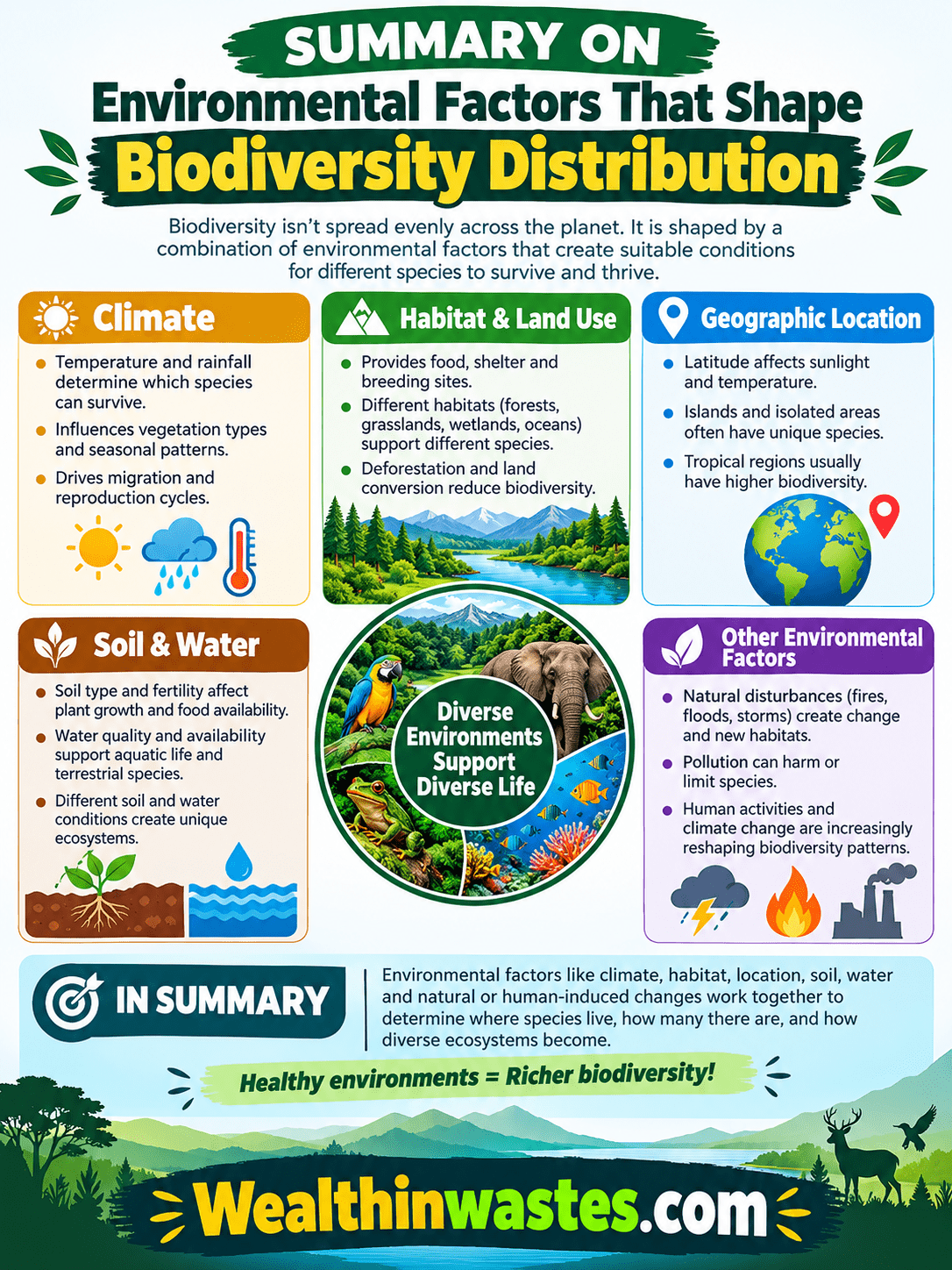
| Environmental Factor | Major Influence | Effect on Biodiversity |
|---|---|---|
| Light | Supports photosynthesis and regulates biological rhythms. | Affects plant growth, flowering, germination, activity, and reproduction. |
| Temperature | Controls biochemical and physiological processes. | Influences survival, adaptation, growth, reproduction, and species ranges. |
| Atmospheric Pressure | Changes with altitude and affects gas availability. | Influences respiration and habitat suitability, especially at high elevations. |
| Rainfall | Provides water and determines soil moisture patterns. | Shapes vegetation communities and indirectly affects animal abundance. |
| Humidity | Influences evaporation, transpiration, and water balance. | Determines suitability for organisms with different moisture requirements. |
| Wind | Moves air, affects water loss, and disperses biological materials. | Influences plant growth, seed movement, aeration, and animal behaviour. |
| Salinity | Determines dissolved salt concentration in water. | Separates freshwater, estuarine, and marine communities. |
| pH | Measures soil and water acidity or alkalinity. | Affects nutrient availability, physiology, chemical balance, and distribution. |
Frequently Asked Questions About Environmental Factors That Shape Biodiversity Distribution
1. What are environmental factors that influence biodiversity?
They include physical and chemical conditions such as light, temperature, rainfall, humidity, wind, atmospheric pressure, salinity, and pH, which influence habitat suitability and species survival.
2. How does light affect biodiversity?
Light provides energy for photosynthesis and influences flowering, germination, movement, migration, activity, and reproduction, affecting which organisms can successfully survive and reproduce within particular habitats.
3. Why does temperature affect species distribution?
Temperature controls many biochemical processes, and organisms have different tolerance ranges. Species therefore occupy areas where thermal conditions remain suitable for growth, reproduction, and normal physiological functioning.
4. How does rainfall influence biodiversity?
Rainfall determines water availability and strongly influences vegetation. Different rainfall amounts and seasonal patterns create forests, grasslands, savannas, wetlands, and other habitats supporting different biological communities.
5. What is the importance of humidity?
Humidity affects evaporation, transpiration, cooling, and water balance. Organisms adapted to humid environments may struggle under dry conditions, while drought-adapted species may perform poorly under excessive moisture.
6. How does wind influence biodiversity?
Wind can increase water loss, transport pollen and seeds, influence temperature, generate waves, improve aquatic aeration, distribute scents, and create mechanical stress that affects plants and animals.
7. Why is salinity important to aquatic biodiversity?
Salinity determines osmotic conditions and separates freshwater, estuarine, and marine environments. Aquatic organisms require adaptations that allow them to maintain water and salt balance under specific conditions.
8. Why does pH influence organisms?
pH affects nutrient availability, chemical reactions, physiological processes, and substance toxicity. Organisms therefore tend to survive within specific pH ranges that provide suitable environmental conditions for growth.
9. Which instruments measure environmental conditions?
Common instruments include light meters for light intensity, hygrometers for humidity, anemometers for wind speed, wind vanes for direction, pH meters for acidity, and Secchi discs for water transparency.
10. Why should environmental factors be studied together?
Environmental factors interact continuously, so studying them together provides a clearer understanding of habitat suitability, species abundance, ecological relationships, biodiversity patterns, conservation needs, and environmental change.
Do you have any questions, suggestions, or contributions? If so, please feel free to use the comment box below to share your thoughts. We also encourage you to kindly share this information with others who might benefit from it. Since we can’t reach everyone at once, we truly appreciate your help in spreading the word. Thank you very much for your support and for sharing!
Read Also: Nigeria’s Rich Biodiversity and Conservation Efforts