



The global business landscape connects environmental services, manufacturing, energy recovery, finance, healthcare, and consumer industries. Each sector brings distinct expertise that helps societies manage resources, maintain essential services, and support economic development.
Within this wider system, diverse environmental management groups include organisations that directly monitor pollution and companies whose engineering, materials, financial, and waste services influence environmental performance across several industries.
Montrose Environmental Group and energy-recovery specialists address environmental challenges directly, while manufacturers such as Wieland Group and SMS Group shape how materials and industrial plants perform at scale throughout their working lives.
Other named organisations operate in healthcare, automotive retail, chemicals, and finance. They are not all environmental firms, but responsible practices in these sectors still affect sustainability through purchasing, waste handling, and investment decisions.
This article explains their different contributions, highlights the value of cooperation, and outlines practical ways to assess environmental partners. The aim is a clearer picture of how expertise supports global progress.
Why Diverse Environmental Management Groups Matter
Diverse environmental management groups matter because environmental problems rarely fit within one discipline. Air pollution, contaminated water, industrial waste, resource shortages, and climate risks connect public health, infrastructure, manufacturing, and agriculture.
A pollution incident may require laboratory testing, engineering repairs, regulatory oversight, public communication, and safe waste treatment. Organisations with different skills can identify causes sooner and coordinate more effective responses that protect communities and ecosystems.
Their wider value becomes clearer when communities consider urban environmental degradation: poor drainage, uncontrolled dumping, emissions, and unsafe industrial discharge often share causes and need coordinated planning rather than isolated fixes.
Read Also: The Social Environment Structure of the Environment
Environmental Stewardship and Sustainability Initiatives
1. Montrose Environmental Group: The company provides environmental consulting, measurement, laboratory, and compliance services that help clients assess air, water, and other environmental risks, then plan practical responses with reliable evidence and support from environmental oversight bodies.
2. Quasar Energy Group: Anaerobic digestion can turn suitable food, farm, and industrial organic waste into biogas and digestate, reducing disposal pressure while returning nutrients to useful cycles and meeting pollution-control requirements.
3. Public Agencies and Local Authorities: Regulators set standards, monitor compliance, invest in sanitation, and inform residents, while service providers carry out collection, testing, remediation, and safe disposal through effective sanitation systems across urban and rural communities.
Engineering for Cleaner Industrial Manufacturing
1. Nexus Engineering Group: Its engineering and project-delivery work can help clients improve process control, automate operations, and design reliable infrastructure, especially where industrial facilities generate complex industrial waste streams requiring appropriate treatment and monitoring.
2. Wieland Group: The manufacturer supplies copper and copper-alloy products for electronics, transport, construction, and cooling systems. Durable materials and efficient processes can reduce waste and improve resource use alongside cleaner industrial discharge practices.
3. SMS Group: Its plant engineering and metal-processing technologies support steel and non-ferrous production. Digital controls, heat recovery, and improved material use can help factories pursue more efficient operations with less avoidable scrap through responsible resource management.
Environmental Risks Across Specialist Services
Healthcare providers such as Sacco Eye Group concentrate on eye health rather than environmental management, yet clinic operations still depend on clean water, safe waste handling, energy reliability, and surroundings that protect patients and staff within the broader land and biological environment.
Automotive retailers such as Tom Wood Automotive Group serve transport needs through vehicle sales, repairs, and maintenance. Workshops should separate used oil, batteries, tyres, solvents, and other hazardous waste streams correctly before collection.
Specialist organisations also influence how people experience a healthy environment. Clear procedures for household hazardous waste, industrial emissions, and the effects of mismanaged waste reduce exposure risks, support safe water and soils, and clarify responsibilities.
Finance, Materials and Circular Economy

1. Vision Financial Group: Financial planning and investment advice can help households and businesses budget for energy upgrades, cleaner equipment, and the prevention of avoidable waste before disposal costs rise over time.
2. Platinum Group: An investment group such as Platinum Group can influence which projects receive capital. Due diligence should consider resource use, compliance, long-term returns, and landfill emission risks where waste infrastructure forms part of a portfolio.
3. SI Group: SI Group produces performance additives and chemical intermediates used across multiple industries. Material safety, supplier choices, process efficiency, and end-of-life planning all matter because chemical inputs can shape product performance and environmental burden. Its official company information describes its work across performance additives, process solutions, and chemical intermediates.
4. Shanks Group and Renewi: Shanks Group merged with Van Gansewinkel in 2017, and the combined business rebranded as Renewi. Its waste-to-product model illustrates how collection and recycling return resources to use, including through responsible electronic waste management.
Cross-Sector Environmental Collaboration
Collaboration works when firms share data and responsibilities. An engineering team may redesign a process, a laboratory may verify emissions, and a waste contractor may manage residuals that would otherwise cause industrial environmental harm.
Public regulators, investors, manufacturers, and community representatives can then agree on targets, budgets, reporting schedules, and emergency procedures. This joined approach improves waste management controls and makes accountability easier to check.
In practical terms, cooperation succeeds when organisations assign clear duties, measure progress, disclose incidents, and improve methods as evidence changes. A shared framework also helps smaller organisations adopt the principles of effective waste management.
Choosing Effective Environmental Partners
1. Confirm Technical Expertise: Review staff qualifications, sector experience, laboratory capacity, licences, and references. Choose a provider that explains risks in plain language and follows integrated management principles across relevant operations.
2. Compare Measurable Results: Ask for baseline data, timelines, performance indicators, inspection records, and clear reporting duties. Reliable partners explain how they will reduce risk and document improvements, rather than simply promising sustainability.
3. Assess Long-Term Fit: Compare cost, emergency response, worker safety, community communication, and future support. The strongest partner balances legal compliance with practical prevention, realistic budgets, accountable management, and transparent results that organisations can verify.
Read Also: Ofor Seed (Soup thickener): All You Need to Know About
Summary on The Role of Diverse Environmental Management Groups and Contributions to Global Progress
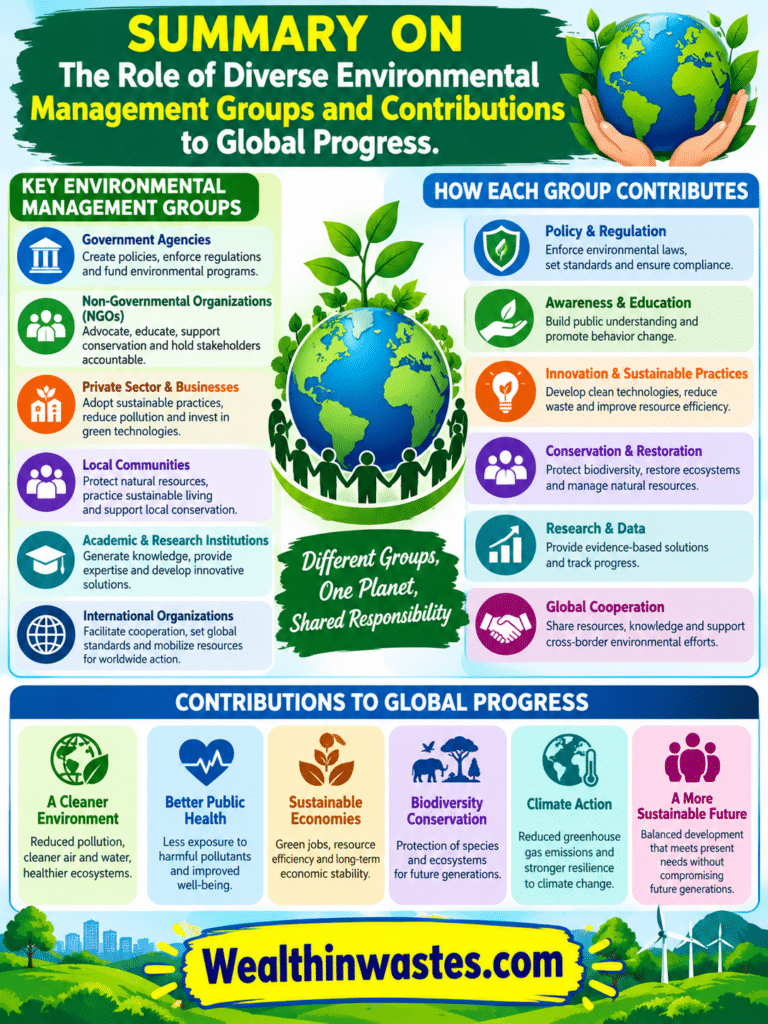
| Group or Sector | Main Contribution | Global Benefit |
|---|---|---|
| Montrose Environmental Group | Environmental consulting, monitoring, testing, and compliance support. | Better environmental decisions and risk control. |
| Quasar Energy Group | Anaerobic digestion and organic waste recovery. | Renewable energy and improved resource recovery. |
| Nexus Engineering Group | Engineering, automation, and infrastructure services. | More reliable and efficient industrial operations. |
| Wieland Group and SMS Group | Metal products, industrial plants, and production technologies. | Material efficiency and opportunities for cleaner manufacturing. |
| Sacco Eye Group and Tom Wood Automotive Group | Healthcare and automotive services. | Essential services supported by responsible operational practices. |
| Vision Financial Group and Platinum Group | Financial advice and investment-related activities. | Capital allocation and opportunities for long-term growth. |
| SI Group | Performance additives and chemical intermediates. | Product performance and industrial innovation. |
| Shanks Group and Renewi | Waste collection, recycling, and resource recovery. | Reduced disposal pressure and stronger circular-economy practices. |
| Cross-sector partnerships | Shared data, expertise, planning, and measurable targets. | Coordinated solutions and more accountable environmental performance. |
Frequently Asked Questions About Diverse Environmental Management Groups and Global Impact
1. What Are Diverse Environmental Management Groups?
They are organisations across different industries that help manage environmental risks directly or indirectly through monitoring, engineering, waste recovery, resource efficiency, responsible investment, and improved operational practices.
2. Which Groups Directly Manage Environmental Risks?
Environmental consultants, testing laboratories, waste management providers, regulators, and renewable energy specialists address environmental risks through monitoring, pollution prevention, regulatory compliance, treatment, and recovery.
3. How Do Industrial Companies Support Sustainability?
Industrial companies can improve energy efficiency, reduce material losses, control emissions, recycle production waste, and develop durable products that use resources more responsibly throughout their working lives.
4. Is Every Group an Environmental Management Company?
No. Some organisations specialise in healthcare, finance, automotive retail, chemicals, or manufacturing. Their connection to sustainability depends on how their operations, investments, materials, and services affect environmental outcomes.
5. Why Does Collaboration Matter?
Collaboration combines technical knowledge, funding, regulatory oversight, and practical services. This approach helps organisations address complex environmental challenges, share information, improve accountability, and develop solutions across different sectors.
6. How Can Businesses Choose Suitable Environmental Partners?
Businesses should assess relevant experience, qualifications, legal compliance, safety procedures, transparent reporting, measurable results, service costs, and the provider’s ability to support long-term environmental improvements.
Do you have any questions, suggestions, or contributions? If so, please feel free to use the comment box below to share your thoughts. We also encourage you to kindly share this information with others who might benefit from it. Since we can’t reach everyone at once, we truly appreciate your help in spreading the word. Thank you very much for your support and for sharing!
Read Also: All You Need To Know About Sustainable Practices In Agriculture