


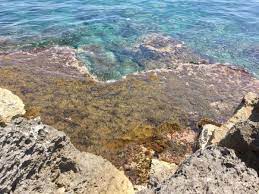
From early history, major economic activities have concentrated around coastal zones because settlements gained access to overseas trade, marine resources, transportation routes, and productive resources from nearby rural hinterlands.
This economic importance has encouraged large populations to settle along coastlines, with migration contributing substantially to population growth in many coastal communities and increasing pressure on limited natural resources.
Coastal and marine environments support fisheries, transportation, tourism, recreation, food production, biodiversity, and other ecosystem services that contribute directly to human health, livelihoods, economic development, and social wellbeing.
However, these environments remain highly vulnerable to human activities because intensive development, pollution, habitat conversion, resource extraction, and poorly planned settlements can alter ecological processes and weaken natural protection.
The condition of coastal and marine environments therefore depends on population patterns, technology, local practices, markets, governance systems, environmental sensitivity, and the effectiveness of pollution prevention and resource management.
Why Coastal and Marine Environments Matter
Coastal and marine environments provide valuable ecological functions that support human societies, including food production, shoreline protection, nutrient cycling, habitat provision, recreation, tourism, transportation, and economic opportunities for coastal populations.
Healthy coastal waters support fisheries and shellfish resources, while mangroves, estuaries, wetlands, and other habitats provide breeding grounds and shelter for numerous aquatic species throughout different stages of development.
These environments also provide important natural services that reduce environmental risks, including shoreline stabilization, sediment retention, water purification, carbon storage, and protection against waves, storms, flooding, and coastal erosion.
Understanding these ecological functions requires attention to biodiversity values and ecosystem benefits, because biological diversity strengthens the resilience and productive capacity of coastal and marine systems.
Human wellbeing remains closely connected to water quality, making effective water quality management essential for protecting aquatic resources, public health, fisheries, recreation, and dependable coastal ecosystem services.
Read ALso: Educational Intervention and Environmental Action
Key Features Of Coastal Ecosystems
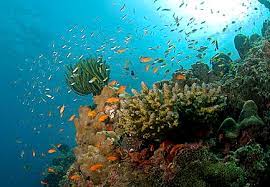
Coastal ecosystems differ from many inland environments because land and sea interact continuously, creating complex conditions where tides, salinity, sediment movement, waves, currents, weather, and human activities influence ecological processes.
1. Ecological Connectivity: Coastal habitats are closely connected because rivers, estuaries, wetlands, mangroves, beaches, seagrass areas, and offshore waters exchange organisms, nutrients, sediments, and pollutants through natural processes daily.
2. High Biological Productivity: Many coastal environments support highly productive food webs because sunlight, nutrients, shallow waters, freshwater inputs, and sheltered habitats create favorable conditions for plants, fish, shellfish, birds, and microorganisms.
3. Strong Human Dependence: Coastal communities depend on marine resources for food, employment, transportation, commerce, tourism, recreation, and income, making environmental degradation capable of creating immediate social and economic consequences.
4. Environmental Sensitivity: Coastal systems can respond quickly to pollution, habitat destruction, altered water flows, overexploitation, and climate pressures, especially where natural ecosystems already experience substantial human disturbance.
Research on environmental factors affecting biodiversity distribution helps explain why coastal species respond differently to temperature, rainfall, salinity, habitat conditions, pollution, and resource availability.
Similarly, environmental monitoring programmes can identify changes in water quality, fish stocks, biodiversity, pollution levels, and other indicators that reveal emerging ecological pressures.
Human Activities Affecting Marine Environments
Human activities influence coastal and marine environments through development, resource extraction, waste generation, transportation, fishing, agriculture, energy production, tourism, and settlement expansion across environmentally sensitive coastal landscapes.
1. Coastal Urbanization: Rapid urban expansion can replace mangroves, wetlands, beaches, and other natural habitats while increasing sewage, solid waste, stormwater runoff, construction pressure, and demand for land and infrastructure.
2. Agriculture And Aquaculture: Agricultural fertilizers, pesticides, sediment runoff, and poorly managed aquaculture operations can introduce nutrients and contaminants into coastal waters and alter nearby ecological conditions.
3. Industrial Development: Factories, refineries, ports, power facilities, and extraction activities may release wastewater, chemicals, petroleum products, heat, and other pollutants into surrounding terrestrial and marine systems.
Current evidence on industrial waste impacts shows that poorly controlled industrial discharges can damage aquatic organisms, increase toxic exposure, and reduce the quality of waters supporting coastal livelihoods.
Likewise, human pressure on natural environments can intensify when development policies prioritize short-term economic gains without adequately accounting for habitat protection, resource limits, and long-term ecological costs.
Population Growth and Coastal Pressure
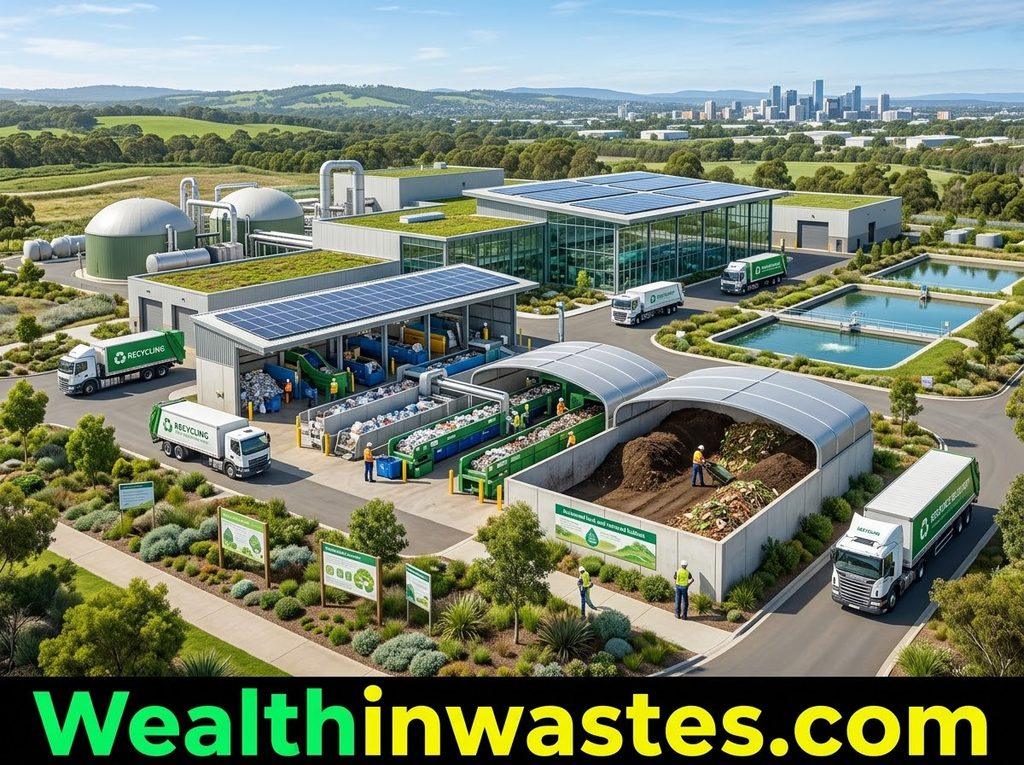
Population growth often receives attention when coastal degradation occurs, but population size alone does not determine environmental outcomes because technology, markets, institutions, consumption patterns, and local practices also matter.
1. Settlement Expansion: Growing coastal populations require housing, roads, drainage, sanitation, ports, markets, and utilities, which can transform natural areas and increase pressure on already limited coastal land and water resources.
2. Rising Resource Demand: Larger populations can increase demand for fish, shrimp, timber, fuel, water, construction materials, and recreational spaces, encouraging intensive exploitation when effective management systems are absent.
3. Migration And Urbanization: Migration into coastal communities can increase competition for resources and services, although strong social institutions, customary practices, local knowledge, and community relationships may moderate harmful environmental effects.
Studies of biodiversity loss and species extinction show why habitat destruction and intensive exploitation deserve attention when population increases coincide with expanding resource demands.
Meanwhile, resource management pressures can extend from land into coastal waters because mining, oil activities, erosion, and land disturbance may increase sediment movement and pollutant loading.
Population pressure becomes especially damaging when communities lack adequate sanitation, infrastructure, environmental planning, and institutions capable of coordinating access to common coastal resources and enforcing sustainable practices.
Pollution Threats In Coastal Waters
Pollution represents one of the most significant threats to coastal and marine environments because contaminants can travel through rivers, drainage systems, groundwater, runoff, atmospheric deposition, and direct discharges.
1. Sewage And Wastewater: Untreated or poorly treated wastewater can introduce nutrients, pathogens, organic matter, chemicals, and suspended solids into coastal waters, causing oxygen depletion, disease risks, algal growth, and ecological disruption.
2.Oil And Chemical Pollution: Petroleum products and hazardous chemicals can contaminate sediments, water, plants, fish, shellfish, and other organisms while creating persistent ecological and socioeconomic impacts across affected communities.
Information on wastewater sources and effects shows that domestic, agricultural, commercial, and industrial discharges can all contribute pollutants that eventually reach rivers, wetlands, estuaries, and coastal waters.
Similarly, wastewater treatment and disposal controls can reduce environmental harm by removing pollutants before discharges reach receiving waters and sensitive aquatic ecosystems.
Oil pollution deserves special concern because petroleum contamination of aquatic environments can persist in sediments, damage habitats, reduce fisheries productivity, and disrupt economic activities dependent on marine resources.
Common Property Resources and Governance
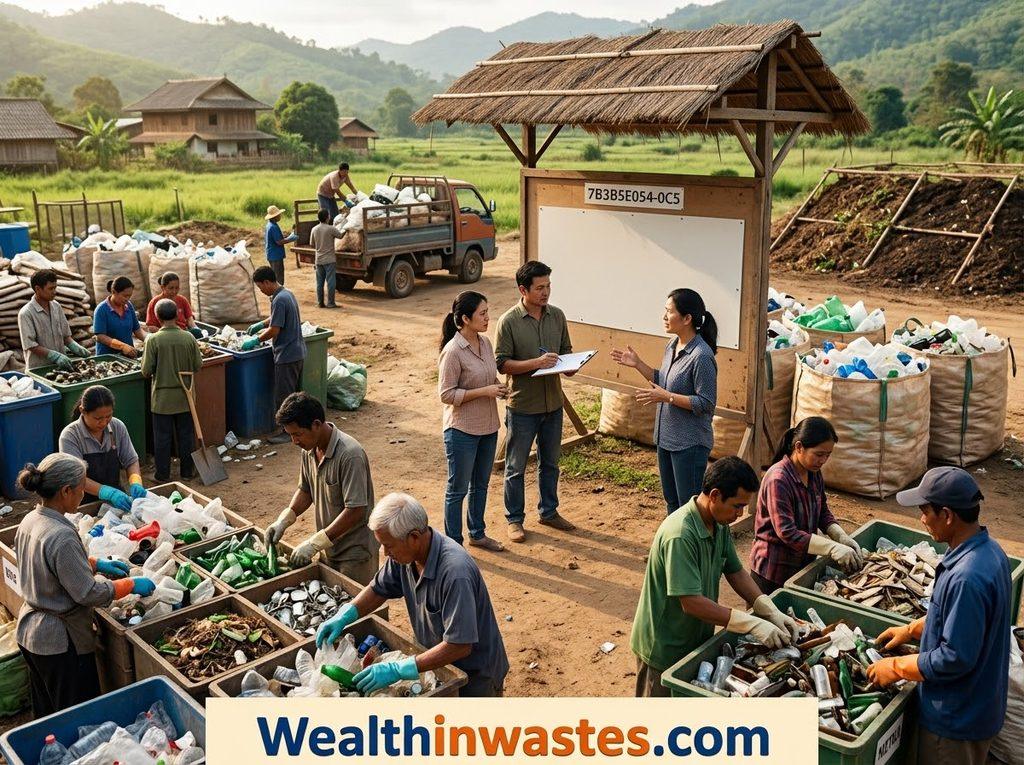
Many coastal and marine resources operate under common property arrangements where communities share access to fishing grounds, mangroves, estuaries, wetlands, and other resources through formal or informal institutions.
1. Shared Resource Access: Common property systems can encourage collective responsibility when users recognize shared interests, follow agreed rules, resolve conflicts, and maintain social relationships that support responsible resource use.
2. Risks From Social Change: Rapid migration, urbanization, commercialization, technological change, and growing markets can weaken established arrangements when traditional rules no longer match emerging demands or increasing resource pressure.
3. Importance Of Institutions: Effective governance requires clear responsibilities, reliable monitoring, fair access arrangements, practical enforcement, community participation, and cooperation between local users, businesses, researchers, and government authorities.
Strong governance also depends on reliable information, and institutional pollution-control arrangements can strengthen coordination among agencies responsible for environmental protection, sanitation, water management, and pollution prevention.
Good governance can protect resources while supporting livelihoods, especially when water resource protection measures reflect local needs, ecological conditions, community participation, and practical management responsibilities.
Ways To Protect Coastal And Marine Environments
Protecting coastal and marine environments requires coordinated action that addresses pollution at its source, maintains natural habitats, strengthens resource governance, and encourages environmentally responsible production and consumption patterns.
1. Protect Natural Habitats: Mangroves, wetlands, estuaries, beaches, seagrass habitats, and other sensitive ecosystems should receive protection because they support biodiversity, fisheries, shoreline stability, water quality, and community livelihoods.
2. Improve Wastewater Management: Communities and industries should collect, treat, monitor, and safely discharge wastewater so that pollutants do not accumulate in rivers, estuaries, lagoons, coastal waters, and sediments.
3. Reduce Waste At Source: Preventing unnecessary waste can lower the volume of materials entering drains, waterways, and coastal environments, while reuse, recycling, and better production practices conserve resources.
4. Strengthen Environmental Monitoring: Regular monitoring of water quality, sediments, fish stocks, habitats, and pollution indicators can reveal problems early and support timely intervention before damage becomes difficult to reverse.
Practical guidance on waste reduction at source emphasizes prevention, improved operating practices, material substitution, and process changes that reduce pollution before wastes require treatment or disposal.
Effective protection can also include proper waste treatment and disposal methods, which reduce the release of pollutants from domestic, industrial, commercial, and agricultural waste streams.
Read Also: Guide on Environmental Management Tips for Reducing Waste
Long-Term Management And Environmental Sustainability
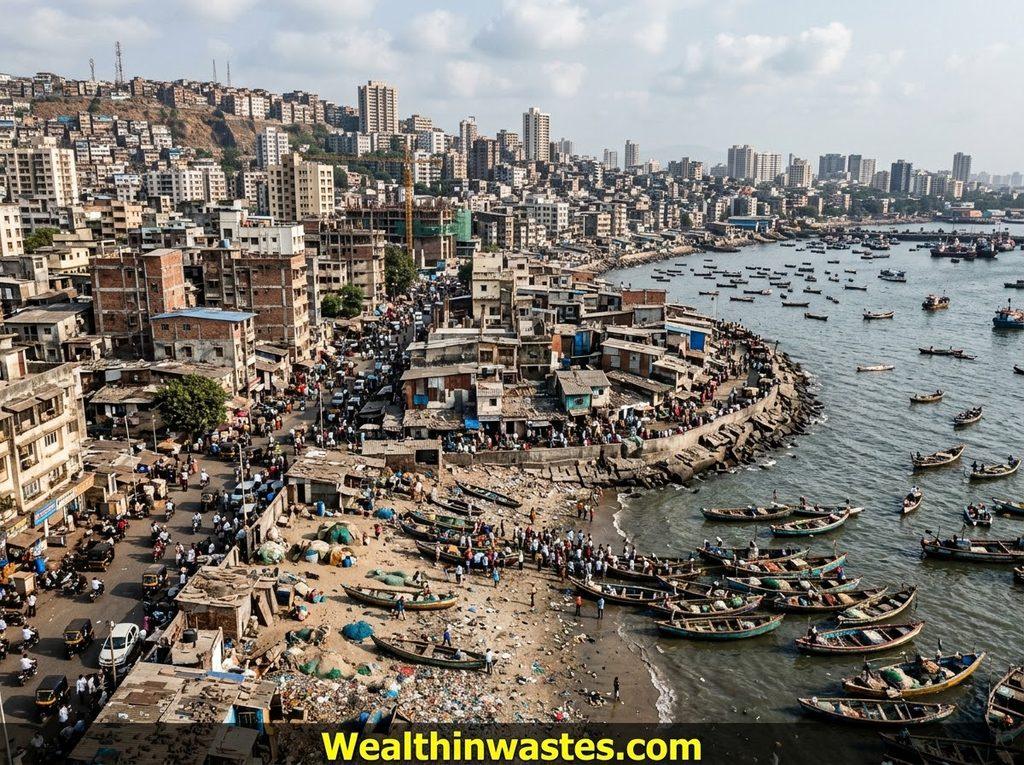
Long-term sustainability depends on integrating environmental protection with economic planning so that coastal development provides employment and essential services without destroying the ecosystems that support future generations.
1. Apply Preventive Management: Environmental problems cost more to repair after severe damage occurs, so prevention should guide coastal planning, pollution control, infrastructure development, resource extraction, and settlement expansion.
2. Promote Efficient Resource Use: Efficient use of materials, energy, water, and natural resources reduces waste generation and environmental pressure while improving economic performance across households, industries, farms, fisheries, and communities.
3. Encourage Recycling And Recovery: Recycling reduces the volume of waste entering disposal systems while recovering useful materials that might otherwise be lost, helping communities conserve resources and lower environmental pressure.
Research on recycling as pollution control demonstrates how material recovery can reduce waste disposal requirements while conserving resources and limiting the environmental consequences associated with discarded materials.
At the community level, environmental management best practices can combine pollution prevention, conservation, responsible resource use, community participation, and appropriate technologies to support sustainable coastal development.
Economic considerations also matter because pollution can reduce fisheries production, damage livelihoods, increase healthcare costs, and create expensive restoration requirements, making prevention economically preferable to repeated environmental recovery.
Studies examining economic losses from pollution demonstrate why decision makers should consider both environmental damage and the financial consequences of declining ecosystem services when evaluating coastal development choices.
Coastal and marine environments remain valuable but vulnerable systems, and sustainable management requires communities, industries, governments, and resource users to reduce pollution while protecting habitats and ecological functions.
Responsible management should prioritize prevention, effective monitoring, improved sanitation, habitat conservation, community participation, sustainable resource use, and stronger institutions capable of balancing development with ecological protection.
Practical action is especially important because waste-related environmental impacts can affect water quality, aquatic organisms, public health, livelihoods, and ecosystem stability when disposal systems remain inadequate.
Protecting these environments is therefore not only an ecological responsibility but also an economic and social priority for communities that depend on coastal resources for food, income, safety, and wellbeing.
Summary on Threats and Solutions To Coastal and Marine Environments
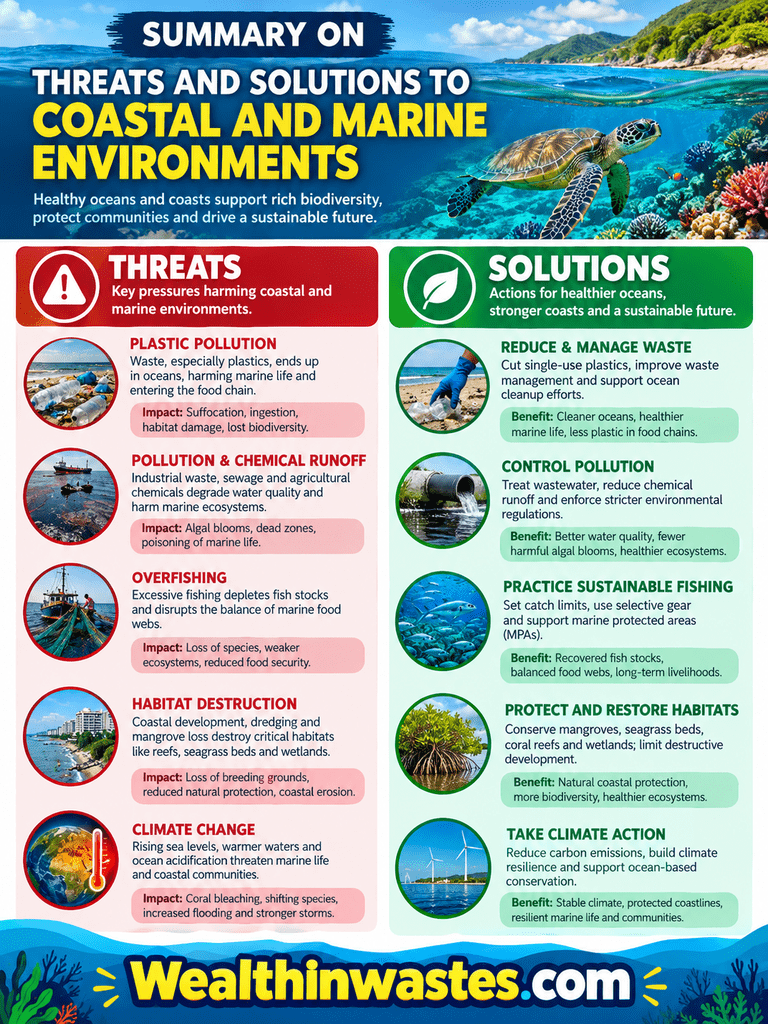
| Topic | Summary |
|---|---|
| Importance | Coastal and marine environments support food, livelihoods, biodiversity, tourism, transport, recreation, and natural protection. |
| Key Features | They have strong land-sea interactions, high biological productivity, ecological connectivity, and environmental sensitivity. |
| Human Pressure | Urbanization, agriculture, aquaculture, industry, tourism, extraction, and settlement expansion can damage coastal systems. |
| Population Growth | Population pressure can increase resource demand, although technology, institutions, markets, and local practices influence the final environmental outcome. |
| Pollution | Sewage, wastewater, oil, chemicals, nutrients, sediment, and solid waste can degrade marine and coastal ecosystems. |
| Governance | Common property systems need clear rules, monitoring, participation, conflict resolution, and effective institutions. |
| Protection | Habitat conservation, pollution prevention, wastewater treatment, waste reduction, recycling, and monitoring support sustainability. |
| Long-Term Goal | Coastal development should meet social and economic needs while maintaining ecosystem services and ecological resilience. |
Frequently Asked Questions About Coastal and Marine Environments: Threats and Solutions
1. What are coastal and marine environments?
They are interconnected land and ocean systems including beaches, estuaries, mangroves, wetlands, lagoons, shallow waters, offshore habitats, and other ecosystems influenced by marine processes.
2. Why are coastal environments important?
They provide food, employment, transportation, tourism opportunities, biodiversity, shoreline protection, recreation, water purification, and other ecosystem services that support human wellbeing.
3. How does population growth affect coastal areas?
Population growth can increase demand for land, food, water, housing, infrastructure, and natural resources, although institutions, technology, markets, and local practices influence environmental outcomes.
4. What are major pollution threats?
Major threats include untreated sewage, wastewater, agricultural runoff, industrial chemicals, oil spills, sediment, plastics, and other wastes that reach coastal and marine waters.
5. How can coastal habitats be protected?
Protection requires habitat conservation, pollution prevention, wastewater treatment, sustainable resource use, effective monitoring, environmental planning, community participation, and strong governance systems.
6. Why is coastal governance important?
Governance establishes rules for resource access, pollution control, monitoring, conflict resolution, conservation, and sustainable use of common coastal and marine resources.
7. What role does waste management play?
Effective waste management prevents pollutants from reaching rivers, wetlands, estuaries, beaches, and oceans while supporting cleaner communities, healthier ecosystems, and more efficient resource use.
8. Why is environmental monitoring necessary?
Monitoring helps identify changes in water quality, biodiversity, fish stocks, pollution levels, and ecosystem conditions, allowing managers to respond before environmental damage becomes severe.
Do you have any questions, suggestions, or contributions? If so, please feel free to use the comment box below to share your thoughts. We also encourage you to kindly share this information with others who might benefit from it. Since we can’t reach everyone at once, we truly appreciate your help in spreading the word. Thank you very much for your support and for sharing!
Read Also: Agriculture and the Natural Environment in Nigeria