


Hazardous substances contain chemical or physical properties that can cause illness, death, ecological damage, or other harmful effects when people mishandle them or release them into the environment.
When hazardous substances enter the environment, they can reduce air and water quality while also disturbing soil functions that support plants, microorganisms, animals, agriculture, and natural ecosystem processes.
Soil receives contaminants through industrial discharge, waste disposal, mining, oil spills, pesticides, contaminated wastewater, atmospheric deposition, and accidental releases from chemical handling and storage operations.
The severity of contamination depends on the pollutant involved, its concentration, persistence, mobility, soil characteristics, climate, and the length of time the substance remains within the affected environment.
Understanding the effects of hazardous substances on soil helps farmers, industries, communities, and environmental managers identify contamination early, protect soil productivity, and reduce risks to food and groundwater.
What Makes Hazardous Substances Harmful to Soil
1. Toxicity: Toxic substances can damage soil organisms, plant roots, and biochemical processes when concentrations become high enough to interfere with normal biological functions within the soil ecosystem.
2. Persistence: Some hazardous chemicals remain in soil for long periods because environmental processes cannot quickly break them into harmless compounds, allowing contamination to continue affecting soil organisms and plants.
3. Mobility: Mobile contaminants can move through soil pores with water, spreading beyond the original release point and increasing the possibility of groundwater contamination or wider agricultural damage.
Soil contamination often develops after hazardous wastes, chemicals, petroleum products, pesticides, or contaminated effluents enter land without adequate containment, treatment, monitoring, or responsible disposal practices.
The nature of the soil strongly influences contamination because clay content, organic matter, texture, drainage, and pH determine how strongly contaminants bind, move, persist, or become biologically available.
Detailed discussions of contamination sources also explain how improper waste disposal on land can introduce hazardous materials into soil and create longer-term environmental problems.
Read Also: Effects of Hazardous Substances on Water and Aquatic Life
Heavy Metals and Soil Quality
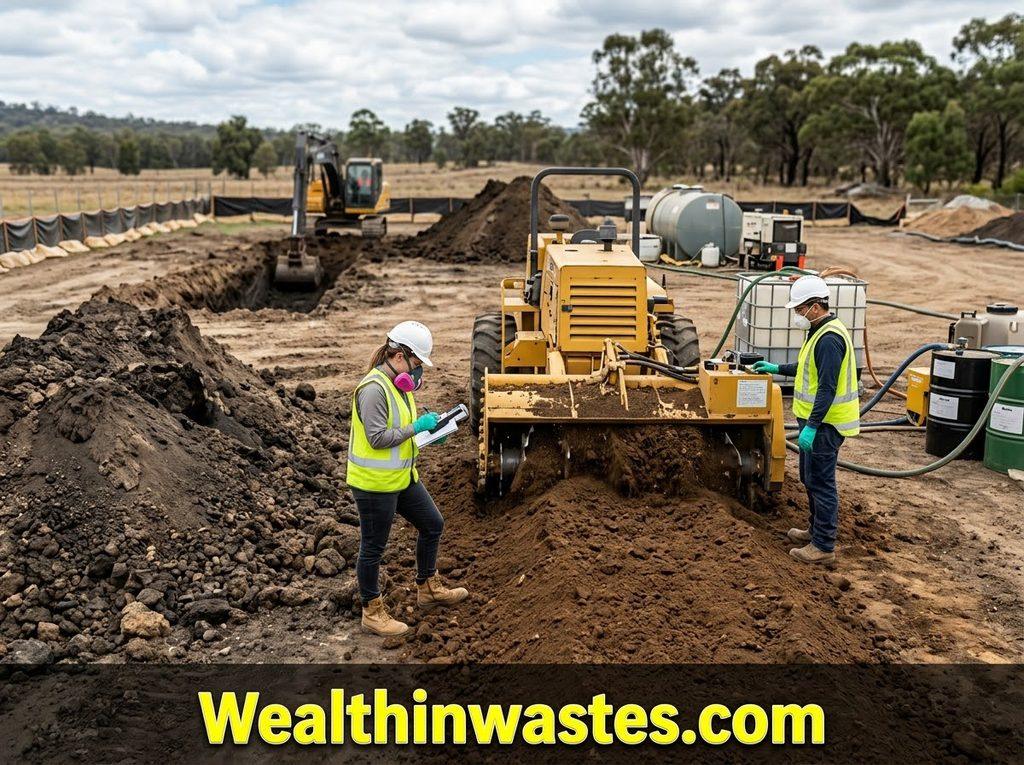
1. Metal Accumulation: Lead, cadmium, mercury, chromium, copper, and zinc can accumulate in contaminated soils when repeated releases increase their concentrations beyond levels that soil ecosystems can safely tolerate.
2. Reduced Soil Function: Excessive metal concentrations can interfere with nutrient cycling, enzyme activity, microbial growth, root development, and other biological processes that maintain healthy and productive soils.
3. Food-Chain Transfer: Plants can absorb certain metals from contaminated soils, creating opportunities for contaminants to enter crops, livestock, wildlife, and eventually humans through connected food chains.
Heavy metals do not all behave identically because their mobility and biological availability depend on chemical form, concentration, soil reactions, organic matter, clay minerals, and environmental conditions.
Soils affected by mining, industrial activities, petroleum operations, waste disposal, or repeated chemical application may develop elevated metal concentrations that reduce productivity and increase ecological exposure risks.
Information on soil degradation and mineral-resource management shows why chemical deterioration can reduce soil resilience and weaken its ability to provide productive agricultural and environmental functions.
Hazardous Chemicals Alter Soil Properties
1.Changes in pH: Certain hazardous substances can alter soil acidity or alkalinity, affecting nutrient availability, microbial activity, chemical reactions, and the behavior of other contaminants present within the soil.
2. Loss of Organic Matter: Pollution can disrupt decomposition processes and microbial communities, reducing the biological activity required to maintain organic matter, nutrient cycling, aggregation, and soil fertility.
3. Structural Changes: Toxic substances can alter aggregation, pore conditions, water movement, and surface characteristics, making some contaminated soils less suitable for root growth and agricultural production.
Hazardous chemicals can interact with clay minerals and organic matter, causing contaminants to become strongly bound or remain dissolved, depending on their chemical characteristics and environmental conditions.
Soil moisture also matters because water can transport soluble contaminants through pores, while dry conditions may increase adsorption for some substances and change their environmental behavior.
Studies of pesticide movement through soil demonstrate how adsorption, moisture, soil texture, and organic matter influence whether chemicals remain near the surface or move deeper.
Effects on Soil Microorganisms
1. Reduced Microbial Numbers: Toxic contaminants can reduce the abundance of sensitive bacteria, fungi, and other microorganisms that perform essential functions within healthy and productive soil ecosystems.
2. Lower Microbial Diversity: Hazardous substances may eliminate sensitive species while allowing tolerant organisms to dominate, changing community composition and weakening important biological interactions within contaminated soils.
3. Enzyme Inhibition: Heavy metals and other pollutants can interfere with enzymes responsible for decomposition, nutrient release, energy transformation, and other biochemical processes required for functioning soils.
Microorganisms drive decomposition and nutrient cycling, so their decline can reduce the soil’s capacity to transform organic materials and release nutrients needed by growing plants.
Contamination can therefore affect nitrogen, phosphorus, carbon, and sulfur cycling, creating changes that may not appear immediately but can gradually reduce soil biological quality.
Research concerning toxic effects of solid waste on soil organisms further demonstrates how harmful materials can disturb microbial populations and normal soil ecological processes.
Damage to Plants and Crop Yield
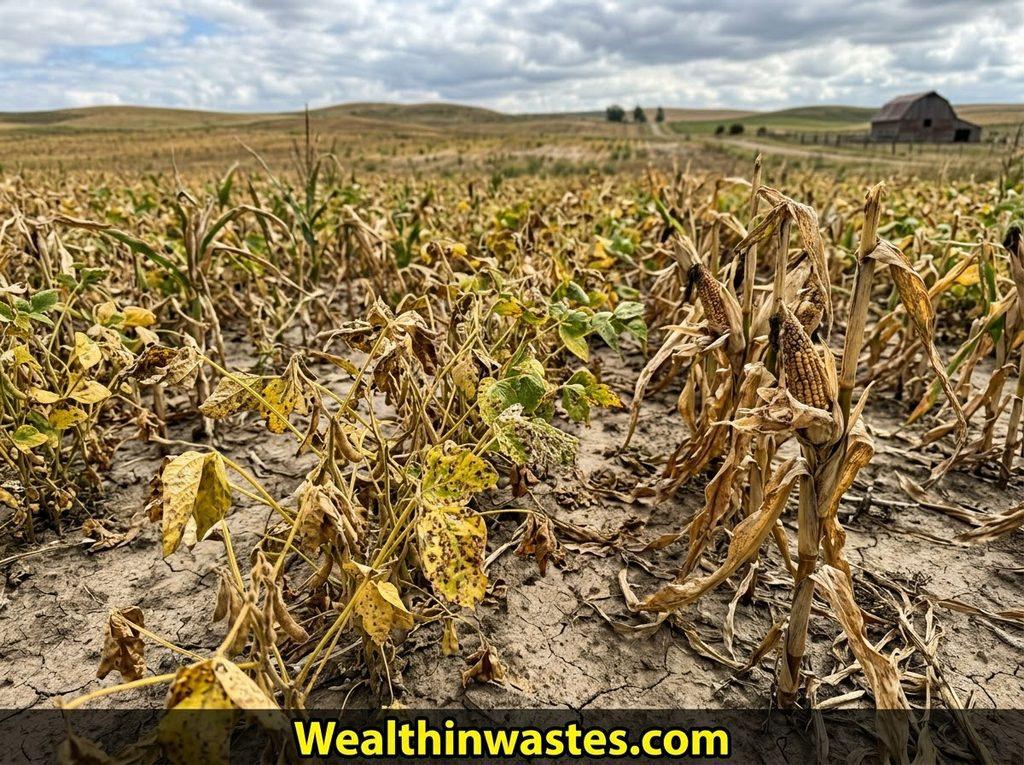
1. Poor Germination: Hazardous contaminants can interfere with seed germination when toxic concentrations disrupt water uptake, cellular activity, nutrient availability, or early root development in sensitive crops.
2. Root Damage: Polluted soils can injure roots directly, restrict nutrient absorption, alter root metabolism, and reduce the plant’s ability to obtain adequate water and essential minerals.
3. Reduced Yield: Contamination may reduce plant growth, leaf development, flowering, fruit formation, and final harvest quality, especially when pollutants persist within the active root zone.
Some contaminants also interfere with photosynthesis and nutrient metabolism, causing chlorosis, stunted growth, premature leaf damage, or visible stress symptoms under severe exposure conditions.
Plants growing on contaminated land may accumulate certain pollutants in edible tissues, creating concerns for food safety where contaminated crops enter household, livestock, or commercial food systems.
Guidance on safer soil fertility management for crop production highlights the importance of balanced nutrient management and reducing practices that create unnecessary environmental contamination.
Movement Through Soil and Water
1. Leaching: Soluble hazardous substances can move downward with infiltrating water, carrying contaminants from surface soil into deeper layers and potentially reaching underground water resources.
2.Runoff: Rainfall can transport pollutants across the soil surface into streams, drainage channels, ponds, and other receiving environments, extending contamination beyond the original site.
3. Groundwater Risk: Persistent mobile contaminants can migrate beyond the root zone and enter groundwater, creating difficult and expensive environmental problems that may affect drinking and irrigation supplies.
The risk of movement depends on soil texture, permeability, rainfall, drainage, pollutant solubility, adsorption strength, groundwater depth, and the amount of contaminant introduced into the environment.
Improperly managed waste sites present particular risks because contaminated liquids can move through surrounding soils and carry hazardous chemicals into groundwater beneath and beyond disposal areas.
Information about groundwater pollution sources and management explains why controlling contamination before pollutants reach underground water remains more practical than expensive cleanup after widespread migration.
Long-Term Agricultural and Environmental Consequences
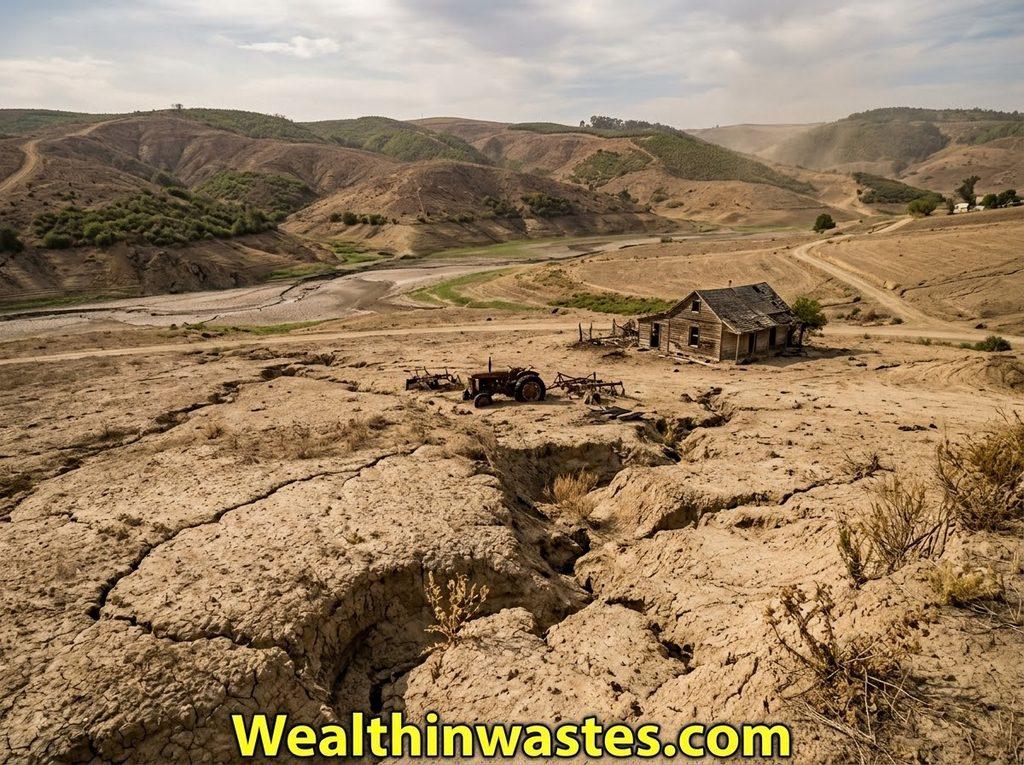
1. Lower Soil Productivity: Persistent contamination can reduce fertility by disturbing nutrient cycling, microbial activity, root development, soil structure, and the biological processes that support crop production.
2. Vegetation Loss: Severe contamination can kill grasses, crops, shrubs, and trees, leaving exposed ground vulnerable to erosion, drying, surface runoff, and further physical degradation.
3. Biodiversity Decline: Polluted soils can reduce sensitive organisms and plants, alter habitat conditions, disrupt food relationships, and gradually decrease biological diversity across affected terrestrial ecosystems.
Farmers may face lower harvests, higher restoration expenses, reduced land value, and greater dependence on external inputs when hazardous contamination significantly reduces natural soil productivity.
Persistent contamination may also restrict future land uses when polluted sites require monitoring, controlled access, remediation, or restrictions on agriculture, housing, construction, or recreational activities.
Articles discussing environmental factors for safe waste-disposal site selection show how soil, groundwater, geology, drainage, and surrounding ecosystems influence contamination risks.
Preventing Hazardous Soil Contamination
1. Responsible Waste Handling: Industries, farms, institutions, and households should identify hazardous materials and use approved storage, transport, treatment, recovery, and disposal procedures.
2. Proper Pesticide Management: Users should follow product instructions, avoid unnecessary applications, prevent spills, and handle contaminated containers and leftover products through appropriate waste-management systems.
3. Pollution Monitoring: Regular soil testing can identify chemical changes early, track contaminant concentrations, determine affected areas, and support informed decisions about agricultural and environmental management.
Preventing contamination also requires reducing unnecessary waste generation, maintaining secure chemical storage areas, repairing leaks quickly, and separating hazardous materials from ordinary municipal waste.
Where pesticide wastes require disposal, appropriate pesticide-container disposal practices can reduce the possibility of chemical residues entering agricultural soils, groundwater, and surface water.
Waste prevention remains especially important because reducing the quantity of hazardous materials entering disposal systems also reduces the likelihood of accidental releases, leachate formation, and contaminated sites.
Restoring Soil After Hazardous Pollution
1. Remove Contaminated Material: Excavation may provide a practical option where contamination affects relatively small areas and pollutant concentrations create unacceptable risks to people, plants, or ecosystems.
2.Immobilize Pollutants: Some remediation approaches reduce contaminant mobility by changing soil chemistry or binding pollutants more strongly, thereby limiting movement and biological exposure within affected soil.
3. Support Biological Recovery: Improving soil organic matter, vegetation, microbial activity, and other biological conditions can support gradual recovery after the major contamination source receives proper control.
Remediation should begin with accurate site assessment because different contaminants require different responses, and treatment decisions must consider pollutant concentration, depth, mobility, soil properties, and intended land use.
Environmental sampling provides essential information for identifying contamination patterns, confirming pollutant concentrations, and determining whether remediation has reduced risks to acceptable levels.
Guidance on representative soil and environmental sampling emphasizes careful collection methods because poor sampling can produce misleading results and weaken decisions about contaminated-site management.
Read Also: General Impact of Wastes on Environment
Managing Hazardous Chemicals for Safer Soil
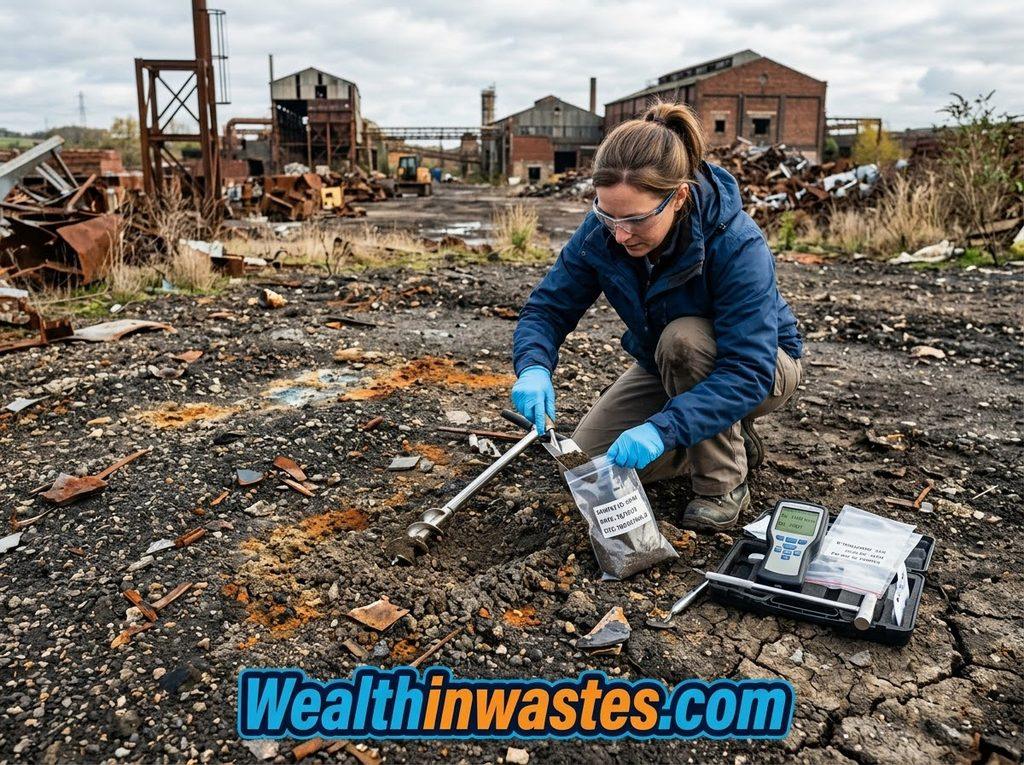
Hazardous chemical control should begin before contamination occurs because prevention usually protects soil more effectively than attempting to restore severely polluted land after contaminants spread through the environment.
Industries should maintain containment systems, inspect storage facilities, control wastewater releases, train workers, and establish emergency procedures that limit chemical spills and accidental discharges.
A useful waste-reduction approach can lower the volume of hazardous materials requiring storage, transportation, treatment, or final disposal while also reducing environmental exposure opportunities.
Organizations should also assess hazardous wastes before selecting disposal facilities, since unsuitable locations may increase the probability of leachate migration and contamination of surrounding land or groundwater.
Properly designed landfills can reduce uncontrolled releases through containment and monitoring, although poor management may still allow contaminated liquids and gases to escape into surrounding environmental media.
Modern discussions of landfill classification and environmental management emphasize suitable containment, leachate control, monitoring, drainage, and long-term maintenance for reducing pollution risks.
Communities can also reduce contamination by preventing illegal dumping, reporting chemical spills, supporting responsible recycling, and educating residents about the dangers associated with hazardous substances.
Effective institutional pollution-control systems help coordinate regulation, monitoring, enforcement, environmental protection, and public health responsibilities across government agencies and other responsible organizations.
Pollution monitoring remains essential after prevention measures because changing contaminant concentrations can reveal new releases, identify persistent hotspots, and guide corrective action before contamination spreads further.
Methods that support pollutant and contaminant monitoring can help environmental managers evaluate chemical hazards and understand whether contamination affects soil, water, plants, animals, or nearby communities.
Hazardous substances can also reach soil through industrial effluents, petroleum activities, chemical processing, contaminated wastewater, and poorly controlled waste streams from manufacturing and commercial operations.
Evidence concerning industrial effluent impacts shows that chemicals, salts, chromium compounds, oils, and other contaminants can affect soil quality alongside groundwater, livestock, aquatic systems, and communities.
The broader problem requires understanding pollution sources because industrial activities, agriculture, transportation, waste disposal, and urban growth can release substances capable of contaminating several environmental media.
Resources explaining major pollution sources and environmental pathways show why pollution prevention must address both the original source and the ways contaminants move afterward.
Certain chemical wastes can directly hinder plant development after entering soil, making proper handling particularly important in agricultural areas where contaminated land may otherwise support food production.
Information on chemical-waste contamination effects highlights the potential for toxic chemicals to pollute soil, restrict plant growth, contaminate water, and create wider ecological problems.
Pesticide persistence also deserves attention because chemicals that remain active for extended periods can expose soil organisms and plants repeatedly, especially after frequent applications or unsuitable management.
Research on factors affecting pesticide degradation in soil explains how soil composition, pH, microbial activity, chemical properties, moisture, and climate influence pesticide persistence.
Oil spills present another important hazard because petroleum compounds can coat soil particles, restrict water movement, affect microorganisms, damage vegetation, and reduce the productive capacity of agricultural land.
Information about oil pollution and its environmental effects describes how petroleum can penetrate soil and interfere with soil water availability, vegetation, organisms, and land usability.
Hazardous contaminants can also alter biological relationships within soil ecosystems because changes in microorganisms, plants, decomposers, and soil fauna can influence wider terrestrial biodiversity.
Research on environmental factors affecting biodiversity demonstrates why pollution should be considered alongside soil conditions, habitat quality, agricultural activities, climate, and other environmental pressures.
Another important consideration involves waste collection and treatment because uncontrolled waste accumulation can increase contamination opportunities while proper management reduces contact between hazardous materials and surrounding soil.
The environmental consequences of poorly managed waste become clearer through discussions of solid-waste management problems, including soil pollution, groundwater contamination, weak enforcement, and inadequate disposal systems.
Ultimately, preventing hazardous substances from reaching soil remains more sustainable than depending entirely on remediation after contamination occurs. Safe handling, monitoring, enforcement, treatment, and public education must work together.
Summary on Effects of Hazardous Substances on Soil and Plant Life
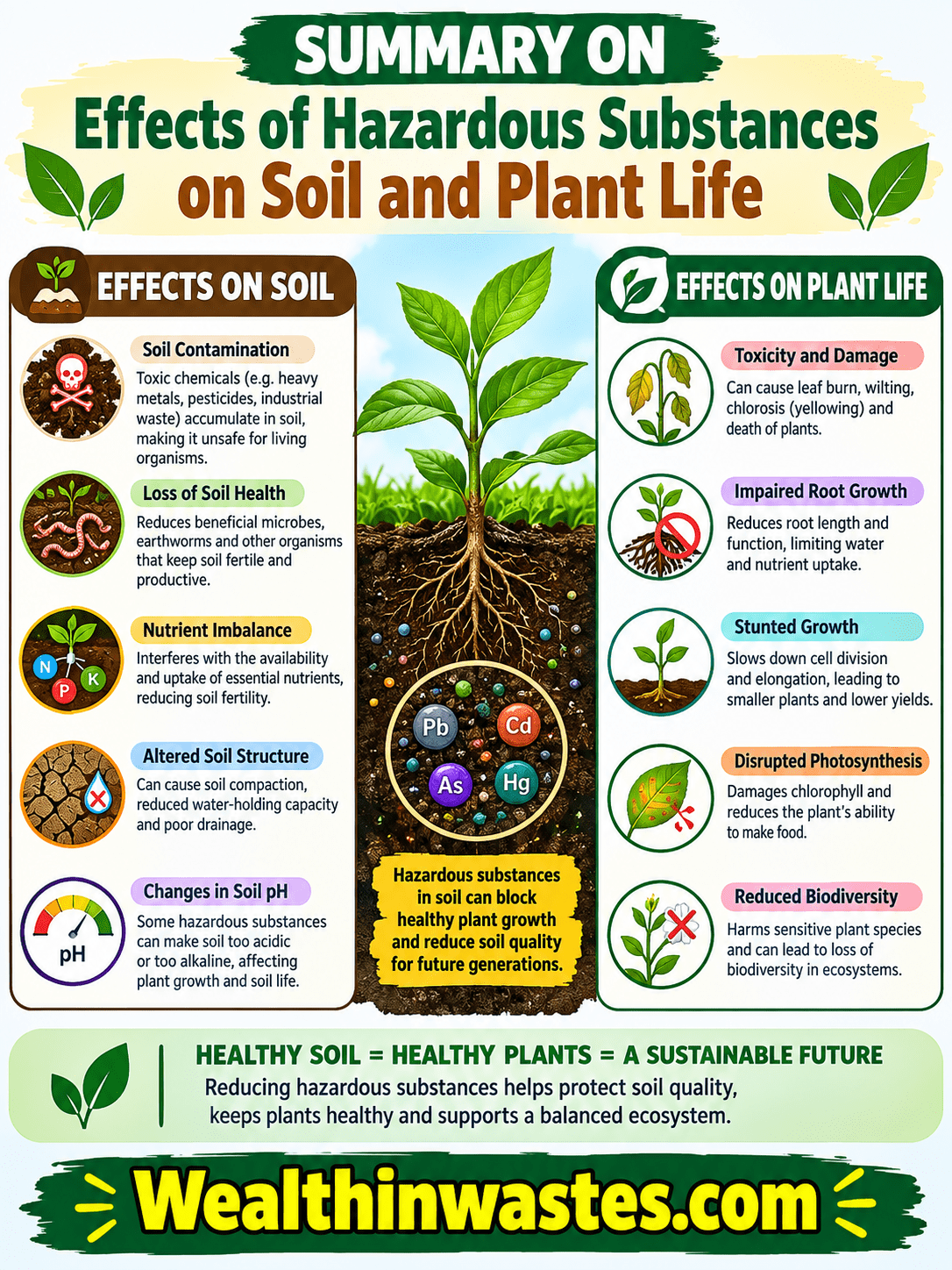
| Area | Major Effect | Possible Consequence |
|---|---|---|
| Heavy Metals | Metal accumulation and toxicity | Reduced soil and plant health |
| Soil Properties | Changes in pH, structure, and chemistry | Poor nutrient availability and water movement |
| Microorganisms | Reduced abundance and diversity | Lower nutrient cycling and enzyme activity |
| Plants | Root damage and poor growth | Reduced crop yield and quality |
| Groundwater | Leaching of mobile contaminants | Water contamination |
| Agricultural Land | Declining soil productivity | Higher production and restoration costs |
| Ecosystems | Vegetation and biodiversity losses | Habitat degradation and ecological imbalance |
| Prevention | Safe storage, disposal, and monitoring | Lower contamination risk |
| Restoration | Containment, removal, and biological recovery | Improved soil safety and function |
Frequently Asked Questions About Effects of Hazardous Substances on Soil and Plant Life
1. What are hazardous substances?
Hazardous substances are materials with chemical, physical, or biological properties that can harm humans, animals, plants, soil, water, or other environmental components.
2. How do hazardous substances affect soil?
They can change soil chemistry, reduce microbial activity, increase heavy-metal concentrations, damage roots, reduce fertility, and contaminate groundwater through leaching.
3. Which hazardous substances commonly contaminate soil?
Common contaminants include heavy metals, petroleum compounds, pesticides, industrial chemicals, contaminated wastewater, solvents, radioactive materials, and hazardous waste residues.
4. Can contaminated soil affect plants?
Yes. Contaminated soil can reduce germination, damage roots, restrict nutrient uptake, cause visible stress symptoms, reduce growth, and lower crop yields.
5. Can hazardous substances reach groundwater?
Yes. Soluble and mobile contaminants can move downward through soil with infiltrating water and eventually reach groundwater beneath contaminated areas.
6. How can soil contamination be prevented?
Prevention requires proper chemical storage, responsible waste disposal, pesticide management, spill control, pollution monitoring, regulatory enforcement, and public environmental education.
7. Can polluted soil be restored?
Yes. Depending on contamination type and severity, restoration may involve removing polluted soil, immobilizing contaminants, improving soil conditions, and supporting biological recovery.
8. Why are soil microorganisms important during contamination assessment?
Microorganisms support decomposition and nutrient cycling, so changes in their abundance, diversity, or activity can indicate important biological effects of soil contamination.
9. What factors determine contaminant movement in soil?
Important factors include soil texture, clay content, organic matter, pH, moisture, drainage, pollutant solubility, chemical persistence, and groundwater conditions.
10. Why should hazardous soil pollution receive early attention?
Early action can prevent contaminants from spreading, protect crops and ecosystems, reduce groundwater risks, lower remediation costs, and preserve the productive value of affected land.
Do you have any questions, suggestions, or contributions? If so, please feel free to use the comment box below to share your thoughts. We also encourage you to kindly share this information with others who might benefit from it. Since we can’t reach everyone at once, we truly appreciate your help in spreading the word. Thank you very much for your support and for sharing!
Read Also: Soil Fertility Management for Safer Tomato Production