


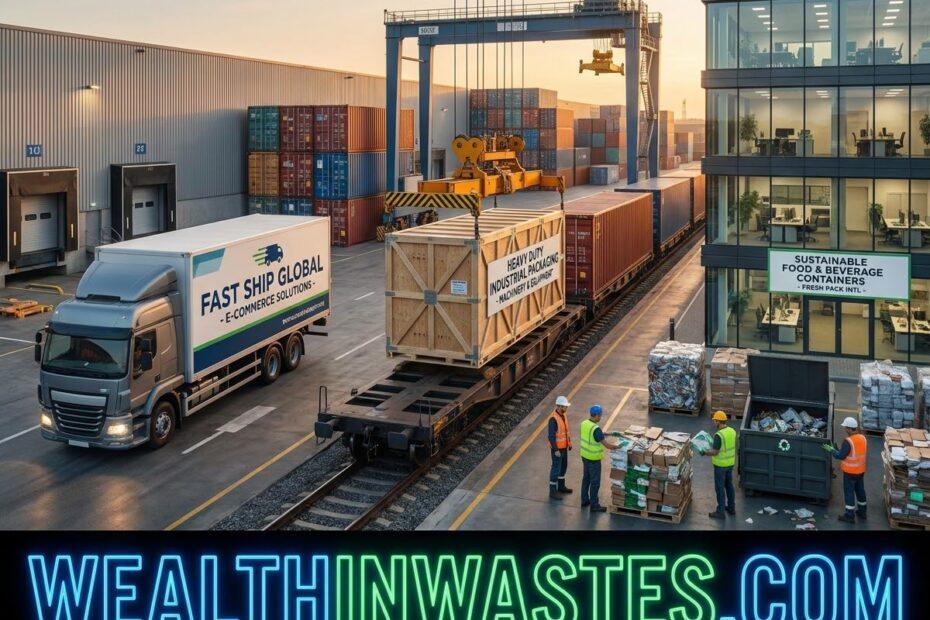
Across the global economy, packaging connects manufacturers, retailers, transport providers and consumers. It protects goods from damage, supports storage and handling, and helps products reach markets with their quality intact.
Although consumers often notice only the box, bottle, pouch or label, packaging depends on material science, engineering, design, quality control and large-scale manufacturing. Packaging corporations coordinate these disciplines for different industries.
Food producers require hygienic containers that maintain freshness, while pharmaceutical companies need packaging that protects medicines from contamination, moisture and other harmful conditions. Manufacturers also depend on reliable packaging for storage and transportation.
Beyond product protection, packaging influences purchasing decisions, brand recognition, distribution costs and customer satisfaction. Well-designed packages make handling easier, communicate important information and help businesses compete in increasingly demanding markets.
However, packaging creates environmental challenges when companies use excessive materials or consumers discard containers without suitable recovery systems. Modern packaging corporations must therefore balance product protection, commercial efficiency, affordability and sustainability.

What Packaging Corporations Do for Modern Commerce
Packaging corporations design, manufacture and supply containers, cartons, bottles, flexible films, protective inserts and other materials that businesses need. Their work supports waste minimisation and source reduction when companies use materials efficiently.
Product protection remains one of their most important responsibilities. Suitable packaging reduces breakage, leakage, contamination and deterioration during handling, storage and transportation, helping businesses maintain product quality and avoid unnecessary financial losses.
Packaging corporations also provide labels, instructions, safety warnings and product information. These features help customers identify goods, understand correct usage, follow storage guidance and make informed purchasing decisions in shops and online marketplaces.
Their activities contribute to a wider waste management system because packaging influences the volume, composition and recoverability of discarded materials. Better designs can prevent avoidable waste and improve material collection after use.
Packaging corporations also support employment through manufacturing, printing, engineering, warehousing, transportation and recycling. These interconnected activities create commercial opportunities for suppliers, small businesses, logistics operators and workers across different parts of the economy.
Read Also: Role and Importance of Packaging Corporations
Global Packaging Corporations and Their Specialties
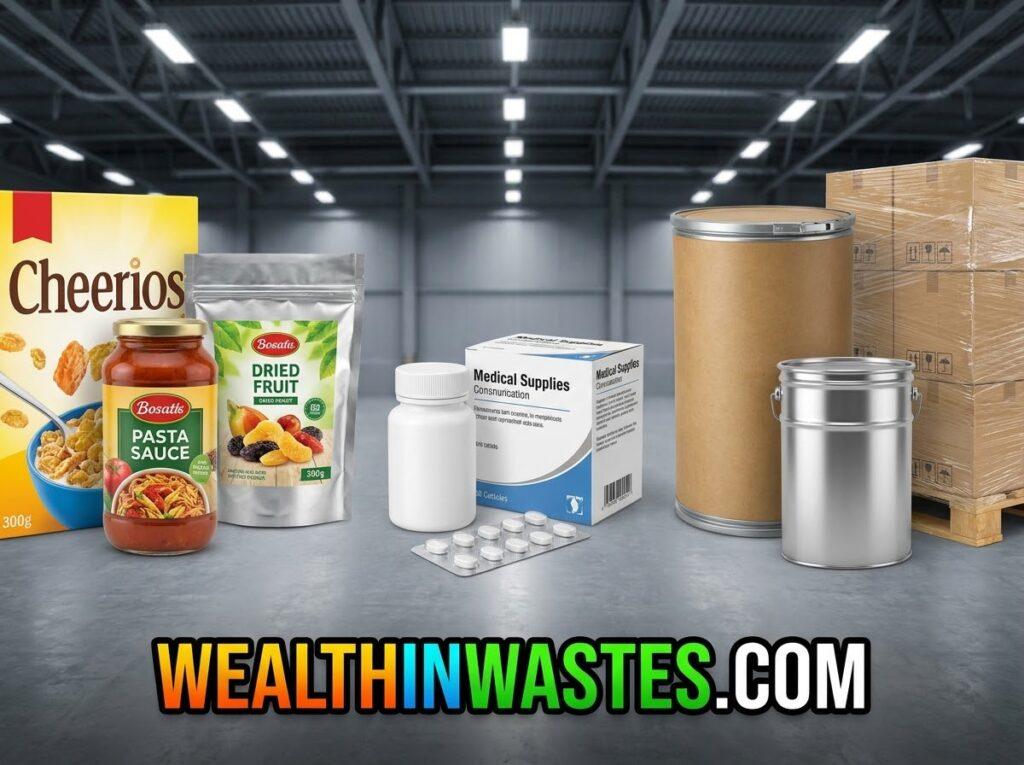
Large packaging corporations serve different markets according to their materials, manufacturing capabilities and technical expertise. Understanding their specialities helps businesses identify suppliers that match their product requirements, budgets and environmental objectives.
1. Amcor: Amcor supplies flexible and rigid packaging solutions for food, beverages, healthcare and personal care products. Following its 2025 merger with Berry Global, the company combines extensive packaging capabilities with international manufacturing and material expertise.
2. Ardagh Group: Ardagh Group focuses on glass and metal packaging for beverages, food and other consumer products. Its containers offer protective barriers, distinctive presentation and opportunities for recycling where suitable collection and processing facilities exist.
3. Berlin Packaging: Berlin Packaging supplies containers, closures, dispensing systems and related packaging components. Its product range serves industries such as cosmetics, food, beverages and healthcare, helping customers source packaging products that meet specific functional requirements.
4. Novolex and Bagcraft: Novolex provides packaging products for foodservice, retail and other markets, including paper-based products through its Bagcraft brand. These solutions support restaurants, bakeries, supermarkets and food processors requiring practical packaging formats.
5. Ball Corporation: Ball Corporation specialises in aluminium beverage packaging, including cans and bottles. Its lightweight metal containers support product protection and established recycling systems, although actual recovery rates depend on collection infrastructure and consumer participation.
These companies illustrate the diversity of modern packaging manufacturing. Businesses comparing suppliers should examine technical capabilities, material suitability, delivery reliability and the advantages of waste recycling when assessing long-term commercial and environmental performance.
Packaging Materials and Manufacturing Innovation
Packaging corporations select materials according to product characteristics, protection requirements, production costs and disposal options. Material innovation helps manufacturers improve durability, reduce weight, maintain product quality and develop packages suited to changing consumer expectations.
1. Paper and Cardboard: Paper and cardboard provide versatile options for cartons, shipping boxes, sleeves and protective inserts. Manufacturers can improve resource efficiency by incorporating suitable recovered fibres and following the steps involved in paper recycling when processing discarded paper materials.
2. Glass: Glass containers are common in food, beverage, pharmaceutical and cosmetic packaging. Glass can retain its material properties through repeated recycling, provided suitable collection and processing systems exist. The glass recycling process helps turn used containers into new products.
3. Plastics: Plastics provide flexibility, durability and moisture resistance, making them useful for pouches, bottles, trays and protective films. Manufacturers can also explore converting plastic waste into packaging materials where the polymer type and intended application allow safe and technically suitable reuse.
4. Metals: Aluminium and steel provide strength and barriers against light, oxygen and other external influences. Metal packaging can support food preservation and beverage distribution while offering recycling opportunities when collection systems recover the material efficiently.
5. Advanced Materials: Specialised coatings, barrier films, protective foams and improved polymer formulations can enhance packaging performance. Manufacturers must assess their effects on recyclability, safety and disposal instead of assuming that every advanced material automatically offers environmental benefits.
Food, Pharmaceutical and Industrial Packaging
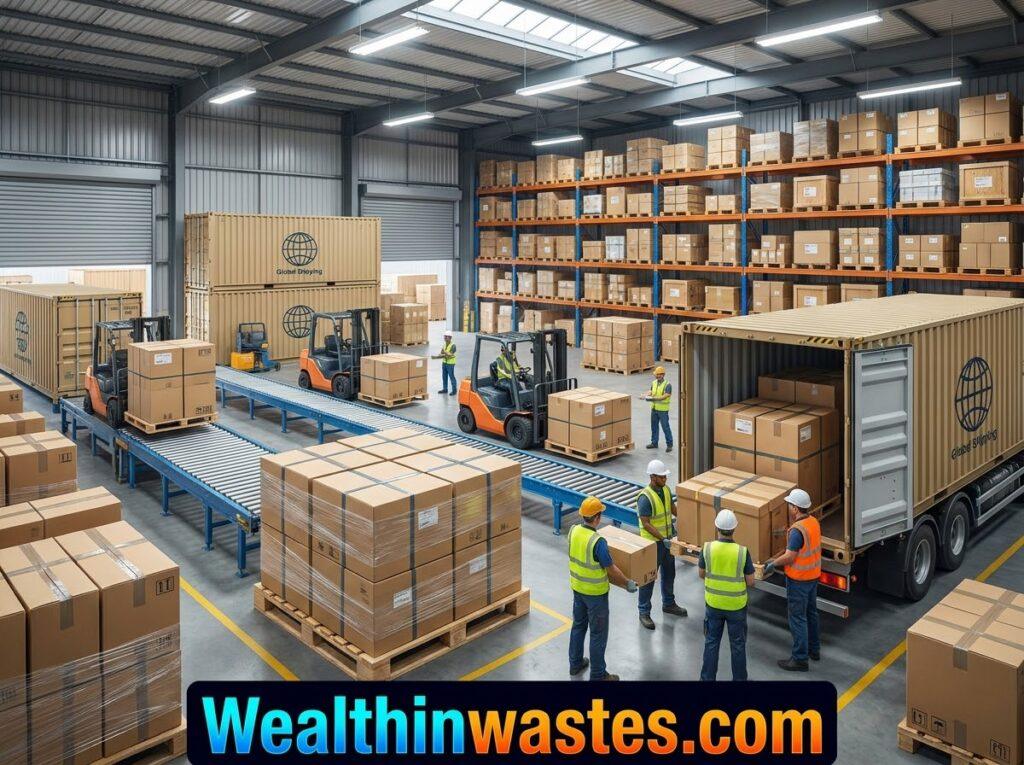
Different industries require packaging that responds to particular safety, storage and transportation challenges. Packaging corporations therefore customise materials, dimensions, closures and protective features to preserve products and support reliable distribution.
Food packaging protects products from contamination, moisture, oxygen, physical damage and other conditions that may affect freshness. Fresh produce often needs ventilation and careful moisture management, while processed foods may require stronger barriers and secure closures.
Pharmaceutical packaging requires particular attention to hygiene, material compatibility and product integrity. Depending on the medicine, manufacturers may need tamper-evident seals, child-resistant closures, light protection or moisture barriers that preserve quality throughout storage and distribution.
Industrial packaging supports the movement of chemicals, machine components, building materials and other goods. Strong drums, crates, containers and protective inserts help prevent damage, reduce handling risks and improve efficiency during warehousing and long-distance transportation.
Packaging decisions must also account for correct disposal. Businesses should understand how to dispose of plastic waste properly and ensure that employees and customers receive clear guidance about materials that local recovery facilities accept.
For plastic containers, identifying the polymer and checking local recycling arrangements can prevent unsuitable materials from entering recovery streams. Information about which types of plastics can be recycled helps businesses make more informed packaging and disposal decisions.
How Packaging Strengthens Supply Chains
Efficient packaging supports supply chains by helping goods move safely from manufacturers to warehouses, retailers and customers. Good designs improve stacking, simplify handling and reduce product losses throughout storage, transportation and distribution.
1. Better Space Utilisation: Packaging corporations develop suitable dimensions that reduce unnecessary empty space in boxes, pallets and transport containers. Efficient loading can help businesses improve storage capacity, organise warehouse operations and transport more products within available space.
2. Reduced Product Damage: Protective packaging limits the effects of vibration, compression, impact and moisture during transit. By choosing appropriate materials and cushioning, businesses can reduce damaged deliveries, replacement expenses, customer complaints and avoidable losses.
3. Improved Inventory Handling: Standardised package sizes, readable labels and clear identification help workers organise stock and monitor product movement. These features can support efficient warehouse management, more accurate inventory records and smoother order fulfilment.
4. Better Material Recovery: Businesses can improve resource use by planning packaging recovery alongside distribution. The integrated waste-management approach for corrugated boxes demonstrates how packaging decisions can incorporate source reduction, reuse, recycling and responsible disposal.
Companies can strengthen these benefits by monitoring transport damage, packaging expenses, storage performance and returned materials. They can also learn from the complete paper recycling process when establishing practical paper recovery arrangements.
Sustainable Packaging and Circular Design
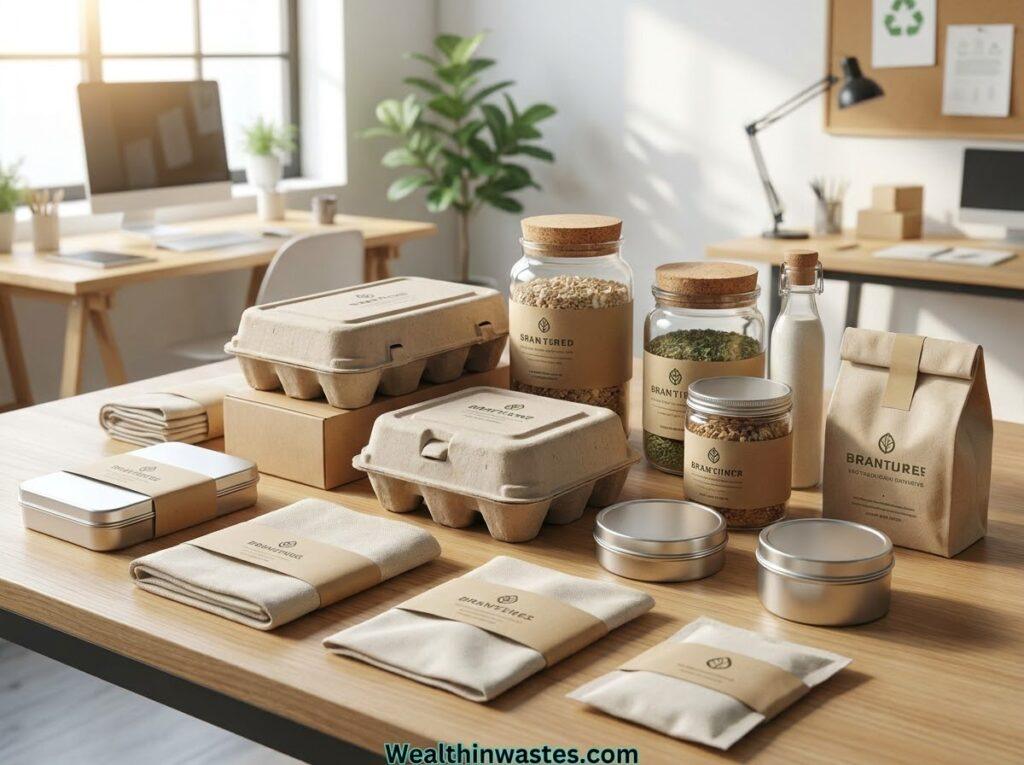
Sustainable packaging aims to protect products while reducing unnecessary material use, environmental damage and disposal difficulties. Packaging corporations can support this objective through careful design, recycled inputs, reusable containers and systems that recover valuable materials after use.
1. Source Reduction: Manufacturers should remove unnecessary layers, reduce excessive dimensions and select appropriate material thicknesses without compromising safety. The environmental management practices for reducing waste provide useful principles for reviewing material consumption.
2. Reuse Systems: Durable crates, transport boxes, pallets and suitable containers can serve repeated purposes when businesses establish effective return, cleaning and inspection systems. These arrangements support the reuse and recycling alternatives to waste management that conserve resources.
3. Recyclable Design: Packaging works better within recycling systems when manufacturers consider material separation and processing requirements from the design stage. Businesses can explore how recyclable product design supports waste management before introducing new containers or multi-material packages.
4. Recycled Content: Using suitable recycled materials can reduce demand for virgin resources. However, companies must assess material quality, product safety and applicable regulations, particularly where packaging directly contacts food, beverages, medicines or other sensitive products.
5. Responsible Plastic Use: Plastic packaging decisions should consider collection facilities, contamination and end-of-life options. Understanding the importance of plastic reuse and recycling helps companies identify practical ways to reduce unnecessary waste.
Businesses must also distinguish recyclable packaging from materials that their local facilities cannot process. Reviewing plastics that cannot be recycled through common systems helps prevent unsuitable materials from contaminating otherwise recoverable packaging waste.
How Businesses Can Choose Packaging Partners
Selecting a packaging corporation requires more than comparing prices. Businesses should examine product requirements, supplier reliability, material performance, customisation, production capacity and environmental commitments before entering agreements or changing existing packaging specifications.
1. Product Compatibility: Confirm that the supplier understands the product’s dimensions, weight, fragility, storage needs and safety requirements. Suitable packaging should protect the contents throughout normal handling, distribution and expected environmental conditions.
2. Quality and Reliability: Review product samples, manufacturing standards, defect rates and delivery performance. Consistent quality helps prevent damaged goods, unexpected production delays and additional expenses that may outweigh a supplier’s initially attractive prices.
3. Total Cost: Compare material prices alongside storage requirements, transportation expenses, product damage and disposal charges. Understanding the different systems of waste reduction can help companies identify savings beyond the purchase price.
4. Environmental Performance: Ask suppliers about material sourcing, recycled content, production waste and recovery options. Companies can also apply the principles behind waste reduction and household waste minimisation when establishing workplace packaging policies.
5. Technical Support: Choose suppliers who can recommend suitable materials, test packaging performance and adjust designs as business needs change. Effective communication supports continuous improvement, reliable supply and solutions that meet evolving market expectations.
Challenges and the Future of Packaging Corporations

Packaging corporations face several challenges, including fluctuating raw-material prices, changing customer preferences, supply disruptions and environmental concerns. Companies must balance commercial performance with product safety, affordability and responsible resource use.
Plastic pollution remains a major concern where packaging escapes collection and enters rivers, drainage channels and natural habitats. Understanding the environmental impact of plastic pollution reinforces the need for better design and disposal practices.
Recycling infrastructure also affects the results of sustainability initiatives. A package labelled recyclable may still enter general waste where suitable collection or processing facilities are unavailable, making local waste services essential to practical environmental progress.
Packaging manufacturers can respond through lighter designs, improved production efficiency, reusable formats and materials that suit established recycling systems. Such measures work best when businesses, consumers, waste collectors and manufacturers coordinate their responsibilities across the packaging lifecycle.
Future developments may include smarter tracking labels, improved barrier materials, refill systems and more efficient manufacturing technologies. The environmental effects of waste disposal also show why companies must evaluate the consequences of packaging choices beyond the factory gate.
Ultimately, packaging corporations can strengthen modern commerce when they combine dependable product protection with material efficiency and practical recovery options. Progress depends on measurable improvements rather than environmental claims unsupported by actual production and waste-management practices.
Read Also: Effects of Pollution on Fish, Algae, Zooplankton, Benthic Organisms, and Water Quality
Summary on How Packaging Corporations Drive Modern Commerce and Sustainability
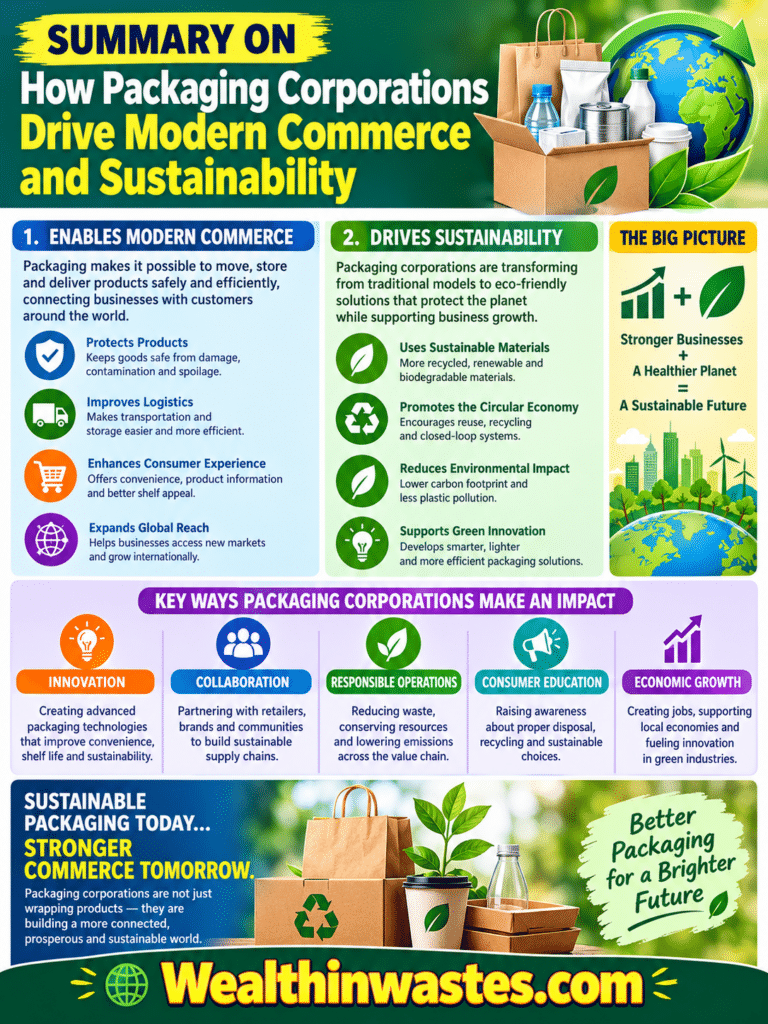
| Area | Summary |
|---|---|
| Definition | Packaging corporations design, manufacture and supply materials that protect and present products. |
| Modern Commerce | Packaging supports storage, transportation, product identification, branding and distribution. |
| Major Companies | Examples include Amcor, Ardagh Group, Berlin Packaging, Novolex and Ball Corporation. |
| Materials | Common options include paper, cardboard, plastics, glass, aluminium and steel. |
| Industry Applications | Food, pharmaceuticals, beverages, cosmetics, agriculture and industrial goods require different packaging solutions. |
| Supply Chains | Effective packaging reduces product damage, improves handling and supports efficient storage and delivery. |
| Sustainability | Source reduction, reuse, recyclable design and appropriate recycled content can improve resource efficiency. |
| Supplier Selection | Businesses should evaluate quality, product compatibility, price, reliability and environmental performance. |
| Future Priorities | Innovation should balance product safety, commercial performance and practical waste recovery. |
Frequently Asked Questions About Packaging Corporations Drive Modern Commerce Sustainably
1. What Do Packaging Corporations Do?
They design, manufacture, source and supply packaging that protects products, supports storage and transportation, communicates essential information and helps brands serve customers safely and efficiently.
2. Why Are Packaging Corporations Important?
They reduce product damage, support supply chains, improve branding, protect product quality and help businesses deliver goods to customers reliably across different markets and industries.
3. Which Materials Do Packaging Corporations Use?
They use paper, cardboard, plastics, glass, aluminium, steel and specialised materials. Selection depends on product safety, strength, cost, storage conditions and available recovery facilities.
4. How Do Packaging Corporations Support Sustainability?
They can reduce unnecessary materials, improve recyclability, use suitable recycled content, develop reusable systems and design packages that fit practical collection and recovery arrangements.
5. How Should Businesses Choose Packaging Corporations?
Businesses should compare product compatibility, material quality, production capacity, supplier reliability, total costs, customisation options and environmental performance before selecting packaging suppliers.
6. What Is the Main Challenge Facing Sustainable Packaging?
A major challenge is ensuring that packaging remains affordable and protective while reducing unnecessary waste. Collection facilities and recycling systems also determine whether materials recover successfully.
7. Can Packaging Corporations Help Reduce Plastic Waste?
Yes. They can reduce unnecessary plastic, design reusable or recyclable packages, improve material selection and support collection systems. Results depend on suitable infrastructure and responsible disposal.
Do you have any questions, suggestions, or contributions? If so, please feel free to use the comment box below to share your thoughts. We also encourage you to kindly share this information with others who might benefit from it. Since we can’t reach everyone at once, we truly appreciate your help in spreading the word. Thank you very much for your support and for sharing!
Read Also: Proper Farm Waste Management Guide