


Water is often seen as a symbol of life, purity, and renewal. From vast oceans to quiet streams, aquatic environments support an incredible diversity of living organisms. Beneath the surface, however, a silent crisis is unfolding. Pollution, in its many forms, is steadily altering the balance of these ecosystems, affecting not just one species but entire biological communities.
Unlike land pollution, which is often visible and immediate, water pollution operates in subtle yet devastating ways. It infiltrates food chains, disrupts biological processes, and weakens the natural resilience of aquatic organisms. From microscopic plankton to large fish species, no life form is immune to its effects.
Understanding how pollutants impact different components of aquatic ecosystems is essential for protecting both environmental health and human survival. This article explores in detail how pollution affects fish, algae, zooplankton, benthic organisms, and overall water quality, revealing the interconnected nature of aquatic life and the urgent need for responsible environmental conservation.
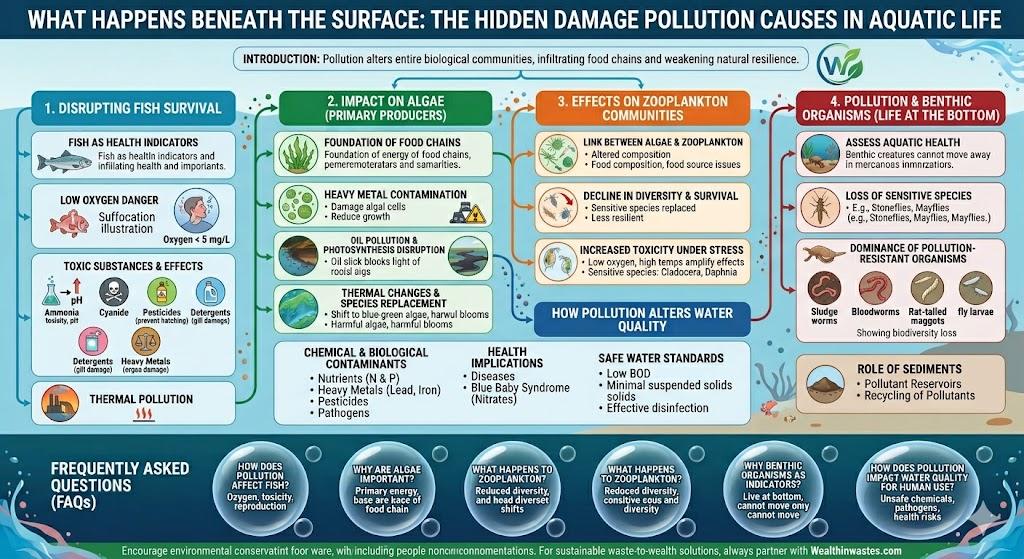
Table Summary on What Happens Beneath the Surface The Hidden Damage Pollution Causes in Aquatic Life
| Component | Key Impact of Pollution |
|---|---|
| Fish | Oxygen depletion, toxicity, reproductive failure |
| Algae | Growth inhibition or harmful overgrowth |
| Zooplankton | Reduced diversity and population shifts |
| Benthic Organisms | Loss of sensitive species, dominance of tolerant ones |
| Water Quality | Chemical imbalance, health risks, reduced usability |
| Sediments | Act as pollutant reservoirs and recycling sources |
| Ecosystem Balance | Disruption of food chains and biodiversity |
A. How Pollution Disrupts Fish Survival
1. Fish as Indicators of Environmental Health
Fish are among the most sensitive organisms in aquatic ecosystems, making them reliable indicators of environmental conditions. Their health reflects the state of their surroundings, particularly in terms of aquatic pollution and oxygen availability.
In natural conditions, fish can sometimes escape polluted zones. However, when contamination becomes widespread, escape is no longer possible, and entire populations may suffer.
2. The Danger of Low Oxygen Levels
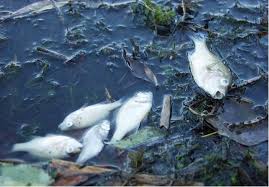
One of the most critical impacts of pollution is the reduction of dissolved oxygen in water. Organic waste increases microbial activity, which consumes oxygen and leaves fish struggling to survive.
Most fish species require at least 5 mg per liter of dissolved oxygen, although some can survive at lower levels. When oxygen drops too far, it leads to suffocation and large-scale fish deaths, a phenomenon often linked to poor water quality management.
3. Toxic Substances and Their Effects
Pollutants introduce harmful chemicals into water systems, many of which are directly toxic to fish:
- Ammonia toxicity increases with higher pH levels and can become lethal even at low concentrations
- Cyanide is extremely dangerous, causing rapid mortality even at minimal exposure
- Pesticides interfere with growth and reproduction, often preventing fish eggs from hatching
- Detergents damage gill tissues, impairing breathing
- Heavy metals such as mercury and lead cause respiratory distress and organ damage
These substances disrupt biological functions and contribute to declining fish populations.
4. Thermal Pollution and Its Consequences
Temperature changes caused by industrial discharge can have severe effects. Elevated temperatures reduce oxygen levels while simultaneously increasing the toxicity of pollutants.
Fish exposed to such conditions may lose their ability to hunt, reproduce, or resist disease, leading to long-term ecological imbalance.
B. The Impact of Pollution on Algae
1. Algae as Primary Producers
Algae form the foundation of aquatic food chains. Through photosynthesis, they produce energy that supports higher organisms. However, pollution significantly alters their growth patterns.
Exposure to heavy metal contamination can damage algal cells, reducing their ability to grow and reproduce. Even small concentrations of substances like copper and mercury can have devastating effects.
2. Oil Pollution and Photosynthesis Disruption
Oil spills and petroleum contamination interfere with light penetration in water. This disrupts photosynthesis, slowing down algal growth and reducing oxygen production.
In freshwater systems, certain algae species are more vulnerable, leading to imbalances that ripple through the entire ecosystem.
3. Thermal Changes and Species Replacement
Long term temperature increases can shift algal populations. Diatoms may be replaced by green algae, which are later overtaken by blue green algae.
These changes often result in harmful algal blooms, which further degrade ecosystem balance and can produce toxins harmful to both aquatic life and humans.
C. Effects of Pollution on Zooplankton Communities
1. The Link Between Algae and Zooplankton
Zooplankton depend on algae as their primary food source. When pollution alters algal composition, it directly impacts zooplankton populations.
Certain species cannot consume specific types of algae, leading to shifts in population dynamics and reduced biodiversity.
2. Decline in Diversity and Survival
Pollution reduces the diversity of zooplankton communities. Sensitive species are replaced by more tolerant ones, leading to less resilient ecosystems.
In extreme cases, protozoa dominate under low oxygen conditions, indicating severe environmental stress.
3. Increased Toxicity Under Stress Conditions
Several factors amplify the effects of pollutants on zooplankton:
- Low oxygen levels increase the toxicity of chemicals
- High temperatures intensify chemical reactions
- Heavy metals, especially copper, can be lethal
Species like Cladocera and Daphnia are particularly sensitive, making them vulnerable indicators of water contamination.
Read Also: Water Pollution Affecting Animals
D. Pollution and Its Effects on Benthic Organisms
1. Life at the Bottom of Aquatic Systems
Benthic organisms live at the bottom of water bodies and include insects, worms, and other invertebrates. Unlike fish, they cannot easily move away from polluted environments.
Because of this, they are widely used in studies to assess aquatic ecosystem health.
2. Loss of Sensitive Species
Pollution causes a gradual decline in sensitive species such as stoneflies and mayflies. These organisms require clean, oxygen-rich water to survive.
As pollution increases, they are replaced by more tolerant species, signaling environmental degradation.
3. Dominance of Pollution Resistant Organisms
In heavily polluted waters, only the most resilient organisms survive. These include:
- Sludge worms
- Bloodworms
- Rat tailed maggots
- Certain fly larvae
While these species can tolerate poor conditions, their dominance indicates severe ecological imbalance and declining biodiversity loss.
E. How Pollution Alters Water Quality
1. Understanding Water Quality Components
Water quality is determined by chemical, physical, and biological factors. These include dissolved gases, nutrients, temperature, turbidity, and living organisms.
Pollution disrupts all these components, making water unsafe for human use and harmful to aquatic life.
2. Chemical and Biological Contaminants
Common pollutants found in water include:
- Nutrients such as nitrogen and phosphorus
- Heavy metals like lead and iron
- Pesticides and industrial chemicals
- Pathogens including bacteria and viruses
These contaminants pose serious risks to both ecosystems and human health.
3. Health Implications of Poor Water Quality
Polluted water can lead to diseases and health complications. For example, high nitrate levels in drinking water can cause methemoglobinemia, a condition that affects oxygen transport in infants.
Pathogens such as bacteria and protozoa can survive in water for extended periods, increasing the risk of infection when consumed.
4. Standards for Safe Water Use
For water to be considered safe, it must meet specific criteria:
- Low biochemical oxygen demand
- Minimal suspended solids
- Effective disinfection to remove pathogens
Meeting these standards is essential for ensuring safe drinking water and maintaining overall public health safety.
F. The Role of Sediments in Pollution Dynamics
1. Sediments as Pollutant Reservoirs
Sediments at the bottom of water bodies act as storage sites for pollutants. Over time, they accumulate harmful substances such as heavy metals and organic chemicals.
2. Recycling of Pollutants
Under certain environmental conditions, these pollutants can be released back into the water. This recycling process prolongs contamination and complicates cleanup efforts.
Understanding this cycle is crucial for effective pollution control strategies.
Frequently Asked Questions on What Happens Beneath the Surface The Hidden Damage Pollution Causes in Aquatic Life
1. How does pollution affect fish in water bodies?
Pollution affects fish by reducing oxygen levels, introducing toxic chemicals, and disrupting reproduction. These factors can lead to illness, behavioral changes, and even mass death in severe cases.
2. Why are algae important in aquatic ecosystems?
Algae serve as primary producers, generating energy through photosynthesis. They form the base of the food chain, supporting zooplankton and other aquatic organisms.
3. What happens to zooplankton when water is polluted?
Pollution reduces zooplankton diversity and alters their population structure. Sensitive species disappear, while more tolerant organisms take their place, leading to ecological imbalance.
4. Why are benthic organisms used as indicators of pollution?
Benthic organisms live at the bottom and cannot escape polluted environments. Their presence or absence provides valuable information about the health of aquatic ecosystems.
5. How does pollution impact water quality for human use?
Pollution introduces harmful chemicals and pathogens into water, making it unsafe for drinking, irrigation, and industrial use. Poor water quality can also lead to serious health issues.
Pollution in aquatic environments is not just an environmental issue; it is a complex challenge that affects biodiversity, ecosystem stability, and human well-being. Each organism, from microscopic algae to large fish, plays a vital role in maintaining balance. When pollution disrupts one component, the effects ripple through the entire system.
Protecting our water bodies requires awareness, responsible practices, and a commitment to sustainable living. By understanding the depth of these impacts, we can take meaningful steps toward preserving aquatic life and ensuring a healthier future for all.
Do you have any questions, suggestions, or contributions? If so, please feel free to use the comment box below to share your thoughts. We also encourage you to kindly share this information with others who might benefit from it. Since we can’t reach everyone at once, we truly appreciate your help in spreading the word. Thank you very much for your support and for sharing!
Read Also: How to Grow Microgreens