


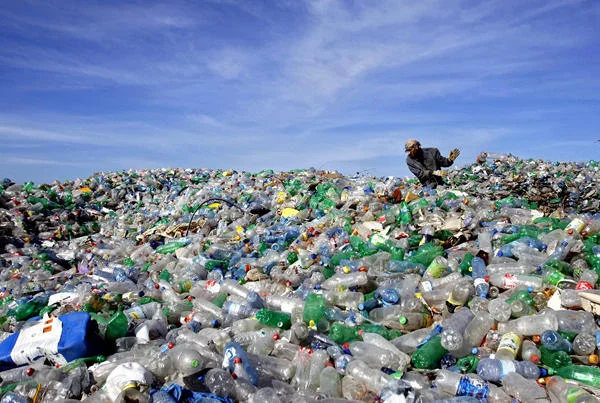
Recycling is the process of collecting used materials and processing them so they can be reused to create new products. Instead of allowing waste to accumulate in landfills or pollute our environment, recycling gives materials a second life. Among all recyclable materials, plastic remains one of the most important and urgent to address.
Plastic is widely used in modern society due to its durability, lightweight nature, and affordability. However, because it is non-biodegradable, plastic waste can remain in the environment for hundreds of years if not properly managed. Recycling plastic is therefore not just a helpful practice — it is a necessary solution for environmental sustainability, economic development, and global health.
This article explores in detail why plastic recycling is important, how it benefits the planet, and why individuals and governments must take it seriously.
What is Plastic Recycling?
Plastic recycling involves:
- Collecting plastic waste materials.
- Sorting and separating them based on type.
- Cleaning and processing them.
- Converting them into raw materials.
- Manufacturing new products from the recycled material.
Rather than producing new plastic from petroleum and natural gas, recycling allows existing plastic to be reused, saving energy and resources.
Why Plastic Recycling is Important
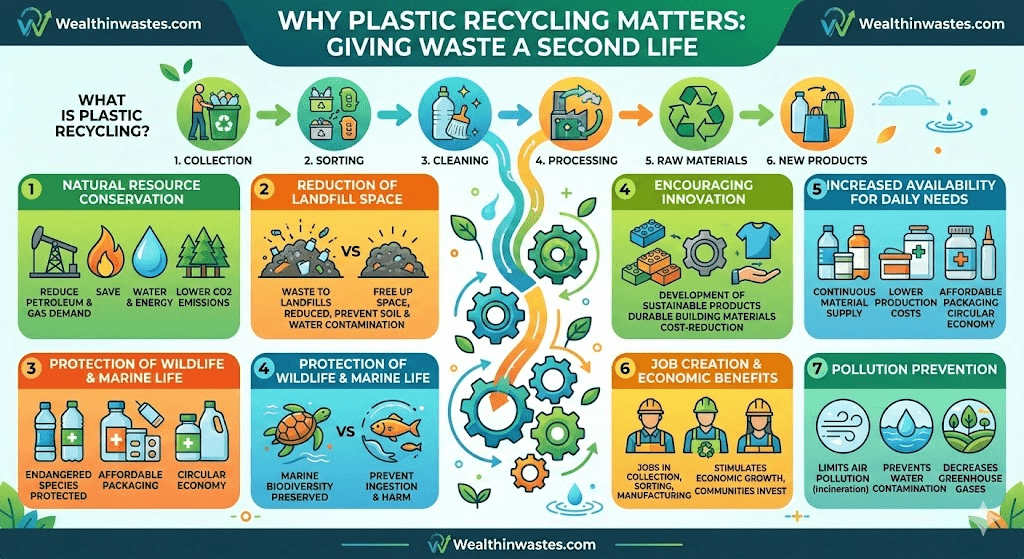
1. Natural Resource Conservation
Plastic production depends heavily on natural resources such as:
- Petroleum
- Natural gas
- Coal
- Water
- Wood
Manufacturing new plastic consumes large amounts of energy and raw materials. When we recycle plastic instead of producing it from scratch, we:
Read Also: The Environment in Early Childhood Education
- Reduce the demand for petroleum products
- Save water and energy
- Lower carbon dioxide emissions
- Preserve natural ecosystems
Recycling minimizes the need to extract new raw materials from the Earth. This helps combat climate change by reducing greenhouse gas emissions associated with manufacturing.
Additionally, wood-plastic composites and other innovative materials can be produced using recycled plastic, extending product life and reducing waste.
2. Reduction of Landfill Space
Plastic takes an extremely long time to degrade. Whether in landfills, rivers, or open dumps, plastic remains for decades or even centuries.
By recycling plastic:
- We reduce the amount of waste sent to landfills.
- We free up landfill space for biodegradable materials.
- We minimize environmental hazards.
- We prevent soil and water contamination.
Landfills filled with plastic waste become environmental threats over time. Recycling significantly reduces this burden.
3. Protection of Wildlife and Marine Life
Plastic pollution is one of the greatest threats to wildlife and marine ecosystems. Plastic bags, bottles, and packaging materials frequently end up in:
- Oceans
- Rivers
- Forests
- Deserts
Many animals mistakenly consume plastic, believing it to be food. Since plastic cannot be digested, it causes internal injuries, starvation, and death. Marine animals such as fish, turtles, and seabirds are particularly vulnerable.
Recycling reduces the amount of plastic entering natural habitats, helping to:
- Protect endangered species
- Preserve marine biodiversity
- Maintain ecological balance
Every recycled plastic bottle is one less potential threat to wildlife.
4. Encouraging Innovation and Sustainable Development
Plastic recycling has led to creative and innovative uses of recycled materials. Recycled plastics are now used in:
- Construction materials
- Road paving
- Shipbuilding
- Furniture production
- Sportswear and textiles
- Vehicle interiors
Because plastic is waterproof and resistant to rot, it can be transformed into durable building materials. In construction and manufacturing industries, recycled plastic reduces costs while maintaining strength and quality.
Innovation in recycling not only protects the environment but also supports sustainable industrial growth.
5. Increased Availability of Plastic for Daily Needs
Plastic plays an important role in packaging, storage, healthcare, electronics, and transportation. By recycling plastic materials, we ensure:
- Continuous supply for manufacturers
- Lower production costs
- Affordable packaging solutions
- Reduced dependence on imported raw materials
Recycling keeps materials in circulation, supporting the circular economy — a system where resources are reused instead of wasted.
6. Job Creation and Economic Benefits
Plastic recycling contributes to employment opportunities in several sectors:
- Waste collection
- Sorting and processing
- Transportation
- Manufacturing
- Research and innovation
From waste collectors to factory workers and recycling plant operators, the recycling industry provides jobs and stimulates economic growth.
Communities that invest in recycling programs often experience economic improvement through small and large-scale recycling businesses.
7. Pollution Prevention
Recycling reduces pollution in multiple ways:
- Decreases air pollution from plastic incineration
- Prevents water contamination
- Reduces soil degradation
- Limits greenhouse gas emissions
Improper disposal of plastic leads to environmental hazards that affect human health. Recycling helps prevent these negative outcomes.
Summary Table: Importance of Plastic Recycling
| Area of Impact | Benefits of Plastic Recycling |
|---|---|
| Natural Resources | Reduces demand for petroleum, gas, coal, and water |
| Climate Change | Lowers carbon dioxide emissions |
| Landfills | Reduces landfill space and waste accumulation |
| Wildlife | Protects animals from ingestion and habitat destruction |
| Economy | Creates jobs and business opportunities |
| Innovation | Encourages development of sustainable products |
| Pollution Control | Prevents air, soil, and water pollution |
Challenges of Plastic Recycling
While recycling offers many benefits, some challenges remain:
- Poor waste segregation
- Lack of awareness
- Inadequate recycling infrastructure
- High processing costs
- Contamination of recyclable materials
Read Also: Importance of Waste Management to Environmental Sanitation
Addressing these challenges requires cooperation from individuals, industries, and governments.
How Individuals Can Help
Everyone has a role to play in reducing plastic pollution. You can:
- Separate plastic waste from other trash
- Reuse plastic containers and bags
- Support products made from recycled materials
- Avoid single-use plastics
- Educate others about recycling
Small actions, when practiced collectively, can produce significant environmental change.
Frequently Asked Questions (FAQ)
1. Why is plastic harmful to the environment?
Plastic is non-biodegradable and can remain in the environment for hundreds of years. It pollutes oceans, harms wildlife, and contributes to climate change.
2. How long does plastic take to decompose?
Depending on the type, plastic can take between 100 to 1,000 years to decompose completely.
3. Is recycling better than incineration?
Yes. Recycling conserves resources and reduces pollution, while incineration releases harmful gases into the atmosphere.
4. What products can be made from recycled plastic?
Recycled plastic can be used to make:
- Bottles
- Clothing fibers
- Construction materials
- Furniture
- Vehicle parts
- Packaging materials
5. Does recycling really help reduce climate change?
Yes. Recycling reduces the need for new plastic production, which lowers greenhouse gas emissions and conserves energy.
6. Can all plastics be recycled?
Not all plastics are recyclable. Some types are more difficult to process. However, advancements in technology are improving recycling capabilities.
Plastic products are highly useful due to their durability and versatility. However, when not properly managed, they become major environmental hazards. The accumulation of plastic waste in landfills, oceans, and natural habitats poses serious risks to ecosystems, wildlife, and human health.
Recycling and reusing plastic is one of the most effective ways to protect our planet. It conserves natural resources, reduces pollution, saves energy, creates jobs, and promotes sustainable innovation.
Read Also: Problems of Solid Waste Management on the Global Stage