


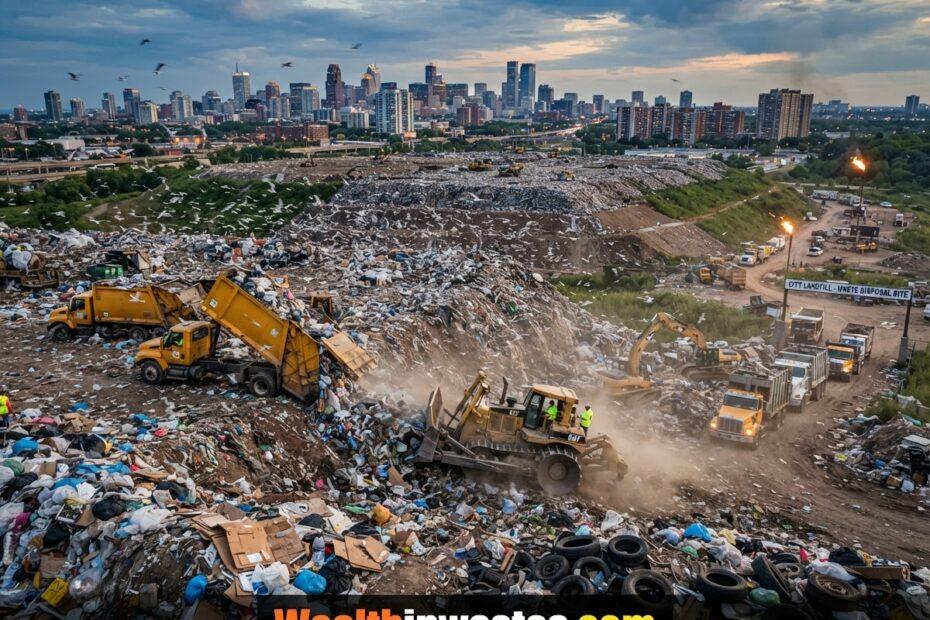
Modern cities generate large amounts of waste every day, including food scraps, packaging, broken furniture, worn clothing, and discarded electronics. All this material needs reliable collection and responsible handling across urban neighbourhoods.
A city dump is one part of the urban waste system. It receives rubbish that households, businesses, institutions, and public services cannot reuse or manage through other available routes in their communities.
Although people sometimes use “dump” to describe an unmanaged rubbish heap, a properly managed disposal site follows operating rules, controls waste placement, and limits pollution through suitable engineering, regular monitoring, and careful planning.
These sites help municipalities maintain sanitation, but they also create challenges when waste reaches the ground, water, or air without adequate containment, monitoring, or treatment for nearby households and public spaces.
Understanding how city dumps work helps residents dispose of rubbish correctly, support recycling programmes, reduce unnecessary waste, and ask useful questions about local environmental protection, public services, and public safety.
What Is a City Dump and How Has It Evolved?
A city dump is a designated location where a municipality receives, sorts, treats, or disposes of solid waste collected from homes, shops, institutions, public spaces, and selected businesses within its service area.
For readers exploring what qualifies as discarded solid material, also review how waste categories are organized. Local authorities classify materials by source, composition, hazards, and handling requirements before selecting a suitable collection or disposal route.
1. Early Open Dumps: Older communities often tipped rubbish into low-lying land or open pits without barriers or supervision, allowing pests, smoke, dirty runoff, and unpleasant odours to affect nearby residents.
2. Managed Disposal Sites: As urban populations grew, municipalities developed more organized collection and disposal systems, introducing site controls, planned waste placement, covering materials, drainage, and basic operational procedures for growing communities.
3. Engineered Landfills: Modern facilities may use protective liners, leachate collection, gas management, designated disposal cells, and environmental monitoring to reduce the chance that waste harms surrounding land or water.
Facilities differ widely, so the term “city dump” does not automatically mean a sanitary landfill. Checking a site’s design and management helps residents understand its environmental protections and nearby community impacts.
Read Also: How to Locate Garbage Dumpster Near Me
What Types of Waste Reach a City Dump?
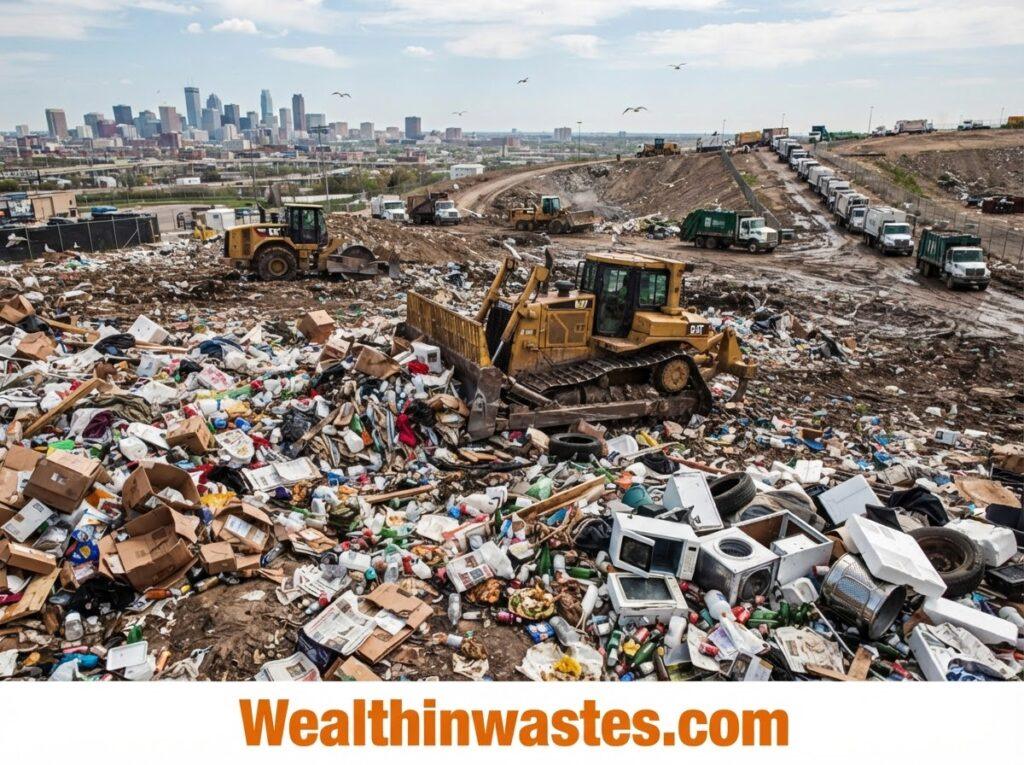
The materials arriving at a city dump depend on local collection rules, recycling access, business activity, and the facility’s permits. Proper sorting keeps recoverable and dangerous items out of ordinary disposal streams.
Use a guide to waste sources and categories to identify household, commercial, and construction materials. Learn about safe hazardous waste management before sending chemicals or other restricted items to a disposal facility.
Rules vary by location, so residents should check local acceptance lists before transporting bulky items, chemicals, batteries, medical materials, or construction debris, and confirm opening hours before making the trip.
1. Household and Commercial Waste: Everyday loads commonly contain food scraps, paper, cardboard, textiles, packaging, broken household items, and other rubbish from homes, offices, shops, restaurants, and public buildings across urban areas.
2. Construction Debris: Building and renovation projects produce concrete, timber, drywall, roofing, soil, and metal offcuts. Facilities may accept suitable material separately, while reusable items can sometimes enter recovery streams.
3. Electronic Waste: Computers, phones, televisions, batteries, and other electrical equipment may contain valuable materials alongside harmful substances. A dedicated electronic waste disposal route is safer than placing these items in general rubbish.
4. Industrial and Hazardous Waste: Some businesses generate chemicals, oils, solvents, contaminated containers, or other hazardous materials. These items require assessment and approved handling, rather than automatic acceptance at a municipal disposal site.
How City Dumps Operate and Stay Safe
A reliable disposal site uses planned procedures from the entrance gate to the active waste cell. Trained staff, suitable equipment, clear records, and routine inspections support safe daily operations every day.
Strong waste management practices do not end at the site boundary. Supervisors need emergency plans, protective equipment, staff training, and reliable communication with local environmental authorities to support safe daily operations.
Residents can support safe operations by following collection instructions, keeping hazardous materials separate, securing loads during transport, and using approved drop-off services instead of leaving rubbish beside roads or in waterways.
1. Waste Inspection: Staff may check incoming loads, confirm permitted materials, and redirect prohibited items to suitable services. These checks lower the chance of fire, chemical exposure, or unsafe mixing.
2. Controlled Placement: Operators direct vehicles to designated areas, spread acceptable waste, and compact it to use space efficiently. Site rules help keep traffic organized and protect workers around heavy machinery.
3. Covering and Drainage: Regular cover materials can limit litter, pests, and odours, while drainage infrastructure directs rainwater away from waste. Well-designed sites also collect contaminated liquid for appropriate management.
4. Records and Monitoring: Logs of incoming waste, inspections, maintenance, and environmental measurements help operators identify problems and show whether controls work. Good waste identification procedures also support safer routing.
Environmental Risks Around City Dumps
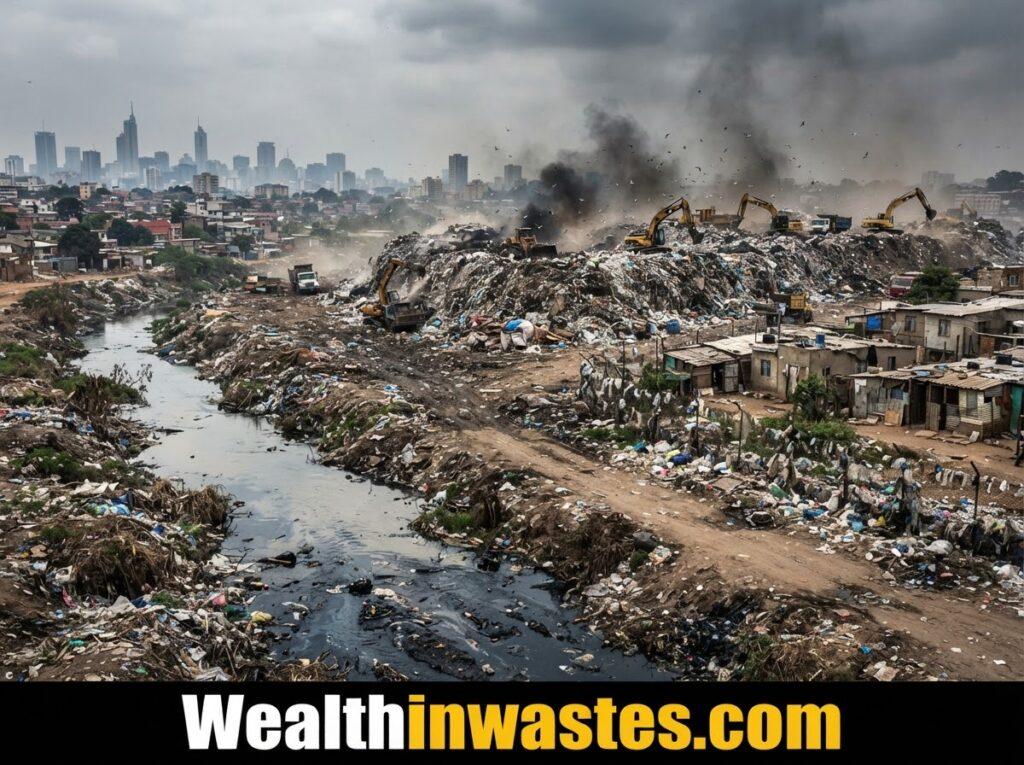
Poorly managed dumps can affect air, soil, water, wildlife, and neighbourhood wellbeing. The severity of these effects depends on waste composition, rainfall, local geology, site design, operating practices, and monitoring.
One major concern is leachate, the polluted liquid that forms when water moves through waste. If a site lacks proper collection and treatment, leachate may contaminate nearby soil or groundwater.
Organic waste can also break down without oxygen and release methane, a greenhouse gas. Open burning adds smoke and harmful pollutants, while fires may release dangerous compounds from plastics and other materials.
Food residues and exposed rubbish can attract flies, rodents, and birds. Persistent odours, litter, and vehicle movement may reduce residents’ comfort, while unmanaged sites can create additional sanitation problems over time.
These risks become more serious when hazardous items enter ordinary waste streams. Guidance on dangerous waste sources and impacts explains why chemicals, oils, and contaminated materials need suitable control measures.
Some substances cause harm at low concentrations or remain in the environment for long periods. Understanding the properties that make wastes hazardous helps people choose appropriate handling and disposal methods.
Households should never assume that every discarded product belongs in a city dump. A practical household hazardous waste guide can help identify separate collection options for paints, cleaners, batteries, and similar materials.
Benefits and Limits of a City Dump
A properly managed city dump provides an organized destination for residual rubbish, helping communities reduce street litter and manage waste that current reuse, recycling, or treatment systems cannot recover economically.
A clearer waste reduction approach can lower demand on disposal facilities by preventing waste at its source, extending product life, encouraging repair, and recovering useful materials before they become rubbish.
Not every plastic item enters an available recycling programme. Checking which plastics local systems cannot recycle helps households avoid contamination and dispose of difficult materials using available local services safely.
1. Public Sanitation: Centralized disposal helps remove rubbish from homes, roads, markets, and public places. Reliable collection reduces scattered refuse and supports cleaner neighbourhoods when workers handle waste consistently for every resident.
2. Practical Capacity: A landfill can accept large amounts of suitable residual waste, giving local authorities a dependable outlet. Its value depends on careful planning, adequate capacity, funding, and environmental controls.
3. Economic and Resource Limits: Dumps require land, transport, equipment, staffing, monitoring, and long-term maintenance. They also bury materials that might otherwise support recovery, so prevention and reuse should come first.
4. Unequal Local Impacts: Nearby residents may face odours, traffic, litter, noise, and environmental concerns when operators fail to manage a site well. Fair planning requires public communication and meaningful oversight.
Alternatives That Reduce City Dump Dependence

Landfilling should handle waste only at the end, after practical prevention, reuse, recycling, and recovery options. A balanced system combines several methods instead of depending entirely on one disposal site.
Recycling recovers suitable paper, metals, glass, and plastics for use in new products. Collection programmes work best when residents separate materials correctly and follow local instructions about cleanliness and accepted items.
Food scraps, leaves, and untreated plant waste can often become compost under appropriate conditions. This process returns organic matter to soil and reduces the amount of biodegradable rubbish requiring final disposal.
For practical steps, readers can use this guide to composting kitchen scraps to manage suitable organic materials in a household setting without creating odours or attracting pests in small spaces.
Some facilities process mixed waste through sorting, biological treatment, or other technologies. The options described in municipal waste treatment methods can recover materials or reduce waste volume before final disposal.
Waste-to-energy and anaerobic digestion can recover energy from suitable waste streams, but they need careful design and pollution controls. Authorities should compare cost, emissions, local needs, and the materials available.
Every alternative has limits, so communities need clear targets, reliable collection, public education, and safe markets for recovered materials. Combining approaches can reduce landfill pressure and conserve more resources over time.
Responsible Waste Disposal for Residents and Businesses
Residents and businesses can make city dumps safer by sorting rubbish before collection, reducing avoidable purchases, and using authorized services. These everyday choices improve material recovery and reduce contamination risks.
Businesses should also keep records of waste contractors, collection dates, and unusual waste streams. Regular audits can reveal avoidable costs, improve legal compliance, and identify opportunities to reduce waste at source.
Local authorities can make responsible disposal easier by publishing clear instructions, providing accessible collection points, enforcing rules fairly, and consulting communities about gaps in local services and inviting resident feedback.
1. Separate Materials: Keep recyclables, organic waste, general rubbish, and hazardous products apart where local services support separate collection. Clear sorting helps workers manage materials efficiently and reduces accidental contamination.
2. Use Approved Drop-Off Points: Take batteries, electronics, paint, chemicals, and other restricted items to designated collection services when available. Follow local rules rather than placing them in household rubbish without checking.
3. Prepare Waste for Collection: Secure bags, flatten suitable cardboard, keep sharp objects protected, and avoid overloading containers. Proper preparation reduces litter, injuries, spillages, and difficulties for collection crews in busy areas.
4. Choose the Right Disposal Route: Before moving bulky or unusual waste, check the local authority’s acceptance rules and fees. Guidance on safer disposal options helps prevent unsuitable materials from entering ordinary landfills.
Read Also: How to Locate a Trash Dumpster Near Me
The Future of City Dumps and Community Action
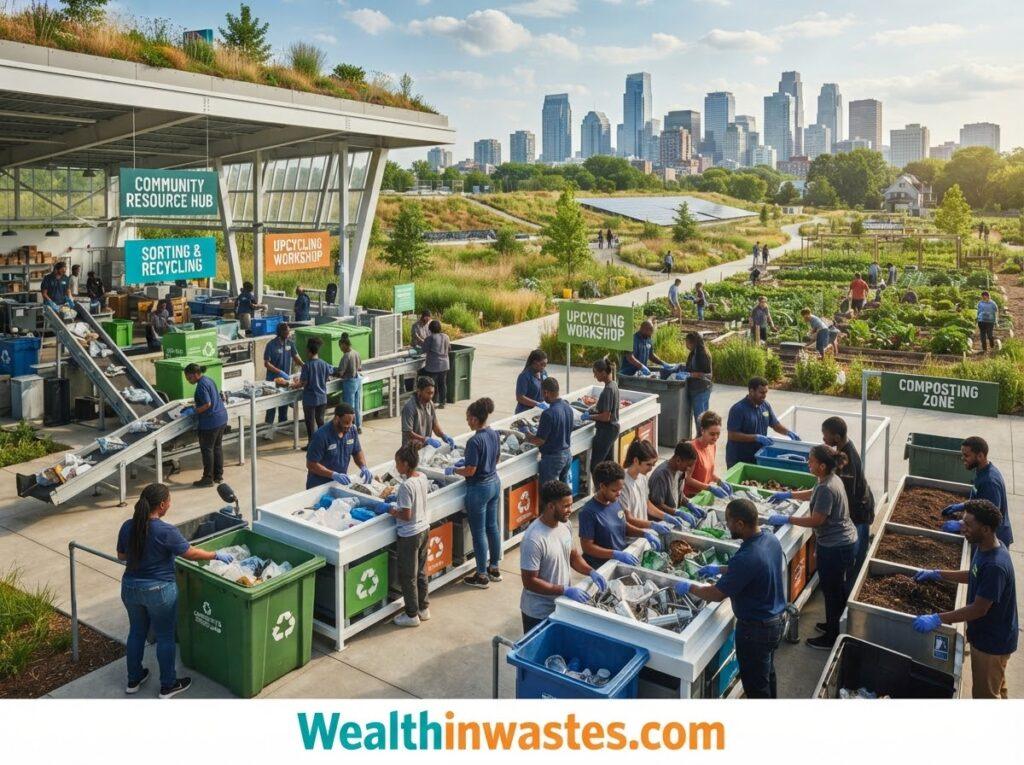
Future city dump management will rely on better data, improved infrastructure, stronger oversight, and wider public participation. Technology can help operators track loads, monitor site conditions, and plan collection efficiently.
Modern landfill design also depends on matching facility type to the waste it receives. Learning about different landfill designs helps explain why not every site can accept every waste stream.
Communities can support improvement by reporting illegal dumping, joining cleanup activities, reducing single-use products, and separating recyclable materials. These actions work best when local services provide clear guidance and accessible collection options.
Schools, community groups, businesses, and municipal agencies can share reliable disposal information. Joint education campaigns help people recognize hazards, understand collection rules, and protect public spaces from uncontrolled rubbish throughout the year.
A sustainable city waste system follows the waste management hierarchy by prioritizing prevention and reuse, then recycling and treatment, while reserving landfill capacity for residual materials that cannot be managed better.
The wider environmental impact of waste clearly shows why long-term planning matters. Communities benefit when policies protect water, soil, air, public health, and future land use for generations to come.
When residents, businesses, waste workers, and decision-makers share responsibility, city dumps can become one controlled component of a broader system that prevents pollution and makes better use of valuable materials.
Summary on City Dump: Urban Waste Disposal, Risks, and Solutions
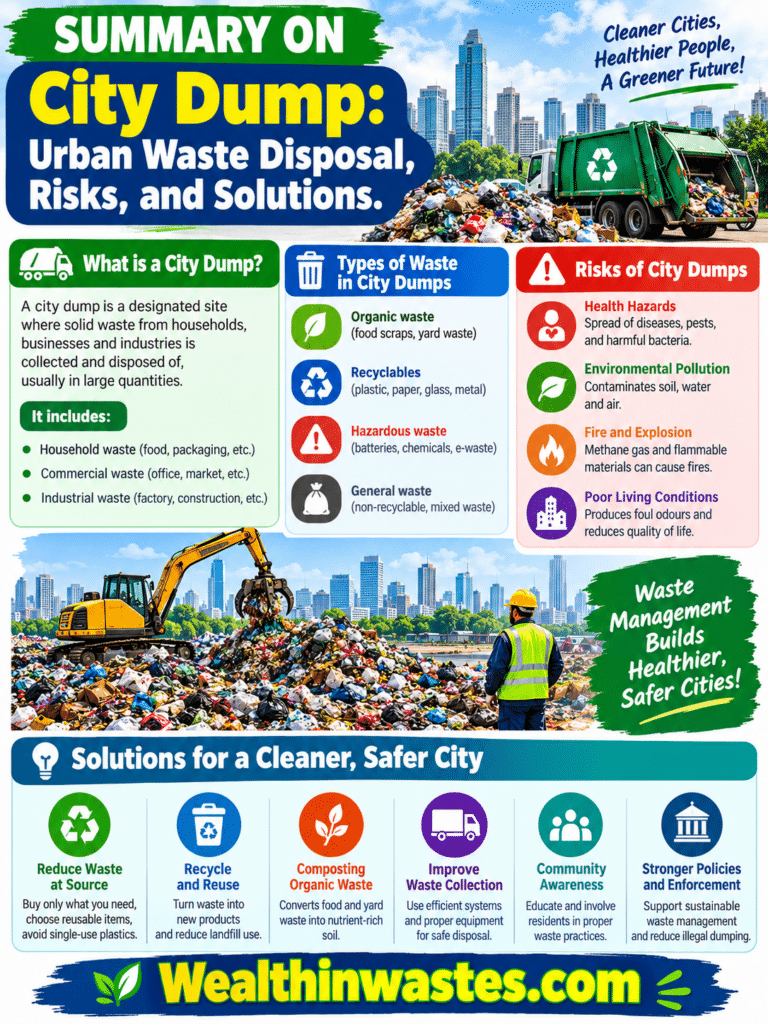
| Topic | Key Takeaway |
|---|---|
| Definition | A city dump or landfill receives residual waste from urban homes, businesses, and public services. |
| Waste Types | Sites may receive household rubbish, commercial waste, construction debris, and other permitted materials; hazardous items often need separate handling. |
| Safe Operations | Inspections, controlled placement, covering, drainage, records, and monitoring reduce operational and environmental risks. |
| Environmental Concerns | Leachate, methane, smoke, pests, odours, and litter can threaten nearby communities when controls fail. |
| Better Alternatives | Waste prevention, reuse, recycling, composting, and suitable treatment can reduce the volume sent to dumps. |
| Community Role | Correct sorting, approved disposal, clear local rules, and public participation help keep urban areas cleaner and safer. |
Frequently Asked Questions About City Dump: Urban Waste Disposal, Risks, and Solutions
1. What is a city dump?
A city dump is a designated place for receiving or disposing of solid waste generated by urban homes, businesses, institutions, and public services.
2. Is a city dump the same as a landfill?
People often use the terms similarly, but a sanitary landfill has engineered controls, while an open dump may lack adequate containment or supervision.
3. What waste can go to a city dump?
Accepted waste varies by site. Ordinary rubbish and some construction debris may qualify, while electronics, chemicals, batteries, and medical waste may require separate services.
4. Why can city dumps harm the environment?
Poor controls can allow contaminated liquid, methane, smoke, litter, and pests to affect soil, water, air, wildlife, and nearby residents.
5. How can residents reduce waste sent to dumps?
Residents can buy thoughtfully, repair and reuse items, separate recyclables, compost suitable food scraps, and follow local waste collection instructions.
6. Can electronic waste go into ordinary rubbish?
Electronic waste should go to an approved collection or recycling service where available because some devices contain hazardous substances and recoverable materials.
7. Who manages a city dump?
Municipal authorities or licensed waste operators commonly manage disposal sites, subject to relevant local environmental and public health requirements.
8. What is the best alternative to dumping waste?
No single alternative suits every material. Waste prevention, reuse, recycling, composting, and suitable treatment should be considered before final disposal.
Do you have any questions, suggestions, or contributions? If so, please feel free to use the comment box below to share your thoughts. We also encourage you to kindly share this information with others who might benefit from it. Since we can’t reach everyone at once, we truly appreciate your help in spreading the word. Thank you very much for your support and for sharing!
Read Also: Proper Farm Waste Management Guide