


Metal recycling companies collect, sort, process, and sell discarded metals so manufacturers can use recovered materials instead of relying entirely on newly mined ores and primary metal production wherever technically and economically practical.
Their work matters because mining and processing virgin metal can damage habitats, consume energy, and generate pollution. Applying the three core waste-reduction principles helps communities keep useful resources in circulation.
From beverage cans and copper wiring to steel beams, machinery, and vehicle parts, recyclable metal appears throughout households, farms, construction sites, and manufacturing businesses across urban and rural communities every day.
This guide explains what metal recycling companies do, which materials they handle, how they help the environment, and what customers should check before choosing a reliable recycler for household or commercial projects.
Recycling contributes to wider efforts to reduce pollution through responsible material recovery, but its results depend on safe handling, efficient processing, and suitable destinations for recovered metals and remaining waste.
What Metal Recycling Companies Do
Metal recycling companies connect people with unwanted metal to manufacturers that need useful secondary raw materials. They organise collection, grading, processing, storage, and sales, depending on each facility’s equipment and business model.
Many facilities accept common scrap metal items from households, contractors, farms, workshops, and factories. Larger operators may also provide collection bins, transport, demolition support, or scheduled pickups for commercial customers.
1. Collection and Sorting: Staff inspect incoming loads, separate metal grades, and remove materials that could damage machinery or contaminate products. Accurate sorting improves recovery and helps downstream processors meet quality requirements.
2. Preparation and Processing: Workers may cut, compact, shear, or shred suitable scrap before separating it by size and composition. The equipment used depends on the metal, item dimensions, and safety conditions.
3. Quality Control: Trained staff check material grades, weigh loads, remove unacceptable contaminants, and keep transaction records. These steps reduce disputes, protect equipment, and help buyers receive materials that meet agreed specifications.
4. Sale to Manufacturers: Recyclers sell prepared metal to foundries, mills, smelters, and specialist processors. This market keeps recovered metal moving into new products and supports a more resource-efficient production cycle.
Read Also: Agricultural Waste Generation Sources and Characteristics
Types of Metals Accepted by Recycling Companies
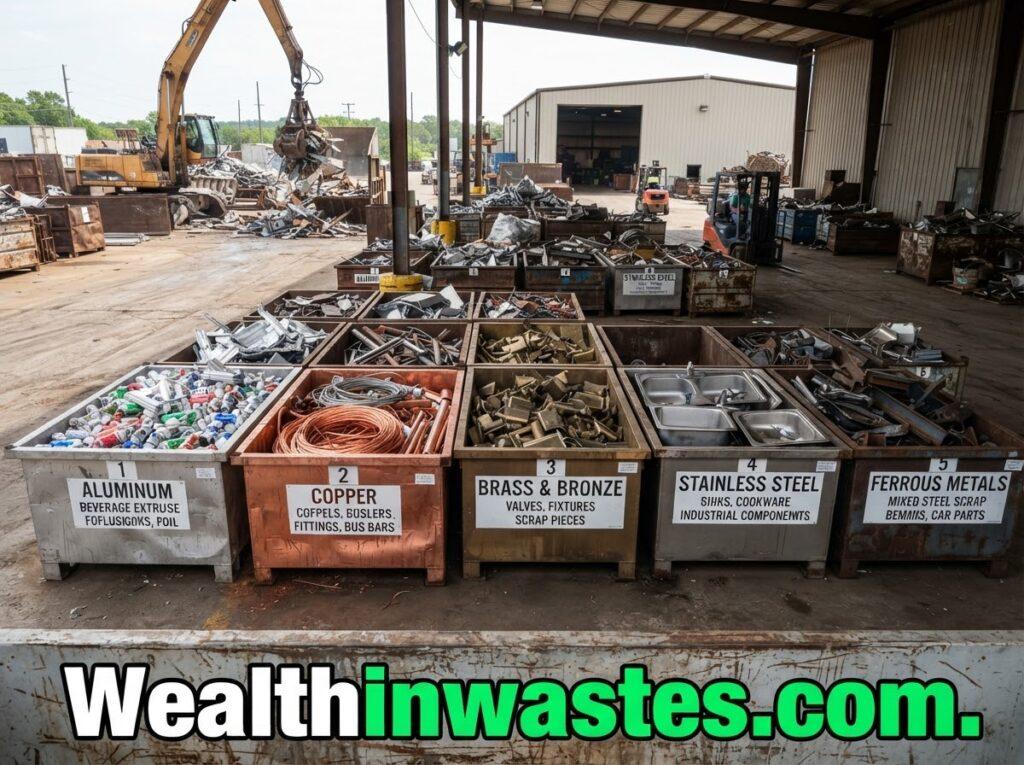
Accepted materials vary by location, equipment, customer demand, and environmental rules. Before transporting scrap, check the facility’s list because one yard may accept items another site cannot safely or economically process.
1. Ferrous Metals: Iron and steel appear in beams, machinery, vehicle bodies, tools, appliances, and manufacturing offcuts. Magnets can help recover many ferrous items, although workers still need to inspect loads before shredding or melting.
2. Aluminium: Beverage cans, window frames, gutters, cookware, and selected building components may enter recycling streams. Efficient aluminium recovery steps depend on clean feedstock and suitable equipment at the receiving facility.
3. Copper, Brass, and Other Non-Ferrous Metals: Wiring, pipes, fittings, radiators, and industrial parts may contain valuable non-ferrous metals. Facilities usually grade them separately because their composition and market value differ from steel or iron.
4. Metal From Mixed Products: Appliances, packaging, electronics, and construction waste can contain recoverable metal alongside other materials. Learn how mixed recyclable materials are separated before deciding what to send to a scrap yard.
5. Restricted or Contaminated Items: Fuel tanks, pressurised cylinders, batteries, electronics, and containers with chemical residues may need specialist handling. Never assume that a metal item is acceptable simply because its main component is recyclable.
Environmental Benefits of Metal Recycling Companies
Metal recovery can reduce demand for virgin ore and limit the land disturbance associated with some mining activities. Reusing suitable metal also preserves material value that would otherwise leave the economy as discarded waste.
Recycling can use less energy than producing certain metals from raw ores, although savings vary by metal, process, electricity source, and product quality. Reliable facilities measure performance rather than promise identical benefits for every load.
Diverting useful scrap from disposal sites can help extend landfill capacity and reduce litter around communities. A well-managed material recovery process also makes collection, separation, and onward transfer more organised.
Metal recycling supports a circular economy by returning recovered resources to manufacturing instead of treating every discarded product as useless. Explore the wider advantages of recycling waste when planning a community or business recycling programme.
These benefits do not happen automatically. Cutting, shredding, transport, dust, noise, wastewater, and furnace emissions still require controls, trained staff, and equipment maintenance to protect workers, ecosystems, and nearby communities.
Customers can improve outcomes by choosing facilities that maintain tidy yards, explain their residue controls, and avoid dumping unrecoverable material. Responsible recycling combines material recovery with careful management of hazards and remaining waste.
Economic Benefits of Metal Recycling Companies
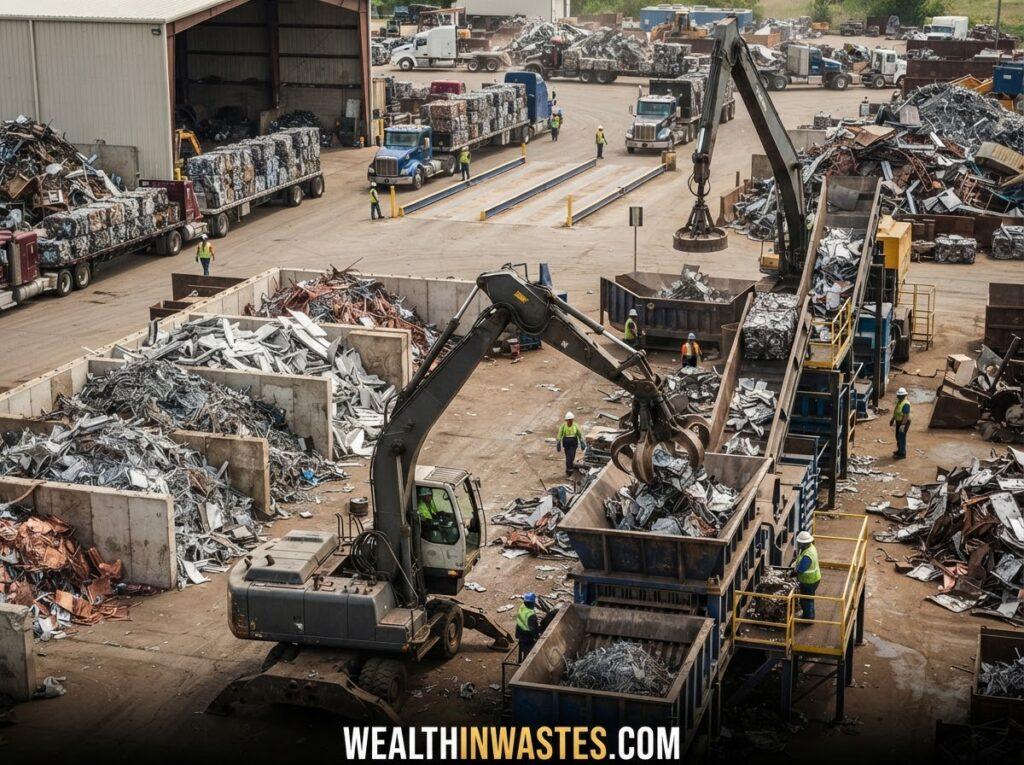
Metal recycling creates value from materials that households, tradespeople, farms, and manufacturers no longer need. Transparent recycling incentives can encourage more people to sort scrap and deliver it through legitimate collection channels.
Local authorities and private operators can strengthen the market through collection infrastructure, public education, and dependable purchasing arrangements. Well-designed government recycling programmes can complement private services where local systems need support.
1. Jobs and Technical Skills: Recycling businesses may employ drivers, sorters, machine operators, mechanics, weighbridge staff, logistics workers, and administrators. Safe training helps employees manage equipment, identify metals, and handle loads correctly.
2. Income From Recovered Materials: Households and businesses may earn money when a recycler purchases acceptable scrap. Prices change with grade, cleanliness, weight, demand, transport costs, and wider commodity-market conditions.
3. Support for Manufacturing: Recovered metals provide a secondary source of raw material for manufacturers. Strong links between recyclers and buyers can improve material availability, reduce waste, and support local commercial activity.
Examples of Metal Recycling Companies

Atlantic Iron and Metal
Before choosing Atlantic Iron and Metal, verify that it currently operates in your area and confirm its address, accepted materials, weighing method, fees, and required documentation directly with the business.
When assessing any local scrap yard, ask whether staff separate grades carefully, protect workers, and send recovered material to suitable processors. Clear answers help customers distinguish a responsible recycler from an unreliable buyer.
Fortune Metal Recycling

Fortune Metal Recycling operates a full-service facility in Rahway, New Jersey, and its service page lists ferrous, non-ferrous, electronic, cardboard, and plastics recycling. Customers should confirm acceptance rules before arranging delivery.
Before visiting, customers should confirm hours, accepted grades, identification requirements, load minimums, payment policies, container options, and special handling rules because facilities may update these requirements without notice at any time.
Metal Recycling in San Jose

In San Jose, Sims Metal’s local yard accepts scrap from households and businesses, including copper, aluminium, brass, iron, steel, and certain production equipment, subject to site rules at the location.
WealthInWastes also profiles CMC Recycling and Alameda Metals as scrap-sector examples. Use such guides as starting points, then confirm current services, accepted materials, and collection options directly before booking a pickup.
How to Choose a Responsible Metal Recycling Company
Start by checking that a company has a verifiable address, transparent pricing, accurate scales, clear receipts, and staff who explain how they classify and weigh each load before payment is issued.
Ask where collected materials go after pickup and whether the company uses reliable downstream processors. A practical waste management strategy should identify responsibilities, records, transport arrangements, residue controls, and compliance.
Review the relevant waste recycling rules in your jurisdiction, and ask about licences, proof of ownership, transport permits, or identification documents required for the type of material you plan to deliver.
Good providers explain exclusions, including pressurised cylinders, fuel tanks, lithium batteries, sealed containers, and contaminated scrap. Never dismantle hazardous equipment yourself; follow facility instructions and local safety advice before arrival.
Compare service quality rather than price alone. Clear communication, accurate weights, documented transactions, secure storage, and responsible downstream handling are useful signs that a recycler takes customer service and environmental duties seriously.
Challenges and Safety Risks in Metal Recycling
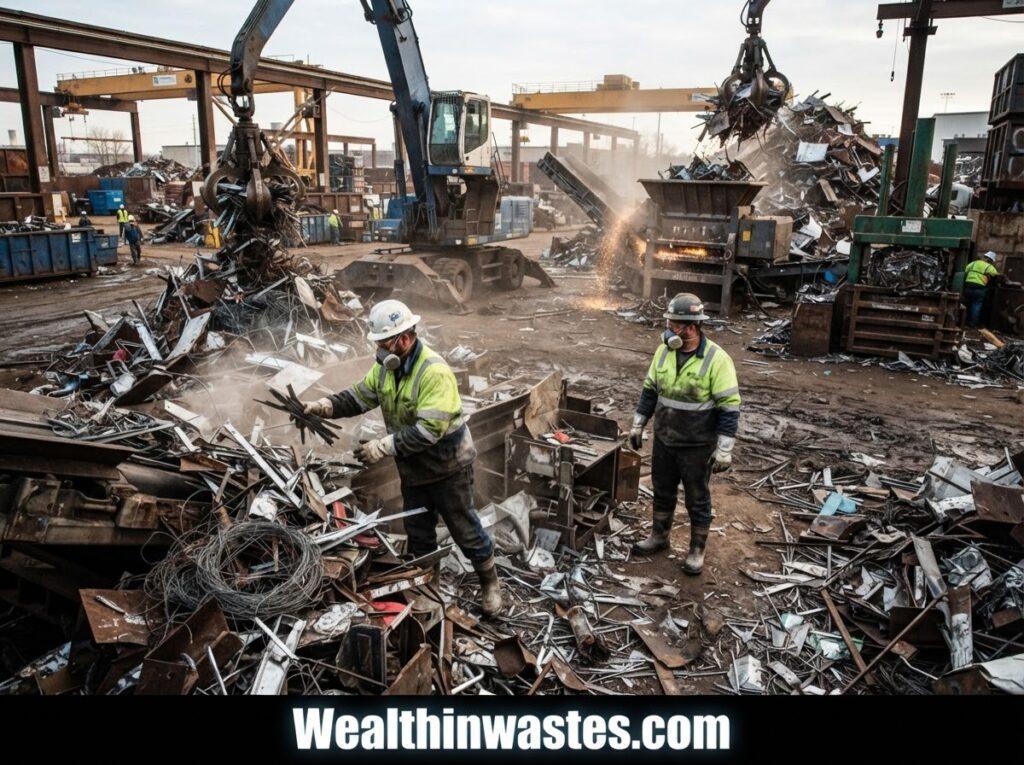
Metal recycling can create hazards when facilities store scrap poorly, mix incompatible materials, operate damaged equipment, or release dust and runoff. Sound environmental sanitation practices help reduce these risks around the facility.
Clear waste management policies support emergency planning, employee training, fire prevention, recordkeeping, and proper treatment of residues that cannot return to the metal recovery stream without further treatment or specialist handling.
1. Fire and Explosion Hazards: Closed containers, fuel residues, batteries, or pressurised items can cause severe incidents when crushed, cut, or heated. Facilities need inspection procedures and clear rules for rejecting dangerous loads.
2. Worker Injuries: Sharp edges, heavy objects, moving conveyors, lifting equipment, and cutting tools can injure workers. Training, protective equipment, safe storage, and well-maintained machinery reduce preventable accidents through close supervision.
3. Pollution From Poor Handling: Oils, paints, metals-bearing dust, and contaminated runoff can affect soil and water if operators ignore containment. Responsible sites separate hazardous residues and use appropriate treatment or licensed disposal routes.
4. Unstable Scrap Prices: Commodity prices and buyer demand can change quickly, affecting income and storage decisions. Businesses should keep accurate records, compare legitimate buyers, and avoid unsafe shortcuts to reduce costs.
How to Prepare Scrap Metal for Collection
Separate scrap by material when the facility recommends it, and keep metal away from food waste, loose batteries, soil, and chemical containers. Clean, sorted loads are generally easier to inspect and grade.
Take photographs or make a brief inventory of larger loads before booking collection. This helps the recycler estimate transport needs, identify possible restrictions, and explain whether staff require extra handling equipment.
People who want to earn money from suitable scrap can review practical steps for selling metal scrap and compare local yards before travelling with heavy or bulky items where possible.
Use a verified recycling drop-off location and check opening hours, accepted materials, payment procedures, load limits, and identification requirements in advance. Requirements can differ between facilities and jurisdictions, so call ahead.
For farms and businesses, a collection area helps staff store scrap safely until pickup. Keep walkways clear, label unusual items, and arrange specialist handling for hazardous components rather than mixing them into ordinary metal loads.
Read Also: Waste Generation and Effect of Waste on Environment
Summary on Metal Recycling Companies and Their Environmental Impact
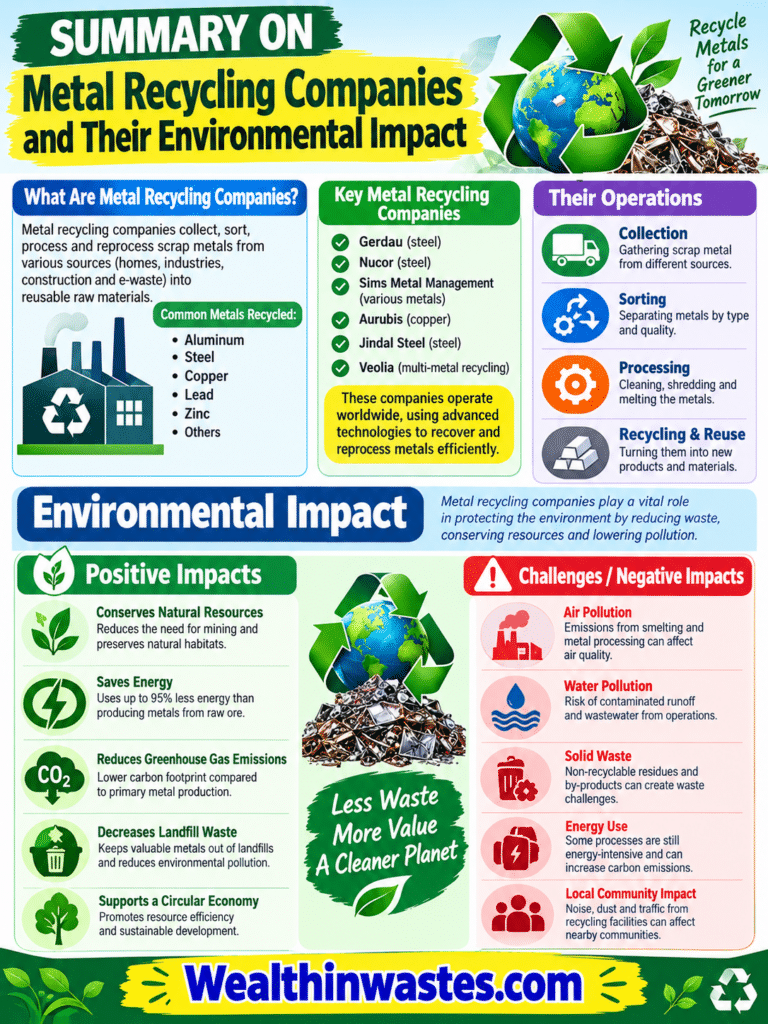
| Topic | Key Point |
|---|---|
| Main role | Collect, sort, process, and sell scrap metal for reuse in manufacturing. |
| Common materials | Iron, steel, aluminium, copper, brass, and metal recovered from selected products. |
| Environmental value | Can conserve resources, reduce waste, and lower some energy and pollution impacts. |
| Economic value | Supports material supply, skilled jobs, and income from acceptable scrap. |
| Choosing a company | Check accepted items, weighing accuracy, pricing, licences, safety, and residue management. |
| Customer responsibility | Separate materials, check restrictions, and use suitable collection or drop-off services. |
Frequently Asked Questions About Metal Recycling Companies and Their Environmental Impact
1. What do metal recycling companies do?
They collect, sort, grade, process, and sell scrap metal so manufacturers can use recovered materials in new products.
2. Which metals can companies recycle?
Many facilities accept iron, steel, aluminium, copper, and brass, but accepted grades and products vary by location and equipment.
3. Does metal recycling protect the environment?
It can conserve raw materials, reduce landfill waste, and lower energy use, although safe collection and processing remain essential.
4. Can I earn money from scrap metal?
Yes. Some recyclers purchase acceptable scrap, but payment depends on material grade, weight, cleanliness, market prices, and facility policies.
5. Do all recycling companies accept appliances?
No. Some facilities accept selected appliances, while others restrict units containing refrigerants, batteries, oils, or electronic components.
6. How can I choose a reliable recycler?
Check its address, accepted materials, pricing, weighing procedures, required documents, safety practices, and how it manages non-recyclable residues.
7. Are metal recycling prices fixed?
No. Prices may change with metal grade, demand, contamination, transport expenses, and international commodity-market conditions.
8. Should I remove hazardous parts before recycling?
Do not dismantle hazardous items without suitable training. Ask the receiving facility how to handle batteries, fuel tanks, cylinders, and contaminated components.
Do you have any questions, suggestions, or contributions? If so, please feel free to use the comment box below to share your thoughts. We also encourage you to kindly share this information with others who might benefit from it. Since we can’t reach everyone at once, we truly appreciate your help in spreading the word. Thank you very much for your support and for sharing!
Read Also: The Garden Egg Inflorescence: Economic Importance, Uses, and By-Products