


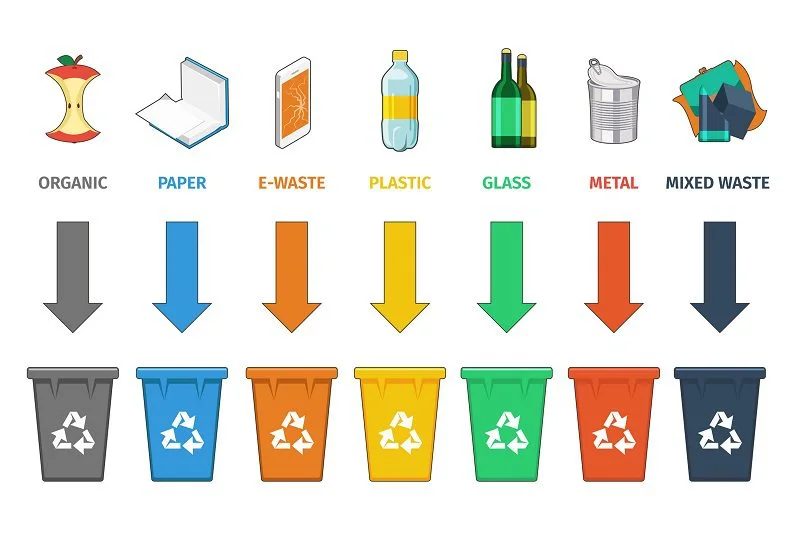
Making and implementing effective waste management policies is one of the most strategic approaches to improving environmental outcomes in new developments. A well-structured waste management policy ensures that waste is properly handled throughout the planning, construction, and operational phases of development projects.
When properly executed, a waste management policy helps prevent excessive noise, foul odors, insecurity, and other hazardous conditions that arise from poorly planned waste processing systems. It also improves efficiency for developers and building managers by integrating convenient waste bin collection schedules and promoting systematic waste sorting.
Waste management policy provides a comprehensive framework for managing waste while considering both environmental sustainability and social well-being. It supports waste reduction, resource conservation, and improved public health.
The Waste Challenge in Nigeria
For many years, Nigeria struggled to respond effectively to its growing waste problem. With rapid population growth and urbanization, the country continues to generate large volumes of waste daily from households, markets, industries, and construction activities.
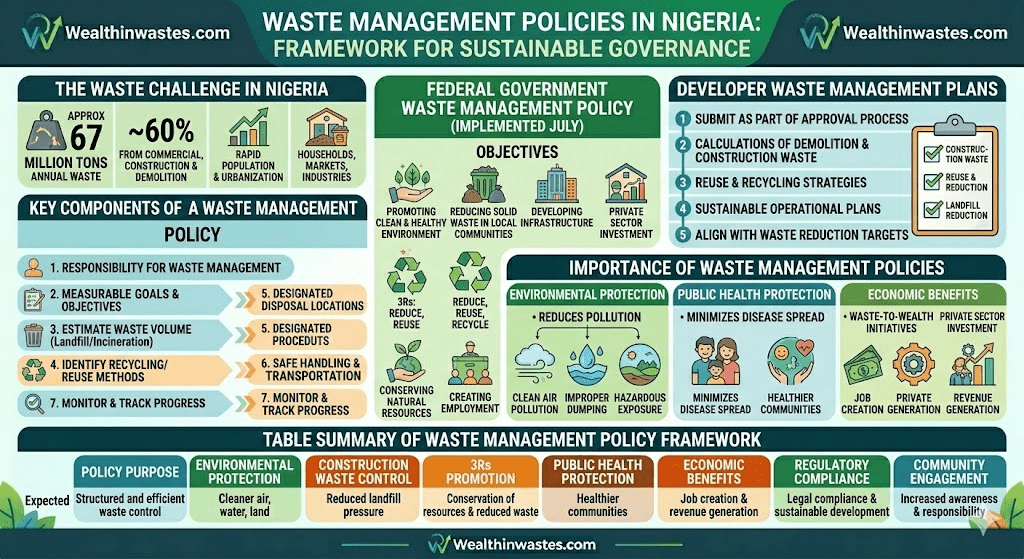
According to estimates from the National Waste Policy, Nigeria produces approximately 67 million tons of waste annually, with about 60% generated from commercial, construction, and demolition activities. This highlights the significant contribution of the construction industry to overall waste generation. Because of this, it is essential that waste management policies be integrated at the planning stage of every new development.
Authorities typically require a waste management plan as part of the development approval process to ensure waste reduction during construction and long-term sustainability during operation.
Developers are required to:
- Provide calculations of demolition and construction waste.
- Outline strategies for reuse and recycling.
- Present sustainable operational plans.
- Align their waste management approach with council and state government waste reduction targets.
Read Also: Everything You Need to Know Before Starting a Cattle Business
Federal Government Waste Management Policy
In July of the previous year, the Federal Executive Council implemented national waste management policies aimed at improving cleanliness across the country and converting waste into wealth. These policies were designed to ensure sustainable, socially acceptable, and environmentally sound solid waste management practices.
The objectives include:
- Promoting a clean and healthy environment.
- Reducing solid waste in local communities.
- Developing waste management infrastructure.
- Encouraging private sector investment.
- Promoting the 3Rs: Reduce, Reuse, and Recycle.
- Conserving natural resources.
- Creating employment opportunities through waste management.
Importance of Waste Management Policies
Solid waste is one of the most pressing environmental challenges globally. If not properly managed, it can cause severe damage to humans, animals, and ecosystems. The deterioration of the environment makes it evident that structured policies are necessary.
Waste management policies are important because they:
- Promote a clean and healthy environment.
- Support socio-economic development.
- Reduce health risks associated with waste.
- Encourage community participation in environmental protection.
- Create awareness about the relationship between development and environmental sustainability.
- Provide clear guidelines for businesses and institutions on waste handling.
Key Components of a Waste Management Policy
An effective waste management policy should include the following:
- Clearly define who is responsible for managing waste.
- Establish measurable goals and objectives.
- Estimate the volume of waste for landfill or incineration.
- Identify recycling and reuse methods for each material.
- Specify designated disposal locations.
- Outline procedures for safe handling and transportation.
- Monitor and track progress regularly.
Objectives of Waste Management Policies
Waste management policies are implemented with clear goals in mind. These include:
- Ensuring compliance with legislative and environmental regulations.
- Reducing waste generation through repair, reuse, and recycling.
- Promoting environmental education and awareness.
- Ensuring proper storage and handling of waste.
- Encouraging industries to adopt best waste management practices.
- Increasing citizen participation in recycling efforts.
- Appointing competent personnel to oversee waste management.
- Reducing landfill dependency.
- Defining clear roles and responsibilities across the waste management chain.
Table Summary of Waste Management Policy Framework
| Aspect | Explanation | Expected Outcome |
|---|---|---|
| Policy Purpose | Establishes guidelines for managing waste across planning, construction, and operational stages. | Structured and efficient waste control system. |
| Environmental Protection | Reduces pollution, improper dumping, and hazardous exposure. | Cleaner air, water, and land. |
| Construction Waste Control | Requires calculation and management of demolition and building waste. | Reduced landfill pressure. |
| 3Rs Promotion | Encourages Reduce, Reuse, and Recycle strategies. | Conservation of resources and reduced waste generation. |
| Public Health Protection | Minimizes disease spread from unmanaged waste. | Healthier communities. |
| Economic Benefits | Supports waste-to-wealth initiatives and private sector investment. | Job creation and revenue generation. |
| Regulatory Compliance | Aligns projects with national and state environmental targets. | Legal compliance and sustainable development. |
| Community Engagement | Encourages public participation in environmental efforts. | Increased environmental awareness and responsibility. |
Frequently Asked Questions (FAQs)
1. What is a waste management policy? A waste management policy is a structured framework that outlines how waste should be reduced, handled, stored, transported, recycled, and disposed of in a safe and sustainable manner.
2. Why is waste management policy important in Nigeria? Nigeria generates millions of tons of waste annually. Without proper policies, waste leads to pollution, flooding, disease outbreaks, and environmental degradation.
3. What are the 3Rs of waste management? The 3Rs stand for:
- Reduce: Minimize waste production.
- Reuse: Use materials multiple times.
- Recycle: Convert waste into new products.
4. Who is responsible for implementing waste management policies? Implementation involves multiple stakeholders including government agencies, construction companies, businesses, waste management firms, and individuals.
5. How does waste management create wealth? Waste can be recycled into new products, converted into energy, or processed into raw materials, creating business opportunities and employment.
6. What happens if waste is not properly managed? Improper waste management can result in environmental pollution, health problems, flooding due to blocked drainage systems, and loss of biodiversity.
7. Why must construction projects submit waste management plans? Construction activities generate large amounts of waste. A submitted plan ensures proper tracking, recycling, and compliance with environmental regulations.
Waste management policies are essential for sustainable development, especially in rapidly growing nations like Nigeria. They provide a clear structure for minimizing waste, protecting public health, conserving resources, and promoting economic growth through waste-to-wealth initiatives.
Read Also: Importance of Waste Management to Environmental Sanitation
Do you have any questions, suggestions, or contributions? If so, please feel free to use the comment box below to share your thoughts. We also encourage you to kindly share this information with others who might benefit from it. Since we can’t reach everyone at once, we truly appreciate your help in spreading the word. Thank you very much for your support and for sharing!