


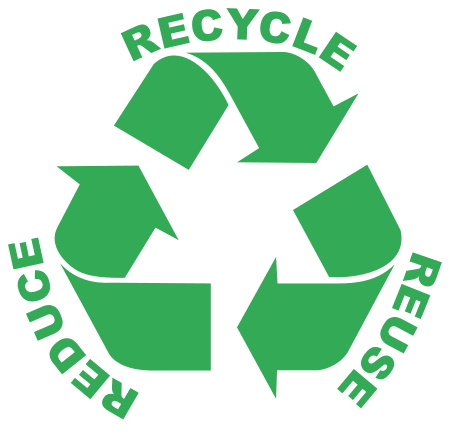
The 3Rs of solid waste management — Reduce, Reuse, and Recycle — form the foundation of responsible waste handling and environmental protection. The main objective of the 3Rs is to promote efficient use of resources, minimize waste generation, and ensure sustainable material management within the environment.
As waste production continues to increase globally due to population growth and industrialization, applying the 3Rs has become more important than ever. These principles not only reduce pollution but also conserve natural resources, save energy, and promote economic sustainability.
What Are the 3Rs and Why Are They Important?
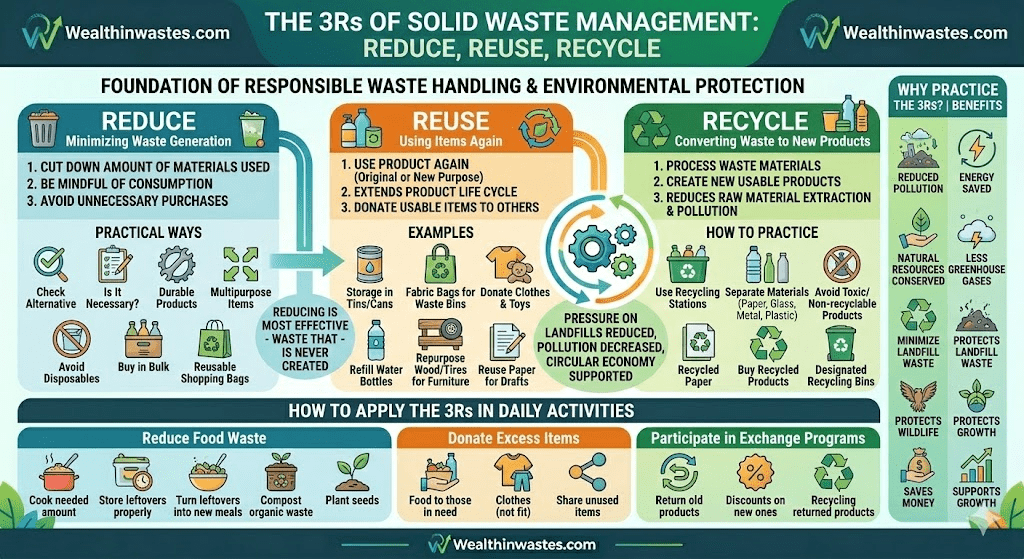
The 3Rs stand for:
- Reduce – Minimize the amount of waste generated.
- Reuse – Use items again instead of discarding them.
- Recycle – Convert waste materials into new usable products.
When properly practiced, the 3Rs significantly reduce the pressure on landfills, decrease pollution, and support a circular economy where materials are continuously reused rather than wasted.
The reduction of waste can only be achieved effectively when individuals, households, industries, and governments actively apply these principles in daily life.
Read Also: Everything You Need to Know About Snap Dragon
1. Reduce
What Does Reduce Mean?
Reducing means cutting down the amount of materials we use to minimize waste generation. It involves being mindful of consumption and avoiding unnecessary purchases.
Reducing is the most effective of the 3Rs because the best waste is the waste that is never created.
Producing less waste means:
- Less pollution
- Lower cleanup costs
- Reduced landfill usage
- Conservation of resources
Practical Ways to Reduce Waste
Here are simple steps to reduce daily waste:
✓ Check if you already have an alternative before buying something new.
✓ Ask yourself if the item is truly necessary.
✓ Purchase durable and long-lasting products.
✓ Choose multipurpose items instead of single-use items.
✓ Avoid disposable kitchen utensils and packaging.
✓ Buy in bulk to reduce packaging waste.
✓ Carry reusable shopping bags.
Reducing consumption is a powerful action that directly lowers environmental impact.
2. Reuse
What Does Reuse Mean?
Reusing involves using a product again for its original purpose or for a different function instead of throwing it away.
Reuse extends the life cycle of products and reduces the need for new production.
It may also involve giving items to others who can use them, rather than discarding them.
Practical Examples of Reuse
a. Use old tins, cans, or containers for storage in the kitchen.
b. Use fabric bags instead of plastic bags for waste bins.
c. Donate old clothes and toys to those in need.
d. Repurpose old wood or tires to create furniture.
e. Refill water bottles instead of buying new ones.
f. Reuse paper for drafts before disposal.
Reusing materials saves money and reduces environmental strain.
3. Recycle
What Does Recycle Mean?
Recycling involves processing waste materials to create new products. It transforms waste into valuable resources.
Recycling reduces:
- Energy consumption
- Raw material extraction
- Water pollution
- Air pollution
It is essential to have proper recycling facilities and collection systems to ensure effective recycling.
How to Practice Recycling
a. Create or use recycling stations in homes and workplaces.
b. Separate recyclable materials such as paper, glass, metal, and plastic.
c. Avoid purchasing toxic or non-recyclable products.
d. Use recycled paper for printing.
e. Buy products made from recycled materials.
f. Ensure proper disposal in designated recycling bins.
How to Apply the 3Rs in Daily Activities
1. Reduce Food Waste
- Cook only what is needed.
- Store leftovers properly.
- Turn leftovers into new meals.
- Compost organic waste.
- Plant vegetable and fruit seeds instead of discarding them.
Reducing food waste helps conserve resources and lowers greenhouse gas emissions.
2. Donate Excess Items
Many households waste usable products.
- Donate extra food to those in need.
- Give away clothes that no longer fit.
- Share unused items with friends or community groups.
Donating reduces waste while helping others.
3. Participate in Exchange Programs
Some businesses offer exchange programs where old products can be returned in exchange for discounts on new ones.
Benefits include:
- Reduced disposal costs
- Lower consumer expenses
- Recycling of returned products
- Sustainable production cycles
Exchange programs support the circular economy.
Why Do We Need to Practice the 3Rs?
Practicing the 3Rs is important because it:
• Reduces air and water pollution.
• Saves energy used in manufacturing.
• Conserves natural resources.
• Reduces greenhouse gas emissions.
• Minimizes landfill waste.
• Protects ecosystems and wildlife.
• Saves money.
• Supports economic growth.
Without the 3Rs, waste would continue to accumulate, increasing environmental and health challenges.
Environmental and Economic Benefits of the 3Rs
| Area | Benefits |
|---|---|
| Environment | Reduced pollution and cleaner ecosystems |
| Economy | Lower production costs and job creation |
| Energy | Less energy required for manufacturing |
| Resources | Conservation of natural materials |
| Public Health | Reduced disease and contamination |
| Landfills | Decreased landfill overflow |
Frequently Asked Questions (FAQ)
1. Which of the 3Rs is the most important?
Reduce is considered the most important because preventing waste is more effective than managing waste after it is created.
2. Can recycling alone solve waste problems?
No. Recycling helps, but reducing and reusing are equally important for long-term sustainability.
3. How does reducing waste save energy?
Manufacturing new products requires energy. By reducing consumption and recycling materials, less energy is needed for production.
4. Is reuse better than recycling?
In many cases, yes. Reusing an item avoids the energy and processing required for recycling.
5. How can schools and organizations promote the 3Rs?
They can:
- Set up recycling bins.
- Conduct awareness programs.
- Encourage paperless communication.
- Organize waste reduction campaigns.
The 3Rs — Reduce, Reuse, and Recycle — are fundamental principles for effective waste management and environmental protection.
Reducing waste prevents pollution at its source.
Reusing extends the life of products.
Recycling transforms waste into valuable resources.
Together, these practices help decrease landfill waste, conserve natural resources, reduce pollution, and promote sustainable living.
Adopting the 3Rs in daily life is one of the most practical and impactful ways to protect our environment and ensure a healthier planet for future generations.
Read Also: Problems of Solid Waste Management on the Global Stage