


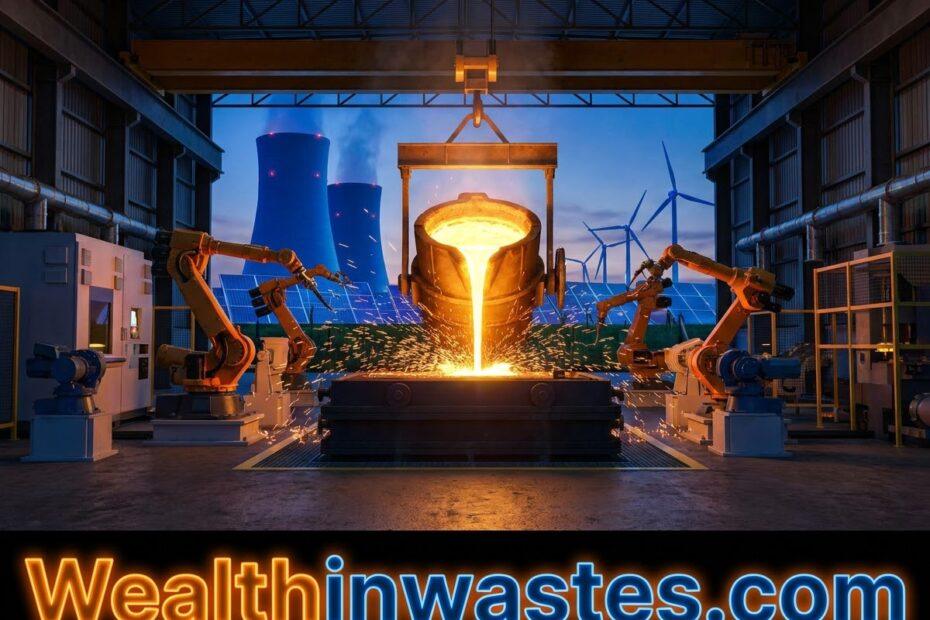
Steel has shaped modern civilization for generations, supporting buildings, transport networks, machinery, and household products. Today, new steel technologies are improving its strength, efficiency, versatility, and environmental performance across global industries.
The industry now faces rising expectations for durable materials alongside urgent pressure to reduce energy use, emissions, and resource consumption. Innovation therefore extends beyond furnaces into design, data, recycling, and supply chains.
Manufacturers are testing cleaner ironmaking routes, refining alloy composition, and adopting digital controls that help plants make consistent products with less waste. These improvements influence construction, automotive production, power systems, and manufacturing.
Steel also supports renewable energy through wind towers, transmission infrastructure, and solar projects. Its long service life can improve resource efficiency when designers select suitable grades and maintain structures properly.
This article explores the major steel technologies shaping production, material performance, smart factories, recycling, and future development. It also explains key limitations that businesses must address as they pursue competitive, responsible steelmaking.

Green Steel Production Methods
Traditional steelmaking often combines coke-based blast furnaces with basic oxygen furnaces. These systems produce large volumes reliably, but carbon-intensive inputs create strong incentives for cleaner processes and better emissions control, alongside metal recycling and reuse.
No single pathway suits every plant. Scrap availability, electricity prices, ore quality, infrastructure, and product specifications shape investment decisions, so producers compare options and consult practical recycling guidance and regional waste-recovery plans.
1. Hydrogen-Based Reduction: Hydrogen can remove oxygen from iron ore during direct reduction, creating water rather than carbon dioxide. Its climate benefit depends on low-emission hydrogen, clean electricity, and suitable feedstocks.
2. Electric Arc Furnaces: Electric arc furnaces melt steel scrap and, in some operations, direct-reduced iron. When powered by cleaner electricity and supplied with suitable feedstock, they can lower production emissions and support flexible manufacturing.
3. Direct-Reduced Iron: Direct-reduced iron processes convert iron ore into metallic iron without melting it in a blast furnace. Natural gas can support this route, while hydrogen may reduce emissions as supplies improve.
4. Process Heat and Carbon Controls: Improved burners, heat recovery, efficient oxygen use, and process monitoring can cut fuel demand. These measures complement longer-term decarbonization and support cleaner steel production.
Read Also: The Impact of Steel Mill on the Environment
Advanced Steel Materials for Better Performance
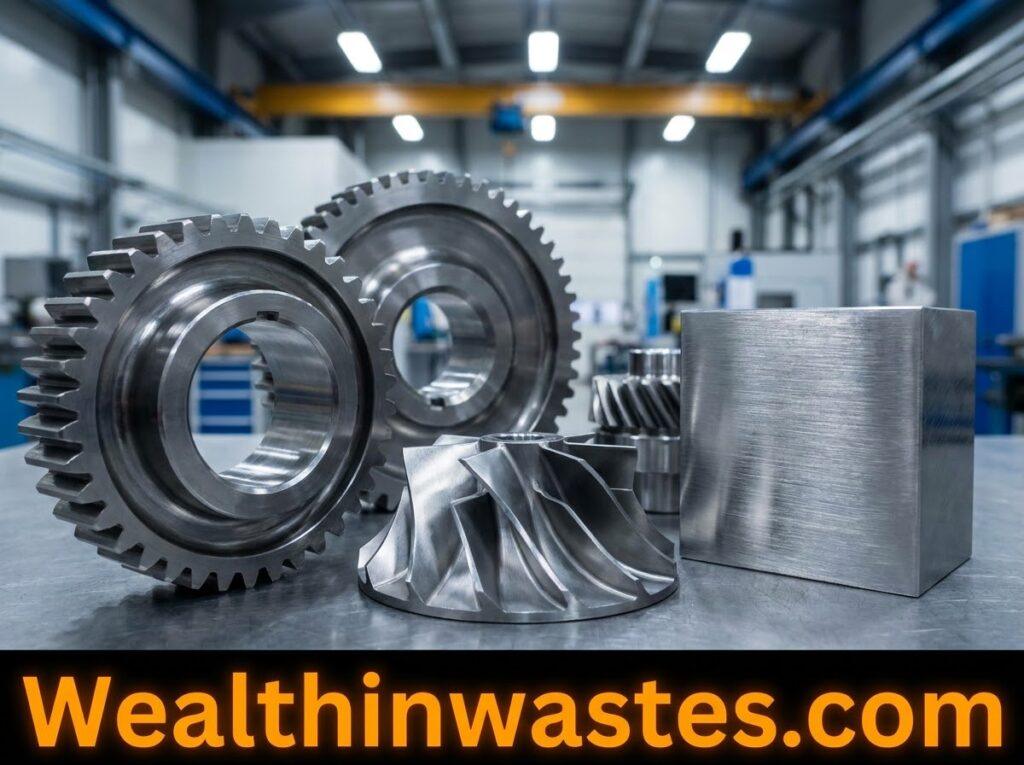
Material science allows engineers to tune steel through alloying, heat treatment, rolling, and controlled cooling. These methods influence strength, flexibility, hardness, weldability, and resistance to corrosion, helping designers choose suitable grades for specific working conditions.
Material advances can reduce resource use when they allow thinner sections, longer service life, or fewer replacements. The result depends on lifecycle performance, responsible design, and whether manufacturing and maintenance match intended operating conditions.
Automotive engineers assess how high-strength grades behave during stamping, welding, and repair. Research into steel parts for vehicles shows why grade selection must balance crash protection, manufacturability, durability, cost, and end-of-life recovery.
Construction engineers may combine new steel grades with recovered materials from building projects. Better recovery of materials from demolition sites can return reusable steel to supply chains, cutting disposal needs and preserving resources.
1. Advanced High-Strength Steel: These grades deliver greater strength without requiring thicker components. Automakers use them in vehicle structures to improve crash performance and manage weight, while engineers assess forming, joining, and repair requirements.
2. Stainless and Duplex Steel: Stainless steel resists corrosion through its chromium-rich composition, while duplex grades combine strength with strong corrosion resistance. These properties suit chemical equipment, marine infrastructure, water systems, and demanding industrial environments.
3. Weathering and Wear-Resistant Grades: Weathering steel develops a protective surface patina under suitable conditions, while wear-resistant grades withstand abrasion in machinery and handling equipment. Designers must account for climate, exposure, maintenance, and service demands.
4. Recycled Steel Applications: Processed scrap can become feedstock for new components, including steel-based construction materials and selected automotive products. Quality depends on chemistry control, sorting, testing, and the requirements of each application.
Smart Steel Manufacturing and Digital Tools
Digitalization connects sensors, production equipment, quality systems, and planning software across the steel plant. Rather than relying only on periodic inspections, operators can analyze live operating data and identify developing problems before they interrupt output.
Internet of Things sensors measure temperature, vibration, pressure, flow, and other process conditions. When teams review these readings consistently, they can schedule maintenance around equipment needs, reduce unplanned downtime, and improve worker and equipment safety.
Artificial intelligence and machine learning can help operators optimize furnace settings, detect product defects, and forecast energy demand. Experts review recommendations, confirm unusual results, and ensure production decisions satisfy safety and quality requirements.
Digital twins create virtual representations of equipment or processes so engineers can test operating changes before applying them to a live line. These models support scenario planning, performance comparison, and decisions during maintenance or upgrades.
A connected factory benefits from dependable suppliers and accurate inventory information. Recycling centres and recovery facilities can contribute traceable secondary-material streams, while digital records help plants track grades, quantities, delivery schedules, and quality checks.
Steel producers coordinate scrap purchases, transport, and deliveries across locations. Commercial metal recovery networks and regional scrap collection services can support this work when partners exchange accurate specifications and maintain clear acceptance procedures.
Automation does not remove the need for trained workers. Teams still require digital skills, cybersecurity practices, reliable data governance, and clear procedures for responding when software recommendations conflict with physical observations or established safety limits.
Steel Recycling and the Circular Economy
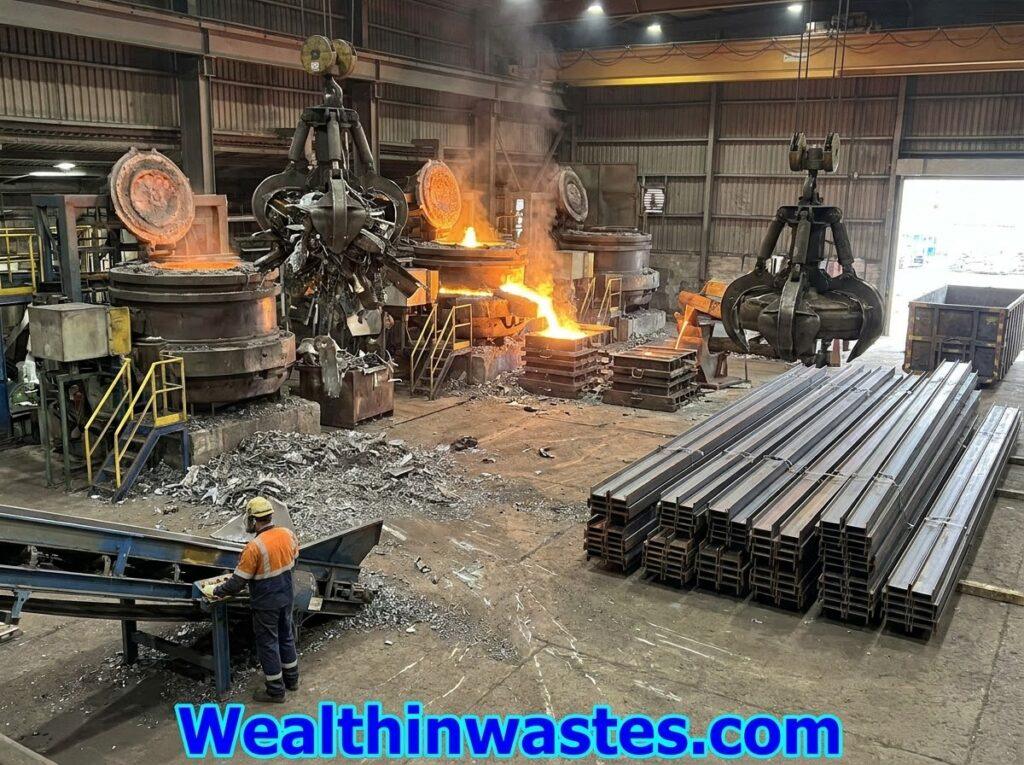
Steel supports a circular economy because many products can return to production as scrap after use. Recycling depends on collection systems, sorting, furnace capacity, and market demand for materials that meet required quality standards.
Scrap-based steelmaking is not impact-free because collection, preparation, transport, and melting all require energy. Its environmental performance depends on electricity sources, material quality, transport distances, furnace efficiency, and the alternative production route being compared.
Public participation also matters because mixed or contaminated materials can reduce recycling efficiency. Clear instructions for sorting containers correctly and accessible collection systems help protect recovered-material quality before scrap reaches industrial processors.
1. Product Design for Recovery: Designers can reduce coatings, simplify assemblies, and identify materials so products are easier to dismantle and sort. These choices complement the reduce, reuse, and recycle approach and improve recovery opportunities.
2. Scrap Collection and Sorting: Recyclers separate ferrous metals from other materials, remove contaminants, and prepare scrap for furnace requirements. Collection programmes can improve supply when people follow clear guidance for recovering used cans.
3. Quality Control and Traceability: Producers check scrap chemistry and remove unwanted elements when necessary to maintain specifications. Metal recycling value chains connect collectors, processors, laboratories, and steelmakers, helping recovered material reach appropriate applications.
4. Closed-Loop Partnerships: Manufacturers can work with customers to recover offcuts, damaged components, and retired products. This approach keeps steel in circulation, improves material planning, and can reduce dependence on newly mined inputs over time.
Steel Technologies Across Major Industries
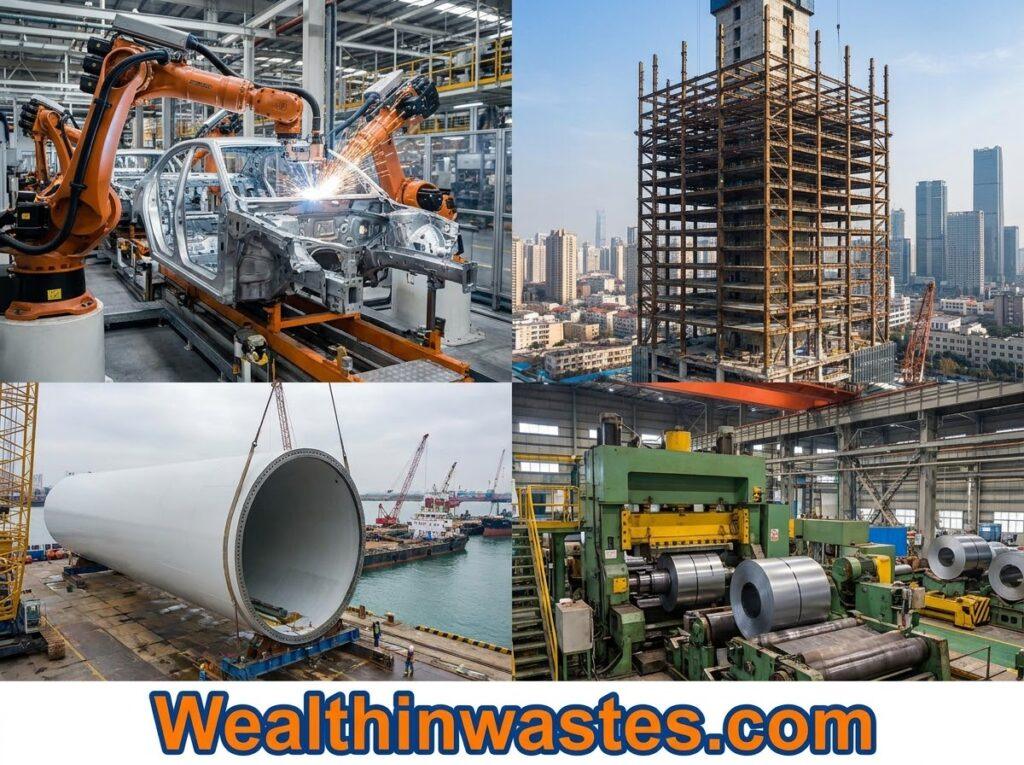
Steel remains essential to bridges, railways, buildings, pipelines, vehicles, machinery, and many energy systems. Technology improvements allow engineers to match products to loading, weather exposure, fatigue risks, maintenance needs, and expected service life.
In construction, stronger grades and improved fabrication can reduce structural weight and simplify designs. Reusing components and considering recovered inert construction materials may support resource efficiency, provided engineers verify specifications, structural integrity, and applicable standards.
Automotive makers use steels in body structures, chassis systems, and critical parts. Material choices influence crash energy management, vehicle mass, repair practices, and the recovery of steel when vehicles reach end of life.
Wind turbines, electricity networks, and other energy infrastructure rely on steel components that face demanding loads and weather conditions. Appropriate corrosion protection, inspection, and maintenance help preserve performance and reduce premature replacement across operating periods.
Steel also supports circular manufacturing beyond heavy industry. Clear instructions for separating mixed containers and community-led recycling initiatives can keep valuable materials in circulation, although collection rules and available facilities differ between locations.
Steel by-products such as slag may have uses in construction after testing and processing. Supplementary materials can also reduce demand for some virgin inputs in specific products, subject to performance and environmental standards.
Steelmaking Challenges and Practical Solutions
Cleaner steel technology faces barriers, including equipment costs, access to low-emission electricity, hydrogen availability, scrap quality, and the need to maintain reliable production. Long investment cycles make planning and policy stability important.
Communities and regulators expect steelmakers to manage air emissions, water use, noise, traffic, and worker exposure. Transparent monitoring, municipal recycling programmes, and guidance on recyclable materials can strengthen accountability while identifying local environmental priorities.
1. Energy and Infrastructure: Hydrogen reduction and electric furnaces need dependable low-carbon power, suitable networks, and new industrial infrastructure. Producers can assess staged upgrades, energy-efficiency projects, and supply agreements before committing to expensive plant-wide changes.
2. Scrap Contamination: Paints, coatings, mixed alloys, and non-metal attachments can complicate recycling or affect steel chemistry. Improved sorting systems, workplace recycling-bin design, material identification, and supplier specifications help reduce contamination before processing begins.
3. By-Product Management: Slag, dust, scale, and other residues require careful handling and reuse or disposal routes. Testing is essential before processed fly ash or other by-products enter construction markets because composition varies.
4. Skills and Investment: Advanced furnaces, sensors, and data platforms require training, maintenance, and cybersecurity planning. Businesses can build capability through projects, staff development, supplier support, and performance reviews that measure energy, quality, and reliability.
The Future of Steel Technologies
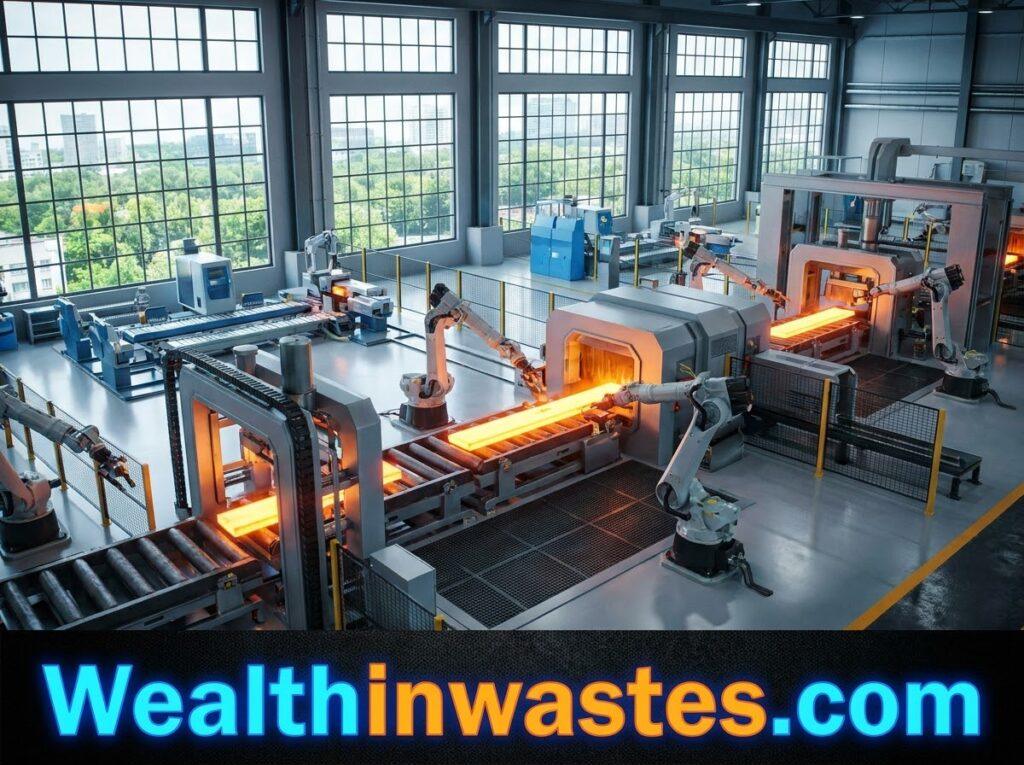
The next phase of steel technologies will likely combine cleaner ironmaking, more efficient furnaces, advanced alloys, and deeper recycling partnerships. Progress will depend on technical performance, commercial viability, infrastructure readiness, and access to lower-emission energy.
Researchers continue to improve hydrogen-based reduction and explore carbon capture for processes that remain difficult to decarbonize. Lifecycle assessments must account for energy inputs, emissions, and site conditions before comparing the benefits of each approach.
Additive manufacturing, often called 3D printing, can create complex steel components and support rapid prototyping. Engineers must still assess production speed, powder or wire inputs, defect control, repairability, and safety standards.
Alloy development may improve strength, toughness, fatigue performance, and resistance to high temperatures or corrosive environments. Advances deliver lasting value when manufacturers test real operating conditions and consider repair, maintenance, and end-of-life recovery.
Supply-chain data can improve forecasting and reveal opportunities to reuse offcuts or return worn components. Broader material tracking and resource-efficient material conversion offer lessons for keeping materials in circulation, alongside better recycling-bin systems.
Steel technologies will not become sustainable through equipment alone. Effective progress requires collaboration among steelmakers, utilities, equipment suppliers, designers, recyclers, governments, and customers who support cleaner production and durable, recoverable products.
Read Also: Practical Steps to Convert Steel Cans Wastes into New Steel Products
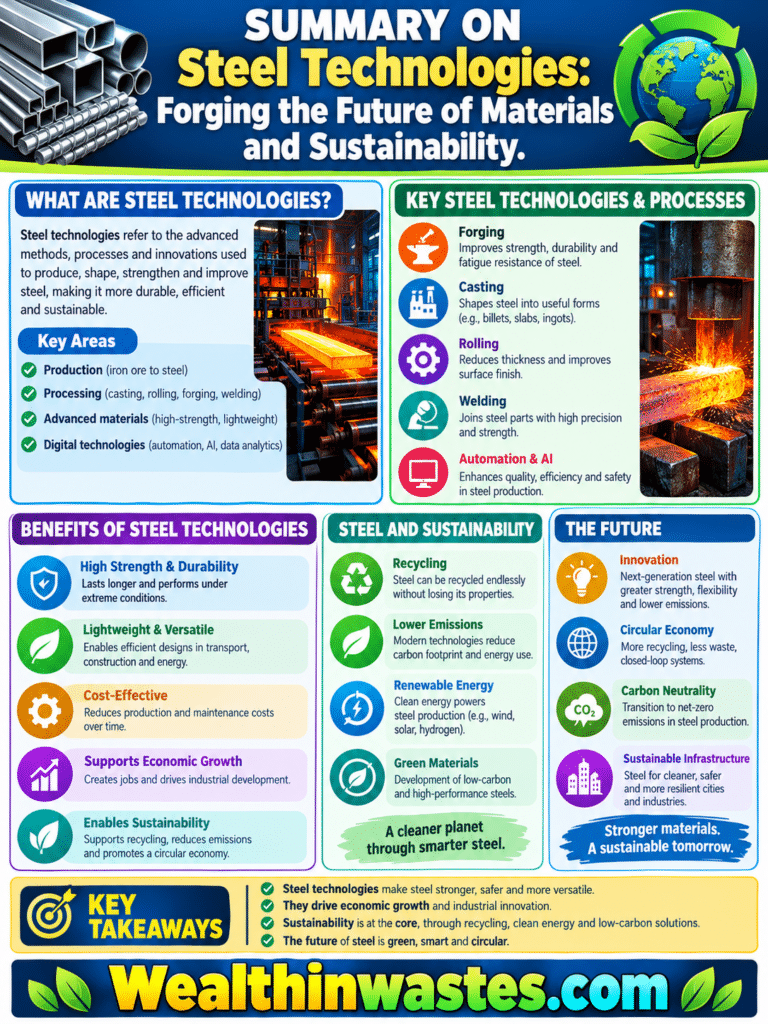
Summary on Steel Technologies: Forging the Future of Materials and Sustainability
| Technology Area | What It Does | Main Benefit |
|---|---|---|
| Green Steel Production | Uses hydrogen reduction, electric furnaces, efficiency upgrades, and cleaner energy. | Can reduce production-related emissions. |
| Advanced Steel Materials | Uses alloy design and controlled processing to tailor performance. | Supports strength, durability, and lighter designs. |
| Smart Manufacturing | Applies sensors, AI, predictive maintenance, and digital twins. | Improves consistency, uptime, and operational decisions. |
| Steel Recycling | Collects, sorts, tests, and remelts suitable steel scrap. | Conserves resources and supports circular material flows. |
| Environmental Management | Addresses energy, by-products, contamination, and worker protection. | Helps reduce risks and improve compliance. |
| Future Development | Advances hydrogen, carbon management, additive manufacturing, and supply-chain data. | Creates paths toward more resilient, lower-impact production. |
Frequently Asked Questions About Steel Technologies
1. What are steel technologies?
They are the production methods, material innovations, digital systems, and recycling processes used to make and manage steel.
2. How does green steel differ from traditional steel?
Green steel aims to reduce emissions through cleaner energy, hydrogen-based reduction, scrap use, and process improvements.
3. What is an electric arc furnace?
It melts scrap steel, and sometimes direct-reduced iron, using electric arcs rather than relying on a traditional blast-furnace route.
4. Why is steel recycling important?
It conserves raw materials, reduces waste, and can lower energy use and emissions compared with primary steel production.
5. Which steel types are used in vehicles?
Automakers use advanced high-strength steel and other carefully selected grades to balance safety, weight, durability, and manufacturability.
6. How does artificial intelligence help steel plants?
AI can support process control, defect detection, maintenance planning, energy forecasting, and more consistent quality checks.
7. Can steel be recycled repeatedly?
Yes. Steel can be recycled many times, although scrap quality, contamination, and chemistry control affect the final product.
8. What slows the adoption of low-emission steel?
High capital costs, clean-energy access, hydrogen supply, infrastructure needs, scrap availability, and technical requirements can slow adoption.
Do you have any questions, suggestions, or contributions? If so, please feel free to use the comment box below to share your thoughts. We also encourage you to kindly share this information with others who might benefit from it. Since we can’t reach everyone at once, we truly appreciate your help in spreading the word. Thank you very much for your support and for sharing!
Read Also: Strategies For Sustainable Resource Management In Agriculture