


Waste determination is the process of examining discarded materials to establish what they are, how facilities generate them, and which management requirements apply before treatment, storage, recycling, transportation, or disposal.
The process matters because a waste stream can appear ordinary while its composition, source, or handling history creates characteristics that require additional controls for workers, communities, facilities, and natural resources.
Accurate waste determinations help organizations separate ordinary waste from materials requiring hazardous waste controls, reducing accidental mismanagement while supporting appropriate decisions about containers, labeling, treatment, recycling, transport, and final disposal.
A clear determination also improves operational planning because facilities can understand their waste profile, estimate generation quantities, identify applicable codes, and prepare documentation that supports inspections and future management decisions.
For regulated facilities, the determination should rely on consistent information gathered at the point of generation and updated when processes, materials, contamination, or other conditions could change the waste properties.
Read Also: Waste Management Terms and their Meanings
Waste Determination Process Basics
The first stage of the waste determination process establishes why the material requires evaluation and identifies the information needed before a classification decision can be made confidently, consistently, and properly.
Waste terminology can create confusion when words such as toxic, hazardous, refuse, discarded material, and solid waste appear together. A useful waste concept resource helps teams maintain consistent meanings when documenting determinations.
In regulatory practice, solid waste does not necessarily mean a material must be physically solid. Liquids, sludges, and contained gases can fall within solid waste definitions, depending on applicable rules and exclusions.
A facility should therefore begin with the legal definition that applies in its jurisdiction, rather than assuming physical appearance alone determines whether a material enters the waste determination process initially.
The definition of solid waste provides an essential starting point because material that does not qualify as solid waste under applicable rules generally cannot proceed into the hazardous waste classification pathway.
Facilities can strengthen this first review by examining solid waste classification and comparing each material with its source, physical form, intended use, disposal route, and applicable regulatory definition before proceeding.
Identify And Describe Waste Streams
1. Map every waste stream: Start with a facility-wide inventory that names each discarded material and explains exactly where, when, and under which operating activity the material becomes waste initially.
2. Describe the generating process: Record the equipment, raw materials, products, chemicals, maintenance activities, spills, cleaning operations, and other processes that contribute to each identified waste stream accurately and consistently.
3. Record waste composition: Gather information about ingredients, contaminants, residues, additives, reaction products, and mixtures because composition can determine whether a material later exhibits a regulated hazardous characteristic requiring controls.
4. Trace industrial sources: Facilities should review relevant industrial waste sources when operations involve manufacturing, processing, construction, petroleum activities, chemical production, agriculture, mining, or other activities that create varied waste streams.
5. Consider environmental pathways: Understanding how waste can reach air, soil, groundwater, surface water, workers, or communities also clarifies industrial waste impacts and why accurate identification matters during planning and management.
6.Separate similar materials: Do not combine different waste streams merely because they look alike; separate materials when their generating processes, composition, contamination levels, or management requirements differ significantly enough.
7. Verify operational records: Production logs, purchasing records, safety information, maintenance documents, and waste collection records can help confirm quantities and support a complete inventory before classification decisions begin properly.
Confirm The Solid Waste Status
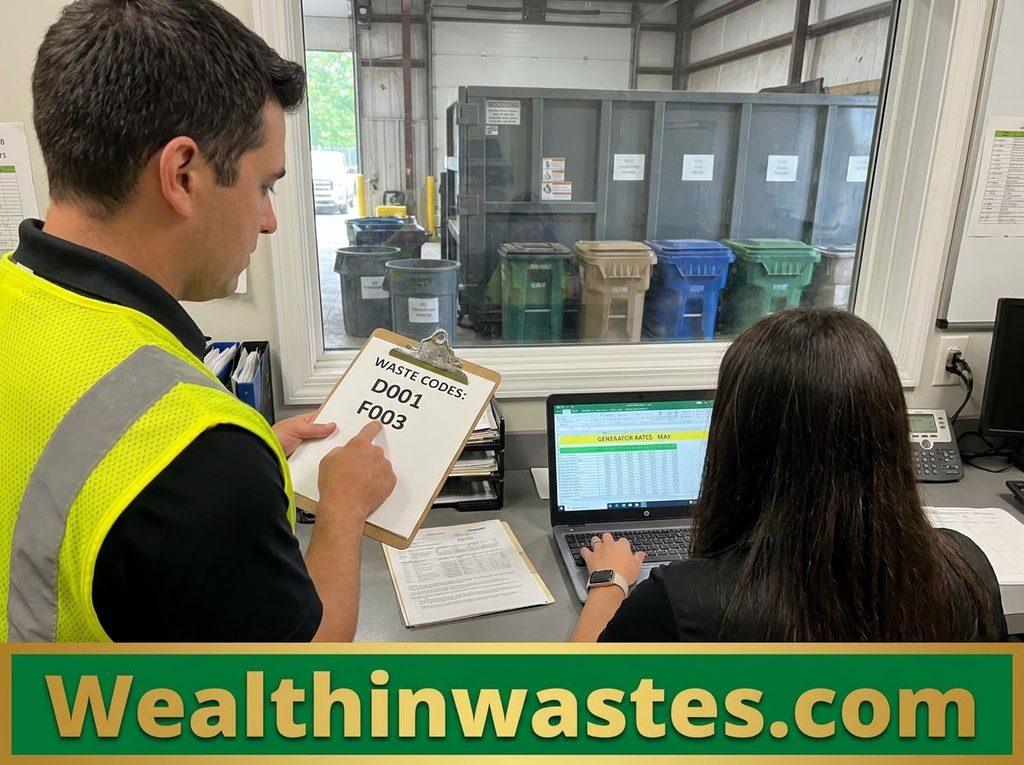
1. Check the solid waste definition: Determine whether the material meets the applicable legal definition before treating it as a candidate for hazardous waste classification or further regulatory evaluation today.
2. Check the point of generation: Make the determination where the waste first occurs, before dilution, mixing, recovery, or other changes that could alter its composition or regulatory status significantly.
3. Identify recycled materials: Materials sent for recycling may receive specific classification information, so the facility should document the facts supporting any applicable exclusion rather than assuming recycling automatically removes oversight or risk.
4. Review process changes: A waste previously classified one way may require reevaluation after changes in raw materials, equipment, operating conditions, contamination, or production methods affect its properties materially or substantially.
5. Compare regulatory characteristics: Consult reliable information on hazardous waste characteristics to determine whether the waste could exhibit ignitability, corrosivity, reactivity, toxicity, or another applicable regulatory property under the rules.
6. Confirm supporting evidence: A review of listed or characteristic hazardous wastes can help determine whether the material appears on a regulatory list or requires additional testing for characteristic properties.
Check Exclusions And Special Rules
1. Review regulatory exclusions: Determine whether any specific exclusion or exemption applies to the material, and document the factual basis carefully because an unsupported exclusion can create compliance problems later.
2. Examine mixtures carefully: A waste combined with another material can acquire different regulatory properties, so generators should evaluate the resulting stream instead of relying on the status of its original components.
3. Check derived materials: Residues, sludges, treatment by-products, and recovered materials may require separate evaluation because processing can change their composition, concentration, physical form, or regulatory classification significantly under applicable rules.
4. Consider source information: Reviewing sources of hazardous substances can reveal whether chemicals, contaminated products, process residues, or other materials require closer examination before the facility accepts an exclusion decision.
5. Confirm management restrictions: Even when a material qualifies for an exclusion, other environmental, transportation, occupational, or local requirements may still apply, and teams should check them before finalizing handling decisions.
6. Plan treatment responsibly: Guidance on hazardous substance treatment and disposal can help facilities understand why identification must come before selecting treatment technologies, storage controls, recovery options, or final disposal methods.
Determine Hazardous Waste Status
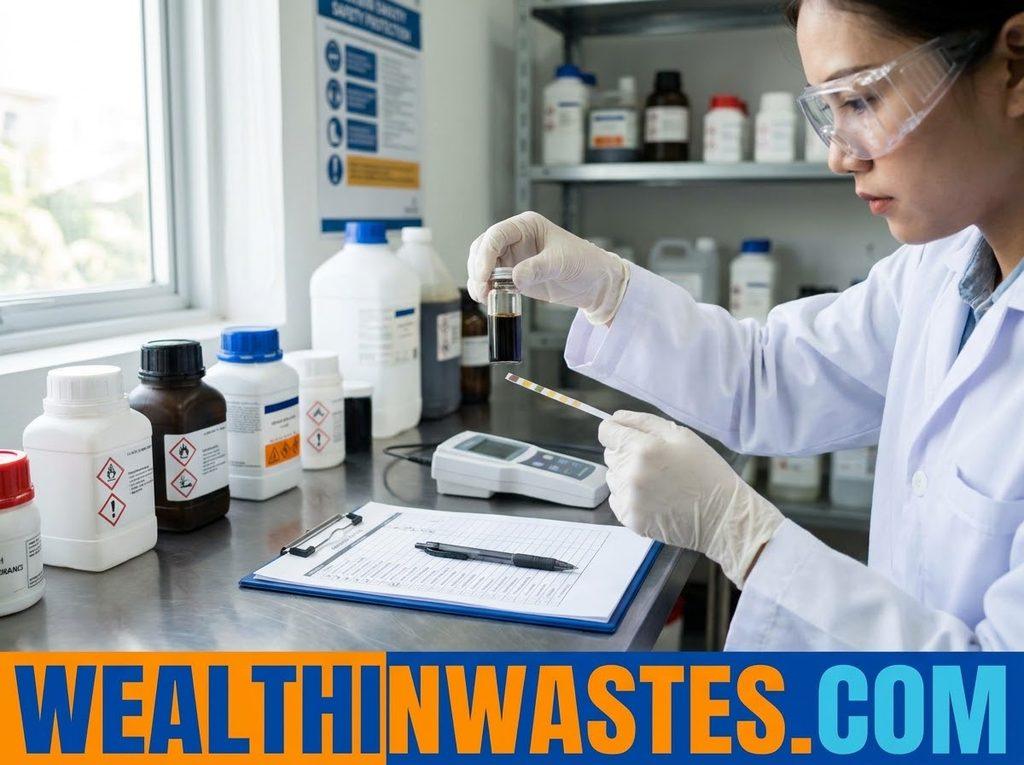
1. Check listed wastes: Determine whether the waste matches a listed category under applicable hazardous waste rules, considering the source, process, chemical identity, and other regulatory details carefully before final classification.
2.Check hazardous characteristics: Evaluate whether the waste exhibits ignitability, corrosivity, reactivity, or toxicity using available knowledge, representative sampling, approved analytical methods, or another accepted approach under the applicable rules.
3. Use reliable waste knowledge: Safety data, process descriptions, ingredient information, previous analyses, technical references, and supplier information can support a knowledge-based determination when the evidence clearly describes the generated waste.
4. Sample representative material: When analytical testing is necessary, collect a representative sample using a suitable method and maintain records showing how staff obtained, handled, preserved, tested, and managed the sample.
5. Compare laboratory results: Compare analytical findings against applicable regulatory limits and test methods rather than treating numbers as isolated results without context, supporting evidence, or proper documentation requirements during review.
6. Document the conclusion: Waste determination methods provide useful guidance on combining testing and knowledge-based evidence to explain why the rules classify a waste as hazardous or non-hazardous under applicable requirements.
7. Verify management requirements: Once a hazardous determination is made, consult the broader hazardous waste management guide and solid waste management guide to connect classification with storage, transportation, treatment, disposal, and compliance duties.
Document Waste Determination Records
Written documentation turns a waste determination from a one-time opinion into a traceable compliance record. It should show what waste was evaluated, how the decision was reached, and when review occurred.
For each waste stream, retain the information that supports the determination, including process descriptions, waste composition, sampling details, laboratory results, safety information, calculations, photographs, and relevant regulatory references properly and consistently.
A useful record should also identify the person responsible for the determination and the date of the decision. Clear ownership makes later reviews easier when inspectors, managers, or environmental officers ask questions.
Organizations can reduce future confusion by keeping waste records in a consistent system, using unique waste-stream names or numbers, controlled templates, and organized evidence that staff can retrieve without unnecessary delay.
Good documentation also supports prevention because records can reveal recurring waste generation, unusual contamination, or process inefficiencies. Reviewing these patterns connects determination work with waste minimization and better resource management.
Finally, strong records help demonstrate why a waste received its classification and reduce disputes during inspections. Facilities should also consider environmental and health effects when assessing whether management decisions adequately control potential risks.
Read Also: What I cannot Recycle – List of Non-Recyclable Items
Use Waste Codes And Generator Rates
1. Measure monthly generation: Record the quantity of each hazardous waste stream generated during the relevant period because generator status and management requirements can depend on the amount produced each month.
2. Track waste separately: Keep quantities for different waste streams distinct when their codes, characteristics, or management requirements differ, rather than combining measurements into one broad total without supporting records.
3. Verify applicable waste codes: List every hazardous waste code that properly applies to the stream after completing the determination, including codes associated with listed or characteristic wastes under applicable rules.
4.Review generator status: In jurisdictions that classify generators by quantity, use documented generation rates to establish the correct category and identify the requirements that accompany that status legally and appropriately.
5. Reconcile shipment records: Compare generation estimates with container inventories, manifests, treatment records, storage logs, and contractor documents to identify unexplained differences, missing quantities, or incomplete accounting promptly during reviews.
6. Connect classification with disposal: Before selecting a final option, review recommended waste disposal methods to ensure the chosen approach matches the waste type, quantity, and applicable regulatory controls carefully.
7. Improve management controls: Use documented quantities and classifications to strengthen waste management control methods, including segregation, labeling, storage planning, emergency preparedness, and oversight of qualified service providers at every stage.
Review And Update Waste Determinations
A waste determination should not become permanently fixed simply because an earlier evaluation produced a clear result. Facilities need practical procedures that trigger review whenever relevant operating conditions change significantly.
Changes in raw materials, formulations, production equipment, treatment methods, contamination, suppliers, operating conditions, or waste handling can alter composition and therefore require a new determination or supporting evidence for decisions.
Facilities should establish a review schedule based on regulatory requirements, waste variability, process risk, and operational changes. Highly variable streams may need more frequent evaluation than stable and well-characterized materials.
Reevaluation can also identify opportunities to reduce waste before it becomes a compliance burden. A documented review of proper waste reduction practices may reveal substitutions, housekeeping improvements, or process controls.
Management teams should compare determination records with current handling practices and confirm that storage, transport, treatment, and disposal arrangements still match the waste profile and applicable requirements during every review cycle.
Finally, a practical solid waste management guide and reliable information about waste recycling processes can support continuous improvement, especially when facilities discover materials that can be safely recovered instead of discarded.
Summary on Step by Step Guide to Waste Determination Process
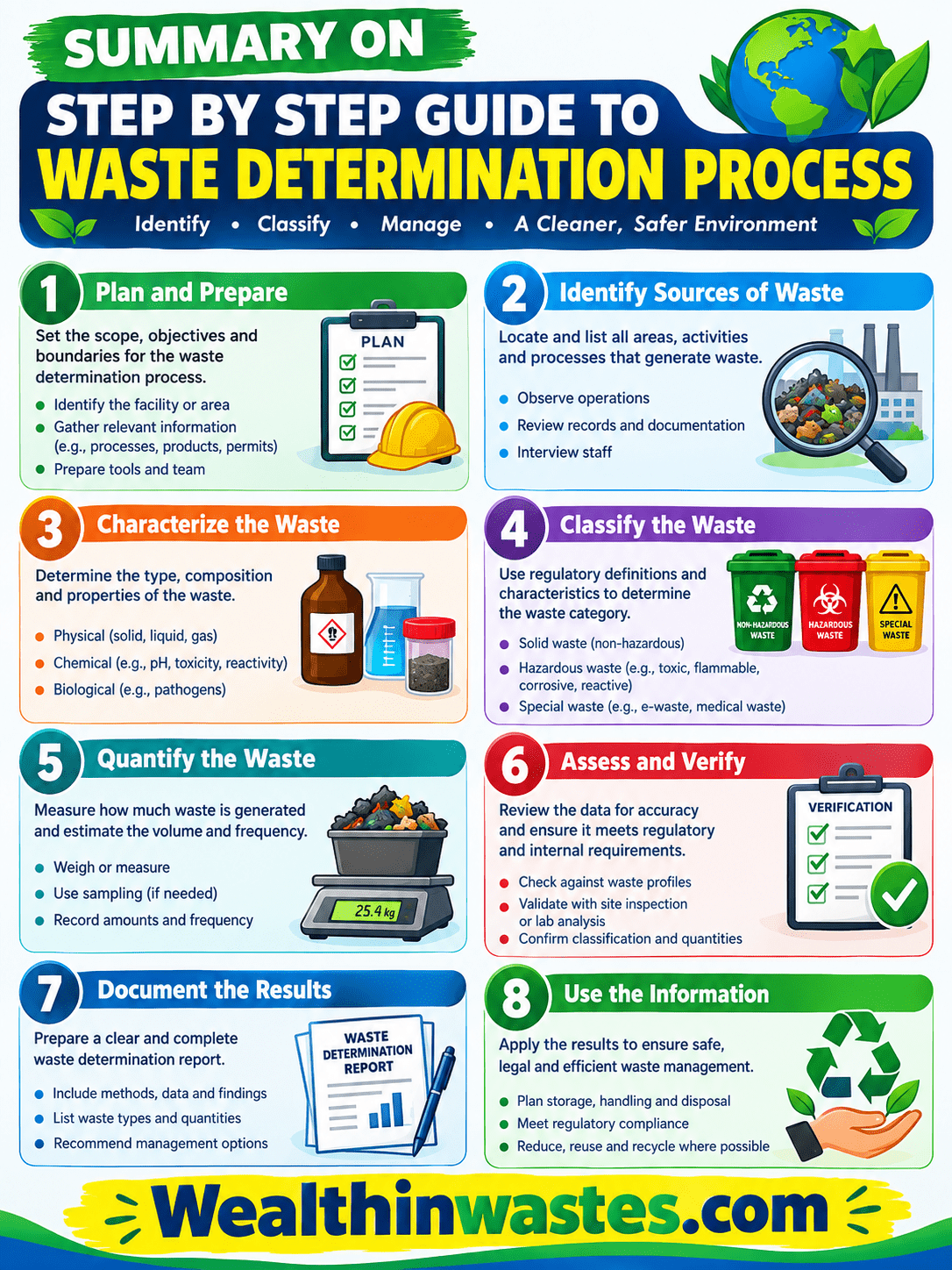
| Section | Main Focus | Key Point |
|---|---|---|
| Process Basics | Purpose and starting point | Begin with definitions and reliable information before making classification decisions. |
| Waste Stream Identification | Source and composition | Inventory every stream and document how each material becomes waste. |
| Solid Waste Status | Regulatory starting point | Confirm the material qualifies as solid waste before hazardous classification. |
| Exclusions And Rules | Special regulatory treatment | Document exclusions, mixtures, derived materials, and other applicable requirements. |
| Hazardous Waste Status | Listed and characteristic wastes | Use process knowledge, representative sampling, and valid analytical evidence. |
| Recordkeeping | Supporting documentation | Keep clear evidence showing how and why the determination was made. |
| Codes And Quantities | Generator requirements | Track waste codes and generation rates to support applicable management duties. |
| Review And Updates | Continued accuracy | Reevaluate waste determinations after material, process, or handling changes. |
Frequently Asked Questions About Waste Determination Process: A Complete Step-by-Step Guide
1. What is the waste determination process?
It is a structured review used to identify a waste stream, determine its regulatory status, classify hazards, and document the conclusion.
2. When should a waste determination be completed?
The facility should complete it when generating waste and whenever changes could alter composition, characteristics, exclusions, or regulatory status.
3. Can every waste stream require the same testing?
No. Some streams can rely on documented process knowledge, while others require representative sampling and laboratory analysis to support classification.
4. Why are waste generation quantities important?
Quantities can affect generator categories, management obligations, storage planning, reporting duties, and the controls required by applicable regulations.
5. What records should support a determination?
Keep process information, composition details, sampling records, analytical results, safety information, regulatory references, calculations, conclusions, and review dates.
6. Should waste determinations be reviewed after changes?
Yes. Changes in materials, processes, contamination, equipment, or handling can alter waste properties and should trigger an appropriate review.
Do you have any questions, suggestions, or contributions? If so, please feel free to use the comment box below to share your thoughts. We also encourage you to kindly share this information with others who might benefit from it. Since we can’t reach everyone at once, we truly appreciate your help in spreading the word. Thank you very much for your support and for sharing!
Read Also: Controlling Food Waste and Recycling in Agriculture