


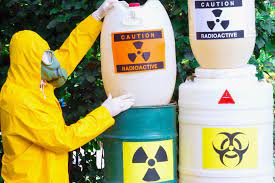
Maaddooyinka halista ah waxay u baahan yihiin maarayn taxadir leh sababtoo ah hantidooda jidheed, kiimiko, ama bayooloji waxay khatar gelin karaan caafimaadka bini’aadamka, tayada deegaanka, kheyraadka dabiiciga ah, iyo noolaha kale marka si khaldan loo maamulo ama si liidata loo koontaroolo.
Agabkani waxa laga yaabaa inay noqdaan qaraxyo, oksaydhayn, guban kara, xanaajin leh, waxyeelo leh, sun ah, kansar, ama deegaan khatar ah, taasoo ka dhigaysa maaraynta qashinka caadiga ah mid aan ku haboonayn walxo badan oo khatar ah oo ay abuuraan guryaha iyo warshadaha.
Qashinka walaxda khatarta ah waxa laga yaabaa inay iska caabiso xaalufka dabiiciga ah, waxay ahaan kartaa sun muddo dheer, ama waxay ku urursan yihiin hababka noolaha. Joogitaankoodu waxa uu ka dhigayaa daawaynta habboon, xakamaynta, gaadiidka, iyo tuurista kama dambaysta ah ee muhiimka ah.
Maareynta qashinka waa in ay had iyo jeer mudnaanta siiso ka hortagga jiilka aan loo baahnayn ee isha. Si kastaba ha ahaatee, qashinka khatarta ah ayaa weli ka soo baxa daryeelka caafimaadka, wax soo saarka, shaybaarada, beeraha, guryaha, wax soo saarka tamarta, iyo hawlaha kale.
Daawaynta saxda ah waxay yaraynaysaa sifooyinka khatarta ah ka hor intaan la tuurin, halka hababka qashin-qubka ee ku habboon ay ka hortagayaan walxaha waxyeellada leh inay soo galaan ciidda, biyaha dhulka hoostiisa, biyaha dusha sare, hawada, silsiladaha cuntada, iyo beelaha u dhow.
Qaybaha Walxaha halista ah iyo Khatarta
Maareynta walxaha khatarta ah waxay ku bilaabataa kala soocida sababtoo ah agabyada kala duwan waxay u baahan yihiin kontaroolo kala duwan. Hagida maaraynta qashinka ee hadda jirta waxay sidoo kale xooga saaraysaa aqoonsiga, kala soocida, kaydinta, daawaynta, gaadiidka, iyo tuurista sidii talaabooyin isku xidhan.
1. Qashinka Shucaaca: Qashinka shucaaca wuxuu ka kooban yahay walxo sii daaya shucaaca ionizing waxaana laga yaabaa inay ka soo baxaan xarumaha nukliyeerka, adeegyada caafimaadka, shaybaarada cilmi-baarista, iyo hawlaha warshadaha gaarka ah ee u baahan maarayn la xakameeyey.
2. Qashin kiimiko: Qashinka kiimikada waxaa ka mid ah alaabada la tuuray, agabka shaybaadhka, hadhaaga habka warshadaha, dareerayaasha, acids, alkalis, weelasha wasakhaysan, iyo biyaha wasakhda ah ee ay ku jiraan walxo soo saari kara waxyeelo deegaanka ama caafimaadka waxyeelada leh.
3. Qashinka Khatarta noole: Qashinka noole-khatarta ah waxa ku jiri kara noole faafa ama agab wasakhaysan oo awood u leh gudbinta cudurrada, gaar ahaan marka daryeelka caafimaadka ama qashinka shaybaadhka ay helaan kala-soocid ku filan, daaweyn, gaadiid, ama tuuris kama-dambays ah.
4. Qashinka Khatarta ah ee Joogtada ah: Walxaha halista ah qaarkood waxay iska caabiyaan burburka dabiiciga ah waxayna ku sii jiri karaan ciidda, wasakhaha, biyaha, ama unugyada noolaha. Ku adkaysiga waxay kordhisaa fursadaha soo-gaadhista muddada-dheer iyo ururinta deegaanka.
5. Qashinka Sunta ah iyo Falcelinta: Walxaha sunta ah ama falcelinta waxay dhaawici karaan dadka ama waxay waxyeeleyn karaan hab-nololeedyada deegaanka iyagoo si toos ah ula xiriira, neefsashada, nuugista, falcelinta kiimikaad, dab, qaraxyo, ama sii daynta gaas iyo isku dhisyo khatar ah.
Fahamka dariiqyada soo-gaadhista ayaa si isku mid ah muhiim u ah sababtoo ah walxaha khatarta ah waxay ku dhex wareegi karaan hawada, biyaha, ciidda, wasakhda, dhirta, xayawaanka, cuntada, iyo warbaahinta kale ee deegaanka ka hor intaanay dadka gaarin.
Sidoo kale akhri: Dariiqyada Walxaha halista ah
Farsamooyinka Daawaynta ee Walxaha halista ah
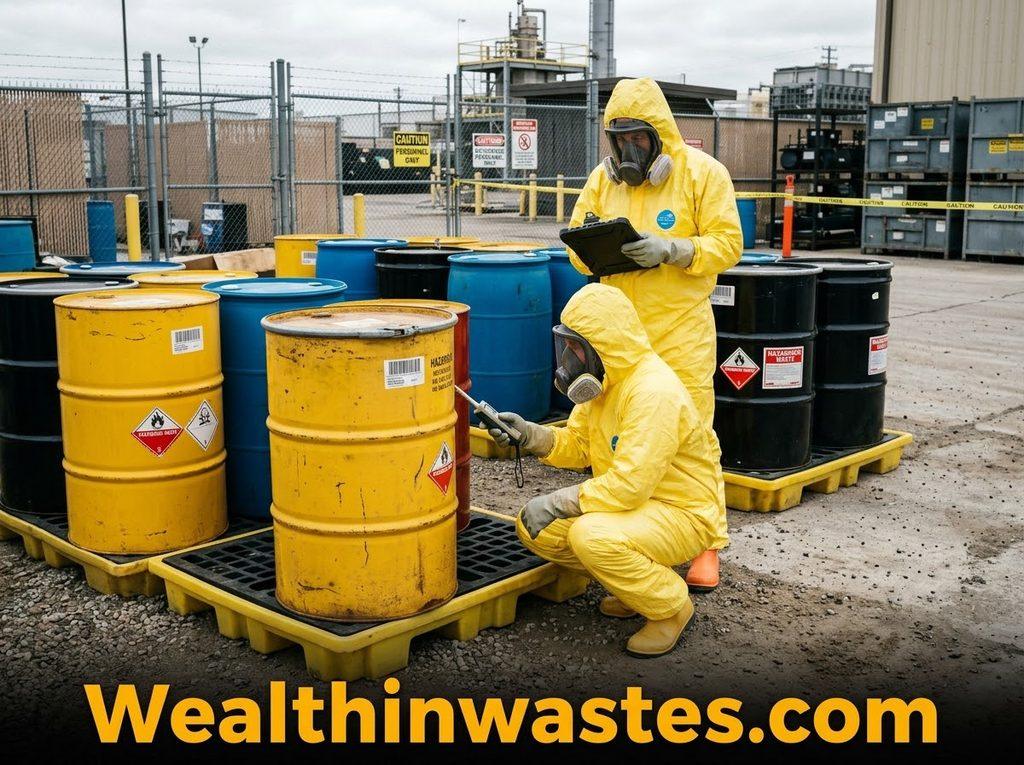
Xulashada tignoolajiyada daawaynta waxay kuxirantahay halabuurka qashinka, xooga saarida, hantida jirka, sunta, falcelinta, mugga, nuxurka qoyaanka, kaabayaasha la heli karo, qiimaha, ujeedooyinka daawaynta, iyo shuruudaha deegaanka ee ku xeeran xarunta daawaynta.
1. Daaweynta Nafleyda: Daaweynta bayooloji waxay isticmaashaa nooleyaal ama habab bayooloji si ay u burburiso wasakhowga dabiiciga ah ee ku habboon. Farsamooyinka waxaa ka mid ah kala-goynta hawada, hababka anaerobic-ka, dhoobada firfircoon, composting, iyo daawaynta enzyme-ku salaysan ee la doortay.
2. Daaweynta Jirka: Nidaamyada jireed ayaa kala sooca, xoogga saaraya, dhaqdhaqaaqa, ama ka saaraya wasakhooyinka iyada oo aan qasab ahayn in la beddelo qaab dhismeedka kiimikada. Farsamooyinka caanka ah waxaa ka mid ah baaritaanka, qalajinta, sifeynta, wasakhaynta, shiididda, uumiga, iyo hagaajinta.
3. Daaweynta Kiimikada: Daawaynta kiimikadu waxay beddeshaa walxaha halista ah iyadoo loo marayo falcelinno la xakameeyey. Oxidation-ka, dhimista, dhex-dhexaadnimada, hydrolysis, roobka, iyo falcelinta la xidhiidha waxay yarayn kartaa sunta, daxalka, falcelinta, ama dhaqdhaqaaqa wasakhaysan.
4. Daawaynta kulaylka: Hababka kulaylku waxay u soo bandhigaan qashinka ku habboon kulaylka la kantaroolo, taasoo keenaysa gubasho, burbur, jeermis, ama isbeddel qaabdhismeed. Gubashada, autoclaving, iyo hababka kulaylka kale waxay si weyn u yareeyn karaan sifooyinka khatarta ah.
Daaweyntu waa inay taageertaa kala sarreynta-maamulka qashinka halkii ay si toos ah u noqon lahayd jawaabta ugu horreysa. Dhimista ilaha, dib u isticmaalida, dib u warshadaynta, soo kabashada, iyo daawaynta ku haboon waxay yarayn kartaa cadadka u baahan in la tuuro.
Hoos u dhigista ilaha ayaa si gaar ah muhiim ugu ah walxaha halista ah sababtoo ah ka hortagga wasakhda marxaladda wax soo saarka waxay yaraynaysaa wax ka qabashada shuruudaha, qiyaasta daaweynta, kharashyada qashinka, iyo sii deynta deegaanka ee suurtagalka ah.
Si loo helo hagitaan wax ku ool ah oo ku saabsan dhimista qashinka ka hor intaysan daaweyntu noqon lama huraan, source reduction practices can help facilities prevent avoidable hazardous waste generation.
Organizations can also strengthen their management systems through better waste management practices covering segregation, operational controls, storage, transportation, treatment, monitoring, and environmental protection.
Thermal Hazardous Substance Treatment
Thermal treatment is useful where hazardous materials require destruction, sterilization, volume reduction, or transformation into less hazardous residues and gases under carefully controlled operating conditions.
1. Combustion: Controlled combustion uses sufficient heat and oxygen to oxidize combustible hazardous materials, producing gases and residual ash. Effective operation requires suitable temperature, residence time, mixing, and emission controls.
2. Pyrolysis: Pyrolysis heats selected materials with limited oxygen, producing gases, liquids, and solid residues. It can process certain difficult wastes while allowing controlled recovery or further treatment of products.
3. Gasification: Gasification converts carbon-containing materials at high temperatures with limited oxygen or steam, producing a combustible synthesis gas and smaller quantities of solid residues requiring additional management.
4. Vitrification: Vitrification uses extreme heat to melt selected hazardous materials into a glass-like stable matrix, reducing contaminant mobility and providing a potentially durable form for controlled final disposal.
5. Autoclaving And Similar Methods: Autoclaving uses pressurized steam to disinfect suitable infectious wastes. Ultraviolet or microwave technologies may also support treatment of selected clinical materials when the process matches waste characteristics.
Thermal treatment can greatly reduce waste volume and destroy many organic contaminants, but facilities require reliable emission controls, trained operators, suitable monitoring, emergency systems, and appropriate management of resulting residues.
Further information about thermal operations is available through different incineration technologies, while broader disposal guidance explains where thermal treatment fits among other waste-management options.
Hababka tuurista ee lagu taliyay should always consider waste composition and treatment requirements rather than assuming that every hazardous material can safely undergo combustion.
Incineration For Hazardous Waste
Incineration involves controlled combustion designed to convert suitable hazardous wastes into gases and non-combustible residues. It remains an important treatment option for selected organic and infectious wastes.
Common hazardous-waste incinerator designs include rotary kilns, multiple-hearth furnaces, and fluidized-bed systems. Each technology suits particular waste characteristics, operating conditions, feed forms, and treatment objectives.
Proper incineration can reduce waste volume substantially and destroy many hazardous organic compounds, while the remaining ash still requires characterization before authorities determine its appropriate management or disposal route.
Modern operation requires attention to combustion conditions, particulate control, acid-gas control, monitoring, maintenance, and safe handling of residues. Poorly operated systems can create additional pollutants and environmental problems.
The complete hazardous waste management framework reinforces the need to identify, store, transport, treat, and dispose of hazardous wastes according to their specific characteristics.
Incineration should therefore complement, rather than replace, reduction and recovery strategies, especially when facilities can safely reclaim usable materials or prevent waste generation through improved production processes.
Hazardous Substance Disposal Methods
Final disposal occurs after treatment when materials still require controlled placement or containment. The selected method should match the waste properties, treatment status, location, environmental setting, and regulatory requirements.
1. Controlled Land Disposal: Controlled disposal places waste within managed facilities that apply operating standards, monitoring procedures, access controls, and specified placement practices intended to reduce environmental exposure.
2. Secure Or Sanitary Landfills: Engineered landfills use liners, leachate collection, covers, monitoring systems, and appropriate geological conditions to isolate waste from surrounding soil and groundwater as much as practicable.
3. Deep-Well Injection: Deep-well injection places suitable liquid wastes into carefully selected underground geological formations. Site assessment must establish containment and minimize risks to potable aquifers and future water resources.
4. Surface Impoundment Or Containment: Suitable containment systems immobilize or isolate hazardous materials using engineered barriers, liners, compatible containers, clay, polymers, concrete, or other protective structures.
5. Water-Based Disposal: Disposal into oceans, rivers, lakes, or other water bodies creates serious environmental risks and should not serve as an uncontrolled alternative to treatment and regulated disposal systems.
Open dumping represents a particularly unsafe approach because uncontrolled sites can expose nearby residents, animals, soil, surface water, and groundwater to contaminants through direct contact and pollutant migration.
Broader information about choosing suitable disposal sites highlights geology, soil, hydrogeology, hydrology, climate, infrastructure, accessibility, and ecological considerations.
Facilities handling liquid wastes should also understand wastewater treatment options because treatment performance and disposal choices must account for contaminant concentration, toxicity, solids content, and groundwater protection.
Safe Landfill Disposal Of Hazardous Waste
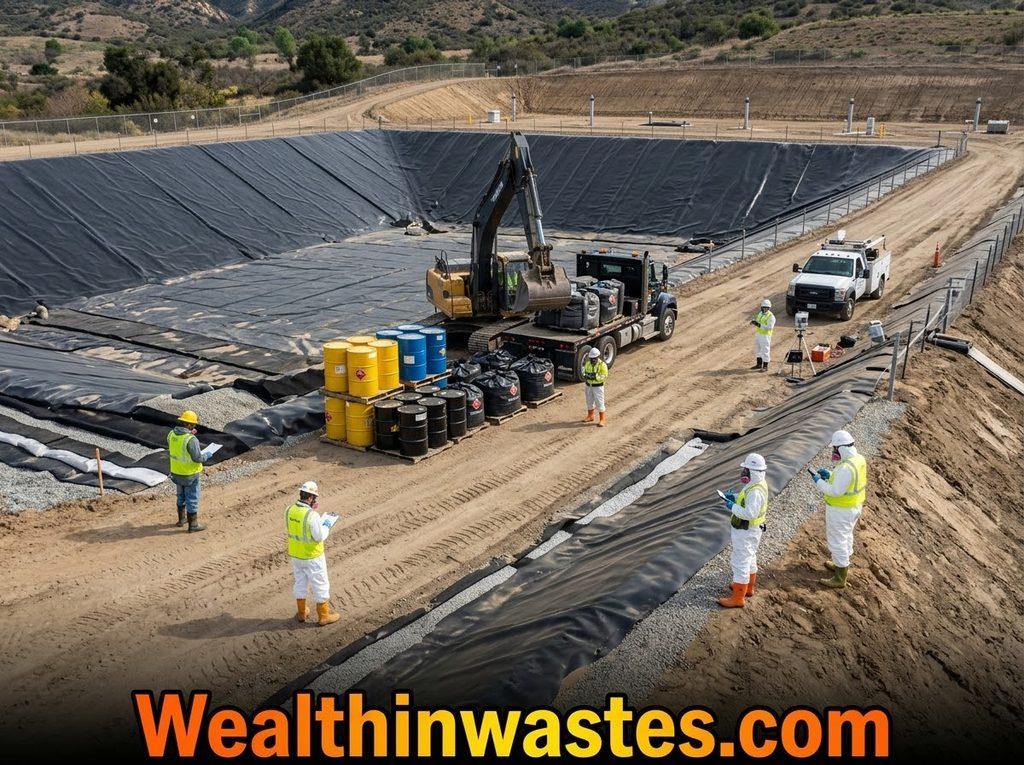
Landfills remain important for residual waste that cannot undergo safe recovery or further treatment. Hazardous waste requires stronger containment and monitoring than ordinary municipal refuse.
1. Bottom Liner: An engineered bottom liner creates a protective barrier beneath deposited waste, helping limit downward movement of contaminated liquids and reducing potential contact with underlying geological materials.
2. Leachate Collection: Leachate collection systems capture contaminated liquids generated within waste layers, allowing operators to remove, treat, monitor, and manage those liquids instead of allowing uncontrolled migration.
3. Daily Or Final Cover: Cover materials reduce exposure to rainfall, control odours and pests, limit litter, improve operational safety, and reduce infiltration that may increase leachate generation.
4. Groundwater Monitoring: Monitoring wells provide information about groundwater quality around disposal facilities. Regular sampling can help operators identify potential releases early and initiate corrective measures where necessary.
5. Site Suitability: Proper site selection considers geology, topography, soil characteristics, hydrogeology, hydrology, climate, ecological conditions, infrastructure, accessibility, and surrounding land uses before facility development proceeds.
Sanitary landfill systems perform best when engineering controls accompany good operating practices. They should never become a justification for accepting incompatible wastes or ignoring treatment requirements.
Readers seeking additional information can review how sanitary landfills operate and examine their major advantages and limitations.
Landfill-related risks also include gas generation, leachate movement, soil contamination, and water-quality impacts, making landfill emission management an important environmental consideration.
Facilities can further improve performance by applying principles described in integrated waste-management planning, keeping final disposal as the last practical stage after prevention, reuse, recycling, recovery, and treatment.
Specialized Hazardous Substance Disposal
Some hazardous wastes require specialized systems because ordinary municipal facilities cannot safely manage their properties. Radioactive, medical, chemical, and infectious wastes illustrate the importance of specialized controls.
1. Radioactive Materials: Radioactive wastes require controlled identification, classification, storage, transportation, treatment where applicable, and disposal according to their activity levels and regulatory requirements.
2. Chemical Materials: Chemical wastes should be identified through labels, safety information, process records, and laboratory characterization before selecting compatible treatment, containment, transportation, or disposal procedures.
3. Biomedical Materials: Infectious materials, pathological waste, sharps, pharmaceutical residues, and contaminated clinical materials require segregation at the point of generation and treatment suitable for their specific risks.
4. Industrial Hazardous Waste: Industrial facilities may generate acids, solvents, metals, toxic compounds, oily residues, and complex mixtures requiring physical, biological, chemical, or thermal treatment before final disposal.
5. Contaminated Containers: Empty containers may retain residues and therefore require cleaning, reuse, recycling, treatment, or disposal according to their previous contents and applicable hazardous-waste requirements.
Effective management of chemical wastes depends heavily on identifying their hazards before workers move, combine, store, treat, or dispose of them. Chemical waste management guidance supports this approach.
Organizations dealing with chemical residues can also review safe chemical waste disposal practices before selecting contractors or treatment facilities.
For medical facilities, medical waste categories help explain why infectious, chemical, radioactive, pharmaceutical, and sharps wastes require different management controls.
Radioactive waste requires particularly careful classification and controlled handling, as explained in radioactive waste management guidance covering identification, classification, transport, storage, and disposal.
Industrial facilities can strengthen their programmes by applying industrial waste management principles that connect treatment, disposal, environmental protection, compliance, and operational responsibility.
Read Also: Water and Wastewater Management Complete Guide
Risk Control Before Hazardous Substance Disposal
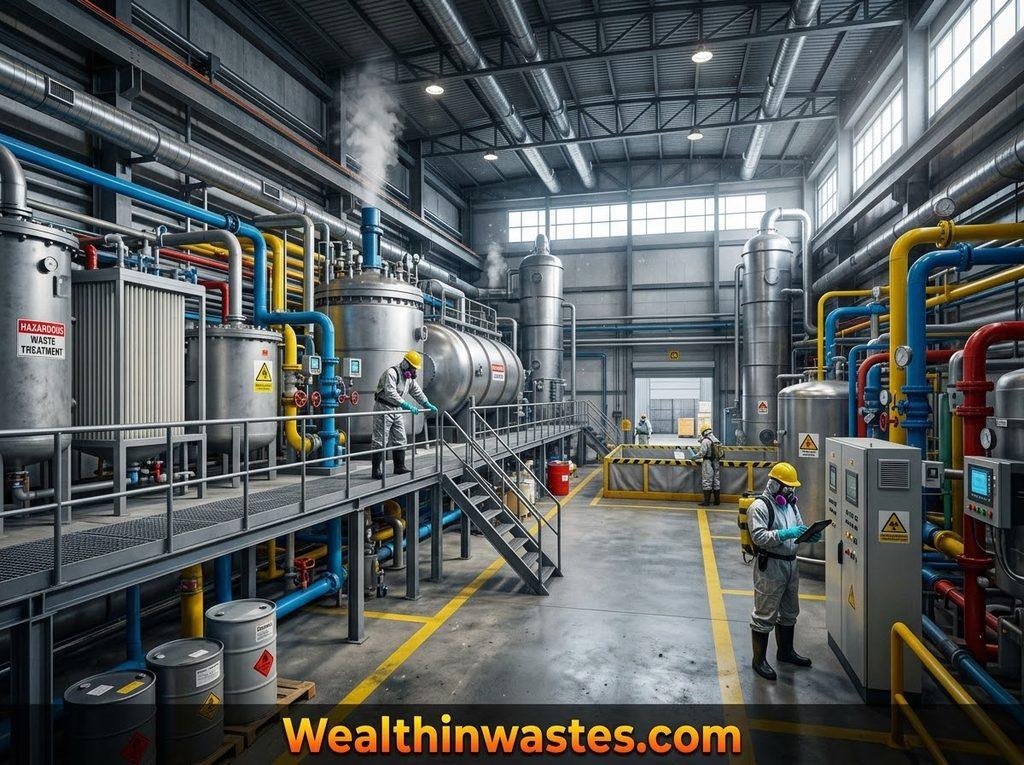
Safe treatment and disposal begin long before waste reaches a disposal facility. Producers should establish procedures that prevent accidental releases and keep hazardous materials separated from incompatible waste streams.
1. Identify Materials Early: Workers should identify hazardous substances through labels, safety documents, inventories, process records, and appropriate testing before storage, treatment, transportation, recycling, or disposal decisions occur.
2. Separate Incompatible Wastes: Segregation reduces accidental reactions and contamination. Chemical, infectious, radioactive, recyclable, and ordinary wastes should remain separated according to their characteristics and management requirements.
3. Store Wastes Securely: Suitable containers, labels, secondary containment, protected storage areas, inspection routines, and controlled access can reduce leaks, spills, unauthorized handling, and accidental exposure.
4. Use Safe Transportation: Transportation should use compatible packaging, secure loading, trained personnel, appropriate routes, spill-response equipment, and documentation that identifies the materials being transported to approved facilities.
5. Monitor Treatment And Disposal: Facilities should monitor operating conditions, emissions, residues, groundwater, leachate, incidents, and compliance indicators to verify that management systems continue protecting workers, communities, and ecosystems.
Good storage practices provide an important foundation for safe handling. Proper storage criteria explain how suitable containers, placement, maintenance, and collection practices support safer waste management.
Waste segregation also reduces contamination and improves processing efficiency. Facilities can apply effective source-segregation practices before hazardous waste reaches treatment or disposal stages.
Environmental protection depends on controlling pollutants across air, water, and land pathways. Environmental safety principles provide useful context for reducing exposure and preventing pollution.
Facilities should also recognize that poor disposal creates wider social and ecological consequences. Pollution management principles reinforce the need for prevention, monitoring, responsible treatment, and community protection.
Where wastewater carries hazardous constituents, treatment must address the liquid stream before discharge or reuse. Wastewater characterization helps determine appropriate treatment and disposal requirements.
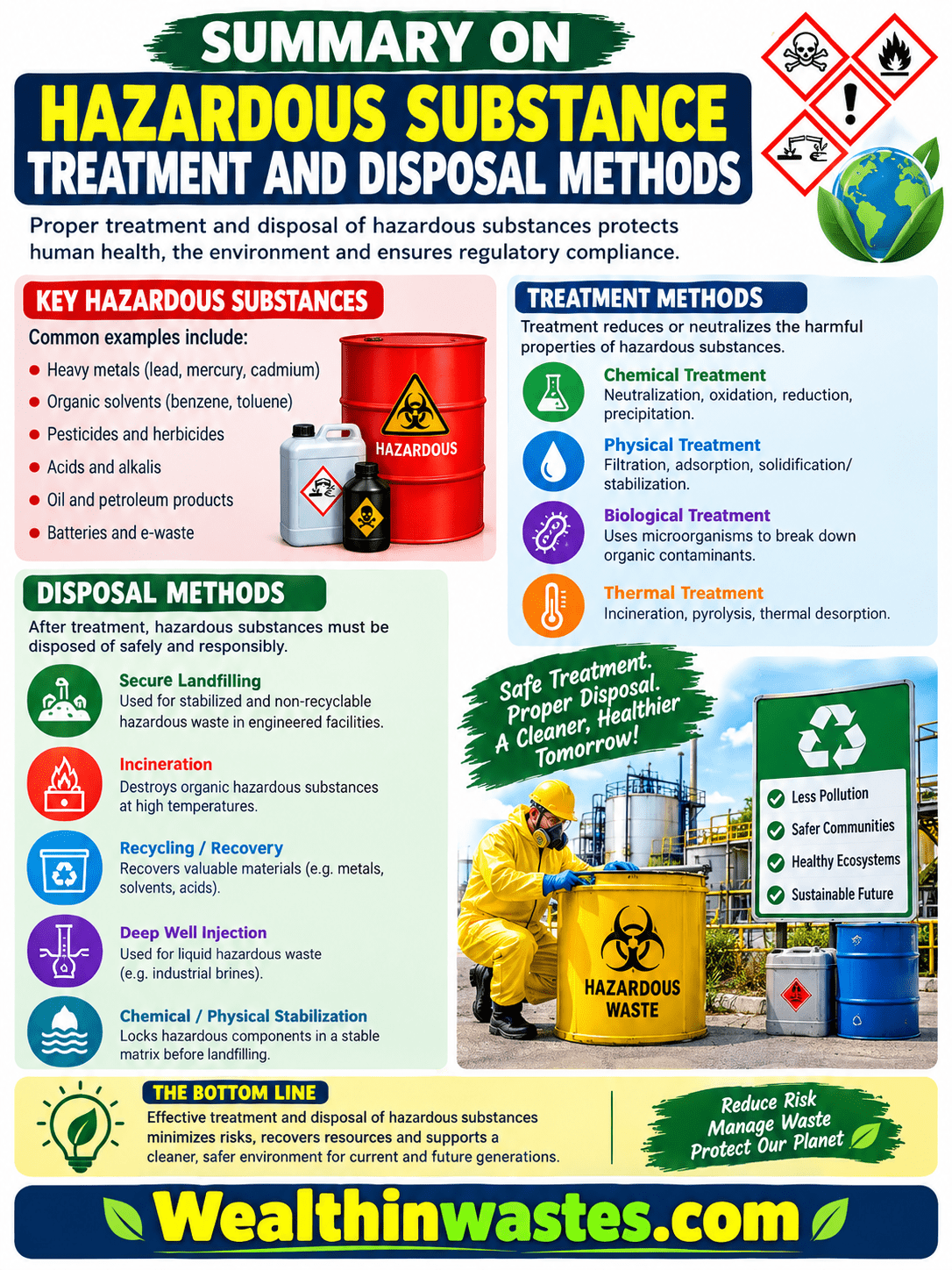
Summary on Hazardous Substance Treatment and Disposal Methods
| Aspect | Key Point |
|---|---|
| Hazardous Substance | Materials capable of causing harmful effects because of their chemical, physical, radioactive, biological, toxic, reactive, or environmental properties. |
| Treatment | Biological, physical, chemical, and thermal technologies reduce, destroy, immobilize, or transform hazardous constituents. |
| Incineration | Controlled combustion can destroy suitable hazardous organic and infectious wastes while reducing volume. |
| Landfills | Secure engineered landfills use liners, covers, leachate systems, and monitoring to contain suitable residual wastes. |
| Specialized Disposal | Radioactive, biomedical, chemical, industrial, and contaminated wastes require management systems suited to their specific characteristics. |
| Risk Control | Identification, segregation, secure storage, safe transportation, treatment monitoring, and environmental protection should occur throughout the management chain. |
Frequently Asked Questions About Hazardous Substance Treatment and Disposal Methods
1. What is a hazardous substance?
A hazardous substance is a material whose properties can cause harm to people, ecosystems, infrastructure, or environmental resources when exposure occurs or management controls fail.
2. Why must hazardous substances receive treatment?
Treatment reduces toxicity, reactivity, infectivity, volume, mobility, or other dangerous characteristics before the remaining waste reaches its final disposal destination.
3. What are the main treatment methods?
The main methods are biological, physical, chemical, and thermal treatment, with selection depending on the waste composition, hazards, treatment objective, and facility capabilities.
4. Is incineration suitable for every hazardous waste?
No. Incineration suits selected wastes and requires compatible feed characteristics, controlled combustion, emission controls, trained operators, monitoring, and safe management of the resulting residues.
5. Can hazardous waste enter ordinary landfills?
Hazardous waste should not enter ordinary disposal sites unless applicable requirements specifically permit it after suitable characterization and treatment, with appropriate containment and environmental safeguards.
6. What makes hazardous waste disposal safer?
Early identification, segregation, secure storage, compatible transportation, effective treatment, engineered containment, monitoring, emergency planning, and compliance with applicable environmental requirements improve disposal safety.
Do you have any questions, suggestions, or contributions? If so, please feel free to use the comment box below to share your thoughts. We also encourage you to kindly share this information with others who might benefit from it. Since we can’t reach everyone at once, we truly appreciate your help in spreading the word. Thank you very much for your support and for sharing!
Read Also: Proper Farm Waste Management Guide