


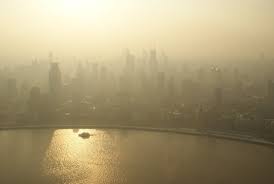
Cities concentrate homes, businesses, transport, industries, services, and infrastructure within limited spaces. This concentration creates opportunities for development, but it also places pressure on air, water, land, vegetation, and ecological systems.
Urban growth changes natural landscapes through construction, road expansion, drainage alteration, vegetation removal, and resource consumption. When these changes exceed environmental capacity, cities can experience pollution, flooding, heat, erosion, habitat loss, and declining quality.
The relationship between cities and environmental degradation therefore deserves careful attention from planners, communities, businesses, and public authorities. Effective urban development requires decisions that support economic activity while protecting natural systems and human wellbeing.
Environmental degradation in cities does not arise from one activity alone. Housing demand, transportation, industrial production, poor sanitation, unmanaged waste, energy use, and inadequate planning can interact and intensify environmental pressures over time.
In this article, you will learn the meaning of city and environmental degradation, major urban pressures, common forms, causes, effects, and practical approaches that can help cities reduce damage and strengthen environmental sustainability.
Meaning of Urban Environmental Degradation
Urban degradation can also weaken the natural services that cities depend upon, including temperature regulation, water filtration, soil stability, carbon storage, and habitat provision. Losing these services can increase dependence on costly engineered solutions.
Environmental quality also shapes how safely and comfortably people live and work. Cleaner surroundings support recreation, movement, commerce, and healthier neighborhoods, whereas degraded environments can create recurring expenses for households, businesses, and governments.
Urban environmental degradation refers to the decline in environmental quality within cities because human activities damage natural resources, ecological functions, living conditions, or the ability of urban systems to support life.
Cities depend on functioning air, water, soil, vegetation, drainage networks, and ecosystems. When pollution, resource depletion, habitat disturbance, or uncontrolled development weakens these systems, environmental problems can become persistent and difficult.
Urban environmental degradation can appear gradually through declining air quality, contaminated waterways, disappearing vegetation, soil disturbance, excessive waste, and rising temperatures. It can also become sudden during floods, industrial incidents, or severe pollution events.
Understanding the environmental pollution impacts of urban activities helps communities recognize how separate problems can interact. Strong pollution control measures can target sources early and more effectively before damage spreads across neighborhoods.
Read Also: Management of Hazardous Wastes in the Environment
Urban Growth and Environmental Pressure
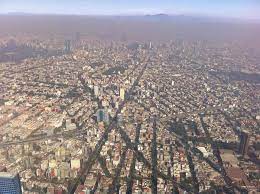
Urban growth often converts natural land into buildings, roads, parking areas, markets, and industrial facilities. This transformation reduces vegetation and soil absorption while increasing paved surfaces that generate faster stormwater runoff.
Population growth also increases demand for water, electricity, transportation, housing, sanitation, food, and consumer goods. Without adequate infrastructure, this demand can overwhelm drainage, waste collection, wastewater treatment, and other essential urban services.
Construction and industry can release dust, wastewater, noise, solid residues, and chemical contaminants. Meanwhile, traffic adds exhaust emissions and particulate matter, while poorly planned expansion can place homes near environmentally sensitive areas.
The economic costs of urban pollution can extend beyond immediate cleanup because contamination may damage health, infrastructure, productivity, property, and natural resources. These burdens can affect households, businesses, and public budgets.
Effective urban management requires institutions with clear responsibilities, reliable data, technical capacity, enforcement powers, and public participation. Strong pollution control institutions can coordinate planning, monitoring, waste services, water protection, and compliance.
Urban expansion can also change local drainage and ecological patterns beyond the construction site. Removing vegetation and compacting soil reduce infiltration, while altered channels can redirect water toward neighborhoods facing higher flood exposure.
Resource consumption grows alongside urban prosperity because residents usually require more materials, energy, food, housing, transportation, and services. Clear waste definitions help cities understand resulting material flows and environmental pressures.
Major Forms of City Environmental Degradation
1. Urban Air Pollution: Urban air pollution arises when traffic, industries, generators, construction, burning, and other activities release harmful substances into the atmosphere. Urban pollution sources can affect people, vegetation, and ecosystems across densely populated areas.
2. Water Pollution: Water pollution occurs when sewage, industrial effluent, urban runoff, chemicals, litter, and other contaminants enter rivers, streams, lakes, groundwater, or coastal waters. It can reduce water quality and disrupt aquatic ecosystems.
3. Solid Waste Problems: Solid waste becomes an environmental problem when collection, transportation, treatment, recycling, and disposal systems cannot keep pace with urban waste generation. Wastewater and water pollution sources can obstruct drainage, contaminate soil, and attract disease vectors.
4. Urban Flooding: Urban flooding often increases when vegetation disappears and paved surfaces expand. Blocked drains, inadequate channels, settlement in floodplains, and intense rainfall can combine to increase runoff and prolong standing water after storms.
5. Urban Heat Islands: Urban heat islands develop when built surfaces absorb and retain heat while vegetation and open land decline. Waste heat from vehicles, buildings, and machinery can further increase local temperatures during hot periods.
6. Soil Degradation And Habitat Loss: Soil degradation and habitat loss occur when construction, excavation, waste disposal, vegetation clearing, and infrastructure expansion disturb land. These changes can damage aquatic and terrestrial systems and reduce urban ecological functions.
Causes of Urban Environmental Degradation
1. Rapid Population Growth: Rapid population growth increases the number of residents, households, vehicles, businesses, and institutions that require land, water, energy, transport, and waste services. Rising demand can intensify pressure where planning capacity remains limited.
2. Unplanned Urban Settlement: Unplanned settlement can place buildings on wetlands, drainage corridors, floodplains, steep slopes, or other sensitive locations. Such development can interfere with natural water movement, increase exposure to hazards, and make environmental recovery harder.
3. Industrial And Commercial Activity: Industrialization and intensive commercial activity can generate air emissions, wastewater, hazardous substances, noise, and waste. Effective water quality protection becomes especially important where industries operate close to homes and waterways.
4. Poor Sanitation: Poor sanitation and inadequate wastewater systems allow sewage and contaminated water to enter streets, drains, rivers, and groundwater. Understanding urban water pollution sources helps reduce pathogens, organic matter, and contamination risks.
5. Transport And Traffic: Heavy dependence on private vehicles increases fuel consumption, congestion, exhaust emissions, and road dust. These pressures become worse where public transport remains inadequate, traffic management is weak, or older vehicles dominate urban travel.
6. Vegetation And Wetland Loss: Vegetation clearing, wetland drainage, excessive paving, and weak waste practices reduce ecological resilience. Where pollutant classes and their pathways remain poorly controlled, environmental damage can move through several connected urban systems.
7. Weak Environmental Governance: Weak environmental governance can allow regulations to remain poorly enforced, maintenance to be delayed, and development decisions to overlook ecological limits. These institutional gaps can allow preventable urban problems to persist.
Effects of Urban Environmental Degradation
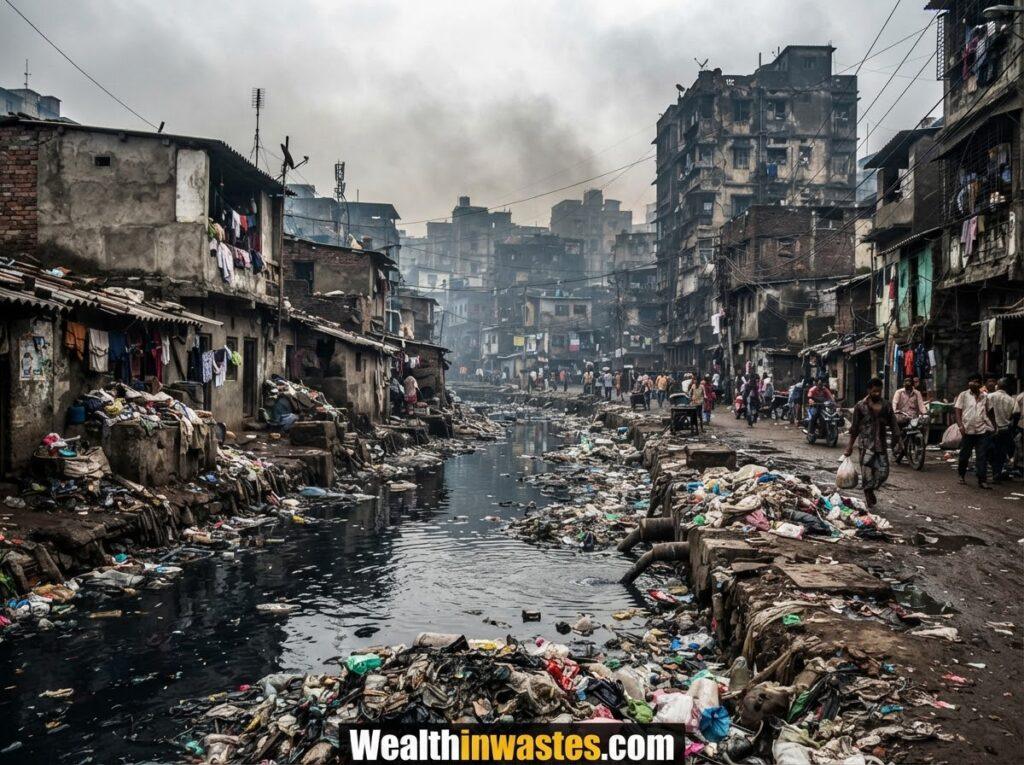
1. Health Effects: Poor urban air quality can irritate the respiratory system and worsen existing health problems, especially when people experience prolonged exposure to pollutants. The health effects of wastes can intensify these concerns.
2. Water And Food Risks: Contaminated urban water can affect people through drinking, domestic use, recreation, food, and contaminated crops. The effects can extend to aquatic organisms and water quality, fisheries, plants, and livelihoods alike.
3. Flooding And Property Damage: Flooding and blocked drainage can damage homes, roads, businesses, vehicles, utilities, and public infrastructure. Repeated flooding can interrupt movement and commerce while creating stagnant water conditions that complicate sanitation and environmental health.
4. Waste-Related Nuisance: Unmanaged waste can create odours, visual blight, pests, fires, and blocked drains. Communities also carry economic costs through cleanup, treatment, damaged property, reduced productivity, and service disruptions linked to poor environmental conditions.
5. Biodiversity Decline: Environmental decline can reduce urban biodiversity by destroying habitats and weakening ecological connections. Pollution can alter food webs and ecosystem functions, while degraded land reduces green-space value and limits opportunities for recreation.
6. Urban Heat Stress: Urban heat and degraded green spaces can reduce outdoor comfort and increase stress during hot periods. Loss of vegetation also removes shade and cooling benefits that normally support residents, pedestrians, and nearby buildings.
7. Loss Of Ecological Functions: Biodiversity decline can reduce the ecological functions provided by urban habitats. Fewer trees, wetlands, insects, birds, and other organisms can weaken pollination, nutrient cycling, natural cooling, and opportunities for environmental education.
Reducing Urban Environmental Degradation
1. Integrated Urban Planning: Integrated urban planning should coordinate housing, transportation, drainage, waste services, industry, green spaces, and environmental protection. Land-use decisions can then reduce conflicts and keep development away from sensitive ecological and hazard-prone areas.
2. Pollution Prevention: Cities can reduce pollution by improving public transport, enforcing vehicle standards, controlling industrial emissions, maintaining drains, and expanding wastewater treatment. Practical water pollution prevention also protects downstream communities and ecosystems.
3. Green Infrastructure: Urban authorities should expand trees, parks, wetlands, permeable surfaces, and other green infrastructure. These measures can moderate heat, absorb stormwater, support biodiversity, improve public spaces, and strengthen resilience against climate-related pressures.
4. Environmental Monitoring: Reliable environmental monitoring helps authorities identify pollution sources, assess changes, enforce standards, and evaluate interventions. A clear water pollution control framework can guide problem identification, objectives, action plans, monitoring, and periodic review.
5. Public Participation: Public participation strengthens urban environmental management because residents understand local conditions and can support cleaner practices.Environmental education, accessible information, community reporting, and responsible household behavior can complement government regulation and infrastructure.
6. Cleaner Business Practices: Businesses can reduce urban environmental pressures by conserving energy and water, minimizing waste, preventing spills, controlling emissions, and adopting cleaner production. Community partnerships can also support recycling, restoration projects, and neighborhood environmental improvement.
Read Also: The Effects of Water Pollution on Human Health and Plants
Waste Management in Sustainable Cities
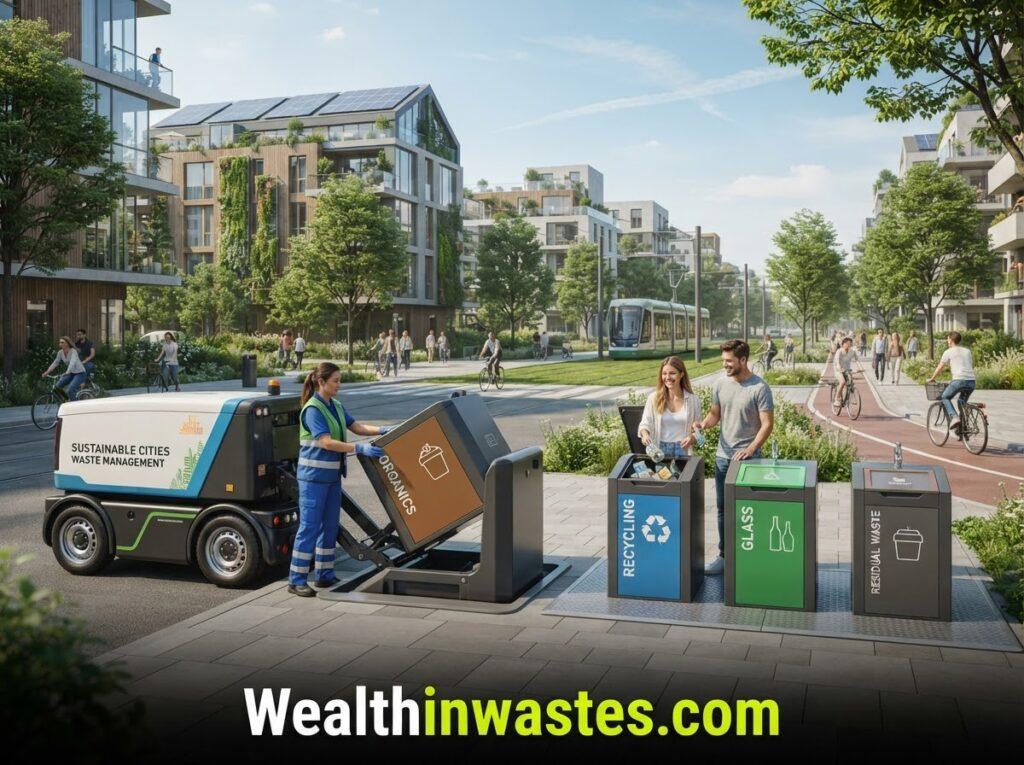
Solid waste management is central to city environmental protection because households, markets, institutions, construction sites, and businesses generate waste every day. Efficient systems keep waste from entering drains, waterways, streets, soil, and open spaces.
Cities need adequate collection coverage, dependable transportation, controlled disposal, material recovery, recycling, composting, and safe handling of hazardous materials. A practical solid waste management guide can help communities understand these linked activities.
Source reduction should remain important because preventing waste generally reduces the volume requiring collection and treatment. Reuse, recycling, and recovery can preserve materials, lower disposal pressure, and create economic opportunities within urban communities.
Clear operational rules also improve consistency across local waste systems. The waste management hierarchy prioritizes reduction, reuse, recycling, composting, recovery, and suitable final disposal for the remaining waste stream where necessary.
Good waste services also support drainage and flood management because discarded materials can accumulate in gutters, culverts, channels, and waterways. Preventing this blockage reduces maintenance demands and helps stormwater move through urban systems.
Organic waste provides another management opportunity through composting and other recovery methods. Separating materials by waste type and source can reduce disposal volumes while creating opportunities for soil improvement and recycling.
Building Sustainable Urban Environmental Systems
Sustainable cities balance economic activity with environmental limits by protecting natural assets while providing housing, mobility, sanitation, energy, water, and public services. This approach reduces long-term costs created by environmental decline.
Sustainable cities balance economic activity with environmental limits by protecting natural assets while providing housing, mobility, sanitation, energy, water, and public services. This approach reduces long-term costs created by environmental decline.
Urban resilience improves when cities combine strong institutions, reliable infrastructure, environmental monitoring, risk-sensitive land use, and community participation. Coordinated planning can align these efforts across households, businesses, public agencies, and neighborhoods.
Cleaner cities also depend on consistent enforcement and shared responsibility. Residents, planners, industries, transport operators, developers, and authorities each influence urban environmental quality through choices, investments, and the management of solid waste challenges.
The long-term objective is not to stop urban development, but to guide it within ecological limits. Better planning and resource management can help cities remain productive, healthy, adaptable, and environmentally sustainable as populations grow.
Cities can measure progress through indicators such as air quality, water quality, waste collection coverage, recycling rates, tree cover, flood exposure, energy efficiency, and waste classification practices that support better environmental decisions.
Long-term urban sustainability also requires preparedness for environmental risks that may change with climate, population, and land-use patterns. Scenario planning can help authorities identify vulnerable areas and strengthen infrastructure before disruptions occur.
Regular maintenance matters as much as new infrastructure because drains, wastewater systems, roads, parks, and waste facilities can lose effectiveness when neglected. Continued investment helps preserve environmental gains and prevent deterioration.
Summary on Causes and Solutions of City and Environmental Degradation
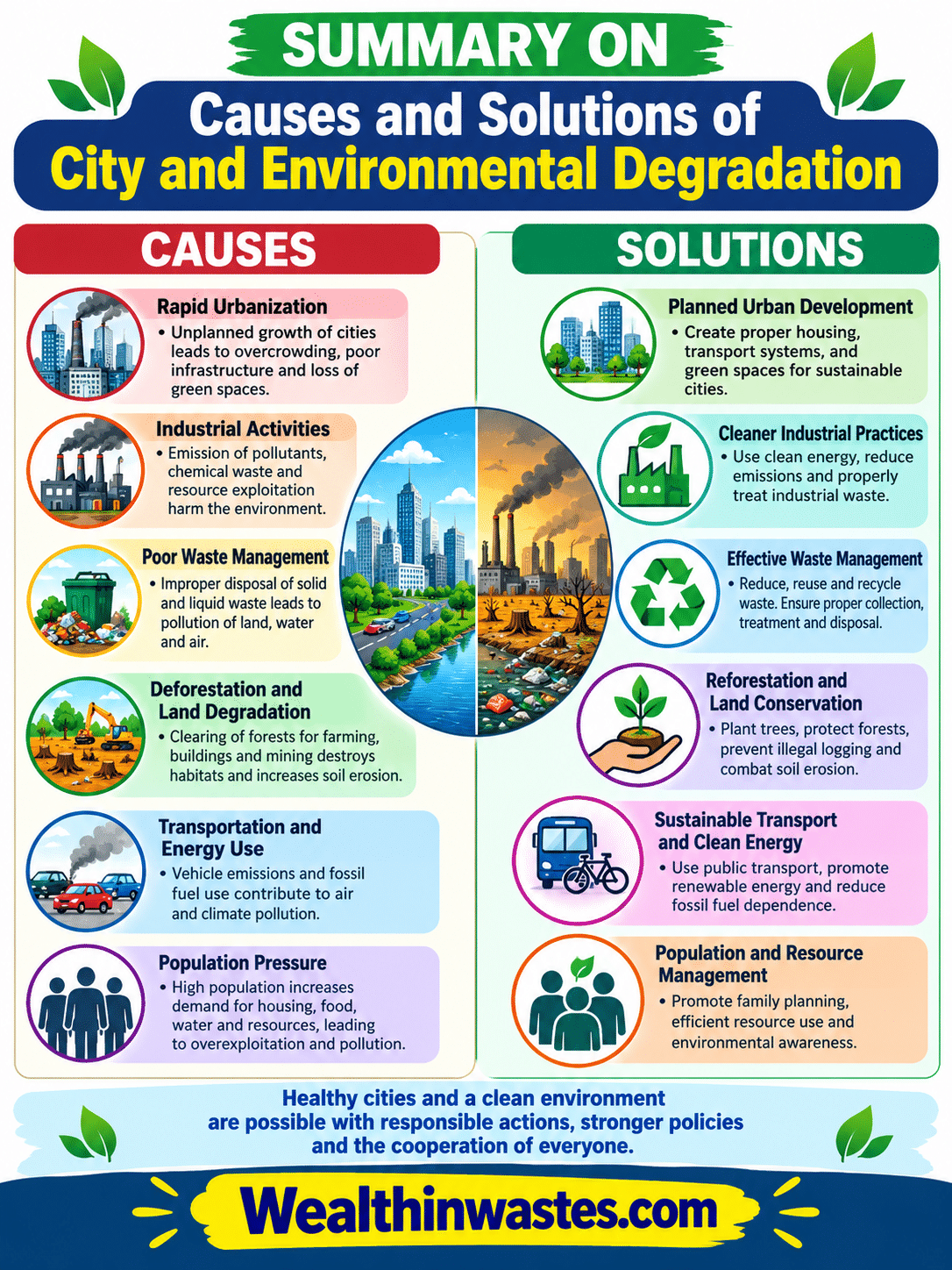
| Section | Main Idea | Why It Matters |
|---|---|---|
| Meaning | Urban environmental degradation is the decline of environmental quality caused by damaging urban activities. | Clarifies the concept and its connection with city life. |
| Urban Growth | Population, construction, industry, transport, and resource use increase environmental pressure. | Shows why rapid development can exceed urban environmental capacity. |
| Major Forms | Air and water pollution, waste, flooding, heat islands, soil degradation, and habitat loss affect cities. | Helps readers recognize the main expressions of degradation. |
| Causes | Population growth, poor planning, sanitation gaps, traffic, land conversion, and weak governance contribute to degradation. | Identifies pressures that require prevention and better management. |
| Effects | Environmental decline can affect health, property, infrastructure, livelihoods, biodiversity, and public spaces. | Connects environmental quality with everyday urban wellbeing and economic costs. |
| Reduction | Planning, pollution control, green infrastructure, monitoring, and public participation can reduce environmental pressures. | Provides practical approaches for improving urban environmental conditions. |
| Waste Management | Collection, recycling, composting, recovery, and safe disposal help keep waste out of drains and ecosystems. | Reduces pollution, flooding risks, and avoidable disposal burdens. |
| Sustainable Systems | Cities need resilient infrastructure, ecological protection, maintenance, measurement, and long-term planning. | Supports urban development that respects environmental limits over time. |
Frequently Asked Questions About City and Environmental Degradation: Causes and Solutions
1. What is city and environmental degradation?
City and environmental degradation is the decline of urban environmental quality caused by activities that damage air, water, soil, vegetation, habitats, drainage systems, and other ecological resources essential for healthy urban living.
2. What are the main forms of urban environmental degradation?
Major forms include air pollution, water pollution, solid waste problems, flooding, urban heat islands, soil degradation, habitat loss, erosion, noise pollution, and pressures that contribute to broader climate change in cities.
3. How does rapid urbanization increase environmental pressure?
Rapid urbanization increases demand for land, housing, transport, energy, water, goods, and services. When planning and infrastructure lag behind population growth, environmental pressures can become harder to control effectively across cities.
4. What effects can city environmental degradation have on people?
Urban environmental degradation can affect health, livelihoods, property, infrastructure, water security, biodiversity, public spaces, and local economies. The severity depends on pollutants, exposure, location, and the effectiveness of environmental management systems.
5. How can cities reduce environmental degradation?
Cities can reduce degradation through integrated planning, effective waste services, wastewater treatment, pollution control, public transport, green infrastructure, environmental monitoring, enforcement, resource efficiency, and meaningful community participation across neighborhoods and administrative areas.
6. Why is waste management important for urban environmental protection?
Poor waste management can block drainage, contaminate soil and water, produce odours, attract pests, create fire risks, damage urban appearance, and increase public cleanup and infrastructure maintenance costs for local authorities.
7.What role does green infrastructure play in cleaner cities?
Green infrastructure includes trees, parks, wetlands, rain gardens, permeable surfaces, and other natural systems. These features can reduce runoff, moderate heat, support biodiversity, and improve urban environmental quality.
8. What can residents do to reduce urban environmental problems?
Residents can reduce environmental pressure by disposing of waste properly, avoiding littering, conserving water and energy, using shared transport where practical, protecting vegetation, reporting pollution, and supporting local environmental initiatives.
Do you have any questions, suggestions, or contributions? If so, please feel free to use the comment box below to share your thoughts. We also encourage you to kindly share this information with others who might benefit from it. Since we can’t reach everyone at once, we truly appreciate your help in spreading the word. Thank you very much for your support and for sharing!
Read Also: Water and Land Pollution in Agriculture