


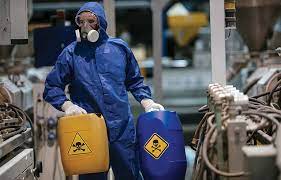
Hazardous substances seldom remain at the point where people release them. Environmental processes can transport these materials through air, water, soil, sediments, plants, animals and human communities.
These movements create pathways through which hazardous substances can eventually reach people, wildlife, crops, drinking-water supplies and sensitive ecosystems. Therefore, identifying each pathway remains essential for effective environmental risk control.
The air people breathe, water they drink, food they eat and soil they handle can all provide opportunities for hazardous substances to reach the body or surrounding environment.
Understanding these connections helps environmental managers identify where contamination begins, how it travels, where contact occurs and which actions can interrupt exposure before serious harm develops.
Effective pathway assessment also supports safer hazardous waste management practices by connecting source control, storage, transport, treatment and disposal decisions with possible environmental exposure.
Understanding Pathways of Hazardous Substances
Pathways of hazardous substances describe the routes and environmental connections that allow harmful materials to move from their original sources toward people, animals, plants, water resources or other environmental receptors.
A substance may remain concentrated near its source, but weather, runoff, groundwater movement, wind, biological uptake and human activities can transport it beyond the original release location.
This movement explains why waste-related exposure risks can affect people who never handled the original material and live some distance from the contamination source.
Pathway analysis therefore considers the source, environmental medium, exposure point and route through which the substance ultimately enters a human body or contacts another receptor.
Understanding this chain makes prevention more practical because managers can identify where contamination enters the environment and determine which links offer the best opportunities for intervention.
Read Also: Sources of Hazardous Substances
Exposure Pathways and Their Components
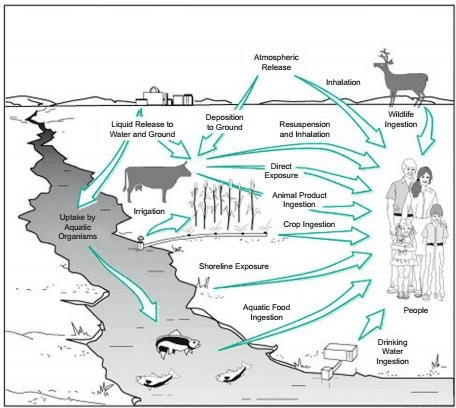
An exposure pathway connects a hazardous substance source with an exposed person, animal or environmental receptor. Four connected elements usually describe the pathway from release to possible exposure.
1. Hazardous Substance Source: The source identifies where the harmful material originates, including industrial facilities, laboratories, farms, hospitals, households, transport operations, waste sites or accidental releases.
2. Environmental Medium: The medium carries or stores the substance after release. Common media include air, surface water, groundwater, soil, sediments, plants and animals within affected ecosystems.
3. Exposure Point: The exposure point identifies where a person, animal or other receptor can contact the contaminated medium. It may occur near the source or farther away.
4. Exposure Route: The exposure route describes how the substance enters the body or reaches a biological receptor, commonly through inhalation, ingestion or direct skin and eye contact.
Figure 1: Illustration of exposure pathways. Source: United States Department of Energy, (1989)
Exposure Media For Hazardous Substances
Exposure media are environmental components that receive, carry, store or concentrate hazardous substances. Their condition determines how contaminants travel and where people may eventually encounter them.
1. Air: Air provides a major pathway for gases, vapours, dust, smoke and suspended particles. Wind can transport airborne contaminants from workplaces, waste sites and industrial areas toward nearby communities.
2. Water: Surface water and groundwater can receive contaminants through spills, runoff, seepage, wastewater discharges and leaching. Polluted water may then affect households, farms, recreation areas and aquatic ecosystems.
3.Soil And Sediments: Soil can retain hazardous substances and later transfer them into crops, groundwater, dust and surface runoff. Sediments can also store contaminants and redistribute them within water systems.
4. Biota: Plants and animals may absorb hazardous substances from contaminated soil, water, air or food. People can later encounter those substances by consuming contaminated crops, livestock, fish or shellfish.
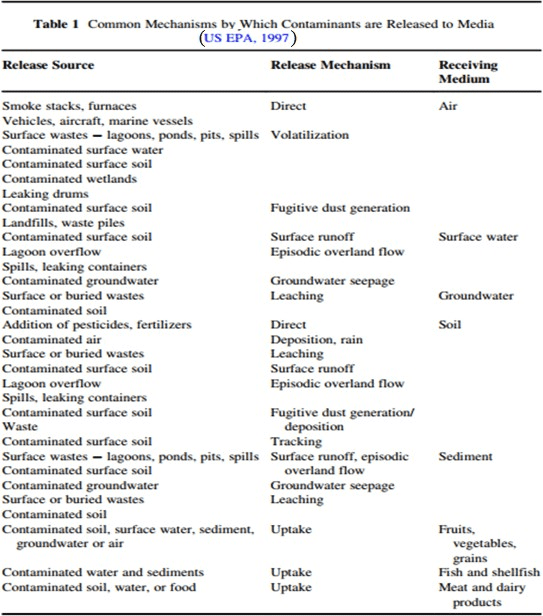
Air remains an important medium because people continuously breathe their surrounding atmosphere. Exposure conditions differ between homes, workplaces, vehicles, recreational locations, public spaces and outdoor environments.
Water also creates important exposure opportunities because pollutants can move through rivers, lakes, ponds, drainage channels and underground aquifers, particularly when contamination reaches drinking-water sources.
Groundwater contamination pathways deserve particular attention because pollutants can migrate beneath the surface and remain difficult to detect until wells or connected ecosystems become affected.
Soil and sediments may act as reservoirs rather than temporary transport media. However, erosion, runoff, wind, cultivation and biological activity can redistribute stored contaminants into other environmental compartments.
Biological materials can extend pathways through food webs, creating exposure after contaminants move from soil or water into plants, insects, fish, livestock and eventually human food.
Research into groundwater resources and contamination shows why subsurface movement deserves careful consideration when assessing pathways from waste locations toward drinking-water supplies.
How Hazardous Substances Reach Exposure Points

An exposure point occurs where a person, animal, plant or environmental receptor can come into contact with a contaminated medium. The location may lie directly within the source area.
However, exposure can also occur away from the source when contaminants travel downwind, downstream, downhill or through groundwater before reaching another location used by people or wildlife.
1. Direct Source Contact: Workers and residents may encounter hazardous substances at the original location through handling, maintenance, spills, leaking containers or accidental releases during normal activities.
2. Airborne Transport: Wind can carry contaminated dust, vapours, fumes and fine particles away from their original locations, creating exposure points around homes, workplaces, roads and public spaces.
3. Waterborne Transport: Rainfall, runoff, wastewater and groundwater movement can carry contaminants into streams, rivers, lakes, wells and irrigation systems, expanding exposure beyond the original contamination area.
4. Biological Transfer: Plants and animals can absorb or accumulate contaminants and move them through food webs. People may later encounter these materials through agricultural products, fish or animal products.
The distance between a source and an exposure point does not automatically determine the level of risk. Concentration, persistence, environmental conditions and contact frequency also influence potential exposure.
Proper disposal-site selection and environmental assessment can therefore reduce the likelihood that hazardous substances will travel toward sensitive receptors, communities or important water resources.
Groundwater pathways deserve particular scrutiny because pollutants may travel slowly and remain hidden underground, while surface-water pathways can transport contaminants rapidly across connected drainage and watershed systems.
Improper disposal can intensify these movements. Landfill containment systems help reduce the escape of contaminated liquids and gases into surrounding environmental media.
Major Routes Of Hazardous Substance Exposure
Once a hazardous substance reaches an exposure point, its route determines how it enters the body. The main routes include inhalation, ingestion and direct contact through skin or eyes.
Inhalation Exposure
Inhalation occurs when people breathe gases, vapours, smoke, dust, fumes, aerosols or other airborne contaminants. The risk depends on concentration, particle characteristics, exposure duration and respiratory conditions.
Polluted air can affect the nose, throat, airways and lungs, while some substances may pass deeper into respiratory tissues or enter circulation after reaching the lungs.
Pollution-related health effects can become more significant when people experience repeated exposure in workplaces, homes, communities or other areas where contaminated air persists.
Ingestion Exposure
Ingestion happens when hazardous substances enter the body through the mouth. People may consume contaminants in drinking water, food, contaminated soil or other materials unintentionally.
Contaminated groundwater and surface water can expose people through drinking, cooking, bathing or recreational activities. Food can also carry contaminants from polluted growing areas, livestock systems or aquatic environments.
Children may face greater soil-ingestion risks because normal childhood behaviour can involve frequent hand-to-mouth contact. Household, recreational and occupational activities can therefore create additional opportunities for ingestion.
Water quality assessment helps identify contamination that could make drinking-water supplies, recreational waters or irrigation resources unsafe for their intended uses.
Direct Contact Exposure
Direct contact occurs when hazardous substances touch the skin or eyes. Although the skin provides an effective barrier for many substances, some chemicals can pass through the outer skin layers.
Exposure may occur during gardening, construction, cleaning, waste handling, industrial work, swimming or contact with contaminated soil, water, surfaces and consumer products.
Safer hazardous-waste handling practices can reduce direct contact by limiting spills, improving containment, controlling access and using appropriate protective procedures during waste management activities.
Read Also: Hurts Wastewater Management Complete Guide
Health and Environmental Risks From Exposure
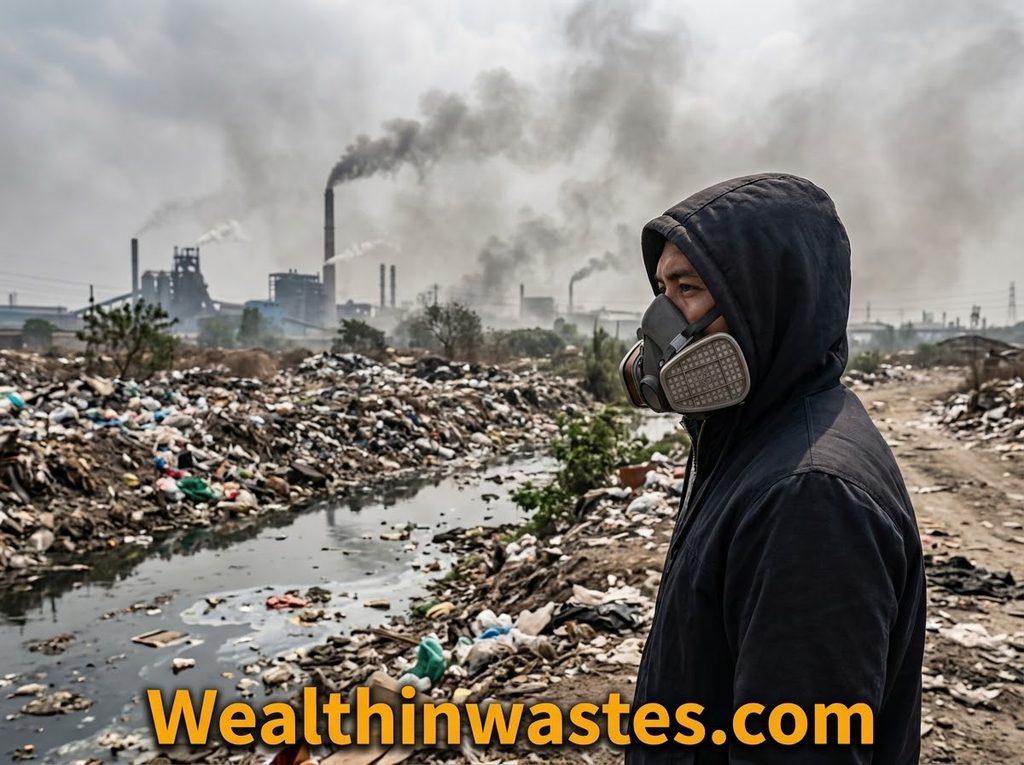
The effect of a hazardous substance depends on its chemical or physical properties, concentration, exposure duration, frequency of contact and the characteristics of the exposed person or ecosystem.
Some substances cause immediate irritation, burns, poisoning or other acute effects, while others may create chronic problems following repeated exposure over longer periods.
Environmental consequences can extend beyond human health. Contaminated soil may affect crops, polluted water may harm aquatic life, and contaminated air may affect plants, animals and surrounding communities.
Hazardous chemicals can also move through food webs. Persistent substances may accumulate in organisms and become concentrated at higher trophic levels, increasing exposure for predators and people.
Evidence from hazardous waste effects and control measures shows that contaminants may affect soil, surface water, groundwater, air, plants, animals and human health when management systems fail.
Improper waste disposal can also create multiple pathways simultaneously. A single uncontrolled site may release contaminated runoff, airborne particles, leachate and residues that biological organisms later absorb.
Environmental effects of improper waste disposal include contamination of water, soil and air, alongside damage to vegetation, habitats and ecosystem functions.
Industrial operations can create complex exposure patterns because several waste streams may coexist. Chemical residues, heavy metals, oils, solvents and other contaminants can enter environmental media through different release mechanisms.
Industrial wastewater management remains particularly important because untreated or poorly treated effluent can transport pollutants directly into receiving waters and downstream environments.
Industrial wastewater treatment processes can reduce pollutant concentrations before discharge, helping interrupt waterborne pathways and protect receiving environments from unnecessary contamination.
Wastewater from homes can also contain chemicals and pollutants. Effective collection and treatment reduce the opportunity for contaminants to migrate into soil, groundwater and surface waters.
Wastewater source control and treatment help limit pollutant releases before contaminants enter larger environmental pathways and create broader exposure opportunities.
Controlling Hazardous Substance Pathways
Effective control begins by preventing hazardous substances from entering environmental media. Source reduction, careful handling, secure storage and appropriate treatment can significantly reduce pathway formation.
1. Reduce Releases At Source: Industries, households, farms and institutions should minimise unnecessary hazardous materials, prevent spills and replace higher-risk substances where practical and technically appropriate.
2. Protect Environmental Media: Containers, storage areas, drainage controls and containment systems should prevent hazardous substances from reaching soil, water, air and other sensitive environmental components.
3. Manage Contaminated Waste Properly: Hazardous materials require appropriate collection, transport, treatment and disposal systems that prevent uncontrolled releases during every stage of waste management.
4. Monitor Exposure Points: Regular monitoring can identify contamination in air, water, soil or biological materials before people encounter dangerous concentrations through routine activities.
5. Interrupt Established Pathways: Remediation, containment, treatment and access restrictions can stop contaminants from reaching receptors when contamination has already entered an environmental medium.
Chemical waste deserves special attention because its properties vary widely. Responsible chemical-waste disposal can prevent dangerous materials from entering uncontrolled environmental pathways.
Recycling and recovery can also reduce the quantity of hazardous materials requiring final disposal. Proper separation helps prevent hazardous components from mixing with ordinary waste streams.
Waste recycling and disposal systems can support safer resource recovery while reducing the uncontrolled release of persistent or harmful materials into the environment.
Where contamination already exists, authorities and operators may need containment, cleanup and treatment measures. The appropriate response depends on the contaminant, medium, location, concentration and receptor.
Groundwater treatment may require specialised approaches because contamination remains underground and can migrate through aquifers. Prevention therefore remains preferable to expensive long-term remediation.
Pollutant and risk assessment supports informed decisions by considering pollutant characteristics, concentrations, persistence, locations and potential effects on exposed populations.
Why Pathway Assessment Matters
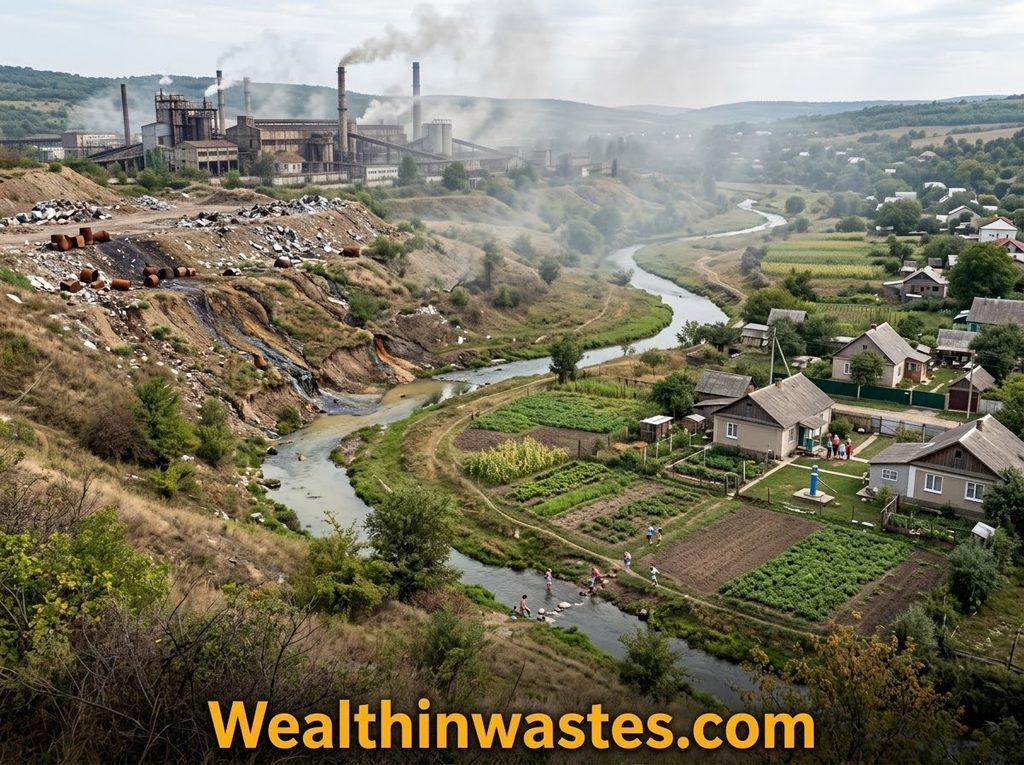
Pathway assessment provides a structured way to understand how hazardous substances move through environmental systems and reach humans, wildlife, crops, water supplies or other sensitive receptors.
1. Protects Human Health: Identifying realistic exposure routes helps authorities and organisations reduce inhalation, ingestion and direct-contact risks before contamination causes preventable harm.
2. Protects Water Resources: Pathway analysis reveals how pollutants can move toward rivers, lakes, wells, aquifers and other water resources that communities and ecosystems depend upon.
3. Protects Food Systems: Tracking contaminants through soil, water, plants and animals helps identify possible food-chain exposure and supports safer agricultural production and food management.
4.Improves Waste Management: Understanding pathways allows waste managers to select better containment, treatment, transport and disposal methods that reduce contamination beyond the original waste source.
Pathway assessment also strengthens pollution-control planning because it connects environmental monitoring with practical intervention points. This approach supports decisions based on how contaminants actually move.
Understanding pollution and its environmental pathways helps communities recognise how unwanted substances can change the condition of air, water, soil and other environmental resources.
Similarly, environmental and health effects of waste become easier to manage when decision-makers understand the pathways connecting waste sources with exposed receptors.
Institutional coordination also matters because water, soil, food, air and waste management responsibilities may involve different agencies. Clear cooperation improves monitoring, enforcement and emergency response.
Pollution-control institutions and responsibilities can help coordinate environmental protection activities across sectors while improving control of harmful substances within communities.
Hazardous substances can also originate from diverse industrial processes. Understanding industrial waste impacts helps identify potential release points and environmental media that require stronger controls.
Health risks may become especially complex where biomedical waste contributes hazardous materials to the environment. Biomedical waste exposure pathways therefore require careful segregation, handling, treatment and disposal.
Finally, contaminated inorganic materials can introduce persistent substances into environmental systems. Inorganic waste management information can support better control of these materials and their potential environmental pathways.
Hazardous substances do not necessarily remain where they enter the environment. Wind, water, soil movement, biological uptake and human activity can transport them into new areas and communities.
The most effective response combines source control, environmental monitoring, secure waste management and pathway interruption. Together, these measures reduce the chance that contamination will reach sensitive receptors.
Careful pathway identification is therefore essential whenever hazardous substances enter or threaten air, water, soil, sediments or biological systems, particularly around industrial, agricultural and waste-management activities.
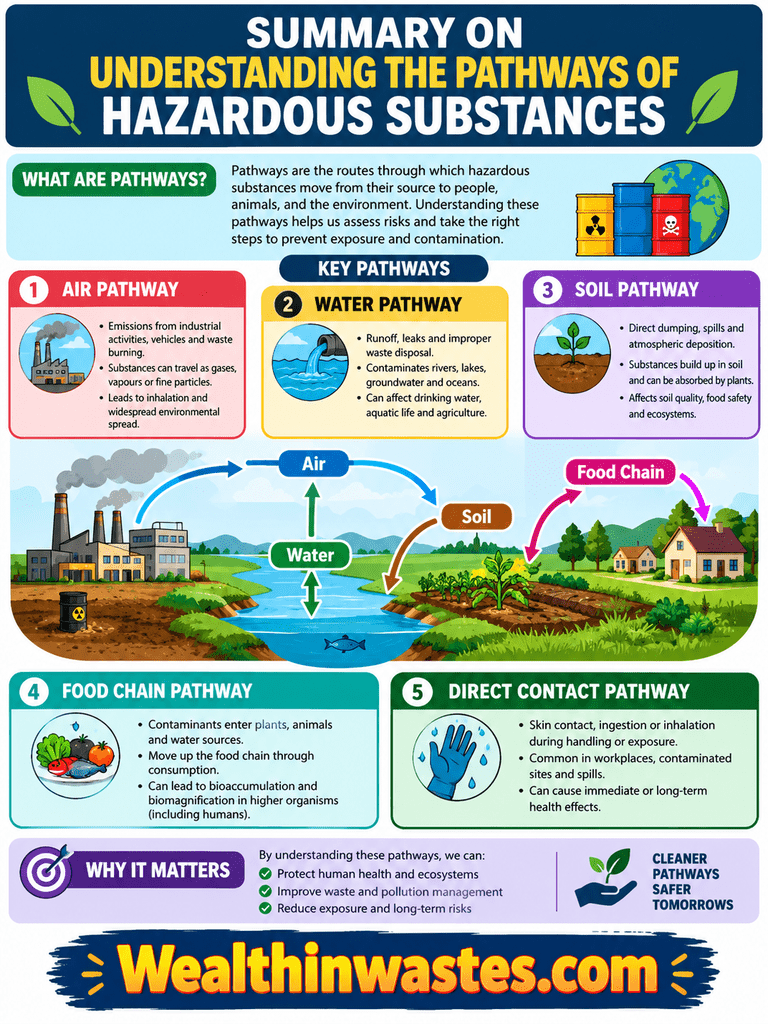
Summary on Understanding the Pathways of Hazardous Substances
| Aspect | Summary |
|---|---|
| Exposure Pathway | The connection between a hazardous substance source, environmental medium, exposure point and exposure route. |
| Major Media | Air, water, soil, sediments, plants and animals can transport or store hazardous substances. |
| Exposure Points | Locations where humans, animals or other receptors can contact contaminated environmental media. |
| Main Routes | Inhalation, ingestion and direct skin or eye contact are major human exposure routes. |
| Transport Processes | Wind, runoff, leaching, groundwater movement, erosion and biological uptake can spread contaminants. |
| Key Risks | Exposure can harm human health, wildlife, crops, water resources and ecosystem stability. |
| Control Measures | Source reduction, containment, treatment, monitoring, remediation and proper disposal can interrupt pathways. |
Frequently Asked Questions About Pathways of Hazardous Substances: Exposure Routes Explained
1. What are pathways of hazardous substances?
They are the environmental connections through which hazardous substances move from a source toward people, animals, plants or other environmental receptors.
2. What are the main exposure media?
The main media include air, surface water, groundwater, soil, sediments, plants and animals.
3. What are the major human exposure routes?
The major routes are inhalation, ingestion and direct contact through the skin or eyes.
4. Can hazardous substances travel far from their source?
Yes. Wind, surface runoff, rivers, groundwater movement and biological transfer can carry hazardous substances away from their original release location.
5. Why is groundwater an important exposure pathway?
Contaminants can migrate underground and reach wells, aquifers and connected water resources used by people, agriculture and ecosystems.
6. Can contaminated food create hazardous substance exposure?
Yes. Plants, fish, livestock and other organisms can absorb or accumulate contaminants that later reach people through the food chain.
7. How can exposure pathways be controlled?
Control measures include source reduction, secure containment, proper treatment, monitoring, remediation, safe disposal and restricting contact with contaminated areas.
8. Why is pathway assessment important?
It helps identify how contaminants move and where interventions can break the connection between hazardous substance sources and exposed receptors.
Do you have any questions, suggestions, or contributions? If so, please feel free to use the comment box below to share your thoughts. We also encourage you to kindly share this information with others who might benefit from it. Since we can’t reach everyone at once, we truly appreciate your help in spreading the word. Thank you very much for your support and for sharing!
Read Also: All You Need To Know About Flower Stores