


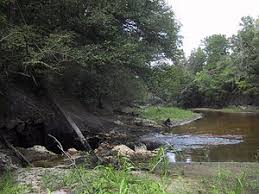
Groundwater resources are water stored below Earth’s surface in the pores and fractures of soil, sand, gravel, and rock. They form a major part of the hydrological cycle and freshwater supply.
Unlike rivers and lakes, groundwater often remains underground and moves slowly through geological materials. This hidden supply supports homes, farms, industries, and ecosystems, especially where surface water becomes scarce during dry seasons.
Rainfall replenishes many groundwater reserves when water infiltrates the soil and moves downwards through permeable materials. The amount reaching underground storage depends on rainfall, soil characteristics, vegetation, geology, and land use.
Groundwater resources provide drinking water, support irrigation, supply industries, and maintain springs and river flows. Their reliability, however, depends on responsible withdrawal, natural recharge, and protection against harmful substances.
Population growth, urban expansion, agricultural development, and industrial activities increase pressure on underground water reserves. Understanding their formation, uses, challenges, and management methods helps communities protect these valuable resources for future generations.
Definition and Importance of Groundwater Resources
Groundwater refers to water beneath Earth’s surface that occupies saturated pores and fractures in soil, sediments, and bedrock. It forms a major component of the hydrological cycle and replenishes many natural water sources.
Groundwater usually enters the subsurface through infiltration and percolation. Some water remains stored in geological formations, while the rest moves towards wells, springs, wetlands, rivers, or other connected water bodies.
The importance of groundwater extends beyond household consumption. Communities use it for crop production, livestock watering, food processing, manufacturing, sanitation, and other activities that depend on dependable freshwater supplies.
Groundwater also supports environmental stability by maintaining water levels in wetlands and sustaining some streams during dry weather. Its contribution to these systems depends on local geology, recharge rates, and groundwater extraction.
Effective water resource management helps communities balance water demand with available supplies. It also encourages planning that considers population needs, environmental requirements, water quality, and the long-term availability of groundwater.
Groundwater is particularly valuable in rural settlements where piped water and nearby rivers may be unavailable. Properly constructed and maintained wells can provide useful supplies, although users must regularly check their quality and reliability.
Water authorities and communities must include groundwater in broader water resources development plans. Such planning helps coordinate water supply projects, protect recharge areas, and reduce competition among households, farmers, industries, and ecosystems.
Formation and Movement of Groundwater
Groundwater formation begins when rainwater or other surface water enters the ground. Some water evaporates, some runs across the land, and some infiltrates the soil to replenish underground reserves.
After infiltration, water moves through soil and porous geological materials under gravity. This downward movement, known as percolation, allows water to pass through the unsaturated zone towards the groundwater storage below.
The unsaturated zone contains both air and water within its pores. Water moves through these spaces until it reaches the saturated zone, where water fills the connected pores and fractures.
The upper boundary of an unconfined saturated zone is called the water table. Its depth changes with rainfall, drought, seasonal conditions, groundwater pumping, and the ability of surrounding materials to transmit water.
Groundwater movement generally follows differences in hydraulic head, moving from areas of higher hydraulic head towards areas of lower hydraulic head. Geological structure and permeability influence the direction and speed of flow.
In suitable locations, groundwater reaches the land surface through springs or discharges into rivers and wetlands. This connection shows why responsible watershed management matters for protecting both underground and surface water.
Natural recharge replenishes groundwater when infiltrating water reaches the saturated zone. Rainfall patterns, soil permeability, vegetation cover, and land development influence recharge, making water source protection essential for long-term availability.
Human activities can interrupt this process by sealing soil with concrete, removing vegetation, or extracting water faster than nature replaces it. Responsible resource conservation practices help preserve recharge opportunities and maintain groundwater supplies.
Read Also: Proper Methods of Disposal of Dilute Pesticide Waste
Types of Aquifers and Groundwater Storage
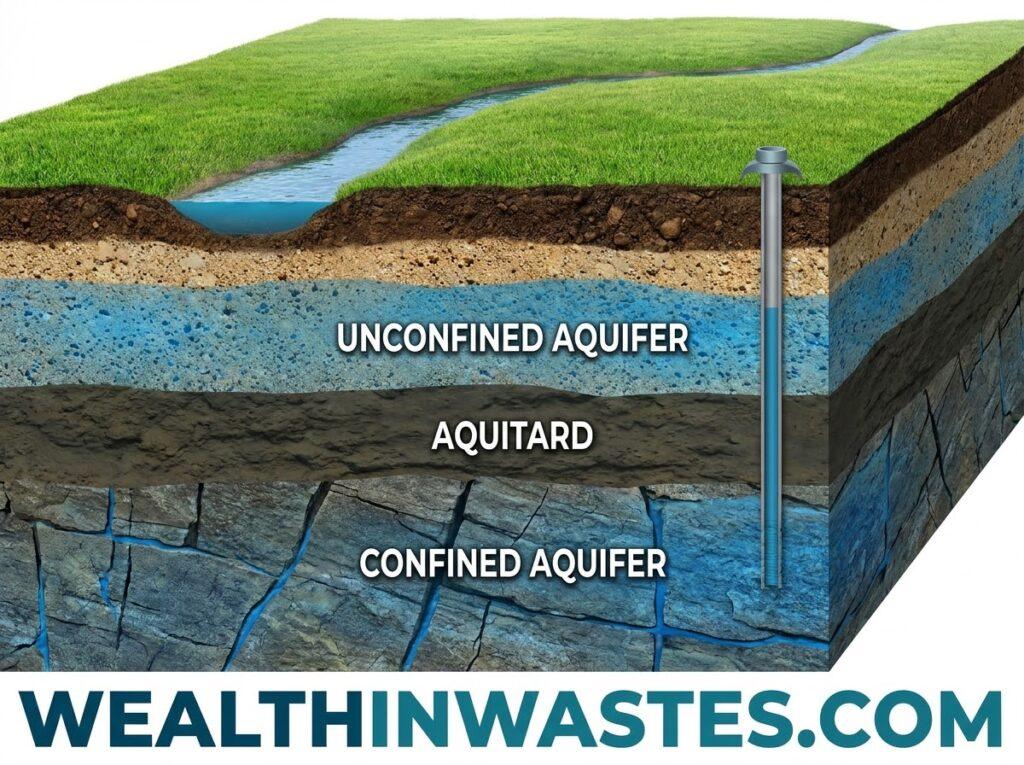
Groundwater storage depends on the physical characteristics of the rocks and sediments beneath the surface. The arrangement of particles, connected pores, fractures, and geological layers determines how much water formations can store and transmit.
An aquifer is a geological formation that stores and transmits enough groundwater to supply wells or springs under suitable conditions. Its usefulness depends on permeability, thickness, recharge, water quality, and local demand.
The structure of groundwater-bearing formations relates closely to the land environment and geological materials. Sand, gravel, and fractured rock can transmit water effectively, while compact clay often restricts groundwater flow.
1. Unconfined Aquifers: These aquifers have a water table as their upper boundary and receive direct recharge from infiltrating water. They are often accessible through shallow wells but remain vulnerable to surface contamination.
2. Confined Aquifers: These formations lie beneath relatively low-permeability layers that restrict water movement. Pressure can cause water to rise in a properly constructed well, although the aquifer still requires protection from pollution and excessive pumping.
3. Perched Aquifers: These occur where groundwater collects above the main water table because a local impermeable or low-permeability layer interrupts downward movement. Their small storage capacity may cause supplies to decline quickly during dry periods.
4. Aquicludes and Aquitards: An aquiclude transmits little or no usable groundwater, while an aquitard restricts flow without necessarily preventing it completely. Understanding these layers improves groundwater exploration and protects surrounding water supplies.
Water quality differs between geological formations because groundwater dissolves minerals and can encounter natural or human-made contaminants. The principles of water quality help explain why testing matters before people use groundwater for drinking or irrigation.
Groundwater managers should assess chemical and microbial conditions alongside available water quantities. Appropriate water quality standards help determine whether supplies meet the requirements for drinking, farming, industry, or other intended uses.
Major Uses of Groundwater Resources
Groundwater resources support many essential activities because communities can obtain water through wells, boreholes, and springs. Their contribution becomes particularly important when rainfall decreases or surface water supplies cannot meet local demand.
1. Domestic Water Supply: Households use groundwater for drinking, cooking, bathing, washing, and sanitation. Users should test water quality, protect wellheads, and maintain sanitary surroundings to reduce the risk of disease-causing contamination.
2. Agricultural Production: Farmers pump groundwater for irrigation, livestock watering, and selected farm operations. Efficient irrigation systems and appropriate scheduling help reduce unnecessary withdrawals while supporting crops during dry spells and irregular rainfall.
3. Industrial Activities: Factories may use groundwater for processing, cleaning, cooling, and other production requirements. Industries need efficient water-use systems and suitable wastewater treatment to prevent contamination and reduce pressure on underground reserves.
4. Commercial Services: Hotels, schools, healthcare facilities, markets, and small businesses may depend on reliable groundwater supplies. Proper storage, routine testing, and maintenance help users maintain dependable supplies without compromising public health or neighbouring wells.
5. Ecosystem Support: Groundwater sustains some springs, rivers, wetlands, and vegetation during periods of limited rainfall. Excessive pumping can reduce these natural discharges, affecting habitats and diminishing the water available to communities downstream.
6. Water Conservation: Fixing leaking taps, maintaining pipes, and improving irrigation efficiency reduce avoidable demand. Practical water conservation measures help communities make existing groundwater supplies last longer.
7. Community Development: Reliable groundwater can support livelihoods, improve sanitation, and encourage local economic activities. However, sustainable access requires sound well construction, adequate maintenance, monitoring, and fair allocation among different users.
Groundwater use should match local aquifer capacity and recharge rates. Poorly planned extraction can create shortages, increase pumping costs, and threaten water quality, making conservation an essential part of development.
Communities must also prevent refuse, wastewater, and chemicals from reaching underground supplies. Understanding the environmental effects of solid waste helps households and authorities recognise how careless disposal can threaten water resources.
Problems Affecting Groundwater Resources
Groundwater faces growing pressure from population growth, expanding agriculture, industrial development, and poor environmental management. These pressures can lower water levels, increase pumping costs, damage ecosystems, and threaten long-term supplies.
1. Water Table Depletion: Excessive pumping lowers groundwater levels when extraction exceeds replenishment. As wells become less productive, users may need deeper boreholes or stronger pumps, increasing expenses and reducing access for nearby communities.
2. Cone of Depression: Pumping creates a local decline in groundwater levels around a well, forming a cone-shaped depression. Heavy extraction from nearby wells can cause these depressions to overlap and lower surrounding water levels.
3. Land Subsidence: Removing groundwater from compressible sediments can cause the ground surface to sink. Subsidence may damage roads, buildings, drainage systems, and pipelines, and some compaction can permanently reduce an aquifer’s storage capacity.
4. Saltwater Intrusion: Excessive pumping near coastlines can draw seawater into freshwater aquifers. Rising salinity may make groundwater unsuitable for drinking or irrigation, requiring careful pumping controls and monitoring of coastal wells.
5. Reduced Natural Discharge: Heavy extraction can reduce water flowing into springs, rivers, and wetlands. These changes may harm aquatic habitats and affect communities that depend on groundwater-fed streams for domestic activities and agriculture.
6. Reduced Recharge: Urban roads, roofs, and paved compounds restrict infiltration and increase surface runoff. Poorly planned urban development can therefore limit groundwater replenishment and increase pressure on existing wells.
7. Waste-Related Pressure: Poor waste handling can introduce contaminants into soil and underground water. The environmental effects of improper waste disposal include risks to groundwater, public health, agriculture, and surrounding ecosystems.
These problems often occur together, particularly where water demand grows faster than management capacity. Effective waste management practices and controlled extraction help reduce environmental damage and protect underground freshwater supplies.
Groundwater Pollution and Its Effects
Groundwater pollution occurs when harmful substances enter underground water and reduce its suitability for intended uses. Contamination may originate from households, farms, factories, waste disposal sites, leaking storage facilities, or natural geological materials.
1. Agricultural Chemicals: Excess fertilisers, herbicides, and pesticides can move through soil with infiltrating water. Careful chemical application, appropriate storage, and correct disposal reduce the risk of contaminating groundwater used by households and farmers.
2. Sewage and Septic Leakage: Faulty septic systems and leaking sanitation facilities may release pathogens and nutrients into the ground. Proper siting, installation, and maintenance reduce contamination risks, especially where shallow wells supply drinking water.
3. Industrial Waste: Factories can release solvents, metals, fuels, and other hazardous substances through leaks or poorly managed waste disposal. Strong treatment procedures, secure storage, and inspections help prevent contaminants from entering permeable underground formations.
4. Landfill Leachate: Rainwater passing through waste can carry dissolved chemicals and other pollutants into surrounding soil. Properly designed disposal facilities, suitable containment, and monitoring help reduce the risk of leachate reaching aquifers.
5. Contaminated Surface Water: Polluted rivers or ponds can affect groundwater where they exchange water with connected underground formations. The framework for water pollution control supports systematic assessment, prevention, monitoring, and management of these pollution pathways.
6. Microbial and Chemical Contamination: Pathogens may cause gastrointestinal illness, while certain chemicals can create longer-term health risks. Understanding the sources and types of water pollution helps identify likely contaminants and select suitable treatment measures.
7. Natural Contamination: Some aquifers naturally contain elevated concentrations of iron, fluoride, arsenic, or dissolved salts. Water testing helps determine whether treatment or another source is necessary before households consume the water regularly.
Groundwater contaminants may remain difficult to detect because pollution occurs underground and water moves relatively slowly through many geological formations. The classes and sources of water pollutants provide useful background for understanding these hazards.
Sustainable Groundwater Management Methods
Sustainable groundwater management aims to maintain adequate water supplies without causing unacceptable environmental damage. It combines responsible extraction, pollution prevention, recharge protection, water quality testing, community participation, and effective public regulation.
1. Controlled Groundwater Extraction: Water users should avoid pumping beyond sustainable limits. Authorities can estimate aquifer conditions, monitor groundwater levels, and establish appropriate withdrawal controls to reduce depletion and protect nearby wells.
2. Regular Water Quality Testing: Test wells and boreholes periodically for relevant microbial and chemical contaminants. Testing helps identify problems early and guides decisions about treatment, alternative supplies, and preventive measures around water collection points.
3. Recharge Area Protection: Protecting permeable land, vegetation, and suitable open spaces allows more rainfall to infiltrate the ground. Local planning should limit harmful activities near important recharge zones and avoid unnecessary surface sealing.
4. Wastewater Treatment: Households, farms, and industries should manage wastewater so that untreated sewage and hazardous chemicals do not reach groundwater. The methods for controlling water pollution support practical prevention and treatment approaches.
5. Community Awareness: Educate residents about sanitary well construction, safe chemical storage, proper waste disposal, and water conservation. Effective institutional arrangements for pollution control also help clarify responsibilities and improve coordination.
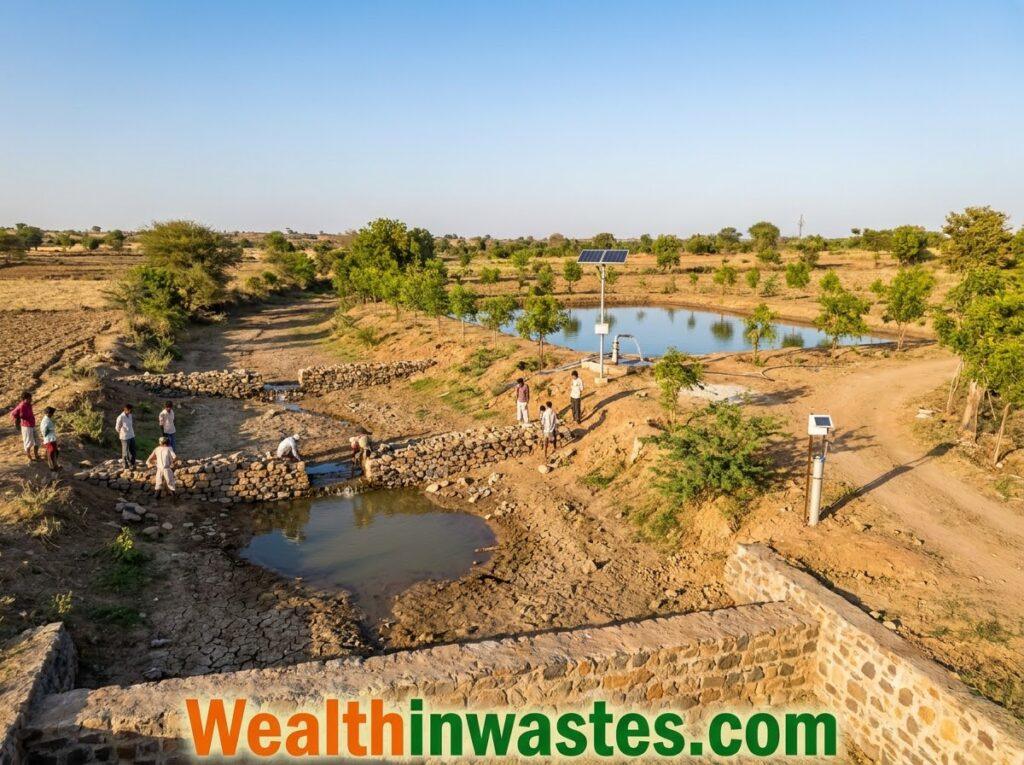
6. Rainwater Harvesting: Collecting roof runoff in suitable storage systems can reduce pressure on groundwater during dry periods. Properly designed infiltration structures may also support recharge where local soil, geology, and water quality conditions permit.
7. Monitoring and Enforcement: Authorities should inspect water projects, protect wellheads, record groundwater levels, and respond to contamination incidents. Strong water pollution prevention measures help safeguard underground supplies for households, agriculture, industry, and ecosystems.
Farmers and other users can also improve efficiency by repairing leaks, choosing appropriate irrigation systems, and avoiding unnecessary pumping. These practical steps reduce demand while helping preserve groundwater for future generations.
Read Also: Problems of Water Resources Development
Summary on Groundwater Resources: Formation, Problems and Management
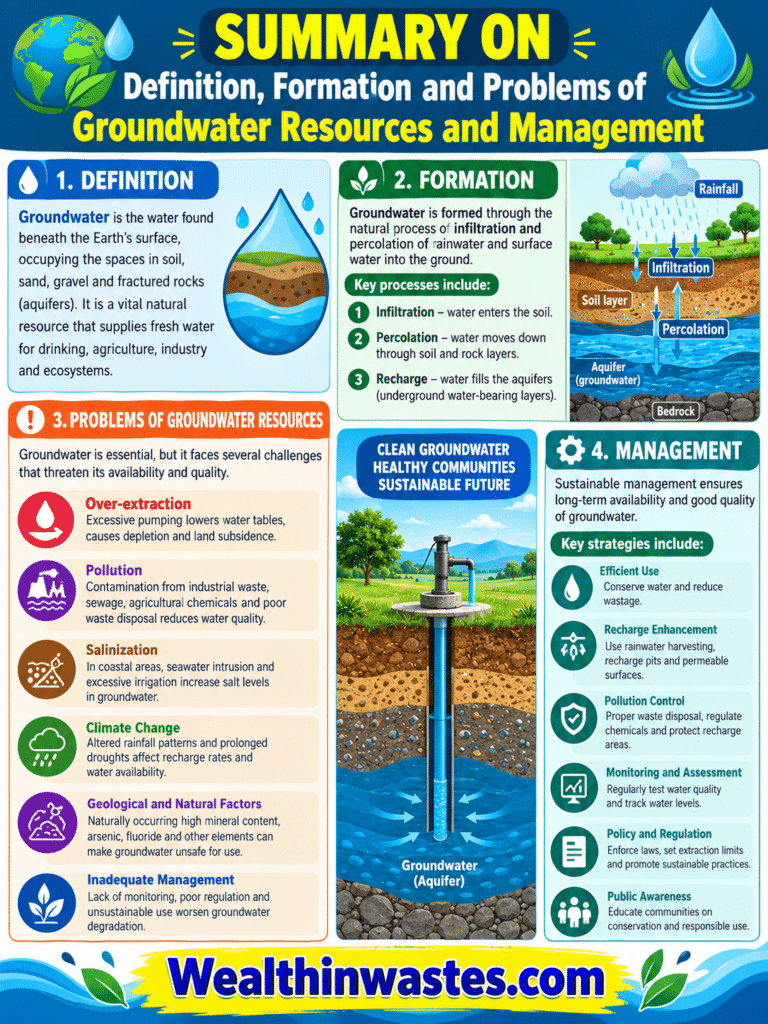
| Aspect | Summary |
|---|---|
| Definition | Water stored beneath Earth’s surface in saturated soil, sediment, and rock. |
| Formation | Rainwater infiltrates the ground and percolates into saturated geological formations. |
| Storage | Aquifers store and transmit groundwater through connected pores and fractures. |
| Major Uses | Domestic supply, irrigation, livestock, industry, and ecosystem support. |
| Depletion | Excessive pumping can lower water tables and reduce natural discharge. |
| Pollution | Sewage, agricultural chemicals, industrial waste, and landfill leachate can contaminate groundwater. |
| Management | Control extraction, protect recharge areas, test water, treat wastewater, and educate communities. |
| Long-Term Goal | Maintain dependable, safe groundwater supplies while protecting environmental health. |
Groundwater resources are essential for domestic water supply, agriculture, industry, and environmental stability. Their continued availability depends on natural recharge, suitable geological conditions, responsible extraction, and effective pollution prevention.
Water table depletion, land subsidence, saltwater intrusion, and contamination can reduce groundwater availability and quality. Sustainable management combines regular monitoring, efficient water use, recharge protection, and responsible waste disposal.
Communities, farmers, industries, and governments all have roles in protecting underground water. Coordinated action today can preserve reliable freshwater supplies, support livelihoods, and safeguard groundwater resources for future generations.
Frequently Asked Questions About Groundwater Resources
1. What Are Groundwater Resources?
They are underground water supplies stored in saturated soil, sediments, and rock formations.
2. How Does Groundwater Form?
Rainwater infiltrates the ground and percolates through soil and rock until it reaches the saturated zone.
3. What Is an Aquifer?
An aquifer is a geological formation capable of storing and transmitting usable quantities of groundwater.
4. What Causes Groundwater Depletion?
Depletion occurs when groundwater extraction exceeds recharge over time, lowering underground water levels.
5. How Does Groundwater Become Polluted?
Pollution can result from sewage leakage, agricultural chemicals, industrial waste, landfill leachate, and natural contaminants.
6. Can Polluted Groundwater Be Treated?
Yes. Appropriate treatment depends on the contaminants present, their concentrations, and the intended use of the water.
7. What Is the Water Table?
The water table is the upper boundary of the saturated zone in an unconfined aquifer.
8. How Can Groundwater Resources Be Protected?
Control pumping, protect recharge areas, maintain sanitary wells, test water regularly, and manage waste responsibly.
9. Why Is Groundwater Important in Agriculture?
It supplies irrigation water and supports livestock, helping farmers maintain production when rainfall and surface water are limited.
10. What Is Sustainable Groundwater Management?
It means using and protecting groundwater in ways that meet present needs without compromising future supplies or environmental health.
Do you have any questions, suggestions, or contributions? If so, please feel free to use the comment box below to share your thoughts. We also encourage you to kindly share this information with others who might benefit from it. Since we can’t reach everyone at once, we truly appreciate your help in spreading the word. Thank you very much for your support and for sharing!
Read Also: Soil and Water Conservation in Agriculture