



The Effects of Technological Advancement on Environment are visible in the way people extract resources, manufacture products, generate electricity, travel, communicate and dispose of equipment. Technology changes both natural systems and daily life.
Technology affects the environment throughout a product’s life cycle, from raw-material extraction and factory production to transport, electricity use, repair and disposal. Damage can begin before an item reaches a shop or home.
The effects are not limited to obvious waste. Digital networks need electricity and equipment, while construction, healthcare, transport and agriculture depend on machines, materials and energy systems, with environmental consequences in every region.
Some innovations reduce emissions, conserve water, improve monitoring and make production more efficient. Others increase extraction, pollution and consumption, so outcomes depend on design, energy sources and disposal practices used.
Understanding these trade-offs helps households, businesses and governments choose better systems. This article explains the main environmental effects, the benefits technology can deliver and practical steps for Nigeria and beyond.
How Technology Changes the Environment
Technology influences the environment through extraction, production, transport, use and disposal. These stages affect air, land, water, climate and living organisms, sometimes in different places and at different times over a product’s lifetime.
These effects interact. Industrial emissions can affect air quality, contaminated runoff can reach rivers and groundwater, and habitat loss can weaken ecosystems. The wider pattern is reflected in global environmental change research.
Environmental management also depends on design choices and local conditions. A long-lasting appliance powered by low-carbon electricity may perform very differently from a short-lived device made and operated using fossil fuels.
Read Also: Disadvantages of Biotechnology on Agriculture
Negative Effects of Technological Advancement
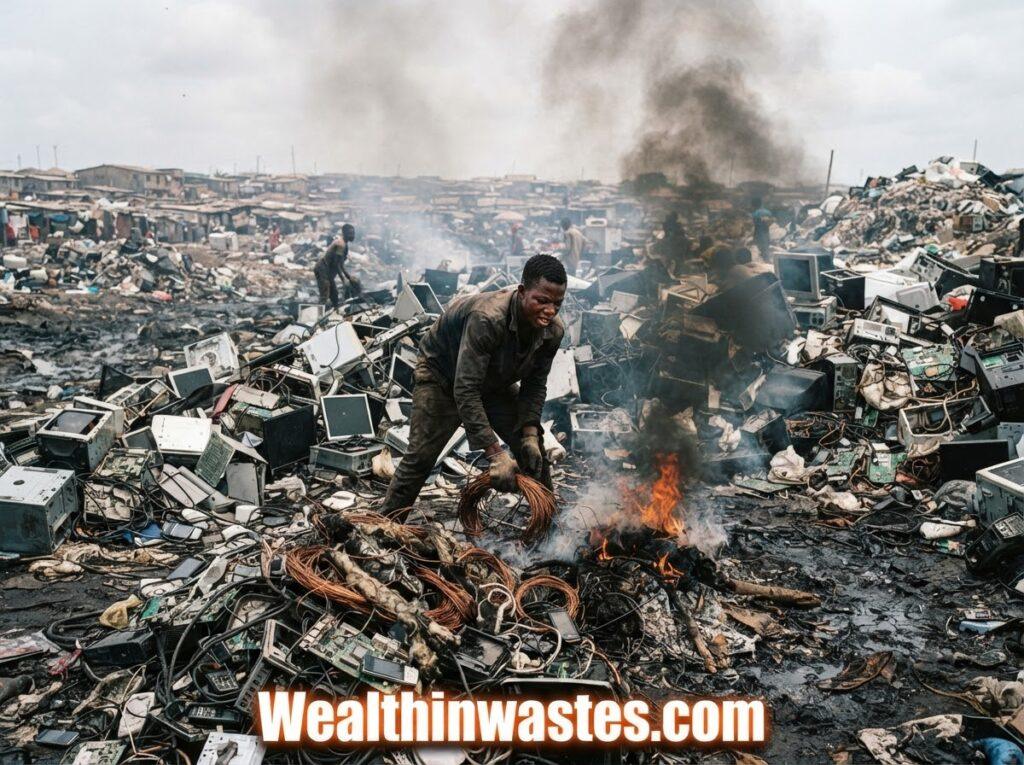
Although technology improves productivity and convenience, its development and widespread use can place considerable pressure on natural resources. The following are some important environmental disadvantages associated with technological advancement.
1. Resource Extraction: Phones, computers, batteries and vehicles require metals and minerals. The impacts of mining projects include habitat disturbance, water consumption, dust and contaminated waste where safeguards and restoration remain weak.
2. Energy Demand and Emissions: Factories, transport networks, servers and household devices draw electricity and fuel. When grids depend on fossil fuels, greater demand can increase greenhouse-gas emissions and worsen climate change.
3. Industrial Pollution: Manufacturing can release smoke, chemical residues, heated wastewater and solid by-products. Poorly managed industrial wastes and untreated effluents may contaminate rivers and soils, while factories add pollutants to surrounding air.
4. Habitat Disruption: Roads, dams, factories, mines and large farms can clear vegetation or divide habitats. These pressures interact with climate change indicators, reduce food and shelter, disturb migration routes and threaten vulnerable species.
5. Hazardous Substances: Some electronics, batteries, industrial chemicals and specialised materials contain toxic substances. Poor handling can expose workers and residents, while pollutants may persist in soil, water and food chains; biotechnology also requires safeguards.
These problems show why manufacturers and consumers must consider environmental consequences throughout the technological life cycle. Poor planning, uncontrolled production and careless disposal can turn useful inventions into sources of pollution.
Positive Environmental Effects of Technology
Technological advancement does not always damage the environment. Properly developed and managed technologies can conserve resources, improve environmental protection and help communities respond more effectively to pollution and climate-related challenges.
1. Cleaner Energy Systems: Solar panels, wind turbines, modern storage and smart grids can reduce reliance on fossil fuels when they replace high-emission generation and operate with responsible material sourcing and end-of-life recovery.
2. Better Environmental Monitoring: Sensors, satellites and geographic information systems help researchers observe air and water, forests and wildlife. UNEP’s satellite methane system issued 1,066 alerts between January and September 2024.
3. Improved Water Treatment: Modern filters, membranes, sensors and treatment plants can remove contaminants and monitor water quality. Better drinking-water treatment protects supplies and allows some industrial water to be reused safely.
4. Efficient Resource Use: Automation and data analysis can adjust lighting, heating, irrigation and factory output to actual demand. Better control supports resource conservation by reducing avoidable energy, water and material use.
5. Digital Communication: Online meetings, electronic documents and remote collaboration can reduce some journeys and paper consumption. Their benefits depend on efficient networks, longer-lasting equipment and electricity with lower emissions.
Environmental Impacts Across Major Industries

Different industries use technology in different ways, meaning their environmental effects also vary. Understanding these applications helps explain how technological development influences natural resources, ecosystems and human activities.
1. Construction Technology: Construction technology speeds up building and infrastructure work through machinery, digital design and advanced materials. However, cement, steel, excavation, transport and demolition can consume energy, disturb land and generate substantial waste.
2. Medical Technology: Medical technology improves diagnosis, treatment and disease monitoring through imaging equipment, laboratory devices, medicines and digital records. Hospitals must still manage electricity demand, single-use materials, chemical residues and specialised healthcare waste carefully.
3. Agricultural Technology: Agricultural technology includes tractors, irrigation systems, sensors, drones, improved storage and precision application equipment. These tools can raise efficiency, but careless use may compact soil, increase energy demand or deplete groundwater resources.
4. Biotechnology and Nanotechnology: These technologies can support new medicines, materials, crop varieties and industrial processes. Their environmental effects depend on the organisms or substances involved, how they are tested, and how production waste is controlled.
5. Information and Communication Technology: ICT supports education, banking, health services and business, but devices and data centres consume resources. The IEA estimated data centres used 415 terawatt-hours of electricity in 2024, around 1.5% of global consumption.
These examples demonstrate that no industry can assess its technological progress through productivity alone. Organisations must also examine energy consumption, material requirements, emissions and the waste generated by their operations.
E-Waste and Resource Depletion
Electronic waste, or e-waste, includes discarded electrical and electronic products such as phones, computers, televisions, refrigerators, cables and batteries. Accurate waste determination helps identify hazards before disposal or recycling.
1. Rising Quantities: The Global E-waste Monitor 2024 reported 62 million tonnes of e-waste worldwide in 2022, but only 22.3% was documented as formally collected and recycled in an environmentally sound manner.
2. Toxic Components: Some discarded equipment contains lead, mercury, cadmium, flame retardants or refrigerants. Improper handling of household hazardous waste can release substances into air, soil and water, exposing workers, residents and ecosystems.
3. Lost Materials: Discarded electronics contain valuable metals and reusable components. Recovering them through metal recycling and a controlled recycling process reduces demand for some newly mined materials and keeps useful resources in circulation.
4. Unsafe Disposal: Burning cables, breaking components by hand or mixing e-waste with ordinary refuse can spread hazardous dust and residues. Proper municipal solid waste treatment reduces some disposal risks.
5. Difficult Recycling: Not every product or plastic component can enter the same recycling stream. Knowing which items cannot be recycled and which plastics cannot be recycled helps prevent contamination.
The International Telecommunication Union and UNITAR projected that global e-waste could reach 82 million tonnes by 2030 under their outlook. This highlights the importance of improving collection and responsible recycling systems.
Practical Ways to Reduce Environmental Harm

Reducing the environmental consequences of technological advancement requires cooperation between consumers, manufacturers, businesses and governments. The following measures can help minimise pollution, conserve resources and encourage more responsible technological development.
1. Buy for Durability: Choose reliable devices that can be repaired, upgraded or supported for several years. Avoid replacing equipment simply because a newer model appears, and check repair options before purchasing.
2. Reduce Energy Use: Switch off idle equipment, enable power-saving settings, choose efficient appliances and maintain cooling systems. Businesses can monitor electricity use and schedule energy-intensive processes when cleaner power is available.
3. Repair and Reuse: Replace batteries, screens or minor components where safe and economical. Donate working devices through trusted programmes, and keep equipment in use longer rather than sending functional products into the waste stream.
4. Separate Hazardous Items: Keep batteries, lamps, cables, computers and broken appliances away from ordinary household rubbish. Use authorised collection points or qualified recyclers, and never burn electronics to recover metals.
5. Improve Product Design: Manufacturers can reduce material use, avoid hazardous chemicals, label components and make products easier to disassemble. Strong circular systems can also support waste management and economic growth.
6. Assess Impacts Early: Governments and organisations should evaluate energy, water, land, emissions and waste before approving projects. Strong environmental management, regular monitoring and public reporting help identify problems and improve accountability.
Technology and Environmental Management in Nigeria
Nigeria has a regulatory framework for several environmental risks linked to technology. NESREA lists the National Environmental (Electrical/Electronic Sector) Regulations, S.I. No. 79 of 2022, alongside separate Battery Control Regulations from 2024.
These regulations are important because electronic products and batteries can create pollution during manufacture, use, repair and disposal. Effective implementation requires clear collection routes, competent recyclers, public awareness and consistent monitoring.
Consumers can help by keeping obsolete phones, computers, batteries and appliances intact until they reach a recognised collection or recycling point. Informal burning or acid extraction exposes people and communities to avoidable hazards.
Businesses, schools, hospitals and public agencies can maintain equipment inventories, arrange approved collection and train staff. These measures prevent discarded devices from entering drains, open dumps, waterways or uncontrolled burning sites.
For additional information, readers can consult NESREA’s published environmental regulations, which outline the country’s regulatory approach to waste control, electrical and electronic activities, and other pollution-related concerns.
Building a Sustainable Technology Future

A sustainable technology future depends on considering environmental costs before products reach the market. Designers, manufacturers, investors and governments should examine material sourcing, energy demand, repairability, emissions and end-of-life recovery.
Progress also requires reliable electricity, clean energy investment, responsible mining, stronger recycling systems and transparent supply chains. No single device or invention can solve environmental problems without wider changes in production and consumption.
Technology is neither automatically harmful nor automatically green. Its overall effect depends on the choices people make across its life cycle, the safeguards they enforce and the environmental benefits they can demonstrate.
Read Also: How to Ensure Sustainable Egg Production
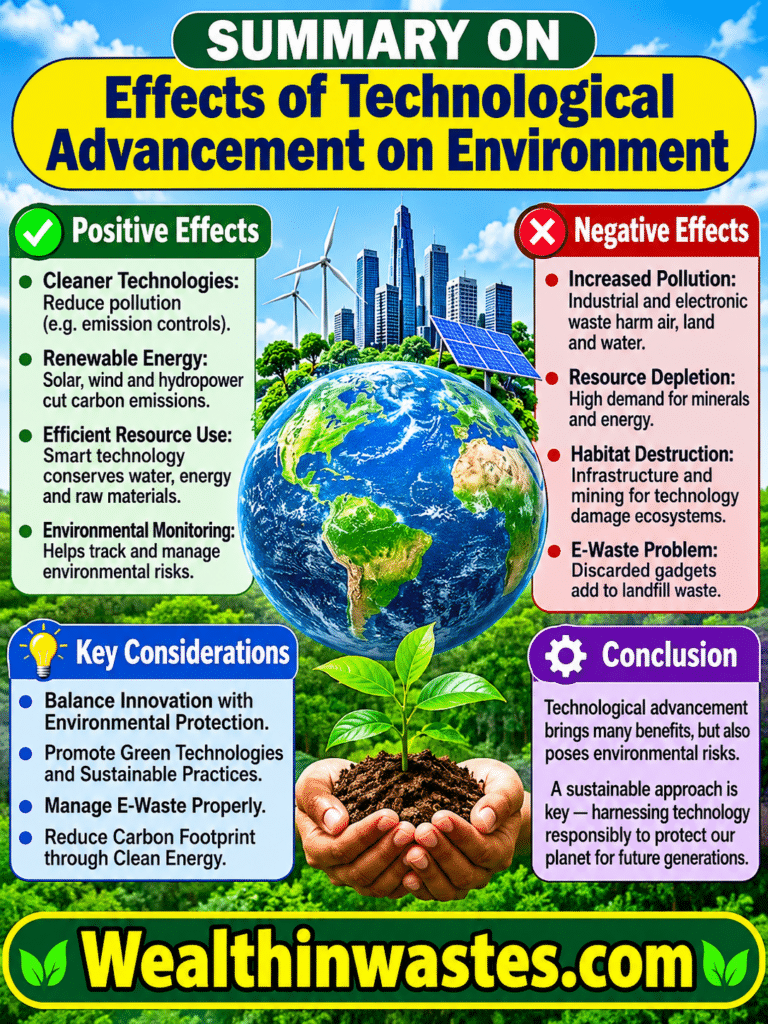
Summary on Effects of Technological Advancement on Environment
| Topic | Main Points |
|---|---|
| Environmental Effects | Technology influences air, water, land, climate and biodiversity. |
| Negative Effects | Pollution, resource depletion, habitat destruction, emissions and hazardous waste. |
| Positive Effects | Renewable energy, environmental monitoring, improved water treatment and resource efficiency. |
| Industrial Applications | Construction, healthcare, agriculture, biotechnology and information technology. |
| Electronic Waste | Improper disposal releases pollutants and wastes valuable recoverable materials. |
| Environmental Protection | Repair, reuse, responsible purchasing, recycling and proper waste management. |
| Nigeria | NESREA provides regulatory frameworks for electrical, electronic and battery waste management. |
| Sustainable Development | Responsible innovation, clean energy, circular production and effective environmental regulation. |
Frequently Asked Questions About Effects of Technological Advancement on Environment
1. What Are the Effects of Technological Advancement on Environment?
They include pollution, climate change, resource depletion, habitat destruction and electronic waste, alongside improvements in energy efficiency and environmental monitoring.
2. What Is the Greatest Environmental Disadvantage of Technology?
There is no single greatest disadvantage. Pollution, excessive resource extraction, greenhouse-gas emissions and poorly managed electronic waste are major concerns.
3. Can Technology Help Protect the Environment?
Yes. Renewable energy, pollution sensors, satellite monitoring, efficient irrigation and modern waste-treatment systems can improve environmental protection.
4. What Is Electronic Waste?
Electronic waste refers to discarded electrical and electronic equipment, including computers, mobile phones, televisions, refrigerators and batteries.
5. How Does Technology Contribute to Climate Change?
Manufacturing, transportation, electricity generation and data centres can release greenhouse gases, particularly when they depend on fossil fuels.
6. How Can Individuals Reduce the Environmental Effects of Technology?
Buy durable products, repair damaged equipment, conserve electricity, reuse functional devices and send electronic waste to recognised recycling facilities.
7. Why Is Improper Electronic Waste Disposal Dangerous?
It can release toxic substances into air, soil and water, potentially harming human health, wildlife and surrounding ecosystems.
8. Does Nigeria Have Regulations for Electronic Waste?
Yes. NESREA lists the National Environmental (Electrical/Electronic Sector) Regulations of 2022 and the National Environmental (Battery Control) Regulations of 2024.
Do you have any questions, suggestions, or contributions? If so, please feel free to use the comment box below to share your thoughts. We also encourage you to kindly share this information with others who might benefit from it. Since we can’t reach everyone at once, we truly appreciate your help in spreading the word. Thank you very much for your support and for sharing!
Read Also: Water and Land Pollution in Agriculture