


The environment consists of connected natural and human-made systems that support life, shape communities, and influence economic activities. Air, water, land, living organisms, and society interact continuously across ecosystems on Earth.
The air environment and water environment are particularly important because plants, animals, and people need breathable air and suitable water conditions for survival, growth, reproduction, and healthy daily activity throughout life.
Air forms the atmosphere surrounding Earth, while the water environment includes oceans, rivers, lakes, groundwater, ice, soil moisture, and water vapour moving through the wider hydrological cycle continuously.
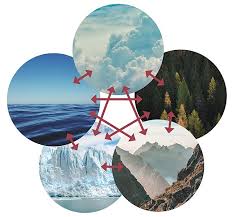
These environmental components do not work independently. Changes in air temperature influence evaporation and rainfall, while water bodies transfer heat, support vegetation, and affect local weather patterns and habitats over time.
Understanding their structure clarifies why pollution control, water conservation, climate awareness, and responsible resource use matter to households, farms, industries, communities, and the survival of future generations across the world.
The Environment and Its Main Components
Environmental structure describes the main components and relationships that allow the planet to function as a life-support system. Scientists commonly group these components into air, water, land, living systems, and human societies.
The atmosphere supplies gases and influences weather; the hydrosphere stores and circulates water; the lithosphere provides rocks and soils; and the biosphere includes organisms that interact with other components every day.
The human or anthroposphere comprises built environments, infrastructure, technologies, and activities that transform natural resources. Social relationships, culture, institutions, and economic systems shape how people use and manage those resources within communities.
A change in one component can affect the others. For example, clearing vegetation can increase soil erosion, send sediment into rivers, reduce water quality, and release stored carbon through decomposition or burning.
Sustainable planning must therefore consider connected systems rather than treating air, water, land, and society as separate problems. Coordinated urban environmental management helps integrate sanitation, land use, industry, transport, farming, and community needs.
Climate-related pressures influence environmental quality and livelihoods. Understanding global warming and climate change helps communities anticipate drought, heat, flooding, and other risks that affect ecosystems and agricultural production across regions.
Public participation strengthens environmental protection because individual habits, business decisions, and government rules influence pollution levels. Long-term strategies to save the Earth work best when people combine prevention, monitoring, restoration, and responsible consumption.
Read Also: Methods of Disposal of Waste Pesticide Containers
The Air Environment and Atmosphere
The air environment includes the gases surrounding Earth, commonly called the atmosphere. Air near the surface consists mainly of nitrogen and oxygen, with smaller quantities of argon, carbon dioxide, water vapour, and trace gases.
Nitrogen accounts for roughly 78% and oxygen about 21% of dry air near sea level. Other gases occur at lower concentrations, yet several have major roles in climate, chemistry, and life processes.
The atmosphere has layers with different temperature patterns and functions. Weather mainly occurs in the troposphere, while the stratosphere contains much of Earth’s protective ozone layer, which absorbs harmful ultraviolet radiation from the Sun.
Atmospheric density decreases with altitude, so there is no single sharp top separating air from space. This gradual transition matters when scientists describe the atmosphere’s upper boundary and outer layers.
Air contaminants include dust, smoke, fine particles, sulphur dioxide, nitrogen oxides, carbon monoxide, and volatile compounds. Air quality and common pollutants help explain preventable risks around homes, farms, roads, and factories.
The sources, concentration, and duration of exposure determine many effects of pollutants. Studying air pollutant sources helps identify preventable risks from traffic, industry, open burning, and household fuels in local communities.
Understanding different types of air pollution explains why some pollutants remain near emission points while others travel farther, react in sunlight, and form new harmful compounds that affect health.
Key Functions of the Air Environment
1. Supports Respiration: Oxygen in the atmosphere allows many organisms, including humans and other animals, to release energy from food. Plants also respire, while using carbon dioxide during photosynthesis to produce sugars.
2. Enables Photosynthesis: Plants absorb carbon dioxide and use sunlight and water to build sugars, releasing oxygen as a by-product. This process supports food webs and helps regulate atmospheric gas balance.
3. Cycles Nitrogen: Atmospheric nitrogen forms an essential ingredient of proteins and genetic material, but most plants cannot use nitrogen gas directly. Microbes convert it into compounds plants can absorb.
4. Regulates Temperature: Greenhouse gases such as carbon dioxide and water vapour retain some outgoing heat, keeping Earth habitable. Excess emissions from energy use, air pollution, and climate change intensify warming and disrupt regional climate patterns.
5. Provides Protection: The ozone layer in the stratosphere absorbs much of the Sun’s harmful ultraviolet radiation. The atmosphere also causes many small meteoroids to heat and break apart before reaching Earth’s surface.
6. Drives Weather and Water Cycles: Winds move heat and moisture, helping form clouds and distribute rainfall. Natural sources of pollution, including wildfires and dust storms, can also change local air quality.
The Water Environment and Hydrosphere

The water environment, or hydrosphere, includes water in liquid, solid, and gaseous forms. It encompasses oceans, rivers, lakes, groundwater, glaciers, snow, wetlands, soil moisture, and atmospheric water vapour.
About 71% of Earth’s surface is covered by water, but most of it is salty ocean water. Freshwater represents a small share, and only part is readily available for people and ecosystems.
Water continually moves through evaporation, condensation, precipitation, infiltration, runoff, and groundwater flow. This hydrological cycle connects the atmosphere, land, and living systems while renewing supplies in different places and seasons over time.
Rivers, lakes, wetlands, and aquifers provide habitats and supply drinking water, irrigation, fishing, industry, transport, and energy generation. Their value depends on reliable quantity, suitable quality, and careful management throughout the year.
Water has unusual physical properties, including high heat capacity and strong solvent ability, that help moderate temperature and dissolve many nutrients and minerals. Understanding water’s unique properties explains its ecological and human importance.
The water environment receives contaminants through sewage, industrial effluent, leaking fuel, litter, and runoff carrying soil, fertilizers, or pesticides. Identifying the sources and types of water pollution helps prevent contamination before pollutants reach streams or groundwater.
Conservation limits avoidable waste and protects the quality of available supplies. Water conservation includes repairing leaks, reducing unnecessary use, protecting catchments, and reusing suitable water to help communities manage limited freshwater resources.
Why the Water Environment Matters
1. Supports Hydration and Body Functions: Water supports digestion, nutrient absorption, circulation, temperature regulation, and waste removal. Adequate intake maintains normal body functions, although needs vary with activity, climate, age, and health.
2. Promotes Plant Growth: Plants need water for photosynthesis, nutrient transport, cell expansion, and temperature regulation. Too little water causes wilting and lower yields, while excess water may deprive roots of oxygen.
3. Supports Habitats and Biodiversity: Freshwater and marine environments support fish, amphibians, aquatic plants, plankton, and countless microorganisms. Protecting habitat quality helps maintain food webs, breeding grounds, and wider ecosystem balance over time.
4. Sustains Agriculture and Food Supply: Farms use water for irrigation, livestock care, cleaning, and processing. Properly managed wastewater treatment prevents pathogens, chemicals, and excess nutrients from contaminating food production areas and nearby waters.
5. Supports Industry and Employment: Manufacturing, power generation, construction, fisheries, and tourism depend on water availability. Environmental effects of waste disposal include contamination and service disruption, raising costs and damaging local economies in affected communities.
6. Protects Sanitation and Public Health: Safe water supports drinking, food preparation, handwashing, and effective sanitation. Water contaminated by pathogens or toxic chemicals can spread disease, so monitoring and treatment help protect communities.
How Air and Water Environments Interact

1. Evaporation and Transpiration: Solar energy changes surface water into vapour, while plants release moisture through transpiration. Together, these processes transfer water from land and vegetation into the atmosphere continuously across landscapes.
2. Cloud Formation and Rainfall: Water vapour cools and condenses into droplets or ice crystals, forming clouds. When atmospheric conditions support precipitation, water returns to land, replenishing soils, rivers, lakes, and groundwater reservoirs.
3. Temperature and Wind: Air temperature and wind influence evaporation rates, while atmospheric moisture affects cloud formation and humidity. These interactions shape local climates, agricultural seasons, freshwater availability, and wildlife habitats throughout the year.
4. Runoff and Pollutants: Heavy rain can carry soil, fertilizer, pesticides, and rubbish into rivers. The general impact of waste on the environment shows why runoff control and careful storage matter for keeping waterways clean.
5. Pollution Returns from Air: Some airborne chemicals react in the atmosphere and return with rain or particles. This deposition can acidify water or add contaminants to surface waters, soils, and sensitive ecosystems.
6. Vegetation Links Environmental Systems: Plants store carbon, slow runoff, shade streams, and return moisture to the air through transpiration. Land pollution and vegetation loss can weaken these protective functions and increase sediment reaching water bodies.
Major Threats to Air and Water Quality
1. Air Pollution: Vehicle exhaust, industrial fuel use, dust, open waste burning, and some household cooking fuels release harmful gases or particles. High exposure can damage respiratory health, vegetation, and local visibility.
2. Water Contamination: Untreated sewage, industrial discharges, oil spills, and poorly managed chemicals introduce pathogens or toxic substances into water. These pollutants threaten aquatic organisms and communities relying on affected supplies.
3. Poor Waste Disposal: Litter and landfill leakage may block drains, contaminate soil, and carry plastics or hazardous substances into rivers. Environmental and health effects of waste also arise when burning mixed rubbish releases smoke and toxic pollutants.
4. Climate Change: Rising greenhouse gas concentrations warm the atmosphere and oceans, alter rainfall, worsen some droughts or floods, and stress aquatic habitats. These changes intensify existing shortages and complicate environmental planning.
5. Excess Agricultural Runoff: Rain and irrigation can wash fertilizer nutrients, pesticide residues, and eroded soil off fields. These materials may encourage excessive algae growth, reduce water quality, and harm aquatic life.
6. Economic and Social Costs: Pollution raises treatment expenses, reduces farm or fishery productivity, and may increase health costs or work absences. Economic losses caused by pollution often burden communities where services and safeguards remain limited.
Read Also: The Impact of Incineration on Our Lives
Practical Ways to Protect Air and Water

Cleaner energy, well-maintained vehicles, efficient equipment, and avoiding open burning can reduce harmful emissions. Practical air pollution control measures work best when households, transport operators, industries, and local authorities contribute.
Keep waste, fuel, chemicals, and animal manure away from wells, streams, lakes, and drainage channels. Air quality management strategies can identify airborne pollution early, while water authorities separately test drinking water and source locations.
Households, farms, and industries should manage sewage and effluent before discharge or safe reuse. Reliable treatment reduces pathogens, organic pollution, toxic substances, and excess nutrients that could harm ecosystems and public health.
Separate recyclables, compost suitable organic waste, and send hazardous materials to approved collection systems. Keep waste out of waterways and avoid burning plastics, which can release dangerous fumes and particles.
Protect wetlands, restore streamside vegetation, plant suitable trees, and reduce erosion with ground cover. These measures slow runoff, trap sediment, provide wildlife habitat, and help maintain local water cycles.
Fix leaks, use irrigation efficiently, collect rainwater where appropriate, and educate communities about pollution prevention. Shared action among households, schools, farmers, industries, and authorities makes environmental conservation more effective.
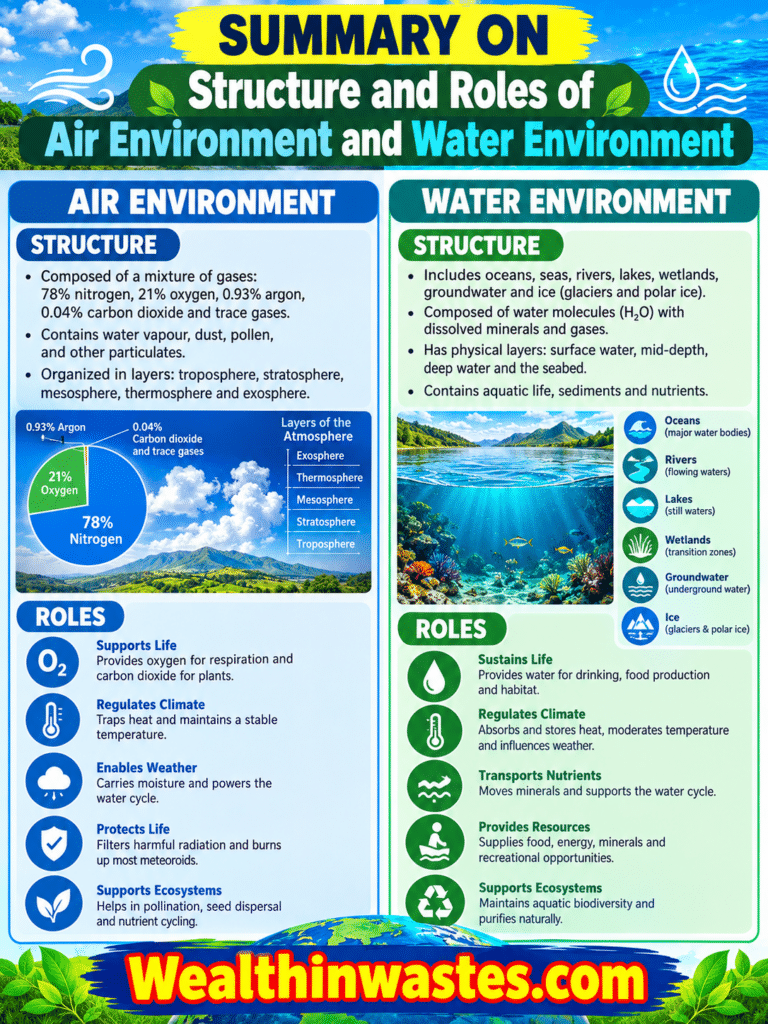
Summary on Structure and Roles of Air Environment and Water Environment
| Environmental Component | Main Features | Importance |
|---|---|---|
| Air Environment | Atmosphere containing nitrogen, oxygen, carbon dioxide, water vapour, and other gases. | Supports respiration, photosynthesis, weather processes, climate regulation, and protection from harmful ultraviolet radiation. |
| Water Environment | Oceans, rivers, lakes, groundwater, wetlands, glaciers, soil moisture, and atmospheric water vapour. | Supports drinking, sanitation, agriculture, industry, aquatic habitats, and biodiversity. |
| Environmental Interdependence | Evaporation, condensation, rainfall, wind, and runoff connect air, water, and land. | Maintains the water cycle, influences climate, and affects ecosystem health. |
| Major Environmental Threats | Air emissions, sewage, industrial effluent, agricultural runoff, waste disposal, and excessive resource use. | Can damage health, contaminate water, disrupt ecosystems, and increase economic costs. |
| Conservation Measures | Pollution prevention, water conservation, wastewater treatment, vegetation protection, and environmental monitoring. | Improves air quality, safeguards freshwater, protects biodiversity, and strengthens environmental resilience. |
Frequently Asked Questions About Air Environment and Water Environment: Structure and Roles
1. What Is the Air Environment?
The air environment is the atmosphere surrounding Earth, containing gases that support life, influence weather, and help protect the planet from harmful solar radiation.
2. What Does the Water Environment Include?
It includes oceans, rivers, lakes, groundwater, wetlands, glaciers, snow, soil moisture, and water vapour cycling through the atmosphere and ecosystems.
3. Why Are Air and Water Interconnected?
Evaporation, cloud formation, rainfall, wind, and runoff continually move heat, moisture, and pollutants between the atmosphere, land, and water bodies.
4. How Much of Earth’s Surface Is Covered by Water?
About 71% of Earth’s surface is covered by water, although most is salty ocean water and only a small proportion is readily available freshwater.
5. What Is the Main Function of the Ozone Layer?
The ozone layer absorbs much of the Sun’s harmful ultraviolet radiation, reducing exposure risks for people, wildlife, and plants at Earth’s surface.
6. How Does Water Support Agriculture?
Water supports seed germination, photosynthesis, nutrient movement, livestock care, irrigation, and food processing, making it essential for crop production and food security.
7. What Causes Pollution in Air and Water Environments?
Major sources include vehicle emissions, burning waste, industrial discharges, untreated sewage, agricultural runoff, and improper chemical handling or disposal.
8. How Can People Protect Air and Water?
Reduce emissions, avoid open burning, dispose of waste safely, conserve water, protect vegetation, and support wastewater treatment and pollution-monitoring programmes.
Do you have any questions, suggestions, or contributions? If so, please feel free to use the comment box below to share your thoughts. We also encourage you to kindly share this information with others who might benefit from it. Since we can’t reach everyone at once, we truly appreciate your help in spreading the word. Thank you very much for your support and for sharing!
Read Also: Usefulness of Water Resources in Agriculture