


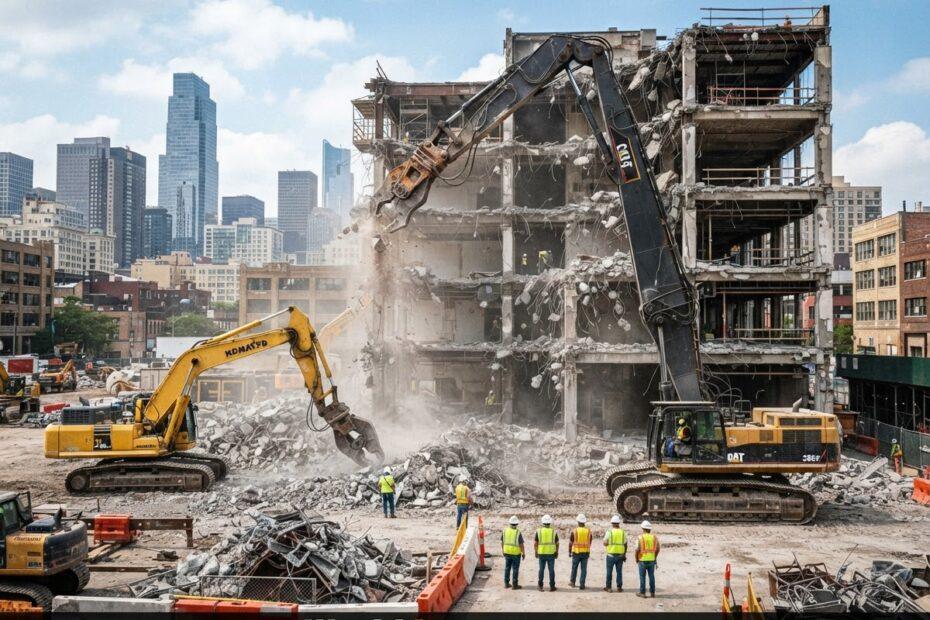
Demolition companies play an essential role in construction by removing unsafe, obsolete, or unwanted structures and preparing sites for new homes, commercial buildings, roads, and public infrastructure projects across towns and cities.
Their work involves far more than knocking down walls. Contractors inspect buildings, assess risks, obtain permits, disconnect utilities, select suitable methods, and coordinate waste removal before construction crews arrive safely and efficiently.
A poorly managed demolition project can damage nearby property, expose workers to dangerous substances, interrupt public services, and create avoidable pollution. Professional planning helps contractors control these risks and protect communities.
Demolition companies also influence project budgets and schedules. Their equipment, skilled workforce, and experience help developers clear sites efficiently while recovering reusable materials and limiting waste sent to disposal facilities.
Choosing a qualified contractor therefore matters to property owners, builders, and public agencies. Understanding services, methods, safety duties, and costs makes it easier to plan demolition responsibly and prepare for the next construction phase.
Read Also: Proximity Power: Discover Companies Around You
Understanding the Role of Demolition Companies

1. Creating a clear starting point: Contractors remove structures that no longer serve their purpose, allowing developers to use land for safer buildings, transport routes, utilities, and other community facilities.
2. Reducing project risks: Their structural assessments, controlled work methods, and safety arrangements help prevent avoidable damage to neighbouring properties, underground services, workers, pedestrians, and nearby businesses throughout the operation.
3. Coordinating site access: They organise machinery, labour, temporary barriers, traffic movement, and debris collection so that removal work follows a planned sequence and keeps nearby residents informed regularly.
4. Supporting resource recovery: Contractors identify reusable fixtures and recyclable materials before disposal, helping project owners reduce waste volumes and support responsible construction and demolition waste management whenever suitable recovery facilities accept materials.
Demolition Services for Different Construction Projects
Residential demolition covers detached houses, apartment blocks, extensions, and unsafe outbuildings. Contractors assess neighbouring homes, narrow access roads, shared boundaries, and utility connections before choosing equipment and removal sequences carefully.
Commercial demolition involves offices, shops, warehouses, hotels, and other business premises. Work may require phased removal, after-hours scheduling, careful handling of shared services, and coordination with property managers and tenants.
Industrial demolition deals with factories, workshops, storage tanks, plants, and heavy infrastructure. These projects often involve complex machinery, reinforced structures, process residues, and industrial waste streams that need careful assessment.
Selective demolition removes chosen parts of a building while preserving the remaining structure. This approach suits renovations, extensions, and interior refits, and it requires precise separation of debris from construction and demolition activities.
Across these project types, contractors identify the materials each job may produce. Understanding wider sources of discarded materials helps teams plan collection, storage, transport, and disposal well before site crews arrive.
Planning, Permits and Site Assessment

1. Site inspection: Contractors examine the building’s age, design, structural condition, access points, neighbouring properties, and nearby infrastructure. This survey helps the team identify hazards and select a suitable demolition method.
2. Hazardous material checks: Specialists investigate suspected asbestos, lead paint, contaminated soil, fuel residues, and other risks. A documented waste determination process helps teams classify materials and choose safe handling procedures.
3. Permits and approvals: The contractor confirms applicable planning, demolition, environmental, and building-control requirements. Owners may need to provide ownership documents, site plans, assessments, notices, and meet local notification obligations while following environmental oversight arrangements.
4. Utility disconnection: Electricity, gas, water, drainage, and telecommunications services must be isolated or rerouted by authorised providers. Written confirmation helps prevent accidental contact with live services during demolition work.
5. Demolition method and logistics: The project plan sets out machinery, workforce roles, access controls, work sequence, emergency arrangements, and waste routes. It should also include air, water, and soil monitoring where needed.
Demolition Methods and Site Safety
1. Manual demolition: Workers use hand tools and small equipment to remove interior fittings, partitions, ceilings, or limited sections. This approach gives the team close control where heavy machinery would cause unnecessary damage.
2. Mechanical demolition: Excavators, breakers, bulldozers, cranes, and specialist attachments remove larger structures efficiently. Skilled operators follow an engineered sequence to manage structural stability and protect people and nearby property.
3. Controlled implosion: Specialist contractors may use engineered explosive systems to bring selected large structures down within a planned footprint. This complex method requires expert design, strict exclusion zones, and formal approvals.
4. Personal protection and access control: Site managers provide suitable helmets, boots, gloves, eye protection, respiratory protection, barriers, signs, and controlled entry. Workers also need clear communication, task-specific safety briefings, and exposure-prevention training.
5. Dust, noise, and vibration control: Teams use water sprays, screens, equipment maintenance, and suitable work schedules to limit disturbance. These pollution-control measures protect workers and surrounding communities at all stages.
Construction Waste Management and Recycling

1. Identifying the waste stream: Demolition debris may include concrete, bricks, timber, metal, glass, plasterboard, roofing, insulation, soil, and fixtures. Correct waste classification helps contractors separate ordinary materials from potentially hazardous waste.
2. Sorting materials at the site: Crews use designated areas or containers for concrete, metals, wood, plastics, and mixed debris. Segregation and material-specific recycling improve quality and reduce contamination during storage and transport.
3. Recovering reusable materials: Doors, fittings, structural components, timber, and metal may retain value after careful removal. Suitable items can enter resale or reuse channels, while recyclables support products recovered from demolition waste.
4. Handling hazardous materials separately: Asbestos-containing products, lead-based coatings, chemical containers, and contaminated soil require specialist assessment and controlled removal under a demolition waste management plan. Contractors must use authorised handlers and suitable disposal facilities.
5. Documenting transport and disposal: Waste records should identify material types, quantities, carriers, destinations, and receipts. Reliable documentation supports accountability and improves resource recovery methods across the project for final disposal.
6. Improving recycling outcomes: Contractors can work with approved processors to recover suitable materials and avoid unnecessary landfill disposal. Practical recycling strategies also reduce demand for newly extracted resources in suitable facilities.
Site Clearance and Environmental Restoration
After demolition, contractors remove remaining debris, inspect the exposed ground, and confirm that the site meets the agreed handover conditions. This stage may include grading, compaction, drainage adjustments, and access preparation.
Where assessments identify contamination, the owner may need a separate remediation plan before construction begins. Depending on the pollutant and site conditions, specialists may assess biological remediation options alongside other treatment methods.
Effective drainage and erosion controls help prevent loose soil, sediment, and pollutants from entering drains, streams, or groundwater. Teams should understand possible sources of water pollution before finalising site controls.
Site restoration may involve stabilising exposed soil, installing temporary ground cover, protecting trees, and maintaining safe boundaries. These measures reduce erosion, improve site conditions, and prepare the property for the next construction phase.
Choosing Demolition Companies and Understanding Costs

1. Verifying licences and insurance: Check that the contractor holds the approvals required for the project and carries suitable public liability and workers’ compensation cover. Confirm policy limits, validity dates, and relevant exclusions.
2. Reviewing comparable experience: Ask for examples of projects with similar building types, site conditions, and demolition methods. References, documented case studies, and site photographs can help establish the contractor’s capability.
3. Examining safety and environmental procedures: Request risk assessments, emergency plans, hazardous-material arrangements, and waste controls. A credible contractor should explain how its waste collection and disposal controls will work.
4. Comparing detailed quotations: Estimates should identify labour, machinery, permits, utility coordination, waste transport, recycling, and site restoration. Check exclusions, provisional costs, and the contractor’s understanding of relevant solid waste categories.
5. Agreeing on communication and handover: Put the work scope, programme, payment stages, reporting arrangements, and completion criteria in writing. Clear responsibilities help both parties resolve changes before they affect costs or deadlines.
Benefits of Professional Demolition Services
Professional demolition teams bring trained workers, suitable machinery, and project-specific experience to a demanding stage of construction. Their coordinated approach helps property owners avoid unnecessary delays, unsafe shortcuts, and poorly managed debris.
Reliable planning also supports neighbouring communities. Proper barriers, dust suppression, noise controls, traffic arrangements, and utility coordination reduce disruption while keeping workers, residents, visitors, and nearby businesses safer throughout the project.
Responsible contractors can also recover valuable materials and reduce the volume sent to landfill. These practices support waste minimisation at source and encourage more efficient use of construction resources across project stages.
Ultimately, the right demolition partner helps developers move from an existing structure to a prepared site with fewer avoidable risks. This creates a stronger starting point for construction, renovation, or redevelopment.
Read Also: Health Benefits and Uses of Crab
Summary on Demolition Companies and Their Crucial Role in Construction
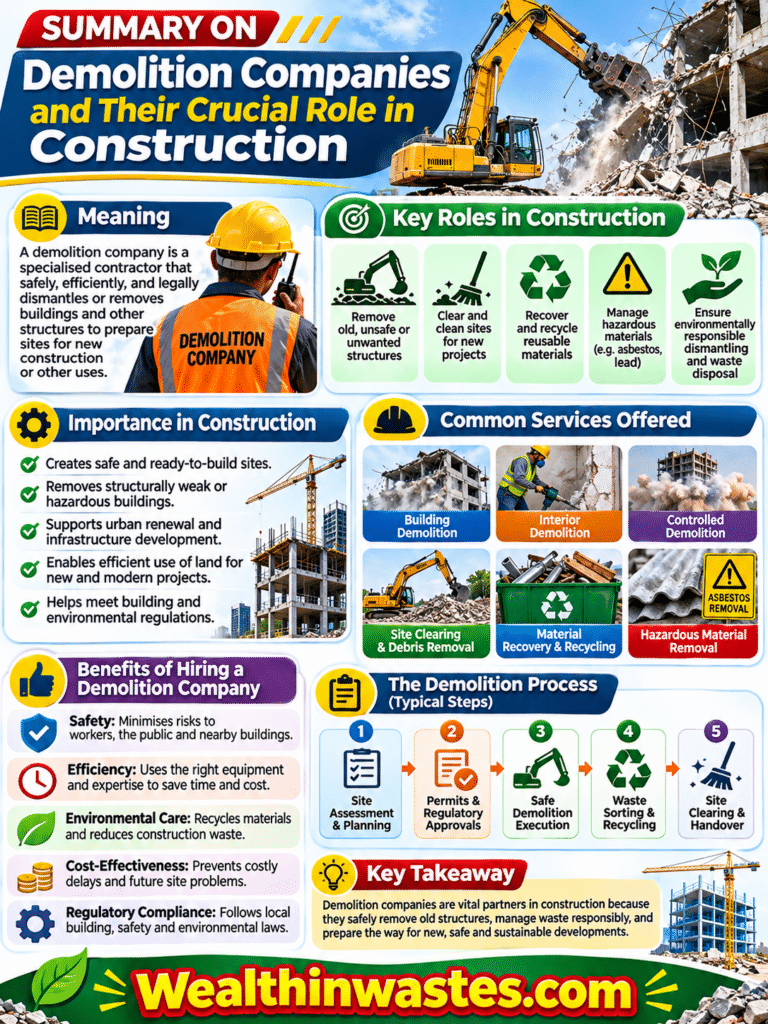
| Aspect | Summary |
|---|---|
| Primary Role | Remove unwanted or unsafe structures and prepare sites for new construction. |
| Demolition Services | Residential, commercial, industrial, and selective building removal. |
| Planning and Permits | Site inspections, hazard assessments, approvals, utility disconnection, and project planning. |
| Demolition Methods | Manual demolition, mechanical demolition, and specialist controlled implosion. |
| Site Safety | Protective equipment, controlled access, dust suppression, and risk management. |
| Waste Management | Sorting, recycling, material recovery, hazardous waste handling, and responsible disposal. |
| Site Restoration | Debris removal, land grading, drainage management, and environmental stabilisation. |
| Contractor Selection | Check qualifications, insurance, experience, safety procedures, quotations, and communication. |
| Construction Benefits | Safer sites, improved project coordination, resource recovery, and reduced environmental impact. |
Frequently Asked Questions About Demolition Companies
1. What do demolition companies do?
They assess structures, plan safe removal, arrange approvals, disconnect utilities, dismantle buildings, manage debris, and prepare sites for subsequent construction activities.
2. What services do demolition companies provide?
Services include residential, commercial, industrial, interior, selective, and complete structural demolition, alongside debris removal and site preparation.
3. How long does a demolition project take?
Duration depends on building size, structural complexity, permits, site access, demolition methods, hazardous materials, and waste removal arrangements.
4. Are permits required before demolition?
Many locations require demolition approvals. Property owners should confirm local building-control, planning, environmental, and utility requirements before contractors begin work.
5. How do demolition companies handle hazardous materials?
Qualified specialists identify, isolate, remove, transport, and dispose of hazardous materials using appropriate safety procedures and authorised facilities.
6. Can demolition waste be recycled?
Yes. Concrete, metals, timber, bricks, glass, and other suitable materials can often be recovered, reused, or processed into new products.
Do you have any questions, suggestions, or contributions? If so, please feel free to use the comment box below to share your thoughts. We also encourage you to kindly share this information with others who might benefit from it. Since we can’t reach everyone at once, we truly appreciate your help in spreading the word. Thank you very much for your support and for sharing!
Read Also: Factors Determining the Choice of a Land Clearing Technique