


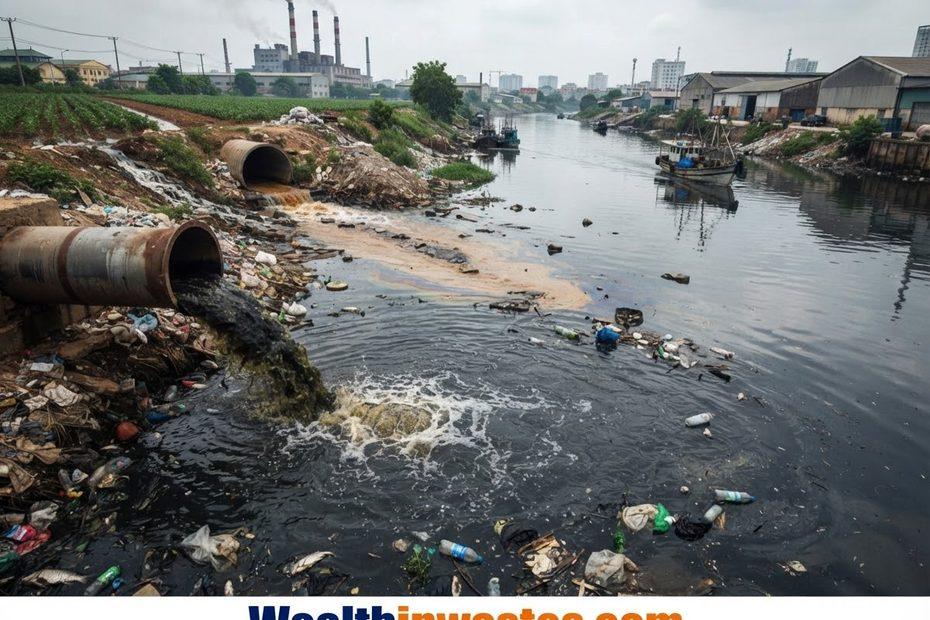
Water is one of the most important natural resources supporting human life, agriculture, industry, wildlife, and healthy ecosystems. Its quality determines whether communities can safely use rivers, lakes, groundwater, and coastal environments.
Human activities increasingly introduce wastes and contaminants into water bodies. Although natural biological, physical, and chemical processes can remove some pollutants, excessive waste loads can overwhelm the self-purification capacity of aquatic ecosystems.
Domestic sewage, industrial effluents, agricultural runoff, eroded soil, chemicals, and heated water can alter the physical, chemical, and biological characteristics of water. These changes may reduce water suitability for drinking, farming, fisheries, recreation, and wildlife.
The problem becomes more serious where wastewater treatment, sanitation infrastructure, and pollution controls are inadequate. Poorly managed wastes can enter streams, lakes, groundwater, and oceans, spreading contaminants beyond their original sources.
This article examines the major classes of water pollutants and the principal sources from which they originate. Understanding these categories helps students, farmers, industries, communities, and environmental managers recognize pollution pathways and improve water protection.
Read Also: What is Wastewater and Sources of Wastewaters
Classes of Water Pollutants
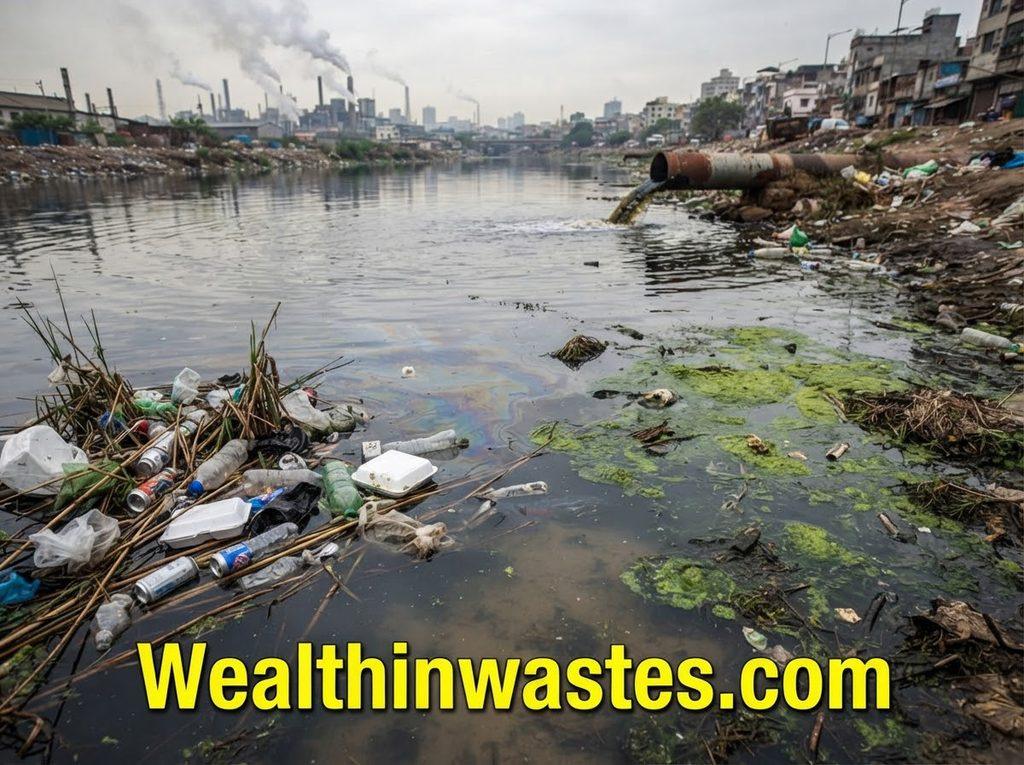
Water pollution includes substances and forms of energy that change water quality and make it less suitable for particular uses. Pollutants may be biological, chemical, physical, radioactive, or thermal in nature.
1. Disease-Causing Organisms: Pathogens such as bacteria, viruses, protozoa, and parasitic organisms commonly enter water through human sewage, animal wastes, and inadequate sanitation, creating risks for people and aquatic organisms.
2. Synthetic Organic Compounds: Industrial, household, and agricultural chemicals can contaminate water. Pesticides, solvents, detergents, pharmaceuticals, and other manufactured substances may persist, spread through ecosystems, or produce harmful effects on organisms.
3. Inorganic Compounds and Mineral Substances: Acids, salts, asbestos fibres, and heavy metals can enter water from mining, manufacturing, waste disposal, atmospheric deposition, and other activities, sometimes accumulating in sediments and organisms.
4. Radioactive Substances: Radioactive pollutants may originate from nuclear energy activities, medical applications, research facilities, mining, and improperly managed radioactive materials. Even small releases require careful control because radiation can persist.
5. Oxygen-Demanding Wastes: Organic materials in sewage and industrial effluents are decomposed by microorganisms, consuming dissolved oxygen. Excessive oxygen demand can create oxygen-poor conditions that stress or kill aquatic organisms.
6. Plant Nutrients: Nitrogen and phosphorus from sewage, fertilizers, manure, and runoff can enter water bodies. Excess nutrients encourage excessive algae and aquatic plant growth, contributing to eutrophication and oxygen depletion.
7. Sediments: Soil particles carried from agricultural fields, construction sites, roads, and exposed land can increase turbidity and sediment deposition. Sedimentation can damage habitats, reduce water clarity, and interfere with aquatic life.
8. Thermal Discharges: Heated water released from power stations and industrial facilities can raise receiving-water temperatures. Because warm water generally holds less dissolved oxygen, thermal pollution can disrupt organisms and ecological processes.
9. Floating and Suspended Materials: Plastics, litter, oils, suspended solids, and other visible materials can degrade water quality, obstruct waterways, reduce light penetration, and harm aquatic organisms through ingestion, entanglement, or habitat alteration.
10. Emerging Contaminants: Modern wastewater may contain pharmaceuticals, personal-care chemicals, microplastics, and other substances that traditional treatment systems may not completely remove. Their presence makes monitoring and improved wastewater management increasingly important.
Read Also: Solid Waste Management Complete Guide
Sources of Water Pollutants
Most water pollution originates from activities on land within drainage basins. Domestic settlements, farms, industries, markets, roads, construction sites, and waste disposal areas can all release pollutants transported toward water bodies.
1. Natural Sources and Background Processes: Water can receive soil particles, leaves, animal wastes, dissolved minerals, and other materials naturally. These processes are part of aquatic cycles, although excessive human disturbance can intensify them.
Even without direct human discharges, natural processes can influence water quality through erosion, decomposition, mineral dissolution, and organic accumulation. Soil erosion processes may increase sediment movement into streams and reservoirs.
Natural eutrophication occurs gradually when nutrients accumulate in water and encourage plant growth. However, human activities can accelerate this process substantially, reducing water quality and changing the ecological condition of affected lakes.
2. Agricultural Areas: Farming can degrade water quality through soil erosion, fertilizer application, pesticide use, irrigation return flows, and livestock wastes. Runoff may carry nutrients, chemicals, pathogens, and sediments into nearby rivers and lakes.
Agricultural runoff becomes particularly important after heavy rainfall or excessive irrigation. Wastewater characteristics and flow patterns influence how pollutants move, dilute, accumulate, and eventually affect receiving water bodies.
3. Non-Point Pollution: Agricultural and urban runoff commonly represents non-point pollution because contaminants originate from many scattered locations rather than one identifiable discharge. This makes prevention more difficult than controlling a concentrated outlet.
Pesticides, fertilizers, livestock manure, and eroded soil may enter water simultaneously during runoff events. Effective control therefore requires improved land management, careful chemical application, vegetation cover, drainage planning, and responsible handling of farm wastes.
4. Urban Areas and Drainage Basins: Buildings, roads, concrete, and asphalt reduce surfaces that absorb rainfall. Increased runoff carries dirt, oil, vehicle fluids, litter, metals, and other pollutants toward drainage channels and receiving waters.
Urban waste can also contribute to water pollution when collection systems are inadequate. Proper waste management hierarchy principles help reduce the quantity of materials that can ultimately reach drains and waterways.
5. Stormwater Systems: During heavy rainfall, storm drains can rapidly transport pollutants washed from streets and exposed surfaces. Where runoff controls are inadequate, sudden pollutant loads may reach rivers, lakes, wetlands, and coastal waters.
Streets can accumulate oil, dust, metals, litter, animal wastes, and other substances between rainfall events. When storms occur, these materials are washed into drainage systems, increasing short-term pollutant concentrations and stressing receiving aquatic environments.
6. Domestic Sewage and Sanitary Sewers: Homes, offices, schools, and commercial premises generate wastewater containing organic matter, nutrients, microorganisms, detergents, and other contaminants. Treatment systems reduce these pollutants before discharge, but failures can cause releases.
Domestic wastewater requires appropriate collection, treatment, and disposal because untreated sewage can introduce pathogens and oxygen-demanding organic matter into water. Detailed information about industrial wastewater treatment processes also illustrates the importance of suitable treatment systems.
7. Combined Sewer Overflows: Some sewer systems carry both sanitary wastewater and stormwater. Heavy rainfall can greatly increase flows beyond treatment capacity, causing overflow that may discharge partially treated or untreated sewage into receiving waters.
Such discharges can temporarily increase concentrations of bacteria, suspended solids, nutrients, and organic matter. Communities therefore benefit from drainage planning, adequate treatment capacity, sewer maintenance, and measures that reduce excessive stormwater entering sanitary systems.
8. Industrial Effluents: Factories may release wastewater containing organic substances, toxic chemicals, oils, salts, nutrients, or heavy metals. Some facilities require specialized treatment because their effluents may exceed acceptable characteristics for municipal treatment.
Industrial pollutants vary according to the processes and raw materials used by different facilities. Proper handling of hazardous waste and dangerous substances is essential to prevent toxic contaminants from entering surface water or groundwater.
9. Waste Disposal Sites: Poorly managed landfills and waste disposal areas can generate leachate that moves through soil toward groundwater. Proper site selection, containment, drainage, and leachate management are therefore important for water protection.
Landfill design should consider geology, soil characteristics, groundwater conditions, drainage, and surrounding land uses. Appropriate environmental factors for disposal-site selection help reduce the possibility of groundwater contamination from leaking waste materials.
Improper waste disposal can create wider environmental consequences beyond visible litter. Research on environmental effects of waste disposal shows how poorly managed wastes can affect water, soil, ecosystems, and public wellbeing over time.
10. Thermal Discharges: Power plants and some manufacturing facilities use water for cooling and may return it at higher temperatures. Warm discharges can alter dissolved oxygen conditions, biological processes, and aquatic life cycles.
Warmer water generally holds less dissolved oxygen, while temperature-sensitive organisms may experience physiological stress. Fish reproduction, feeding, growth, and movement can also be affected when thermal conditions change rapidly near discharge points.
Pollution prevention should combine responsible waste handling, efficient wastewater treatment, erosion control, agricultural best practices, and reduction of unnecessary waste at source. Waste management best practices support these wider environmental protection efforts.
Recycling and reuse can further reduce the amount of waste requiring disposal, indirectly lowering opportunities for pollutants to reach water. Recycling and reuse practices are therefore valuable components of sustainable pollution prevention.
Controlling agricultural erosion is especially important because eroded soil may transport nutrients, pesticides, and other contaminants. Additional guidance on erosion types and contributing factors helps explain why exposed soils can become significant pollution pathways.
Wastewater pollution also depends on the physical and chemical characteristics of the waste stream. Monitoring flow, suspended solids, oxygen demand, nutrients, toxic substances, and other properties helps treatment operators identify appropriate control measures.
Water quality protection is therefore not the responsibility of one sector alone. Households, farmers, industries, governments, waste managers, and communities must work together to reduce pollutant generation and prevent contamination before it reaches water.
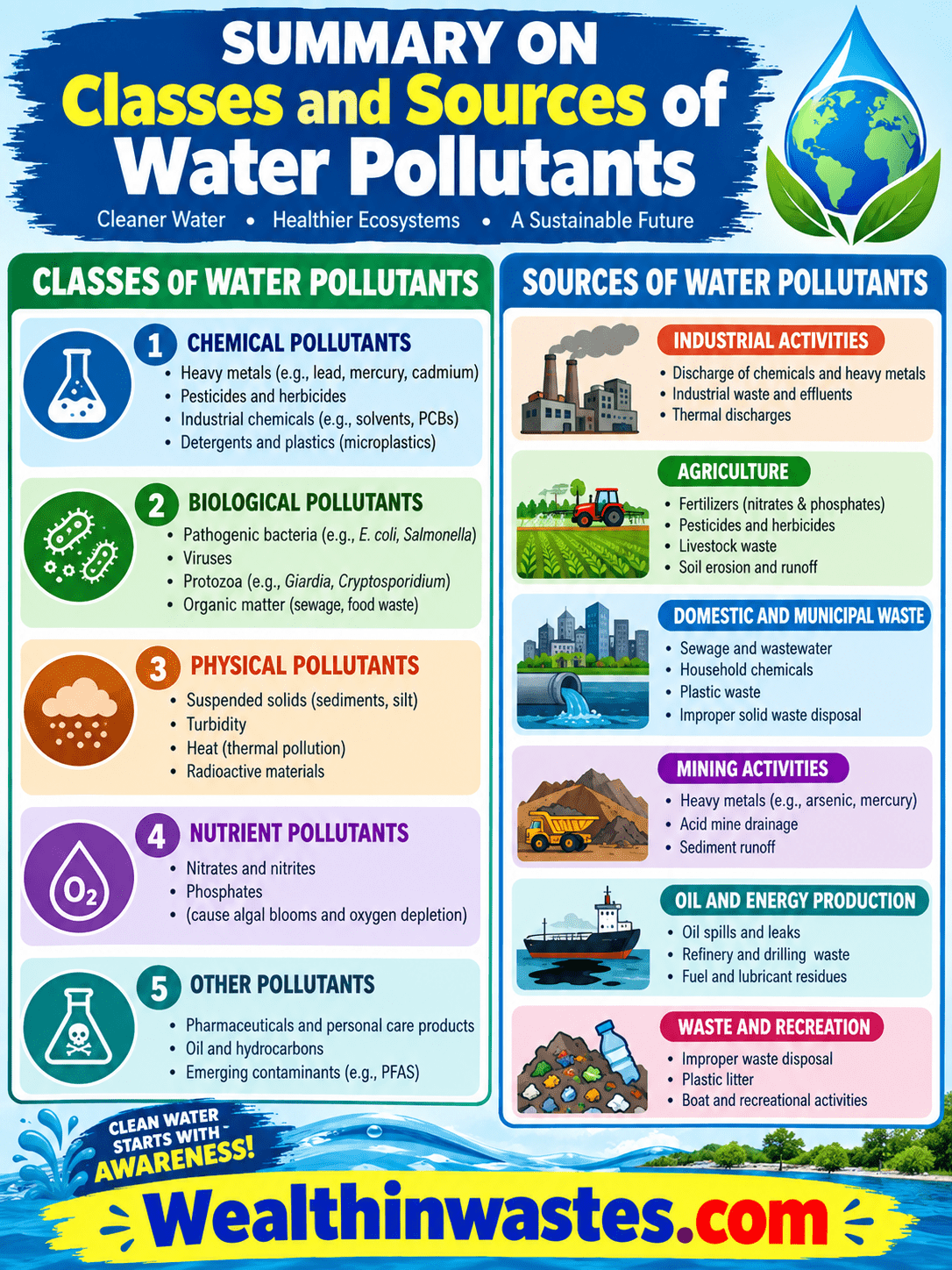
Summary on Classes and Sources of Water Pollutants
| Aspect | Summary |
|---|---|
| Meaning of Water Pollution | Water pollution occurs when substances or forms of energy change water quality enough to reduce its suitability for intended uses and aquatic life. |
| Major Pollutants | Important classes include pathogens, synthetic organic compounds, inorganic substances, radioactive materials, oxygen-demanding wastes, nutrients, sediments, thermal discharges, suspended materials, and emerging contaminants. |
| Natural Sources | Natural erosion, decomposition, mineral dissolution, leaves, and animal wastes can affect water quality even without direct human pollution. |
| Agricultural Sources | Fertilizers, pesticides, livestock wastes, irrigation runoff, and eroded soil can introduce nutrients, chemicals, pathogens, and sediments into water. |
| Urban Sources | Roads, buildings, concrete surfaces, stormwater systems, domestic sewage, and urban waste can transport pollutants into nearby water bodies. |
| Industrial Sources | Industrial effluents may contain organic materials, oils, toxic chemicals, nutrients, salts, heavy metals, and other process-related contaminants. |
| Waste Disposal Sources | Poorly managed disposal sites can produce leachate that contaminates soil and groundwater, particularly where containment and drainage systems are inadequate. |
| Thermal Pollution | Heated industrial and power-plant discharges can raise water temperatures, alter dissolved oxygen conditions, and disturb aquatic ecological processes. |
| Pollution Control | Effective prevention combines wastewater treatment, responsible waste management, erosion control, improved agricultural practices, recycling, monitoring, and appropriate environmental regulation. |
Frequently Asked Questions About Classes and Sources of Water Pollutants
1. What is water pollution, and when is water considered polluted?
Water is considered polluted when human activities change its physical, chemical, or biological characteristics enough to reduce its suitability for drinking, agriculture, industry, recreation, or aquatic life.
2. What are the major classes of water pollutants discussed in this article?
Major classes include disease-causing organisms, synthetic organic compounds, inorganic substances, radioactive materials, oxygen-demanding wastes, plant nutrients, sediments, thermal discharges, suspended materials, and emerging contaminants.
3. How does agriculture contribute to water pollution, and which farm activities are most responsible for contamination?
Agriculture contributes through soil erosion, fertilizer and pesticide runoff, livestock wastes, irrigation return flows, and drainage. These pollutants can enter streams, lakes, wetlands, and groundwater when management practices are inadequate.
4. What is the difference between point-source and non-point-source water pollution?
Point-source pollution originates from an identifiable location such as a discharge pipe or treatment outlet, whereas non-point pollution comes from dispersed areas such as farms, roads, streets, and landscapes.
5. Why are oxygen-demanding wastes harmful to aquatic organisms, especially fish and other sensitive species?
Oxygen-demanding wastes stimulate microbial decomposition that consumes dissolved oxygen. When oxygen concentrations become too low, fish, invertebrates, and other aquatic organisms may experience stress, reduced survival, or local die-offs.
6. How does thermal pollution affect aquatic ecosystems and the organisms living within affected water bodies?
Thermal pollution raises water temperature, which can reduce dissolved oxygen availability and disturb biological processes. Aquatic organisms may experience altered growth, reproduction, movement, feeding patterns, and other temperature-sensitive ecological responses.
7. Why can heavy rainfall increase water pollution in urban areas, particularly where drainage infrastructure is poorly managed?
Heavy rainfall produces large volumes of surface runoff that wash pollutants from roads, roofs, construction areas, and other impervious surfaces. Storm drains can then transport these contaminants rapidly into receiving waters.
8. How can poorly managed waste disposal sites contaminate groundwater and create long-term environmental problems?
Poorly managed disposal sites can produce leachate containing dissolved contaminants. If containment and drainage are inadequate, leachate may move through soil and reach groundwater, creating contamination that can be difficult to reverse.
Do you have any questions, suggestions, or contributions? If so, please feel free to use the comment box below to share your thoughts. We also encourage you to kindly share this information with others who might benefit from it. Since we can’t reach everyone at once, we truly appreciate your help in spreading the word. Thank you very much for your support and for sharing!
Read Also: Understanding Soil Erosion and Its Agricultural Implications