


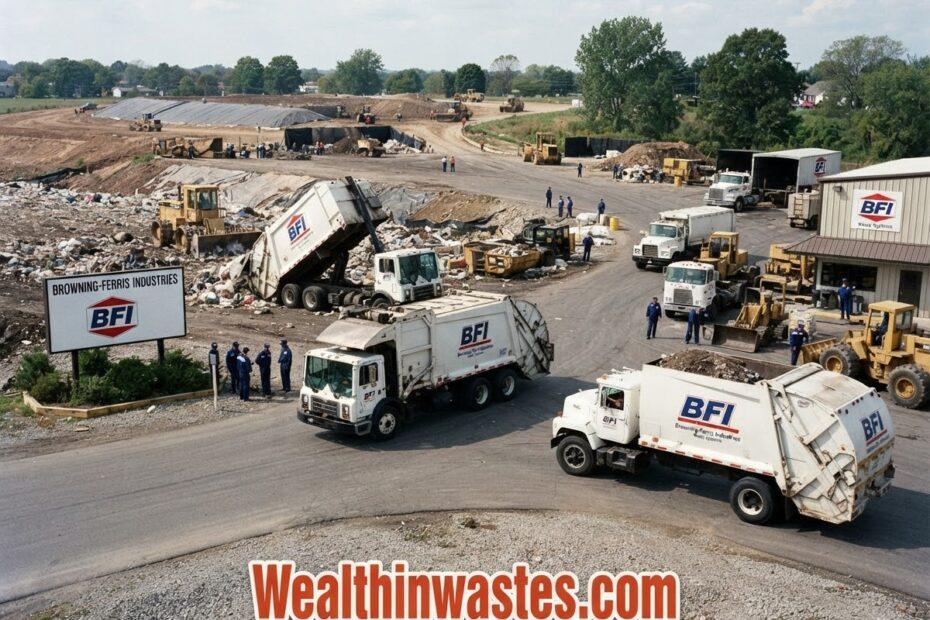
Browning-Ferris Industries (BFI) helped reshape the North American waste industry by turning a small Houston-area collection operation into a large company serving residential, commercial, and industrial customers across several markets.
Its history reflects the broader transformation of waste services, including corporate consolidation, landfill development, recycling expansion, and tighter environmental oversight as communities demanded more reliable collection and disposal systems over time.
The company began with a modest collection business in Texas, then expanded through new contracts and acquisitions. Its growth made BFI one of the industry’s prominent publicly held waste companies.
BFI also diversified beyond garbage pickup, building operations around disposal, resource recovery, and specialized waste services. These changes mirrored the practical and regulatory pressures facing a rapidly growing sector across North America.
Although the BFI name no longer defines an independent national company, its corporate history helps explain how modern waste businesses grew, what they provided, and why regulation matters to communities.
The Evolution of Browning-Ferris Industries
1. A Houston-Area Start: In 1967, accountant Tom Fatjo Jr. launched American Refuse Systems, Inc., collecting household waste in a Houston suburb before expanding into factories and landfill disposal contracts.
2. A New Corporate Identity: In 1970, Fatjo partnered with Louis A. Waters and gained control of Browning-Ferris Machinery Company. The business adopted the Browning-Ferris Industries name for its next phase.
3. Acquisition-Led Expansion: Throughout the 1970s and 1980s, BFI acquired smaller operators, widened its United States and Canadian reach, and entered selected overseas markets, building a broad network of waste services.
4. A Broader Business: BFI began resource recovery in 1972 and expanded into several waste streams. Modern types of solid waste, the waste-management hierarchy, the classification of discarded materials, and solid-waste management goals help explain this complexity.
Read Also: The Growing Importance of Battery Recycling
Core Services Behind BFI’s Growth

BFI’s service model connected collection with transportation and disposal, giving homes, businesses, construction sites, and public agencies a single provider for several essential sanitation needs across different customer settings and contract types.
1. Waste Collection and Transport: Residential collection involved scheduled pickups, while commercial customers used front-load containers or other arrangements suited to their waste. These services formed the daily, visible part of BFI’s operations.
2. Landfill Operations: After collection, trucks transported waste to transfer stations, processing sites, or disposal facilities. The broader treatment and disposal process shows why safe routing and suitable destinations matter to communities and operators.
3. Sanitary Disposal: Landfills remained central to BFI’s business, supported by owned, leased, or operated sites. An overview of landfill types shows how engineering and site design affect waste containment throughout a facility’s operating life.
4. Recycling and Specialized Services: BFI processed waste fibers and paper, expanded recycling activity, and offered sweeping and industrial services. These activities connect with landfill advantages and disadvantages and waste reduction practices today.
BFI’s Impact on the Waste Industry
BFI helped shift waste collection from many small local operators toward larger regional and national networks. That consolidation changed the environmental impacts of waste management by concentrating infrastructure and expertise within fewer large companies.
Scale can improve route planning, equipment use, customer coverage, and investment capacity, but it can also concentrate market power. The impacts of industrial waste show why handling and disposal systems need effective oversight.
BFI’s early recycling activity helped make material recovery a more integrated business line rather than an occasional add-on. Related approaches such as metal recycling show why recovered materials can retain economic value.
Environmental Risks and Regulatory Pressure

As environmental standards tightened during the 1970s and 1980s, waste companies faced new expectations for landfill operation, containment, recordkeeping, and pollution prevention under evolving federal and state requirements across different service areas.
BFI explored hazardous-waste treatment and medical-waste services, but legal and financial problems led it to leave the toxic-waste business in 1990. Modern hazardous-waste management relies on controlled handling and authorized treatment facilities.
The same lesson applies beyond landfill waste: industrial discharges and household chemicals require different safeguards. Reading about industrial effluent effects helps explain why operators must distinguish materials before treatment or final disposal.
Medical and household waste streams can create risks when sharp objects, infectious materials, solvents, or other hazardous items enter ordinary rubbish. Guidance on safe household hazardous-waste disposal shows why segregation matters.
The Allied Waste Merger and BFI’s Legacy
1. The 1999 Acquisition: Allied Waste Industries acquired BFI in a transaction valued at approximately $9.4 billion, ending BFI’s independence as a publicly traded waste company. The deal brought two major waste-hauling networks under one owner.
2. Antitrust Review: The U.S. Department of Justice required divestitures in 18 metropolitan areas before the acquisition could proceed, responding to competition concerns. This illustrated how consolidation could trigger careful market review.
3. Corporate Transition: BFI later appeared in corporate records as a subsidiary before its identity became part of wider operations. The distinction between ordinary refuse and hazardous-waste sources and classifications remained important to compliance.
4. The 2008 Merger: On December 5, 2008, Allied Waste merged with Republic Services. Many former BFI operations entered the combined group, although specific assets and contracts changed through required divestitures across local markets.
5. A Wider Environmental Context: The waste industry continued addressing varied materials and disposal challenges. Understanding agricultural-waste impacts and plastic items that cannot be recycled highlights the need for tailored management approaches.
Lessons from BFI for Modern Waste Services
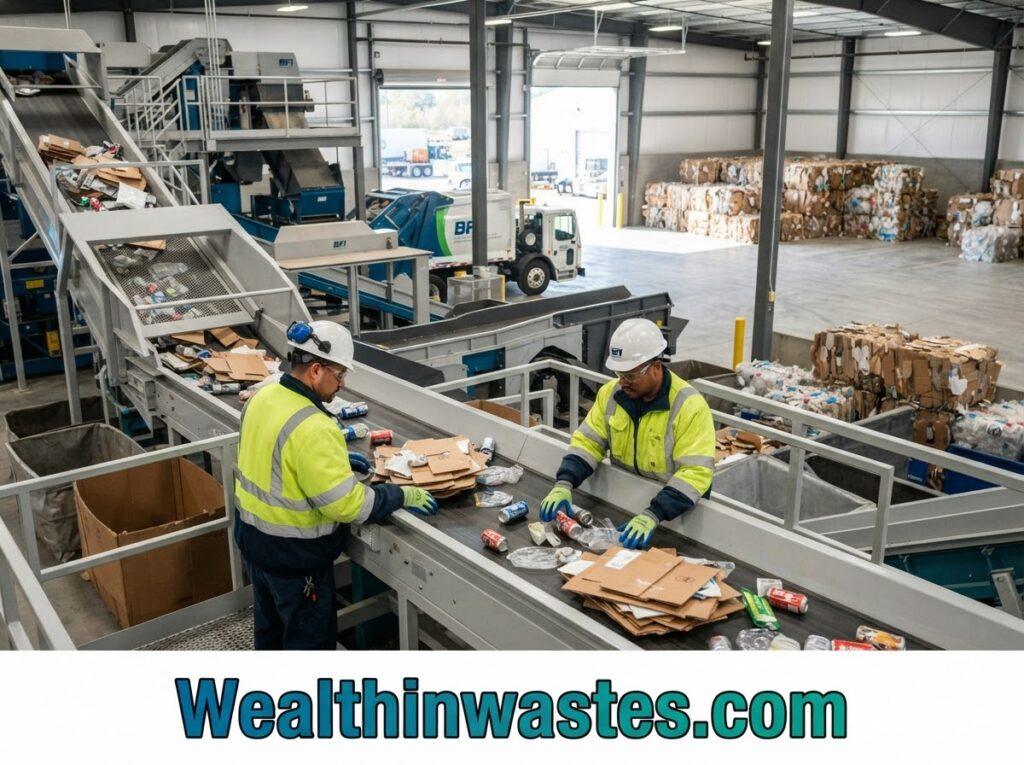
BFI’s history demonstrates how collection networks, disposal infrastructure, and recycling services can develop into an integrated business. Its growth also shows why operational efficiency must remain balanced with competition, safety, and environmental accountability.
Modern resource recovery continues to depend on sorting, material quality, viable markets, and reliable processing facilities. Readers interested in aluminum recycling can explore how recovered materials support manufacturing and reduce demand for virgin resources.
Companies in the wider sector now serve varied customers and materials, from household rubbish to industrial discards. Examples of specialized recycling businesses demonstrate how operators can support material recovery within local waste systems.
BFI’s story also provides useful context for understanding today’s disposal challenges. A broader guide to garbage-waste management options explains why prevention, recycling, recovery, and responsible final disposal all matter.
Read Also: Forest Industries and Wildlife Prospect
Summary on Evolution Of Browning-Ferris Industries: BFI’s Waste Legacy
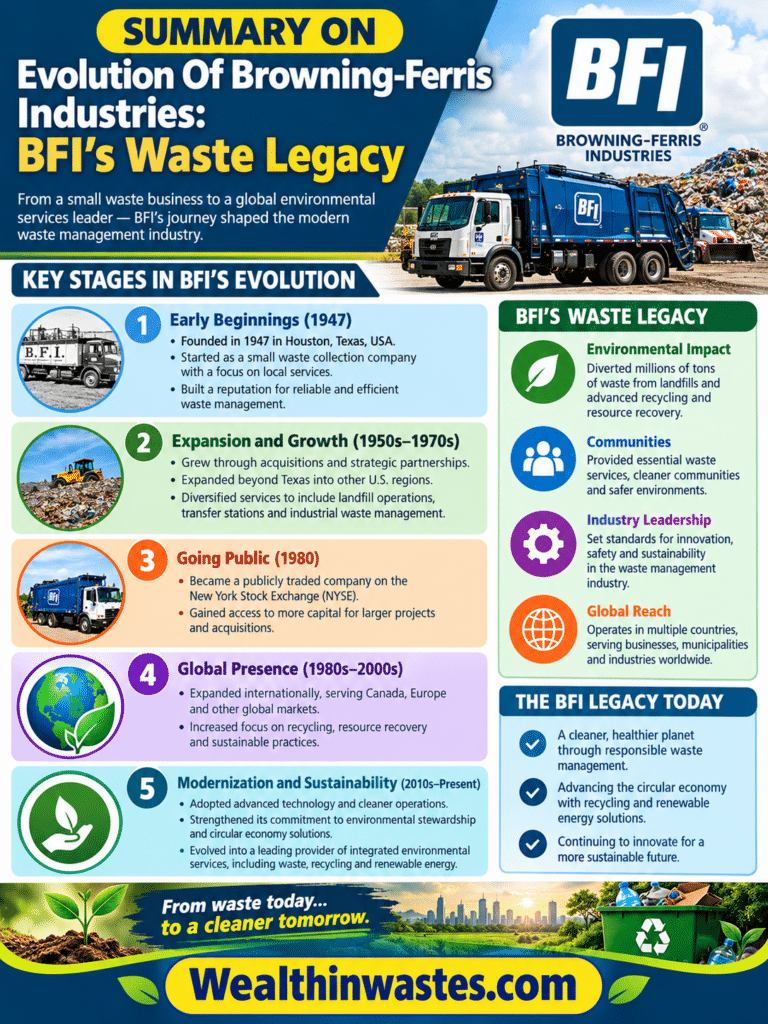
| Topic | Key Details |
|---|---|
| Founding | American Refuse Systems began collecting waste in Houston in 1967. |
| Corporate Name | The company adopted the Browning-Ferris Industries name in 1970. |
| Growth | BFI expanded through acquisitions, collection contracts, landfill operations, and recycling services. |
| Core Services | Waste collection, transportation, disposal, recycling, sweeping, and specialized waste treatment. |
| Industry Influence | BFI contributed to industry consolidation and the expansion of integrated waste services. |
| Acquisition | Allied Waste acquired BFI in 1999 in a transaction valued at approximately $9.4 billion. |
| Competition Review | The Department of Justice required divestitures in 18 metropolitan areas. |
| Corporate Legacy | Allied Waste merged with Republic Services on December 5, 2008. |
| Historical Significance | BFI remains an important example of the development of modern waste management. |
Frequently Asked Questions About Evolution Of Browning-Ferris Industries: BFI’s Waste Legacy
1. When was Browning-Ferris Industries founded?
Tom Fatjo Jr. began American Refuse Systems in 1967 in a Houston suburb. The business adopted the Browning-Ferris Industries name in 1970 after a partnership and corporate restructuring.
2. What services did BFI provide?
BFI provided residential and commercial waste collection, transportation, landfill disposal, recycling, street sweeping, and specialized services, including hazardous-waste treatment for a period and medical-waste management.
3. Did Browning-Ferris Industries operate recycling services?
Yes. BFI entered recycling in 1972 through its acquisition of a waste-fiber processor. The company later expanded resource recovery as part of its wider waste-management business.
4. What happened to BFI in 1999?
Allied Waste Industries acquired BFI in a transaction valued at approximately $9.4 billion. The U.S. Department of Justice required divestitures in 18 metropolitan areas to address competition concerns.
5. How did BFI become connected to Republic Services?
Allied Waste merged with Republic Services on December 5, 2008. Many former BFI operations became part of the combined company, although particular assets and contracts also changed through divestitures.
6. Why is Browning-Ferris Industries historically important?
BFI illustrates how acquisitions, landfill networks, recycling, and regulatory oversight shaped the modern waste industry. Its history helps explain the development of larger integrated environmental-services companies.
Do you have any questions, suggestions, or contributions? If so, please feel free to use the comment box below to share your thoughts. We also encourage you to kindly share this information with others who might benefit from it. Since we can’t reach everyone at once, we truly appreciate your help in spreading the word. Thank you very much for your support and for sharing!
Read Also: How to Conduct Fisheries Ecology Research