


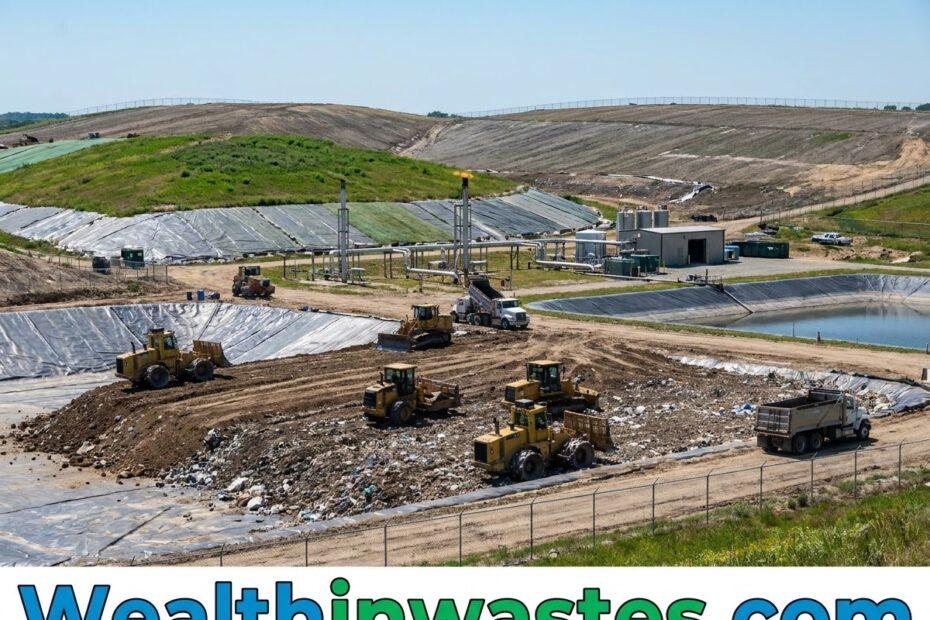
American Environmental Landfill (AEL) is a regional waste-management facility in Sand Springs, Oklahoma, that handles permitted non-hazardous waste streams and supports disposal needs across parts of the central United States.
Unlike an open dump, a modern Subtitle D landfill uses engineered cells, waste-placement controls, leachate management, monitoring, and closure planning to reduce pollution and protect public health over its operating life.
AEL reports serving Oklahoma and neighboring states, accepting permitted municipal, construction, and industrial waste streams, and operating a methane recovery program that turns landfill gas into electricity for nearby homes.
The site’s operating profile matters because waste facilities must match each load to their permits, document incoming materials, and keep unsuitable wastes out of disposal areas through consistent screening and staff oversight.
This guide explains AEL’s regional role, accepted materials, environmental safeguards, landfill-gas energy, regulatory responsibilities, and community programs, while clarifying what customers should confirm before delivering waste directly to the facility.

American Environmental Landfill and Its Regional Role
American Environmental Landfill operates at 207 N 177th W Avenue in Sand Springs, near Tulsa, and provides disposal services for approved waste streams across Oklahoma, Kansas, Missouri, Arkansas, and Texas.
Its Subtitle D designation places it within the regulatory framework for non-hazardous solid waste facilities, while permits and facility procedures determine which materials staff can accept and how they handle them.
Understanding the facility begins with knowing the different sources and types of solid waste that households, construction projects, and businesses generate across the region every day and how those materials require different management approaches.
Because disposal rules vary by material, generators should follow the site’s acceptance instructions and check a load before traveling; correct waste classification helps prevent unsuitable deliveries and unnecessary disposal complications.
The facility forms one part of a wider disposal network that includes transfer stations, recycling centers, composting programs, and specialist treatment sites for materials that should not enter ordinary landfill cells. Customers comparing local options can consult this guide to finding an appropriate landfill before arranging transportation.
As a regional waste-management facility, AEL supports businesses, municipalities, and individuals that need a permitted destination for suitable waste. Its role also shows why responsible disposal requires clear documentation and careful handling.
Read Also: Components of a Landfill and Landfill Operation
Accepted Waste Types and Specialized Disposal Services
Before a load reaches the landfill, AEL’s published acceptance rules determine whether the material fits its permit. Customers should obtain confirmation for unusual, liquid, or industrial waste streams before booking transportation.
1. Municipal Solid Waste: AEL accepts permitted solid waste, including appropriate household and commercial refuse. Separating reusable or recyclable items beforehand can reduce residual waste and conserve valuable materials.
2. Construction and Demolition Debris: Approved building waste and renovation debris may qualify, depending on the applicable acceptance rules. Contractors should check material restrictions and handling instructions before delivering construction-related loads to the facility.
3. Non-Hazardous Industrial Waste: AEL lists permitted industrial solids and liquids, contaminated soil, and municipal or industrial sludge among its accepted materials. Its guidance on industrial waste sources helps generators understand why different streams require separate management procedures.
4. Waste Profiling and Documentation: AEL requires profiling and approval before shipping non-hazardous industrial waste. Accurate waste determination helps generators describe their materials, identify potential hazards, and provide suitable supporting records.
5. Asbestos and Specialized Materials: AEL lists friable and non-friable asbestos among its accepted materials. These wastes require strict packaging, paperwork, and handling, so customers should confirm the current requirements before arranging any asbestos-related shipment.
6. Excluded Materials: AEL states that it does not accept regulated hazardous waste, radioactive material, regulated PCBs, or untreated regulated infectious biomedical waste. Generators must choose appropriate treatment and disposal routes for such materials.
Landfill Design and Environmental Protection Systems
Modern landfill engineering aims to isolate waste from surrounding soil, groundwater, and surface water. AEL’s Subtitle D designation places its operation within a regulatory framework designed to protect human health and the environment.
1. Engineered Liners: Composite landfill liners commonly combine compacted clay with a synthetic membrane. These barriers help restrict the movement of contaminated liquids into underlying soil and groundwater when facilities follow required design and construction standards.
2. Leachate Collection: Rainwater and moisture can move through deposited waste, producing leachate that carries dissolved substances. Collection and appropriate management systems help control this liquid and reduce contamination risks around landfill cells.
3. Waste Compaction and Cover: Operators compact waste and apply suitable cover materials according to operational requirements. These practices help control litter, reduce odours, limit pests, and maintain more orderly disposal areas during daily operations.
4. Environmental Monitoring: Groundwater sampling and other required monitoring activities help identify possible environmental changes. Proper oversight of landfill emissions also supports the control of gases that can affect air quality and climate.
5. Closure and Long-Term Care: Landfill responsibilities continue after waste acceptance ends. Final covers, monitoring systems, and maintenance activities help protect surrounding resources, while understanding waste-related environmental impacts reinforces the importance of long-term protection.
Methane Recovery and Waste-to-Energy Benefits

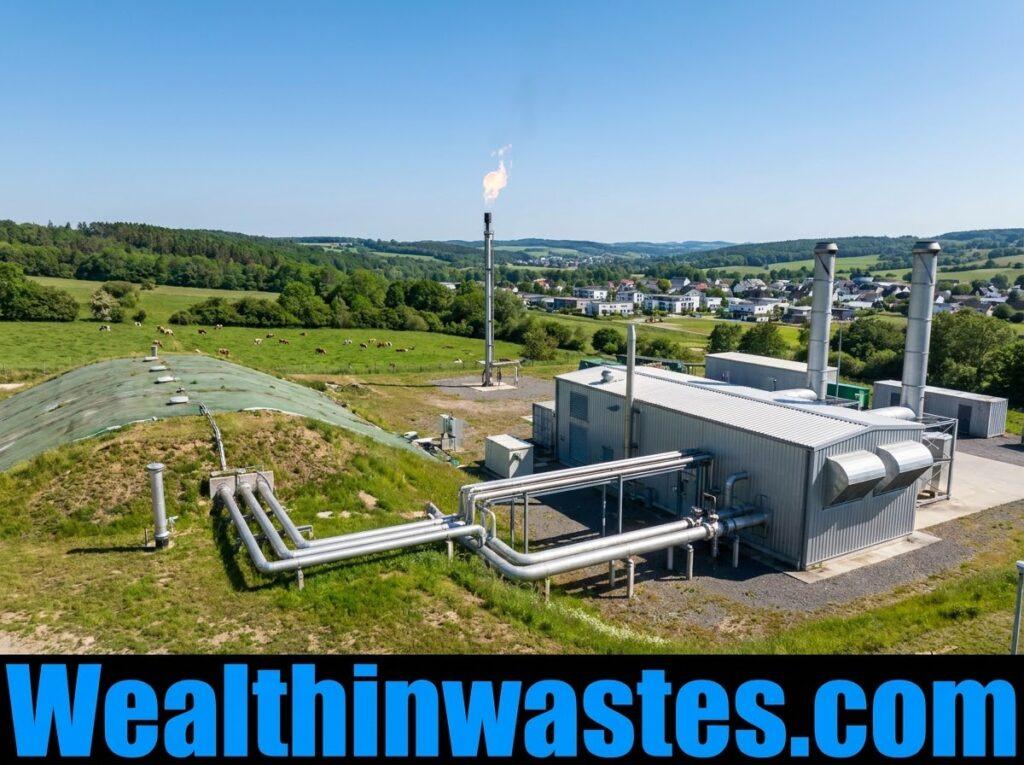
Organic waste decomposes under landfill conditions and generates landfill gas containing methane and carbon dioxide. AEL captures methane from decomposing waste and directs the collected gas to generators that produce electricity.
According to AEL’s published information, its waste-to-energy system uses strategically positioned gas wells and three generators to convert captured methane into electrical power for nearby homes.
AEL’s website has described the project as supplying electricity for approximately 18,000 to 20,000 Oklahomans. The estimate varies across its published pages, so readers should treat it as an approximate operating claim rather than a fixed current count.
Methane recovery can reduce the amount of landfill gas released directly into the atmosphere when collection systems operate effectively. Using captured gas for electricity also makes productive use of an energy source generated by unavoidable residual waste.
However, energy recovery does not replace waste prevention or recycling. The waste-management hierarchy prioritizes reducing waste, reusing suitable products, and recycling recoverable materials before final disposal and energy recovery.
Communities and businesses can support this approach by separating recoverable materials and improving collection practices. The waste recycling process shows how suitable materials can re-enter production rather than consume landfill capacity unnecessarily.
Organic waste also offers opportunities beyond landfilling when its composition and local conditions permit safe recovery. Households can explore composting suitable kitchen waste to reduce the amount of biodegradable material entering the disposal stream.
Regulatory Compliance and Environmental Monitoring
American Environmental Landfill operates within federal and Oklahoma environmental requirements. Subtitle D establishes standards for many non-hazardous solid waste facilities, while state permits and operating conditions determine additional responsibilities.
1. Regulatory Requirements: Landfill operators must follow applicable design, operating, monitoring, closure, and post-closure standards. Understanding waste-management laws and regulations helps generators and businesses recognize their own compliance responsibilities.
2. Waste Profiling and Records: AEL requires advance profiling and approval for non-hazardous industrial waste, together with appropriate manifests and disposal documentation. These records support traceability and show how a facility manages approved materials.
3. Groundwater and Environmental Checks: Applicable landfill standards require environmental monitoring, including groundwater monitoring for covered facilities. The sampling plan and response procedures depend on regulatory requirements, site conditions, and the approved environmental protection program.
4. Liquid Waste Controls: Industrial liquids require suitable assessment and management before acceptance. Effective waste treatment and disposal planning helps prevent unsuitable liquids from entering ordinary disposal systems and contributing to pollution.
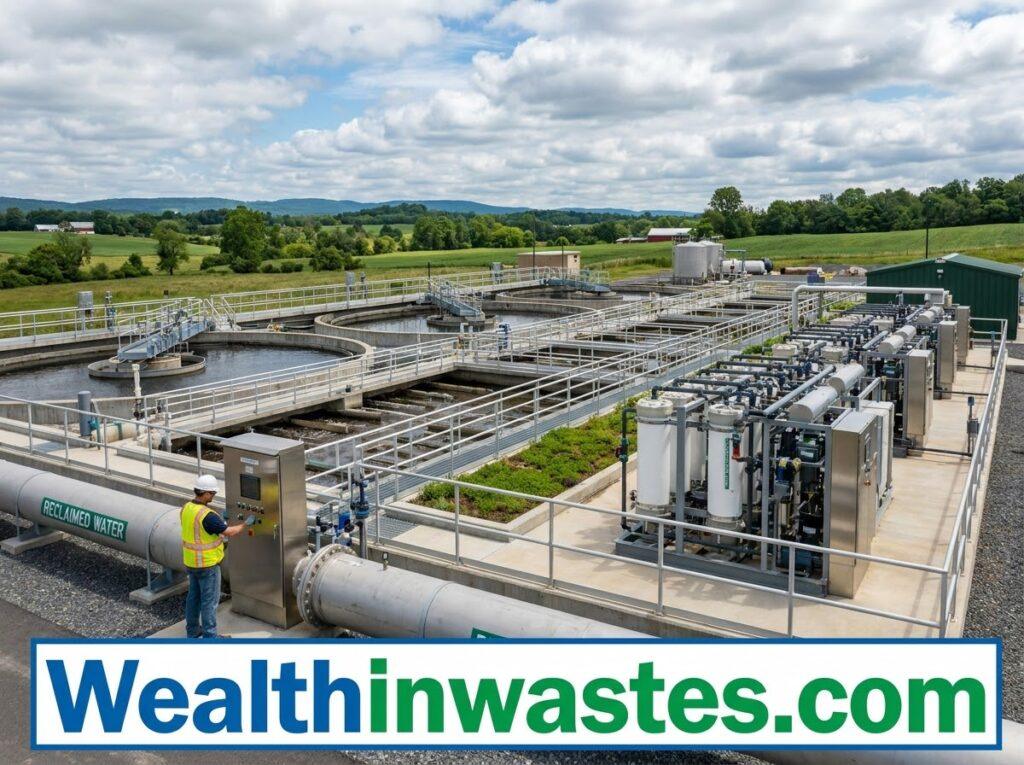
5. Pollution Prevention: Proper wastewater management matters because untreated industrial effluent can harm water resources. Reviewing industrial effluent impacts helps explain why responsible treatment, monitoring, and compliant disposal remain essential environmental safeguards.
Community Engagement and Environmental Stewardship
American Environmental Landfill presents environmental awareness, community service, and innovation as important parts of its operating approach. These priorities recognize that responsible waste management involves both technical controls and relationships with surrounding communities.
AEL operates in Oklahoma’s Green Country region, where protecting local landscapes and natural resources matters to residents and businesses. Effective waste management practices can support cleaner surroundings and better environmental protection.
The company’s website identifies the American Therapeutic Riding Center as a community initiative located on part of its property. AEL states that the property has supported the center since 2007, connecting the site with therapeutic and community services.
Community waste management also depends on recovery systems that prevent useful materials from becoming unnecessary refuse. Understanding recycling practices across America helps readers appreciate how landfill services fit within a wider materials-recovery network.
AEL’s sustainability efforts also highlight the importance of reducing pollution before waste reaches disposal facilities. Guidance on the environmental effects of agricultural waste illustrates how responsible handling protects soil, air, water, and neighboring communities.
Lasting environmental progress depends on cooperation among waste operators, regulators, businesses, and residents. Transparent communication, suitable disposal choices, and responsible daily habits can help communities reduce avoidable environmental pressures.
Practical Information for Customers and Waste Generators
Anyone planning to deliver waste to American Environmental Landfill should confirm current requirements before setting out. The right preparation reduces delays, avoids rejected loads, and helps staff manage incoming materials safely.
1. Confirm Location and Operating Hours: AEL lists its address as 207 N 177th W Avenue, Sand Springs, Oklahoma 74063. Its published hours are Monday through Friday, 7 a.m. to 5 p.m., and Saturday, 7 a.m. to 3 p.m.; the facility closes on Sundays and major holidays.
2. Verify Waste Acceptance: Contact the landfill before bringing industrial waste, liquids, asbestos, contaminated soil, or other specialized materials. Acceptance depends on permits, profiling requirements, and the facility’s current operating procedures.
3. Prepare Required Documentation: Industrial customers should obtain the appropriate waste profile, approval, and shipping documentation before dispatch. Accurate descriptions help facility staff evaluate materials and maintain reliable records throughout the disposal process.
4. Follow Site Instructions: Secure loads appropriately, separate incompatible materials, and follow directions from landfill personnel when entering the facility. Understanding the objectives of solid waste management helps explain why orderly handling matters at every stage.
5. Consider Alternatives Before Disposal: Recycling, reuse, and suitable organic-waste recovery can reduce the amount of refuse requiring final disposal. Reviewing the advantages and disadvantages of landfills helps explain why responsible waste planning remains important.
For updated acceptance rules, fees, holiday schedules, and documentation requirements, consult AEL directly before visiting. Customers can use the facility’s official website or call 918-245-7786 to confirm relevant details.
Read Also: Waste Management Services Across America
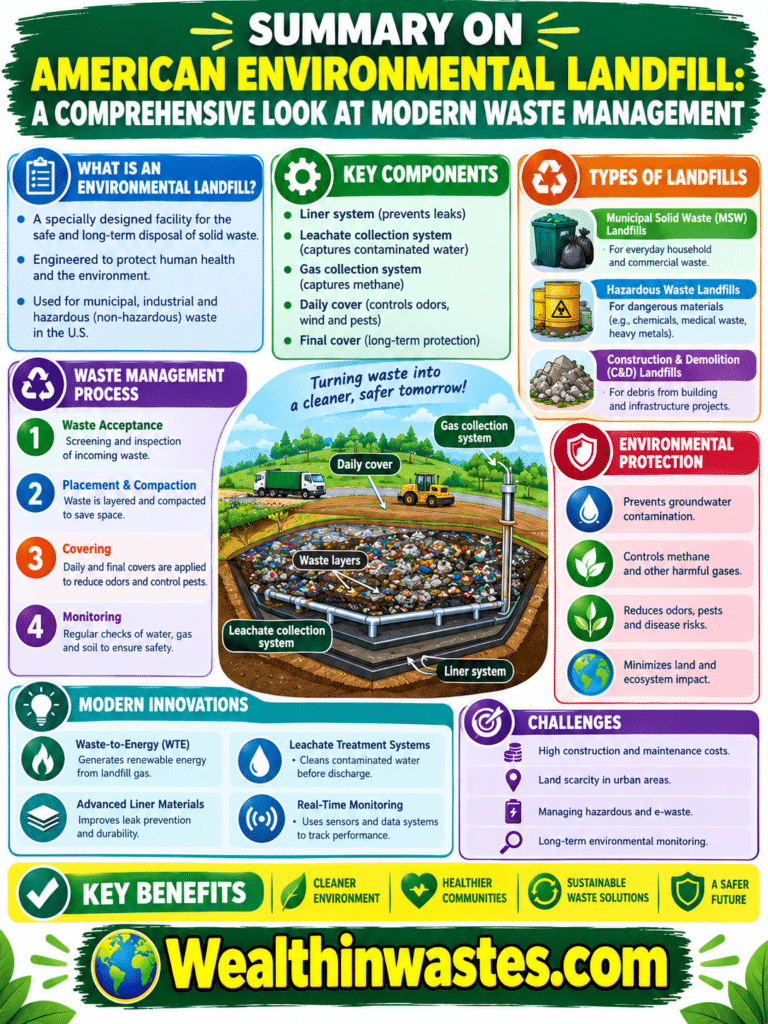
Summary on American Environmental Landfill: A Comprehensive Look at Modern Waste Management
| Aspect | Summary |
|---|---|
| Location | Sand Springs, Oklahoma, near Tulsa. |
| Regional Service | AEL reports serving Oklahoma, Kansas, Missouri, Arkansas, and Texas. |
| Waste Acceptance | Permitted solid waste, non-hazardous industrial solids and liquids, contaminated soil, sludge, and specified asbestos waste. |
| Environmental Protection | Landfill standards address containment, leachate, groundwater monitoring, operating practices, closure, and long-term care. |
| Energy Recovery | AEL captures landfill methane and uses three generators to produce electricity for nearby homes. |
| Compliance | Waste profiling, approval, documentation, permitted waste acceptance, and environmental monitoring support responsible operations. |
| Community Initiatives | AEL identifies environmental awareness, community service, and its therapeutic riding center as parts of its wider commitment. |
| Customer Advice | Confirm current hours, fees, accepted materials, and required paperwork before delivering a load. |
Frequently Asked Questions About American Environmental Landfill: Waste Management Guide
1. Where Is American Environmental Landfill Located?
It is located at 207 N 177th W Avenue, Sand Springs, Oklahoma 74063, near Tulsa.
2. What Types of Waste Does AEL Accept?
AEL accepts specified solid waste, non-hazardous industrial waste, contaminated soil, sludge, and approved asbestos waste, subject to its permits and acceptance requirements.
3. Does American Environmental Landfill Accept Hazardous Waste?
No. AEL states that it does not accept regulated hazardous waste, radioactive material, regulated PCBs, or untreated regulated infectious biomedical waste.
4. How Does AEL Turn Landfill Gas Into Electricity?
It collects methane from decomposing waste through gas wells and uses three generators to convert the captured gas into electricity.
5. How Many People Benefit From AEL’s Energy Program?
AEL’s published pages give estimates of approximately 18,000 to 20,000 residents, so the precise current figure may vary.
6. Does AEL Accept Industrial Liquid Waste?
Yes. It lists permitted non-hazardous industrial liquids, but customers must follow the applicable profiling, approval, and documentation procedures.
7. What Are AEL’s Operating Hours?
The published schedule lists Monday through Friday, 7 a.m. to 5 p.m., and Saturday, 7 a.m. to 3 p.m. The facility closes Sundays and major holidays.
8. Why Is Landfill Monitoring Important?
Monitoring helps identify possible contamination, supports regulatory compliance, and protects surrounding soil, groundwater, air quality, and community health.
Do you have any questions, suggestions, or contributions? If so, please feel free to use the comment box below to share your thoughts. We also encourage you to kindly share this information with others who might benefit from it. Since we can’t reach everyone at once, we truly appreciate your help in spreading the word. Thank you very much for your support and for sharing!
Read Also: Agricultural Environmental Impact: Exploring Positive and Negative Aspects