


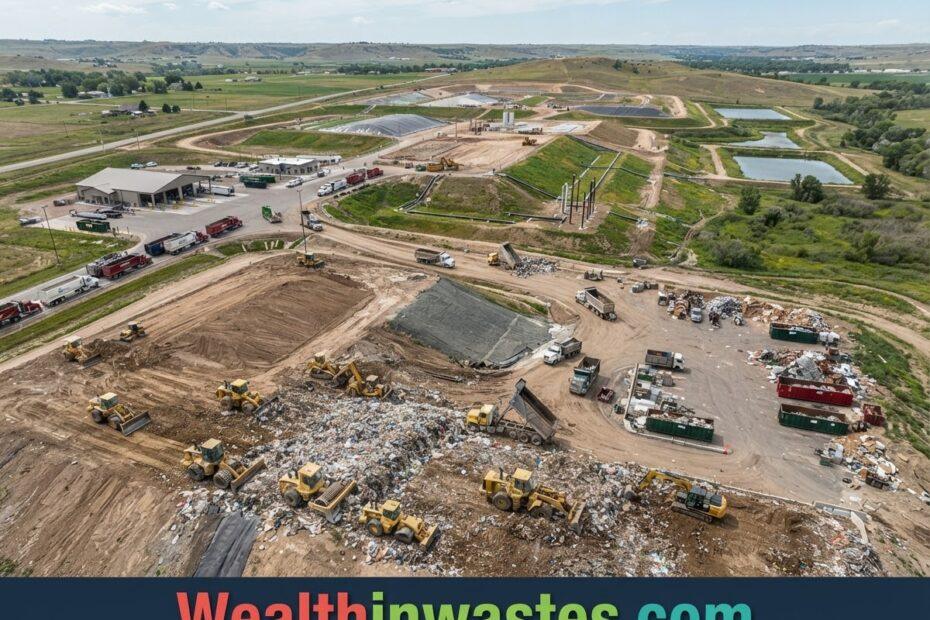
The Adams County Landfill in Eastern Washington is a regional disposal facility designed to manage residual waste from communities and businesses throughout the Inland Northwest using regulated, engineered disposal systems.
Unlike an uncontrolled dump, this site uses engineered containment, waste screening, leachate collection, and groundwater monitoring. These controls help reduce environmental risks within modern waste-management systems.
The landfill provides a destination for waste that cannot reasonably be reused, recycled, or processed through other recovery methods. Its operations support regional sanitation while requiring careful environmental management and regulatory oversight.
However, the regional landfill differs from public transfer stations operated by Adams County. Those separate facilities provide residents with designated disposal, recycling, and special-waste services under their own acceptance requirements.
Understanding the facility’s location, operating schedule, accepted materials, and environmental safeguards helps waste generators make informed disposal decisions and appreciate how modern landfills work within a responsible waste-management system.

Adams County Landfill: Location and Operations
The Adams County Regional Landfill sits near Washtucna in Eastern Washington, approximately nine miles from the town and roughly 80 miles from Spokane, according to Waste Management’s published facility information.
Waste Management of Washington, Inc. owns and operates the Subtitle D facility, which began receiving municipal solid waste in 2024 and serves Washington, Idaho, and Montana through a regional disposal network.
The site covers approximately 3,300 acres, although its permitted waste-disposal footprint spans 550 acres. Waste Management estimates 80 to 150 years of remaining life, subject to operating conditions and approvals.
Current operator information lists weekday operating hours of 7 a.m. to 4 p.m. and clearly states that the landfill does not open to the public for direct disposal or casual household drop-offs.
The regional model channels waste from commercial haulers and transfer stations instead of relying on walk-in traffic. This approach centralizes screening, unloading, and disposal operations at the permitted site under controlled procedures.
This arrangement reflects the role of county landfills and the need to coordinate collection, transport, and final disposal. A comprehensive waste-management framework helps explain how these regional services connect.
Readers should distinguish the regional landfill from Adams County’s public transfer stations, which operate separately and provide local waste and recycling services for eligible residents under county rules and schedules.
Read Also: Components of a Landfill and Landfill Operation
Waste Types Accepted at Adams County Landfill
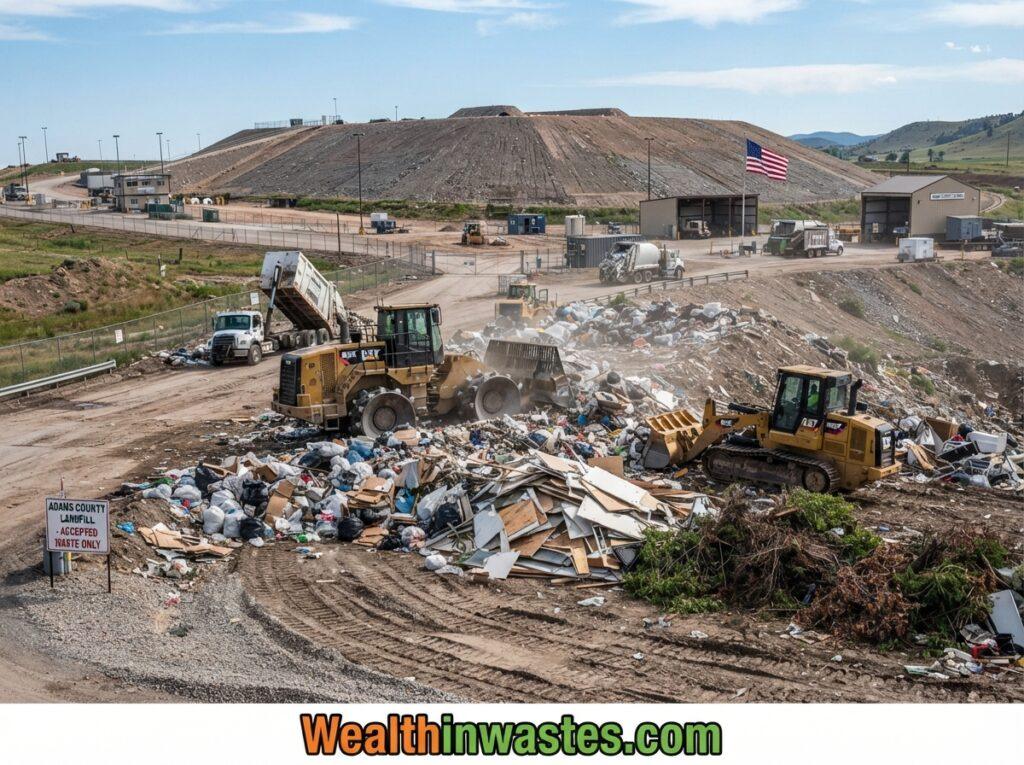
Accepted materials depend on the facility’s permit and specific approval conditions. The landfill mainly handles household garbage alongside permitted non-hazardous industrial and special waste streams that meet its operating requirements.
1. Household Garbage: Household refuse forms the primary waste stream. Resources explaining municipal solid waste describe common household, commercial, and institutional discards, although acceptance rules still determine where individual items belong.
2. Construction and Demolition Debris: Approved construction waste may include concrete, wood, and other building materials. Contractors should confirm material specifications, size restrictions, and disposal arrangements before delivering demolition debris.
3. Industrial and Special Waste: The facility accepts certain non-hazardous industrial and special materials under its permit. Understanding how authorities classify different waste types helps generators identify the correct disposal pathway.
4. Eligible Contaminated Soils: Certain non-hazardous contaminated soils appear among the operator’s accepted material categories. Generators must disclose relevant information and obtain approval before transporting these materials for disposal.
5. Approved Industrial Liquids: The facility’s published information identifies industrial liquids as acceptable for designated surface impoundments when permitted conditions apply. Their acceptance requires technical review rather than automatic permission to unload.
Material acceptance can change according to permit conditions, waste characteristics, and individual approval terms. Reviewing appropriate waste-handling and treatment methods helps generators avoid unsuitable disposal decisions.
Prohibited Waste and Landfill Approval Rules
1. Hazardous Waste Restrictions: The Adams County Regional Landfill does not accept hazardous waste. Chemicals or materials presenting toxic, corrosive, reactive, or significant flammability hazards require an appropriately authorized facility.
2. Waste Profile Requirements: Generators or their representatives must complete a Non-Hazardous Waste Profile for applicable industrial and special materials. Technical staff review the information before granting permission for disposal.
3. Special Waste Approval: Certain unusual materials require additional documentation or specific handling arrangements. Reviewing appropriate waste-disposal methods helps generators select facilities equipped and authorized to manage their materials safely.
4. Liquid Waste Restrictions: Industrial liquids cannot simply enter ordinary disposal cells. The facility identifies designated surface impoundments for eligible liquids, and generators must confirm the applicable technical requirements before arranging delivery.
5. Material Identification: Accurate descriptions of a waste’s source, composition, and potential contaminants help facility staff evaluate its suitability. Following a proper solid-waste management approach also reduces unnecessary handling and disposal problems.
6. Alternative Disposal Arrangements: When the landfill cannot accept a material, its generator must identify an authorized alternative. Never assume that county transfer stations and the regional landfill share identical acceptance rules.
Landfill Environmental Safeguards and Leachate Control
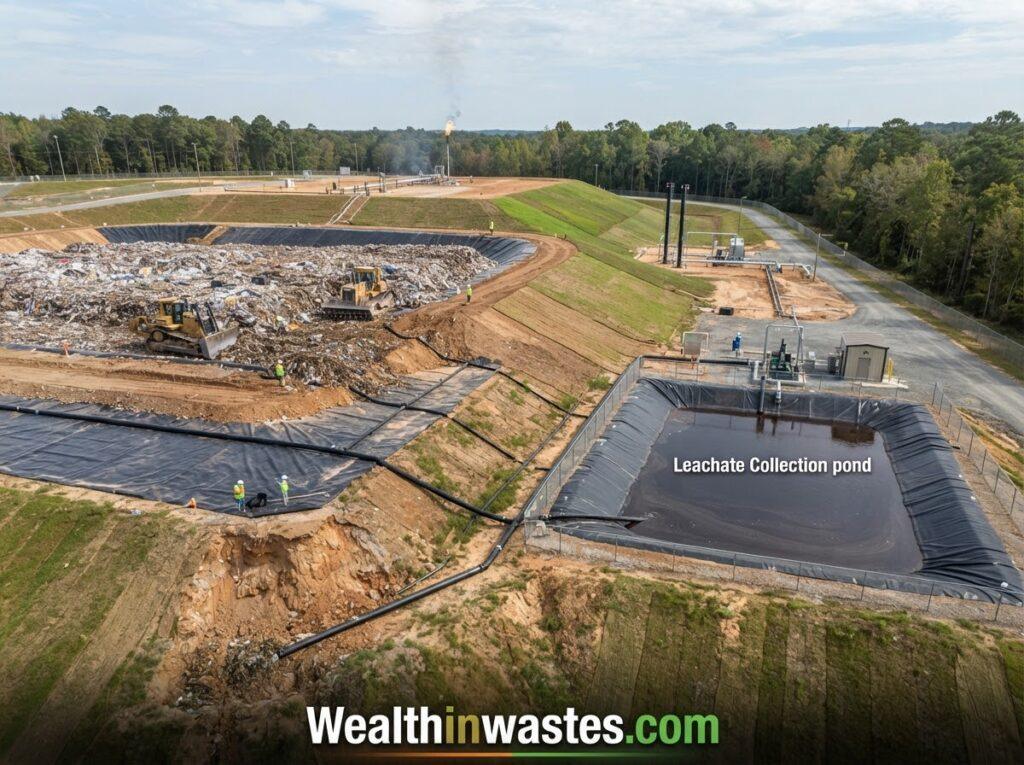
Modern landfill design combines engineered barriers, drainage infrastructure, and environmental monitoring to contain waste. The basic components of a sanitary landfill illustrate how these systems support environmental protection.
The Adams County facility uses a multilayer composite liner that includes an engineered geosynthetic clay barrier and a 60-mil high-density polyethylene geomembrane. Together, these barriers help isolate waste and wastewater from underlying soil.
Leachate develops when water moves through waste and collects dissolved or suspended contaminants. Proper collection prevents uncontrolled migration and reduces the possibility that contaminated liquid will reach surrounding soil or groundwater.
The facility’s leachate system includes a permeable gravel drainage layer covering the landfill base. Perforated pipes direct collected liquid toward a sump, which routes it to a double composite-lined evaporation pond.
Groundwater monitoring provides another protective layer. Onsite wells located upgradient and downgradient of the waste-disposal footprint help environmental professionals assess groundwater conditions and identify changes that might require investigation.
Landfill operators also need to consider gas emissions, odors, and other potential effects associated with decomposing waste. Understanding landfill emissions and their environmental impact helps explain why monitoring and maintenance remain important throughout operations.
These systems reduce environmental risks, but they do not remove every potential hazard. Continuous maintenance, reliable monitoring, and appropriate corrective action remain essential for limiting the environmental effects of landfills.
Adams County Landfill Permits and Regulatory Oversight
Landfill operations require permits that establish acceptable activities, waste-handling conditions, and environmental responsibilities. A well-designed waste-management strategy includes clear procedures for monitoring performance and addressing potential environmental problems.
Waste Management lists Solid Waste Handling Permit 0597-01 and Ecology Air Permit A001086 in its published Adams County facility information. Adams County authorities and the Washington Department of Ecology provide regulatory oversight.
As of October 20, 2026, the Washington Department of Ecology has published a proposal to approve the landfill’s air operating permit. Its public-comment period runs from October 5 through November 4, 2026, according to the official permit notice.
Environmental oversight extends beyond holding documents. Operators must maintain systems, collect monitoring data, and provide required reports so regulators can evaluate whether the facility meets applicable environmental and operational requirements.
The waste-management hierarchy helps place landfill disposal within a broader policy framework that emphasizes prevention, reuse, recycling, and recovery before final disposal wherever practical and appropriate.
Clear objectives support these responsibilities. The objectives of solid-waste management include protecting public health, reducing pollution, controlling environmental risks, and ensuring that waste reaches facilities equipped to handle it.
Regulatory compliance also depends on accurate documentation and timely communication. Residents and waste generators can consult published agency notices to understand permit proposals, review environmental requirements, and follow opportunities for public participation.
Adams County Recycling and Waste Diversion
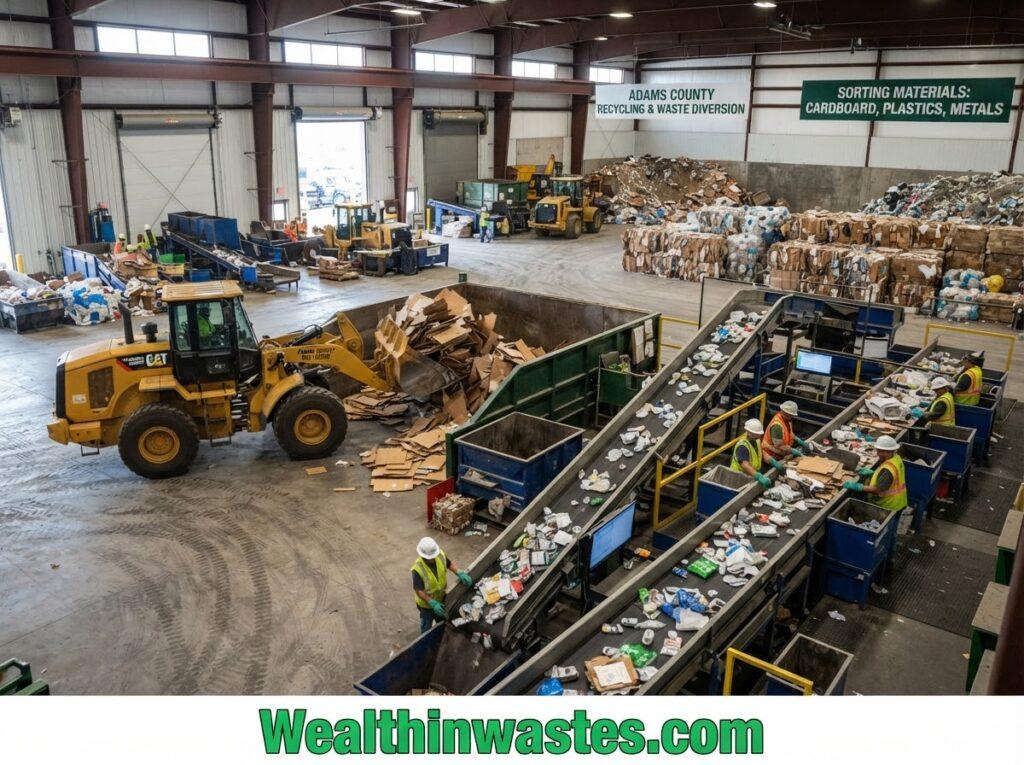
The regional landfill forms one part of a broader waste-management system. Recycling and recovery programs help divert useful materials from disposal, conserve resources, and reduce demand for additional landfill capacity.
1. Paper and Cardboard: Adams County transfer stations provide recycling options for eligible paper and cardboard materials. Exploring the advantages of recycling waste explains how material recovery conserves resources.
2. Metals and Aluminum Cans: The county’s official recycling information lists clean scrap metal and aluminum cans among accepted materials. Separating these items before disposal supports recovery and reduces the volume of reusable resources lost.
3. Yard Waste and Wood: Designated county transfer stations accept eligible yard waste and certain wood materials. Residents should follow the county’s preparation requirements because contaminated, oversized, or otherwise unsuitable materials may face restrictions.
4. Tires, Oil, and Appliances: Adams County lists tires, used oil, and appliances among materials accepted through designated transfer-station programs. Checking the proper waste-recycling process helps residents prepare materials correctly.
5. Household Hazardous Waste and Electronics: County programs provide designated routes for eligible household hazardous waste and electronic items. Applying the principles of reducing, reusing, and recycling helps households choose better alternatives to disposal.
Accepted items, fees, seasonal hours, and eligibility requirements can change. Consult the official Adams County recycling information before transporting materials to avoid unnecessary trips or rejected loads.
Landfill Access, Operating Hours, and Disposal Preparation
1. Confirm Access Before Visiting: The Adams County Regional Landfill is not open to the public for direct disposal. Individuals should contact Waste Management or use an appropriate public transfer station for eligible household materials.
2. Check Operating Hours: Waste Management lists Monday through Friday, 7 a.m. to 4 p.m., for the regional landfill. Confirm current requirements directly with the operator before scheduling commercial deliveries or special-waste arrangements.
3. Separate Recyclable Materials: Sort paper, cardboard, metals, and other accepted recyclables before transporting residual garbage. Practical landfill waste-management ideas can help households reduce unnecessary disposal and retain material value.
4. Identify Special Materials: Check acceptance criteria for liquids, contaminated soils, construction debris, and unusual waste. Effective waste-management controls begin with correct classification and an appropriate disposal destination.
5. Secure Every Transport Load: Cover and secure waste before travelling to a disposal site. Properly restrained loads prevent litter, material spills, and traffic hazards while supporting cleaner roads and safer transport conditions.
6. Use County Transfer Stations When Appropriate: Adams County’s Bruce and Ritzville transfer stations provide designated public disposal and recycling services. Check their separate schedules, accepted materials, fees, and seasonal arrangements before making a journey.
Read Also: Locating the Nearest Landfill for Your Needs
The Role of Adams County Landfill in Regional Waste Management
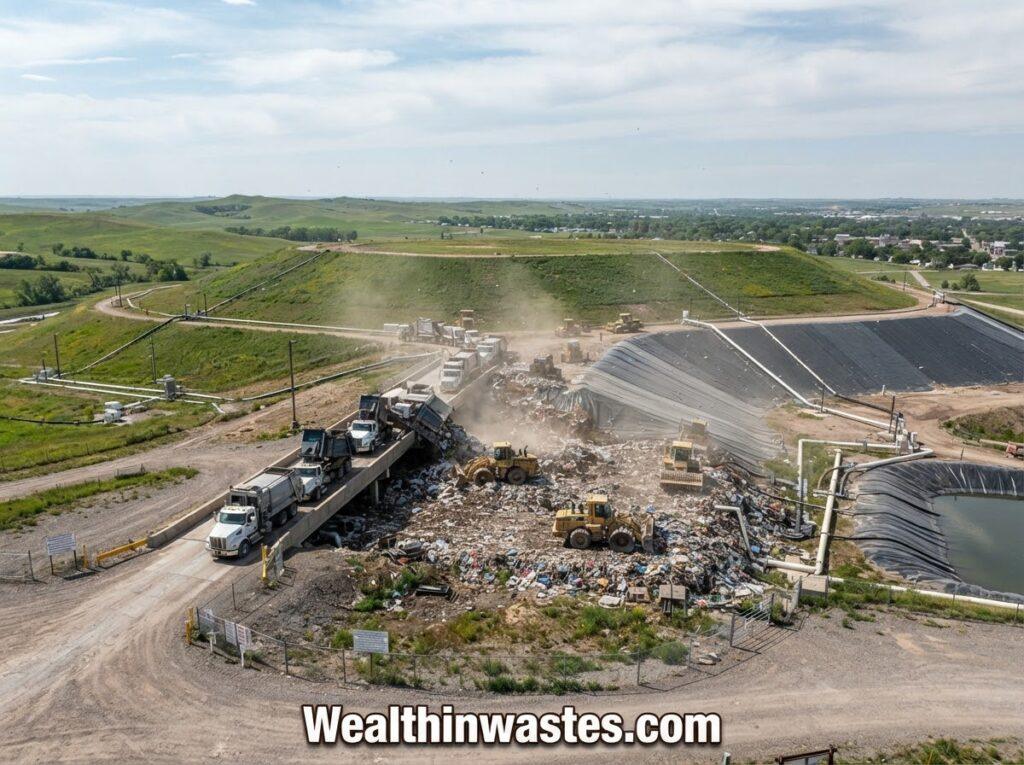
The Adams County Landfill provides regional infrastructure for residual waste that requires final disposal. By consolidating permitted waste streams at an engineered facility, it supports organized handling instead of uncontrolled dumping.
Large regional facilities also depend on cooperation among waste generators, transport companies, local governments, and environmental regulators. These relationships help coordinate collection routes, approval procedures, monitoring requirements, and long-term operational planning.
Nevertheless, landfill capacity remains a finite resource. Waste prevention, product reuse, recycling, and suitable organic-waste recovery can reduce disposal demand and extend the useful life of existing infrastructure.
The principles of integrated waste management explain why disposal works best alongside prevention, collection, material recovery, and environmentally responsible treatment rather than operating as a community’s only waste-management option.
Long-term environmental protection requires consistent monitoring, reliable engineering, and transparent regulatory oversight. The facility’s projected remaining life indicates substantial potential capacity, although future performance depends on approvals and operating conditions.
Ultimately, responsible waste management involves more than moving refuse away from homes and businesses. It requires choosing suitable disposal routes, protecting natural resources, and keeping recoverable materials in circulation whenever practical.
Summary on Adams County Landfill: A Comprehensive Look at Waste Management
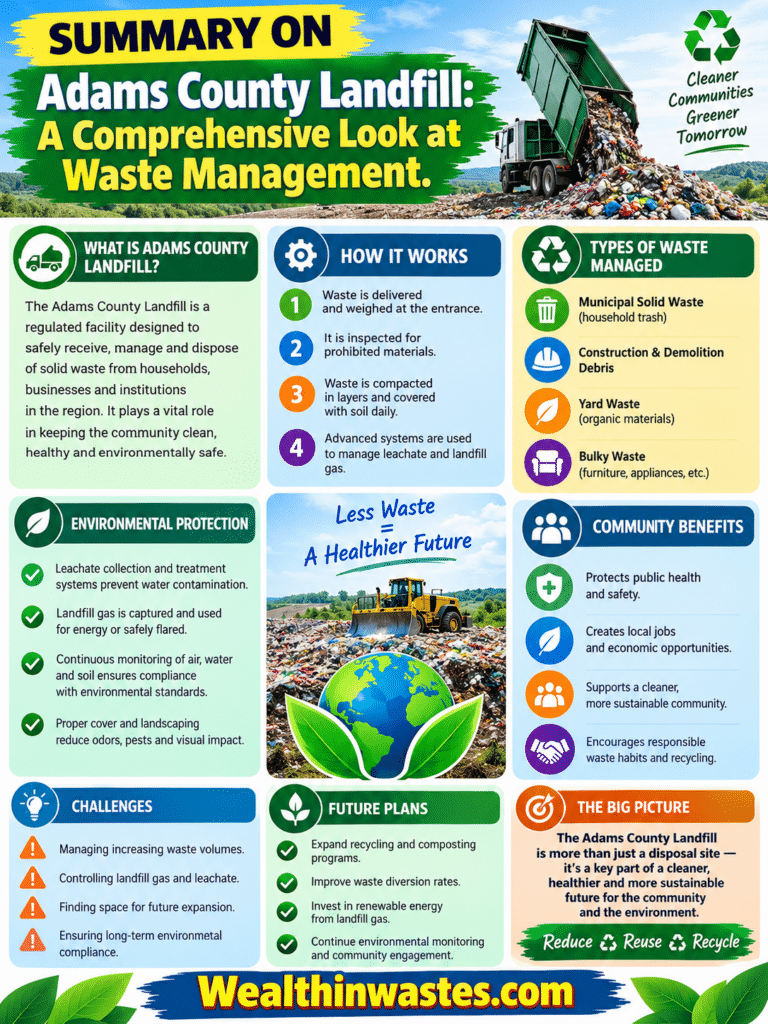
| Topic | Key Information |
|---|---|
| Location | Near Washtucna, Eastern Washington |
| Operator | Waste Management of Washington, Inc. |
| Opening Year | 2024 |
| Operating Hours | Monday–Friday, 7 a.m.–4 p.m.; not open to the public for direct disposal |
| Site Area | Approximately 3,300 acres, with a 550-acre permitted waste-disposal footprint |
| Service Region | Washington, Idaho, and Montana |
| Accepted Materials | Household garbage and approved non-hazardous industrial and special waste |
| Prohibited Materials | Hazardous waste |
| Environmental Protection | Composite liners, leachate collection, and groundwater monitoring |
| Permits Listed by Operator | Solid Waste Handling Permit 0597-01 and Ecology Air Permit A001086 |
| Recycling Options | Separate county transfer-station programs handle eligible recyclables and special wastes |
Frequently Asked Questions About Adams County Landfill: Operations, Rules, and Environment
1. Where Is Adams County Landfill Located?
It is near Washtucna in Eastern Washington, approximately 80 miles from Spokane.
2. Who Owns and Operates the Landfill?
Waste Management of Washington, Inc. owns and operates the regional landfill.
3. Is Adams County Landfill Open to the Public?
No. The regional landfill does not accept direct public drop-offs.
4. What Are Its Operating Hours?
The operator lists Monday through Friday, from 7 a.m. until 4 p.m.
5. What Types of Waste Does It Accept?
It accepts household garbage and approved non-hazardous industrial and special waste.
6. Does Adams County Landfill Accept Hazardous Waste?
No. Hazardous waste requires an appropriately authorized disposal facility.
7. How Does the Landfill Protect Groundwater?
Composite liners, leachate collection, and groundwater monitoring help limit contamination risks.
8. Where Can Residents Recycle Special Materials?
Adams County’s Bruce and Ritzville transfer stations provide designated recycling and special-waste services.
9. Does the Landfill Have Environmental Permits?
The operator lists solid-waste and air-permit identifiers; check current regulatory notices for updates.
Do you have any questions, suggestions, or contributions? If so, please feel free to use the comment box below to share your thoughts. We also encourage you to kindly share this information with others who might benefit from it. Since we can’t reach everyone at once, we truly appreciate your help in spreading the word. Thank you very much for your support and for sharing!
Read Also: The Practice of Composting Organic Waste Materials