



Environmental pollution includes many forms of contamination that can affect air, water, soil, ecosystems, and human health. Among these forms, radioactive pollution presents unusual challenges because radioactive materials can persist.
Radioactive pollution occurs when radioactive materials enter the environment through natural processes or human activities, producing ionizing radiation that can damage living tissues and disrupt ecological processes.
Unlike many conventional pollutants, radioactive substances do not become harmless through ordinary biological decomposition. Their hazard gradually declines through radioactive decay, with some materials remaining hazardous for extremely long periods.
Understanding radioactive pollution also helps explain the broader environmental pollution pathways through which contaminants move between different environmental compartments and reach people, animals, plants, and natural resources.
Radiation itself is not always pollution, because natural background radiation and controlled medical applications can occur without environmental contamination. Pollution becomes a concern when exposure creates unacceptable risks to health or ecosystems.
Radioactive pollution can originate from nuclear activities, mining, industrial operations, medical facilities, research laboratories, accidents, and improper management of radioactive materials or wastes.
What Is Radioactive Pollution?
Radioactive pollution occurs when radioactive materials become deposited, released, or dispersed in the atmosphere, water, soil, buildings, or biological systems at levels that create environmental or health concerns.
Radioactive materials release ionizing radiation as unstable atoms transform into more stable forms. Depending on the radionuclide, emissions may include alpha particles, beta particles, gamma rays, or neutrons.
Ionizing radiation carries enough energy to remove electrons from atoms and molecules. This process can damage cellular structures and genetic material, especially when exposure occurs at sufficiently high doses or over prolonged periods.
The management challenge becomes greater when contamination enters soil, groundwater, food chains, buildings, or equipment. Waste-related environmental and health effects can therefore become more complex when radioactive materials are involved.
Radioactive pollution should also be distinguished from everyday non-ionizing radiation produced by radio, telecommunications, visible light, and microwaves. Those forms of radiation differ substantially from high-energy ionizing radiation.
Medical imaging provides another important distinction because controlled radiation exposure during procedures such as X-rays does not automatically represent environmental pollution. The primary concern involves unnecessary exposure, contamination, or uncontrolled releases.
Read Also: Hurts Wastewater Management Complete Guide
How Radioactive Pollution Differs From Other Pollution
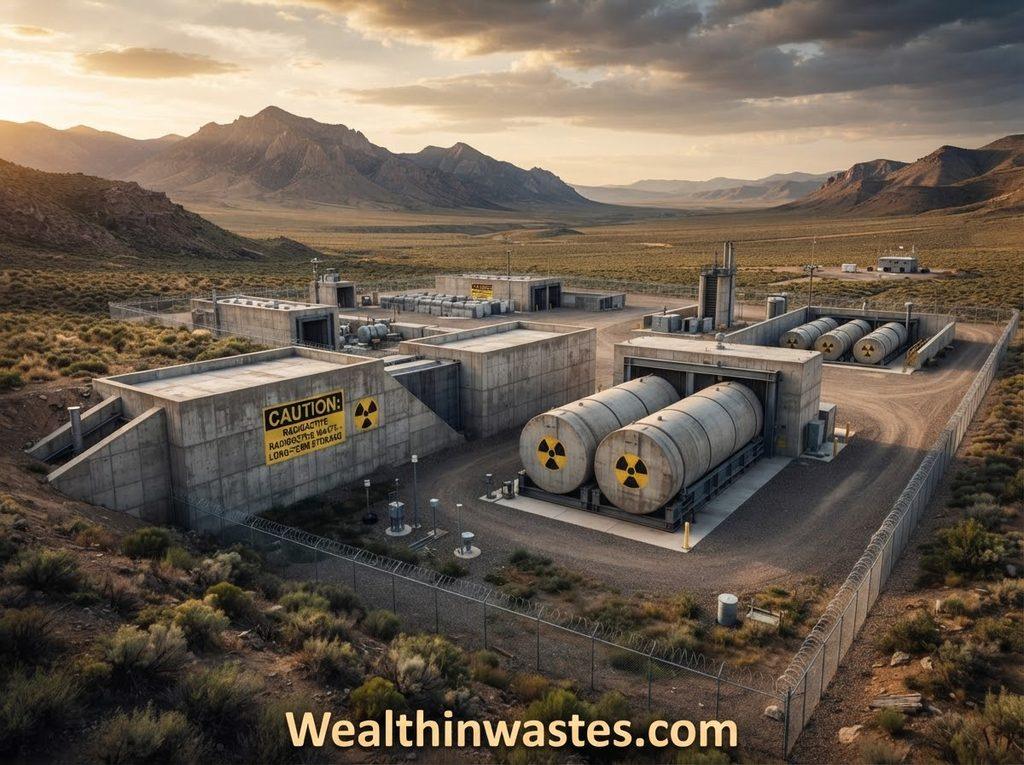
Most biological wastes can eventually decompose through natural processes, while many chemicals can undergo treatment that changes their toxicity. Radioactive contaminants instead lose activity primarily through radioactive decay.
Radioactive decay follows a characteristic half-life, meaning the time required for half the radioactive atoms in a sample to decay. A longer half-life generally means the substance remains radioactive longer.
However, a longer half-life does not automatically mean greater or smaller health effects. Risk depends on the radionuclide, radiation type, activity, exposure pathway, dose, duration, and whether radioactive material enters the body.
This persistence requires strict containment and monitoring. Environmental monitoring programmes can identify contamination, measure changes over time, and support decisions about exposure control, remediation, and safe land use.
Radioactive contamination can also behave differently depending on the material involved. Some radionuclides remain attached to soil particles, while others dissolve in water or enter plants and animals through biological processes.
Effective environmental protection therefore requires more than ordinary waste collection. Waste management principles and hierarchy provide useful foundations, but radioactive materials require specialized handling, storage, transport, and disposal systems.
Types of Radioactive Pollution
Radioactive pollution can be grouped according to how frequently contamination occurs and how the radioactive material enters the environment. Three broad categories commonly describe continuous, occasional, and accidental releases.
1. Continuous Radioactive Pollution: This form occurs when radioactive materials are released repeatedly or remain continuously associated with an operating facility, mining site, laboratory, or other regulated activity.
2. Occasional Radioactive Pollution: This form occurs periodically during specific activities such as certain experiments, controlled operations, testing activities, maintenance events, or other processes that can temporarily increase environmental radioactive releases.
3. Accidental Radioactive Pollution: This form follows an unplanned event involving radioactive materials, such as equipment failure, containment damage, transport incidents, fire, human error, or an uncontrolled release.
These categories help environmental managers understand the timing and likely control requirements associated with contamination. Hazardous waste sources and classifications provide a useful comparison for understanding how hazardous materials receive different management approaches.
Sources of Radioactive Environmental Pollution
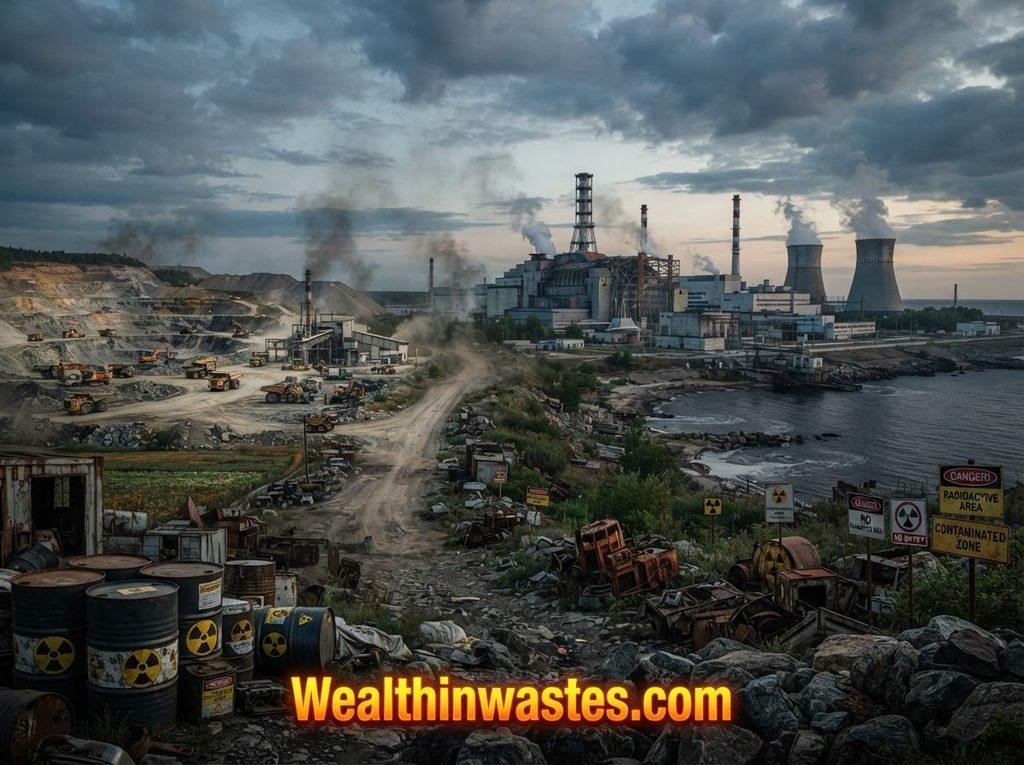
Human activities account for important sources of artificial radiation exposure and radioactive contamination. These sources include nuclear fuel operations, uranium mining, radioactive waste handling, medicine, research, and industrial applications.
1. Nuclear Energy Activities: Nuclear power facilities use radioactive materials during fuel preparation, reactor operation, maintenance, and waste management. Strong containment and monitoring systems help prevent radioactive materials from reaching surrounding communities.
2. Uranium Mining And Processing: Uranium extraction can expose workers and nearby environments to radioactive ores, tailings, radon, contaminated water, and other materials requiring appropriate control, storage, and long-term environmental management.
3. Medical And Research Activities: Hospitals and laboratories use radioactive materials for diagnosis, treatment, research, and testing. Proper storage, handling, shielding, and disposal prevent unnecessary exposure and reduce environmental contamination risks.
4. Industrial And Commercial Activities: Radiation sources support activities such as material testing, thickness measurement, sterilization, and specialized equipment. Weak controls or poor disposal practices can create localized radioactive contamination.
Some industrial radioactive wastes may also share management challenges with other hazardous materials. The characteristics of hazardous wastes demonstrate why ignitability, corrosivity, reactivity, toxicity, and other risks require specialized controls.
Domestic waste streams can occasionally contain radioactive items when consumers, businesses, or institutions dispose of specialized materials incorrectly. Household hazardous waste management therefore remains relevant to broader contamination prevention.
Examples of Radioactive Contaminants
Radioactive contaminants include radionuclides that emit radiation while undergoing radioactive decay. Their properties, half-lives, chemical behaviour, radiation types, and exposure pathways determine how they behave within environmental and biological systems.
1. Caesium-137: Caesium-137 produces beta and gamma radiation and has applications involving radiation measurement and medicine. Environmental releases can contaminate soil, vegetation, water, and food, creating pathways for human exposure.
2.Strontium-90: Strontium-90 emits beta radiation and can behave similarly to calcium within biological systems. This property allows it to enter bones and teeth when contaminated food or water reaches humans.
3. Plutonium-238: Plutonium-238 produces substantial heat through radioactive decay and has supported radioisotope thermoelectric generators. Because plutonium compounds can present serious internal contamination risks, containment remains critically important.
4. Uranium-235: Uranium-235 occurs naturally and can serve as nuclear reactor fuel. Mining, milling, processing, and waste activities associated with uranium require careful control of radioactive materials and contaminated residues.
5. Cobalt-57 And Cobalt-60: Cobalt isotopes have medical and industrial applications. Cobalt-60 releases penetrating gamma radiation, making shielding, secure storage, controlled use, and appropriate disposal essential for occupational safety.
6. Radium-226: Radium-226 occurs naturally in some geological materials and generates decay products, including radon. Long-term exposure concerns make proper control of contaminated materials and affected environments important.
The environmental behaviour of radioactive contaminants can also overlap with broader land contamination. Land and soil pollution processes can influence how radioactive materials remain in soil or move into groundwater.
Effects of Radioactive Pollution
Radioactive pollution can affect people, wildlife, vegetation, soils, water resources, and ecosystems. The severity of the effects depends on radiation type, dose, exposure duration, distance, shielding, and exposure pathway.
High radiation doses can damage tissues and cause acute health effects, while lower or prolonged exposures can increase the probability of developing certain cancers and other radiation-related health problems.
Internal exposure can occur when radioactive particles enter the body through inhalation, ingestion, wounds, or contaminated food and water. The resulting health consequences depend strongly on the radionuclide involved.
Environmental contamination can also reduce the usability of land and water resources. Water quality principles emphasize prevention because contaminated water can create difficult and expensive management challenges.
Radioactive substances may enter food chains after deposition onto crops, absorption by plants, ingestion by animals, or contamination of aquatic organisms. Monitoring therefore remains important wherever contamination could reach food production.
The wider economic consequences may include cleanup expenses, restricted land use, healthcare costs, environmental monitoring, lost productivity, and reduced public confidence. Economic losses associated with pollution illustrate the broader cost of environmental contamination.
Prevention And Control of Radioactive Pollution
Prevention starts with controlling radioactive sources before contamination reaches the environment. Facilities should use appropriate shielding, containment, monitoring, worker training, emergency procedures, and secure storage systems.
1. Source Control: Organizations should minimize radioactive material use where practical, maintain equipment properly, prevent leaks, and use appropriate containment systems that reduce the possibility of accidental environmental releases.
2. Safe Waste Management: Radioactive wastes require segregation, secure packaging, controlled storage, monitoring, transportation, and disposal methods appropriate for their characteristics and activity levels. Ordinary waste disposal systems cannot replace specialized controls.
3. Environmental Monitoring: Regular measurements can identify unusual radiation levels and establish whether contamination affects air, soil, water, vegetation, or other environmental compartments. Monitoring also supports emergency response and long-term remediation.
General waste prevention also reduces opportunities for hazardous materials to enter uncontrolled disposal streams. Proper waste reduction practices encourage source control, safer material selection, process improvements, and careful handling.
Specialized treatment remains necessary when radioactive waste already exists. Proper waste treatment and disposal methods demonstrate how controlled approaches can reduce environmental risks while supporting safer waste management systems.
Read Also: Definition and Waste Minimization/Reduction Process
Why Radioactive Pollution Requires Long-Term Management

Radioactive contamination may require long-term management because some radionuclides remain active for decades, centuries, or longer. Management decisions therefore consider decay periods, environmental pathways, containment integrity, and future land use.
Authorities and facility operators may need to maintain records, monitor contaminated areas, restrict access, inspect storage systems, and communicate potential risks to workers and surrounding communities.
Long-term planning should also connect radioactive waste management with broader environmental governance. Institutional arrangements for pollution control help clarify responsibilities for monitoring, regulation, enforcement, emergency response, and environmental protection.
Waste-management systems must also prevent cross-contamination between hazardous and ordinary waste streams. Solid waste management systems provide useful foundations for collection and control, although radioactive materials demand additional specialized safeguards.
Preventive management becomes more effective when organizations reduce waste at its source and select safer operational practices. Waste reduction strategies can therefore support broader pollution-prevention objectives.
Public awareness also matters because individuals can unknowingly contribute to contamination through careless disposal of specialized equipment or materials. Environmental management practices for waste reduction can strengthen responsible behaviour.
Summary on Other Types of Environmental Pollution
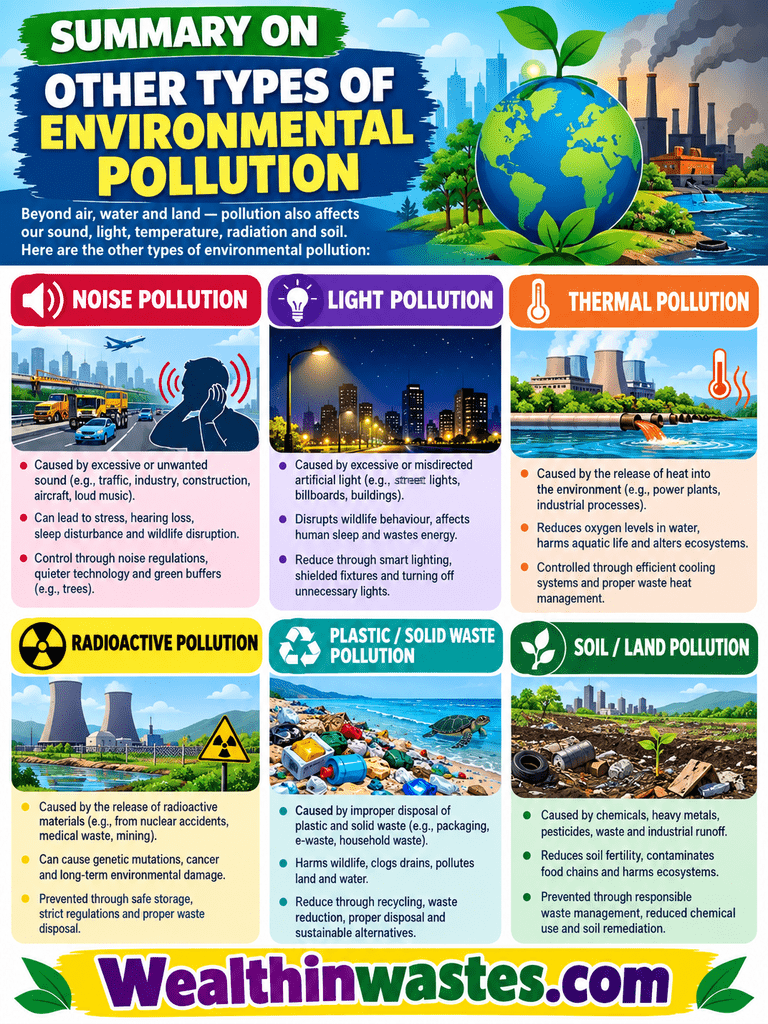
| Aspect | Summary |
|---|---|
| Radioactive Pollution | Environmental contamination involving radioactive materials that emit ionizing radiation. |
| Main Types | Continuous, occasional, and accidental radioactive pollution. |
| Major Sources | Nuclear activities, uranium mining, medicine, research, industry, waste handling, and accidents. |
| Common Contaminants | Caesium-137, strontium-90, plutonium-238, uranium-235, cobalt isotopes, and radium-226. |
| Health Effects | Potential tissue damage, increased cancer risk, and other radiation-related health effects depending on exposure. |
| Environmental Effects | Contamination of soil, water, vegetation, food chains, wildlife habitats, and usable land. |
| Control Measures | Source control, shielding, containment, monitoring, secure storage, specialized waste management, and emergency planning. |
| Long-Term Management | Requires continued monitoring, controlled storage, access restrictions, record keeping, and appropriate disposal or remediation. |
Frequently Asked Questions About Types of Environmental Pollution: Other Major Forms
1. What is radioactive pollution?
Radioactive pollution occurs when radioactive materials enter the environment and create potentially harmful exposure to ionizing radiation affecting people, animals, plants, soil, water, or ecosystems.
2. What are the main types of radioactive pollution?
The main categories are continuous pollution, occasional pollution, and accidental pollution, based mainly on how frequently radioactive contamination occurs and how radioactive materials enter the environment.
3. Is all radiation environmental pollution?
No. Radiation occurs naturally and has controlled medical, scientific, and industrial uses. Pollution involves uncontrolled contamination or exposure that creates unacceptable risks to health, safety, or environmental quality.
4. Which radioactive contaminants are commonly discussed?
Important examples include caesium-137, strontium-90, plutonium-238, uranium-235, cobalt-57, cobalt-60, and radium-226, although many other radionuclides exist in natural and artificial environments.
5. Can radioactive pollution disappear naturally?
Radioactive activity decreases through radioactive decay, but some radionuclides require very long periods to decline. Contaminated areas may therefore need continued monitoring, containment, access control, or remediation.
6. How can radioactive pollution be controlled?
Control depends on source reduction, containment, shielding, monitoring, secure storage, specialized waste handling, worker training, emergency planning, regulatory oversight, and responsible long-term environmental management.
Do you have any questions, suggestions, or contributions? If so, please feel free to use the comment box below to share your thoughts. We also encourage you to kindly share this information with others who might benefit from it. Since we can’t reach everyone at once, we truly appreciate your help in spreading the word. Thank you very much for your support and for sharing!
Read Also: Water and Land Pollution in Agriculture