


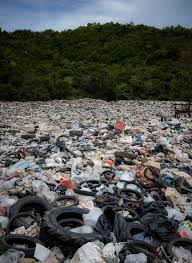
Land filling is an economical method of waste disposal in developing countries, involving the placement of refuse into depressions, mining voids, excavated land, or borrowed pits for final disposal.
It remains one of the traditional waste disposal methods used in many countries because communities can manage large quantities of residual waste without requiring highly complex treatment technologies.
Much of the waste generated in developing countries comes from households and contains considerable quantities of food waste, green materials, paper, plastics, and other everyday discarded materials.
However, landfill disposal still requires proper planning because poorly selected or operated sites can contaminate soil and water, generate unpleasant odours, attract pests, and release landfill gases.
Understanding the waste management hierarchy helps explain why landfilling should generally handle residual materials after practical opportunities for reduction, reuse, recycling, recovery, and treatment.
What Are Landfills?
A landfill is a designated area where waste undergoes controlled placement, compaction, covering, drainage management, and monitoring to reduce the risks associated with uncontrolled disposal.
Modern landfill practice differs significantly from open dumping because properly designed facilities can incorporate liners, leachate collection systems, gas controls, drainage structures, access controls, and environmental monitoring.
The basic objective remains simple: provide a controlled destination for waste that cannot reasonably undergo prevention, reuse, recycling, composting, recovery, or another suitable treatment process.
Effective solid waste management planning considers the quantity, composition, characteristics, and expected behaviour of waste before authorities select disposal and treatment methods for individual waste streams.
Site selection also matters because geology, soil, topography, groundwater conditions, hydrology, climate, accessibility, and surrounding land uses can influence the environmental performance of disposal facilities.
Communities therefore need to distinguish between a properly managed landfill and an uncontrolled dumpsite because the environmental, operational, and public health risks can differ considerably between them.
Readers can learn more about these planning considerations through proper disposal site assessment, which helps identify locations that can better protect surrounding communities and ecosystems.
Read Also: Proper Waste Reduction Process
Advantages and Disadvantages of Landfills
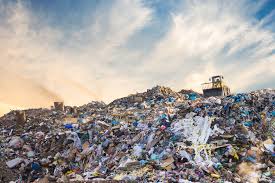
Landfills offer practical advantages, especially where communities require affordable final disposal for large quantities of residual waste, but those benefits depend heavily on suitable design, operation, monitoring, and maintenance.
The principal advantages include relatively straightforward operation, broad waste acceptance, land restoration opportunities, employment creation, and possible recovery of useful landfill gas for energy generation.
At the same time, landfill disposal creates challenges involving land requirements, methane emissions, leachate production, odours, transportation, environmental monitoring, and long-term responsibilities after sites stop receiving waste.
The broader waste management process therefore remains important because landfill disposal works best as one component of an integrated system rather than the only available solution.
Understanding both sides allows governments, businesses, and communities to compare disposal costs and practical benefits against environmental risks before expanding or developing landfill facilities.
Economic Advantages of Landfills
Landfilling can provide important economic advantages where communities need affordable disposal and possess suitable land, existing transport networks, equipment, and management capacity for residual waste.
1.Lower Disposal Cost: Landfills can cost less than sophisticated treatment systems in locations where suitable land, equipment, transportation routes, and operational infrastructure already exist.
2. Broad Waste Acceptance: Properly designed landfills can receive many residual materials, reducing the need for separate treatment facilities when recycling, composting, or recovery cannot handle specific waste streams.
3. Land Restoration Opportunity: Mining voids, excavated areas, and other disturbed locations can sometimes receive waste while supporting planned land restoration after disposal operations eventually end.
4. Employment Creation: Landfill operations require drivers, equipment operators, environmental officers, maintenance workers, security personnel, technicians, supervisors, and administrative staff, creating employment opportunities within local communities.
5. Landfill Gas Revenue: Suitable facilities can collect landfill gas and use it for energy recovery, creating a potential revenue stream while reducing uncontrolled release of methane.
6. Operational Simplicity: Compared with complex thermal treatment facilities, basic landfill operations can require fewer specialized processes, although modern sanitary facilities still demand skilled management and environmental controls.
These economic considerations become clearer when compared with the main elements of waste management, including collection, transport, separation, treatment, recycling, and final disposal responsibilities.
Environmental Benefits of Controlled Landfills
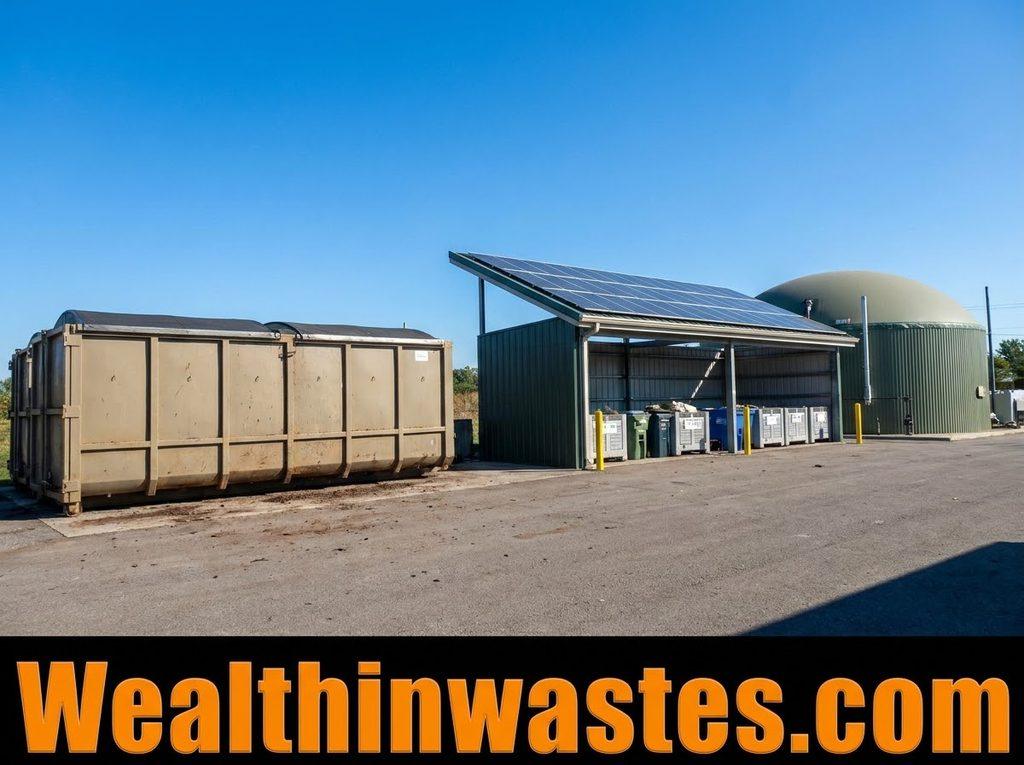
Although landfills create environmental concerns, controlled facilities can provide benefits when they replace uncontrolled dumping and manage waste within engineered boundaries.
Controlled disposal reduces scattered waste because operators place refuse within defined cells rather than allowing discarded materials to accumulate across roadsides, vacant land, waterways, and community spaces.
Regular compaction and covering can also reduce direct exposure to waste, helping control litter, insects, rodents, birds, unpleasant odours, and other nuisances associated with exposed refuse.
Properly designed drainage and containment measures can reduce the movement of contaminated liquids into surrounding soil and water compared with unmanaged disposal practices.
Landfill gas collection can capture part of the methane produced during decomposition, allowing operators to flare or recover the gas for controlled energy use.
Readers can understand these protection measures more clearly by reviewing how sanitary landfills manage waste through planned containment, gas control, leachate management, and environmental monitoring.
Controlled landfills therefore provide a more responsible disposal option than open dumping, although they still require continuous management to prevent pollution and protect surrounding communities.
Disadvantages of Landfills
Despite their practical value, landfills create several environmental, economic, and social disadvantages that can become serious when facilities receive poor planning, inadequate controls, or insufficient long-term management.
1. Large Land Requirement: Landfills require substantial areas for waste placement, access roads, drainage infrastructure, buffer zones, operational facilities, and future expansion as waste generation continues.
2. Methane Production: Organic materials can decompose under oxygen-limited conditions and generate methane, creating greenhouse gas concerns and potential fire or explosion hazards when poorly controlled.
3. Leachate Formation: Rainwater and moisture moving through waste can produce contaminated liquid containing dissolved organic and inorganic substances that require careful collection, treatment, and monitoring.
4. Long-Term Monitoring: Closed landfill sites can continue producing gases and contaminated liquids, requiring monitoring and maintenance after active waste placement ends.
5.Odour Problems: Decomposing organic materials can produce unpleasant smells, especially when waste placement, covering, drainage, or gas management systems fail to control emissions effectively.
6. Transport Impacts: Landfills located far from waste generation areas can increase collection distances, fuel consumption, vehicle traffic, road pressure, and transportation costs for waste authorities.
Several of these impacts are discussed through the environmental effects of landfill disposal, particularly concerns involving groundwater, air quality, methane, leachate, and surrounding ecosystems.
Environmental Risks of Landfill Waste
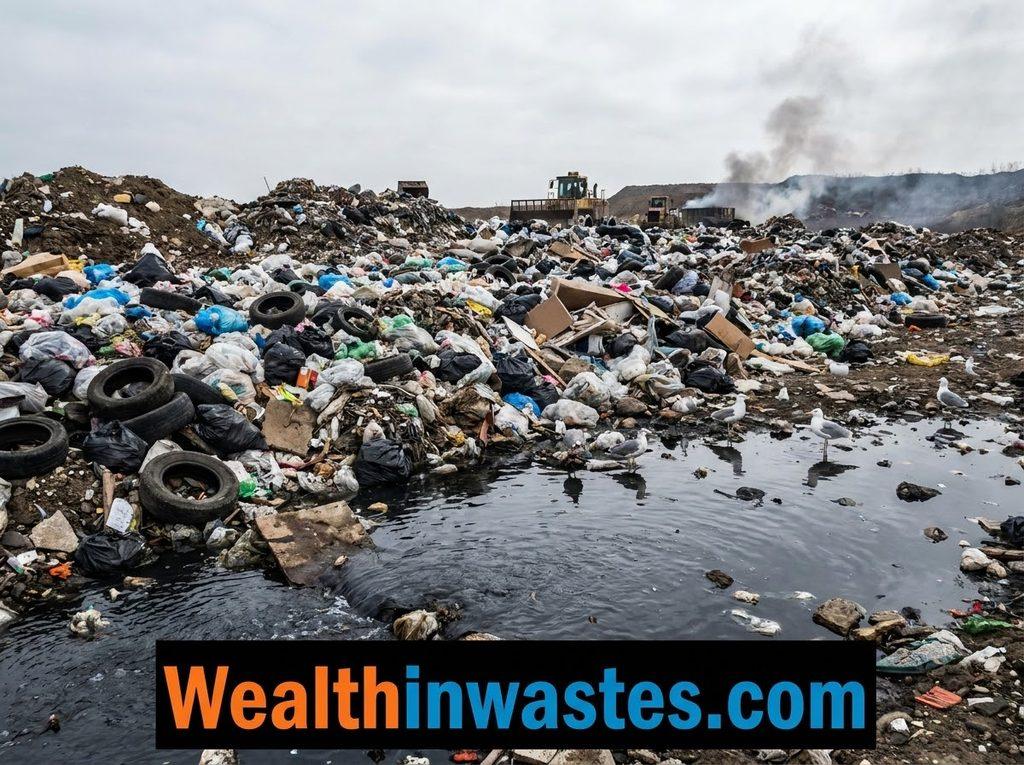
The environmental risks associated with landfills depend strongly on facility design, waste composition, climate, groundwater conditions, operating practices, regulatory oversight, and the effectiveness of pollution-control measures.
One major concern involves leachate, which forms when moisture interacts with decomposing waste and carries dissolved substances through the waste mass.
Without effective containment and collection, contaminated leachate can migrate into surrounding soil, groundwater, drainage channels, or surface water, creating significant environmental and public health concerns.
Landfill operations can also contribute to air pollution through methane, carbon dioxide, odours, dust, vehicle emissions, and other gases associated with waste decomposition and site activities.
The effects of solid waste pollution show why uncontrolled disposal can threaten soil, water, air quality, ecological processes, and community wellbeing.
Older or poorly managed sites may present greater risks because they can lack modern liners, leachate collection, gas recovery systems, drainage controls, monitoring programmes, or effective closure measures.
Communities can reduce these risks by strengthening waste control practices before materials reach disposal facilities, thereby reducing the quantity and potential hazards of waste entering landfills.
Landfill Gas and Leachate Management
Effective landfill management requires attention to both landfill gas and leachate because these products develop naturally as waste decomposes and interacts with moisture inside disposal cells.
1. Gas Collection: Collection systems can capture methane-rich landfill gas, allowing operators to flare it safely or recover useful energy under controlled conditions.
2. Gas Monitoring: Regular monitoring helps operators identify methane migration, pressure changes, leaks, and other conditions that could create safety or environmental problems around disposal facilities.
3. Leachate Collection: Drainage layers and collection systems can direct contaminated liquid toward storage or treatment facilities, reducing uncontrolled movement through surrounding soil and groundwater.
4. Leachate Treatment: Collected leachate requires suitable treatment or controlled management before discharge because its composition can contain dissolved organic matter, nutrients, metals, salts, and other contaminants.
5. Surface Drainage: Stormwater controls should prevent excessive rainfall from entering waste cells because additional moisture can increase leachate generation and complicate landfill management.
6. Environmental Monitoring: Regular groundwater, gas, surface water, soil, and air monitoring helps operators identify pollution pathways early and respond before impacts become more difficult to control.
Detailed discussion of landfill emissions and environmental impacts further explains why methane control, groundwater protection, and continuous management remain essential throughout landfill operation.
Better Waste Management Alternatives
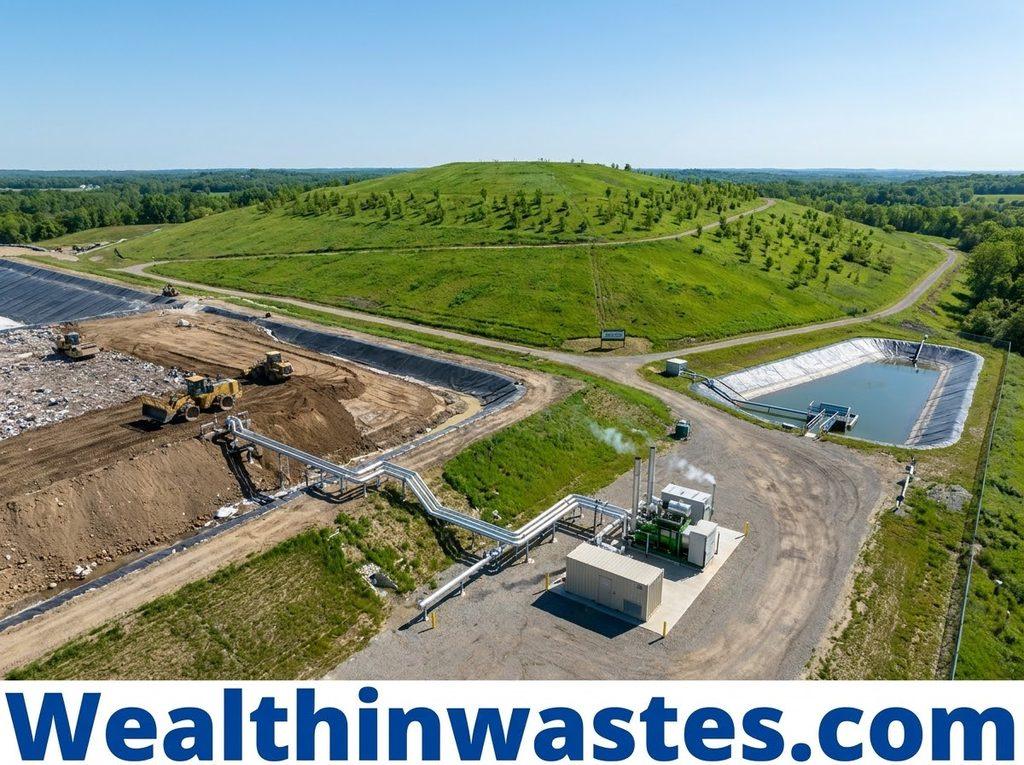
Landfills remain useful for residual waste, but communities can reduce landfill dependence by preventing unnecessary waste generation and recovering valuable materials before final disposal.
1.Waste Reduction: Reducing waste at source decreases the total material requiring collection, transportation, treatment, and disposal while conserving resources and extending landfill capacity.
2. Reuse: Reusing containers, equipment, packaging, clothing, furniture, and other suitable materials keeps useful products in circulation and delays their movement into the waste stream.
3. Recycling: Recycling separates useful materials such as paper, plastics, metals, and glass from residual waste, reducing disposal quantities and conserving raw materials for manufacturing processes.
4. Composting: Composting diverts suitable food scraps, garden materials, and other biodegradable waste from landfills while producing organic material that can support soil improvement and plant production.
5. Energy Recovery: Suitable residual materials can undergo controlled technologies that recover energy while reducing the volume requiring final disposal, provided environmental controls remain effective.
6. Alternative Treatment: Technologies such as anaerobic digestion, gasification, pyrolysis, and other treatment systems can manage selected waste streams while supporting resource recovery and reducing landfill dependence.
The available treatment technologies demonstrate why communities should compare waste characteristics, environmental conditions, technical capacity, costs, and resource-recovery opportunities before choosing final disposal.
Similarly, composting suitable organic materials can reduce the amount of biodegradable waste sent to disposal facilities while producing a useful soil amendment.
Recycling also plays an important role because recovering recyclable materials reduces the volume of waste requiring landfill disposal and supports more efficient resource use throughout the economy.
Communities can strengthen this approach through reduce, reuse, and recycle practices, ensuring that disposal remains the final option after practical recovery opportunities receive proper consideration.
Additional guidance on suitable waste disposal methods can help decision-makers compare landfill disposal with other options according to waste type, environmental conditions, operational capacity, and available resources.
These alternatives support the broader solid waste management framework, which combines collection, storage, recycling, treatment, resource recovery, transportation, and final disposal into a coordinated system.
The proper management of waste also helps reduce environmental pollution, conserve resources, improve sanitation, support economic opportunities, and decrease pressure on existing disposal sites.
Communities can further explore integrated waste management practices to understand how different disposal and recovery methods can work together instead of depending exclusively on landfills.
Another useful approach involves understanding how waste behaves inside landfills, particularly the slow decomposition of organic materials and the resulting generation of methane and leachate.
Finally, environmental and health considerations should guide waste decisions because uncontrolled pollution can create risks extending beyond the landfill boundary and affecting nearby populations.
Effective waste planning should therefore prioritize prevention, reuse, recycling, composting, recovery, and suitable treatment before sending remaining materials to properly designed and responsibly managed landfills.
Read Also: Proper Waste Recycle Process
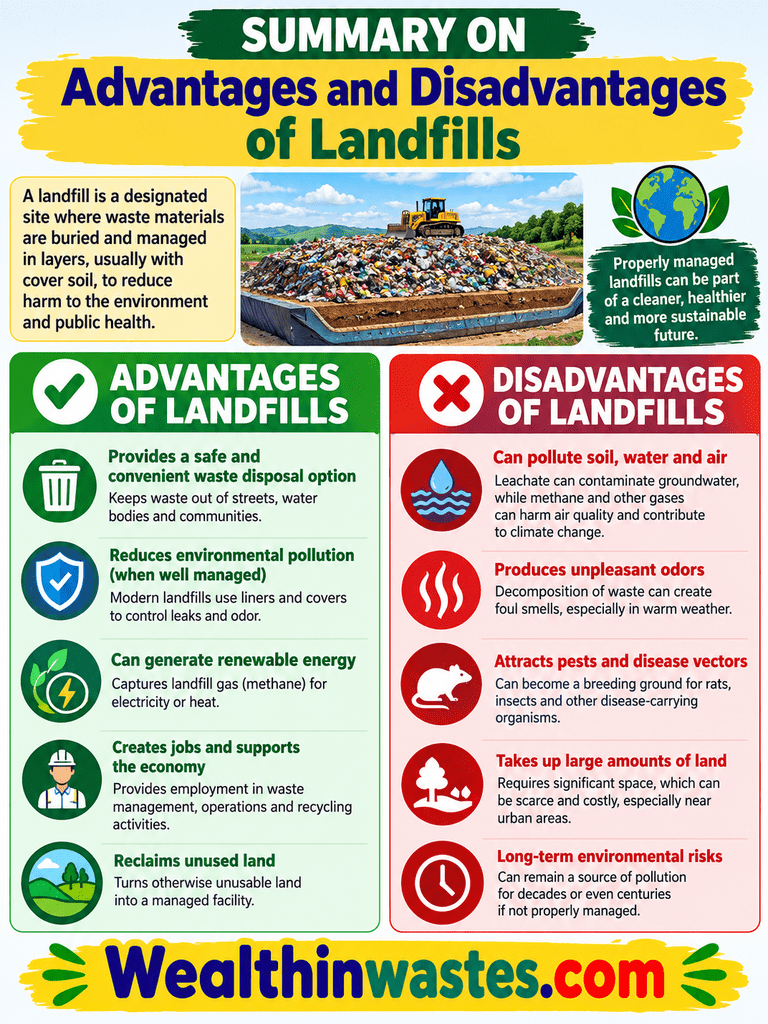
Summary on Advantages and Disadvantages of Landfills
| Aspect | Summary |
|---|---|
| Definition | Landfills provide controlled areas for placing residual waste after suitable prevention, reuse, recycling, recovery, or treatment opportunities. |
| Main Advantage | They can provide relatively affordable final disposal for large quantities of residual waste when suitable land and management systems exist. |
| Economic Value | Landfills can support employment, site restoration, waste services, and potential energy recovery from collected landfill gas. |
| Environmental Benefit | Properly controlled facilities reduce scattered waste and can manage leachate, methane, drainage, odours, and other pollution pathways. |
| Main Disadvantage | Landfills require substantial land and can create methane, leachate, odours, transport impacts, and long-term monitoring responsibilities. |
| Major Environmental Risk | Failures in containment, drainage, gas control, monitoring, or management can contribute to soil, groundwater, air, and ecosystem pollution. |
| Better Approach | Waste prevention, reuse, recycling, composting, energy recovery, suitable treatment, and controlled final disposal should operate together. |
Frequently Asked Questions About Advantages and Disadvantages of Landfills Explained
1. What is a landfill?
A landfill is a designated disposal facility where waste receives controlled placement, compaction, covering, drainage management, monitoring, and environmental protection measures.
2. What is the main advantage of landfills?
The main advantage is practical final disposal for large quantities of residual waste, especially where suitable land and basic operational infrastructure are available.
3. What is the biggest disadvantage of landfills?
A major disadvantage is their potential to generate methane and leachate, while also requiring considerable land and long-term environmental management.
4. Why does methane form in landfills?
Methane forms when biodegradable organic materials decompose under oxygen-limited conditions within the waste mass, particularly where moisture and other suitable conditions exist.
5. Can landfills contaminate groundwater?
Yes. Leachate can contaminate groundwater when it escapes containment systems or when landfill operations lack effective collection, treatment, monitoring, and maintenance.
6. Can landfill gas produce energy?
Yes. Properly collected landfill gas can support controlled flaring or energy recovery systems, turning part of the methane resource into useful energy.
7. Are landfills better than open dumps?
Properly designed and managed landfills generally provide stronger environmental controls than uncontrolled open dumps because operators can manage waste placement, leachate, gases, drainage, and monitoring.
8. How can communities reduce landfill waste?
Communities can reduce landfill waste through waste prevention, reuse, recycling, composting, recovery, appropriate treatment, better segregation, and responsible purchasing and consumption practices.
Do you have any questions, suggestions, or contributions? If so, please feel free to use the comment box below to share your thoughts. We also encourage you to kindly share this information with others who might benefit from it. Since we can’t reach everyone at once, we truly appreciate your help in spreading the word. Thank you very much for your support and for sharing!
Read Also: Proper Farm Waste management guide