


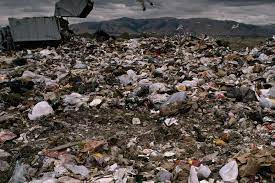
Pollution on the Environment occurs when harmful substances or forms of energy enter air, water or land and disturb natural processes. Its effects reach people, wildlife, vegetation and ecosystems over time.
The problem does not come from factories alone. Household refuse, transport, farming, construction, mining and energy use can increase waste generation and release pollutants, especially where collection and treatment systems remain inadequate.
In Nigeria, open refuse burning, blocked drains, untreated wastewater, vehicle exhaust and careless chemical handling can expose residents to pollution at home, work, school and on farms throughout the year.
Understanding the main sources and types of pollution helps readers recognise risks, explain how contaminants move through the environment and identify practical steps for preventing avoidable damage in their communities.
What Pollution Means for the Environment
Environmental pollution is the introduction or presence of harmful substances, organisms or energy in the surroundings at levels that damage living things, disrupt natural processes or make resources unsafe to use.
A pollutant is the material, organism or energy responsible for contamination. Examples include smoke from wildfires, dust, sewage, pesticides, oil, heavy metals, excessive heat, loud sound and artificial light, from natural or human activities.
Pollution differs from harmless change because it creates a risk or reduces environmental quality; the seriousness depends on a pollutant’s toxicity, quantity, persistence and route of exposure for people and wildlife.
Read Also: Causes and Effects of Land Pollution
Major Sources of Environmental Pollution
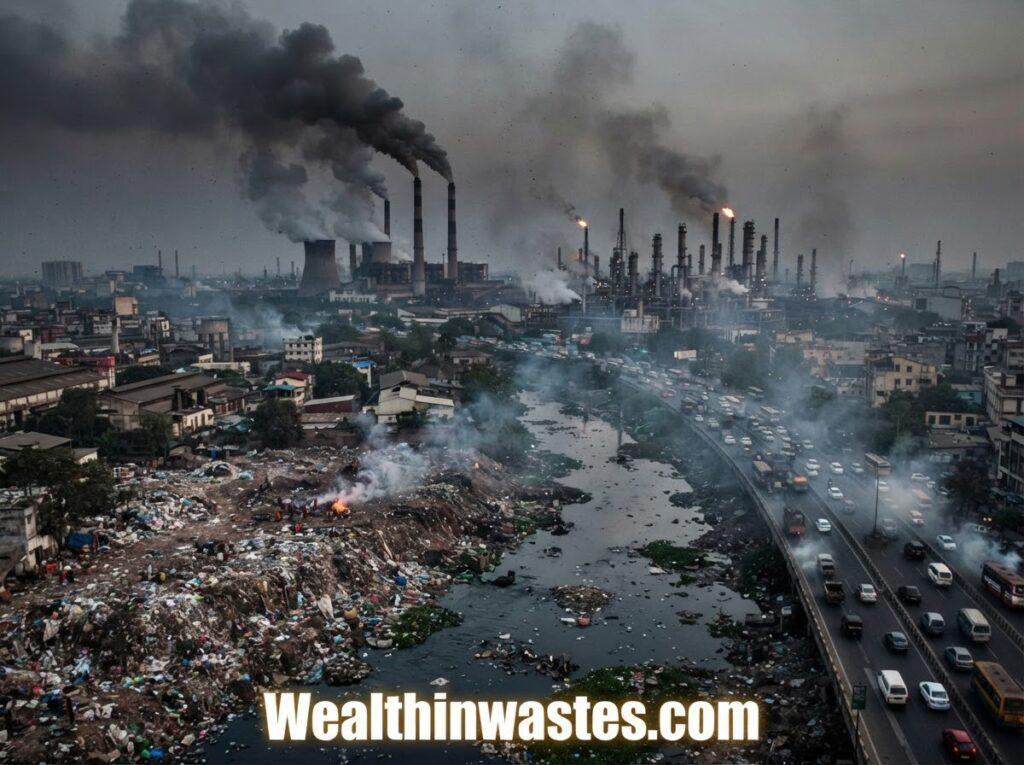
1. Household and Municipal Waste: Rapid population growth increases household refuse, including food scraps, packaging, plastics, discarded appliances, detergents and sewage. When collection fails, municipal refuse accumulates in streets, open spaces and drains around homes.
2. Industrial Activities: Factories, power stations, workshops and processing plants release smoke, dust, wastewater, oils and chemical residues. Poor controls allow these industrial waste streams to contaminate nearby land, rivers and the surrounding outdoor air.
3. Agricultural Activities: Crop production and livestock keeping generate manure, crop residues, packaging, wastewater and chemical containers. Poor storage or disposal of agricultural waste can spread nutrients, pathogens and chemical residues beyond the farm boundary and nearby areas.
4. Fertilisers and Pesticides: Fertilisers and pesticides support production when used correctly, but excessive application or careless handling leaves residues in soil and runoff. Some forms of hazardous pesticide use also harm organisms that farmers do not target.
5. Transportation and Energy Production: Petrol and diesel engines release gases such as carbon monoxide and nitrogen oxides, alongside fine particles. Generators and fuel burning add emissions, while traffic and machinery create persistent noise around homes.
Vehicle exhaust adds gases and particles to the air, while horns, engines and construction machinery create noise. The supplied image illustrates transport-related pollution as one visible environmental pressure in towns.
6. Mining and Construction: Mining projects, quarrying, road building and construction disturb soil and vegetation. Excavation, dust, fuel leaks, sediment and abandoned materials can damage habitats and affect nearby residential communities over long periods of time.
7. Hazardous Household and Commercial Materials: Paints, batteries, solvents, medicines, electronic parts and some cleaning products contain hazardous substances. Mixing household hazardous waste with ordinary refuse can expose waste workers and allow toxic materials to enter soil or water.
Classifying discarded materials before collection helps identify special handling requirements. A sound waste determination process separates hazardous items from ordinary rubbish and directs each material towards appropriate treatment or disposal.
Point-Source and Non-Point Source Pollution
Point-Source Pollution
Point-source pollution comes from a distinct, identifiable outlet, such as a discharge pipe, drainage channel or factory stack. Monitoring that outlet can help trace responsibility and control the release at source.
Industrial wastewater discharged through a defined outlet may contain oils, solvents, metals or organic matter. Effective treatment before release reduces contamination, as explained in this review of industrial effluents and receiving ecosystems.
Non-Point Source Pollution
Non-point source pollution comes from scattered activities across a wide area rather than one identifiable pipe. Rainwater can wash fertilisers, litter, oil, sediment and animal waste into drains and rivers.
Drainage basins collect water from surrounding land and carry it towards shared waterways. Understanding drainage patterns helps explain how pollutants from farms, roads and settlements travel downstream during rainfall and storms.
In a Nigerian town, rain may wash refuse from roadside dumps into blocked gutters and streams. Similar runoff carries soil, fuel residues and farm chemicals into water bodies after storms.
Main Types of Environmental Pollution
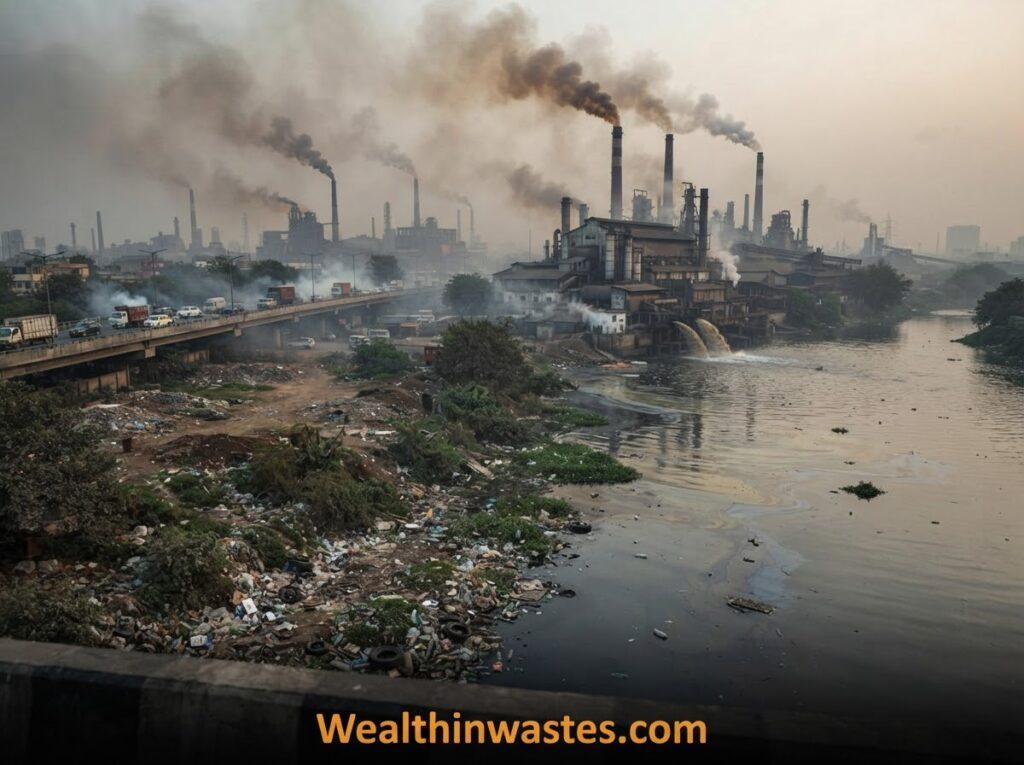
1. Land and Soil Pollution: Land and soil pollution occurs when refuse, chemicals, oil or contaminated sediment build up on the ground. It can reduce soil quality, damage habitats and allow harmful substances to reach crops.
2. Water Pollution: Water pollution occurs when sewage, industrial discharge, oil, pathogens or farm runoff contaminate rivers, lakes or underground aquifers. Excess nutrients can trigger algal blooms and oxygen loss, harming aquatic life.
3. Air Pollution: Air pollution includes smoke, dust, fumes and gases released by vehicles, generators, factories, fires and household cooking. Fine particles and harmful gases can travel well beyond their original emission points.
4. Noise, Light and Visual Pollution: Noise pollution exposes people and wildlife to excessive sound; light pollution adds unwanted artificial brightness. Visual pollution from cluttered signs, litter and abandoned structures also affects landscapes and daily activities.
5. Thermal and Radioactive Pollution: Thermal pollution changes water temperature, often when industries or power stations release heated cooling water. Radioactive pollution occurs when radioactive materials escape from controlled settings or enter waste streams and ecosystems.
Clean drinking water depends on suitable drinking-water treatment that removes or reduces physical, chemical and microbial contaminants. Treatment methods must match the source-water condition and its intended household or industrial use.
Water testing helps identify contamination that sight, taste or smell may not reveal. Reliable water quality analysis uses suitable sampling, selected parameters and laboratory procedures to assess whether water is fit for use.
Treatment systems may use screening, settling, filtration and disinfection, depending on the water source. Proper water treatment processes reduce many hazards, but operators must monitor performance and maintain equipment regularly.
Effects of Pollution on Living Things
1. Human Health Problems: Pollution affects health through inhalation, ingestion and skin contact. Exposure to contaminated wastewater can also create biological and chemical hazards for water-treatment workers who lack suitable protective procedures and equipment.
2. Damage to Aquatic Ecosystems: Polluted water can reduce oxygen, damage aquatic habitats and harm fisheries. Plastic debris, oil and untreated waste also threaten marine animals, particularly where inefficient waste management allows rubbish to reach the coast.
3. Reduced Soil Fertility: Contaminated soil can reduce crop growth and transfer some pollutants into food. The risk depends on the substance, concentration, exposure period and whether plants or animals absorb harmful residues through food chains.
4. Respiratory and Cardiovascular Problems: Air pollution can irritate the eyes and airways and worsen existing respiratory or heart conditions. Repeated exposure to certain pollutants increases health risks, especially for children, older people and outdoor workers.
5. Wildlife and Biodiversity Loss: Wildlife may ingest plastic, become entangled in discarded materials or lose feeding and breeding habitats. Persistent chemicals can also move through food webs, affecting predators and other vulnerable aquatic species.
How Pollution Moves Through Communities
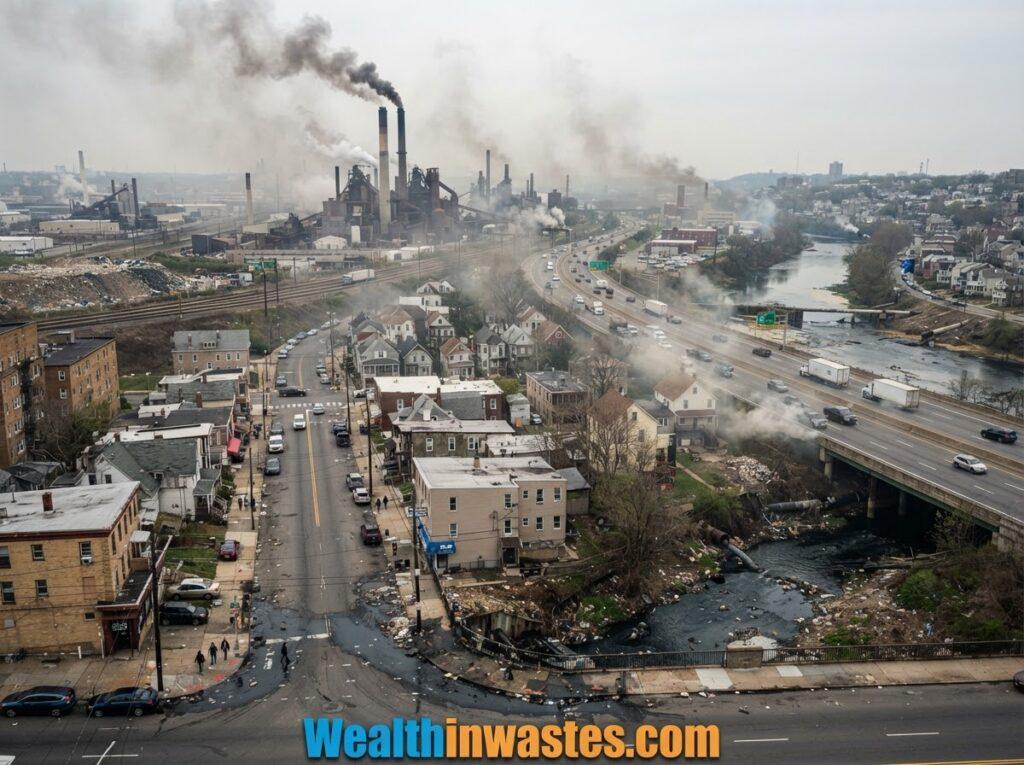
Pollutants travel through air, surface runoff, soil infiltration and water currents. Wind carries smoke and dust, while rainfall moves contaminants from roads, farms and dumpsites into nearby waterways and wetlands.
Some chemicals seep through soil and reach underground water, especially where waste sites lack protective barriers. Aquifers supply wells and boreholes, so contamination can threaten household and agricultural water use.
Urban growth can increase paved surfaces, traffic, waste generation and pressure on drains. Without reliable collection and drainage, heavy rainfall may spread rubbish and contaminated water into nearby residential areas.
Practical Ways to Prevent Pollution
1. Reduce Waste Generation: Reduce waste at its source by buying only what is needed, choosing durable goods and reusing safe materials. These choices limit the volume requiring collection, treatment or final disposal overall.
2. Separate and Treat Waste Properly: Separate ordinary refuse from batteries, oils, pesticides, medicines and electronic waste. Municipal waste treatment works better when households and businesses sort materials and keep hazardous items out of general bins.
3. Apply Agricultural Chemicals Responsibly: Farmers should follow product labels, use only necessary pesticide quantities and store chemicals securely. Safe pesticide application reduces accidental exposure, runoff and harm to beneficial insects, soil organisms and nearby water.
4. Adopt Integrated Pest Management: Repeated or unnecessary pesticide use can increase environmental pressure and encourage unsafe handling. Integrated pest management combines monitoring, crop rotation, resistant varieties and biological controls to reduce reliance on chemical treatments.
5. Improve Waste Collection and Storage: Properly managed waste collection and storage prevent scattered rubbish, blocked drains and uncontrolled dumping. Understanding the characteristics of municipal refuse helps planners select suitable handling options in communities.
Shared Responsibility for Environmental Protection

Government agencies should enforce environmental standards, monitor emissions and discharges, and provide reliable waste and sanitation services. Clear responsibilities and public reporting help communities identify pollution and seek corrective action.
Industries should maintain treatment systems, prevent leaks, monitor emissions and train workers in safe handling. Environmental assessments and regular inspections can identify risks before pollutants spread beyond facility boundaries and affect residents.
Schools, households, farmers and community groups can support clean-up programmes, separate recyclables and report illegal dumping. Long-term progress depends on practical habits, accessible facilities and cooperation across local neighbourhoods.
Read Also: The Reproductive Rate of Sheep and Goat
Summary on Sources and Types of Pollution on the Environment
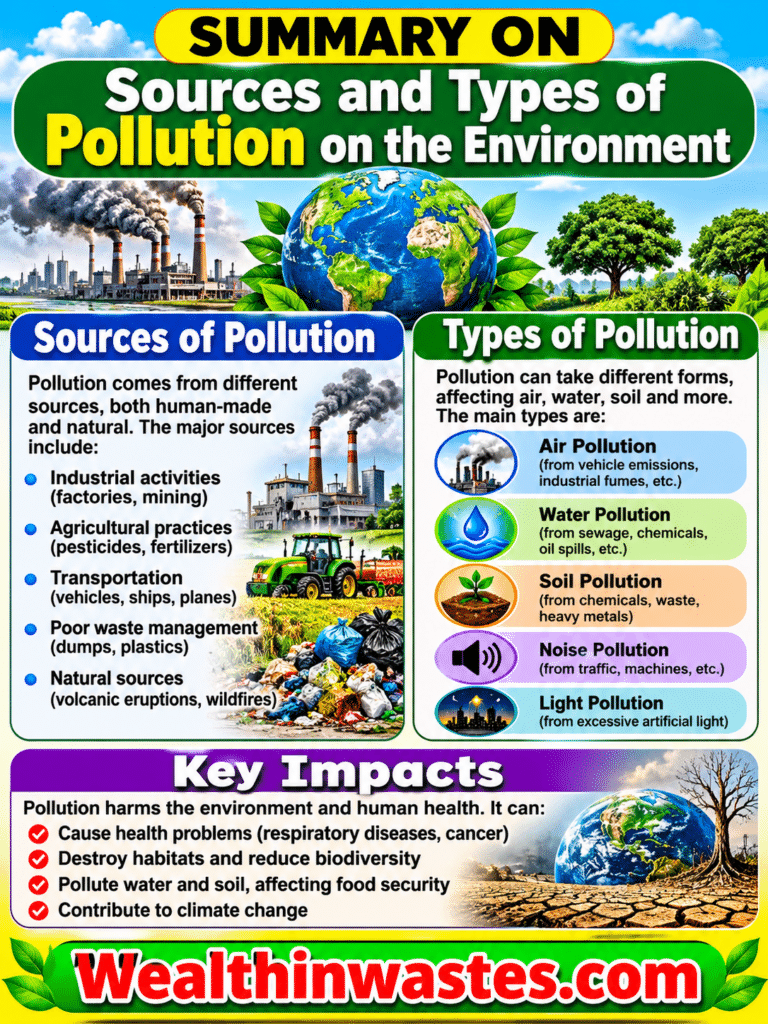
| Topic | Main Points | Environmental Importance |
|---|---|---|
| Environmental Pollution | Harmful substances, organisms or energy entering the environment. | Disrupts natural processes and threatens living organisms. |
| Major Sources | Households, industries, agriculture, transport, mining and construction. | Introduce pollutants into air, land and water. |
| Point Sources | Identifiable outlets such as pipes and factory stacks. | Can be traced and monitored directly. |
| Non-Point Sources | Diffuse pollution carried by rainfall and surface runoff. | Can contaminate rivers, lakes and groundwater. |
| Major Types | Land, water, air, noise, light, visual, thermal and radioactive pollution. | Affect ecosystems, resources and environmental quality. |
| Environmental Effects | Health problems, habitat damage, soil degradation and biodiversity loss. | Threaten humans, plants, animals and aquatic organisms. |
| Prevention | Waste reduction, proper disposal, recycling and responsible chemical use. | Reduces contamination and protects natural resources. |
| Shared Responsibility | Government, industries, households, farmers and communities. | Encourages coordinated environmental protection. |
Frequently Asked Questions About Pollution on the Environment and Its Major Sources
1. What Is Pollution on the Environment?
It is the introduction of harmful substances, organisms or energy into the environment, causing damage to living things and natural processes.
2. What Are the Main Sources of Environmental Pollution?
The major sources include households, industries, agriculture, transportation, mining, construction and improper waste disposal.
3. What Is Point-Source Pollution?
It is pollution released from a specific, identifiable source, such as an industrial discharge pipe or factory smokestack.
4. What Is Non-Point Source Pollution?
It is pollution from scattered sources, commonly carried into waterways by rainfall and surface runoff.
5. What Are the Major Types of Pollution?
They include land, water, air, noise, light, visual, thermal and radioactive pollution.
6. How Does Pollution Affect Human Health?
It can cause respiratory irritation, infections, chemical exposure and other health problems, depending on the pollutant and exposure level.
7. How Does Agriculture Cause Environmental Pollution?
Excess fertilisers, pesticides, animal waste and poorly managed farm residues can contaminate soil, air and water.
8. How Can People Prevent Environmental Pollution?
People can reduce waste, recycle materials, avoid open burning, manage chemicals responsibly and support proper sanitation and waste collection.
Do you have any questions, suggestions, or contributions? If so, please feel free to use the comment box below to share your thoughts. We also encourage you to kindly share this information with others who might benefit from it. Since we can’t reach everyone at once, we truly appreciate your help in spreading the word. Thank you very much for your support and for sharing!
Read Also: Water and Land Pollution in Agriculture