


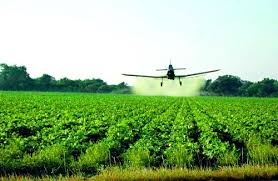
Pesticide mobility may redistribute chemicals within an application site or move part of an applied product away from its intended target, creating environmental concerns when movement reaches sensitive areas.
After application, pesticides may attach to soil particles, vegetation, or other surfaces and remain near deposition points, depending on chemical characteristics, environmental conditions, and available binding sites.
Other pesticide molecules may dissolve in water, move with runoff, enter plants, travel downward through soil, or become airborne when volatilization, erosion, or spray drift occurs.
The extent of movement depends strongly on pesticide chemistry, particularly water solubility, sorption strength, vapour pressure, and persistence, while soil and site conditions can strengthen or reduce these effects.
Understanding these properties helps farmers, environmental managers, and pesticide users predict where chemicals may travel, select suitable products, and reduce unnecessary contamination of soil, surface water, and groundwater.
Understanding Pesticide Mobility
Pesticide mobility describes the capacity of an applied chemical to move from its original location into soil, water, air, plants, sediments, or surrounding environmental compartments.
Once a pesticide reaches soil, some molecules may remain attached to particles, while others enter soil water and become available for leaching, runoff, plant uptake, or further transformation.
The balance between attached and dissolved pesticide determines how readily the chemical can move, while persistence determines how long enough material remains available for environmental transport.
Farmers can better understand this balance by examining how pesticides move through soil and recognizing the pathways that carry chemicals beyond treated areas.
Mobility does not always indicate failure because limited movement into the root zone can improve control, whereas excessive transport can reduce effectiveness and increase exposure to unintended organisms.
Environmental consequences become more serious when mobile pesticides enter drainage systems, streams, ponds, wells, or aquifers, especially where repeated applications occur or soils provide rapid pathways.
Read Also: Roles of Producers and Corporations in Waste Management
Water Solubility And Pesticide Mobility
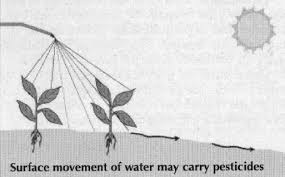
Water solubility measures how much pesticide can dissolve in water, making it one of the most important chemical properties affecting movement through moist soil and flowing surface water.
A highly water-soluble pesticide generally has more molecules available in soil solution, increasing opportunities for downward movement with infiltrating water and transport through surface runoff after rainfall.
A pesticide with low water solubility may remain more strongly associated with soil particles, although other chemical and environmental properties can still create significant movement pathways under certain conditions.
Rainfall or irrigation adds water to soil and can promote desorption, releasing pesticide molecules from particles into soil water where they become more mobile and potentially more available for leaching.
The properties of soil that influence pesticide mobility can therefore determine whether dissolved chemicals move slowly through the profile or travel rapidly toward drainage pathways.
Water solubility should never be considered alone because adsorption strength, soil texture, rainfall intensity, application timing, and pesticide persistence can greatly change the actual leaching risk.
Koc, the organic-carbon-normalized sorption coefficient, helps describe pesticide attachment to soil organic carbon and provides useful information when estimating how readily a pesticide remains dissolved.
Lower sorption values generally indicate greater dissolved concentrations, increasing the possibility that water can carry the pesticide downward through permeable soil toward groundwater resources.
For this reason, highly soluble pesticides with weak soil binding require particular care where permeable soils, shallow groundwater, intense rainfall, or frequent irrigation create favorable conditions for movement.
Sorption Controls Pesticide Movement
1. Strong Sorption: Strongly sorbed pesticide molecules attach firmly to soil particles, particularly organic matter and clay surfaces, reducing their immediate concentration in soil water and limiting downward movement.
2. Weak Sorption: Weakly sorbed molecules remain more readily in soil solution and can move with infiltrating water, making them more susceptible to leaching below the root zone.
3. Reversible Binding: Sorption can change as conditions change, because pesticide molecules may desorb when water enters the soil or when competing chemicals and dissolved substances alter binding conditions.
Sorption affects more than mobility because it also changes pesticide availability for plant uptake, microbial degradation, volatilization, and eventual release into surrounding environmental compartments.
Dry soils often provide stronger opportunities for adsorption because water molecules compete less intensely with pesticide molecules for available binding sites on soil colloids.
In contrast, wet conditions can encourage desorption and increase pesticide availability within soil water, especially when irrigation or rainfall supplies enough moisture to overcome the soil’s holding capacity.
The relationship between soil binding and environmental behavior becomes clearer when examining pesticide degradation factors in soil, because strong sorption can sometimes protect chemicals from rapid biological breakdown.
Strong sorption can also reduce pesticide effectiveness when target weeds or other organisms cannot readily access the chemical, creating a management challenge that requires careful product selection.
Vapour Pressure and Pesticide Mobility

Vapour pressure indicates how readily a pesticide changes from a liquid or solid into a gas, making it an important property when evaluating atmospheric movement and volatilization.
Pesticides with higher vapour pressures generally volatilize more readily, particularly when temperature, soil moisture, wind speed, or exposed surface conditions encourage conversion into airborne chemical vapour.
Volatilization can reduce the amount remaining on the application site, but vapour movement can also expose nearby crops, workers, animals, buildings, and natural vegetation to unintended pesticide contact.
The site conditions controlling pesticide movement can strongly influence volatility because temperature, wind, groundwater depth, and geological characteristics interact with the chemical’s vapour pressure.
Some pesticides require volatility for specific applications, particularly fumigants that must move through spaces within soil to provide relatively uniform treatment across targeted areas.
However, excessive volatilization can reduce pest-control performance and increase off-site transport, especially when farmers apply volatile products during hot, dry, or windy weather.
Soil incorporation or suitable sealing methods can reduce surface exposure for some products, but application decisions must always follow the product label and approved agricultural directions.
Understanding pesticide transport through environmental waters also helps explain why chemicals that leave the application area can continue moving after reaching drainage channels or surface water.
Volatility therefore influences pesticide mobility through the atmosphere rather than solely through soil water, making weather conditions an important consideration whenever a chemical has substantial vapour pressure.
Half-Life And Pesticide Persistence
1. Short Half-Life: A pesticide with a short half-life breaks down relatively quickly, reducing the period during which substantial residues remain available for movement through soil, water, or air.
2.Long Half-Life: A persistent pesticide remains in the environment longer, giving rainfall, irrigation, runoff, leaching, and other transport processes more opportunity to redistribute its residues.
3. Environmental Dependence: Half-life changes with soil properties, moisture, temperature, pH, microbial activity, sunlight, and chemical characteristics, so reported values require comparable conditions for meaningful interpretation.
A pesticide half-life refers to the approximate time required for half of the original chemical amount to degrade into other compounds through environmental transformation processes.
For example, one kilogram of pesticide with a ninety-day half-life would theoretically leave about half a kilogram after ninety days under the conditions used for that estimate.
After another ninety days, the remaining amount would theoretically decline to approximately one quarter kilogram, although actual field concentrations can differ because environmental conditions continually change.
The management of soil as a productive resource becomes important because persistent chemicals can remain within agricultural soils and influence future crops and environmental quality.
Longer persistence does not automatically mean greater mobility, because a strongly sorbed chemical may remain near its application site despite lasting for an extended period.
However, a persistent pesticide with high solubility and weak sorption can remain available long enough to move considerable distances whenever suitable water pathways develop.
Pesticide persistence can also influence residue management in livestock systems when animals encounter contaminated feed, soil, vegetation, or environments following pesticide applications.
Therefore, pesticide half-life should be evaluated together with solubility, sorption, volatility, soil conditions, and expected weather rather than treated as an independent indicator of environmental risk.
Chemical Properties Work Together

1. Solubility And Sorption: High solubility combined with weak sorption generally increases the dissolved fraction, making more pesticide available for downward movement, runoff, and transport with flowing water.
2. Vapour Pressure And Temperature: High vapour pressure combined with warm conditions can encourage volatilization, moving pesticide residues from soil or foliage into surrounding atmospheric pathways.
3. Persistence And Water Movement: A long-lived pesticide that remains dissolved can continue moving whenever rainfall or irrigation supplies enough water to transport residues beyond the treated zone.
4. Formulation And Application: Product formulation and application methods influence how quickly pesticide molecules reach soil water, plant surfaces, sediments, or the atmosphere after treatment.
These properties interact rather than operating independently, so two pesticides with similar solubility can behave differently because their sorption strength, persistence, vapour pressure, or degradation pathways differ.
A chemical with moderate solubility may still present considerable movement risk when soil binding remains weak and degradation proceeds slowly under field conditions.
Likewise, strong sorption may reduce dissolved movement while increasing the amount carried away with eroded sediment during storms, particularly where vegetation cover provides poor protection.
This interaction becomes especially relevant when considering pathways that can contaminate food, because pesticide residues may move between environmental compartments before reaching crops or other agricultural products.
The correct interpretation therefore requires consideration of the complete chemical profile rather than relying on one value listed on a pesticide product information sheet.
Soil And Site Conditions Modify Mobility
1.Soil Texture And Structure: Sandy soils often allow faster water movement, while clay-rich soils provide more binding surfaces; weak structure and cracks can create additional preferential flow pathways.
2. Soil Organic Matter: Organic matter provides binding sites for many pesticides, potentially reducing dissolved concentrations and slowing downward movement while also affecting microbial activity and water retention.
3. Soil Moisture And pH: Moisture influences infiltration, runoff, desorption, and degradation, while soil pH can change pesticide charge, binding behavior, persistence, and availability for transport.
4. Groundwater And Geology: A shallow water table, permeable geological material, fractures, or karst formations can shorten the pathway between pesticide-treated soil and underground water.
Rainfall intensity and timing strongly affect movement because intense precipitation soon after application may generate runoff or supply enough infiltrating water to carry dissolved pesticide downward.
Fields with slopes can experience greater runoff, especially when soil infiltration capacity cannot absorb incoming water quickly enough, allowing pesticide residues to leave with flowing surface water.
Vegetation, crop residues, and ground cover can slow runoff and reduce soil erosion, helping retain pesticide-associated particles near the treated field rather than allowing rapid downstream transport.
Research on land pollution and its movement pathways reinforces the importance of understanding how contaminants travel through soils before they reach groundwater or surrounding ecosystems.
Soil characteristics may also change with cultivation, compaction, tillage, organic amendments, drainage, and repeated irrigation, meaning pesticide mobility can vary considerably between fields.
Understanding basic soil properties therefore provides an important foundation for predicting how pesticide molecules interact with water, soil particles, air spaces, roots, and microorganisms.
Read Also: Site Conditions Affecting the Mobility of Pesticides in Soil
Practices That Reduce Pesticide Movement

1. Select Suitable Products: Choose pesticides according to crop needs, target pests, soil characteristics, and environmental conditions, giving preference to products whose mobility and persistence suit the application site.
2. Apply Correctly: Follow the product label for application rate, timing, placement, equipment, and weather restrictions so excessive residues do not remain exposed to runoff, leaching, or volatilization.
3. Manage Water Carefully: Avoid unnecessary irrigation immediately after application when labels provide such guidance, and prevent excessive water application that could increase runoff or downward pesticide transport.
4. Protect Soil Surfaces: Maintain vegetation, crop residues, contour planting, suitable tillage, and other conservation measures that reduce erosion and slow contaminated surface water leaving agricultural fields.
Management practices should also prevent pesticide spills during mixing, loading, equipment cleaning, storage, and disposal because concentrated chemicals can create localized contamination and subsequent leaching.
Proper disposal matters because discarded pesticide containers and chemical residues can become environmental contamination sources when users abandon them near fields, drains, streams, or waste areas.
Guidance on safe handling of dilute pesticide wastes demonstrates why disposal locations and methods should protect watercourses, groundwater, people, livestock, and wildlife.
Responsible pesticide use should form part of a wider environmental management strategy, particularly where farms operate near wells, streams, wetlands, reservoirs, drainage channels, or sensitive habitats.
Farmers should also understand how pesticide exposure can occur, because reducing environmental mobility can also reduce opportunities for unintended human and ecological exposure.
Integrated pest management can further reduce dependence on chemical applications by combining monitoring, cultural practices, biological controls, resistant varieties, and carefully selected pesticides where chemical treatment remains necessary.
For wider context, agricultural chemicals as sources of water pollution show why field-level decisions can influence water quality beyond the farm boundary.
Soil conservation also contributes to pesticide risk reduction because reducing erosion lowers the amount of contaminated sediment that runoff can transport into streams, ponds, drainage systems, and reservoirs.
Farmers can strengthen prevention by combining sound agricultural waste management with careful pesticide storage and disposal, reducing opportunities for chemical residues to enter environmental pathways.
Broader pollution control measures remain relevant because pesticides can contribute to multiple forms of environmental pollution when poor management allows chemicals to move outside their intended locations.
Reducing environmental movement requires continued attention to soil health, drainage, rainfall, application conditions, and chemical characteristics rather than depending on one management measure alone.
Maintaining healthy agricultural soils through appropriate management can support infiltration, reduce erosion, and improve environmental resilience, consistent with principles discussed in sustainable soil resource management.
Because pesticide residues can eventually affect agricultural products, readers can also examine sources of pesticide residues in animal products to understand wider food-chain implications.
Environmental contamination can produce wider consequences beyond pesticide movement alone, making resources on hazardous substances in soil and plant systems useful for broader pollution awareness.
Persistent agricultural contamination may also contribute to broader soil-quality concerns, which are discussed through soil contamination from agricultural inputs and other environmental pollutants.
Water movement beyond agricultural land can carry dissolved or particle-associated contaminants into larger aquatic systems, as explained in discussions of contaminant movement through water.
Understanding the broader movement of contaminants through agricultural wastewater and runoff further shows why chemical management must consider drainage pathways and receiving waters.
Environmental controls should also recognize that pollution effects may develop gradually, as discussed in primary and secondary pollution effects, particularly when persistent contaminants remain available for extended periods.
The economic consequences of environmental contamination can extend beyond farms, making pollution-related economic losses another reason to prevent unnecessary pesticide movement before problems become difficult to reverse.
Appropriate land selection and environmental planning can further reduce risk, especially where farms operate near sensitive resources, as broader land-use suitability considerations demonstrate.
Finally, understanding pollution prevention and control approaches helps place pesticide management within a broader framework for protecting agricultural land, water resources, and surrounding ecosystems.
Before selecting and applying a pesticide, users should consider its solubility, sorption, vapour pressure, half-life, soil properties, weather conditions, and application method to reduce unintended environmental movement.
Summary on Pesticide Properties Affecting Its Mobility
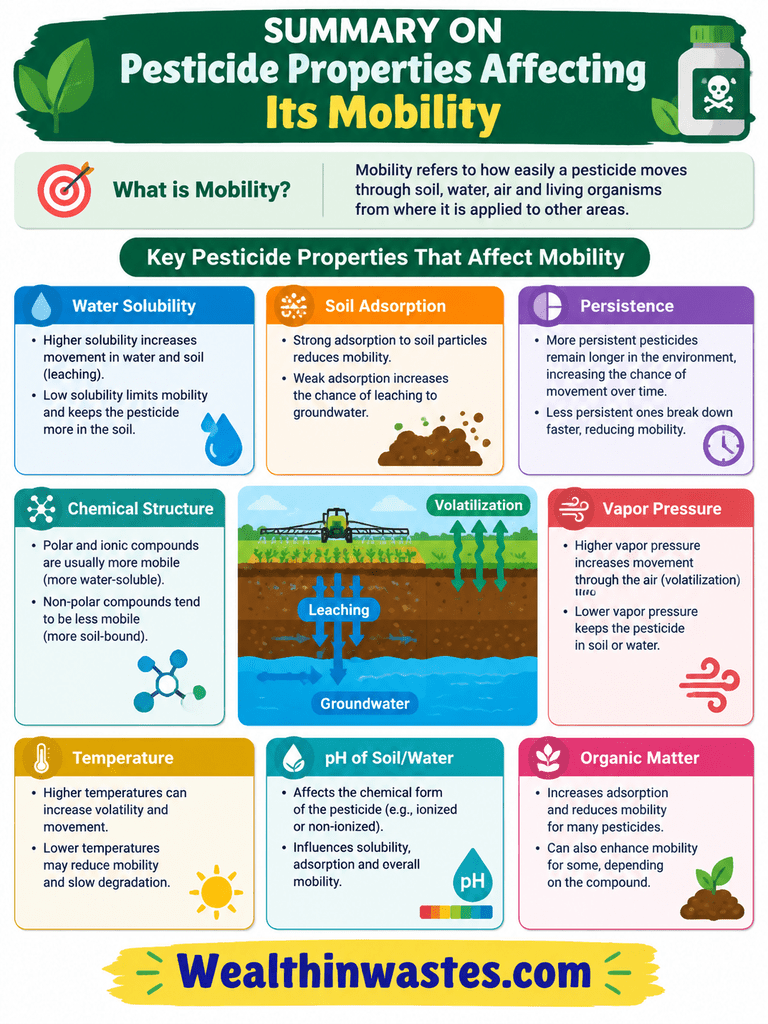
| Pesticide Property | Effect On Mobility | Main Environmental Pathway |
|---|---|---|
| Water Solubility | Higher solubility generally increases the dissolved fraction available for transport. | Leaching and runoff |
| Sorption | Strong binding generally reduces dissolved movement but may increase sediment-associated transport. | Soil and sediment movement |
| Vapour Pressure | Higher vapour pressure increases the tendency to volatilize under suitable conditions. | Atmospheric movement |
| Half-Life | Longer persistence provides more time for environmental transport to occur. | Leaching, runoff, and redistribution |
| Soil Conditions | Texture, organic matter, structure, moisture, and pH modify chemical behavior. | Soil-water movement |
| Weather | Rain, irrigation, temperature, wind, and evaporation can intensify different movement pathways. | Water and atmospheric transport |
Frequently Asked Questions About Pesticide Properties Affecting Its Mobility
1. What is pesticide mobility?
Pesticide mobility is the ability of an applied pesticide to move from its original location through soil, water, air, plants, sediments, or other environmental compartments.
2. Which pesticide property most strongly affects movement with water?
Water solubility strongly influences movement with water because dissolved pesticide molecules can travel through soil water, rainfall runoff, irrigation water, drainage pathways, and groundwater.
3. How does sorption affect pesticide mobility?
Sorption attaches pesticide molecules to soil particles and usually reduces their dissolved concentration, although strongly sorbed residues can still move when contaminated soil particles become eroded.
4. Does a long pesticide half-life increase mobility?
A long half-life increases persistence, giving the pesticide more time to encounter rainfall, irrigation, runoff, leaching, volatilization, or other processes that can redistribute remaining residues.
5. Why is vapour pressure important?
Vapour pressure indicates how readily a pesticide enters the gaseous phase, helping determine volatilization potential and the possibility of atmospheric movement away from the application site.
6. Can soil properties change pesticide mobility?
Yes. Soil texture, organic matter, structure, moisture, pH, permeability, cracks, and macropores can change pesticide sorption, degradation, infiltration, runoff, and movement toward groundwater.
7. How can farmers reduce pesticide movement?
Farmers can reduce movement by choosing suitable products, following labels, avoiding unsuitable weather, managing irrigation carefully, protecting soil surfaces, preventing spills, and integrating nonchemical pest-control methods.
8. Why can pesticide mobility cause groundwater contamination?
Dissolved pesticides can move downward with infiltrating water, particularly where chemicals have weak sorption, adequate persistence, permeable soils, substantial rainfall, or shallow groundwater.
Do you have any questions, suggestions, or contributions? If so, please feel free to use the comment box below to share your thoughts. We also encourage you to kindly share this information with others who might benefit from it. Since we can’t reach everyone at once, we truly appreciate your help in spreading the word. Thank you very much for your support and for sharing!
Read Also: Safe Handling of Pesticides in Agriculture