


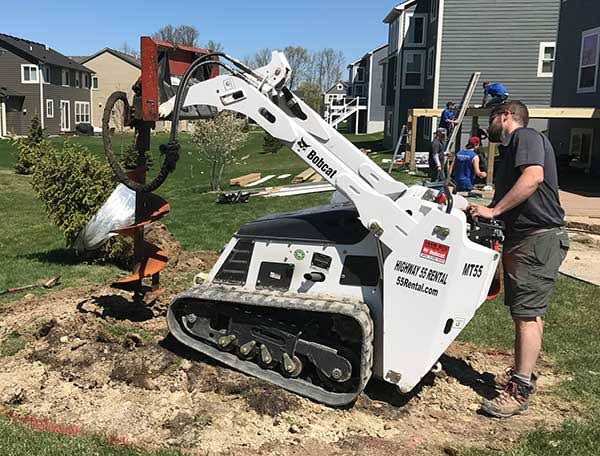
Renting provides a practical way to access vehicles, equipment, containers, and other useful items without making a permanent purchase. It works particularly well when your needs remain temporary.
A rental near you can save valuable time because local providers may offer faster delivery, easier communication, convenient collection, and services designed around customers within nearby communities.
Whether you need a pickup truck for moving materials, a dumpster for renovation debris, or equipment for a short project, rental services can provide useful flexibility.
The most important part involves identifying the correct rental service, understanding its terms, comparing the total cost, and ensuring your selected option matches your project requirements.
This guide explains how to search for a rental near you, compare available choices, prepare for pickup or delivery, and use rental services efficiently while avoiding unnecessary expenses.
Why Choose a Rental Near You
A rental near you makes temporary access easier because nearby providers usually reduce travel requirements, simplify communication, and help customers arrange delivery, collection, or vehicle pickup conveniently.
Local rentals also work well for household cleanups, moving activities, construction projects, landscaping jobs, events, and business operations that require additional resources for limited periods.
Before renting anything, understand the type of waste, equipment, vehicle, or service you actually need. Understanding waste types can help you select an appropriate container.
Rental services can support better environmental decisions when customers reuse available products instead of purchasing unnecessary items. This approach complements effective waste management planning for temporary projects.
Read Also: Aluminum Recycling: Everything you Need to Know
How to Search for Rental Near You

1. Define Your Requirement: Start by identifying what you need, how much you need, where you will use it, and how long your project will last before contacting rental providers.
2. Search Local Providers: Use online searches, business directories, maps, and local recommendations to locate nearby providers. Check waste management guidance when your rental involves discarded materials.
3. Review Service Options: Examine available vehicle sizes, container capacities, equipment types, rental periods, delivery choices, collection arrangements, and support services before choosing the provider that matches your requirements.
4. Read Customer Reviews: Customer reviews can reveal useful information about punctuality, vehicle condition, communication, billing practices, delivery reliability, and how providers handle problems during completed rental periods.
Searching locally becomes easier when you combine the exact item with your location, such as “pickup rental near me,” “dumpster rental near me,” or “equipment rental near me.”
How to Compare Local Rental Services
1. Compare Total Prices: Do not compare providers using headline prices alone. Check delivery charges, pickup fees, deposits, mileage costs, fuel requirements, taxes, cleaning charges, and other expenses.
2. Check Rental Terms: Review minimum rental periods, cancellation policies, late-return charges, damage responsibilities, insurance requirements, acceptable use rules, and conditions for extending rentals when projects take longer.
3. Evaluate Equipment Condition: Ask about maintenance, cleanliness, safety features, operating condition, and available support before accepting equipment or vehicles. Proper preparation reduces avoidable interruptions once your project begins.
4. Consider Convenience: Look for providers offering useful delivery, collection, booking, customer support, and scheduling options. A slightly higher price may provide better convenience and reduce costly project delays.
For waste-related projects, understanding recommended waste disposal methods can help you avoid renting a container that cannot safely handle your materials.
Pickup Rental Options Near You
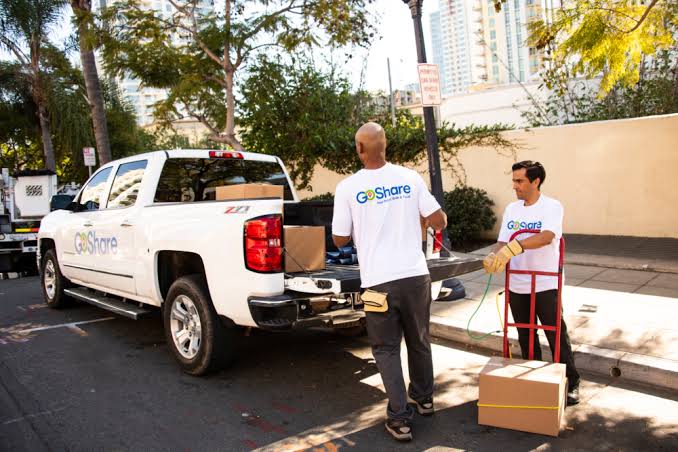
Pickup truck rentals provide a flexible transportation option when you need to move furniture, tools, building materials, appliances, landscaping supplies, or other bulky items without owning a truck.
When searching for a local waste management solution, consider whether the rental vehicle can safely accommodate materials, especially when transporting cleanup debris or recyclable products.
Pickup Rental Booking Process
1. Check Availability: Contact the provider or visit its booking platform to confirm vehicle availability for your preferred date, pickup location, rental period, and expected return time.
2. Select the Right Truck: Choose a truck size according to the weight, dimensions, and quantity of materials you plan to transport. Avoid selecting a vehicle that leaves your load unstable.
3. Review Vehicle Requirements: Check licensing requirements, insurance rules, mileage policies, fuel arrangements, payment conditions, and inspection procedures before accepting the vehicle from the rental company.
4. Inspect Before Departure: Inspect tires, lights, mirrors, body panels, cargo areas, and visible damage before leaving. Document existing defects so you can avoid disputes during vehicle return.
A well-maintained pickup can make waste removal more efficient, especially when customers understand household waste management practices before loading materials for transportation.
Dumpster Rental Near You for Cleanup

Dumpster rentals suit renovation work, property cleanouts, landscaping projects, moving activities, roofing jobs, and construction tasks that produce more waste than ordinary household bins can handle.
Before booking, estimate the volume and type of waste you expect. Dumpster rental guidance can help you select an appropriate container size.
You should also understand what the provider accepts. Some materials require separate handling, while hazardous substances, chemicals, electronics, and other restricted materials may need specialized disposal services.
When handling recyclable materials, proper separation can improve recovery and reduce contamination. Learn about recycling waste effectively before placing recyclable materials into general-purpose containers.
Glass requires particular care because broken pieces can create injuries and contamination. A dedicated glass recycling process provides a safer option when projects produce substantial amounts of glass waste.
Paper and cardboard can remain valuable when kept clean and separated. Proper handling supports paper recycling practices instead of sending recoverable materials directly into disposal streams.
Read Also: The Benefits of Amarillo Recycling
How to Prepare Before Renting

1. Measure Your Project: Estimate the amount of material, debris, or equipment you need to handle before booking. Accurate estimates help prevent under-sizing, extra trips, unexpected costs, and scheduling problems.
2. Prepare the Rental Area: Clear the placement area of obstacles, branches, parked vehicles, and unnecessary objects. Ensure the location provides enough access for delivery vehicles and collection operations.
3. Separate Restricted Materials: Check the provider’s prohibited-items policy before loading anything. Chemicals, certain paints, electronics, and hazardous materials may require specialized collection or disposal arrangements instead.
4. Plan the Rental Period: Choose a realistic rental period that covers preparation, active work, loading, transportation, and final cleanup. A small scheduling buffer can prevent unnecessary late-return charges.
Good planning should also include waste reduction. Reducing waste at the source can lower the quantity of materials requiring collection and decrease the container size needed.
Benefits of Choosing Local Rental Services
1. Faster Access: Nearby providers may respond faster because their operations cover your area. This can make scheduling easier when your project requires urgent equipment, vehicle access, or waste collection.
2. Easier Communication: Local providers often make direct communication simpler because customers can discuss delivery instructions, access conditions, project requirements, and service concerns without complicated arrangements.
3. Convenient Delivery and Pickup: Local rental companies may provide practical delivery and collection options, reducing the need for customers to travel long distances or arrange independent transportation.
4. Community Support: Choosing reputable local businesses keeps some spending within the community while supporting employment, service providers, transport operators, maintenance workers, and related local economic activities.
Local services can also support cleaner surroundings when customers follow proper sanitation and waste management practices during cleanup, construction, or moving projects.
Recycling can further improve the environmental value of temporary rental projects. The advantages of waste recycling include better resource recovery and reduced pressure on disposal facilities.
Customers handling electronic equipment should take additional care because ordinary dumpsters may not suit electronic waste. Follow proper e-waste disposal guidance when electronics form part of a cleanup.
Understanding environmental consequences also matters when selecting disposal services. Waste impacts on health and the environment show why responsible handling remains important for rental projects.
Plastic materials deserve careful separation because poorly managed plastic waste can remain in the environment for extended periods. Learn about plastic waste pollution before disposing large quantities.
Food-related cleanup projects require another approach because organic materials can create odors and attract pests. Review food waste management practices before placing substantial organic waste into rental containers.
Common Rental Mistakes to Avoid

1. Choosing the Wrong Size: Selecting an undersized vehicle, dumpster, or equipment package can create avoidable costs. Estimate your requirements carefully and consult the rental provider when project quantities remain uncertain.
2. Ignoring Rental Terms: Customers sometimes focus only on advertised prices and overlook mileage limits, deposits, fuel requirements, damage policies, late fees, cancellation conditions, or delivery charges.
3. Mixing Restricted Materials: Do not assume every rental container accepts every material. Check prohibited-item rules carefully, especially when handling chemicals, hazardous substances, electronics, liquids, or specialized waste.
4. Delaying the Reservation: Waiting until the last minute can reduce your choices, especially during busy periods. Reserve suitable vehicles, dumpsters, or equipment early when your project has fixed deadlines.
Another common mistake involves treating every discarded material as ordinary trash. Reviewing solid waste classification can help explain why different materials require different handling methods.
Before final disposal, consider whether reuse, recycling, recovery, or composting offers a better option. The waste management hierarchy provides a useful framework for responsible decisions.
Businesses with recurring projects can develop more organized plans by following waste minimization principles that identify avoidable materials and reduce unnecessary disposal costs.
When disposal remains necessary, choose providers that handle materials responsibly. Proper waste treatment and disposal methods help reduce environmental risks linked to poorly managed waste.
Summary on Practical Guide to Finding Rentals Near You
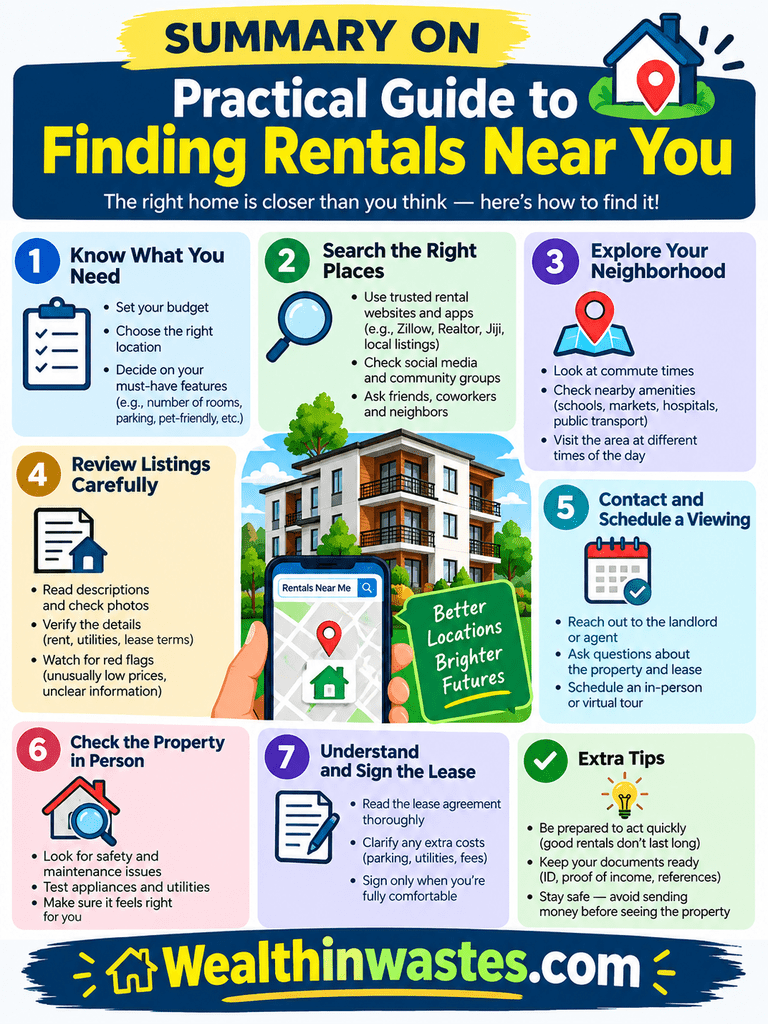
| Topic | Key Point |
|---|---|
| Rental Near You | Local rentals provide temporary access to vehicles, equipment, dumpsters, and other useful services. |
| Local Search | Use location-based searches, directories, reviews, and recommendations to identify suitable providers. |
| Price Comparison | Compare complete costs, including deposits, delivery, mileage, fuel, taxes, and additional charges. |
| Pickup Rental | Select vehicle size according to load requirements and inspect the vehicle before departure. |
| Dumpster Rental | Choose container size according to waste volume and confirm accepted and prohibited materials. |
| Preparation | Prepare the rental area, estimate quantities, separate restricted materials, and plan the rental period. |
| Environmental Responsibility | Reduce, reuse, recycle, and dispose of materials through suitable waste management channels. |
| Mistake Prevention | Read rental terms, reserve early, select suitable sizes, and avoid improper material disposal. |
Frequently Asked Questions About Rental Near You: A Practical Guide to Finding Rentals
1. What does rental near you mean?
Rental near you refers to nearby businesses that provide temporary access to vehicles, equipment, dumpsters, tools, containers, or other useful items according to customer requirements.
2. How can I find a rental near me?
Search online using the item you need together with your location, then compare providers based on availability, pricing, reviews, rental terms, and overall service convenience.
3. What should I check before renting?
Check total costs, rental duration, deposits, insurance, mileage limits, damage policies, cancellation terms, delivery arrangements, and restrictions affecting how you can use the rental.
4. Is a pickup rental useful for moving?
Yes. Pickup rentals can transport furniture, appliances, tools, building materials, landscaping supplies, and other bulky items without requiring long-term vehicle ownership.
5. How do I choose a dumpster size?
Estimate the volume of waste your project will produce, then discuss your requirements with the rental company to identify a suitable container capacity.
6. Can I place any material inside a rental dumpster?
No. Rental companies may prohibit hazardous, chemical, electronic, liquid, or other restricted materials. Always confirm the provider’s accepted-material policy before loading your container.
7. Why should I choose a local rental company?
Local providers may offer easier communication, faster access, convenient delivery, simpler collection, and services designed around customers within nearby communities.
8. How can I reduce rental costs?
Choose the right size, compare complete prices, avoid unnecessary rental days, understand additional fees, prepare before delivery, and reduce waste before disposal begins.
9. Should I inspect a rental vehicle before use?
Yes. Inspect the vehicle for visible damage, check important operating features, and document existing issues before departure to reduce potential disputes during return.
10. Can renting support sustainable practices?
Yes. Renting can provide temporary access without requiring permanent ownership, while responsible waste sorting, reuse, recycling, and proper disposal can further reduce environmental pressures.
Do you have any questions, suggestions, or contributions? If so, please feel free to use the comment box below to share your thoughts. We also encourage you to kindly share this information with others who might benefit from it. Since we can’t reach everyone at once, we truly appreciate your help in spreading the word. Thank you very much for your support and for sharing!
Read Also: Controlling Food Waste and Recycling in Agriculture