


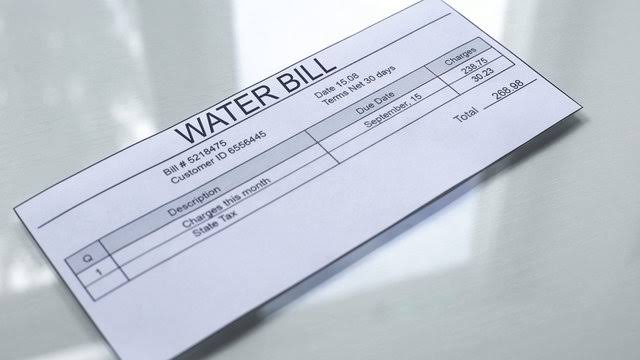
A water bill records the cost of water services supplied to a household, business, or other property during a particular billing period. It connects daily water use with utility charges.
Many customers look only at the final amount and payment deadline, yet a water bill can contain several charges. Understanding those figures helps you manage household expenses and recognize unusual costs.
Your water bill may reflect more than the volume of water entering your property. Depending on the provider, charges can support meters, wastewater services, maintenance, conservation, treatment, and distribution.
Water remains essential for drinking, cooking, bathing, cleaning, sanitation, agriculture, and industry. Protecting this resource therefore requires responsible consumption, proper infrastructure, effective treatment, and awareness of environmental consequences.
Because billing systems vary between communities, customers should always examine the explanation supplied by their utility. A careful review can improve budgeting, reveal changes in consumption, and prevent avoidable disputes.
What a Water Bill Shows
1. Billing period: The billing period identifies the dates covered by the current statement. Comparing periods consistently helps you understand seasonal patterns, household habits, and changes in consumption.
2. Account information: A typical statement contains an account number, service address, customer information, and payment details. These identifiers help the provider apply payments correctly and resolve account questions.
3. Meter reading: Meter readings provide the basis for measured water consumption. A previous reading and current reading usually allow the provider to determine how much water passed through the meter.
4. Consumption charge: The consumption charge reflects the amount of water used during the billing period. Higher usage generally increases this portion of the bill when the provider uses volumetric pricing.
5. Fixed charge: Some utilities apply a fixed service charge regardless of consumption. Such charges can contribute toward maintaining pipes, meters, administrative systems, treatment facilities, and distribution networks.
6. Service description: Statements may distinguish drinking water, wastewater, drainage, or other utility services. Understanding these descriptions makes it easier to connect each amount with the service being provided.
7. Environmental connection: Water billing also connects household spending with environmental responsibility because providing safe water requires treatment and infrastructure. Proper environmental management helps reduce waste and protect resources.
8. Payment deadline: The due date indicates when payment should reach the utility. Checking this date regularly helps customers avoid late charges, service problems, and unnecessary account complications.
Read Also: Health Hazards Associated with Water Treatment
Main Water Bill Charges
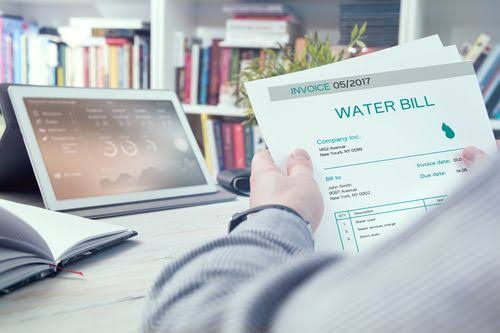
1. Water usage charge: This charge usually depends on the measured volume consumed. Activities such as bathing, laundry, cooking, toilet flushing, cleaning, and gardening can all contribute to the amount recorded.
2. Wastewater charge: Some utilities charge separately for wastewater services because used water requires collection, treatment, and safe disposal. Learning about water waste management clarifies why these services matter.
3. Service fee: A service or base fee can cover account administration, meter management, customer support, and network maintenance. This charge may remain relatively stable even when monthly consumption changes.
4. Infrastructure contribution: Utilities need money to maintain pumps, treatment facilities, storage systems, pipes, and other assets. Charges can therefore support long-term infrastructure reliability and reduce operational failures.
5. Conservation charge: Some systems include charges that support conservation programs or demand-management activities.Effective water conservation can reduce unnecessary consumption while protecting supplies for households and communities.
6. Penalties: Customers may sometimes see late-payment fees, returned-payment charges, or other penalties. Reading account terms carefully helps you understand when additional costs can appear on a water bill.
7. Treatment-related costs: Safe water requires processes that remove impurities and harmful organisms. WealthInWastes describes water treatment processes such as filtration, sedimentation, and disinfection.
8. Local differences: Not every provider uses the same pricing structure. Residents should compare their statement with the utility’s published explanation rather than assuming another city’s water bill uses identical charges.
Water Usage And Meter Readings
1. Check previous reading: Start by locating the previous meter reading on your statement. This figure provides a reference point for calculating current consumption and identifying significant changes between billing periods.
2. Check current reading: Compare the current statement reading with your physical meter when possible. A major difference can indicate unusual consumption, a recording problem, or a timing difference.
3. Calculate consumption: Subtract the previous reading from the current reading to estimate usage during the billing period. This simple check can help confirm whether the billed amount appears reasonable.
4. Watch household patterns: Water consumption can rise when households host visitors, increase outdoor cleaning, irrigate gardens, or use washing equipment more frequently. Recording habits can explain many temporary increases.
5. Check for leaks: A leaking toilet, dripping tap, damaged pipe, or faulty valve can increase consumption without providing useful household service. WealthInWastes recommends prompt leak repairs as part of water conservation.
6. Monitor wastewater: Water that enters a property often leaves as wastewater. Understanding wastewater characteristics and flow rates helps explain why water use affects collection and treatment requirements.
7. Consider seasonality: Outdoor water use often changes with weather and household activities. Comparing several bills rather than one statement can reveal whether consumption changes follow predictable seasonal patterns.
8. Record unusual events: Keep notes about plumbing repairs, guests, construction, irrigation, or prolonged cleaning. Such records can provide useful evidence when a water bill suddenly differs from normal household patterns.
Why Your Water Bill Changes
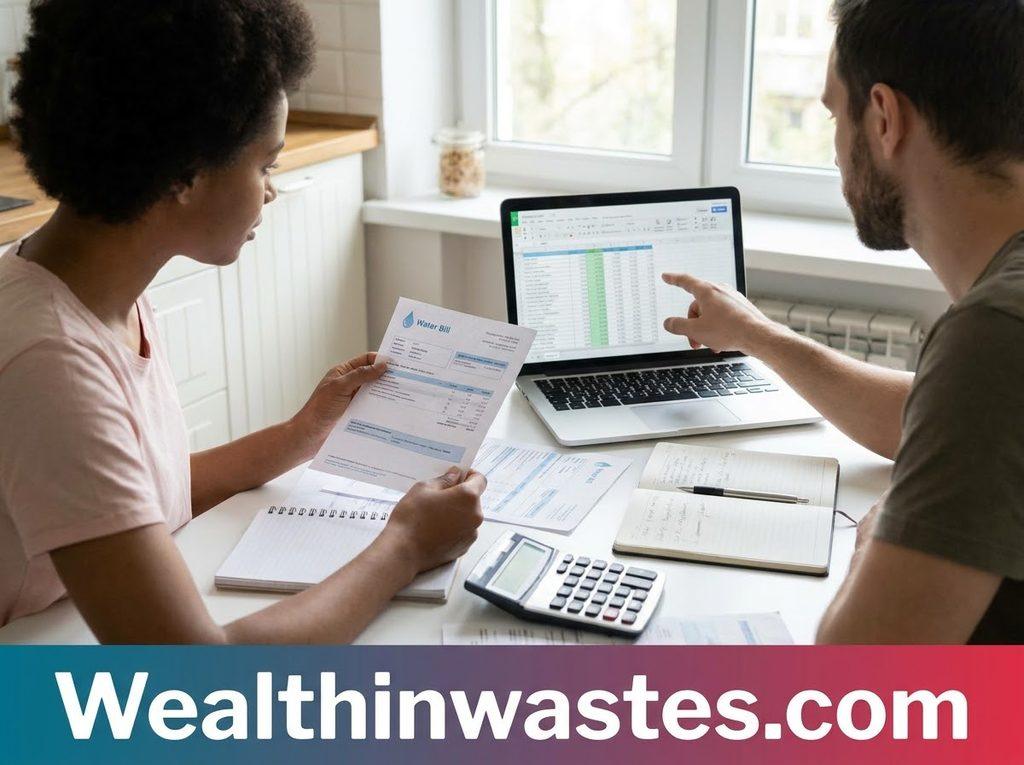
1. Increased consumption: The most straightforward reason for a higher water bill is increased usage. Longer showers, frequent washing, outdoor cleaning, and gardening can raise consumption even without any plumbing fault.
2. Hidden leaks: Small leaks can continue for days or weeks, producing substantial cumulative consumption. Checking toilets, faucets, exposed pipes, storage tanks, and irrigation connections can help identify unwanted water loss.
3. Rate changes: Utilities can revise tariffs or service charges because operating costs, infrastructure requirements, or regulatory conditions change. Customers should review official notices accompanying statements when prices change.
4. Billing adjustments: A provider may estimate a reading when access to a meter becomes difficult. A later actual reading can then create an adjustment that changes the amount shown on your water bill.
5. Service expansion: New infrastructure or additional services can alter utility charges. Understanding water supply issues helps explain the wider systems that influence reliable water provision.
6. Water scarcity: Short supplies can encourage communities to introduce conservation measures, pricing changes, or restrictions.Water emergencies may also affect service conditions and household access during severe disruptions.
7. Environmental pressure: Pollution, overuse, drought, flooding, and ecosystem degradation can increase the complexity of water management. WealthInWastes discusses water emergency and security challenges affecting communities.
8. Population growth: Growing communities place greater demand on treatment, storage, distribution, and wastewater systems. Effective planning becomes increasingly important as more households depend on the same water infrastructure.
Water Quality And Service Costs
1. Source protection: Reliable water service begins with protecting rivers, reservoirs, groundwater, and other sources from contamination. Pollution prevention reduces treatment pressure and supports safer supplies for communities.
2. Water quality testing: Utilities and authorities may examine physical, chemical, and biological characteristics to assess water quality. Detailed water quality analysis supports informed treatment and management decisions.
3. Treatment processes: Water treatment can involve aeration, coagulation, flocculation, sedimentation, filtration, and disinfection. These processes help prepare water for distribution according to applicable quality requirements.
4. Pollution control: Preventing contamination reduces risks to water sources and communities. WealthInWastes explains how pollution control institutions can support regulation, water quality management, sanitation, and wastewater treatment.
5. Industrial impacts: Industrial activities can release substances that affect rivers, groundwater, and other receiving environments. Proper waste controls help limit contamination and protect the quality of valuable water resources.
6. Wastewater treatment: Used water requires proper handling before discharge or reuse. WealthInWastes outlines several wastewater treatment options designed around wastewater characteristics and required effluent quality.
7. Treatment efficiency: Treatment facilities require suitable equipment, maintenance, and operational practices. efficient treatment unit maintenance helps facilities continue performing their intended functions effectively.
8. Public responsibility: Customers also influence water quality through daily behavior. Avoiding improper disposal of chemicals, oils, medicines, and waste helps protect drains, wastewater systems, rivers, and groundwater.
Simple Ways To Lower Water Costs
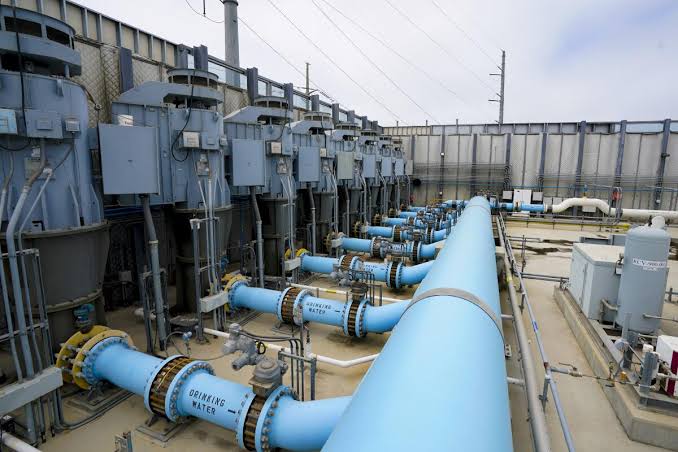
1. Repair leaks: Inspect faucets, toilets, pipes, tanks, and outdoor connections regularly. Prompt repairs can reduce unnecessary consumption while preventing water damage and avoiding charges for water that provides no useful service.
2. Shorten showers: Reducing shower duration can lower water use without affecting essential hygiene. Encouraging every household member to adopt practical conservation habits can produce meaningful savings across several billing periods.
3. Improve irrigation: Water gardens during suitable periods and avoid unnecessary irrigation during rainfall. Better irrigation practices reduce losses while maintaining adequate moisture for plants and protecting limited freshwater resources.
4. Reuse suitable water: Some wastewater streams may support appropriate non-potable uses after suitable management. WealthInWastes discusses wastewater reuse and recycling as part of resource conservation.
5. Monitor consumption: Record your meter readings periodically and compare them with previous bills. Tracking usage gives you an early warning when consumption rises unexpectedly or conservation efforts begin producing savings.
6. Maintain plumbing: Worn washers, faulty valves, blocked pipes, and damaged fittings can create waste or reduce system efficiency.Routine maintenance protects the plumbing system while supporting predictable household water consumption.
7. Reduce pollution: Responsible waste disposal protects waterways and reduces pressure on treatment facilities. Information about environmental effects of waste disposal shows why prevention matters.
8. Practice conservation: Water is a valuable renewable resource, but supplies can face serious pressure. Broader resource conservation practices support sustainable use beyond individual household savings.
How To Handle Water Bill Errors
1. Review every charge: Do not focus only on the total amount. Examine usage, service fees, adjustments, previous balances, payments, penalties, and other entries before deciding that a billing error occurred.
2. Compare previous bills: Place the current statement beside earlier statements and identify unusual changes. A comparison can reveal sudden consumption increases, changed rates, estimated readings, or missing payments.
3. Inspect the meter: Check the physical meter and compare its reading with the bill. Photographing the display can provide a useful record when communicating with the utility.
4. Check your property: Inspect toilets, faucets, tanks, pipes, and outdoor fixtures for leaks. A higher bill may result from a genuine increase in consumption rather than an administrative error.
5. Request clarification: Contact the provider when the figures remain unclear. Ask for an explanation of unusual readings, adjustments, tariffs, or charges instead of assuming the statement contains an error.
6. Keep records: Save bills, payment receipts, meter photographs, correspondence, and repair invoices. Good documentation makes it easier to explain your position and follow a complaint through properly.
7. Understand contamination concerns: A billing complaint differs from a water-quality complaint. Information about water pollution sources can help you distinguish service charges from environmental or quality concerns.
8. Escalate unresolved issues: When normal customer-service channels do not resolve a genuine dispute, follow the provider’s formal complaint process and retain all records until the matter receives a final response.
Read Also: Procedures of Water Quality Analysis
Why Paying Your Water Bill Matters
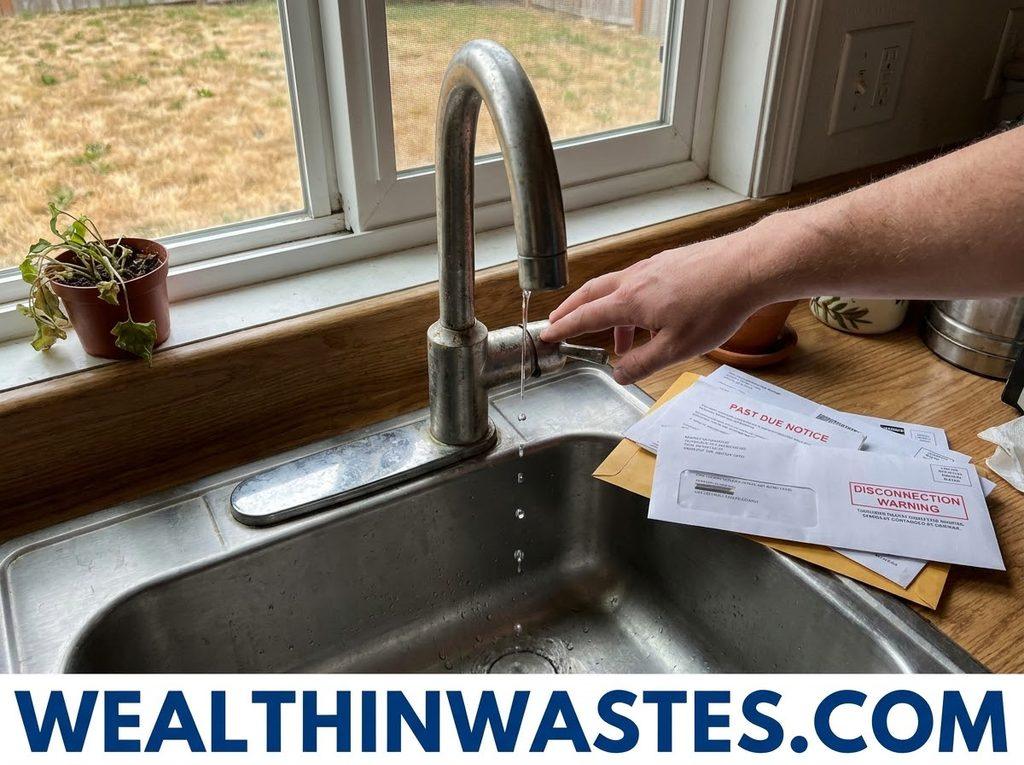
1. Supports water supply: Water utilities require revenue to operate distribution networks, maintain equipment, manage customer accounts, and continue delivering water services to connected households and businesses.
2. Supports treatment: Treatment facilities need equipment, chemicals, energy, labor, and maintenance. Proper payment helps sustain systems responsible for preparing water and managing wastewater safely.
3. Maintains infrastructure: Pipes, pumps, meters, storage facilities, and treatment units deteriorate over time. Revenue supports repairs and replacement, helping communities maintain reliable utility services.
4. Encourages accountability: Customers who understand their bills can monitor charges and ask informed questions. Transparent billing strengthens communication between residents and the organizations responsible for managing water services.
5. Protects public health: Safe water and effective wastewater management reduce exposure to harmful contaminants. Proper municipal wastewater treatment contributes to healthier communities and cleaner receiving environments.
6. Promotes conservation: A consumption-based bill makes water use visible to customers. When households see the relationship between usage and cost, they may become more willing to reduce avoidable waste.
7. Supports environmental protection: Responsible water management reduces pressure on natural resources. Understanding resource conservation challenges reinforces the importance of balancing human needs with environmental protection.
8. Strengthens future services: Sustainable water systems require planning, investment, maintenance, and responsible consumption. Paying valid charges on time contributes to the financial stability needed to maintain essential services over time.
Water Bill, Wastewater, And Sustainable Use
1. Understand wastewater: Water used inside homes and businesses eventually becomes wastewater. Proper collection and treatment prevent harmful substances from reaching rivers, lakes, groundwater, and surrounding environments.
2. Track water flows: The amount of water used influences wastewater volume. Studying wastewater characteristics can help communities design systems that handle variable flows and maintain appropriate treatment performance.
3. Consider reuse: Properly treated wastewater can support selected non-potable activities where regulations and safety requirements permit. Reuse can reduce pressure on freshwater resources and improve overall resource efficiency.
4. Reduce contamination: Avoid pouring hazardous substances into drains because they may enter wastewater systems. Pollution prevention at the source can reduce treatment difficulties and protect receiving water bodies.
5. Maintain treatment systems: Efficient wastewater facilities depend on appropriate design, operation, and maintenance. Understanding treatment system design factors shows why capacity planning matters.
6. Support pollution prevention: Industrial and municipal activities can introduce contaminants into water. Learning about waste impacts on the environment encourages better practices that protect water quality.
7. Value clean water: A water bill can remind customers that reliable water service depends on a connected system of sources, treatment facilities, pipes, monitoring, maintenance, regulation, and responsible consumer behavior.
8. Think beyond the bill: Managing water wisely protects household finances and natural resources. Responsible consumption, proper waste disposal, maintenance, and conservation together support cleaner and more sustainable communities.
Water Bill Planning For Households
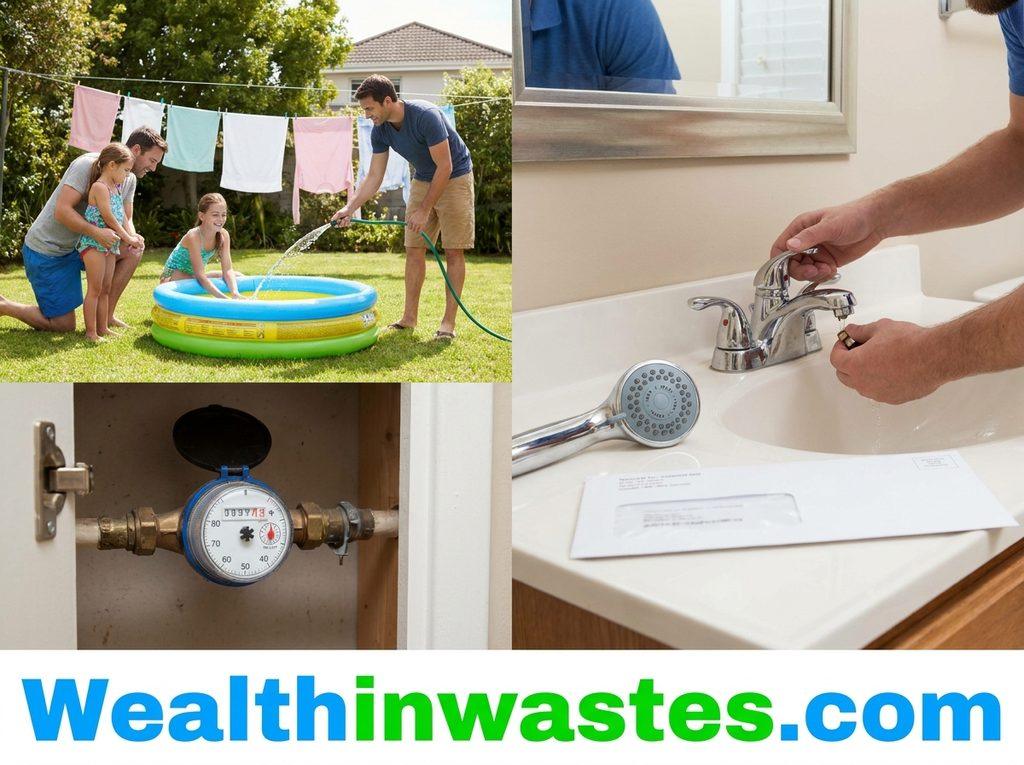
1. Set a monthly target: Use previous statements to establish an expected spending range. A realistic target can help the household notice unusual increases before they become difficult to manage.
2. Budget for seasonal changes: Some periods may require more water for cleaning, gardening, visitors, or other activities. Including these possibilities in your budget can make higher bills easier to absorb.
3. Keep emergency funds: Plumbing failures can create unexpected expenses alongside higher water charges. Maintaining a small household reserve can help cover urgent repairs and prevent prolonged water loss.
4. Compare consumption: Review your usage rather than comparing only the monetary amount. Changes in tariff rates can affect the price even when the household uses approximately the same volume.
5. Review conservation progress: After introducing water-saving habits, compare several later statements with earlier ones. Measured results can show whether repairs, shorter showers, better irrigation, or other changes are working.
6. Maintain accurate records: Store statements and payment information in an organized place. Accurate records make budgeting easier and provide useful evidence when customers need to discuss their accounts with providers.
7. Understand local policies: Water services operate under local rules and institutional arrangements. Reading about wastewater treatment standards can improve general understanding of service requirements.
8. Make informed decisions: A water bill becomes more useful when customers understand what drives each charge. Combining careful reading, consumption monitoring, conservation, and maintenance creates better household water management.
Summary on Understanding Your Water Bill and Its Impact
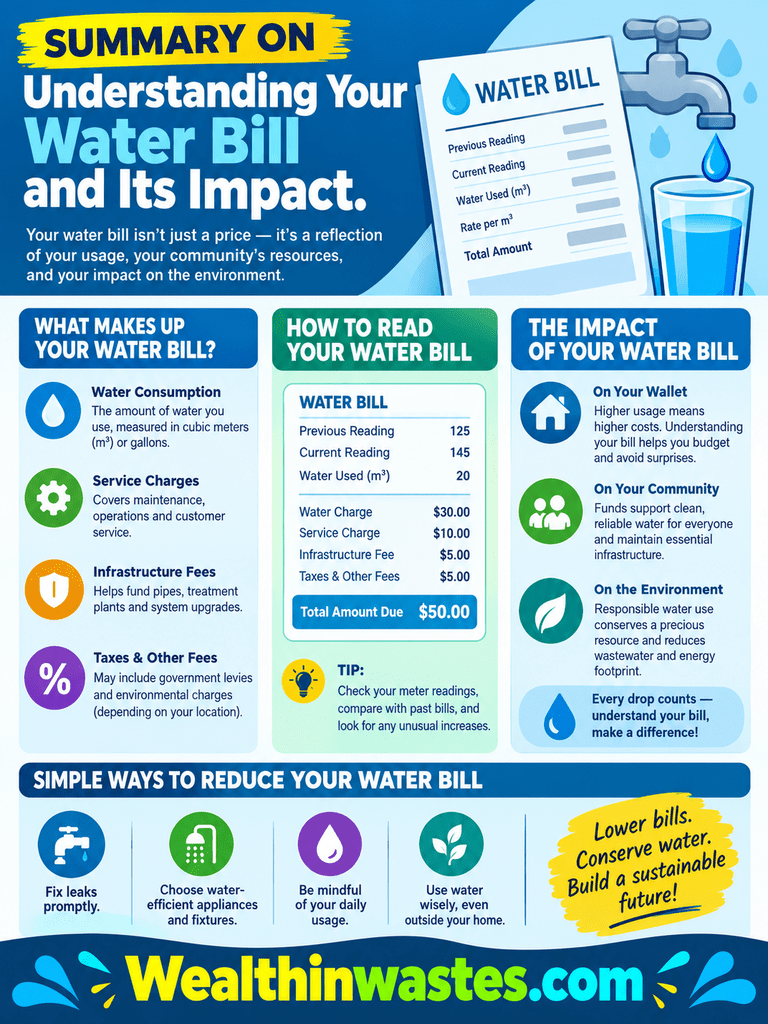
| Topic | Key Point |
|---|---|
| Water Bill | Shows charges for water services during a defined billing period. |
| Meter Reading | Helps determine the volume of water used. |
| Main Charges | May include usage, service, wastewater, infrastructure, and other approved charges. |
| Higher Bills | Can result from increased use, leaks, rate changes, adjustments, or unusual events. |
| Water Quality | Safe supply depends on source protection, treatment, monitoring, and pollution control. |
| Lower Costs | Repair leaks, monitor consumption, maintain plumbing, and use water efficiently. |
| Billing Errors | Compare readings, inspect the meter, review charges, and contact the provider. |
| Sustainability | Responsible water use protects household finances and natural water resources. |
Frequently Asked Questions About Water Bill: Understand Charges, Usage, and Your Costs
1. What is a water bill?
A water bill is a statement showing the charges associated with water services supplied to a property during a specific billing period.
2. Why did my water bill increase?
An increase can result from higher consumption, leaks, tariff changes, estimated readings, billing adjustments, or increased service charges.
3. How can I reduce my water bill?
Repair leaks, shorten showers, improve irrigation, monitor meter readings, maintain plumbing, and reduce unnecessary water use.
4. What does a water meter measure?
A water meter measures the amount of water passing through the property’s service connection during a particular period.
5. Can a leaking toilet increase my water bill?
Yes. A continuously leaking toilet can waste substantial amounts of water and increase measured consumption even when household activities remain unchanged.
6. What should I do about an unusually high water bill?
Review the statement, compare previous readings, inspect for leaks, check the meter, and contact the water provider for clarification.
7. Why can a water bill include wastewater charges?
Used water requires collection, treatment, and disposal or reuse, so some utilities charge customers for wastewater services separately.
8. Why is paying a water bill important?
Valid payments help support water supply, treatment, infrastructure maintenance, customer services, and other essential utility operations.
9. Can water bills vary between cities?
Yes. Utilities can use different tariffs, service structures, billing periods, infrastructure charges, and wastewater arrangements.
10. How often should I check my water meter?
Checking it periodically can help identify unusual consumption, possible leaks, and differences between actual use and billed readings.
Do you have any questions, suggestions, or contributions? If so, please feel free to use the comment box below to share your thoughts. We also encourage you to kindly share this information with others who might benefit from it. Since we can’t reach everyone at once, we truly appreciate your help in spreading the word. Thank you very much for your support and for sharing!
Read Also: The Garden Egg Stem: Economic Importance, Uses, and By-Products