


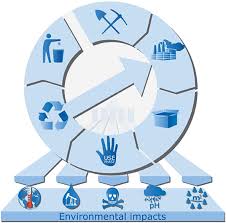
As concern has increased over the relationship between economic activity and environmental protection, organizations have developed methods for measuring how products, processes, and services affect natural systems and surrounding environmental resources.
Environmental Life Cycle Assessment offers a comprehensive way to examine those effects throughout a product system, from extracting raw materials and manufacturing through transportation, use, recycling, recovery, and final disposal stages.
Unlike an assessment that studies only one factory or operation, life cycle assessment considers connected activities and environmental flows across the entire system, helping reveal impacts transferred between different stages.
The method developed from early energy and resource studies that examined industrial material and energy requirements. Researchers later expanded those studies to address pollution, waste generation, resource depletion, climate change, and additional environmental concerns.
Today, Environmental Life Cycle Assessment supports product development, environmental management, waste decisions, purchasing, policy development, and sustainability planning by providing structured evidence about environmental burdens and potential improvement opportunities.
What Is Environmental Life Cycle Assessment?
Environmental Life Cycle Assessment is a systematic method for compiling and evaluating inputs, outputs, and potential environmental impacts associated with a product system throughout its defined life cycle.
The assessment can include raw material extraction, processing, manufacturing, transportation, distribution, product use, maintenance, reuse, recycling, recovery, treatment, and final disposal where these stages fall within the chosen system boundary.
The approach recognizes that environmental burdens can occur before a product reaches a factory and after consumers finish using it. Therefore, a narrow assessment may overlook important upstream or downstream consequences.
Understanding how waste affects the environment also supports life cycle thinking because waste represents an output that may require collection, treatment, recovery, recycling, or disposal.
A product system contains connected processes that exchange materials, energy, intermediate products, and waste. Researchers define these connections clearly so another practitioner can understand and reproduce the assessment approach.
The method therefore examines environmental performance across linked activities instead of assuming that improvements within one process automatically reduce the total burden of the complete product system.
Read Also: Environmental Cost Benefit Analysis
Evolution Of Environmental Life Cycle Assessment

Environmental Life Cycle Assessment evolved from earlier studies designed to understand industrial energy and material requirements. Researchers initially focused on resource consumption before extending analysis toward waste and pollution.
During the late 1960s and early 1970s, concerns surrounding energy use, resource availability, and environmental degradation encouraged organizations to measure industrial consumption more systematically across different production alternatives.
Some early investigations became known as energy analysis, while later studies adopted broader resource analysis approaches. Researchers increasingly considered the environmental consequences associated with material extraction, processing, production, transportation, and waste generation.
One notable early study examined alternative beverage container systems and compared their energy and natural resource requirements across complete life cycles. This approach contributed important ideas to later life cycle inventory methods.
The expansion of environmental concerns also brought pollution into the analysis, including impacts affecting air, water, and land. Related studies of waste-related environmental impacts demonstrate why broader environmental accounting became necessary.
SETAC contributed significantly to developing terminology, methodological guidance, and approaches for integrating environmental impact assessment into LCA. International standardization later improved consistency and transparency in conducting and reporting studies.
Modern LCA practice follows ISO 14040 and ISO 14044, which establish principles, framework, requirements, and guidelines for conducting life cycle assessments. Earlier standards addressed individual phases separately before consolidation.
Environmental Life Cycle Assessment Methodology
Environmental Life Cycle Assessment follows four connected phases. Researchers use these phases to define the study, collect information, evaluate potential impacts, and interpret findings according to the original purpose.
1. Goal And Scope Definition: Researchers establish the purpose, intended application, audience, functional unit, system boundary, assumptions, limitations, data requirements, and methodological choices before collecting detailed environmental information.
2. Life Cycle Inventory Analysis: Practitioners gather quantitative information about material consumption, energy requirements, water use, emissions, wastewater, products, co-products, and solid waste associated with included processes.
3. Life Cycle Impact Assessment: Inventory flows receive scientific treatment through selected impact categories. Researchers classify relevant substances and calculate their potential contributions to environmental problems such as climate change and acidification.
4. Life Cycle Interpretation: Researchers evaluate significant findings, examine completeness and consistency, consider uncertainties, test important assumptions, and communicate conclusions in a form that supports the intended environmental decision.
These phases interact rather than operate as completely separate activities. New information discovered during inventory or impact assessment can require adjustments to the original scope, assumptions, or data requirements.
The methodology can also complement broader environmental management best practices by showing where operational changes could deliver meaningful reductions in resource consumption or environmental burdens.
Goal And Scope Definition In LCA

The goal and scope phase determines exactly what the assessment will investigate. A clearly defined purpose prevents unnecessary data collection and ensures that the final findings answer the intended environmental question.
1. Intended Application: The researcher should state whether results will support product development, environmental management, purchasing, comparison, policy development, sustainability planning, environmental communication, or another clearly identified application.
2. Functional Unit: The assessment needs a measurable reference representing the function delivered by the product system. This unit allows researchers to compare alternatives that provide equivalent services or performance.
3. System Boundary: Researchers define where the study begins and ends, identifying included processes and exclusions. A cradle-to-grave boundary can include extraction, production, distribution, use, recovery, recycling, and disposal.
4. Data Requirements: The scope should identify geographical coverage, technological conditions, study period, required data quality, allocation procedures, environmental categories, assumptions, limitations, and important sources of uncertainty.
Resource limitations can influence study depth, but researchers should not remove processes that could materially affect conclusions without explaining the reason. Transparent exclusions strengthen confidence in the resulting assessment.
A carefully planned scope can also reveal whether a complete assessment is necessary. Preliminary investigations may identify dominant processes and help focus more detailed analysis where environmental burdens appear significant.
Understanding waste reduction at source can become relevant during scoping because prevention activities may reduce material consumption, waste generation, transportation requirements, treatment needs, and final disposal burdens.
The system description should remain sufficiently detailed to allow another practitioner to understand the processes included. Flow diagrams can further clarify relationships among inputs, operations, products, co-products, emissions, and wastes.
Life Cycle Inventory Analysis And Data
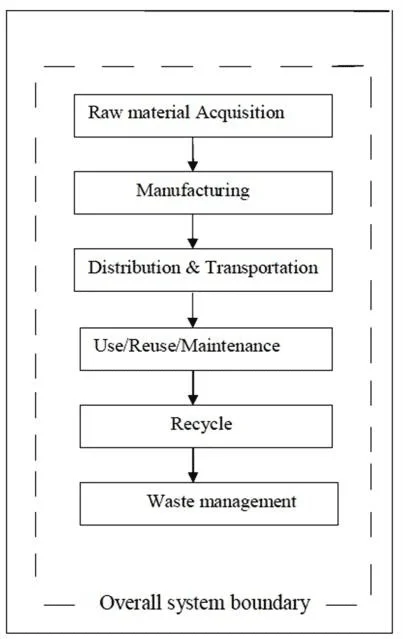
Life cycle inventory analysis gathers information about everything entering and leaving the defined product system. The inventory may include materials, fuels, electricity, water, products, emissions, wastewater, and solid wastes.
1. Data Collection: Primary data comes directly from facilities, production records, measurements, or operational observations, while secondary data comes from databases, literature, government publications, industry sources, and credible technical references.
2. Data Quality: Researchers assess accuracy, completeness, age, geographical relevance, technological relevance, measurement methods, and uncertainty. Stronger data quality generally improves confidence in inventory results and subsequent environmental interpretations.
3. Allocation: When a process produces several products or useful outputs, researchers may distribute environmental burdens among them. The selected procedure should remain consistent with the study purpose and methodological requirements.
4. Inventory Calculation: Collected information enters calculations or specialized software that combines flows from individual processes. The resulting inventory provides quantitative totals that researchers can later connect with environmental impact categories.
Agricultural systems can generate many different environmental flows, including crop residues, manure, wastewater, packaging, fertilizers, pesticides, and fuel consumption. Understanding agricultural waste sources and characteristics can strengthen inventory identification.
Industrial facilities may also produce complex wastewater and chemical releases. Information about industrial effluent impacts can help researchers identify relevant environmental flows requiring measurement or estimation.
For municipal products and services, inventory boundaries may involve many waste streams. Knowledge of municipal solid waste categories can help practitioners identify materials requiring separate collection, treatment, recovery, or disposal.
Electronic products deserve special attention because manufacturing and disposal can involve energy consumption, material requirements, and hazardous substances. Research on electronic waste management provides useful context for these product systems.
Environmental Impact Assessment In LCA
Life cycle impact assessment converts inventory information into indicators that describe potential environmental consequences. Researchers select categories according to the study purpose, product system, geographical context, and chosen assessment method.
1. Category Selection: Potential categories include climate change, acidification, eutrophication, photochemical ozone formation, resource use, toxicity, land use, and water-related impacts, depending on the assessment framework selected.
2. Classification: Inventory flows are assigned to relevant impact categories. A single substance may contribute to several categories, so researchers must consider every meaningful relationship rather than assigning each flow once.
3. Characterization: Characterization factors convert different inventory flows into common indicators. For climate change, greenhouse gases can receive factors that express their potential effect as carbon dioxide equivalents.
4.Interpretation: Researchers evaluate significant contributors, completeness, consistency, sensitivity, uncertainty, assumptions, and methodological choices before determining which environmental findings deserve the greatest attention within the study.
Weighting may assign relative importance to different impact categories, but it introduces value judgments that can influence ranking. Researchers should therefore explain weighting choices clearly rather than presenting subjective priorities as purely scientific findings.
Environmental impact assessment can complement other environmental decision tools. For example, environmental protection instruments can provide regulatory and management context for decisions influenced by LCA findings.
Life cycle results can also support assessments of waste treatment alternatives because environmental burdens may shift between collection, processing, recovery, and disposal stages. This broader perspective prevents decisions based on only one environmental indicator.
Interpreting Environmental Life Cycle Results
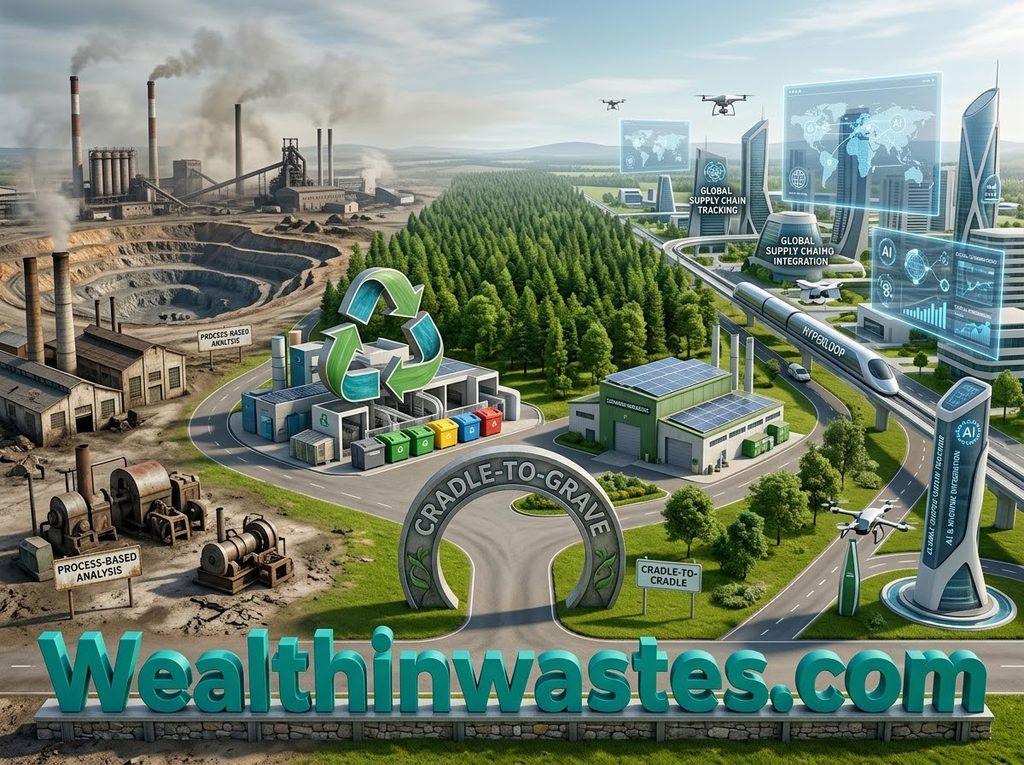
LCA interpretation brings inventory and impact assessment findings together so decision makers can understand what the results mean for the original study objective. This phase requires careful review rather than simple result presentation.
1. Identify Significant Issues: Researchers determine which processes, materials, emissions, or life cycle stages contribute most strongly to the environmental indicators assessed within the defined study boundaries.
2. Check Completeness: The study team reviews whether required information, processes, flows, and impact categories received adequate consideration. Missing information may weaken conclusions or require additional data collection.
3. Check Consistency: Researchers examine whether assumptions, data sources, system boundaries, allocation methods, and calculations remain consistent throughout the assessment and support meaningful comparison of alternatives.
4. Evaluate Uncertainty: Interpretation should acknowledge uncertain measurements, assumptions, estimation methods, technological differences, and incomplete information. Sensitivity analysis can reveal whether important conclusions change when key parameters vary.
The final report should explain the objective, scope, functional unit, system boundary, major assumptions, data sources, data quality, assessment method, limitations, significant findings, and conclusions in understandable language.
Interpretation should also prevent exaggerated environmental claims. Results represent the assumptions and methods selected for the study, so conclusions should match the evidence and avoid presenting uncertain findings as absolute environmental facts.
Read Also: Wastewater Treatment Options
Uses Of Environmental Life Cycle Assessment
Environmental Life Cycle Assessment supports organizations that need evidence for environmental improvement, product development, waste management, purchasing, policy, and sustainability decisions. Its applications can occur internally or across external stakeholder relationships.
1. Product And Process Improvement: LCA identifies stages with substantial environmental burdens, helping designers consider alternative materials, technologies, energy sources, manufacturing systems, packaging choices, and end-of-life options.
2. Waste Management Decisions: Organizations can compare prevention, reuse, recycling, recovery, treatment, and disposal options by examining environmental consequences throughout the entire system rather than focusing on one waste-management stage.
3. Environmental Management: LCA can support environmental management systems by identifying significant aspects, establishing priorities, evaluating improvement alternatives, and monitoring progress toward environmental objectives and targets.
4.Purchasing And Policy: Government agencies, businesses, and institutions can use LCA findings when developing purchasing criteria, comparing alternatives, designing environmental policies, communicating environmental performance, and encouraging more sustainable production systems.
Organizations can strengthen these applications through the waste management hierarchy, which encourages reduction, reuse, recycling, recovery, and appropriate final disposal according to environmental and operational circumstances.
Recycling decisions can receive additional support from information on proper waste recycling practices, especially when researchers identify material recovery as a potential improvement option within a product life cycle.
More detailed comparisons can draw on waste recycling advantages to understand how recovering materials may reduce virgin resource demand, energy requirements, emissions, and disposal quantities.
LCA can also inform landfill-related decisions because final disposal remains part of many product systems. Information about different landfill types helps practitioners understand the environmental characteristics of alternative disposal routes.
Researchers may compare disposal options with evidence about landfill advantages and disadvantages, especially where recycling, recovery, treatment, and disposal alternatives create different environmental burdens.
Wastewater can also form a significant life cycle flow. Information about wastewater treatment alternatives can support comparisons involving treatment energy, chemicals, emissions, sludge production, water quality, and final discharge.
Broader environmental planning can draw on practical environmental management measures when translating assessment findings into operational changes within facilities, organizations, communities, and product systems.
Waste prevention remains particularly important because avoiding material use can reduce several downstream burdens simultaneously. Practical guidance on reducing environmental waste impacts can support implementation.
Economic considerations may influence environmental decisions as well. Research on waste management and economic growth provides useful context when organizations balance environmental improvements with financial and development objectives.
Landfill emissions can also affect the interpretation of end-of-life alternatives. Evidence on landfill emissions and environmental effects can help practitioners consider emissions arising after products become waste.
Strong LCA practice therefore extends beyond calculating numbers. The method helps connect environmental information with practical actions, encouraging organizations to prevent waste, conserve resources, improve product systems, and reduce avoidable environmental burdens.
Environmental Life Cycle Assessment provides a structured framework for understanding environmental burdens across connected stages, from resource extraction and manufacturing to product use, recycling, recovery, treatment, and final disposal.
Its effectiveness depends on clearly defined objectives, appropriate functional units, transparent system boundaries, reliable inventory data, suitable impact methods, careful interpretation, and honest communication of assumptions and limitations.
When applied properly, LCA can help organizations identify improvement opportunities, compare alternatives, strengthen environmental management, support waste decisions, encourage resource efficiency, and make better-informed sustainability choices.
Environmental Life Cycle Assessment should therefore serve as a decision-support tool rather than a substitute for professional judgement, regulatory requirements, environmental monitoring, or other specialized environmental assessment methods.
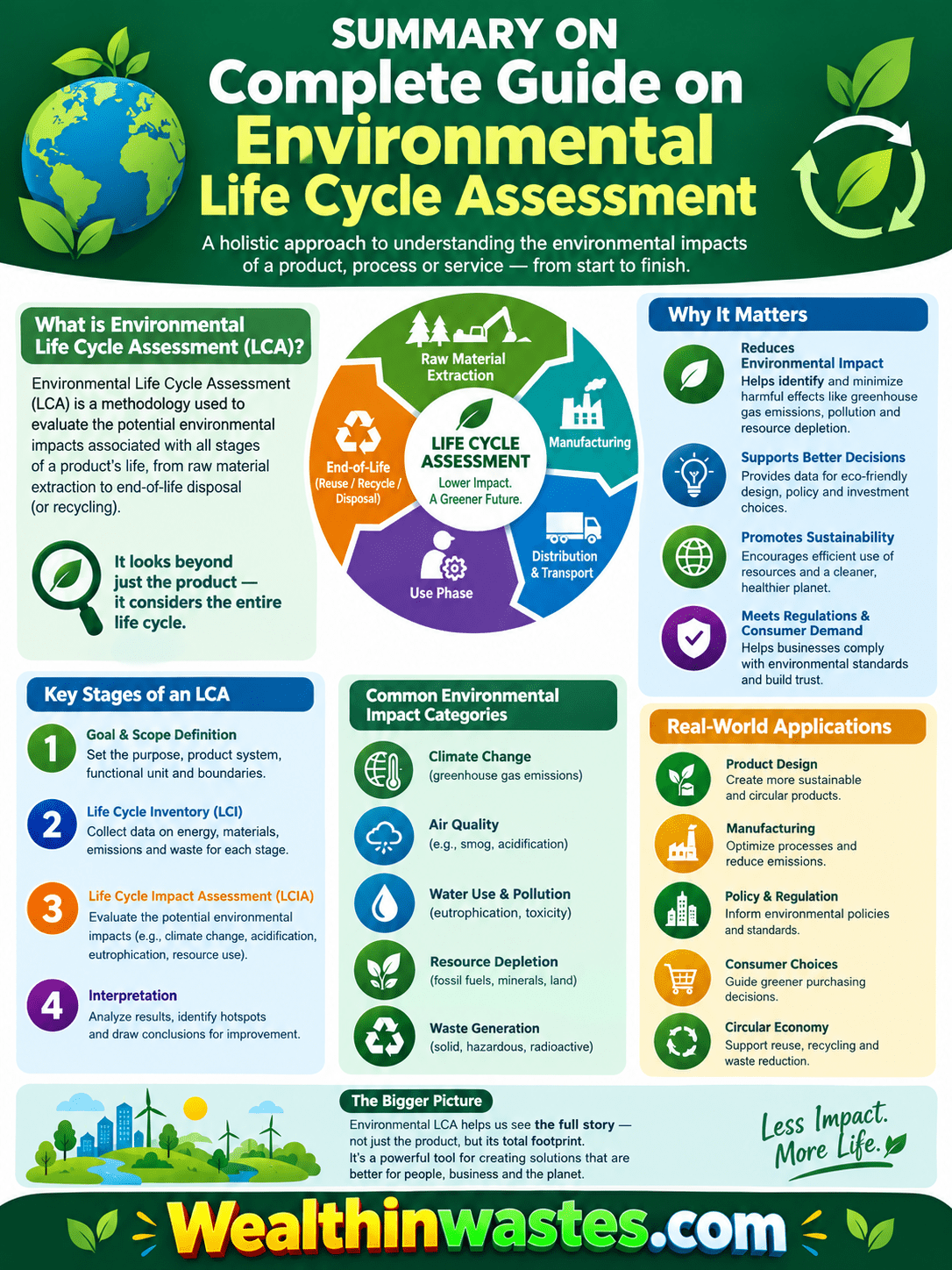
Summary on Complete Guide on Environmental Life Cycle Assessment
| Aspect | Summary |
|---|---|
| Definition | Environmental Life Cycle Assessment evaluates environmental inputs, outputs, and potential impacts throughout a defined product or service system. |
| Life Cycle Perspective | It can cover raw material extraction, processing, manufacturing, transportation, use, reuse, recycling, recovery, treatment, and disposal. |
| Main Phases | Goal and scope definition, life cycle inventory analysis, life cycle impact assessment, and life cycle interpretation. |
| Functional Unit | A measurable reference that represents the function delivered by the product system and supports fair comparison between alternatives. |
| Inventory Analysis | Collects information about materials, energy, water, products, emissions, wastewater, co-products, and wastes. |
| Impact Assessment | Classifies and evaluates inventory flows against environmental categories such as climate change, acidification, eutrophication, toxicity, and resource use. |
| Interpretation | Reviews significant findings, completeness, consistency, uncertainty, assumptions, limitations, and alignment with the original study goal. |
| Major Uses | Supports product design, environmental management, waste decisions, purchasing, policy development, resource efficiency, and sustainability planning. |
Frequently Asked Questions About Environmental Life Cycle Assessment: A Complete Guide
1. What is Environmental Life Cycle Assessment?
It is a systematic method for evaluating environmental inputs, outputs, and potential impacts associated with a product, process, or service throughout its defined life cycle.
2. What are the four main phases of LCA?
The four phases are goal and scope definition, life cycle inventory analysis, life cycle impact assessment, and life cycle interpretation.
3. What is a functional unit in LCA?
A functional unit is a measurable reference representing the function or performance delivered by a product system, allowing researchers to compare alternatives consistently.
4. Why are system boundaries important?
System boundaries determine which processes, inputs, outputs, and activities the assessment includes, helping prevent important omissions and making the study transparent.
5. What does life cycle inventory analysis measure?
It measures or estimates material, energy, water, product, emission, wastewater, and waste flows associated with the processes included within the selected system boundary.
6. Which environmental impacts can LCA evaluate?
Depending on the selected methodology, LCA can evaluate potential impacts involving climate change, acidification, eutrophication, toxicity, resource use, land use, and other environmental concerns.
7. Can LCA help improve waste management?
Yes. It can compare prevention, reuse, recycling, recovery, treatment, and disposal options by examining environmental burdens across the complete system instead of focusing on one stage.
8. What standards govern life cycle assessment?
ISO 14040 provides principles and framework requirements, while ISO 14044 provides requirements and guidelines for conducting life cycle assessments and reporting their results.
Do you have any questions, suggestions, or contributions? If so, please feel free to use the comment box below to share your thoughts. We also encourage you to kindly share this information with others who might benefit from it. Since we can’t reach everyone at once, we truly appreciate your help in spreading the word. Thank you very much for your support and for sharing!
Read Also: Measurement of Environmental Degradation in Agriculture