



Accidents are a common feature in industry, particularly in developing countries, where inadequate safety systems can expose workers to dangerous conditions and increase preventable injuries, property damage and financial losses.
Some industries, including mining, construction and manufacturing, face substantial accident risks because workers regularly operate machinery, handle hazardous substances, work at heights and perform physically demanding tasks.
Accidents can cause serious losses to workers and their families, organizations, communities and nations, making systematic prevention essential for protecting lives, maintaining productivity and reducing avoidable economic burdens.
Nigeria has legislation addressing factory safety, workplace accidents and employee compensation, including the Factories Act and the Employees’ Compensation Act, 2010, which supports compensation for employment-related injury, disease, disability or death.
Understanding accidents requires more than identifying the immediate event because unsafe acts, unsafe conditions, organizational weaknesses and environmental pressures can interact before an injury, fatality or property loss occurs.
Terms and Definitions of Accidents
The International Labour Organization describes an accident as an occurrence that gives rise to injury, ill health or fatality, while broader definitions emphasize unintended events producing injury, death or property damage.
An accident does not normally arise without contributing circumstances; unsafe actions, defective equipment, poor procedures, inadequate training and hazardous environments may combine to create conditions where an unwanted event becomes possible.
Organizations therefore need cooperation from managers, supervisors, safety professionals and workers because effective accident prevention depends on identifying hazards early and controlling risks before they produce harmful consequences.
An incident is a work-related event in which injury, ill health or fatality occurs, or an event that could reasonably have produced one of those outcomes under slightly different circumstances.
A near-miss is an incident that produces no injury, illness or fatality but creates evidence that harmful consequences could have occurred. Reporting near-misses provides valuable opportunities for preventive action.
Emergency situations represent particular incidents that demand immediate action to protect people, property or the environment. Examples include uncontrolled fires, explosions, major chemical releases and structural collapses.
Read Also: Environmental Life Cycle Assessment
Accident Classification and Severity

Accidents can be classified according to their severity, principal cause, effect and location. These classifications help organizations understand the scale of harm, recognize recurring patterns and prioritize appropriate preventive measures.
1. Minor Accidents: A minor accident causes limited harm without loss of life, although the affected person may experience temporary injury, discomfort, restricted duties or small property damage requiring attention.
2. Moderate Accidents: A moderate accident causes an identifiable injury or significant disruption without death, and may require medical treatment, temporary absence from work, equipment repair or operational interruption.
3. Major Accidents: A major accident involves severe consequences that may include permanent disability, extensive property damage or loss of life, requiring formal investigation and stronger preventive controls afterward.
4. Disasters: A disaster produces extensive loss of life, property or essential infrastructure and can overwhelm normal organizational response capacity, requiring coordinated emergency intervention from several responsible agencies.
5. Fire and Explosion Accidents: These accidents involve uncontrolled combustion, explosions or pressure releases that can cause burns, smoke exposure, structural damage, fatalities and widespread disruption when dangerous materials ignite.
6.Electrical Accidents: Electrical accidents result from contact with energized equipment, damaged wiring, faulty installations or improper electrical work and can cause electric shock, burns, fires, falls and fatal injuries.
7. Machinery and Tool Accidents: Moving machinery, defective tools and inadequate guarding can trap, cut, crush or strike workers, particularly when operators bypass safety devices or perform maintenance without proper isolation procedures.
8. Falls and Falling Objects: Workers can suffer serious injuries when they fall from heights, enter unprotected pits or are struck by materials, equipment or objects that become detached above them.
9. Location-Based Accidents: Accidents may occur on roads, in homes, factories, farms, mines, construction sites, fishing vessels, aircraft, railways and other locations where different hazards require specialized controls.
Major Causes of Accidents
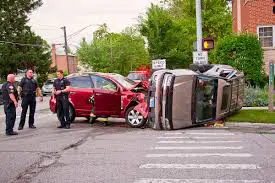
Accident causes are usually multifactorial rather than single events. Human factors and environmental factors often interact with management weaknesses, unsafe procedures, defective equipment and inadequate supervision.
1. Unsafe Acts: Unsafe acts include ignoring procedures, operating equipment incorrectly, removing protective guards, failing to use protective equipment and taking unnecessary risks during routine or emergency work.
2. Unsafe Conditions: Unsafe conditions include defective machinery, slippery surfaces, poor lighting, excessive noise, inadequate ventilation, exposed electrical systems, unsafe structures and poorly maintained workplaces.
3. Inadequate Training: Workers who lack adequate knowledge of equipment, hazards and safe operating procedures may make mistakes that increase exposure to injury, particularly when employers assign unfamiliar duties without sufficient instruction.
4. Poor Supervision: Weak supervision allows unsafe practices to continue unnoticed and may prevent managers from identifying dangerous behavior, inadequate housekeeping, defective equipment and failures to follow established safety requirements.
5. Poor Risk Management: Organizations increase accident risks when they fail to identify hazards, assess exposure, implement controls, communicate procedures and regularly review safety performance after incidents or operational changes.
6. Hazardous Materials: Chemicals, toxic substances, combustible materials and infectious wastes can cause poisoning, burns, explosions, respiratory problems and environmental harm when workers handle, store or dispose of them incorrectly.
Effective control begins with understanding how hazardous materials move through workplaces and how waste handling practices can create additional exposure pathways. Hazardous waste characteristics provide useful guidance.
Accident prevention also benefits from controlling waste accumulation because poorly managed materials can create blocked pathways, unstable piles, contaminated surfaces and other conditions that increase injury risks.
Waste minimization practices can support safer workplaces by reducing unnecessary materials, improving housekeeping and limiting avoidable handling, storage and disposal activities that expose workers to hazards.
Human Factors Behind Accidents
Human factors can influence accident occurrence through physical capability, physiological conditions, experience, fatigue and psychological states. These factors require careful management rather than simple blame after an accident.
1. Physical Capability: Workers may face increased risks when job demands exceed their physical abilities, particularly where tasks require adequate vision, hearing, strength, coordination, mobility or sustained physical performance.
2. Age and Experience: Younger workers may lack practical experience, while older workers may experience reduced physical capacity for some demanding tasks. Appropriate training and suitable work assignments can reduce exposure.
3.Fatigue and Working Hours: Long working hours, inadequate rest and poorly managed shifts can reduce attention, reaction time and judgment, increasing the likelihood of mistakes during demanding or repetitive operations.
4. Experience and Training: Inexperienced workers can struggle to recognize hazards, interpret warning signals or respond correctly during abnormal situations, making structured induction, supervised practice and refresher training essential.
5. Psychological Conditions: Carelessness, inattentiveness, overconfidence, emotional stress, poor concentration, ignorance and pressure to complete work quickly may influence decisions and increase unsafe behavior during workplace activities.
Human performance also depends on the surrounding environment. Poor air quality, harmful exposure and uncomfortable conditions can affect concentration and wellbeing, reinforcing the importance of controlling environmental hazards.
Pollutant risk assessment provides a useful framework for understanding exposure, while air quality measurement can help identify unsafe environmental conditions.
Good safety management should therefore consider workers as part of a wider system rather than treating individual mistakes as the sole explanation. Pollution and human health risks further demonstrate the importance of exposure control.
Environmental Factors and Workplace Safety

Environmental factors can create hazards even when workers follow established procedures. Temperature, humidity, lighting, noise, ventilation, machinery condition and natural events may all contribute to accident occurrence.
1. Poor Illumination: Inadequate lighting can make hazards difficult to see, increase errors and reduce workers’ ability to recognize warning signs, moving equipment, obstacles, spills and unsafe conditions.
2. Excessive Noise: High noise levels can interfere with communication, warning signals and concentration while prolonged exposure may create health problems that further affect workplace performance and safety.
3. Temperature and Humidity: Excessive heat, cold and humidity can create discomfort, fatigue and reduced work performance while also affecting equipment operation, material stability and workers’ ability to make sound decisions.
4. Mechanical Failure: Failure of machines, vehicles, lifting equipment or protective systems can cause sudden and severe accidents, especially when inspection, maintenance and replacement schedules are inadequate or ignored.
5. Hazardous Workplace Conditions: Poor housekeeping, blocked exits, unstable storage, exposed machinery, unsafe electrical systems and contaminated surfaces can create preventable hazards throughout industrial and commercial working environments.
6. Natural Hazards: Floods, storms, strong winds, lightning and other natural events may damage infrastructure, interrupt operations and expose workers to dangerous conditions that require emergency preparedness and resilient planning.
Poor waste management can also create environmental hazards through obstructed drains, unstable waste piles, contaminated areas and unsafe handling points. Environmental and health effects of wastes show why these risks deserve attention.
Organizations can reduce these risks by improving waste storage, collection and disposal systems. Solid waste management objectives include protecting human health and reducing environmental impacts.
Industrial facilities should also control hazardous materials throughout their operations because poor disposal practices can expose employees and surrounding communities. Industrial waste management guidance supports safer handling and environmental protection.
Costs of Industrial Accidents
Industrial accidents impose financial, social and human costs that extend beyond immediate medical treatment. The total burden can affect injured workers, families, employers, communities and national economies.
1.Costs to Workers: Workers may face treatment expenses, disability, reduced earning capacity, prolonged illness, permanent impairment and psychological stress following serious accidents or occupational injuries.
2. Costs to Families: Families may lose income when an injured worker cannot continue employment, while relatives may experience additional responsibilities, caregiving expenses, emotional distress and disruption to household stability.
3. Direct Organizational Costs: Employers may pay medical expenses, rehabilitation costs, compensation, legal fees, regulatory penalties, equipment replacement expenses and other immediate costs resulting directly from an accident.
4. Indirect Organizational Costs: Organizations can lose productivity through absenteeism, investigations, retraining, disrupted schedules, damaged equipment, reduced employee morale, recruitment needs and delays in returning operations to normal.
5. Reputation and Stakeholder Costs: Repeated accidents can damage public confidence, strain relationships with employees and surrounding communities, increase union tensions and create negative perceptions about organizational safety standards.
6. Community and National Costs: Serious accidents can reduce available skilled manpower, increase pressure on hospitals and emergency services, interrupt production and create economic losses that extend beyond individual organizations.
Environmental damage can increase accident-related costs when incidents release pollutants or hazardous materials. Economic losses from pollution demonstrate how environmental impacts can create wider financial consequences.
Improper industrial waste management may also increase cleanup obligations and expose businesses to environmental liabilities. Industrial waste management practices can help organizations control these avoidable risks.
Organizations can reduce long-term costs by treating prevention as an investment rather than an expense. Proper waste control supports cleaner workplaces while reducing hazards associated with poor material management.
Accident Prevention Principles
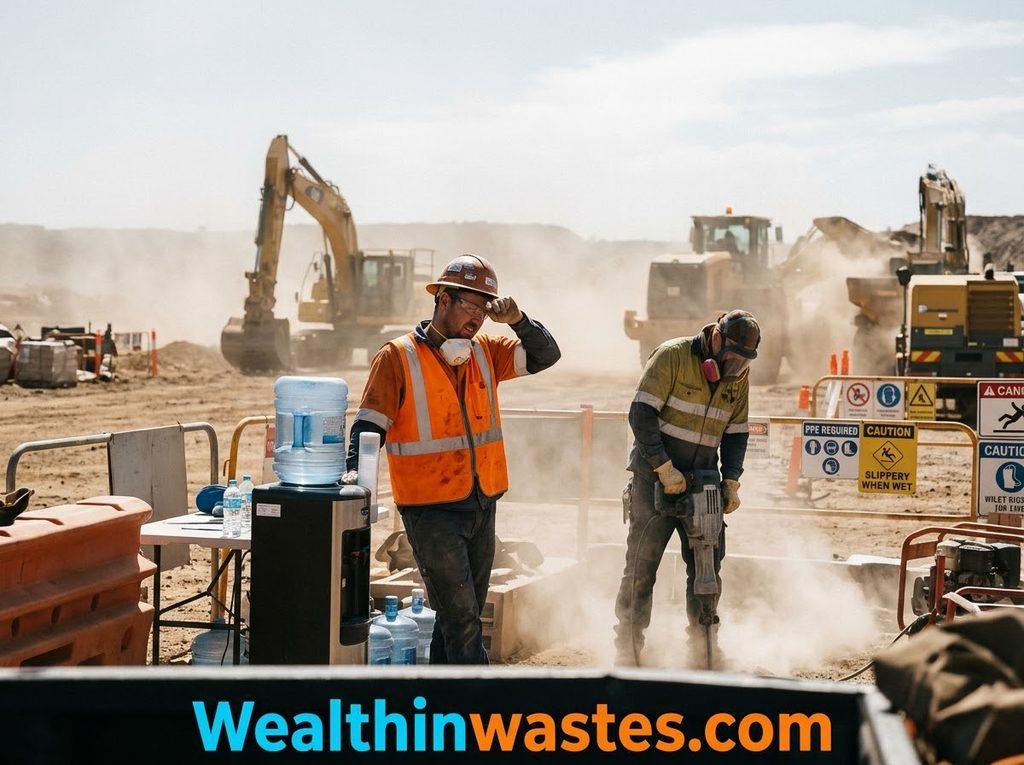
Accident prevention requires a structured safety program that identifies hazards before workers experience harm. Prevention should involve management commitment, employee participation, training, inspections, maintenance and continuous improvement.
1. Pre-Placement Assessment: Employers should assess whether prospective workers can safely perform assigned duties and identify relevant physical, technical and occupational requirements before placing employees in hazardous positions.
2. Job Training: Workers should receive clear instruction about hazards, equipment, procedures, emergency actions and protective measures before beginning duties, followed by practical supervision until they demonstrate competence.
3. Continuing Education: Refresher training keeps workers familiar with changing hazards, revised procedures, new equipment, emergency arrangements and lessons learned from previous incidents and near-misses.
4. Safe Working Environment: Employers should maintain clean, orderly and adequately ventilated workplaces while providing suitable lighting, machine guarding, safe electrical systems, emergency exits and appropriate personal protective equipment.
5. Safety Department: A competent safety professional or department should coordinate inspections, risk assessments, training, incident investigations and corrective actions while promoting safety responsibilities across every organizational level.
6. Risk Assessment: Regular surveys should identify hazards, evaluate exposure, determine suitable controls and review whether existing measures remain effective when work processes, equipment, materials or conditions change.
Waste-related risks also require preventive planning because effective segregation, collection and treatment can reduce exposure to hazardous materials. Waste management hierarchy principles provide a useful prevention framework.
Organizations can strengthen prevention by combining waste reduction with recovery and safe disposal. Alternative waste treatment technologies can reduce certain environmental and operational risks when appropriately selected.
Clear procedures should extend to wastewater because unsafe wastewater handling can expose workers to biological, chemical and physical hazards. Industrial wastewater treatment processes help control hazardous industrial effluent.
Read Also: Water and Wastewater Management Complete Guide
Accident Reporting and Safety Management
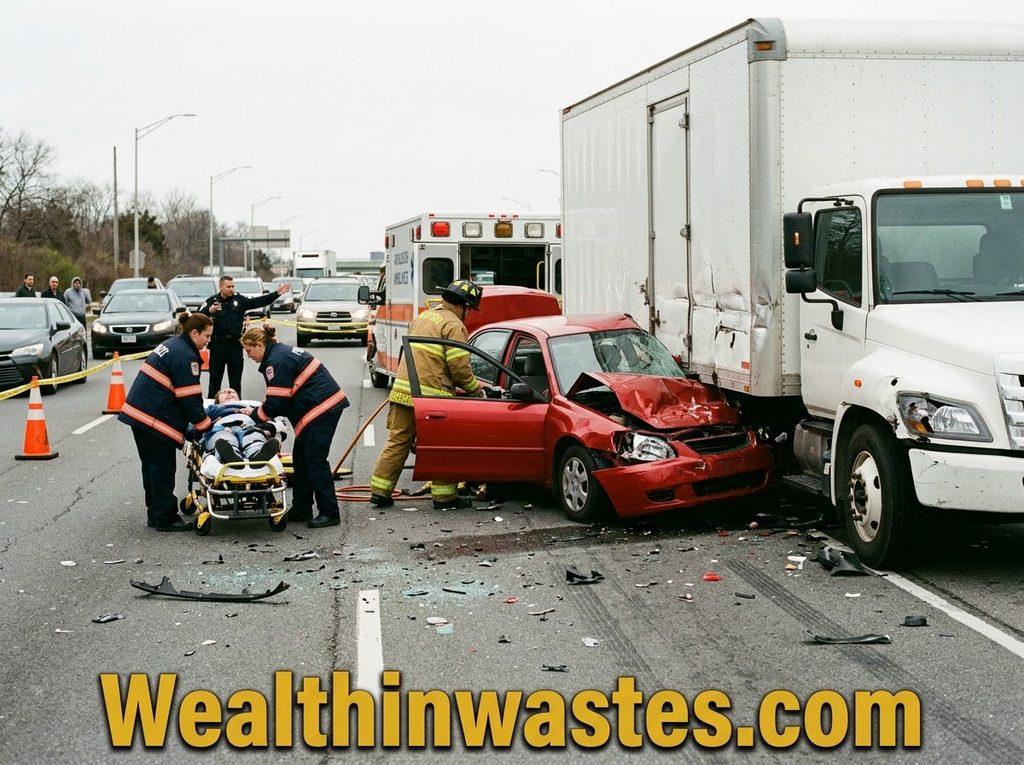
Accident reporting helps organizations understand what happened, identify contributing factors and prevent recurrence. Every significant event should receive timely attention, accurate documentation and appropriate corrective action.
Records should capture the location, time, people involved, immediate causes, environmental conditions, equipment status, injuries, property damage and actions taken after the accident or dangerous occurrence.
Organizations should investigate accidents without focusing only on individual blame because deeper causes may involve inadequate procedures, maintenance failures, training weaknesses, poor supervision, defective equipment or management decisions.
Near-misses deserve similar attention because they reveal hazards before serious consequences occur. Reporting them encourages preventive action and allows safety teams to correct unsafe conditions before another event causes injury.
Regular reviews should examine accident trends, recurring causes, work locations, affected activities and corrective-action performance. Management can then direct resources toward the highest-risk areas and measure whether prevention efforts work.
Effective waste management processes illustrate the importance of organized systems, clear responsibilities and controlled movement of materials throughout an operation.
Organizations should also understand that waste-related emergencies can affect roads, drains, treatment systems and communities. Solid waste management guidance supports safer collection, handling and disposal arrangements.
Where wastewater systems form part of industrial operations, emergency plans should address leaks, overflow, chemical exposure and equipment failure. Water and wastewater management is therefore relevant to broader workplace risk control.
Practical procedures should also account for disposal technologies, because poorly selected treatment methods can introduce new hazards. Proper waste disposal methods can support safer environmental management.
In conclusion, accidents can affect workers, families, organizations and nations through injuries, fatalities, property damage, disrupted production, medical expenses and wider economic losses, making prevention a shared responsibility.
Although accidents may involve complex combinations of human and environmental factors, organizations can reduce their frequency and severity through hazard identification, training, supervision, maintenance, reporting and effective safety management.
Accident classification helps explain differences in severity, while cause analysis reveals unsafe acts, unsafe conditions, human limitations, environmental hazards, mechanical failures and natural events that can contribute to harmful incidents.
Accident prevention should remain a continuous process involving workers, supervisors, management and safety professionals, because safer workplaces depend on shared responsibility, consistent procedures and prompt correction of identified hazards.
Summary on Classification, Causes and Costs of Accidents
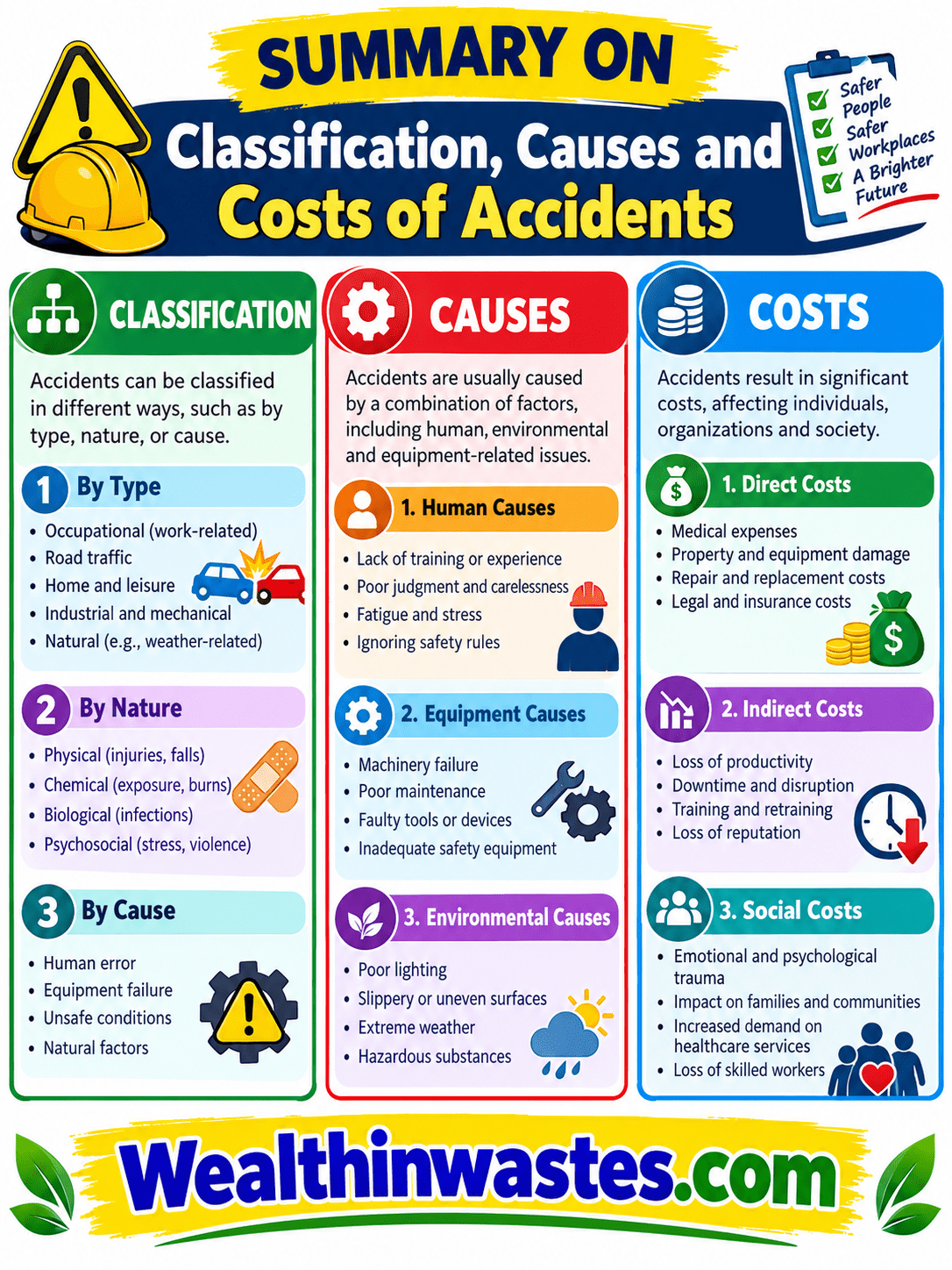
| Area | Summary |
|---|---|
| Meaning | Accidents are unintended events that may cause injury, ill health, death or property damage. |
| Classification | Accidents may be minor, moderate, major or disastrous and can also be classified by cause and location. |
| Main Causes | Unsafe acts, unsafe conditions, inadequate training, poor supervision, equipment failure and environmental hazards contribute to accidents. |
| Human Factors | Physical capability, age, experience, fatigue, working hours and psychological conditions can affect accident risks. |
| Environmental Factors | Noise, poor lighting, temperature, humidity, mechanical failure, hazardous conditions and natural disasters can contribute to accidents. |
| Costs | Accidents create medical, compensation, productivity, legal, family, community and national economic costs. |
| Prevention | Training, risk assessment, safe workplaces, competent supervision, maintenance, reporting and continuous education strengthen accident prevention. |
Frequently Asked Questions About Accidents: Classification, Causes and Costs
1. What is an accident?
An accident is an unintended event that may cause injury, ill health, death or property damage during work, transportation, domestic activities or other situations.
2. What are the main classifications of accidents?
Accidents can be classified by severity as minor, moderate, major or disaster and by cause or location, including electrical, industrial, domestic, road and natural events.
3. What are the major causes of accidents?
Major causes include unsafe acts, unsafe conditions, inadequate training, poor supervision, mechanical failures, fatigue, hazardous materials and environmental hazards.
4. What are human factors in accidents?
Human factors include physical capability, age, experience, fatigue, working hours, inattentiveness, overconfidence, emotional stress, inadequate knowledge and other conditions affecting safe performance.
5. What are the costs of industrial accidents?
Industrial accidents can create medical, rehabilitation, compensation, legal, equipment, productivity, family, community and national costs, while also damaging organizational reputation.
6. How can accidents be prevented?
Accidents can be reduced through risk assessment, employee training, continuing education, safe working environments, competent supervision, equipment maintenance, emergency planning and accurate accident reporting.
7. Why should near-misses be reported?
Near-miss reports reveal hazardous conditions before serious injury or property damage occurs, giving organizations an opportunity to correct weaknesses before another incident produces greater consequences.
Do you have any questions, suggestions, or contributions? If so, please feel free to use the comment box below to share your thoughts. We also encourage you to kindly share this information with others who might benefit from it. Since we can’t reach everyone at once, we truly appreciate your help in spreading the word. Thank you very much for your support and for sharing!
Read Also: A Guide to Farm Workshop Safety Practices