


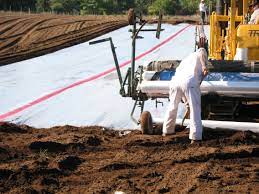
Fumigation involves the use of poisonous gases or substances that release gases to control pests within a defined area. It provides effective access to hiding places that ordinary pesticide treatments cannot easily reach.
Fumigants work as gases that enter target organisms through respiratory systems or body surfaces. Their gaseous nature allows them to move into spaces that sprays, dusts, and conventional treatments may leave untreated.
In agricultural production, soil fumigation focuses specifically on pests living within soil, where nematodes, fungi, bacteria, insects, and weeds can interfere with roots, seedlings, plant development, and crop productivity.
Because fumigants can affect multiple organisms, their use requires careful planning, appropriate product selection, and strict attention to product labels, environmental conditions, worker protection, and applicable pesticide regulations.
Understanding soil fumigation therefore helps farmers recognize its purpose, benefits, limitations, suitable applications, environmental considerations, and relationship with other responsible crop protection practices.
What Soil Fumigation Means
Soil fumigation involves applying a pesticide to soil so that it forms a gas capable of moving through soil spaces and controlling pests that can damage crops or disrupt plant growth.
The treatment targets organisms beneath the soil surface, making it especially useful where pests remain protected from ordinary contact treatments. This approach can reach several organisms occupying different soil layers simultaneously.
Soil fumigation can provide broad pest suppression because a suitable fumigant may control several pest groups at once. This characteristic distinguishes fumigants from pesticides designed for narrowly defined targets.
Fumigation differs from ordinary soil pesticide application because the active material must generate or release a gas that spreads through soil spaces. Successful treatment therefore depends strongly on soil conditions and containment.
Soil texture, moisture, organic matter, temperature, structure, and permeability can influence how pesticides move through soil. Understanding these characteristics helps reduce ineffective treatment and unwanted environmental movement.
Farmers should also understand the relationship between pesticide behaviour and soil conditions because soil properties affecting pesticide mobility can influence treatment performance and environmental exposure.
Properly planned soil fumigation forms part of a wider crop protection strategy. It should complement sanitation, resistant varieties, crop rotation, biological methods, monitoring, and other suitable integrated pest management measures.
Types of Fumigation
1. Space Fumigation: Space fumigation treats enclosed areas containing infested materials or pest populations. Examples include storage buildings, grain facilities, vehicles, rodent burrows, tarpaulins, and other enclosed agricultural spaces.
2. Soil Fumigation: Soil fumigation treats soil containing organisms capable of damaging crops. The pesticide forms a gas within the soil and targets pests before planting or during approved production situations.
3. Empty Building Fumigation: Empty building fumigation targets residual pests hiding within cracks, openings, equipment areas, and other inaccessible locations after stored commodities or materials have been removed.
4. Grain Storage Fumigation: Grain storage fumigation protects stored agricultural commodities from insect infestations that may develop within bins, warehouses, containers, and tightly packed products during storage periods.
5. Rodent Burrow Fumigation: Rodent burrow fumigation introduces a suitable fumigant into underground pest shelters. This approach targets animals inside protected burrows where surface applications may provide limited control.
6. Tarpaulin Fumigation: Tarpaulin fumigation covers commodities or treated areas with suitable materials that help contain fumigant gases. This method can improve exposure within the enclosed treatment space.
7.Vehicle Fumigation: Vehicle fumigation treats enclosed transport spaces that may harbour insects or other pests. It requires careful isolation and controlled procedures because fumigant gases can pose serious exposure hazards.
Importance of Soil Fumigation
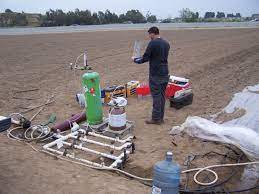
1. Nematode Control: Soil fumigation can suppress plant-parasitic nematodes that attack roots, interfere with nutrient absorption, weaken plants, and contribute to poor growth, reduced yields, and declining crop performance.
2. Fungal Disease Management: Certain soilborne fungi can remain in production fields and attack roots, stems, seedlings, or emerging plants. Appropriate fumigation can reduce disease pressure where approved and justified.
3. Bacterial Pest Suppression: Some soilborne bacterial organisms can contribute to serious crop diseases. Fumigation may reduce populations in suitable production systems when other management approaches cannot provide adequate control alone.
4. Weed Seed Reduction: Certain fumigation programs suppress weed seeds and seedlings located within treated soil. Lower weed pressure can reduce early competition for water, nutrients, sunlight, and growing space.
5. Insect Management: Soil-dwelling insects can damage roots, seeds, seedlings, and underground plant tissues. Fumigation can reduce selected insect populations and protect vulnerable crops during their early development stages.
6. Improved Crop Establishment: Reducing damaging soilborne organisms before planting can create more favourable conditions for seeds and transplants. Stronger establishment may support healthier root development and improved crop uniformity.
7. Protection of High-Value Crops: Growers often consider soil fumigation for high-value crops where soilborne pests threaten substantial economic returns. Its use requires careful assessment of expected benefits, costs, risks, and alternatives.
The relationship between pesticide movement and environmental safety makes pesticide movement through soil an important consideration whenever fumigants or other agricultural chemicals enter the soil environment.
Read Also: Management Practices Affecting the Mobility of Pesticides in Soil
Common Soil Fumigant Types
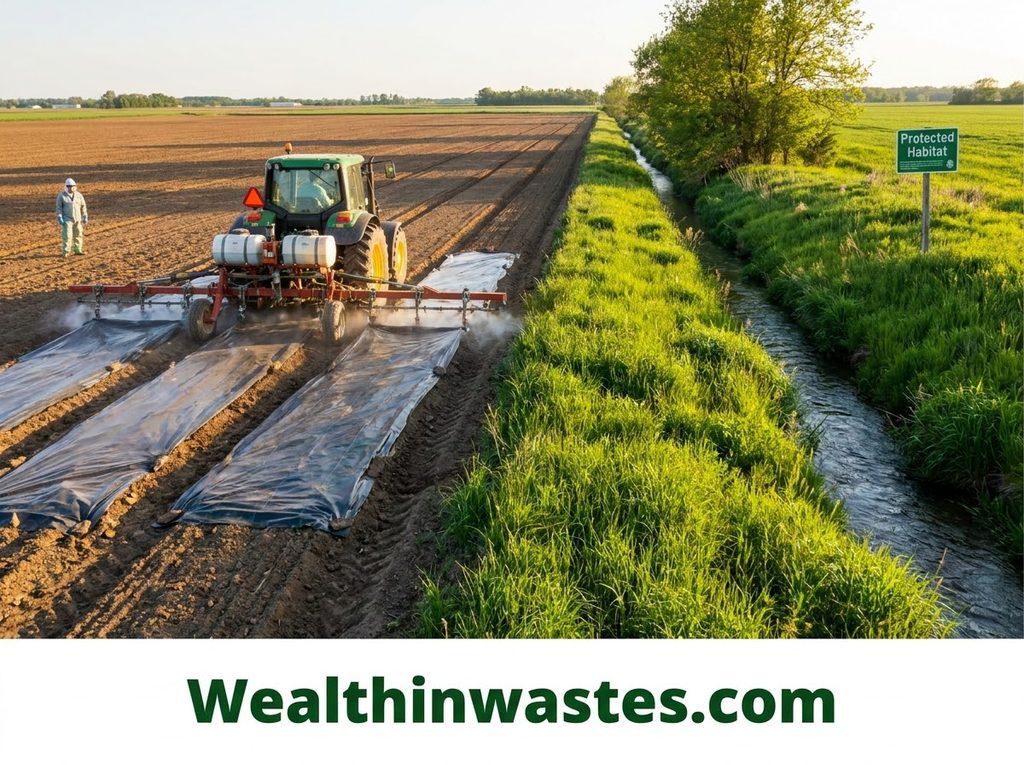
1. Chloropicrin: Chloropicrin is a soil fumigant used in certain agricultural systems against soilborne pests, including fungi and nematodes. Its application requires strict adherence to approved labels and safety requirements.
2. Dazomet: Dazomet is a granular soil fumigant that breaks down in suitable conditions and releases fumigant compounds. It has applications for suppressing selected soilborne fungi, nematodes, insects, and weeds.
3. Metam Sodium: Metam sodium is a soil fumigant that produces methyl isothiocyanate under appropriate conditions. It can provide broad suppression of several soilborne pest groups when used according to authorized directions.
4. Metam Potassium: Metam potassium belongs to the same fumigant group as metam sodium and can provide broad soil pest suppression. Its permitted uses and requirements depend on product registration.
5. Methyl Bromide: Methyl bromide has historically provided broad-spectrum fumigation, but its use has faced major international restrictions because of environmental concerns, with limited applications remaining under specific regulatory provisions.
6. 1,3-Dichloropropene: 1,3-Dichloropropene is used primarily for controlling plant-parasitic nematodes. Some formulations combine it with other active ingredients to broaden pest management across suitable agricultural situations.
7. Dimethyl Disulfide: Dimethyl disulfide is another soil fumigant used in approved agricultural applications. Its selection depends on target pests, crop systems, product registration, environmental conditions, and the required protective measures.
The choice of a fumigant should never depend only on the pest name.Growers should evaluate soil conditions, crop sensitivity, product registration, application restrictions, environmental risks, and available nonchemical alternatives.
Factors controlling pesticide persistence also matter because pesticide degradation in soils affects how long chemical activity may remain within treated soil and how environmental exposure can change over time.
Where Soil Fumigation Is Used
1. Field Crops: Some high-value field crops receive soil fumigation where serious soilborne pests threaten production. Farmers should base decisions on verified pest pressure, crop requirements, economic value, and approved uses.
2. Vegetable Production: Commercial vegetable production can use soil fumigation in selected systems where nematodes, fungi, weeds, or other soilborne pests repeatedly affect crop establishment and yield.
3. Nurseries: Nursery soils can harbour pests that attack seedlings and young plants. Properly selected fumigation programs may reduce pest pressure and create cleaner starting conditions for nursery production.
4. Greenhouses: Greenhouse soils can develop repeated pest problems because intensive production often uses the same growing area continuously. Soil fumigation may form part of an approved sanitation strategy.
5. Seed Beds: Seed and transplant beds need healthy soil because seedlings remain particularly vulnerable to damping-off organisms, nematodes, insects, and competing weeds. Fumigation may help reduce selected threats.
6. Transplant Production: Transplant systems require careful protection because young roots can suffer rapid damage from soilborne pests. Treatment decisions should consider crop sensitivity, pest identification, and alternative control opportunities.
7. Intensive Cropping Systems: Repeated crop production can increase populations of persistent soilborne pests. Fumigation may provide valuable suppression where crop rotation, sanitation, resistant varieties, and other measures cannot adequately reduce pest pressure.
Site conditions should receive particular attention because groundwater, weather, and hydrogeologic conditions can influence how pesticides move after application and increase environmental concerns under unsuitable circumstances.
The physical characteristics of the treated soil also matter because soil properties and chemistry influence water movement, adsorption, microbial activity, and the behaviour of chemical substances introduced into agricultural soils.
Soil Fumigation Benefits and Limits
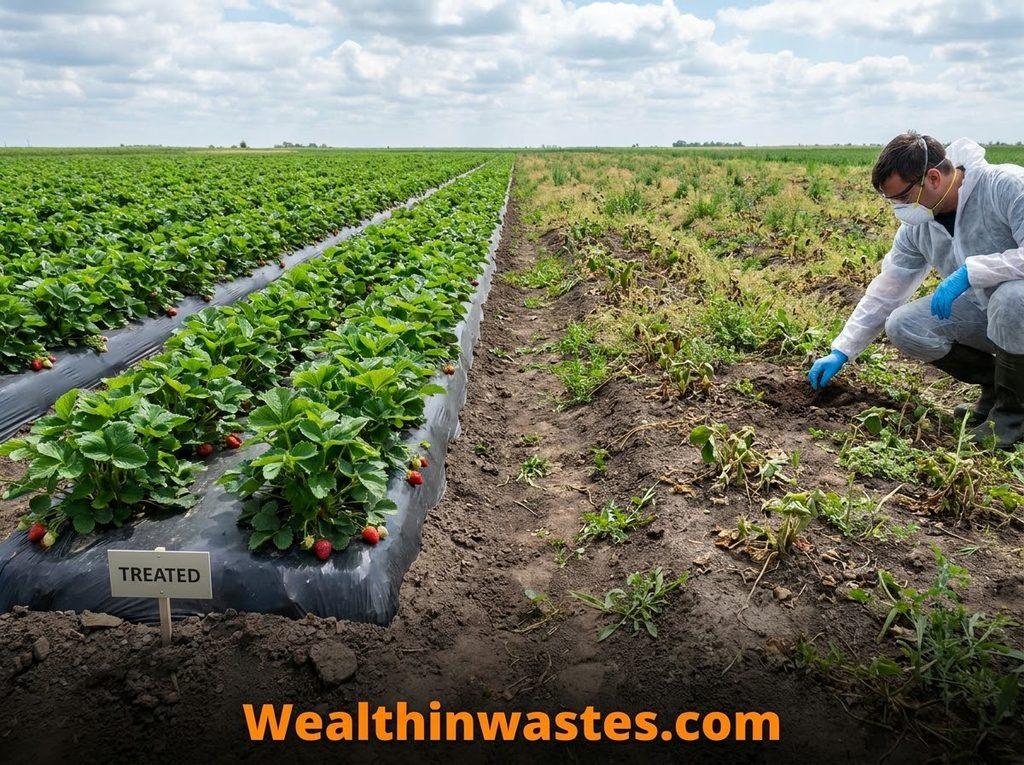
One major benefit of soil fumigation is broad pest suppression. A suitable fumigant can affect several damaging pest groups, making it useful where multiple soilborne problems occur together.
Fumigation can also improve crop establishment by reducing damaging organisms before sensitive seedlings or transplants encounter high pest populations. This advantage becomes important in intensive production systems.
Another benefit involves difficult-to-reach pests. Because fumigants move as gases through soil spaces, they can reach organisms hidden below the surface more effectively than many conventional contact treatments.
However, fumigation also has limitations. Broad-spectrum action may affect beneficial organisms alongside harmful pests, potentially disturbing biological processes that contribute to healthy and productive soils.
Soil fumigation can also involve significant costs for products, labour, equipment, preparation, monitoring, protective measures, and compliance. Farmers should compare these expenses with the expected economic value of pest suppression.
Environmental risk represents another limitation because pesticide movement can result in unwanted exposure. Information on pesticide transport in surface waters highlights why runoff and off-site movement deserve serious attention.
Fumigation should therefore remain a targeted management decision rather than a routine response to every pest problem.Accurate diagnosis, monitoring, economic analysis, and integrated approaches help determine whether treatment is justified.
Broader soil management also matters because sustainable soil resource management can strengthen long-term productivity and reduce excessive reliance on chemical inputs across farming systems.
Safe Soil Fumigation Practices
1. Confirm the Pest: Farmers should identify the actual pest or disease problem before considering fumigation. Unnecessary chemical treatment increases cost and exposure while failing to address the underlying production problem.
2. Read the Label: Product labels provide essential information about approved uses, protective requirements, restrictions, handling procedures, and environmental precautions. Users should never rely on memory when working with fumigants.
3. Use Qualified Personnel: Fumigation should involve properly trained and authorized personnel who understand the product, equipment, emergency procedures, exposure risks, and legal requirements governing the selected fumigant.
4. Protect Workers: Workers require appropriate protection based on the specific product and exposure conditions. Exclusion zones, warning signs, protective equipment, training, communication, and emergency planning can reduce exposure risks significantly.
5. Consider Weather: Weather conditions can influence fumigant movement and exposure. Users should follow product instructions concerning temperature, wind, rainfall, and other environmental factors before treatment begins.
6. Protect Neighbours: Fumigant gases can move beyond treated soil under unsuitable circumstances. Buffer requirements, restricted access, community notification, and other precautions can reduce risks to nearby people, workers, and sensitive areas.
7. Prepare for Emergencies: Every fumigation program should include procedures for unexpected exposure, equipment failure, spills, escapes, or other emergencies. Emergency contacts and response arrangements should remain accessible throughout the operation.
Responsible pesticide management also involves reducing unnecessary waste. Farmers can learn more from proper pesticide waste reduction practices that help protect soil, water resources, and people after agricultural chemical use.
Likewise, dilute pesticide waste disposal methods should follow applicable regulations and product guidance because careless disposal can contaminate soil, groundwater, surface water, wildlife habitats, and agricultural land.
Read Also: Site Conditions Affecting the Mobility of Pesticides in Soil
Soil Fumigation and Environmental Protection
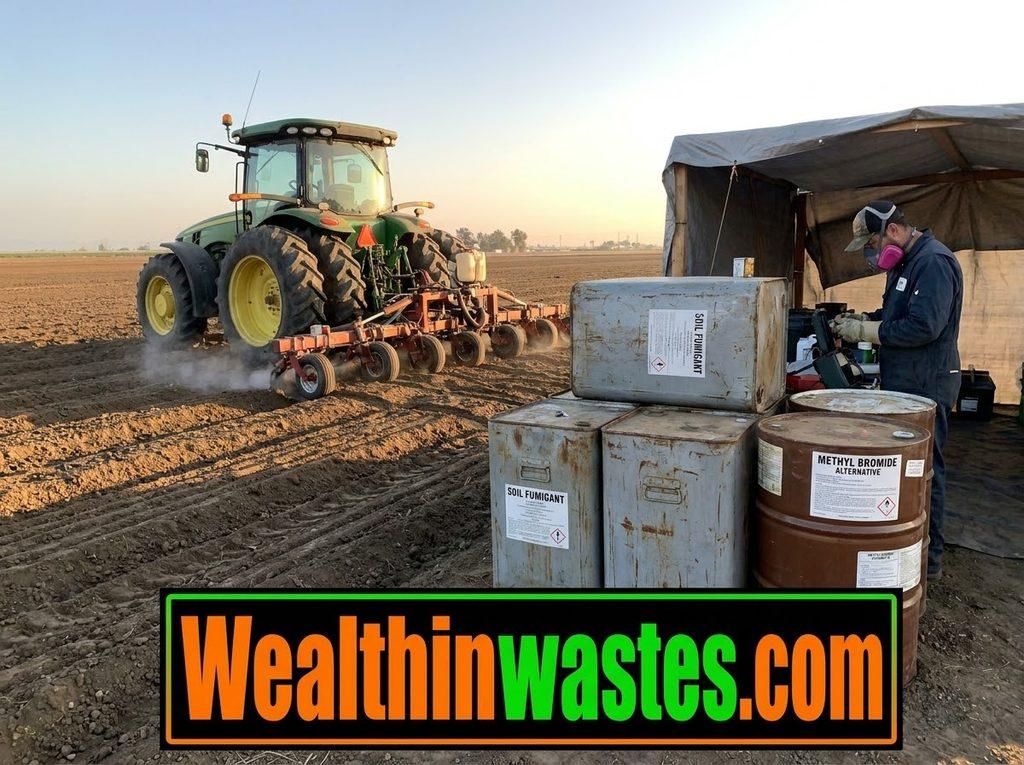
Soil fumigation can affect more than the intended pest population because fumigants and their breakdown products may interact with soil organisms, plants, air, water, and surrounding ecosystems.
The potential effects depend on the chemical involved, application conditions, soil characteristics, weather, persistence, mobility, and the quality of risk management surrounding the treatment.
Soil organisms deserve particular consideration because microorganisms contribute to decomposition, nutrient cycling, soil structure, and other processes essential for productive agricultural systems.
Farmers should therefore understand that chemical pest control can influence soil biological activity. Information about hazardous substances and soil health demonstrates why chemical releases require careful environmental management.
Groundwater protection also matters, especially where soils are permeable or groundwater lies relatively close to the surface. Chemical movement can become more difficult to control under such conditions.
Broader agricultural contamination concerns also justify caution because agricultural chemical wastes can contribute to environmental hazards when containers, residues, and related materials receive poor management.
Long-term soil stewardship should combine pest control with conservation practices. Soil conservation and management can help maintain productive soils while reducing unnecessary environmental degradation.
Where contamination occurs, responsible management becomes essential. Existing guidance on controlling specific pollutants emphasizes prevention, containment, remediation, and integrated approaches that reduce pollution at its source.
Water protection should remain part of every agricultural chemical decision because water quality management principles favour preventing contamination rather than depending entirely on expensive cleanup after pollutants have already spread.
Pesticides can also contribute to water pollution when they move from treated farmland. Understanding agricultural sources of water pollution helps farmers recognize why proper application and containment matter.
The wider consequences of chemical pollution should not be overlooked because water pollution effects can extend beyond farmland and affect aquatic organisms, ecosystems, livestock, communities, and economic activities.
Persistent contaminants can also contribute to soil and land pollution, particularly where repeated chemical inputs combine with weak waste management, unsuitable disposal, or poor environmental controls.
Heavy chemical contamination creates additional concerns because soil contamination from agricultural inputs can affect soil functions, groundwater quality, crop production, and the long-term value of agricultural land.
Pesticide movement may also depend on adsorption, leaching, runoff, and degradation. Farmers can explore site conditions affecting pesticide mobility to better understand these environmental pathways.
Environmental responsibility also requires appropriate pesticide storage and container management. Proper pesticide container disposal reduces the chance of residual chemicals entering soil, surface water, groundwater, or food systems.
Finally, growers should consider integrated pest management because pollution prevention approaches can reduce unnecessary chemical dependence while supporting crop protection, resource conservation, and healthier agricultural environments.
For farmers interested in broader crop protection, Safe Handling of Pesticides in Agriculture provides useful guidance on responsible pesticide handling, storage, protective practices, application, and environmental precautions.
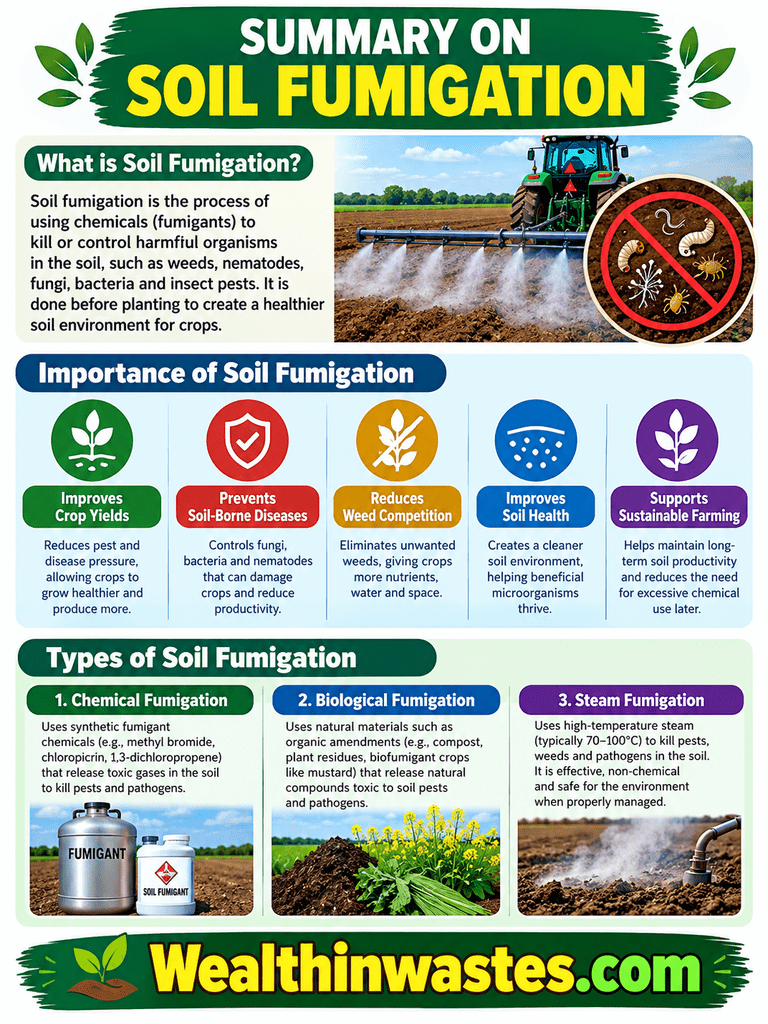
Summary on Soil Fumigation, Importance and Types of Fumigation
| Aspect | Summary |
|---|---|
| Meaning | Soil fumigation applies pesticides that form gases within soil to suppress damaging soilborne pests. |
| Main Target Pests | Nematodes, fungi, bacteria, insects, weeds, and other selected soil-dwelling organisms. |
| Major Uses | Fields, nurseries, greenhouses, seed beds, transplant beds, and selected intensive production systems. |
| Key Benefits | Broad pest suppression, improved crop establishment, protection of high-value crops, and better management of difficult soilborne pests. |
| Major Limitations | High toxicity, potential effects on beneficial organisms, environmental risks, cost, and strict regulatory requirements. |
| Safety Priorities | Correct pest identification, label compliance, trained personnel, protective measures, environmental assessment, and emergency planning. |
| Environmental Concern | Improper use can contribute to chemical movement, air exposure, groundwater contamination, and broader ecosystem impacts. |
| Best Approach | Use fumigation only when justified and integrate it with monitoring, sanitation, crop rotation, resistant varieties, and other pest management options. |
Frequently Asked Questions About Soil Fumigation: Importance, Types, Benefits and Uses
1. What is soil fumigation?
Soil fumigation is a pest management practice that uses pesticides capable of forming gases within soil to control selected soilborne pests that threaten crops.
2. What pests can soil fumigation control?
Depending on the product, soil fumigation can suppress nematodes, fungi, bacteria, insects, weeds, and other organisms that live within agricultural soils.
3. Where is soil fumigation commonly used?
It may be used in selected field crops, nurseries, greenhouses, seed beds, transplant beds, and other production systems where serious soilborne pests justify treatment.
4. What are the main types of fumigation?
The two broad categories are space fumigation and soil fumigation. Space fumigation treats enclosed areas, while soil fumigation targets pests living in agricultural soil.
5. Why is soil fumigation important?
It can provide broad suppression of difficult soilborne pests, improve crop establishment, protect high-value crops, and reduce pest pressure where other methods provide insufficient control.
6. Is soil fumigation safe?
Soil fumigants can pose serious risks when misused. Safe use requires trained personnel, approved products, label compliance, protective measures, environmental precautions, and appropriate regulatory controls.
7. Can soil fumigation harm beneficial organisms?
Yes. Because many fumigants have broad activity, they can affect beneficial soil organisms alongside target pests. This possibility makes targeted and justified use particularly important.
8. What alternatives can reduce the need for fumigation?
Crop rotation, resistant varieties, sanitation, biological control, monitoring, soil solarization, cultural practices, and integrated pest management can reduce reliance on chemical fumigation.
Do you have any questions, suggestions, or contributions? If so, please feel free to use the comment box below to share your thoughts. We also encourage you to kindly share this information with others who might benefit from it. Since we can’t reach everyone at once, we truly appreciate your help in spreading the word. Thank you very much for your support and for sharing!
Read Also: Chemical Methods of Weed Control Guide