


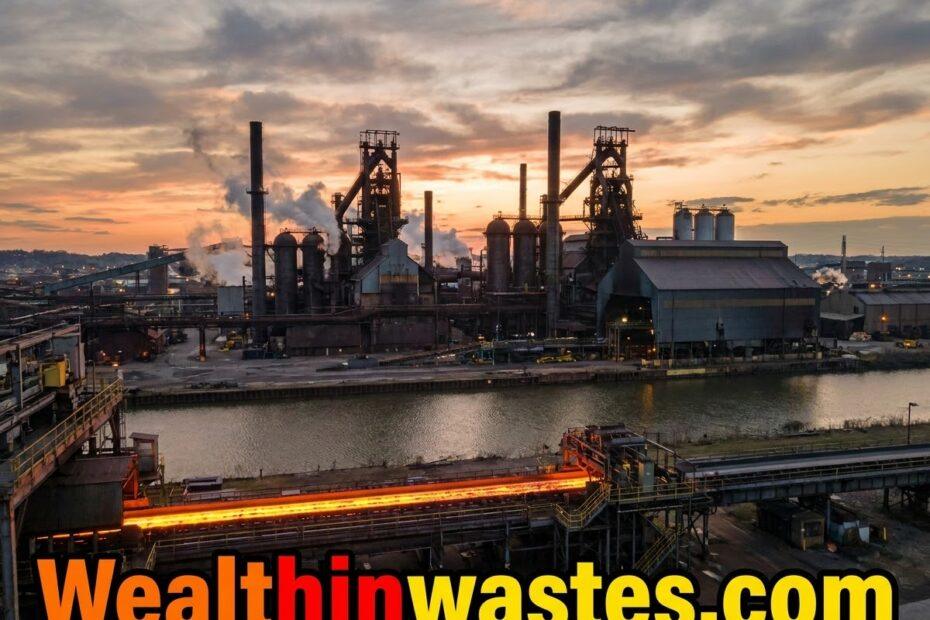
The Cleveland Steel Mill most commonly refers to Cleveland Works, an integrated steelmaking facility on the Cuyahoga River in Cleveland, Ohio. It produces steel sheet and semi-finished slabs for industrial customers.
The site is operated by Cleveland-Cliffs and serves markets including automotive, construction, distribution and steel converters. Its equipment links ironmaking, steel refining, casting, rolling and protective coating within one connected industrial works.
Cleveland’s steelmaking story began long before the present facility took its current form. Lake Erie shipping and railway connections helped move iron ore, coal and finished products between Great Lakes ports and factories.
This article explains the mill’s history, how Cleveland Works makes steel, the products it supplies, its contribution to employment and the environmental questions facing integrated steelmaking in modern industrial economies, including its wider lessons.
For readers in Nigeria and across Africa, the Cleveland example shows how ports, raw-material supply, energy, processing capacity and environmental oversight shape large-scale steel production and its place in global supply chains.
Cleveland Steel Mill and Its Industrial Importance you
Cleveland Works matters because it combines ironmaking and several finishing stages at one site. That integrated arrangement gives manufacturers a local source of sheet steel with specified surface and thickness characteristics.
The facility also illustrates how established steelmaking technologies remain part of modern supply chains, particularly where producers need large volumes, consistent grades and processing equipment tailored to demanding industrial customers.
Its importance extends beyond the finished coil: furnaces, rolling lines, water systems and maintenance activities generate materials that require careful industrial waste management and operational controls throughout the production process.
Cleveland Works is therefore best understood as an operating industrial complex rather than a museum piece. It connects the region’s manufacturing heritage with continuing demand for processed steel in automotive and construction markets.
Read Also: The Impact of Steel Mill on the Environment
History of Cleveland Steel Manufacturing
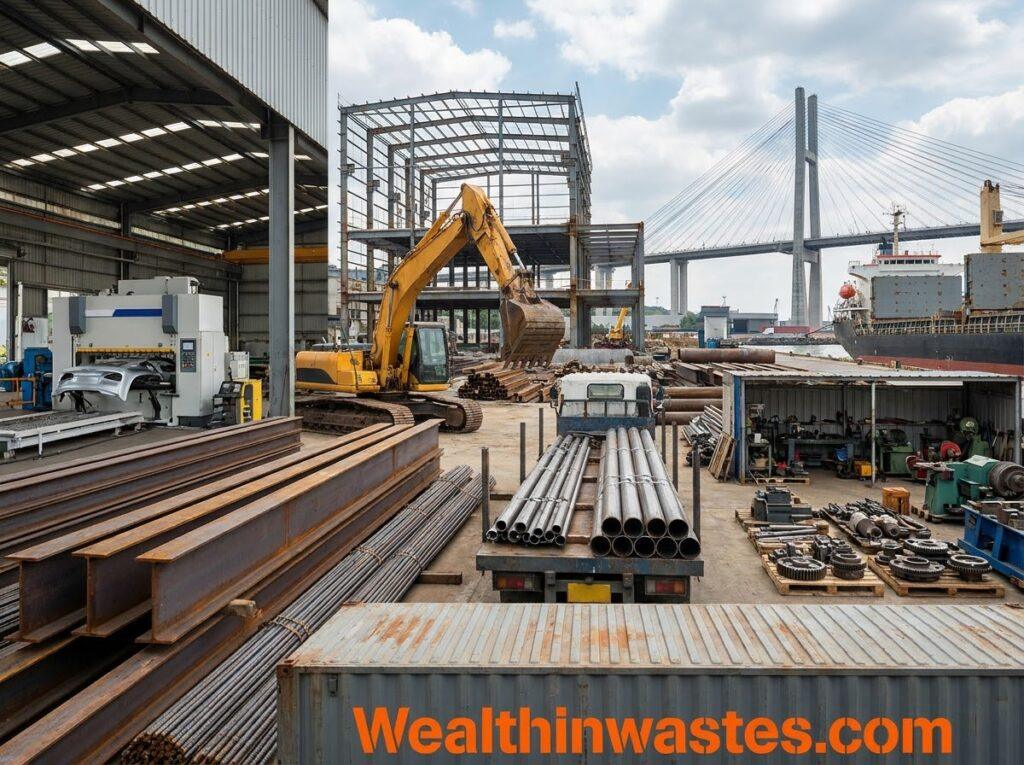
1. Lake Erie and Rail Access: Cleveland’s position on Lake Erie and its railway links made it a practical meeting point for iron ore from the upper Great Lakes and coal from nearby regions.
2. Early Steelmaking Advances: The Cleveland Rolling Mill Company installed Bessemer converters in 1868, helping establish Cleveland as an important centre for modern steel production beyond the local iron trade.
3. Expansion of Heavy Industry: By the late nineteenth and early twentieth centuries, Cleveland’s mills supplied rails, wire, sheet, plate and other products for transport, construction and growing manufacturing industries.
4. Restructuring and Consolidation: Foreign competition, changing demand, economic recessions and plant closures reshaped the regional industry during the late twentieth century, although steelmaking remained an important part of Cleveland’s industrial identity.
5. The Present-Day Facility: The current Cleveland Works belongs to Cleveland-Cliffs; its present equipment and product range should not be confused with every historic mill that once operated across Cleveland.
How the Cleveland Steel Mill Operates
1. Raw-Material Preparation: Iron ore is processed into feedstock, while coke supplies heat and helps remove oxygen from the ore. Metals recycling provides another source of material because scrap steel can also enter steelmaking processes.
2. Ironmaking in Blast Furnaces: Cleveland Works lists two blast furnaces. They use prepared iron-bearing materials and coke to produce hot metal, which then moves to the steelmaking stage for refining.
3. Refining in Basic Oxygen Furnaces: Oxygen is blown into hot metal to reduce excess carbon and other impurities. The operator lists two basic oxygen steelmaking facilities and continuous strand casters.
4. Casting and Rolling: Continuous casting forms steel into semi-finished shapes before rolling mills reduce thickness and improve dimensions. Further processing prepares sheet products for coating or direct customer delivery.
The site has an 84-inch hot strip mill, a pickle line, a five-stand tandem mill and a hot-dip coating line. The proper waste recycling process is also important in recovering scrap from steel production.
Industrial scrap can also pass through established collection, sorting and processing businesses before delivery. A metal recycling services guide illustrates this supporting part of the wider steel supply chain for steelmaking operations.
Major Steel Products and Their Uses
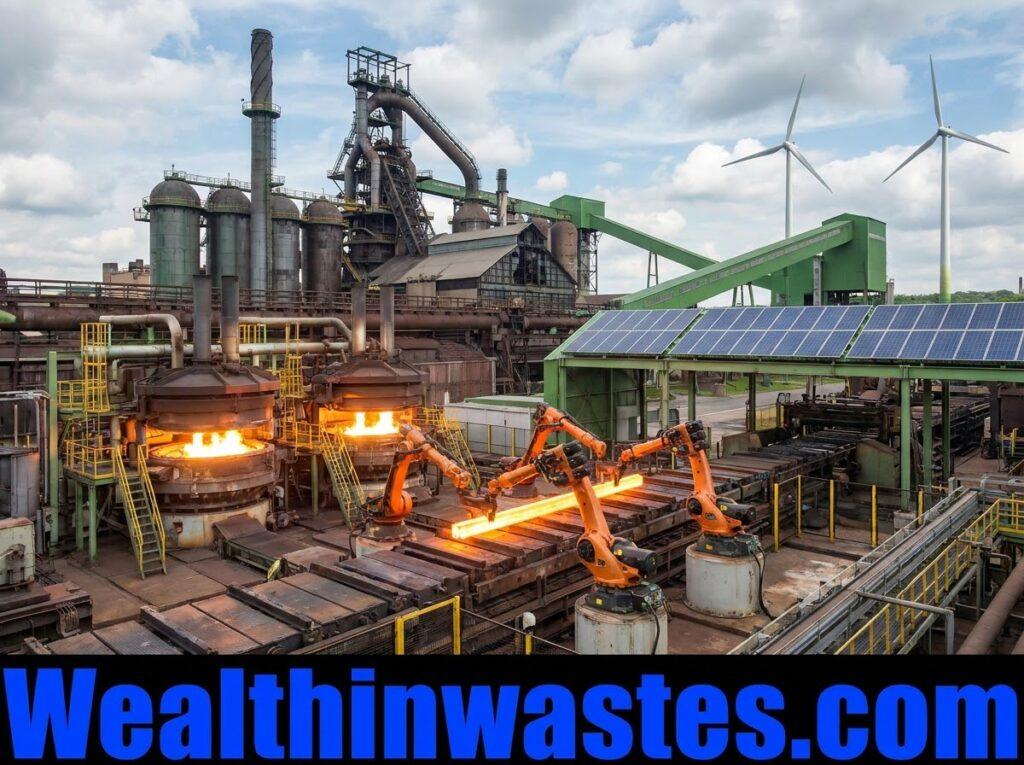
The Cleveland Works product list includes hot-rolled sheet, cold-rolled sheet, hot-dipped galvanised sheet and semi-finished slabs. These forms serve different manufacturing requirements rather than one interchangeable market across automotive and construction applications.
Hot-rolled sheet passes through a rolling mill while steel remains hot. Manufacturers use it for applications where strength, formability and suitable dimensions matter more than a finely finished surface or tight surface tolerances.
Cold-rolled sheet receives additional processing after hot rolling, giving buyers tighter thickness control and a smoother finish. Those properties make it useful for vehicle panels, appliances and manufactured components requiring consistent appearance and fit.
Hot-dipped galvanised sheet carries a zinc coating that helps protect steel against corrosion. It is widely useful where exposed components need longer service life, including selected construction and vehicle applications in suitable environments.
Recycling creates routes for steel products after their first use. WealthInWastes explains how recovered steel can be directed towards vehicle components and construction materials, although suitability depends on grades and processing.
Economic Impact and Employment Opportunities
1. Skilled Technical Employment: A large steelworks needs operators, electricians, mechanics, engineers, laboratory staff, safety professionals and logistics teams. These roles require practical training, disciplined procedures and ongoing equipment knowledge.
2. Local Supplier Demand: The works buys or uses transport, maintenance, engineering, industrial gases, refractories, machinery and other services. These connections support contractors and businesses beyond the plant’s direct workforce.
3. Downstream Manufacturing: Automotive firms, construction suppliers, steel processors and distributors depend on reliable sheet and slab supplies. Stable quality and delivery schedules help them plan production and meet customer requirements.
4. Scrap Recovery Businesses: Recovered metal also sustains collectors, sorters and processors. Scrap metal buyers help connect discarded material with facilities that can prepare suitable feedstock for industry at regional and industrial scale.
By-products also have a commercial side. Businesses that recover reusable materials from manufacturing residues can create value rather than treating every output as waste, as explained in this article on industrial waste recovery.
Environmental Challenges and Sustainability

1. Greenhouse Gas Emissions: Integrated blast-furnace and basic-oxygen steelmaking relies on carbon-based inputs and high-temperature processes. It therefore creates significant direct emissions, making efficiency and lower-carbon investment important for long-term competitiveness.
2. Air Quality: Steelmaking and material handling can release dust and other air pollutants if controls fail or operate poorly. Monitoring, enclosed transfer points and maintained capture equipment help limit exposure to nearby communities, reducing potential industrial pollution impacts.
3. Water and Wastewater: Cooling, cleaning and finishing processes can use water and create wastewater. Treatment and regular monitoring are essential before any industrial effluents reach the river or wider environment.
4. Solid By-Products: Slag, scale, dust, sludge and spent materials require classification and safe handling. Some industrial by-products may be recovered or reused, while hazardous residues need controlled disposal; their origins vary between industrial waste streams.
5. Environmental Management: Facilities need clear responsibilities, permit compliance, inspections and reliable performance records. Effective industrial waste management guidance and an environmental management system help turn duties into consistent operating practices.
6. Reuse and Recycling: Sorting clean scrap, recovering useful by-products and preventing leaks can reduce unnecessary disposal. These measures need clear pollution-control oversight and safe material recovery systems at every production stage.
Technology and Modern Steel Production
The documented equipment includes two blast furnaces, two basic-oxygen steelmaking facilities with continuous casters, an 84-inch hot-strip mill, a pickle line, tandem mill and hot-dip coating line for further sheet processing.
These stages let the site control important product characteristics, including thickness, surface condition and corrosion protection. The operator’s description confirms products and markets, not every grade or customer contract available to the public.
Improvements at an integrated works can involve furnace efficiency, process control, heat recovery, leak prevention and quality measurement. These changes can reduce operating losses without changing the site’s fundamental furnace route.
Cleveland-Cliffs’ wider sustainability programme discusses energy efficiency, industrial electrification, hydrogen and carbon capture research. These are corporate-level areas of work; they do not prove that Cleveland Works has switched to electric-arc steelmaking.
Steel recovery also depends on reliable collectors and processors. Metal recycling companies help sort, grade and prepare recovered material before it enters suitable manufacturing routes for large industrial customers across the supply chain.
The Future of Cleveland’s Steel Industry
1. Continued Modernisation: The future of Cleveland’s steel industry will depend on keeping reliable production while lowering energy use, emissions and waste. Investment decisions must reflect equipment life, market demand, technology cost and regulation.
2. Better Material Recovery: Recycled feedstock and stronger recovery systems can support material efficiency, but a blast-furnace/basic-oxygen plant cannot be described as an electric-arc furnace simply because it uses some scrap during steelmaking operations.
Well-designed resource recovery programmes can help keep metals in use, although each recovered material still needs testing and process controls before it returns to production within a suitable industrial application.
3. Lessons for African Manufacturing: For Nigeria and other African economies, Cleveland’s example underlines the importance of dependable transport, raw-material supply, skilled technical training and environmental monitoring when developing domestic steel capacity and manufacturing supply chains.
4. Sustainable Industrial Planning: The central lesson is not that every region should copy Cleveland’s furnace route. Rather, industrial planning must match local resources, energy systems, product demand, infrastructure and environmental safeguards before large investments proceed.
Read Also: How to raise ostrich for agribusiness
Summary on Cleveland Steel Mill and Its Role in American Industry
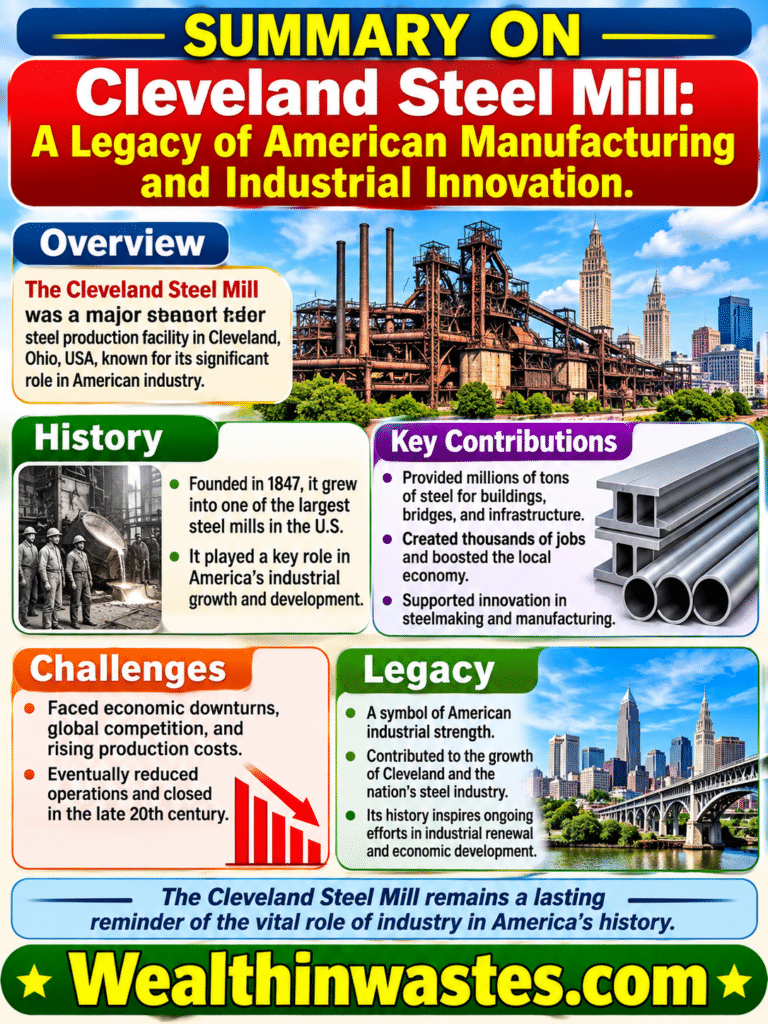
| Topic | Key Information |
|---|---|
| Facility | Cleveland Works, operated by Cleveland-Cliffs. |
| Location | Cuyahoga River, Cleveland, Ohio, United States. |
| Steelmaking Process | Integrated blast-furnace and basic-oxygen furnace production. |
| Production Equipment | Blast furnaces, steelmaking facilities, continuous casters, rolling mills and coating lines. |
| Main Products | Hot-rolled sheet, cold-rolled sheet, galvanised sheet and semi-finished slabs. |
| Markets | Automotive, construction, converters and distribution. |
| Economic Contribution | Skilled employment, manufacturing supplies, transport and industrial services. |
| Environmental Concerns | Greenhouse gas emissions, air quality, wastewater and industrial by-products. |
| Future Priorities | Modernisation, energy efficiency, material recovery and environmental management. |
Frequently Asked Questions About Cleveland Steel Mill and Its Role in American Industry
1. What Is Cleveland Works?
It is Cleveland-Cliffs’ integrated steelmaking facility on the Cuyahoga River in Cleveland, Ohio.
2. Who Owns and Operates the Cleveland Steel Mill?
Cleveland-Cliffs operates Cleveland Works and lists it among its steelmaking locations.
3. What Products Does Cleveland Works Manufacture?
It produces hot-rolled, cold-rolled and hot-dipped galvanised sheet, together with semi-finished steel slabs.
4. What Steelmaking Process Does the Facility Use?
It uses an integrated blast-furnace and basic-oxygen furnace process, followed by continuous casting and further steel processing.
5. Where Is the Cleveland Steel Mill Located?
Cleveland Works is situated along the Cuyahoga River in Cleveland, Ohio, with access to Great Lakes shipping, railways and highways.
6. Which Industries Use Steel From Cleveland Works?
Its markets include automotive manufacturing, construction, steel converters and distribution businesses.
7. Does Cleveland Works Use Electric Arc Furnaces?
The operator’s current facility description identifies blast furnaces and basic-oxygen steelmaking facilities. It does not list electric arc furnaces at Cleveland Works.
8. What Environmental Challenges Affect the Cleveland Steel Mill?
Its integrated production route presents challenges involving greenhouse gas emissions, air pollution, industrial wastewater, energy consumption and solid by-product management.
Do you have any questions, suggestions, or contributions? If so, please feel free to use the comment box below to share your thoughts. We also encourage you to kindly share this information with others who might benefit from it. Since we can’t reach everyone at once, we truly appreciate your help in spreading the word. Thank you very much for your support and for sharing!
Read Also: Controlling Food Waste and Recycling in Agriculture