



Protecting public health remains the central purpose of assessing xenobiotics such as pesticides, pharmaceuticals, and industrial chemicals. Pesticides receive special attention because people can encounter them through several pathways, doses, and exposure periods.
Chronic exposure to low pesticide concentrations may contribute to mutations or carcinogenicity, while acute poisoning can cause serious illness and death. These contrasting outcomes make both short-term and long-term exposure important.
Risk assessment examines how a pesticide behaves, how much reaches people, and whether expected exposure can produce harmful effects. The process therefore connects toxicity information with realistic human exposure conditions and uncertainty.
Humans may encounter pesticide residues through food, occupational contact, contaminated environments, or other exposure routes. Using pesticides as representative xenobiotics helps researchers examine how chemical hazards translate into potential human health risks.
General Principles of Pesticide Risk Assessment
1. NOAEL Basis: The No Observed Adverse Effect Level, or NOAEL, often comes from animal toxicity studies and provides a starting point for estimating exposure levels that should not produce observable adverse effects.
2. Acceptable Daily Intake: The source describes the traditional calculation of ADI by dividing NOAEL by an uncertainty factor of 100, creating a conservative estimate for acceptable human daily intake.
3. Interspecies Variation: Animals and humans can differ in toxicokinetics and toxicodynamics, so assessment factors help account for differences when researchers extrapolate toxicity findings from experimental species to exposed people.
4. Interindividual Variation: People can respond differently to the same pesticide because biological characteristics vary among individuals. Risk assessment therefore considers human-to-human variability when setting protective exposure limits for repeated contact.
5. Toxicokinetic Subfactor: Renwick proposed dividing the interspecies uncertainty factor into components addressing toxicokinetics and toxicodynamics, with values of four and 2.5 respectively under his risk assessment framework for extrapolation.
6. IPCS Approach: WHO/IPCS adapted the framework by retaining four and 2.5 for interspecies differences, while using approximately 3.16-fold components for both toxicokinetics and toxicodynamics in human variability.
Read Also: What is a Solid Waste and Hazardous Waste
Pesticide Exposure and Human Health

Human exposure to pesticides can occur in workplaces, homes, farms, storage areas, food systems, and contaminated environments. Each situation can produce different concentrations, frequencies, durations, and routes of contact for exposed people.
Occupational exposure may exceed exposure from ordinary dietary intake because workers can handle concentrated formulations, spray equipment, treated crops, contaminated clothing, or pesticide residues during repeated agricultural activities every season.
Food consumption provides another exposure pathway because residues can remain on or inside treated crops after application. Pesticide residues in fruits and vegetables can therefore contribute to dietary exposure for consumers.
The presence of residues does not automatically establish a health hazard because risk depends on the chemical, concentration, exposure pattern, toxicity, and characteristics of the exposed person, including susceptibility and duration.
Environmental movement can extend pesticide exposure beyond the application site. Pesticide movement through soil can connect treated fields with groundwater, surface water, crops, animals, and surrounding communities through several environmental pathways.
Lipophilic residues may accumulate in tissues and remain in the body longer than rapidly eliminated compounds. Understanding human exposure to hazardous substances helps explain why persistence, repeated contact, and biological uptake matter.
Toxic Effects of Pesticide Residues
Toxic effects depend on pesticide properties, residue concentrations, and the degree of human exposure. A detected residue therefore requires toxicological interpretation rather than an automatic assumption that illness or injury will follow.
Some pesticides affect the nervous system because their biological targets resemble processes present in humans and other organisms. Routes of pesticide exposure also influence the amount reaching sensitive tissues and organs.
Organophosphate and related pesticides can interfere with acetylcholinesterase activity, allowing acetylcholine to accumulate and disrupting normal nerve signalling. Hazardous pesticide concerns also highlight the importance of careful handling and exposure prevention.
Acute effects may include excessive salivation, sweating, lacrimation, gastrointestinal disturbances, excitation, and other cholinergic signs. Severe poisoning can progress to neurological dysfunction, respiratory depression, paralysis, and potentially death in serious cases.
Chronic exposure may involve neurobehavioral effects, reproductive concerns, immune disruption, allergies, hypersensitivity, or other outcomes. Public health risk assessment requires attention to exposure duration and chemical-specific evidence from appropriate studies.
Food residues deserve particular attention when people consume contaminated commodities repeatedly. Pesticide residues in cereals and pulses can become relevant when intake continues over time and exposure occurs across multiple dietary sources.
Cholinergic Neuronal Injury and Dysfunction

1. Acetylcholine Accumulation: Organophosphate exposure can inhibit acetylcholinesterase, causing acetylcholine to accumulate at synapses and producing excessive stimulation of cholinergic neurons within the human nervous system, especially after significant exposure.
2. Muscarinic Overstimulation: Excessive muscarinic receptor activation can disturb excitatory and inhibitory balance, contributing to neuronal excitotoxicity, seizures, respiratory depression, and other serious neurological consequences after severe pesticide exposure occurs.
3. Glutamate Release: Severe cholinergic stimulation may promote excessive glutamate release from glutamatergic neurons, contributing to calcium overload in postsynaptic cells and increasing the potential for serious neuronal cellular injury.
4. Calcium Overload: Excess intracellular calcium can activate lipases, proteases, kinases, phosphatases, and endonucleases. These metabolic cascades can disrupt protein synthesis and deprive injured cells of factors needed for survival.
5. Oxidative Damage: Acute poisoning may involve oxidative stress and inflammatory responses alongside edema and other cellular disturbances. Pesticide degradation studies add environmental context for chemical persistence and transformation processes.
6. Neuronal Cell Death: Experimental studies have reported neuronal loss, axonal degeneration, and cell death after organophosphate exposure. Hazardous waste characteristics reinforce the need for controlled handling of toxic chemical materials.
Long-Term Neurobehavioral Disorders
Long-term neurological outcomes have received attention because organophosphate exposure can affect cholinergic neurons in the basal forebrain and limbic system. These regions contribute to memory, cognition, emotional processing, movement, and sensory functions.
Persistent memory and cognitive problems represent important behavioural outcomes reported after substantial organophosphate exposure. Pesticide metabolism studies help explain why species may experience different residue and toxicity patterns after chemical exposure.
Reports involving Gulf War veterans described long-term cognitive and memory impairments after exposure to sarin and cyclosarin at Khamisiyah. Such findings illustrate why delayed neurological effects may require extended follow-up.
Studies following workers exposed during the Tokyo subway sarin attack also reported persistent memory changes years after exposure. Environmental transport information illustrates how chemical movement can extend exposure beyond initial sources and locations.
Psychomotor performance can also change after significant exposure. Clinical observations described reduced fine dexterity, visuospatial abilities, motor coordination, and finger-tapping performance among highly exposed individuals during long-term assessments and follow-up.
Some exposed individuals also reported prolonged somatic complaints involving gastrointestinal symptoms, headaches, migraines, skin problems, and related conditions. Hazardous substance sources provide useful context for identifying repeated contact opportunities and pathways.
Oxidative Stress and Cancer Risk

1. Oxidative Stress: Subchronic and chronic organophosphate exposure has been associated with oxidative stress, which can involve disturbed antioxidant defenses and cellular injury in humans and experimental animals after exposure.
2. Hyperglycaemia: The source identifies hyperglycaemia as one mechanism associated with oxidative stress during organophosphate intoxication, while findings for chronic carbamate exposure remain less consistent across available reports and studies.
3. Lipid Peroxidation: Carbofuran exposure has been observed to increase oxidative stress in rat brain by promoting lipid peroxidation and reducing antioxidant defenses, illustrating a potential mechanism of pesticide-related neural injury.
4. Reversible Neurotoxicity: Toxicological surveys of carbaryl have described reversible neurobehavioral and neurotoxic effects in vertebrates, particularly in association with symptoms observed during acute poisoning and subsequent recovery after exposure.
5. Cancer Associations: Epidemiological studies have examined possible relationships between pesticide exposure or specific residues and cancer outcomes. Pesticide metabolism in plants helps explain how residues can change before human dietary exposure.
6. Persistent Residues: Some pesticide compounds persist in environmental and biological systems. Residues in animal products show how persistent chemicals may move from agricultural environments into human food pathways over time.
Reproductive Health And Other Outcomes
Reproductive effects form another important component of pesticide health risk assessment because exposure can affect fertility, pregnancy outcomes, sperm characteristics, and reproductive hormone function under some exposure conditions and populations.
Studies have reported associations between pesticide exposure and reduced fertility, altered sperm parameters, pregnancy loss, prolonged time to pregnancy, spontaneous abortion, or premature birth. Residue management in livestock helps reduce indirect dietary exposure.
Some research has associated consumption of produce with higher pesticide residue burdens with lower sperm count, ejaculate volume, and the percentage of morphologically normal sperm among men attending fertility clinics.
Animal and environmental evidence also indicates that pesticide residues can move through feed, water, and treated environments into livestock products. Pesticide effects on livestock provide context for this indirect exposure pathway.
Residues in meat, milk, eggs, and other animal products depend on pesticide chemistry, animal metabolism, exposure routes, and time between exposure and production. Household hazardous waste guidance also shows why safe chemical handling matters.
Other reported human effects include immune disruption, allergies, hypersensitivity, and nervous-system injury. Agricultural waste sources can identify contaminated materials that deserve controlled handling to limit avoidable exposure during farming and disposal.
Read Also: Waste Determination Methods
Interpreting Risk and Reducing Exposure

1. Exposure Characterisation: Risk assessment should identify who may encounter a pesticide, through which route, at what concentration, and for how long, because these conditions strongly influence overall risk levels.
2. Residue Interpretation: Residue measurements should be interpreted alongside toxicological information rather than treated as proof of harm. Pesticide mobility management identifies environmental factors that can alter exposure patterns and concentrations.
3. Environmental Pathways: Pesticides can move through soil, water, air, crops, animals, and waste materials. Dilute pesticide waste management helps reduce contamination and unintended exposure pathways during disposal and cleanup activities.
4. Uncertainty Factors: Uncertainty factors help address differences between experimental animals and humans, as well as differences among people. They support cautious interpretation when complete human toxicity information is unavailable.
5. Exposure Reduction: Reducing unnecessary pesticide contact requires appropriate product selection, careful handling, correct application, residue control, and responsible management of contaminated materials, while following applicable product labels and safety requirements.
6. Integrated Assessment: Human health risk assessment is strongest when toxicology, exposure information, environmental fate, residue data, and population variability are considered together. This integrated approach supports more protective and scientifically grounded conclusions.
Summary on Human Health Risk Assessment of Pesticide as Representative Xenobiotic
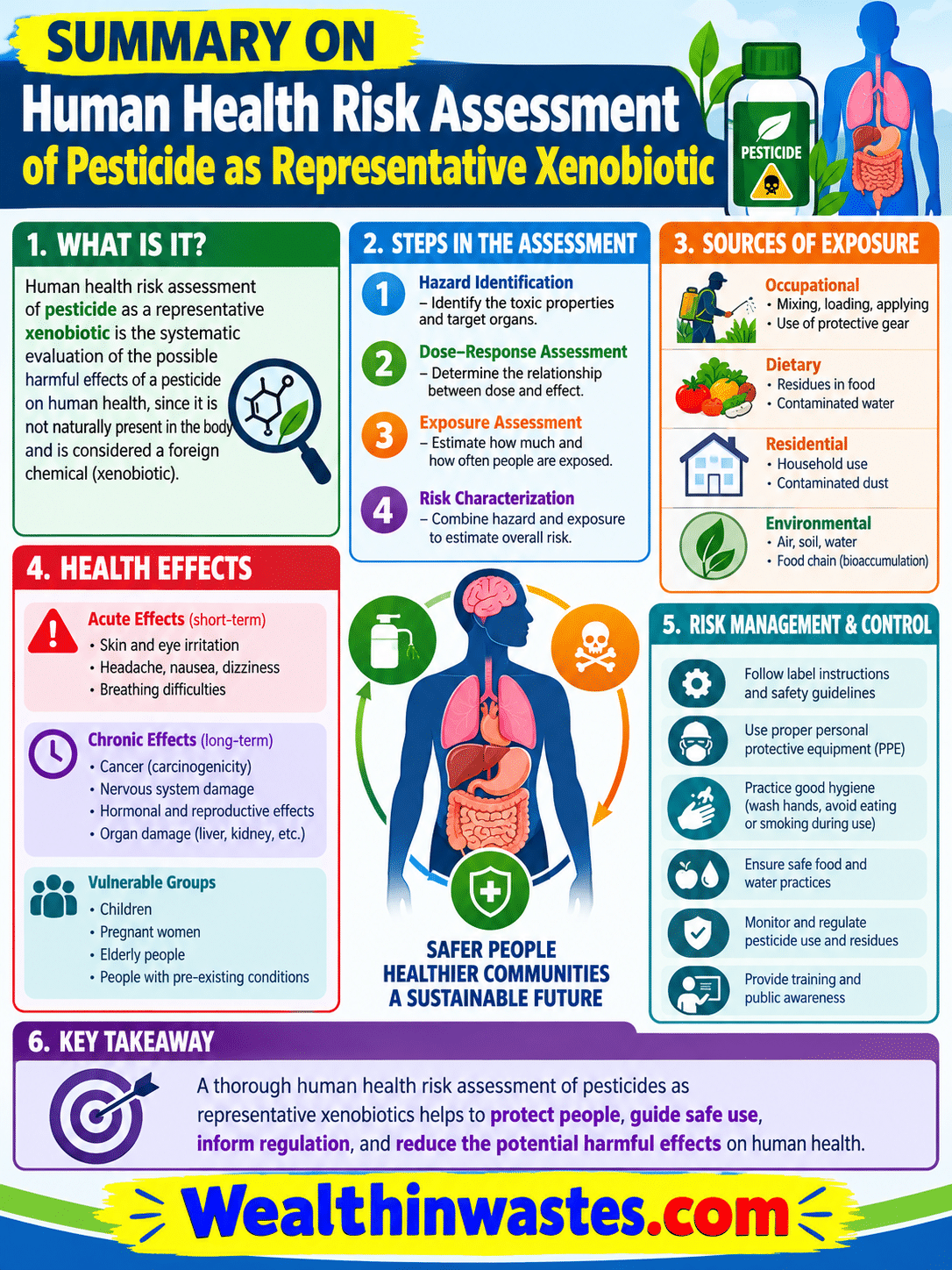
| Section | Main Idea | Why It Matters |
|---|---|---|
| General principles | NOAEL, ADI, and uncertainty factors support cautious extrapolation from toxicity studies. | They help account for interspecies and human variability. |
| Exposure | Pesticides can reach people through occupational, dietary, and environmental pathways. | Exposure route, dose, duration, and persistence influence risk. |
| Residues | Detected residues require interpretation using toxicological and exposure information. | Residue presence alone does not establish harm. |
| Neurological effects | Organophosphates can disrupt cholinergic signalling and may cause severe neurological injury. | Understanding mechanisms clarifies potential acute and chronic outcomes. |
| Long-term outcomes | Memory, cognitive, psychomotor, and somatic effects have been reported after substantial exposure. | Follow-up may be important when delayed effects are possible. |
| Oxidative stress and cancer | Oxidative stress and possible cancer associations form important assessment endpoints. | Evidence must be interpreted by chemical and exposure context. |
| Reproductive outcomes | Studies have linked some pesticide exposures with reproductive and pregnancy-related effects. | These endpoints require careful compound-specific evaluation. |
| Risk management | Integrated assessment combines toxicity, exposure, environmental fate, residue data, and variability. | This supports more scientifically grounded risk interpretation. |
Frequently Asked Questions About Human Health Risk Assessment of Pesticide as a Xenobiotic
1. What is human health risk assessment of pesticide?
Human health risk assessment of pesticide exposure evaluates toxicity and expected human exposure to determine whether a chemical may present unacceptable health concerns under defined conditions and levels of contact.
2. What is NOAEL in pesticide assessment?
NOAEL means No Observed Adverse Effect Level. It provides a toxicological starting point, often from animal studies, for estimating an exposure level without observed adverse effects during the relevant study period.
3. Why is an uncertainty factor used?
An uncertainty factor helps account for differences between experimental animals and humans, and differences among people. The source describes a traditional default factor of 100 for these combined variations during extrapolation.
4. Can pesticide residues automatically make food unsafe?
No. Residues require interpretation alongside pesticide toxicity, residue concentration, exposure frequency, dose, and human susceptibility. Detecting a residue alone does not establish that the food will cause harm to consumers.
5. What neurological effects can pesticides cause?
Certain pesticides, especially organophosphates, can disrupt cholinergic signalling. Severe exposure may produce seizures, respiratory depression, neuronal injury, cognitive problems, psychomotor deficits, and prolonged behavioural or neurological effects in affected people.
6. Why are reproductive effects included in assessment?
Reproductive outcomes matter because some pesticide exposures have been associated with altered fertility, sperm characteristics, pregnancy outcomes, and hormonal effects. Assessment considers these endpoints when supported by toxicological and epidemiological evidence.
Do you have any questions, suggestions, or contributions? If so, please feel free to use the comment box below to share your thoughts. We also encourage you to kindly share this information with others who might benefit from it. Since we can’t reach everyone at once, we truly appreciate your help in spreading the word. Thank you very much for your support and for sharing!
Read Also: Safe Handling of Pesticides in Agriculture