


Pesticide metabolism studies are important because they show how agricultural chemicals behave after entering animals and help researchers identify metabolites that may influence toxicity, persistence, distribution, and elimination.
Although metabolic processes share broad similarities among species, animals can differ considerably in enzyme activity, metabolic pathways, absorption, tissue distribution, and elimination, making species comparisons essential during toxicological evaluation.
Without knowledge of metabolic pathways, oral toxicity studies may remain incomplete because researchers could fail to test metabolites that contribute substantially to biological effects after exposure to the parent pesticide.
The metabolic fate of pesticide residues entering food-producing animals also determines whether chemicals remain in edible tissues, milk, eggs, fat, or other products intended for human consumption.
Understanding these processes therefore supports pesticide risk assessment, residue monitoring, experimental design, regulatory decisions, and efforts to protect consumers, livestock workers, animals, and environmental resources from unnecessary exposure.
Toxicological Significance of Animal Metabolism Studies
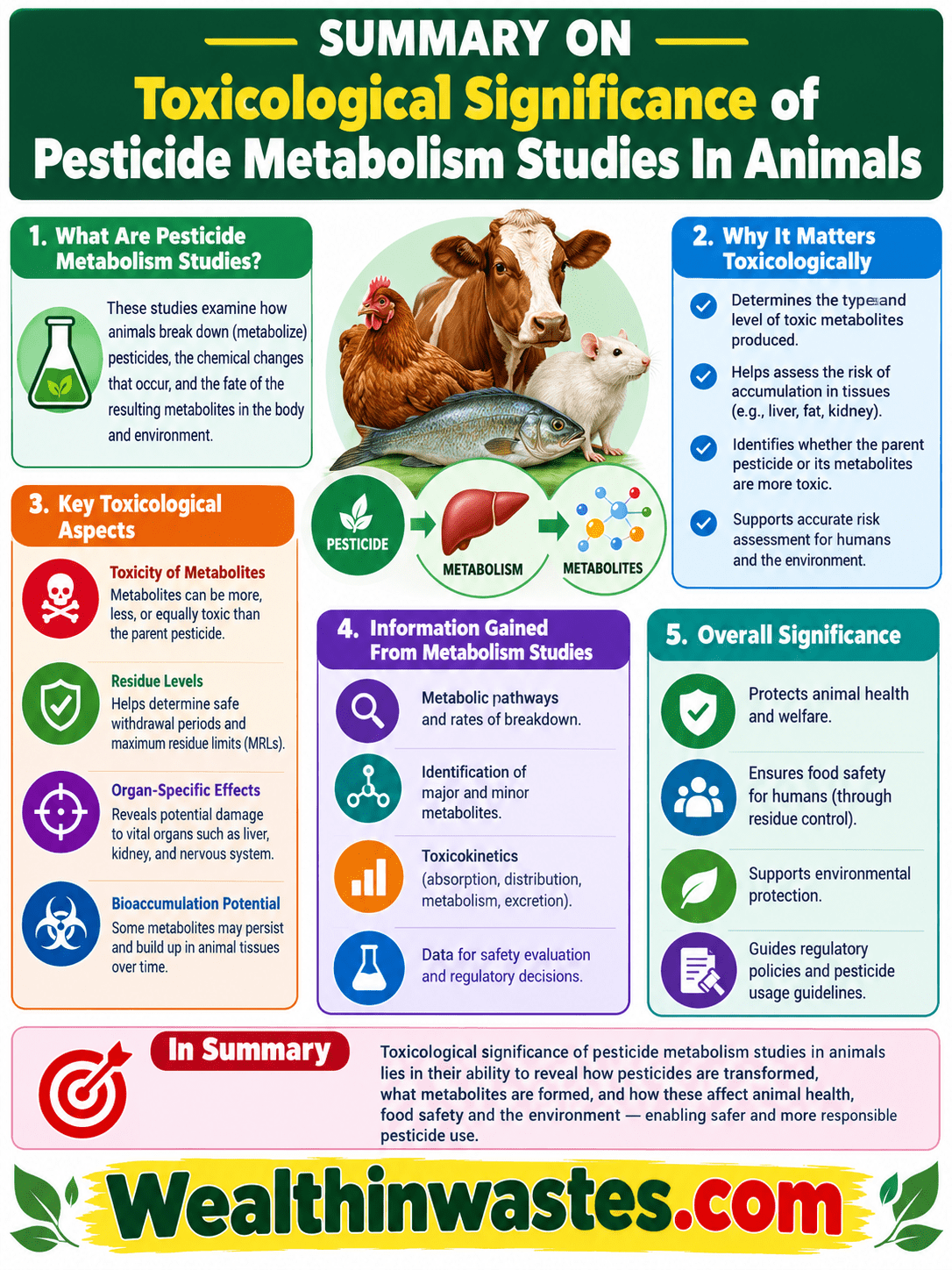
1. Identification of important metabolites: Metabolism studies reveal whether animals convert parent pesticides into products that become less toxic, similarly toxic, more toxic, or biologically active.
2. Understanding species differences: Different animals may process the same pesticide differently because enzyme systems vary among species, affecting the concentration and persistence of metabolites in tissues.
3. Evaluation of edible residues: Studies help determine which pesticide-derived residues remain in meat, milk, eggs, liver, kidney, fat, and other food commodities after exposure.
4. Better exposure assessment: Detailed metabolism information helps researchers connect exposure routes and doses with the metabolites that actually reach organs, tissues, and biological targets.
5. Support for safety decisions: Metabolic information strengthens toxicological evaluations by showing how pesticide residues are transformed, eliminated, stored, or incorporated into biological materials.
6. More complete research: Understanding metabolism allows researchers to design studies that examine relevant parent compounds and metabolites rather than assuming the original pesticide remains unchanged inside animals.
Species-specific metabolism becomes particularly important when laboratory findings are compared with food-producing animals. Information on pesticide residues affecting livestock illustrates why animal responses cannot always be generalized.
Proper interpretation also requires attention to residue control after exposure, because livestock residue management depends partly on understanding absorption, transformation, distribution, and elimination within exposed animals.
The toxicological significance of pesticide studies also connects directly with exposure pathways, including ingestion, inhalation, dermal contact, and other routes described in research on pesticide exposure and dose-response relationships.
Read Also: Factors Influencing Pesticide Degradation in Soils
Techniques for Animal Pesticide Metabolism Studies
1. Controlled pesticide administration: Researchers administer measured pesticide doses through appropriate routes so exposure can be accurately related to absorption, metabolism, distribution, residue formation, and elimination.
2. Metabolism stalls and cages: Special housing systems help researchers restrain experimental animals safely while permitting separate collection of urine, feces, respiratory gases, and other materials.
3. Quantitative excreta collection: Separate collection of excreta and volatile products allows researchers to measure how much administered pesticide leaves the animal through different elimination pathways.
4.Surgical modifications: Procedures such as fistulation, cannulation, and colostomy can provide controlled access to specific physiological compartments when specialized metabolic investigations require direct sampling.
5. Biopsy procedures: Tissue sampling can provide important evidence about pesticide distribution and metabolic products in organs involved in absorption, transformation, storage, and elimination.
6. In vitro investigations: Laboratory systems using tissues, cells, blood, enzymes, or organ preparations can help explain metabolic reactions while reducing the need for extensive whole-animal experimentation.
Metabolism researchers also need to understand how pesticides enter biological systems after environmental release. Studies of pesticide movement and absorption provide useful context for exposure before animal metabolism begins.
Experimental results can also depend on environmental exposure conditions, especially when animals consume contaminated feed or water. Research on site conditions affecting pesticide mobility helps explain these pathways.
Pesticide Biotransformation in Animals
Pesticide biotransformation describes enzymatic conversion of foreign chemical compounds into metabolites that generally become more water-soluble and easier to transport or eliminate through urine, bile, feces, or other routes.
The overall process commonly involves functionalization and conjugation reactions, although individual pesticides may follow several pathways depending on chemical structure, species, tissues, enzyme systems, exposure level, and physiological condition.
Cytochrome P450 enzymes play major roles in many oxidative transformations, while esterases, epoxide hydrolases, flavin monooxygenases, peroxidases, dehydrogenases, and other enzymes contribute to specific metabolic reactions.
These transformations do not automatically make every metabolite harmless. Some metabolites can retain biological activity, while others may possess different toxicological properties that require separate evaluation during pesticide safety studies.
Metabolic pathways also influence residue persistence. Information on pesticide degradation and metabolism demonstrates that oxidation, reduction, hydrolysis, and conjugation can strongly influence the fate of foreign compounds.
Similar principles apply when animals consume contaminated agricultural products. Monitoring pesticide residues in fruits and vegetables helps explain how residues can enter livestock diets before metabolism occurs.
Stored food can also contribute to exposure because pesticide residues may remain in treated grains and pulses. Research concerning pesticide residues in cereals and pulses demonstrates this additional exposure pathway.
Phase I Pesticide Metabolism
1. Oxidation: Oxidative reactions can add or expose functional groups within pesticide molecules, increasing polarity and creating products that may undergo further metabolism or conjugation.
2. Hydrolysis: Hydrolytic reactions cleave susceptible chemical bonds through water-mediated processes, often contributing significantly to pesticide detoxification and the formation of more readily eliminated products.
3. Reduction: Reduction reactions can modify nitro groups, carbonyl compounds, alkenes, aldehydes, and ketones, particularly within tissues where suitable reducing enzymes and conditions exist.
Oxidation represents one of the most extensively studied Phase I processes. Cytochrome P450 enzymes contain numerous isoforms, and their distribution differs among species, tissues, developmental stages, and physiological states.
Because enzyme systems differ, identical pesticides may undergo different reactions in animals, plants, birds, or mammals. This variability contributes significantly to species-specific toxicity and residue profiles.
Hydrolysis may involve carboxylesterases and epoxide hydrolases.Ester cleavage is particularly important for some pesticides, while esterase activity can also influence the toxicity of organophosphate compounds.
Studies of soil behaviour provide useful supporting information because pesticide persistence can depend on multiple interacting variables. Research on soil properties affecting pesticide mobility illustrates this broader environmental context.
Another relevant consideration is the connection between degradation and environmental conditions. Information on factors influencing pesticide degradation helps explain why chemical persistence can change substantially across different environments.
Management practices can further influence exposure before animals encounter residues. Appropriate application timing, rates, and irrigation practices are discussed in research on pesticide management practices affecting mobility.
Phase II Pesticide Metabolism
Phase II reactions generally involve conjugation, where a pesticide or its metabolite combines chemically with an endogenous substance, producing a larger and often more polar compound suitable for elimination.
1. Glutathione conjugation: Glutathione provides reactive thiol groups that can bind electrophilic pesticide metabolites, with glutathione-S-transferases catalyzing reactions that support detoxification and subsequent urinary elimination.
2. Glucuronidation and sugar conjugation: Glucuronic acid commonly combines with alcohols, phenols, amines, acids, and related functional groups, producing conjugates that facilitate transport and excretion.
3. Amino acid conjugation: Foreign carboxylic acids can combine with amino acids, and the particular amino acid involved may depend strongly on the chemical characteristics of the pesticide-derived compound.
4. Lipophilic conjugation: Some reactions can increase rather than decrease lipophilicity, allowing pesticide-derived structures to associate with fats, triglycerides, membranes, or transport systems inside the animal.
5. Sulfate conjugation: Sulfate groups may attach to suitable substrates through enzyme-catalyzed transfer reactions and compete with glucuronidation, particularly for certain phenolic foreign compounds.
Glutathione conjugates may move between cells before further processing produces cysteine derivatives and mercapturates. These products can eventually leave the body through renal excretion.
Glucuronide formation adds complexity because conjugates can sometimes rearrange structurally. Such changes may influence analytical detection and interpretation of pesticide-derived residues during metabolism investigations.
Residue contamination in food-producing animals remains important because feed and environmental contact can introduce pesticides into edible products. Research on sources of pesticide contamination in meat and dairy products demonstrates these pathways.
Broader concerns about hazardous chemicals also reinforce the need for careful pesticide evaluation. Discussions of hazardous pesticides and regulatory concerns show why toxicological information remains important beyond individual experiments.
Water exposure can also influence residue pathways because contaminated runoff may reach drinking sources or aquatic systems. Basic principles in water quality management therefore complement pesticide metabolism research.
Read Also: Roles of Producers and Corporations in Waste Management
Phase III Pesticide Residues

Phase III residues, within the classification used in metabolism studies, describe pesticide-derived materials associated with endogenous biological substances that may remain bound within macromolecular structures.
These residues may associate with proteins, nucleic acids, or other cellular components, making extraction difficult and creating challenges when researchers attempt to determine their identity and toxicological relevance.
Unextracted residues cannot automatically be considered harmless because their significance depends on whether digestion, metabolism, or physiological conditions can release biologically available pesticide-derived compounds.
The triazine herbicide ametryn provides an example in which substantial liver residues remained unextracted until enzymatic and hydrolytic treatments released metabolites containing the intact triazine structure.
Such findings demonstrate why bound residues require careful characterization rather than simple measurement of extractable parent compounds. Analytical procedures must distinguish true xenobiotic residues from natural incorporation of radiolabel.
Food safety evaluations also depend on understanding persistence within animal tissues. Information on food pesticide residues provides useful context because dietary exposure can precede the formation of animal-bound residues.
Environmental transport can extend these exposure pathways beyond farms. Research on pesticide transport in surface waters shows how chemicals may move through dissolved and particle-associated forms.
Phase IV Pesticide Metabolism
Phase IV residues can arise when radiolabeled pesticide material becomes incorporated into naturally occurring compounds after extensive metabolism of the original xenobiotic molecule within the animal.
The positioning of the radiolabel strongly influences interpretation because extensive degradation can release labeled fragments that enter normal biochemical pathways and become widely distributed throughout tissues.
Such incorporation may complicate residue analysis because researchers must distinguish pesticide-derived material from naturally occurring compounds that simply contain atoms originally supplied by the labeled pesticide.
In goat metabolism studies involving chlorethoxyfos, extensive degradation accompanied formation and expiration of radiolabeled carbon dioxide, demonstrating that complete mineralization can substantially change residue interpretation.
Phase IV interpretation therefore requires knowledge of radiolabel placement, metabolic intermediates, natural biochemical pathways, tissue distribution, excretion, and the analytical methods used to characterize radioactive residues.
The wider environmental significance of persistent contaminants can be understood through research on hazardous substances affecting soil and plant life, where persistence and transformation influence ecological exposure.
Similarly, contaminated water may carry pesticide-derived substances into broader ecosystems. Research on water pollution effects on humans and plants highlights why chemical transport deserves attention throughout agricultural systems.
Wastewater pathways also deserve consideration when contaminated water originates from farms, processing operations, or other activities. Proper wastewater management and treatment can reduce opportunities for contaminants to spread.
Read Also: Roles of Producers and Corporations in Waste Management
Toxicological Significance for Food Safety

1. Protection of consumers: Metabolism studies identify residues that may persist in edible tissues and therefore support assessments of potential dietary exposure from meat, milk, eggs, and other animal products.
2. Establishment of residue limits: Knowledge of parent pesticides and relevant metabolites supports scientific evaluation of residue concentrations and helps determine appropriate safety controls for food commodities.
3. Understanding withdrawal periods: Metabolic studies provide information about how quickly residues decline, supporting management decisions concerning treatment intervals and the period required before animal products enter food channels.
4. Recognition of species differences: Livestock species may metabolize pesticides differently, so toxicological findings from one animal cannot automatically represent chickens, sheep, goats, pigs, cattle, or horses.
5.Support for regulatory assessment: Complete metabolism profiles help regulators evaluate exposure, identify relevant metabolites, interpret toxicity data, and determine whether pesticide use can meet established safety requirements.
Residue management also depends on preventing unnecessary contamination before animals encounter pesticides. Proper control of dilute chemical waste is addressed through safe pesticide waste disposal methods.
Empty pesticide containers can create additional contamination risks when poorly managed. Guidance on pesticide container disposal demonstrates why waste handling remains part of effective residue prevention.
Reducing waste at the source can further limit accidental pesticide releases. Practical approaches described in pesticide waste reduction guidance support broader efforts to prevent environmental contamination.
Ultimately, toxicological significance extends beyond identifying a single metabolite. It requires integration of metabolism, toxicity, exposure, residue distribution, food consumption, species differences, environmental movement, and responsible pesticide management.
Summary on Toxicological Significance of Pesticide Metabolism Studies In Animals
| Section | Main Idea | Why It Matters |
|---|---|---|
| Animal Metabolism Studies | Identify pesticide metabolites and species differences. | Improves toxicological interpretation and safety assessment. |
| Study Techniques | Use controlled administration, collection, sampling, and laboratory methods. | Produces reliable metabolism and residue data. |
| Biotransformation | Converts pesticides through enzymatic reactions. | Determines toxicity, persistence, and elimination. |
| Phase I | Includes oxidation, hydrolysis, and reduction. | Creates functional groups for further transformation. |
| Phase II | Includes glutathione, sugar, amino acid, lipophilic, and sulfate conjugation. | Often supports transport and excretion. |
| Phase III | Includes bound pesticide-derived residues. | Requires evaluation of extraction and bioavailability. |
| Phase IV | Involves radiolabel incorporation into natural compounds. | Complicates residue interpretation and requires careful analysis. |
| Food Safety | Connects metabolism with residues in animal products. | Supports consumer protection and regulatory decisions. |
Frequently Asked Questions About Toxicological Significance of Pesticide Metabolism in Animals
1. Why are pesticide metabolism studies important?
They identify metabolites, explain species differences, and support evaluation of toxicity and residues.
2. What is pesticide biotransformation?
It is the enzymatic conversion of pesticides into metabolites that can differ in polarity, activity, toxicity, and elimination.
3. What occurs during Phase I metabolism?
Phase I commonly involves oxidation, hydrolysis, and reduction reactions.
4. What is Phase II metabolism?
Phase II mainly involves conjugation with endogenous substances such as glutathione, glucuronic acid, sulfate, or amino acids.
5. Why do species metabolize pesticides differently?
Species possess different enzyme systems, tissue activities, physiological characteristics, and metabolic capacities.
6. What are bound pesticide residues?
They are pesticide-derived residues associated with biological macromolecules and may require specialized procedures for characterization.
7. How do metabolism studies support food safety?
They help identify residues that may remain in meat, milk, eggs, fat, organs, and other animal products.
8. Why are Phase IV residues difficult to interpret?
Radiolabeled pesticide fragments may enter natural biochemical pathways, making it necessary to separate pesticide-derived material from normal biological compounds.
9. Which animals can be studied for pesticide metabolism?
Large-animal studies may involve chickens, sheep, goats, swine, cattle, horses, and other relevant food-producing species.
10. Can pesticide metabolites be more toxic than the parent pesticide?
Yes. Some metabolites can retain biological activity or produce different toxicological effects, so they may require separate evaluation.
Do you have any questions, suggestions, or contributions? If so, please feel free to use the comment box below to share your thoughts. We also encourage you to kindly share this information with others who might benefit from it. Since we can’t reach everyone at once, we truly appreciate your help in spreading the word. Thank you very much for your support and for sharing!
Read Also: Safe Handling of Pesticides in Agriculture