


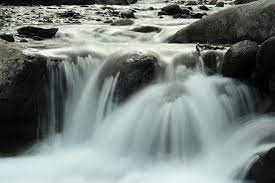
Freshwater is one of the most valuable natural resources on Earth because people, animals, plants, agriculture, industries, and ecosystems depend on reliable supplies of suitable water.
Although freshwater forms only a small portion of the planet’s total water resources, societies use it for drinking, cooking, sanitation, irrigation, livestock production, manufacturing, recreation, and environmental functions.
Important freshwater sources include rivers, lakes, ponds, reservoirs, springs, rainfall, groundwater, wells, and boreholes. Their availability varies according to climate, geography, season, geology, land use, and human demand.
Human activities can reduce freshwater quality when sewage, agricultural runoff, industrial discharges, waste materials, petroleum products, sediments, nutrients, chemicals, or microorganisms enter natural water systems.
Freshwater management therefore requires more than protecting visible rivers and lakes. It also requires groundwater protection, watershed planning, pollution prevention, responsible consumption, monitoring, treatment, conservation, and community participation.
This article examines freshwater constituents, sources, importance, pollution causes, pollutant categories, environmental effects, prevention methods, and management practices that support long-term availability for people and ecosystems.
Freshwater Meaning and Key Characteristics
Freshwater refers to water containing relatively low concentrations of dissolved salts compared with seawater. It supports terrestrial and aquatic life while serving numerous domestic, agricultural, industrial, and ecological purposes.
Freshwater contains dissolved gases, minerals, nutrients, organic substances, suspended particles, microorganisms, and other materials. Their concentrations differ according to geology, climate, vegetation, biological activity, and surrounding human activities.
Calcium, magnesium, sodium, potassium, chloride, sulphate, bicarbonate, and carbonate contribute to freshwater chemistry. These constituents influence hardness, alkalinity, conductivity, and the general chemical condition of water.
Dissolved oxygen remains particularly important because aquatic organisms require oxygen for respiration. Temperature, biological activity, water movement, atmospheric exchange, and pollution can influence dissolved oxygen concentrations.
Freshwater also contains nitrogen and phosphorus that support biological productivity. Excessive nutrient inputs, however, can encourage algal growth, oxygen depletion, unpleasant conditions, and ecological imbalance.
Changes in pH, temperature, turbidity, conductivity, oxygen, and dissolved substances provide useful information about water quality. Detailed freshwater chemistry characteristics help explain these variations.
Suspended clay, silt, organic particles, plankton, and microorganisms can reduce water clarity when concentrations become high. Turbid conditions may restrict light penetration and interfere with photosynthesis.
Freshwater therefore remains a dynamic environmental medium rather than chemically pure water. Its characteristics determine whether particular water sources can safely support human uses and aquatic ecosystem functions.
Read Also: Types of Wastewater and Motivational Factors for Recycling/Reuse
Freshwater Sources and Availability
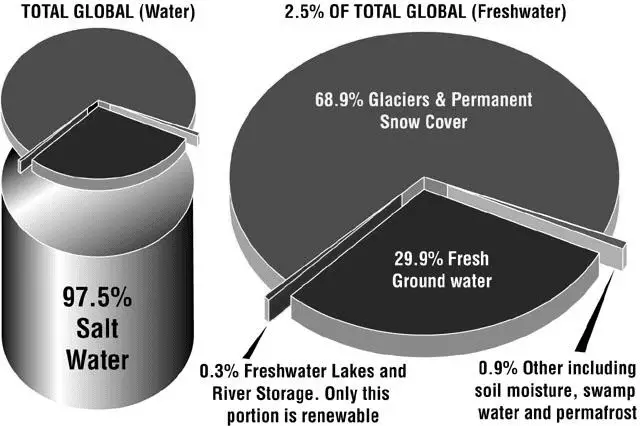
Freshwater occurs in several interconnected forms, including surface water and groundwater. These resources constantly interact through rainfall, infiltration, runoff, evaporation, groundwater movement, and natural drainage processes.
Rivers and streams transport water across landscapes, linking upstream catchments with downstream communities, wetlands, lakes, reservoirs, estuaries, and other environments that depend upon continuous water movement.
Lakes, ponds, and reservoirs store freshwater for domestic supply, irrigation, fisheries, livestock, industry, recreation, and ecological purposes. Their water levels can change with rainfall, withdrawals, evaporation, and inflows.
Groundwater occurs beneath the surface in pores, fractures, and underground formations.Wells and boreholes commonly access these reserves, making groundwater especially important where surface supplies remain unreliable.
Freshwater availability differs greatly among regions because rainfall patterns, geological conditions, population distribution, infrastructure, and seasonal changes influence both natural supplies and human access.
Conservation becomes essential when demand increases or water availability declines. Practical freshwater conservation approaches can reduce unnecessary consumption and protect supplies under increasing pressure.
Efficient management should also consider natural recharge and replenishment. Excessive withdrawals can reduce groundwater levels, lower streamflow, damage ecosystems, and create competition between households, agriculture, industries, and environmental needs.
Water scarcity can develop even where annual rainfall appears adequate because rainfall may arrive unevenly. Storage, distribution, conservation, pollution control, and responsible allocation help improve freshwater security.
Why Freshwater Management Matters
Freshwater management protects both quantity and quality by coordinating water use, pollution prevention, conservation, monitoring, treatment, ecosystem protection, and long-term planning across connected natural and human systems.
1. Human Health: Reliable supplies of safe freshwater support drinking, food preparation, personal hygiene, sanitation, and disease prevention, while reducing exposure to contaminated water and associated health risks.
2. Agricultural Production: Crops and livestock require dependable water for growth, irrigation, feeding, processing, cleaning, and survival, making freshwater management essential for stable agricultural productivity.
3. Industrial Development: Manufacturing facilities use freshwater for cooling, processing, cleaning, steam generation, product formulation, and other operations, so efficient management can reduce operational pressure on limited supplies.
4. Ecosystem Protection: Rivers, lakes, ponds, wetlands, and groundwater systems provide habitat for aquatic organisms while supporting nutrient cycling, biodiversity, food webs, and natural ecological processes.
5. Climate Resilience: Strong freshwater management can improve resilience by protecting watersheds, maintaining wetlands, reducing wasteful consumption, preserving storage capacity, and preparing communities for droughts and changing rainfall patterns.
6. Resource Efficiency: Responsible water management encourages conservation, reuse, maintenance, leakage control, pollution prevention, and efficient technologies that help communities obtain greater value from available freshwater.
7. Economic Stability: Clean and reliable freshwater supports farming, fisheries, tourism, manufacturing, households, and other economic activities. Effective environmental management best practices can strengthen these benefits.
8. Future Availability: Sustainable management prevents present consumption from undermining future supplies. It encourages decisions that protect natural resources while meeting current needs without creating unnecessary environmental damage.
Main Causes of Freshwater Pollution
Freshwater pollution occurs when harmful substances enter water resources and alter their physical, chemical, or biological condition. Pollution may originate from homes, farms, industries, cities, mines, or natural sources.
1. Domestic Wastewater: Untreated sewage can introduce pathogens, nutrients, organic matter, detergents, suspended solids, and household chemicals. Proper wastewater source management helps control these contamination pathways.
2. Agricultural Runoff: Rainfall can carry fertilizers, pesticides, manure, eroded soil, and organic materials from farmland into nearby rivers, streams, ponds, reservoirs, wetlands, and groundwater.
3.Industrial Discharges: Factories may release oils, metals, chemicals, suspended materials, acids, alkalis, nutrients, heated water, and other contaminants depending on their production processes.
4. Mining Activities: Mining and quarrying can release sediments, dissolved metals, acidic drainage, processing chemicals, and other materials that degrade freshwater when operations lack effective environmental safeguards.
5. Urban Runoff: Rainwater flowing across roads, markets, parking areas, construction sites, and rooftops can collect oils, plastics, litter, sediments, chemicals, nutrients, and other pollutants.
6. Improper Waste Disposal: Poorly managed waste can release pollutants into freshwater through leachate, direct dumping, drainage, flooding, and contaminated runoff. Responsible waste reduction practices can lower these risks.
7. Construction Activities: Soil disturbance exposes loose materials that rainfall can transport into waterways. Construction runoff commonly increases sediment loads and can carry cement residues, oils, litter, and other materials.
8. Petroleum Activities: Oil spills, leaking storage facilities, transport accidents, and operational discharges can introduce petroleum compounds into freshwater. Effective industrial waste management helps prevent contamination.
Read Also: Types of Wastewater and Motivational Factors for Recycling/Reuse
Major Freshwater Pollutants
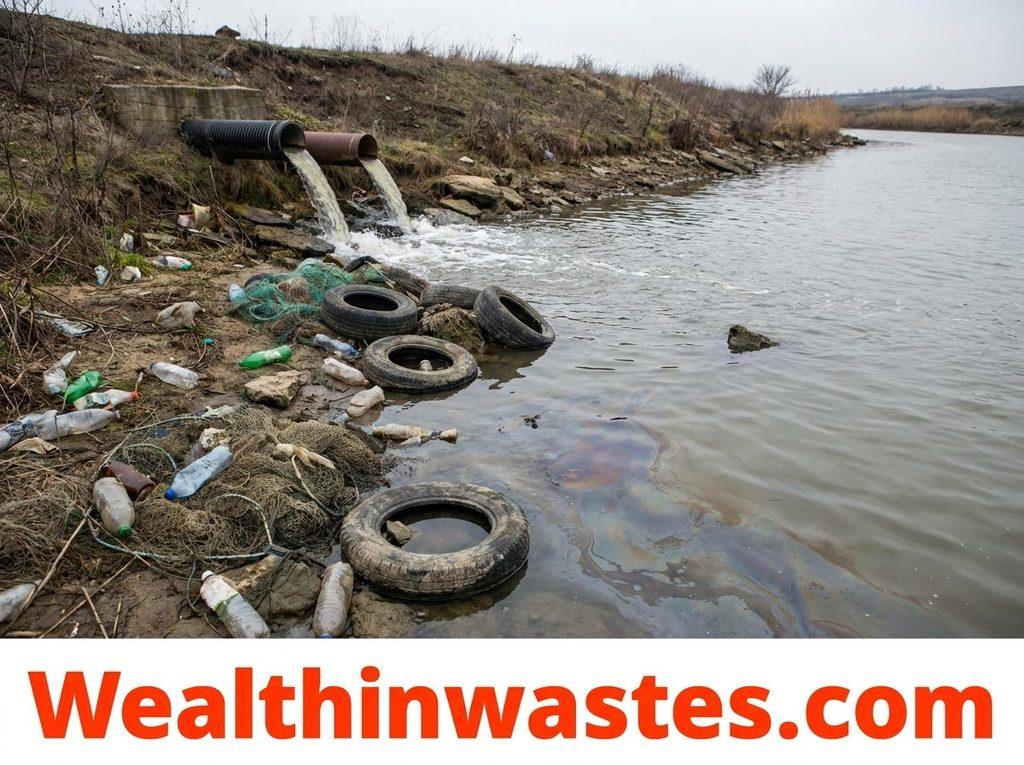
Freshwater pollutants vary according to their sources and properties. Some pollutants remain suspended, while others dissolve, react chemically, accumulate in sediments, or move through connected surface and groundwater systems.
1. Microbial Pollutants: Bacteria, viruses, protozoa, parasites, and other microorganisms can enter freshwater through sewage, livestock waste, septic systems, wildlife, and contaminated runoff.
2. Nutrient Pollutants: Nitrogen and phosphorus support biological growth, but excessive concentrations can stimulate algal blooms, increase decomposition, reduce dissolved oxygen, and disrupt freshwater ecosystems.
3. Heavy Metals: Metals such as lead, mercury, arsenic, and other trace elements can originate from industries, mining, waste, and natural geology, creating risks when concentrations become elevated.
4. Pesticides and Herbicides: Agricultural chemicals can move through runoff, drainage, erosion, spray drift, or groundwater pathways. Improper use can expose aquatic organisms and affect water quality.
5. Petroleum Compounds: Oils, fuels, lubricants, and petroleum-related chemicals can enter water through spills, leaks, industrial activities, vehicle operations, storage failures, and contaminated stormwater.
6. Organic Chemicals: Solvents, detergents, industrial compounds, pharmaceutical residues, and other organic substances can alter freshwater chemistry. Their effects depend on concentration, persistence, toxicity, and exposure duration.
7. Sediments and Plastics: Soil particles, litter, plastics, debris, and other physical materials can reduce clarity, cover habitats, obstruct waterways, transport pollutants, and interfere with aquatic organisms.
8. Radioactive Materials: Radioactive substances may occur naturally or enter water through specialized industrial, mining, medical, research, and energy-related activities requiring careful control and monitoring.
Pollutants often occur together rather than individually. A polluted water body may contain pathogens, nutrients, sediments, chemicals, metals, oils, and other contaminants from several sources simultaneously.
Understanding freshwater pollution categories helps environmental managers identify likely sources, prioritize monitoring, select suitable controls, and develop practical strategies for protecting affected water resources.
Effects of Freshwater Pollution
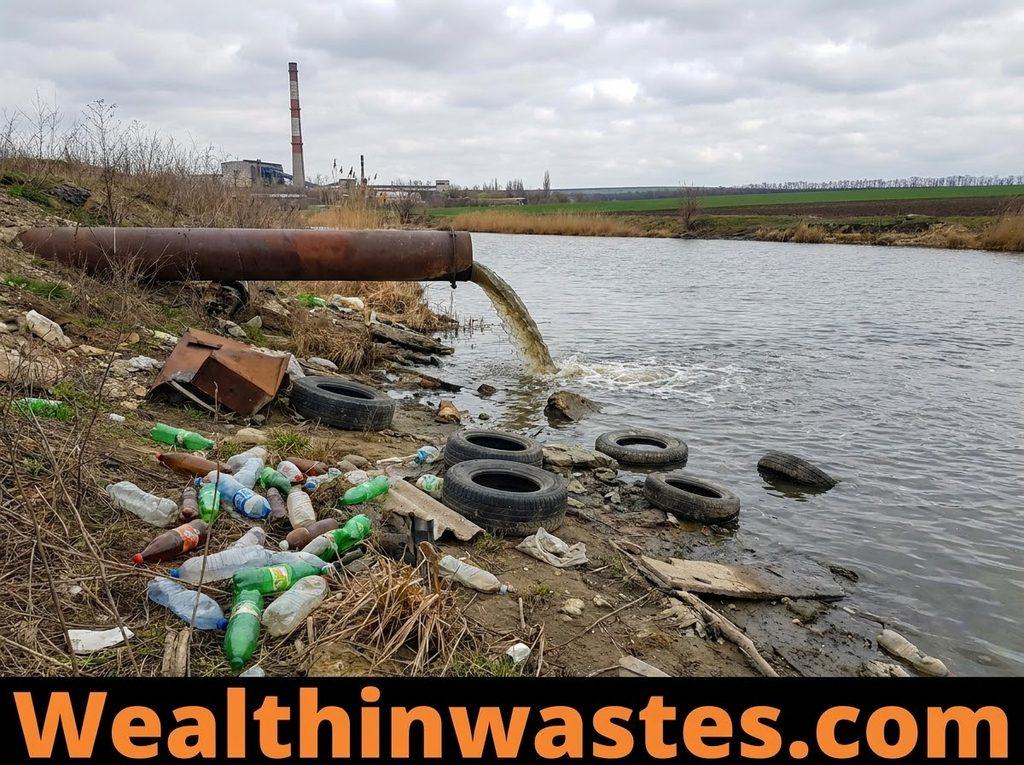
Freshwater pollution can affect people, animals, plants, ecosystems, agriculture, fisheries, recreation, industries, and local economies. The severity depends on pollutant type, concentration, exposure period, and environmental conditions.
Pathogenic microorganisms can contaminate water used for drinking, food preparation, bathing, recreation, livestock, and irrigation. Inadequate sanitation and untreated wastewater increase opportunities for human exposure.
Excess nutrients can trigger algal growth and other ecological changes. As plants and algae die, microbial decomposition consumes oxygen and may create stressful conditions for fish and other organisms.
Toxic chemicals can directly damage aquatic organisms and interfere with biological processes. Persistent substances may remain in sediments or accumulate within organisms, increasing ecological concerns through food-web interactions.
Sediment pollution can reduce water clarity, restrict light penetration, cover habitats, interfere with fish spawning grounds, and transport nutrients or chemicals. Erosion control therefore remains important for freshwater protection.
Groundwater contamination can create long-term management challenges because pollutants may move slowly underground and remain difficult to detect or remove. Protecting wells and recharge areas can reduce these risks.
Polluted freshwater can increase treatment costs because utilities may require additional processes to remove pathogens, nutrients, chemicals, suspended materials, salts, or other undesirable substances before use.
The wider effects of freshwater pollution include ecological deterioration, public-health concerns, economic losses, reduced recreational value, fishery impacts, agricultural problems, and declining confidence in water supplies.
Pollution can also spread beyond its original location because rivers transport contaminants downstream while groundwater carries substances through underground formations. Effective controls must therefore consider entire connected water systems.
Routine freshwater environmental monitoring can reveal changes in pollutants, water chemistry, biological conditions, and exposure patterns, allowing authorities and communities to respond before contamination becomes more widespread.
Freshwater Protection and Management
Freshwater management combines pollution prevention, efficient use, monitoring, treatment, conservation, ecosystem protection, infrastructure development, regulation, and public participation to maintain suitable water resources over time.
1. Pollution Prevention: Controlling contaminants before discharge reduces treatment demands and protects receiving environments. Source reduction should remain a central element of practical water-quality protection programmes.
2. Wastewater Treatment: Domestic, commercial, and industrial wastewater should receive suitable treatment before discharge or reuse. Proper treatment can reduce pathogens, solids, organic matter, nutrients, and selected chemicals.
3. Watershed Protection: Protecting forests, soils, wetlands, streams, and drainage areas reduces erosion and runoff while supporting infiltration, storage, habitat protection, and natural water filtration.
4. Water Conservation: Efficient irrigation, leak repairs, rainwater harvesting, water-saving fixtures, reuse, and responsible consumption can reduce pressure on freshwater systems. Useful water conservation measures support sustainable supplies.
5. Regular Monitoring: Authorities and water users should monitor appropriate physical, chemical, and biological parameters. Monitoring creates evidence for identifying pollution sources, assessing trends, and guiding corrective action.
6. Strong Regulation: Environmental institutions need clear responsibilities, suitable standards, technical capacity, reliable information, and enforcement mechanisms to control pollution and support effective freshwater management.
7.Community Participation: Communities can identify local pollution sources, support conservation projects, report environmental problems, maintain clean surroundings, and encourage responsible use of shared freshwater resources.
8. Resource Recovery: Treated wastewater can sometimes support non-potable uses when quality and safety requirements are satisfied. Integrated water and wastewater management can improve resource efficiency.
9. Sediment Control: Erosion-control measures, vegetation, settling systems, and suitable drainage design can reduce sediment entering freshwater. Sedimentation processes can also support treatment systems.
10. Efficient Planning: Freshwater programmes should consider population growth, urban expansion, agriculture, industry, climate variability, infrastructure needs, ecosystem requirements, and future demand when allocating available resources.
Good management also depends on understanding wastewater quality before selecting treatment systems. Information on wastewater characteristics and flow rates supports better treatment and discharge planning.
Treatment design should match water-quality objectives and receiving-environment sensitivity. Knowledge about sedimentation factors in treatment can improve the removal of settleable materials.
Organic pollution also requires attention because decomposition can consume oxygen. Understanding biochemical oxygen demand helps professionals evaluate pollution strength and treatment requirements.
Institutions responsible for water protection need coordinated duties and adequate technical support. Effective pollution-control arrangements can strengthen standards, monitoring, enforcement, sanitation, and water-resource protection.
Agriculture and Freshwater Conservation
Agriculture depends heavily on freshwater, yet farming can also contribute nutrients, pesticides, sediments, manure, and other contaminants when land and water resources receive poor management.
1. Fertilizer Management: Farmers should match fertilizer applications with crop requirements, timing, soil conditions, and expected rainfall to reduce nutrient losses that can reach nearby freshwater.
2. Pesticide Management: Appropriate products, recommended application rates, safe handling, correct timing, and runoff prevention can reduce pesticide movement from farms into rivers, ponds, groundwater, and wetlands.
3. Erosion Control: Vegetative cover, mulches, contour practices, reduced soil disturbance, and suitable conservation structures can reduce soil movement while limiting sediments transported into freshwater systems.
4. Efficient Irrigation: Farmers can conserve freshwater by improving irrigation scheduling, maintaining equipment, reducing leaks, applying suitable amounts, and avoiding unnecessary runoff from cultivated fields.
5. Manure Management: Livestock waste requires careful storage, treatment, transport, and application. Proper management reduces nutrient and microbial contamination risks associated with agricultural drainage and runoff.
6. Vegetated Buffers: Grass strips, shrubs, trees, and other suitable vegetation beside waterways can slow runoff, trap sediments, increase infiltration, and reduce direct pollutant movement into freshwater.
7. Soil and Water Conservation: Integrated practices protect productive soils while reducing erosion and water losses. Farmers can learn from environmental effects of poor waste disposal when managing farm waste responsibly.
8. Sustainable Farm Planning: Agricultural decisions should balance crop production with water conservation, soil protection, biodiversity, and pollution prevention. Responsible land management strengthens both farm resilience and freshwater security.
Summary on Freshwater and the Need for Sustainable Management
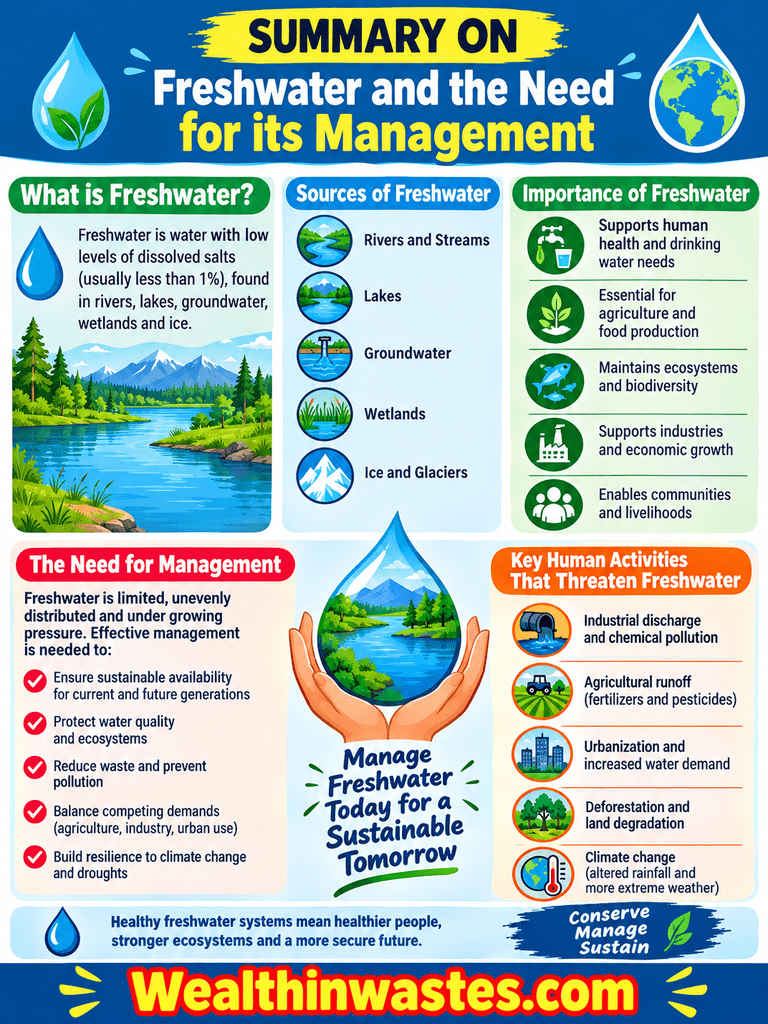
Freshwater must receive careful management because limited suitable supplies support human health, agriculture, industry, biodiversity, sanitation, livelihoods, and countless ecological processes.
| Aspect | Summary |
|---|---|
| Meaning | Freshwater is relatively low-salt water found in surface and underground systems. |
| Sources | Major sources include rivers, lakes, ponds, reservoirs, springs, rainfall, groundwater, wells, and boreholes. |
| Constituents | Freshwater contains gases, minerals, nutrients, organic matter, suspended particles, and microorganisms. |
| Importance | It supports drinking, sanitation, agriculture, livestock, industries, fisheries, ecosystems, recreation, and economic activities. |
| Pollution Sources | Important sources include sewage, agriculture, industries, mining, urban runoff, waste disposal, construction, and petroleum activities. |
| Major Pollutants | Pollutants include pathogens, nutrients, metals, pesticides, petroleum compounds, organic chemicals, sediments, plastics, and radioactive materials. |
| Pollution Effects | Pollution can harm people, wildlife, aquatic ecosystems, agriculture, fisheries, recreation, groundwater, and water-treatment systems. |
| Management | Protection requires pollution prevention, wastewater treatment, conservation, monitoring, watershed management, regulation, and public participation. |
| Agricultural Protection | Farmers can reduce contamination through efficient irrigation, erosion control, responsible fertilizer use, pesticide management, manure handling, and vegetated buffers. |
Frequently Asked Questions About Freshwater and the Need for Sustainable Management
1. What is freshwater?
Freshwater is water containing relatively low concentrations of dissolved salts. It occurs in rivers, lakes, ponds, reservoirs, springs, rainfall, groundwater, wells, and boreholes.
2. Why is freshwater important?
Freshwater supports drinking, sanitation, agriculture, livestock, industries, fisheries, ecosystems, recreation, biodiversity, food production, and many biological processes essential for human and environmental wellbeing.
3. What are the main freshwater sources?
Major sources include rivers, streams, lakes, ponds, reservoirs, springs, rainfall, groundwater, wells, and boreholes that provide water for human communities, agriculture, industries, and ecosystems.
4. What causes freshwater pollution?
Major causes include sewage, agricultural runoff, industrial discharges, mining, petroleum activities, urban stormwater, improper waste disposal, construction, erosion, and some natural geological processes.
5. What are common freshwater pollutants?
Common pollutants include pathogens, nutrients, heavy metals, pesticides, petroleum compounds, organic chemicals, sediments, plastics, radioactive materials, oils, and household or industrial wastes.
6. How does agriculture affect freshwater?
Agriculture can affect freshwater through fertilizer runoff, pesticide movement, soil erosion, livestock manure, irrigation losses, sediments, agricultural drainage, and improperly managed farm wastes.
7. How can freshwater pollution be prevented?
Prevention requires wastewater treatment, responsible agriculture, proper waste disposal, industrial pollution controls, erosion management, conservation, monitoring, environmental regulation, and public participation.
8. Why is freshwater management necessary?
Management protects water quality and quantity while supporting health, food production, economic activities, biodiversity, ecosystem functions, sustainable use, and reliable supplies for future generations.
9. What is the role of watershed management?
Watershed management coordinates land and water protection across connected drainage areas. It can reduce erosion, runoff, pollution, flooding, habitat damage, and unnecessary freshwater losses.
10. Can wastewater help conserve freshwater?
Yes.Properly treated wastewater can support suitable non-potable uses, reducing pressure on freshwater supplies. The required treatment level depends on the intended use and associated health risks.
Do you have any questions, suggestions, or contributions? If so, please feel free to use the comment box below to share your thoughts. We also encourage you to kindly share this information with others who might benefit from it. Since we can’t reach everyone at once, we truly appreciate your help in spreading the word. Thank you very much for your support and for sharing!
Read Also: Agronomic Measures to Control Soil Erosion