



The United States Environmental Protection Agency (EPA) identifies extremely hazardous substances that can require special emergency planning, reporting, inventory control, and communication when facilities store or release significant quantities.
Hazardous materials management brings together identification, safe storage, transportation, handling, emergency response, documentation, treatment, and disposal practices that reduce risks to workers, communities, property, wildlife, soil, water, and air.
Pesticides and fumigants deserve particular attention because some active ingredients can produce toxic gases, contaminate surfaces, or create dangerous reactions when handled incorrectly, especially during spills, leaks, and cleanup.
Effective management begins before a chemical enters a facility. Responsible operators assess hazards, inspect containers, follow product labels, maintain suitable protective equipment, train personnel, and prepare practical emergency procedures.
Fumigation illustrates why disciplined hazardous materials management matters. Successful treatment requires controlled conditions, appropriate respiratory protection, restricted access, accurate monitoring, and strict adherence to the product label and applicable regulations.
Understanding Hazardous Materials Management
Hazardous materials management refers to the organized control of substances that can harm people, animals, property, or the environment. It covers every stage from acquisition and storage through final disposal.
A sound system identifies the chemical, evaluates its hazards, determines suitable controls, and establishes responsibilities for everyone who may handle or encounter the material during routine operations or emergencies.
Common hazardous materials include pesticides, fumigants, corrosive chemicals, flammable substances, toxic industrial products, contaminated soil, laboratory residues, and certain wastes generated after agricultural or manufacturing activities.
Facilities should maintain clear inventories because knowing what materials exist, where they are located, and how much is present makes emergency planning more effective and reduces accidental exposure.
Reliable labels, safety data sheets, container inspections, and written procedures help workers recognize chemical hazards before handling begins. These controls also support consistent decisions during transport, storage, application, cleanup, and disposal.
Organizations can strengthen their hazardous-waste management system by maintaining current records, assigning responsibilities, checking storage areas, and reviewing emergency procedures before an incident occurs.
Hazardous materials management extends beyond the chemical itself. Contaminated packaging, protective clothing, absorbents, soil, water, equipment, and cleanup debris may require controlled handling because residues can continue creating hazards.
Organizations should review their procedures regularly and update them after incidents, process changes, new chemical purchases, equipment modifications, or changes in applicable requirements. Continuous review keeps controls practical and relevant.
Read Also: Soil Fumigation, Importance and Types of Fumigation
Regulatory Records And Hazardous Material Reporting

The supplied guidance highlights EPA requirements for extremely hazardous materials, including Threshold Planning Quantities and Reportable Quantities. These concepts help authorities understand where dangerous substances exist and when releases require notification.
A Threshold Planning Quantity, or TPQ, represents a specified amount of an extremely hazardous substance that can trigger emergency planning responsibilities when a facility stores that quantity.
A Reportable Quantity, or RQ, represents a specified amount of a substance whose accidental release can require reporting. The applicable quantity depends on the regulated material and governing requirements.
Facilities should never rely on memory when managing reporting thresholds. Keep accurate inventories, retain current safety documentation, and establish a process that alerts responsible personnel when quantities change.
Facilities can improve chemical records through a complete hazardous-waste management approach that connects identification, storage, transportation, treatment, and disposal information within one organized system.
Material Safety Data Sheets, commonly called MSDSs and now generally described as Safety Data Sheets, provide information about hazards, handling, protective measures, emergency procedures, and other important chemical safety requirements.
Annual inventories and emergency documentation help local and state response organizations understand the hazardous materials present at facilities. Accurate records can support better preparation before fires, spills, leaks, or other incidents occur.
For chemical identification and safe handling decisions, operators should maintain reliable information about chemical waste characteristics, including physical properties, hazards, storage requirements, and appropriate disposal precautions.
Because regulatory requirements vary by location and substance, facilities should verify current national, state, and local rules before storing, transporting, applying, or disposing of hazardous materials.
Safe Storage And Site Controls
1. Use Compatible Containers: Select containers that resist the chemical they hold, remain structurally sound, close securely, and prevent leakage. Inspect them frequently for corrosion, damage, swelling, cracks, or worn seals.
2. Control Access: Keep hazardous materials in secure areas with restricted access. Authorized personnel should understand hazards, emergency procedures, protective equipment requirements, and the location of spill-response supplies before entering.
3. Separate Incompatible Materials: Store substances according to their chemical compatibility. Keep materials that can react dangerously apart, and avoid placing chemicals near heat, ignition sources, food, feed, medicines, or drinking water.
4. Maintain Suitable Ventilation: Storage areas should provide appropriate ventilation for the chemicals involved while preventing unsafe accumulation of vapors or gases. Follow product instructions when determining ventilation and monitoring requirements.
5. Protect Against Spills: Use suitable containment measures, sound shelving, stable stacking, and practical drainage controls that keep leaks from reaching people, soil, drains, groundwater, or surface water.
6. Keep Labels And Records: Maintain readable labels and an updated inventory showing material names, quantities, storage locations, and relevant safety information. Never transfer hazardous substances into unmarked food or beverage containers.
Good storage practices should follow established hazardous-waste storage principles, including container compatibility, controlled access, suitable facilities, careful segregation, and protection against accidental releases.
Emergency Spill And Leak Response
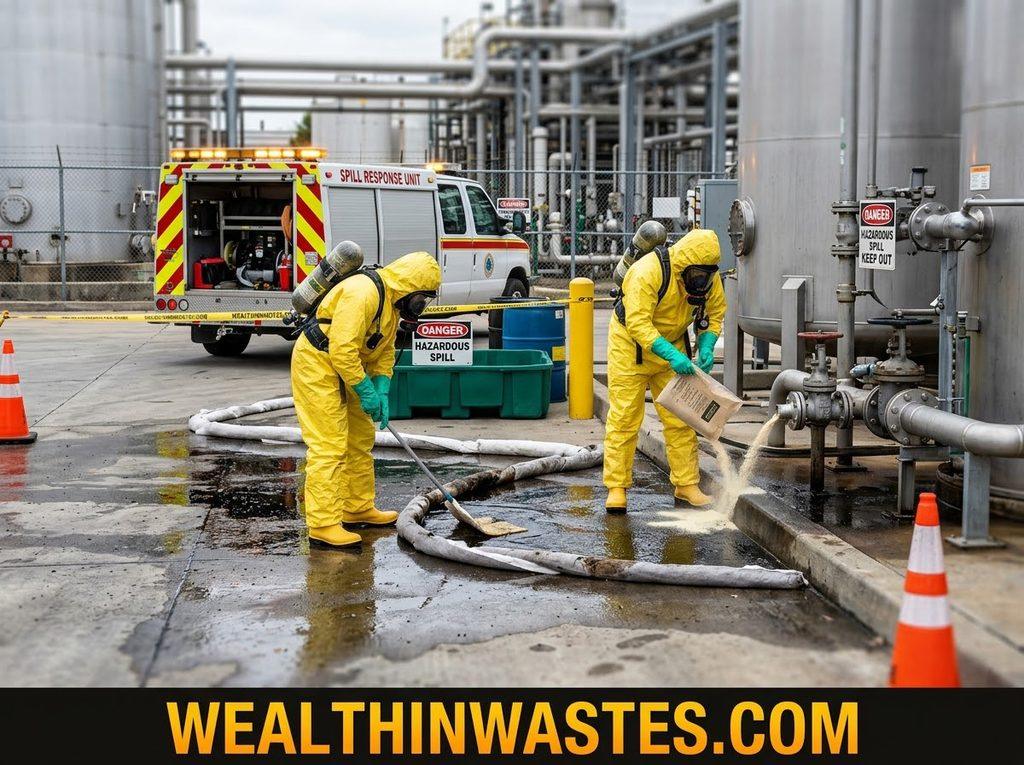
1. Isolate The Area: Move people away from the spill or leak, restrict access, and prevent unnecessary contact. Do not enter a contaminated area until trained personnel determine suitable protective measures.
2. Identify The Material: Use the container label, safety data sheet, inventory, or other reliable information to identify the substance. Never guess the chemical identity when selecting a response method.
3. Follow The Label: Product labels provide critical instructions for handling, containment, protective equipment, and emergency action. Follow those directions precisely, while also complying with applicable emergency and environmental requirements.
4. Use Appropriate Protection: Respiratory protection, gloves, protective clothing, eye protection, or other equipment may be necessary depending on the substance and exposure risk. Only trained personnel should perform hazardous cleanup.
5. Prevent Environmental Spread: Stop contaminated liquid, soil, debris, or wash water from reaching drains, streams, wells, or other sensitive areas.Use appropriate containment methods rather than improvised disposal.
6. Report Required Releases: When a release reaches the applicable reporting threshold, notify responsible authorities according to current requirements. Document the incident, response actions, quantities, and waste generated afterward.
Facilities should also consider pollution containment and cleanup measures that limit chemical movement while protecting workers, nearby communities, soil, groundwater, surface water, and ecological systems.
Suitable response locations should account for environmental conditions around disposal and containment areas, particularly drainage, geology, groundwater vulnerability, surrounding ecosystems, and long-term monitoring requirements.
Fumigant Safety And Application
Fumigants are specialized pesticides that act as gases or vapors, allowing them to penetrate enclosed spaces and reach pests hidden within commodities, structures, soil, or other difficult-to-access locations.
Because fumigants can produce dangerous concentrations quickly, operators must treat them as serious hazardous materials. Product labels should determine application methods, exposure limits, protective equipment, sealing requirements, and reentry controls.
The effectiveness of a fumigant can change with temperature, moisture, pest species, structure, formulation, and application method. Operators should therefore avoid changing prescribed rates, exposure periods, or procedures.
Fumigation should occur only in suitable spaces that workers can seal and control effectively. Warning notices, restricted access, monitoring procedures, emergency contacts, and protective equipment should remain available throughout treatment.
Additional agricultural guidance on fumigant use emphasizes careful pesticide-container management because empty or contaminated containers may retain hazardous residues and require controlled storage, handling, and disposal.
Fumigation work should also complement understanding pesticide movement through soil, particularly when soil treatments could affect surrounding land, groundwater, plants, microorganisms, or other environmental receptors.
1. Use Trained Personnel: Fumigation involves highly toxic substances and should be performed only by competent, properly authorized personnel who understand the product label, exposure controls, sealing requirements, monitoring, and emergency procedures.
2. Seal The Treatment Area: Space fumigation depends on controlled containment. Structures should be prepared and sealed appropriately so the fumigant remains within the treatment area and does not expose surrounding people unnecessarily.
3. Respect Reentry Controls: Keep people and animals away during treatment and until monitoring confirms that entry is safe. Never rely on odor alone to determine whether a fumigant concentration is acceptable.
4. Choose Controls Carefully: Fumigant effectiveness can change with pest species, temperature, moisture, structure, formulation, and application method. Follow approved directions rather than improvising concentration, exposure time, or equipment.
5. Prepare Emergency Equipment: Keep the required protective equipment, communication methods, warning signs, emergency contacts, and response materials ready before treatment begins. Preparation reduces confusion when an unexpected exposure occurs.
6. Treat Phosphide Products Carefully: Aluminum and magnesium phosphide products can generate phosphine gas when exposed to moisture. Follow the product label and emergency guidance, and never improvise cleanup procedures that increase exposure.
Fumigation is the use of poisonous gases to kill pests in an enclosed area and it is the most effective way to reach pests in their most remote hiding places.
Waste Handling And Disposal Controls
1. Identify Contaminated Waste: Treat contaminated soil, water, packaging, absorbents, protective clothing, equipment, and spill debris according to their hazards.Do not assume cleanup materials are ordinary household or municipal waste.
2. Minimize Waste Generation: Plan chemical purchases and applications carefully so operators avoid unnecessary leftovers. Waste prevention reduces storage demands, disposal costs, accidental-release opportunities, and the quantity of hazardous residue requiring treatment.
Effective prevention starts with reducing hazardous waste at its source through accurate purchasing, efficient chemical use, careful maintenance, reuse where appropriate, recovery, and improved operational practices.
3. Manage Pesticide Containers: Follow the product label for empty-container handling. Some pesticide containers require specific rinsing procedures, while containers associated with certain phosphide products must not be rinsed because moisture can create dangerous gases.
4. Store Waste Securely: Keep hazardous residues in compatible, closed, clearly identified containers within a controlled storage area. Separate incompatible wastes and prevent exposure to rain, heat, unauthorized people, livestock, and wildlife.
5. Use Approved Disposal Routes: Arrange treatment, recovery, or disposal through authorized facilities or contractors appropriate for the waste. Never pour hazardous residues into drains, waterways, fields, or ordinary waste containers.
Operators handling leftover spray mixtures should follow approved dilute pesticide waste practices that protect groundwater, surface water, wildlife, workers, and surrounding communities from unnecessary chemical exposure.
6. Maintain Disposal Records: Record waste descriptions, quantities, dates, carriers, destinations, and relevant documentation. Strong records demonstrate responsible management and make it easier to trace materials after incidents or regulatory inspections.
Where disposal becomes necessary, facilities should follow a suitable treatment and disposal hierarchy that prioritizes prevention, reuse, recycling, recovery, treatment, and controlled final disposal.
Disposal decisions should also consider appropriate waste-disposal options, especially where hazardous residues require specialized facilities, controlled transport, documented treatment, or regulated final disposal.
Worker Protection And Emergency Preparedness
Worker safety remains central to hazardous materials management because exposure can occur during routine handling, chemical transfer, equipment maintenance, application, spill response, waste storage, or transport.
Training should cover label interpretation, hazard recognition, protective equipment, safe handling techniques, storage controls, emergency communication, decontamination, reporting responsibilities, and procedures for preventing accidental releases.
Facilities should make suitable protective equipment readily available and ensure workers understand how to use, maintain, store, and replace it. Poorly maintained equipment can create a false sense of security during chemical operations.
Emergency plans should identify responsible personnel, evacuation routes, communication channels, emergency contacts, equipment locations, assembly points, and procedures for protecting nearby people. Plans should remain practical and easy to follow.
Workers can strengthen their understanding of chemical risks through hazardous-waste source and classification guidance, which helps connect material characteristics with safer handling, storage, treatment, and disposal decisions.
Fumigation work requires additional controls because toxic gases can spread without warning. Personnel should understand access restrictions, treatment boundaries, monitoring expectations, warning signs, and the circumstances that require immediate evacuation.
Incident drills can reveal weaknesses before a real emergency occurs. Periodic exercises should test communication, evacuation, equipment access, reporting procedures, and coordination among workers, supervisors, contractors, and emergency responders.
Facilities can also use pollutant and risk-assessment principles to understand how chemical concentration, persistence, exposure pathways, location, and timing can influence potential risks to people and environmental media.
After an incident, management should document what happened, identify contributing factors, replace damaged equipment, review procedures, and train personnel on corrective actions. Learning from incidents reduces the chance of recurrence.
Environmental Protection And Risk Reduction
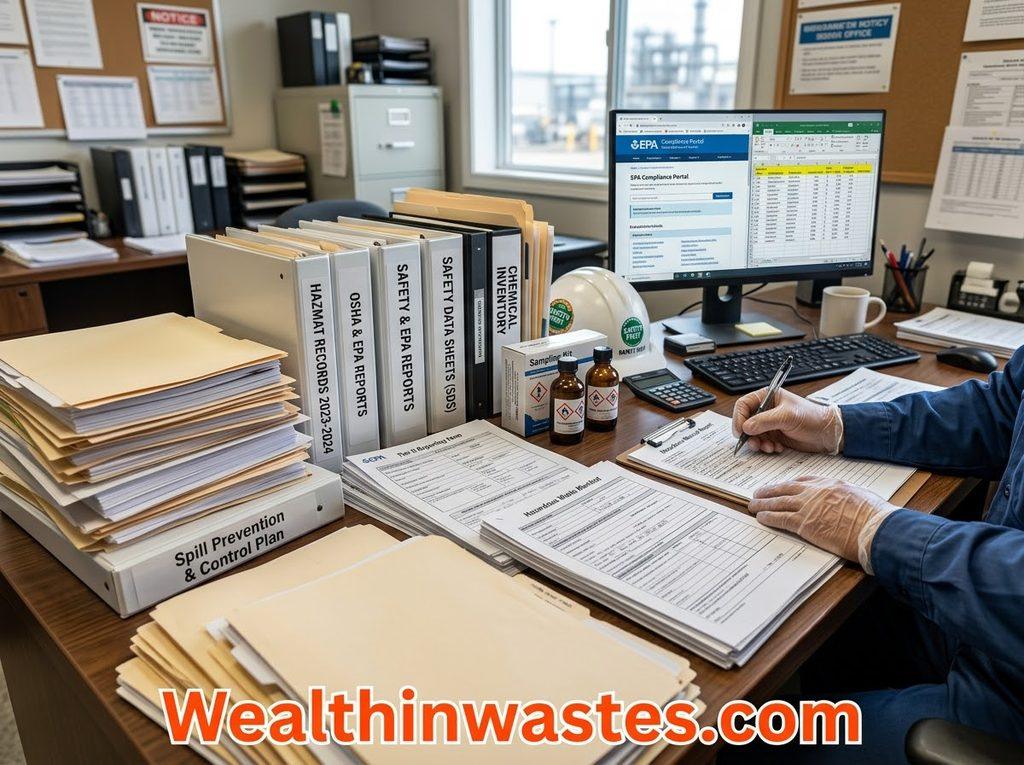
Hazardous materials can reach the environment through leaks, spills, poor storage, improper disposal, contaminated runoff, atmospheric releases, or damaged containers. Effective management aims to prevent these pathways before contamination occurs.
Protecting soil is important because pesticide residues and other hazardous substances may affect soil organisms, plants, productivity, and groundwater when contamination persists or moves through the soil profile.
Facilities should follow sound practices for preventing hazardous soil contamination, including secure chemical storage, rapid leak control, responsible waste handling, suitable containment, and monitoring where contamination may have occurred.
Water resources also need protection because chemical runoff, seepage, accidental discharges, and contaminated wash water can introduce pollutants into streams, rivers, ponds, groundwater, and other water sources used by communities.
Agricultural operators should understand common water-pollution pathways because pesticide runoff and other chemical discharges can move beyond treatment areas and affect aquatic environments.
Air quality can suffer when toxic vapors, gases, dusts, or combustion products escape into the atmosphere. Appropriate containment, ventilation, monitoring, and emission controls help reduce unnecessary exposure.
Facilities can strengthen air-pollution control measures by identifying hazardous emissions, monitoring relevant concentrations, maintaining equipment, and preventing uncontrolled releases from chemical storage or treatment operations.
Environmental risk reduction also depends on careful site selection for hazardous-waste handling and disposal. Facilities should consider geology, drainage, groundwater vulnerability, nearby ecosystems, transport routes, and long-term monitoring needs.
Reducing chemical waste at source offers another important control. Better purchasing, accurate application, maintenance, reuse where appropriate, recovery, recycling, and process improvements can lower the volume of hazardous residues.
Operators seeking additional waste-prevention strategies can review practical methods for reducing waste generation before residues require storage, treatment, transportation, or final disposal.
Read Also: Proper Wastes Treatment and Disposal Methods
Fumigation Spill Scenarios And Controls
Different fumigants present different hazards, so response procedures must follow the specific product label and safety information. The cleanup approach for a volatile gas differs from the approach for a solid phosphide product.
Methyl bromide, for example, presents inhalation hazards that make unauthorized entry into a spill area dangerous. The supplied guidance emphasizes evacuation, respiratory protection, controlled access, and concentration monitoring.
For phosphide products, moisture can accelerate phosphine generation. The supplied material therefore warns against using water during cleanup and emphasizes procedures that prevent responders from creating additional toxic or fire hazards.
Damaged containers should receive careful attention. Where a container leaks, trained personnel should follow the product-specific emergency procedure rather than attempting improvised repairs, transfers, or cleanup methods without considering exposure risks.
Contaminated soil, water, packaging, and cleanup debris should be treated as potentially hazardous until their status is determined.Appropriate containment prevents secondary contamination and protects workers who handle the waste later.
Spill response should also consider reporting obligations. A release can require notification when its quantity reaches the applicable Reportable Quantity, so accurate estimation and documentation remain important after containment.
Sites affected by accidental releases should consider land-pollution prevention and recovery measures so contaminants do not spread through soil, surface runoff, uncontrolled dumping, or poorly managed cleanup wastes.
Hazardous agricultural materials can also contribute to broader soil contamination risks when residues combine with polluted wastes, repeated chemical inputs, industrial releases, or inappropriate disposal practices.
Never treat a fumigation spill as an ordinary housekeeping problem. Toxic gases and reactive residues can create serious exposure hazards, making professional response, restricted access, and regulatory compliance essential.
Additional pesticide waste should remain controlled through responsible disposal of contaminated containers and materials, especially where residues could threaten workers, livestock, wildlife, soil, groundwater, or surface water.
Fumigators must use protective equipment to prevent injury or loss of life if they are likely to encounter gas concentrations above allowable limits. Always follow label instructions for protective equipment and clothing.
All fumigant products should remain in a locked, dry, well-ventilated location away from heat, ignition sources, food, feed, medicines, unauthorized personnel, children, and animals.
Summary on Comprehensive Hazardous Materials Management Guide
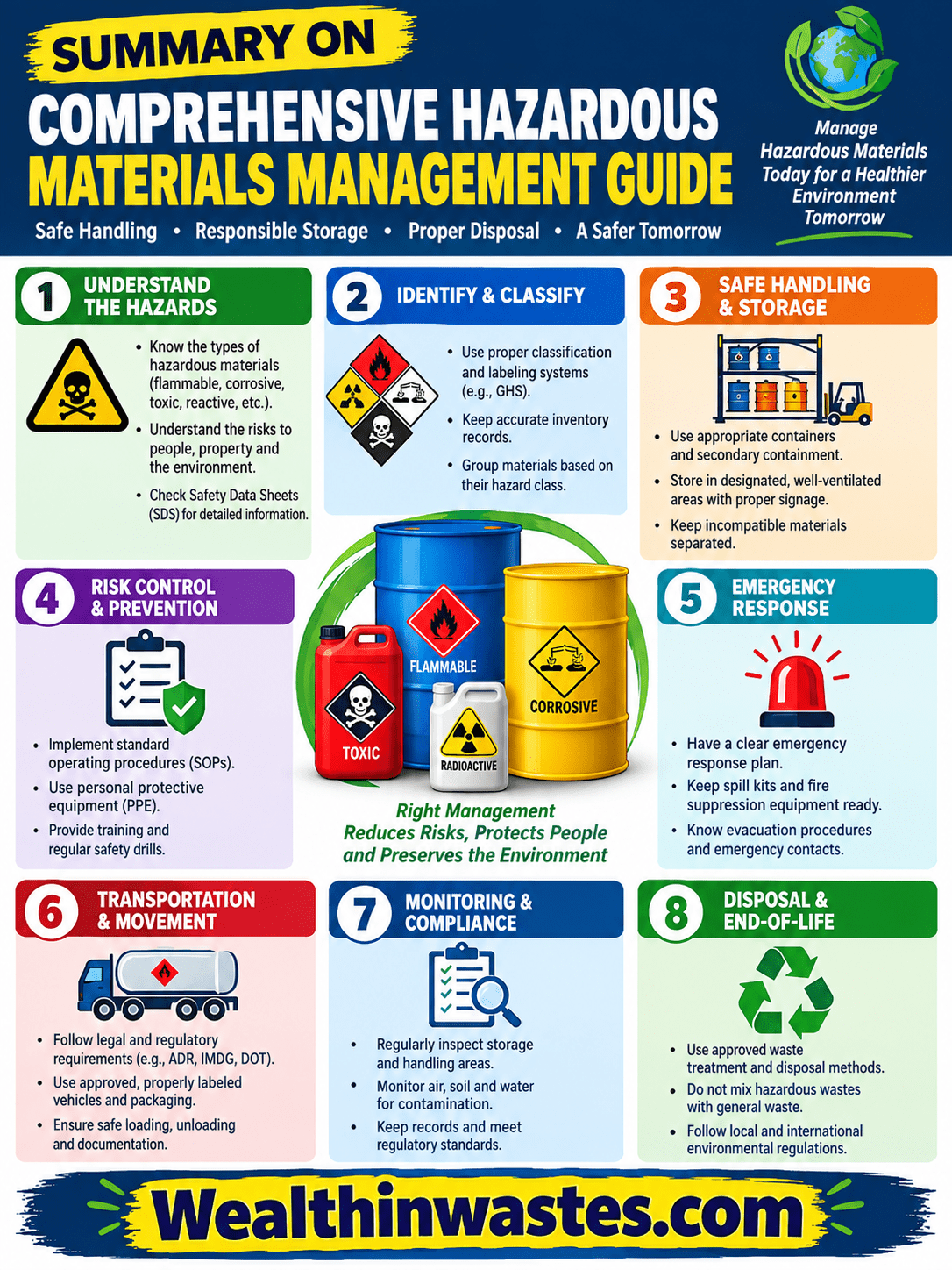
| Aspect | Summary |
|---|---|
| Hazardous Materials Management | It controls hazardous substances throughout identification, storage, handling, transport, emergency response, treatment, and disposal. |
| Regulatory Reporting | TPQs and RQs help determine emergency planning and reporting responsibilities for regulated hazardous substances. |
| Safe Storage | Use compatible containers, clear labels, secure access, suitable ventilation, segregation, and spill containment. |
| Fumigation Safety | Fumigation requires trained personnel, controlled spaces, protective equipment, monitoring, sealing, and strict label compliance. |
| Spill Response | Isolate affected areas, identify materials, use appropriate protection, prevent environmental spread, and report qualifying releases. |
| Waste Disposal | Contaminated materials require appropriate storage, treatment, transport, recovery, recycling, or authorized final disposal. |
| Worker Protection | Training, emergency planning, protective equipment, drills, communication, and incident reviews reduce exposure and improve preparedness. |
| Environmental Protection | Preventing releases protects soil, groundwater, surface water, air quality, wildlife, and surrounding communities. |
| Waste Reduction | Accurate purchasing and chemical use can reduce leftovers, disposal requirements, environmental risks, and operating costs. |
Frequently Asked Questions About Hazardous Materials Management Guide: Safe Practices
1. What is hazardous materials management?
Hazardous materials management is the organized control of dangerous substances from purchase and storage through handling, emergency response, transport, treatment, and final disposal.
2. What is a Threshold Planning Quantity?
A Threshold Planning Quantity is a specified amount of an extremely hazardous substance that can trigger emergency planning responsibilities under applicable regulatory requirements.
3. What is a Reportable Quantity?
A Reportable Quantity is a specified amount of a regulated substance whose accidental environmental release can require notification to the responsible authorities.
4. Why are fumigants considered hazardous materials?
Many fumigants can produce highly toxic gases or vapors.Incorrect handling, poor sealing, inadequate protection, or premature reentry can expose people to dangerous concentrations.
5. How should hazardous materials be stored?
Store them in compatible, labeled, secure containers, separate incompatible substances, control access, provide suitable ventilation, and protect storage areas against leaks, heat, ignition, and environmental release.
6. What should happen after a chemical spill?
Isolate the area, identify the material, follow the label and safety information, use appropriate protective equipment, prevent environmental spread, and report the release when applicable.
7. Can phosphide spills be cleaned with water?
The supplied guidance specifically warns against using water on aluminum or magnesium phosphide spills because moisture can increase phosphine generation and create greater toxic or fire hazards.
8. Why is hazardous-waste documentation important?
Good documentation records material identities, quantities, locations, incidents, transport, treatment, and disposal. These records improve emergency planning, accountability, compliance, and long-term environmental management.
9. How can facilities reduce hazardous waste?
Facilities can reduce hazardous waste through accurate purchasing, careful chemical application, process improvements, prevention of spills, appropriate reuse or recovery, and responsible management of unavoidable residues.
10. Who should perform hazardous fumigation work?
Fumigation should be performed by properly trained, competent, and appropriately authorized personnel who understand the specific product, protective measures, emergency procedures, containment requirements, and relevant regulations.
Do you have any questions, suggestions, or contributions? If so, please feel free to use the comment box below to share your thoughts. We also encourage you to kindly share this information with others who might benefit from it. Since we can’t reach everyone at once, we truly appreciate your help in spreading the word. Thank you very much for your support and for sharing!
Read Also: Safe Handling of Pesticides in Agriculture