


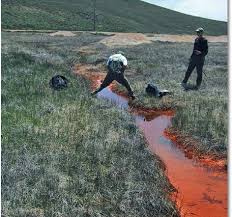
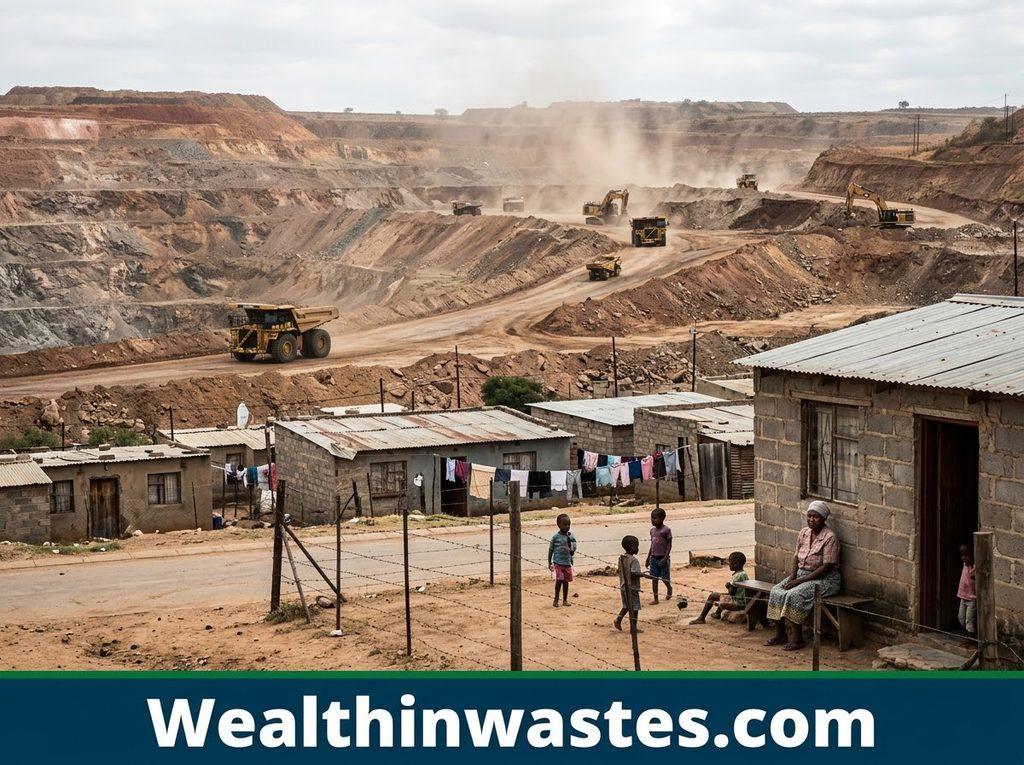
The social impacts of large-scale mining projects can extend far beyond the mine itself, influencing livelihoods, community relationships, cultural practices, public health, local economies, and people’s sense of security in affected areas.
Mining projects may bring employment, roads, schools, markets, and new services to remote areas, yet these gains may reach different groups unevenly and may not compensate everyone for associated social costs.
Social values are particularly affected when mining changes access to land, water resources, forests, and traditional activity areas. These changes can reshape relationships within communities and between residents and authorities.
Displacement creates deeper challenges because families can lose homes, productive land, social networks, community institutions, and places carrying historical or spiritual meaning, especially when relocation decisions exclude local voices and customary leaders.
Understanding the impacts of mining projects on social values therefore requires attention to economic opportunity, environmental quality, public health, cultural identity, participation, equity, conflict prevention, and long-term community wellbeing across project areas.
Read Also: Ecological Consequences of Management of Natural Resources
Impacts of Mining Projects on Communities
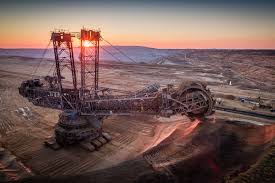
Mining projects can alter community life quickly when exploration expands into areas previously used for farming, fishing, grazing, housing, recreation, or cultural activities. The scale of change often depends upon project location and infrastructure.
New roads, processing facilities, worker camps, power systems, and transport routes can improve physical connections and expand access to markets or services. However, construction can also divide settlements and disrupt familiar movement patterns.
Local populations may experience rising demand for housing, food, transport, water, and other services after mining begins. Where supplies remain limited, prices can rise and poorer households may face greater pressure.
Community members may also experience changes in social relationships as workers arrive from outside areas, businesses expand, and new income opportunities develop. These changes can create cooperation while also producing competition.
Mining can therefore affect the social organization of communities by changing who controls resources, who gains employment, who receives contracts, and whose concerns receive attention during important project decisions within host areas.
Projects can also alter perceptions of fairness. When residents believe benefits, compensation, employment, or environmental protection are distributed unevenly, dissatisfaction may grow even when the project produces visible economic activity.
Social values depend strongly on trust, participation, shared norms, and access to community resources. Responsible development should recognize these factors rather than treating social effects as secondary to production targets.
Early consultation can help identify important places, vulnerable groups, livelihood patterns, and local expectations before major disturbance occurs. Strong engagement also gives communities opportunities to understand project plans and raise concerns.
Mining Projects and Economic Benefits
1. Employment Opportunities: Mining projects can create direct jobs for operators, engineers, drivers, technicians, security personnel, and support workers, while indirect employment may expand through transport, food supply, construction, and local services for nearby households.
2. Infrastructure Development: Mining investment can support community infrastructure, schools, clinics, water systems, and other facilities. These improvements can strengthen community access to services when planning reflects genuine local needs that serve surrounding local residents.
3. Local Business Growth: Increased demand from mining companies and workers can create opportunities for traders, farmers, caterers, mechanics, accommodation providers, and contractors.Local procurement can spread economic activity beyond the mine across host communities.
4. Unequal Distribution: Economic gains may not reach households equally. People lacking skills, capital, land, connections, or access to training can remain excluded while costs such as higher prices affect wider populations across local communities.
5. Long-Term Economic Dependence: Communities can become heavily dependent on mining income when alternative industries remain weak. This dependence may create vulnerability when commodity prices fall, operations close, or employment levels decline and household incomes.
Mining Projects, Displacement, and Livelihoods
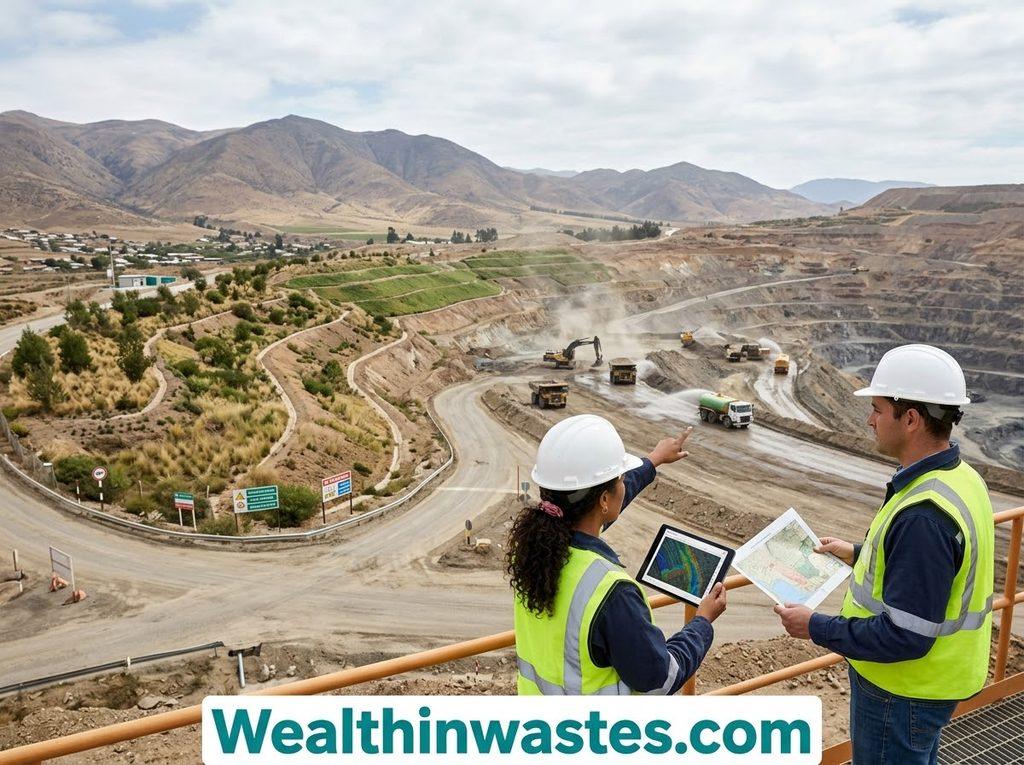
1. Loss of Homes: Large mining developments can require residential areas to be cleared for pits, roads, processing plants, waste facilities, or other infrastructure, forcing families to relocate from established community environments during project development.
2. Loss of Productive Land: Displacement can remove access to farms, grazing areas, fishing grounds, forests, and water sources. Losing natural resources may reduce household income and weaken traditional food production systems for affected households.
3. Disrupted Social Networks: Resettlement can separate relatives, neighbours, religious groups, traders, and local associations. These relationships often provide childcare, credit, labour exchange, emergency support, shared knowledge, and community assistance during difficult transitions.
4. Reduced Cultural Continuity: Moving communities away from ancestral locations can weaken connections with burial grounds, sacred landscapes, historical places, and traditional practices that depend upon particular territories and natural features within affected host communities.
5. Inadequate Resettlement Planning: Inadequate resettlement planning can leave new settlements without sufficient land, water, transport, schools, markets, healthcare, or employment, creating additional economic hardship, resentment, and livelihood disruption after relocation for displaced households and businesses.
Social Conflict and Power Imbalances
Conflict can emerge when communities perceive mining decisions as unfair, especially where authorities, companies, landowners, workers, and vulnerable groups have different interests. Disputes may concern compensation, employment, pollution, ownership, access, or participation.
Power differences matter because mining companies often possess greater financial resources, technical expertise, legal support, and institutional access than individual households. Communities may struggle to negotiate effectively without independent information or representation.
When residents feel ignored, consultation can become symbolic rather than meaningful. This can deepen distrust and encourage protests, legal disputes, work stoppages, community division, or confrontations over project activities across affected communities.
Clear agreements can reduce uncertainty by defining responsibilities, compensation arrangements, environmental safeguards, grievance procedures, monitoring roles, and community development commitments. Transparent processes also make it easier to track whether commitments are fulfilled.
Community participation works better when information is accessible and local people can understand technical assessments, expected impacts, alternatives, and proposed controls. Independent advisers can help residents evaluate complex documents and decisions.
Local institutions can influence how mining benefits and burdens are distributed. Traditional authorities, elected representatives, women’s groups, youth organizations, farmers, fishers, and other associations may have different priorities and community leaders.
Effective grievance mechanisms should provide accessible channels for complaints, timely responses, documented decisions, and escalation when disputes remain unresolved. Communities need confidence that raising concerns will not threaten access to future opportunities and respected procedures.
Social stability depends on more than avoiding conflict. It also requires fair participation, reliable communication, respect for community rights, and practical systems that allow residents to influence decisions affecting their homes and livelihoods.
Mining Projects and Public Health
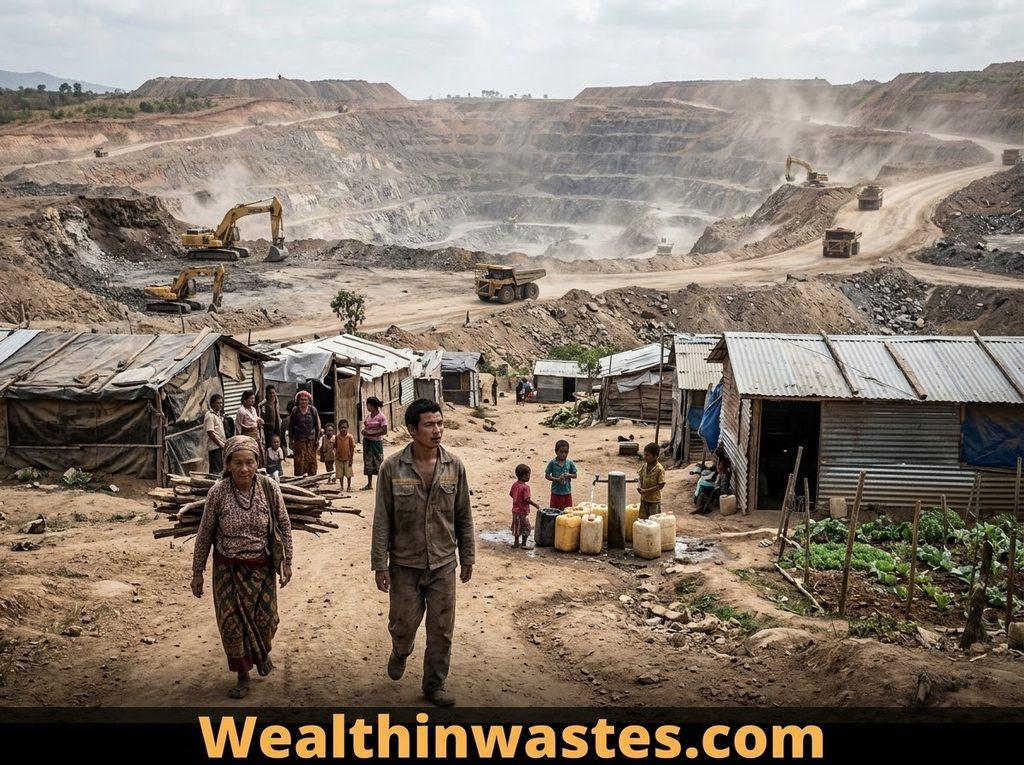
1. Water Contamination: Mining can introduce metals, suspended solids, acidity, processing chemicals, fuels, sewage, and other contaminants into rivers, streams, lakes, and groundwater when pollution controls fail or waste systems are poorly managed across nearby residential areas too.
2. Air Pollution: Blasting, crushing, hauling, burning, and exposed mine surfaces can generate dust, particulate matter, gases, and fumes. Persistent exposure can reduce air quality and increase health concerns among workers and nearby residents during prolonged dry periods.
3. Hazardous Exposure: Mining workers and nearby residents may encounter hazardous substances through contaminated water, soil, food, dust, or improper waste handling. Exposure pathways depend on contaminants, concentration, duration, and local conditions without adequate safeguards.
4. Disease and Sanitation Risks: Rapidly established mining camps can strain sanitation systems, housing, clinics, and water supplies. Poor conditions may increase exposure to infectious diseases and other community health problems around growing mining settlements.
5. Reduced Quality of Life: Noise, traffic, dust, pollution, congestion, altered landscapes, and uncertainty can affect physical comfort, social wellbeing, household routines, and perceptions of safety within host communities over extended periods for surrounding households and workers.
Mining Projects and Cultural Values
Mining projects can affect cultural resources directly through excavation, construction, vegetation clearing, blasting, road building, and infrastructure placement. These activities may physically damage archaeological sites, sacred places, historic structures, or landmarks.
Indirect effects can also occur when erosion, sediment movement, drainage changes, increased access, or changing land use alters the surroundings that give cultural resources their meaning and wider community context.
Sacred landscapes may hold spiritual importance that cannot be measured through market prices alone. Their value can depend on ancestry, ceremonies, oral traditions, community identity, and relationships between people and particular places.
Historic infrastructures may also serve as physical records of community development. Their destruction can remove evidence of earlier settlement, trade, industry, migration, or traditional construction practices that communities use to understand their history.
Greater access to previously remote areas may increase the risk of unauthorized artifact removal, vandalism, visitor pressure, or accidental damage. Monitoring and controlled access can help reduce these risks around sensitive locations.
Visual changes can influence cultural perception even when physical resources remain intact. Large excavations, waste facilities, cleared vegetation, dust, machinery, and roads can transform landscapes that communities previously regarded as distinctive or meaningful.
Local knowledge can help identify cultural resources that formal surveys may overlook. Elders, traditional custodians, historians, religious leaders, and community groups may know about places with historical or spiritual importance.
Protection measures should therefore combine technical assessment with meaningful community participation. Avoiding sensitive sites, establishing buffer areas, documenting heritage, controlling access, and monitoring changes can reduce avoidable cultural damage around affected communities.
Mining Projects and Environmental Damage
1. Soil and Food Production: Mining disturbance can remove topsoil, increase erosion, alter drainage, and introduce contaminants.These changes may reduce agricultural productivity and affect households that depend on land for food and income nearby.
2. Water and Fisheries: Sediment, metals, chemicals, and altered water flows can affect aquatic habitats. Declining water quality may reduce fish availability, increase treatment needs, and disrupt communities relying on rivers for livelihoods and incomes.
3. Forest and Biodiversity Loss: Clearing land for pits, roads, camps, and waste facilities can remove vegetation and fragment habitats. Communities may lose access to fuelwood, wild foods, medicinal plants, and other ecosystem resources there.
4. Livelihood Transfer of Costs: When pollution spreads beyond mine boundaries, agriculture, fishing, livestock production, tourism, and household activities may absorb cleanup expenses or income losses without sharing proportionately in mining revenues for local households.
5. Reduced Community Resilience: Loss of natural resources can leave households with fewer options during droughts, price increases, crop failures, or employment disruptions. Healthy ecosystems often provide essential support when formal services are limited locally.
Read Also: United Nation REDD- Plus Initiative to Combating Deforestation
Managing Mining Projects Responsibly
1. Strong Environmental Assessment: Before approval, projects should examine likely effects on land, water, biodiversity, livelihoods, health, cultural resources, traffic, housing, and vulnerable groups. Baseline information improves later monitoring and accountability during early project approval.
2. Fair Community Engagement: Companies and authorities should provide understandable information, consult affected groups early, document concerns, and explain how decisions respond to community input. Participation should continue throughout the project life cycle and trust.
3. Effective Resettlement Planning: Where relocation cannot be avoided, planning should address housing, land, infrastructure, livelihoods, cultural ties, social networks, compensation, and long-term support rather than focusing only on physical movement before relocation actually occurs.
4. Pollution Prevention: Operators should control wastewater, runoff, dust, hazardous materials, sewage, noise, and waste at their sources. Regular monitoring can reveal problems early and support corrective action before impacts spread throughout active mining operations.
5. Community Benefit Systems: Local development agreements can direct appropriate resources toward skills training, procurement, infrastructure, education, healthcare, or livelihood support. Clear criteria can improve transparency and reduce disputes over benefit distribution for affected residents.
6. Closure and Restoration: Mining planning should address what happens after extraction ends. Land restoration, water protection, employment transition, infrastructure maintenance, and long-term monitoring can help communities adjust to post-mining conditions across affected host communities.
Mining projects can produce valuable economic opportunities, but their wider effects depend heavily on how land, resources, livelihoods, culture, health, and community participation are managed throughout project development.
Communities experience fewer social pressures when project planning recognizes local knowledge, protects important resources, communicates openly, and provides fair systems for compensation, participation, environmental monitoring, and dispute resolution.
Long-term success also requires planning for mine closure, restoration, livelihood transition, and continuing community needs after extraction ends. These measures can reduce dependence, uncertainty, and unresolved social burdens.
Summary on Impacts of Mining Projects on Social Values and Communities
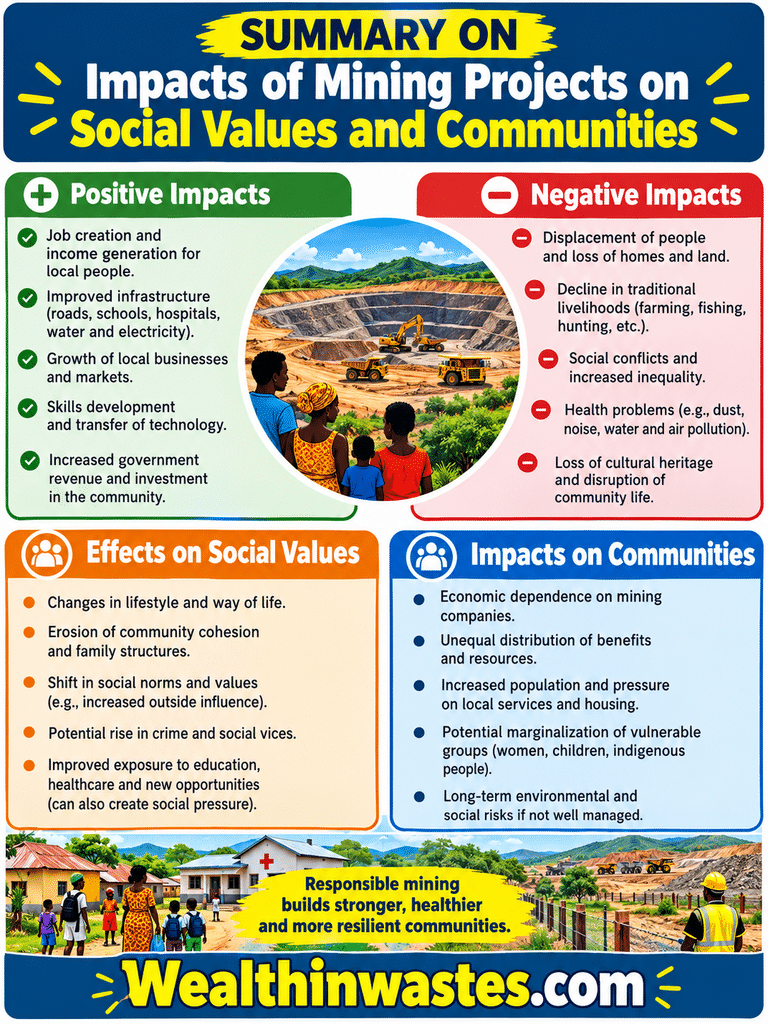
| Section | Main Idea | Why It Matters |
|---|---|---|
| Community Change | Mining can reshape services, relationships, resources, and local routines. | Social structures may change rapidly. |
| Economic Benefits | Jobs, infrastructure, and businesses may grow. | Benefits may remain unevenly distributed. |
| Displacement | Families may lose homes, land, livelihoods, and networks. | Relocation can create lasting hardship. |
| Conflict | Unequal power and poor consultation can increase disputes. | Trust and stability may decline. |
| Public Health | Pollution and poor sanitation can increase exposure risks. | Community wellbeing can deteriorate. |
| Cultural Values | Sacred, historic, and ancestral resources may be disturbed. | Identity and heritage can be weakened. |
| Environmental Damage | Soil, water, forests, and biodiversity may decline. | Natural livelihoods and resilience can suffer. |
| Responsible Management | Assessment, participation, safeguards, and restoration reduce harm. | Better planning supports long-term community wellbeing. |
Frequently Asked Questions About Impacts of Mining Projects on Social Values and Communities
1. What are the main impacts of mining projects on social values?
Mining can affect livelihoods, health, culture, displacement, social relationships, local economies, public services, environmental quality, and community stability.
2. Can mining projects provide social benefits?
Yes. Projects may create employment, infrastructure, business opportunities, skills development, and improved access to services, although benefits may be unevenly distributed.
3. Why can mining cause community displacement?
Large mines may require land for pits, roads, plants, waste facilities, camps, and other infrastructure, making relocation necessary in some project areas.
4. How can mining pollution affect communities?
Contaminated water, air, soil, food, or waste streams can increase exposure risks and may reduce livelihood opportunities, comfort, and community wellbeing.
5. Why can mining projects create social conflict?
Conflict may arise when residents perceive compensation, employment, environmental protection, land access, or decision-making processes as unfair or inadequately managed.
6. Which cultural values can mining affect?
Mining can affect sacred landscapes, ancestral places, historic structures, archaeological resources, traditional practices, community memories, and culturally important natural landmarks.
7. How does environmental damage affect social values?
Environmental degradation can reduce access to farming, fishing, forests, water, food resources, and other natural assets that support household livelihoods and cultural practices.
8. How can mining projects reduce social harm?
Early assessment, meaningful participation, fair resettlement, pollution prevention, transparent agreements, strong grievance systems, and closure planning can help reduce avoidable impacts.
Do you have any questions, suggestions, or contributions? If so, please feel free to use the comment box below to share your thoughts. We also encourage you to kindly share this information with others who might benefit from it. Since we can’t reach everyone at once, we truly appreciate your help in spreading the word. Thank you very much for your support and for sharing!
Read Also: Water and Land Pollution in Agriculture