


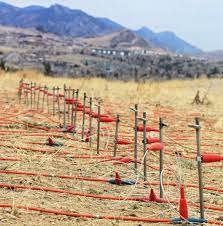
The search for valuable materials beneath the earth has occupied human societies for thousands of years, because minerals and other natural resources support construction, manufacturing, energy production, and technological development.
Copper has been used for thousands of years, while ancient gold objects demonstrate how early communities developed methods for locating, extracting, shaping, and trading valuable mineral resources from natural deposits.
As human demand for minerals increased, people developed more systematic approaches for identifying deposits before committing substantial resources to extraction, processing, transportation, and commercial development of those materials.
These activities have also changed landscapes, soils, rivers, vegetation, and wildlife habitats. Understanding mining therefore requires attention to both resource development and the environmental responsibilities that accompany extraction.
The terms prospection, exploration, and mining describe related but distinct stages of resource development. Together, they help determine whether valuable deposits exist, whether they can generate returns, and how extraction should proceed.
Prospection and Exploration in Mining
Prospection generally refers to the early search for indications of natural resources, while exploration involves more detailed investigations intended to establish the location, characteristics, quantity, and quality of deposits.
Exploration can target organic resources such as coal, petroleum, and natural gas, or inorganic resources such as gold, cassiterite, tantalite, columbite, diamond, limestone, and other economically useful minerals.
Prospection often begins with existing geological information, maps, historical records, remote observations, and knowledge of regional geology. Researchers then identify areas that deserve closer examination through systematic field investigations.
Understanding the broader natural resource base helps explain why exploration focuses on particular materials and locations where geology, technology, demand, and economic conditions create development opportunities.
Field exploration may involve geological mapping, surface observations, geochemical sampling, geophysical surveys, trenching, drilling, laboratory analysis, and interpretation of collected data from different locations.
Exploration teams may also examine environmental monitoring indicators when establishing baseline conditions that later help measure changes caused by exploration, development, extraction, and associated infrastructure.
The process can continue for months or years because investigators must establish whether a deposit contains sufficient material of suitable quality to justify the large capital requirements associated with development.
Exploration represents a high-risk investment because drilling and analysis can consume substantial funds without producing a commercially viable discovery. This uncertainty makes careful planning and technical evaluation essential.
Exploration also requires information from several disciplines, including geology, geochemistry, geophysics, chemistry, engineering, environmental science, economics, accounting, logistics, health, and community relations.
Read Also: On-site Municipal Wastewaters Treatment
Major Stages of Mineral Exploration
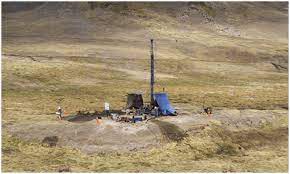
A systematic exploration programme reduces uncertainty by moving from broad regional investigation toward detailed assessment. Each stage narrows the search area and improves understanding of the potential deposit.
1. Literature Review: Exploration normally starts by reviewing geological maps, previous studies, historical records, remote sensing information, mineral occurrence data, and reports about similar deposits elsewhere.
This initial work helps identify favourable geological settings and prevents unnecessary duplication of earlier investigations. It also provides the foundation for field planning, budgeting, and selection of suitable technical methods.
2.Regional Reconnaissance: Field teams visit promising areas to examine rock types, structures, drainage patterns, soil conditions, visible mineralisation, and other surface indicators associated with possible deposits.
Researchers may combine reconnaissance findings with rock and mineral resource classifications to distinguish preliminary targets from areas with weaker geological evidence or limited development potential.
3. Sampling and Analysis: Soil, rock, stream sediment, groundwater, or other samples may undergo laboratory testing to determine chemical composition and identify elements or compounds associated with mineralisation.
Reliable sampling depends on proper site selection, representative collection, careful labelling, appropriate preservation, and suitable analytical procedures. Poor sampling can produce misleading results and weaken later investment decisions.
4. Geophysical Investigation: Geophysical methods help reveal underground structures or contrasts without excavating the entire target area. Magnetic, electrical, electromagnetic, seismic, and radiometric methods can provide valuable subsurface information.
Geophysical information becomes especially useful when surface exposures are limited. Investigators can combine those results with geology and chemistry to improve the interpretation of the deposit.
5. Trenching and Drilling: Trenching can expose shallow mineralised zones, while drilling provides information about deposits below the surface. Drill cores or cuttings allow detailed geological and laboratory evaluation.
These investigations help define deposit boundaries and support estimates of thickness, continuity, depth, grade, and volume. They therefore represent important steps toward establishing the commercial potential of a mineral occurrence.
6. Feasibility Assessment: Technical findings must eventually support economic analysis, development planning, environmental evaluation, infrastructure studies, and risk assessment before investors decide whether extraction should proceed.
Reserves, Resources, Grade and Tonnage
Exploration does not simply ask whether minerals exist. It must establish how much material exists, where it occurs, what it contains, and whether enough valuable material can support economic extraction.
1. Resource: A resource refers broadly to a known or potentially valuable concentration of naturally occurring material whose quantity, quality, or economic potential may justify further evaluation.
The distinction becomes important because not every geological occurrence can support profitable mining. Technological limitations, market conditions, recovery costs, infrastructure, environmental requirements, and access can restrict development.
2. Reserve: A reserve represents the portion of a mineral resource that can be economically extracted under defined technical, legal, environmental, and market conditions.
This concept connects geological knowledge with financial reality. A large deposit may remain uneconomic when extraction costs are excessive or commodity prices cannot support the required investment.
3. Grade: Grade describes the concentration of the valuable mineral or element within the material being evaluated. Higher grades can improve potential revenue, although grade alone does not determine profitability.
Exploration therefore focuses on determining chemical characteristics and distribution patterns across the deposit. Broader knowledge of soil and mineral resource management also helps explain interactions between mineral development and surrounding environmental resources.
4. Tonnage: Tonnage estimates the quantity of mineralised material available within defined geological boundaries. Analysts combine dimensions, density, sampling results, and geological interpretation to calculate volume and mass.
5.Economic Evaluation: Engineers and financial specialists compare recoverable material with development, extraction, processing, transport, environmental, labour, and closure costs before recommending commercial development.
Accurate estimation improves confidence among lenders, investors, regulators, operators, and host communities. It also provides a technical foundation for mine planning and environmental management.
Mining Methods and Extraction Choices
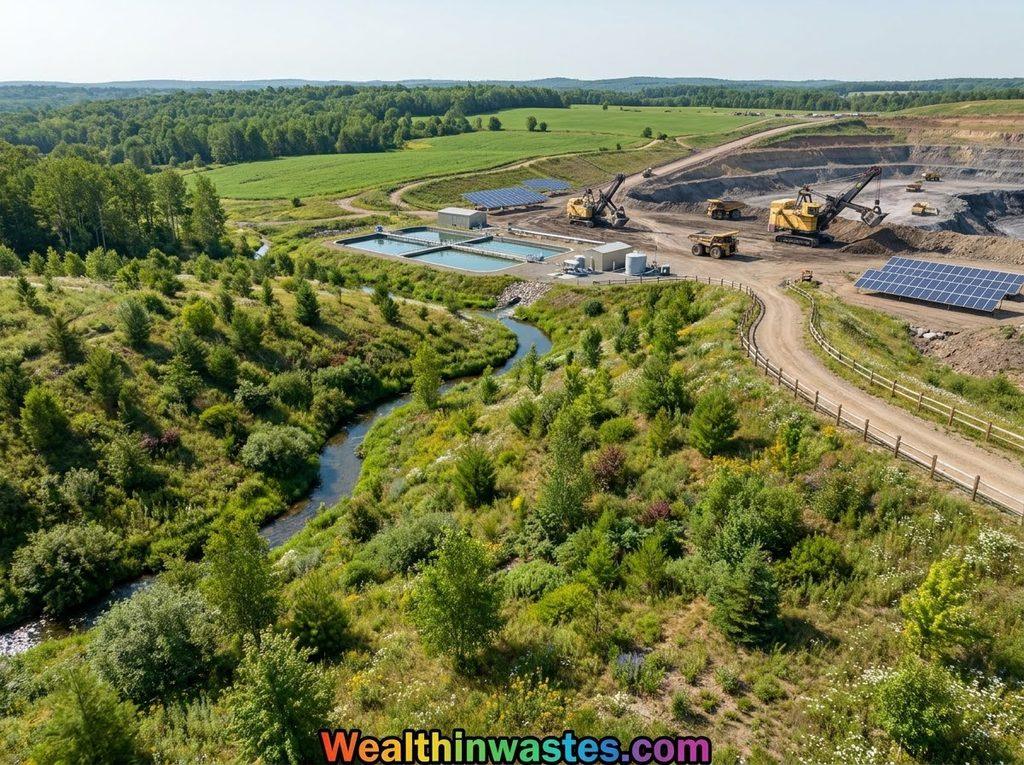
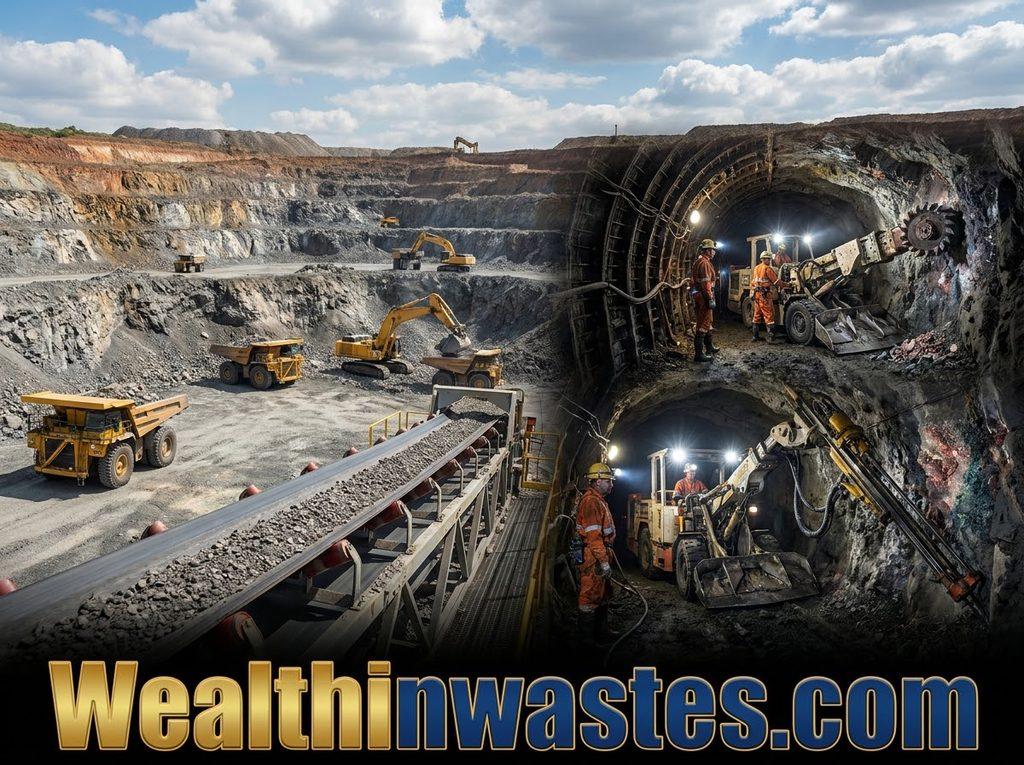
Mining begins when exploration establishes sufficient confidence that a deposit can support extraction. The selected method must match geological conditions, deposit depth, grade, geometry, safety requirements, costs, and environmental constraints.
1. Surface Mining: Surface methods remove overlying materials to access shallow or near-surface deposits. Open-cast operations can be efficient where deposits occur close to the ground surface and suitable conditions exist.
However, surface extraction can create substantial land disturbance, waste rock piles, altered drainage, dust, noise, and changes to vegetation. Related land impacts are discussed in causes and effects of land pollution.
2. Underground Mining: Underground methods access deeper deposits through shafts, declines, tunnels, stopes, and associated underground workings. They can reduce surface disturbance compared with large open pits.
Underground operations require careful control of ventilation, groundwater, rock stability, haulage, worker safety, emergency response, and waste management. Water inflow can become particularly challenging during heavy rainfall.
3. Quarrying: Quarry operations extract construction materials such as limestone, granite, sand, marble, and other aggregates. Many materials require limited processing before entering construction or industrial markets.
Where extraction affects agricultural landscapes, planners should consider soil productivity because disturbances can reduce productive capacity. Guidance on soil erosion processes helps explain why exposed surfaces need protection.
4. Alluvial Mining: Alluvial operations recover minerals deposited by rivers or flowing water. The method can be suitable for certain deposits, but poorly managed dredging can increase sedimentation and disturb aquatic habitats.
The selected mining method must therefore consider not only geology and economic returns but also drainage, waste storage, surrounding land uses, water resources, settlements, and ecological sensitivity.
Mining operations also interact with groundwater systems. Effective planning should prevent contaminants and sediments from entering underground or surface water resources.
Economic Importance and Value Addition
Mining provides raw materials for construction, manufacturing, energy generation, transportation, electronics, infrastructure, and many other sectors. Mineral development can therefore contribute to employment and government revenue.
1. Industrial Raw Materials: Limestone supports cement production, aggregates support roads and buildings, while metallic ores supply industries that manufacture tools, machines, electrical equipment, and other products.
These uses connect mineral extraction with wider development. Understanding natural resource classification helps explain why different minerals have different economic importance, processing requirements, and patterns of demand.
2. Employment: Mining can create direct employment for geologists, engineers, machine operators, technicians, drivers, security workers, environmental specialists, accountants, and administrative personnel.
Indirect employment may also develop through transportation, equipment supply, accommodation, food services, repairs, construction, trading, and other activities that support mining communities.
3. Government Revenue: Governments may receive income through taxes, royalties, permits, fees, and other legally established payments associated with mineral development and production.
4.Value Addition: Some minerals require crushing, concentration, smelting, refining, grading, or other treatment before reaching their intended markets. Processing can increase economic value while creating additional technical jobs.
Responsible mining should balance economic objectives with environmental protection. The principles described in resource conservation are especially relevant because many minerals form extremely slowly and remain finite.
5. Community Development: Mining can support roads, electricity, water infrastructure, services, and local enterprises when projects apply sound community engagement, transparent benefit sharing, and responsible operational practices.
However, poorly managed projects can produce social conflicts, displacement, land-use disputes, and environmental damage. Economic benefits therefore need to accompany strong governance and environmental safeguards.
Environmental Effects of Mining
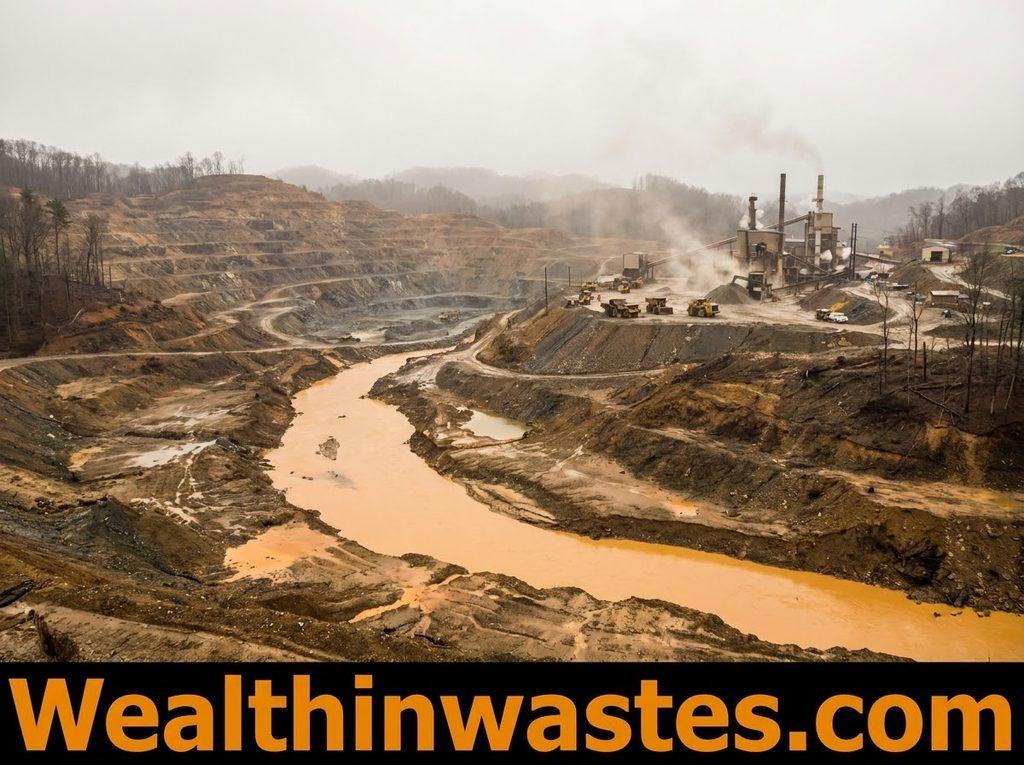
Mining changes land surfaces and subsurface conditions, so environmental effects can continue throughout exploration, construction, extraction, processing, transportation, closure, and post-mining activities.
1. Ecosystem Disturbance: Clearing vegetation, excavating soil, constructing roads, and establishing mining facilities can fragment habitats and change ecological relationships across the affected landscape.
The broader consequences of habitat disturbance are explained in human impacts on the natural environment, where land conversion, industrial development, and habitat fragmentation receive wider environmental attention.
2. Biodiversity Loss: Mining can destroy or alter habitats used by plants, animals, and microorganisms. Noise, dust, water contamination, and vegetation clearance may further reduce suitable conditions for sensitive species.
Maintaining biodiversity matters because ecosystems provide ecological functions and resources. The value of biodiversity components illustrates why conservation should remain part of resource development planning.
3. Soil Degradation: Excavation, stockpiling, vehicle movement, and removal of vegetation can expose soil to erosion, compaction, nutrient loss, and structural deterioration.
Detailed discussion of soil degradation and mineral resource management shows how physical, chemical, and biological changes can reduce the ability of soils to support productive ecological functions.
4. Water Pollution: Mine drainage, sediment, processing chemicals, fuels, waste materials, and contaminated runoff can affect rivers, streams, lakes, and groundwater when operators fail to control pollution pathways.
Water-quality impacts may involve suspended solids, metals, acidity, altered chemistry, or other contaminants. The principles described in water pollution classification help explain how pollutants reach receiving waters.
5. Community Displacement: Large projects can require land occupied by farms, houses, roads, cultural sites, or community infrastructure. Poor planning can create conflicts over ownership, access, compensation, and livelihoods.
6. Air and Noise Pollution: Blasting, crushing, haulage, diesel equipment, and exposed surfaces can generate dust, particulate matter, gases, and noise that affect workers and surrounding communities.
Mine waste requires careful management because unsuitable storage can create long-term pollution risks. General guidance on proper waste control supports safer approaches to handling unavoidable waste streams.
Read Also: Proper Waste Control Complete Guide
Sustainable Mining and Land Reclamation
Sustainable mining aims to meet legitimate resource needs while reducing avoidable environmental damage, protecting communities, complying with regulations, and planning responsibly for mine closure from the beginning.
1. Environmental Planning: Mining projects should identify environmental risks before major disturbance begins.Effective planning considers land use, water resources, biodiversity, waste, transportation, community needs, and closure objectives.
The principles outlined in environmental planning show why projects need measurable objectives, coordinated implementation, monitoring, evaluation, and community participation.
2. Environmental Monitoring: Operators should track water quality, air conditions, soil characteristics, biodiversity, vegetation recovery, waste facilities, and other indicators that reveal environmental changes during project development.
Monitoring allows managers to detect problems early and improve controls. It also creates evidence for compliance decisions, environmental reporting, corrective action, and long-term restoration planning.
3. Pollution Prevention: Mining facilities should control runoff, contain hazardous substances, manage waste properly, reduce dust, protect drainage systems, and maintain equipment to prevent unnecessary releases.
Pollution prevention aligns with broader environmental management best practices, which emphasize resource efficiency, conservation, monitoring, and pollution reduction across human activities.
4. Progressive Rehabilitation: Operators can restore suitable areas while mining continues instead of waiting until the entire operation closes. Early rehabilitation can reduce erosion, stabilize disturbed surfaces, and accelerate vegetation recovery.
Reclamation should restore landforms, drainage, vegetation, soil functions, and safe land uses as far as practical. The final objective should reflect agreed post-mining plans and local environmental conditions.
5. Community Participation: Communities should contribute to decisions affecting land, water, access, livelihoods, cultural resources, and long-term land-use outcomes. Participation can improve trust and reduce avoidable disputes.
6. Resource Efficiency: Mining companies can reduce waste and pressure on finite resources through improved recovery, recycling, efficient energy use, better process control, and careful material handling throughout operations.
These measures become particularly important when mining affects agricultural landscapes. Sustainable approaches can protect productive land and reduce the long-term consequences of soil erosion and surface disturbance.
7. Mine Closure and Reclamation: Closure should receive attention before mining starts. Operators should plan how they will secure abandoned workings, manage waste facilities, restore drainage, and support safe future land use.
Reclamation may take many years because ecological recovery depends on soil condition, rainfall, vegetation, topography, contamination levels, and continuing management after active extraction ends.
Summary on Complete Guide on Prospection or Exploration and Mining
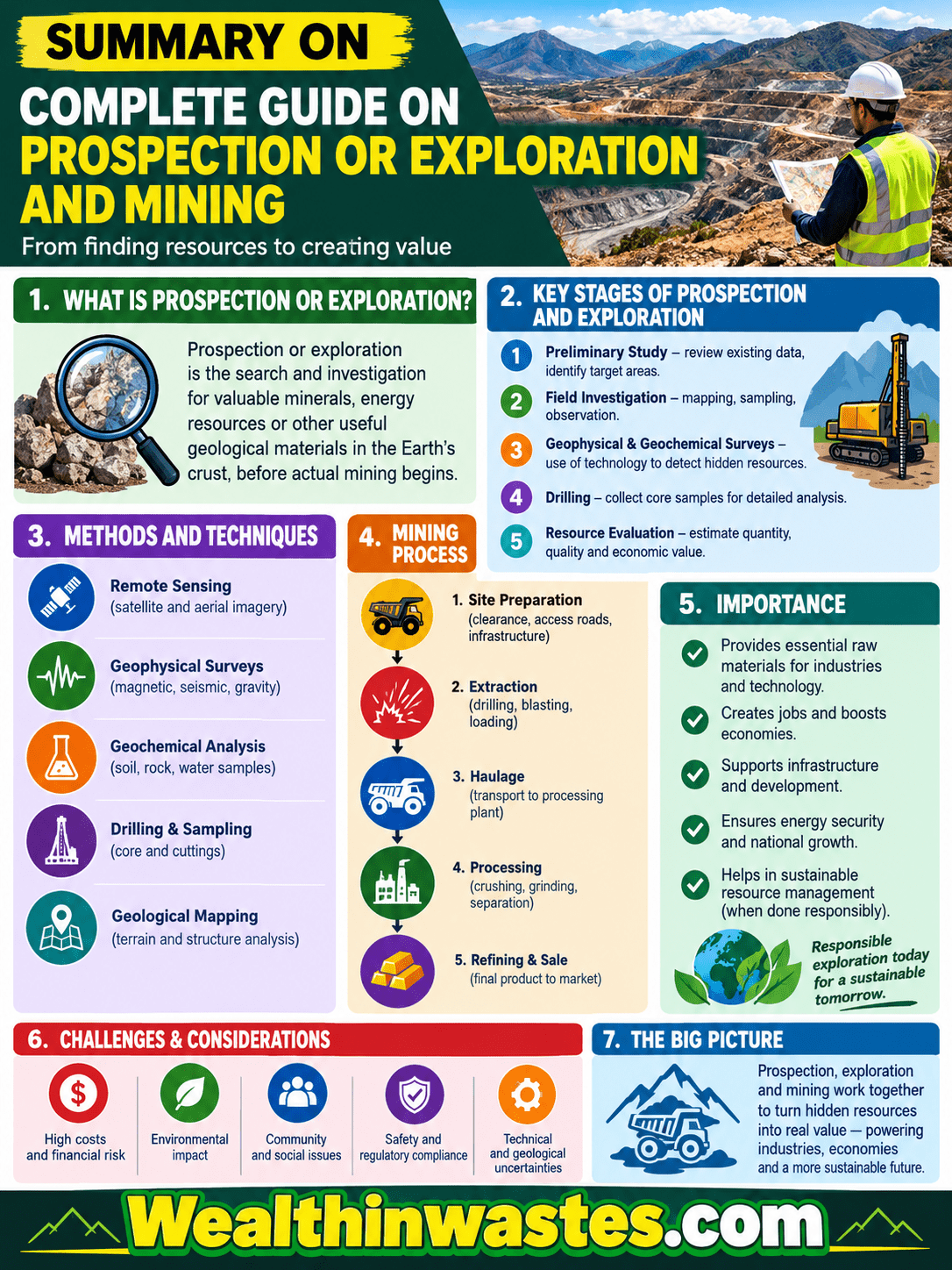
| Aspect | Summary |
|---|---|
| Prospection | Early-stage search for indications of natural resources and promising areas. |
| Exploration | Detailed investigation using mapping, sampling, geophysics, trenching, drilling, and analysis. |
| Grade | Concentration of valuable minerals or elements within the deposit. |
| Tonnage | Estimated quantity or mass of mineralised material within defined boundaries. |
| Reserve | Economically extractable portion of a mineral resource under defined conditions. |
| Mining | Extraction of natural materials from underground or surface deposits. |
| Major Methods | Surface, underground, quarrying, and alluvial methods depending on deposit conditions. |
| Environmental Effects | Land disturbance, biodiversity loss, soil degradation, water pollution, air pollution, noise, and displacement. |
| Reclamation | Restoration and stabilization of disturbed land during closure and post-mining periods. |
Frequently Asked Questions About Prospection or Exploration and Mining
1. What is mining?
Mining is the extraction of useful natural materials from the earth through surface, underground, quarrying, or other suitable extraction methods.
2. What is prospection?
Prospection is the preliminary search for signs and locations of potentially valuable natural resources before detailed exploration begins.
3. What is mineral exploration?
Mineral exploration involves systematic geological, geochemical, geophysical, sampling, trenching, and drilling activities used to evaluate a potential deposit.
4. What is the difference between a resource and a reserve?
A resource describes a potentially valuable mineral occurrence, while a reserve represents the portion considered economically extractable under defined conditions.
5. What factors determine the mining method?
Major factors include deposit depth, geological structure, grade, geometry, safety, technology, operating cost, location, market conditions, and environmental considerations.
6. How does mining affect the environment?
Mining can disturb ecosystems, remove vegetation, degrade soil, pollute water, generate dust and noise, alter drainage, and displace communities.
7. Why is reclamation important after mining?
Reclamation helps stabilize disturbed land, restore drainage and vegetation, reduce erosion and pollution risks, and prepare affected areas for safe future use.
8. Why does exploration involve many different professionals?
Exploration combines geological, chemical, engineering, environmental, financial, logistical, administrative, health, and community considerations that require different areas of expertise.
Do you have any questions, suggestions, or contributions? If so, please feel free to use the comment box below to share your thoughts. We also encourage you to kindly share this information with others who might benefit from it. Since we can’t reach everyone at once, we truly appreciate your help in spreading the word. Thank you very much for your support and for sharing!
Read Also: Water and Land Pollution in Agriculture