


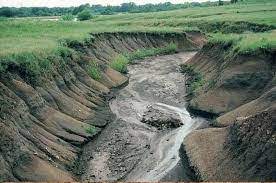
Soil erosion is a major process that can remove fertile topsoil rapidly and weaken the productive capacity of agricultural land. Understanding it helps farmers protect soil resources wisely and sustain future harvests.
Soil supports crop production, vegetation, settlements, roads and many human activities. When people misuse or poorly manage this resource, erosion can remove valuable particles, organic matter, nutrients and productive soil depth.
Natural erosion occurs slowly across landscapes, while accelerated erosion often follows human disturbance. The difference matters because rapid soil loss can exceed natural soil formation and renewal processes by wide margins.
This article explains soil erosion in clear terms, covering its meaning, major types, agents, forms, physical factors and human causes. It also examines important effects and practical control measures for vulnerable land.
The discussion follows established soil concepts while connecting erosion with agriculture, land management, vegetation cover, water movement and environmental protection. These relationships make erosion easier to recognize and manage across working landscapes.
What Is Soil Erosion?
Soil erosion means the detachment and removal of topsoil, either partly or completely, through agents such as water, wind and ice. Water and wind commonly produce the strongest visible effects.
Because topsoil contains important organic matter and nutrients, its removal can reduce soil fertility and crop productivity. Readers can explore soil properties and their environmental importance and the wider concept of environmental pollution for context.
Erosion becomes especially serious when natural soil loss outpaces soil formation. The problem intensifies where vegetation disappears, rainfall produces heavy runoff, wind moves dry particles, or people disturb protective soil surfaces.
Soil remains a renewable resource only when formation and renewal can replace losses over time. Understanding that balance helps farmers and land managers recognize why topsoil deserves careful protection for productivity.
Read Also: Traditional Soil Classification Systems
Types of Soil Erosion
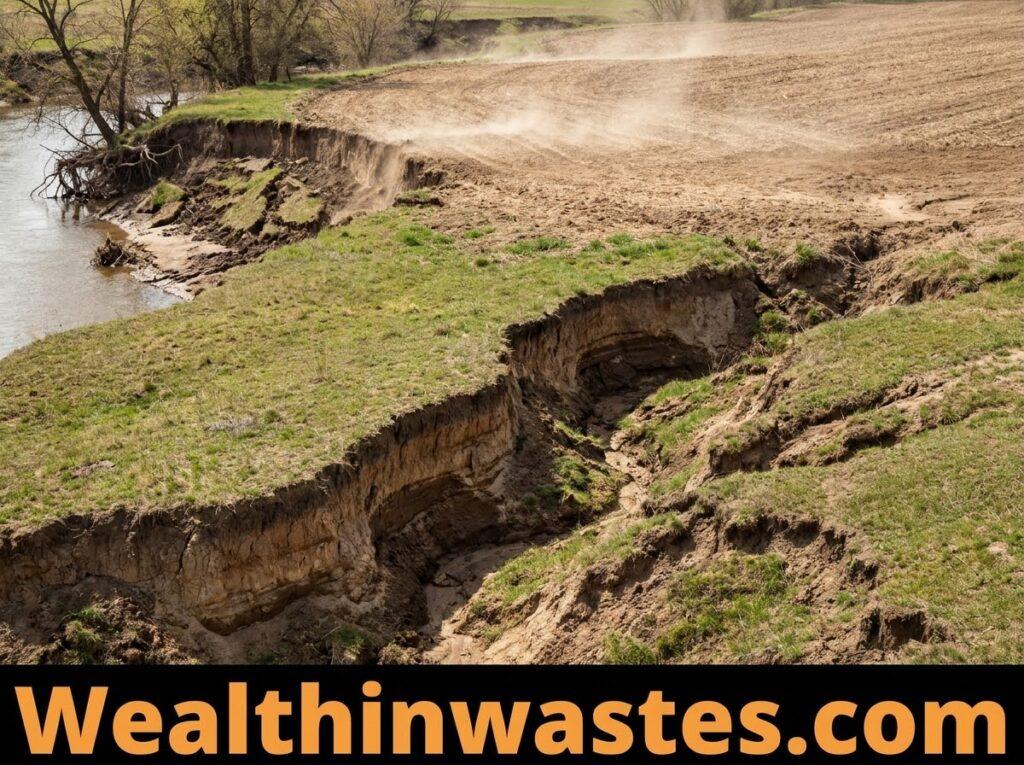
Accelerated soil erosion receives the greatest attention because human activities can greatly increase soil loss. However, the source material identifies two broad erosion types that help explain natural and human-driven change.
1. Normal Geological Erosion: Normal geological erosion occurs naturally wherever energy and matter move across the earth’s surface, but its slow rate usually allows soil formation to continue alongside removal.
2. Accelerated Soil Erosion: Accelerated soil erosion commonly follows human activities that disturb land surfaces, remove vegetation or concentrate runoff, causing noticeable soil loss, reduced yields and wider environmental damage over time.
Normal geological erosion rarely causes obvious damage because natural renewal can balance losses. Accelerated erosion becomes harmful when disturbance pushes soil loss beyond the landscape’s natural ability to recover.
Accelerated erosion can remove soil constituents, lower crop yields and increase economic losses. Severe gully formation may even consume farmland while transported sediments enter streams, rivers, lakes and other water bodies.
Persistent soil damage can also interact with contamination and waste problems. See land pollution causes and solutions to understand how broader land pressures can compound environmental degradation across affected communities.
Agents That Cause Soil Erosion
Water and wind rank as the most common erosion agents, while ice also erodes landscapes. Their influence varies with climate, landform, soil condition, vegetation and the strength of moving water or air.
1. Water: Water commonly causes soil erosion through rainfall impact, surface runoff and concentrated flow. It can detach particles, transport them downslope and deposit sediment elsewhere during intense storms and floods.
2. Wind: Wind removes loose, dry soil particles across broad open landscapes. Strong winds become especially effective where vegetation cover is poor and natural or artificial windbreaks cannot slow movement.
3. Ice: Ice can erode land by moving across surfaces and carrying soil or rock fragments. Although less effective than water and wind in this discussion, it remains an important natural agent.
Water erosion can also connect soil loss with wider water pollution pathways because moving sediment may carry nutrients, wastes and other pollutants into nearby surface waters, drainage channels and downstream wetlands during heavy rainfall events.
Wind erosion becomes prominent in dry, open environments, particularly semi-arid and arid plains. Its severity generally increases as wind strength rises and protective vegetation declines across exposed surfaces and fields.
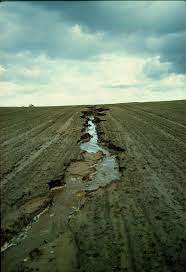
Forms of Water Erosion
Water erosion appears in several forms depending on how runoff moves across the ground. The source identifies rills, sheet erosion and gullies as three important forms affecting agricultural landscapes and farmland.
1. Rill Erosion: Rills are shallow, narrow and usually parallel channels that develop on bare hillsides, especially where poorly permeable subsoil encourages surface water to flow rather than infiltrate readily.
2. Sheet Erosion: Sheet erosion occurs when turbulent, unchanneled water flow carries soil particles across a surface. Its gradual action may remain difficult to notice while continuously removing upper topsoil.
3. Gully Erosion: Gully erosion creates channels that cut deeply into underlying materials. It can become highly destructive on farmland because concentrated runoff removes large volumes of soil and enlarges channels.
Gullies can expand rapidly after repeated runoff events, turning productive fields into difficult terrain. They also concentrate sediment movement toward downstream areas, where deposition can affect drainage and aquatic environments.
The relationship between erosion and soil productivity also deserves attention because continuous topsoil loss can reduce productive depth and crop performance. See related background on major soil types and their characteristics.
Runoff from eroding land can also alter receiving waters. The wider effects of water pollution help explain why sediment movement can create problems beyond the original erosion site and nearby farms.
Physical Factors Behind Soil Erosion
Physical factors are natural conditions that influence accelerated erosion. The main factors include soil characteristics, topography, climate and vegetation cover, which interact to determine runoff, wind exposure and soil stability.
1. Nature of Soil: Soil infiltration capacity, permeability and water-holding capacity influence erosion risk. Where these properties remain low, surface disturbance can quickly encourage runoff and increase particle removal from fields.
2. Topography: Slope angle and slope length influence erosion because steeper or longer slopes can support faster runoff and greater soil loss. Slope form also changes erosion patterns across land.
3. Climate: Climate influences which erosion agent dominates and controls its intensity. Heavy rainfall can strengthen water erosion, while dry conditions and strong winds can encourage wind erosion across exposed land.
4. Vegetation Cover: Vegetation protects soil from direct raindrop impact, improves structure and infiltration, and strengthens soil through roots. Sparse vegetation leaves surfaces exposed to runoff, wind and particle detachment.
Soil characteristics also connect with wider resource management concerns. Readers can review responsible soil resource management and soil formation processes for additional environmental context and useful soil knowledge for erosion management.
Landscape position matters because water naturally follows slopes and gathers in lower areas. Long, steep or poorly protected slopes can therefore experience more concentrated runoff and stronger erosion than level ground.
Human Factors Behind Soil Erosion
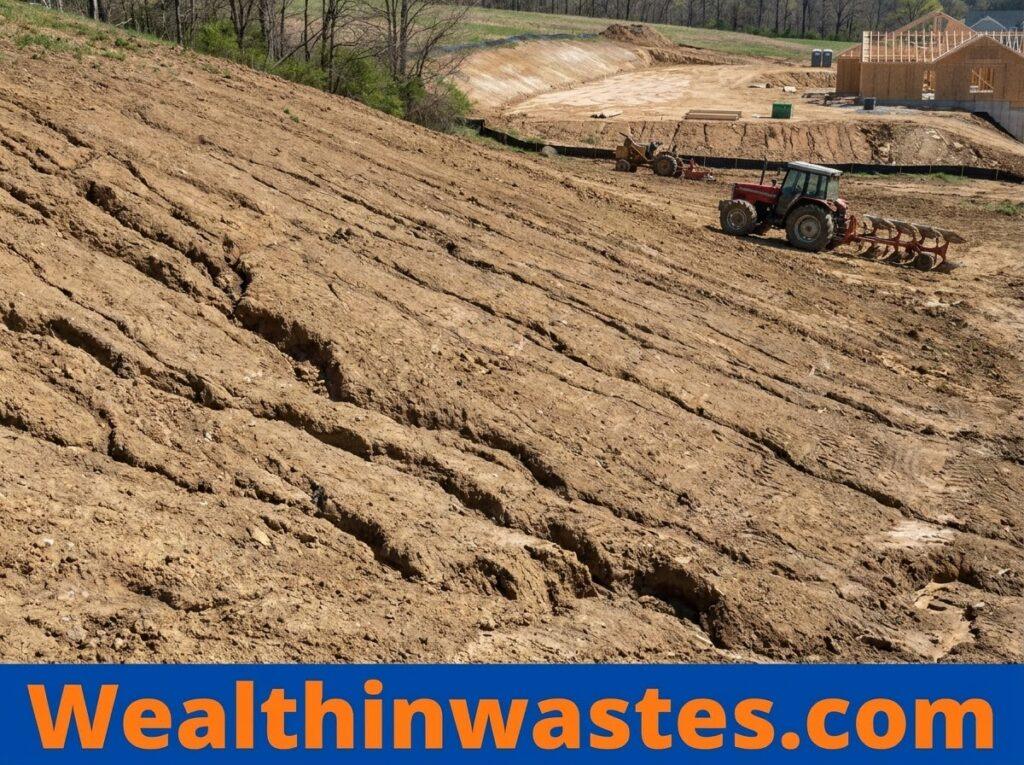
Human activities can disturb vegetation, compact soil, expose surfaces and concentrate runoff. Farming, grazing, mining, urbanization, industrialization and engineering construction can therefore accelerate erosion when people manage land without adequate protection.
1. Agriculture: Agriculture can expose soil when farmers remove original vegetation and repeatedly cultivate land. Erosion risk depends on cultivation intensity, farming systems, soil cover and the crops grown in an area.
2. Grazing: Grazing can remove protective vegetation when livestock repeatedly feed on the same land. Cattle, sheep and goats may leave soil exposed to rainfall, runoff and wind for extended periods.
3. Mining: Mining can disturb large areas, remove vegetation and alter drainage patterns. Long-term extraction may create land pressure, exhaustion and severe erosion, as illustrated by mining landscapes in Nigeria.
Mining also changes land and community conditions beyond extraction sites. Related mining impacts on communities and land resources show why disturbed landscapes require careful environmental planning, restoration and long-term monitoring.
4. Engineering Construction: Roads, footpaths, settlements, markets and other construction works can strip vegetation and concentrate runoff. Concentrated runoff can then initiate channels that develop into serious gullies on disturbed ground.
Human pressure also interacts with land-cover change. Learn about land-cover change and deforestation and vegetation degradation and its consequences for related environmental understanding and land protection decisions everywhere, especially rural communities.
Land suitability also influences how much disturbance an area can tolerate. A wider understanding of land use and suitability can support better decisions before farms, roads or activities occupy vulnerable terrain.
Effects of Soil Erosion
Soil erosion produces both on-site and off-site effects. It can remove fertile soil from fields while moving sediment into waterways, drainage systems and other places where accumulated materials cause additional environmental problems.
1. Fertility Loss: Erosion removes topsoil that contains organic matter and nutrients, gradually weakening the productive layer. Farmers may then face declining crop performance as valuable soil resources disappear from fields.
2. Reduced Crop Yield: Continued soil loss can reduce rooting depth, water storage and nutrient availability. These changes may lower crop productivity, especially where repeated erosion removes productive surface layers faster than renewal.
3. Farmland Loss: Severe gully erosion can consume sections of farmland and make cultivation difficult. Large channels may divide fields, damage access routes and reduce the usable agricultural area available.
4. Sediment Pollution: Eroded soil can enter streams, rivers and lakes, increasing sediment loads and carrying associated substances. This connects soil erosion with broader water pollution sources and environmental concerns in receiving waters.
Land degradation can also reinforce erosion through declining vegetation and weaker soil structure. Read more about agricultural land degradation to understand how productivity and land condition interact across farms and rural landscapes.
Broader environmental damage can accompany poorly managed materials and disturbed land. Review environmental and health effects of wastes to connect land degradation with wider ecological risks and community concerns over time.
Effective land protection also depends on careful material management. Practical waste handling and treatment methods can reduce additional environmental pressures around farms, roads and worksites across vulnerable landscapes over time.
Off-site effects may extend beyond farms because sediment travels through drainage networks. The resulting changes can influence water quality, aquatic habitats, infrastructure and communities located downstream from seriously eroding land.
Read Also: The Three (3) Major Soil Types of the World
Practical Soil Erosion Control Methods
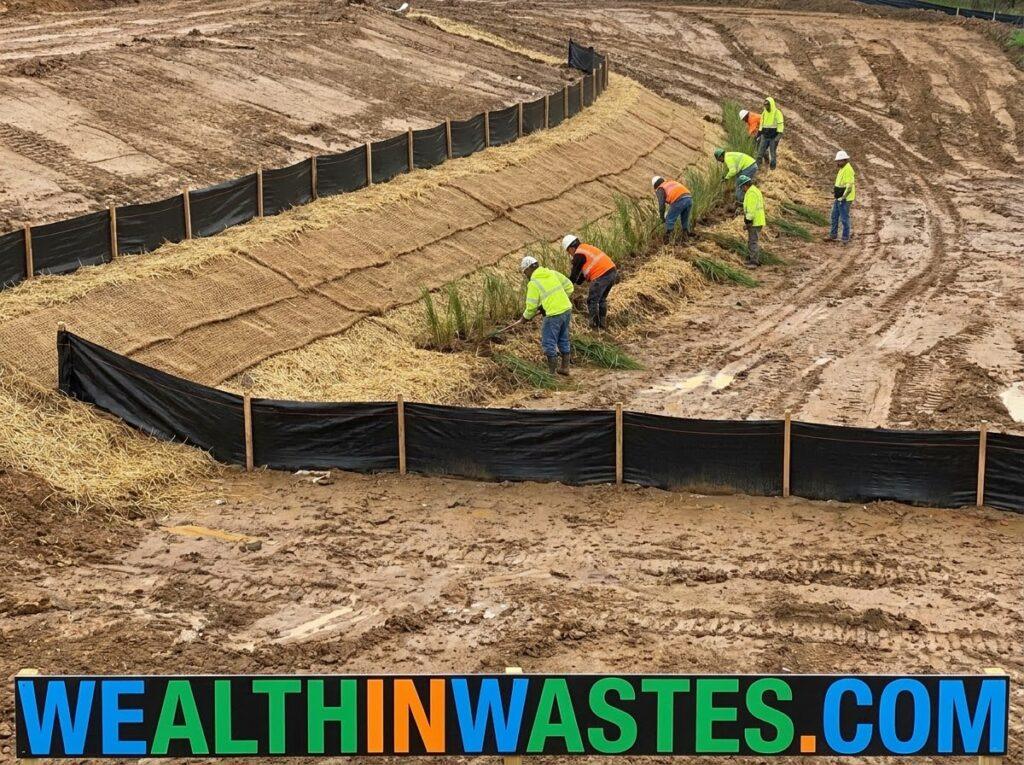
Effective erosion control focuses on keeping soil covered, slowing runoff and maintaining stable land surfaces. Good management combines vegetation, suitable cultivation, careful grazing, sound construction practices and responsible resource use.
1. Maintain Vegetation Cover: Keep protective vegetation on vulnerable land whenever possible. Plant residues, grasses, trees and other covers reduce raindrop impact, slow runoff, improve infiltration and protect exposed soil.
2. Reduce Excessive Disturbance: Avoid unnecessary removal of vegetation and repeated disturbance on fragile land. Careful land management preserves soil structure and reduces conditions that encourage accelerated erosion across exposed surfaces.
3. Manage Grazing Carefully: Control livestock pressure so vegetation can recover before soil surfaces become exposed. Rotational and controlled grazing can reduce repeated disturbance while maintaining protective ground cover over vulnerable fields.
4. Protect Slopes: Manage runoff carefully on sloping land by maintaining vegetation and avoiding practices that concentrate flowing water. Slope protection helps reduce the speed and erosive power of runoff.
5. Manage Land Resources Responsibly: Plan agriculture, mining and construction according to land capability. The broader principles discussed in forest and land protection initiatives reinforce the value of maintaining protective vegetation.
Good management also considers waste and residue handling because poorly managed materials can affect soil and water systems. Related guidance appears in agricultural waste management and agricultural waste impacts for better land stewardship.
Farm residues also require careful handling because poorly managed materials can affect field conditions and environmental quality. Learn about agricultural waste sources and characteristics for better resource use and cleaner farms.
Climate conditions can alter rainfall intensity, dry periods and wind exposure, so long-term erosion planning should consider changing environmental conditions. See climate change and sustainability for broader environmental context and planning.
Summary on Soil Erosion: Meaning, Types and Factors of Soil Erosion
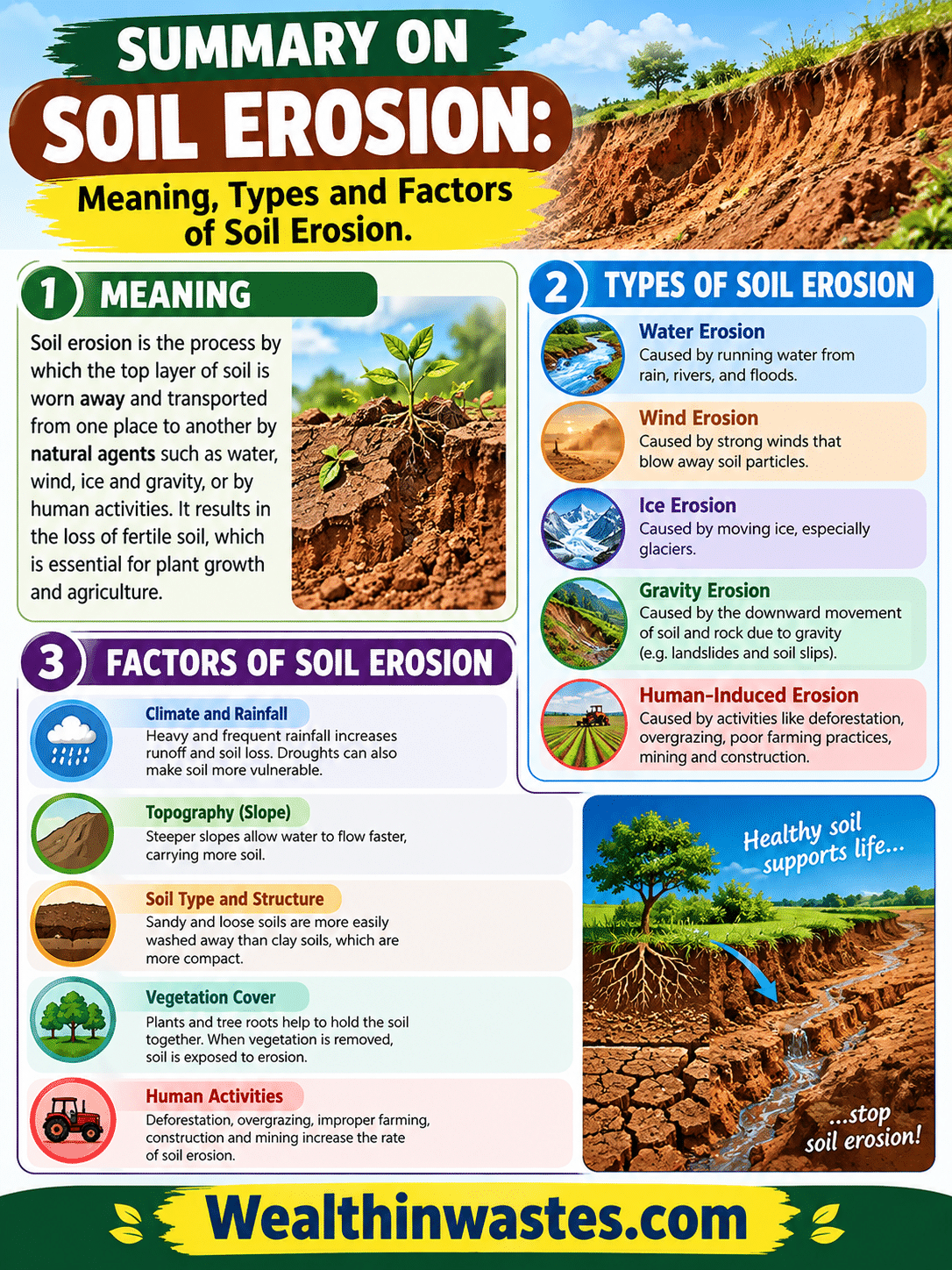
| Topic | Key Point |
|---|---|
| Meaning | Detachment and removal of topsoil by erosion agents. |
| Main Types | Normal geological erosion and accelerated soil erosion. |
| Major Agents | Water, wind and ice. |
| Water Forms | Rills, sheet erosion and gully erosion. |
| Physical Factors | Soil properties, topography, climate and vegetation cover. |
| Human Factors | Agriculture, grazing, mining and construction activities. |
| Main Effects | Fertility loss, lower yields, farmland loss and sediment movement. |
| Control Focus | Maintain cover, reduce disturbance, manage runoff and plan land use. |
Frequently Asked Questions About Soil Erosion: Meaning, Types, Causes, Effects and Control
1. What is soil erosion?
Soil erosion is the detachment and removal of topsoil by agents such as water, wind and ice.
2. What are the two main types of soil erosion?
The two broad types are normal geological erosion and accelerated soil erosion.
3. Which agents cause soil erosion?
Water and wind commonly cause erosion, while ice also acts as a natural erosion agent.
4. What are the main forms of water erosion?
The main forms are rill erosion, sheet erosion and gully erosion.
5. Which physical factors increase erosion risk?
Soil properties, topography, climate and vegetation cover strongly influence erosion risk and intensity.
6. How do human activities accelerate soil erosion?
Farming, grazing, mining, construction and other land disturbances can remove vegetation, expose soil and concentrate runoff.
7. Why is gully erosion dangerous?
Gullies can remove large quantities of soil, divide farmland, damage access routes and increase sediment movement into downstream areas.
8. How can farmers reduce soil erosion?
Farmers can maintain vegetation or residue cover, reduce unnecessary disturbance, manage grazing, protect slopes and control runoff across vulnerable land.
Do you have any questions, suggestions, or contributions? If so, please feel free to use the comment box below to share your thoughts. We also encourage you to kindly share this information with others who might benefit from it. Since we can’t reach everyone at once, we truly appreciate your help in spreading the word. Thank you very much for your support and for sharing!
Read Also: Processes and Factors of Soil Erosion Relevant to Agricultural Lands