


Fumigants are pesticides designed to control pests through gases or vapours that move into enclosed spaces, treated commodities, soil pores, or other difficult-to-reach locations where conventional applications may perform poorly.
Unlike many contact pesticides, fumigants depend on penetration and exposure throughout a treatment area. Their physical properties allow molecules to disperse widely, making them valuable against hidden insects, rodents, nematodes, pathogens, and weeds.
However, the same mobility that improves pest control also increases exposure risks. Fumigants can enter the body mainly through breathing, while some products can also cause injury through skin contact or accidental ingestion.
Because fumigants can produce serious poisoning, users must treat them as specialized pesticides rather than ordinary insecticides. Product labels, legal requirements, ventilation rules, monitoring procedures, and protective measures deserve strict attention.
This guide explains the major types and nature of fumigants, including their physical forms, common active ingredients, principal uses, safety concerns, environmental behaviour, and responsible management practices for safer pest control decisions.
What Are Fumigants and How They Work
Fumigants work by producing a gas or vapour capable of reaching pest organisms throughout a treatment zone. Unlike surface sprays, they can penetrate cracks, crevices, packed commodities, soil spaces, and concealed galleries.
Their broad activity explains why fumigants can control insects at different life stages and sometimes affect rodents, nematodes, fungi, bacteria, or weeds. Results depend on concentration, exposure time, temperature, moisture, sealing, and penetration.
Their nature also creates a narrow safety margin. A concentration sufficient to kill pests can endanger people or animals, so trained application, restricted access, gas monitoring, proper aeration, and label compliance remain essential throughout treatment.
For a broader explanation of pesticide movement, pesticide movement through soil shows why volatility, adsorption, runoff, leaching, and degradation matter when chemicals enter environmental systems.
The same environmental principles also apply when assessing soil properties that affect pesticide mobility, because texture, moisture, organic matter, and soil structure can influence chemical movement and persistence.
Read Also: Soil Fumigation, Importance and Types of Fumigation
Types of Fumigants by Form and Use
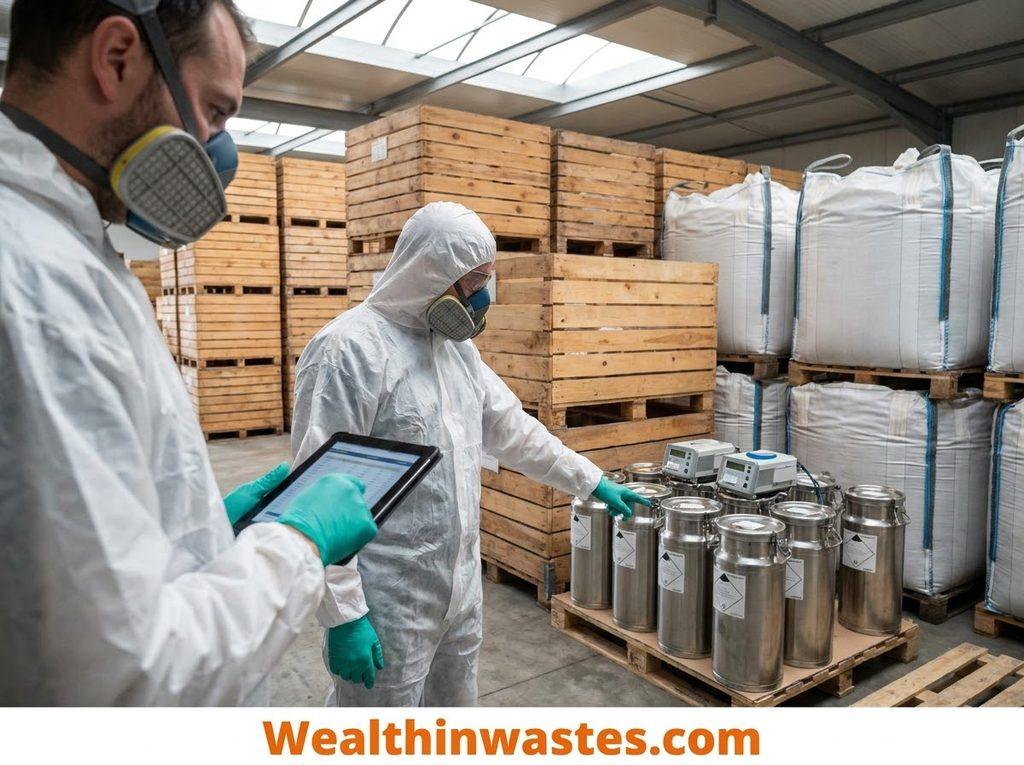
1. Gaseous Fumigants: These products are supplied as gases or become gaseous under treatment conditions. Their molecules disperse rapidly through enclosed spaces, making them useful where pests hide beyond the reach of sprays.
2. Liquid Fumigants: Some fumigants are formulated as liquids under pressure or as volatile liquids. After release, they vaporize and spread through the treatment zone, requiring tight containment and careful exposure management.
3. Solid Fumigants: Solid products such as metal phosphides generate toxic gas when they contact sufficient moisture. Their dry formulation simplifies transport and handling, but accidental moisture exposure can create dangerous phosphine concentrations.
4. Soil Fumigants: These products are applied to soil to form gases that move through soil pores. They target underground pests and pathogens, while soil texture, moisture, temperature, sealing, and application method influence performance.
Fumigation may therefore occur in buildings, commodity stores, vehicles, rodent burrows, greenhouses, fields, nurseries, or other enclosed treatment areas. The application site determines the formulation and precautions required.
Understanding major pollution pathways helps explain why fumigants must remain contained and why chemical losses can create consequences beyond the original treatment location.
Methyl Bromide and Chloropicrin Fumigants
Methyl bromide has long served as a powerful fumigant for soil, commodities, and other enclosed treatments.It is highly penetrating and effective against many pests, but its environmental and health concerns have sharply limited uses.
Because methyl bromide can damage the ozone layer, the United States phased out most production and consumption, retaining specific exemptions for critical uses and quarantine or preshipment purposes. Regulatory requirements differ among countries and products.
Methyl bromide can cause serious poisoning when inhaled and may severely injure skin when trapped against the body. It also requires chemical compatibility checks because reactions with sulphur-containing materials can create undesirable effects.
Chloropicrin is another important fumigant and warning agent. It has a strong irritating odour that can alert people to its presence, while concentrations above warning-agent levels may contribute directly to fumigant activity.
Anyone studying hazardous pesticide concerns and regulatory weaknesses should recognize that fumigants require stronger oversight because accidental exposure can affect workers, communities, animals, and environmental resources.
The connection between fumigant use and food safety also becomes clearer through pesticide residues in cereals and pulses, particularly where stored commodities receive chemical pest-control treatments.
Proper fumigant management becomes especially important where chemical exposure could affect surrounding soil, crops, groundwater, stored commodities, or people working near the treatment area.
Phosphide Fumigants for Pest Control
1. Aluminum Phosphide: This solid fumigant reacts with moisture to release phosphine gas. Operators use it for stored commodities, enclosed spaces, and rodent burrows, where gas penetration can reach pests hidden inside stacks.
2. Magnesium Phosphide: This material also releases phosphine when moisture reaches the formulation. It reacts more readily than aluminum phosphide, so handling and storage require especially careful moisture control during authorized use.
3. Phosphine Action: Phosphine acts as a highly toxic fumigant against insects and other organisms. Because the gas can seriously harm people and animals, treatment areas require controlled access, warning procedures, and appropriate monitoring.
4. Storage Requirements: Phosphide formulations should remain dry before use and disposal. Moisture exposure during storage, transport, or handling can release phosphine unexpectedly, creating severe poisoning and fire or contamination concerns.
Phosphide safety also connects directly with proper fumigant storage, handling, and disposal, because moisture, poor ventilation, accidental exposure, and improper waste management can create dangerous conditions.
Information about pesticide exposure routes is equally important because inhalation remains a major concern when workers encounter phosphine or other toxic fumigant gases.
Sulfuryl Fluoride and Dichlorvos Fumigants
Sulfuryl fluoride is a colourless, odourless, non-flammable gas used mainly for structural and commodity fumigation. Because people cannot detect it by smell, professional monitoring and clearance procedures play an important role.
In the United States, sulfuryl fluoride remains a restricted-use pesticide, and residential structural fumigation requires certified application or direct supervision under applicable requirements. This illustrates the specialized controls surrounding highly toxic fumigants.
Dichlorvos, commonly called DDVP, differs from true fumigant gases because it primarily works as a contact and stomach insecticide while also providing fumigant activity. It has been used for protection of stored products.
Dichlorvos belongs to the organophosphorus insecticide group and requires careful handling. Its chemical properties and regulatory status mean users should follow the current product label, storage instructions, and applicable pesticide requirements.
Concerns about residues become more important when fumigant-related compounds reach food products.Detailed information on pesticide residues in fruits and vegetables demonstrates why proper chemical use and monitoring matter.
Similar issues can arise through animal feed and environmental contact, as explained in sources of pesticide residue contamination in meat and dairy products, where residues can move through interconnected agricultural systems.
Good chemical stewardship also depends on understanding ways to manage pesticide residues in livestock, especially where treated crops, feed, buildings, soil, or water contribute to animal exposure.
Ethylene Oxide and Other Fumigants
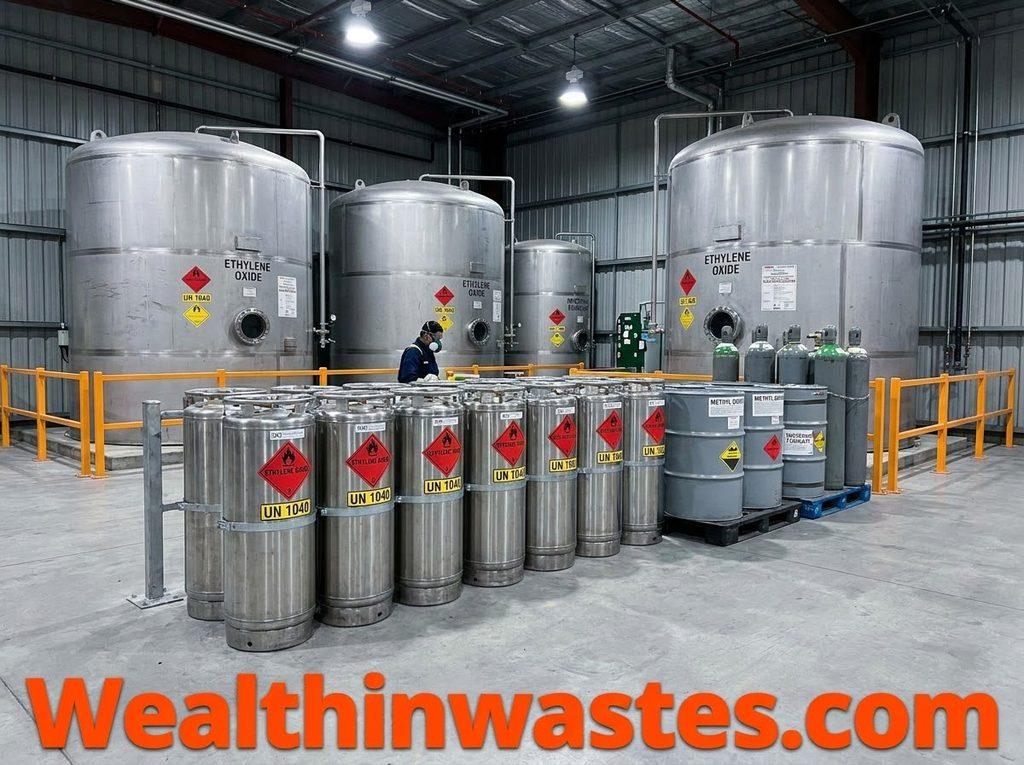
Ethylene oxide is a colourless, toxic, flammable gas that has applications as a fumigant for certain commodities and materials. Formulations may combine it with another gas to reduce flammability and improve handling characteristics.
Historically, ethylene oxide has received attention for treating products such as spices, black walnuts, and copra. Its flammability and toxicity make controlled facilities, trained personnel, and strict procedures especially important.
Other fumigant active ingredients exist for particular soil, structural, commodity, or specialized applications. Their availability and legal status can change, so users should rely on current labels and local regulatory authorities.
Fumigant selection should therefore depend on the target pest, treatment site, commodity, temperature, moisture, sealing conditions, exposure requirements, and legal authorization rather than simply choosing the strongest available chemical for the intended treatment.
The fate of pesticide chemicals after application deserves attention because compounds can change through environmental processes. The discussion of pesticide degradation and metabolism in plants provides useful background for understanding chemical transformation.
Likewise, factors influencing pesticide degradation in soils show how temperature, moisture, soil composition, microorganisms, and chemical properties can affect persistence after treatment.
Fumigants should never be selected solely according to pest-killing strength. The chemical’s volatility, compatibility, environmental behaviour, application method, and legal authorization must match the specific treatment conditions.
Key Safety and Environmental Concerns
1. Human Exposure: Inhalation represents a major concern because fumigant gases can enter the lungs quickly and produce serious toxic effects. Skin or eye contact may also create injury with certain formulations.
2. Fire And Reactivity: Some fumigants or formulations can react with moisture, sulphur-containing materials, metals, or other substances. Their chemical compatibility should always be checked against the current product label before treatment.
3. Environmental Movement: Volatile pesticides can escape treatment areas or move through soil, runoff, and leaching. Poor containment may therefore reduce pest control while increasing risks to surrounding air, soil, water, plants, and wildlife.
4. Food Residues: Improper pesticide use around stored commodities can contribute to residues. Correct application, approved products, waiting periods, aeration, and commodity-specific requirements help protect food quality and reduce unnecessary exposure.
5. Waste Management: Empty containers, contaminated materials, leftover chemicals, and phosphide residues require careful disposal. Never improvise disposal methods because inappropriate moisture contact, burning, reuse, or dumping can create serious hazards.
Environmental movement deserves special attention because chemicals can reach sensitive resources. Research on site conditions affecting pesticide mobility explains how groundwater depth, weather, rainfall, and hydrogeologic conditions influence movement.
Management practices also matter because application timing, irrigation, treatment rate, and placement influence chemical losses.The guidance on pesticide mobility management practices highlights these important controls.
When hazardous chemicals enter land, their consequences may extend beyond the treatment area. The discussion of hazardous substances affecting soil and plant life illustrates the wider ecological risks.
Water resources also require protection because pesticide pollution can move from agricultural land into streams and groundwater. Appropriate water quality principles support prevention and responsible chemical management.
Read Also: Storing, Handling and Disposing of Fumigants
Selecting and Managing Fumigants Responsibly
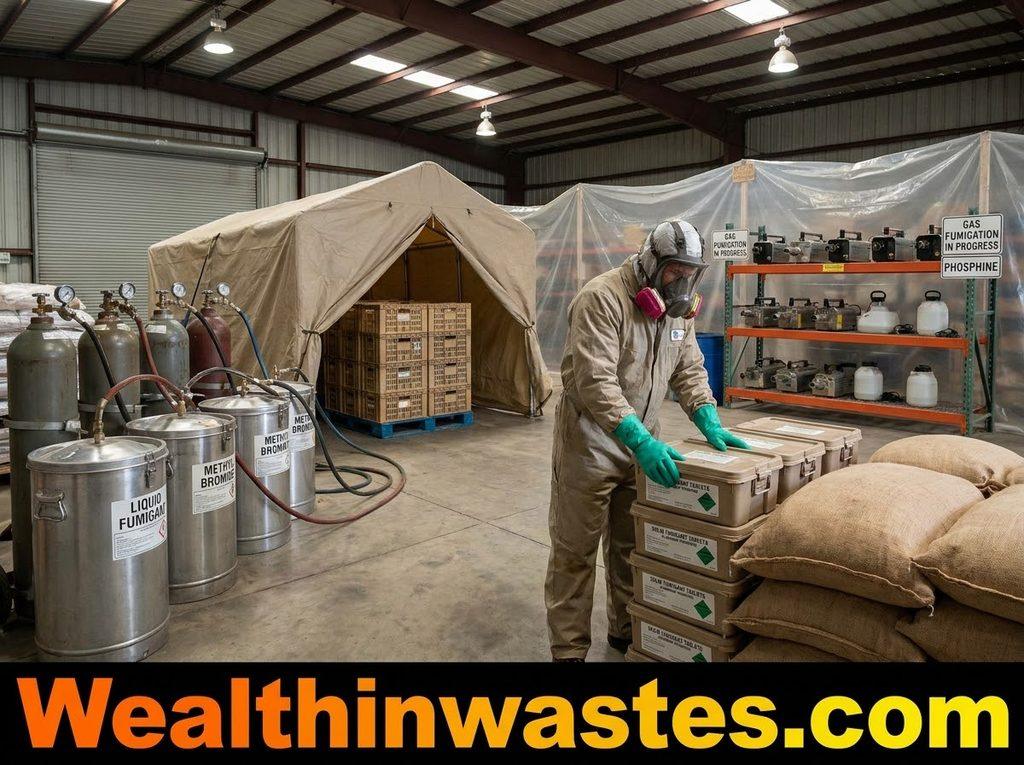
Responsible fumigation begins with correct pest identification and treatment planning. The applicator should confirm that fumigation suits the target, inspect the site, identify sensitive materials, and review every label requirement beforehand.
Storage and transport deserve the same care as application. Fumigants should remain in secure, appropriate conditions, away from food, feed, people, animals, heat, and moisture, according to product-specific directions and approved storage areas.
During treatment, only authorized personnel should enter controlled areas. Warning signs, exclusion zones, gas monitoring, emergency procedures, and thorough aeration help reduce accidental exposure and support safer re-entry after fumigation.
After treatment, operators must manage containers, residues, spent formulations, and contaminated materials properly. Good waste practices prevent secondary contamination while maintaining safer conditions for workers, communities, stored products, soil, and water.
Proper disposal becomes especially important for containers and residues. Guidance on waste pesticide container disposal explains why reuse, uncontrolled dumping, and unsafe cleaning can create additional environmental hazards.
Fumigant-related waste can also fall within broader hazardous waste management systems. The explanation of household hazardous waste categories shows why pesticide products require specialized handling when discarded.
Hazard classification provides another useful perspective. Characteristics of hazardous wastes include properties such as toxicity, reactivity, corrosivity, and ignitability, which can influence storage, transport, and disposal decisions.
Finally, broader water protection remains essential where chemical residues could reach drainage systems or water bodies. Effective measures for water pollution prevention help reduce contamination from agricultural and waste-management activities.
Summary on Types and Nature of Fumigants
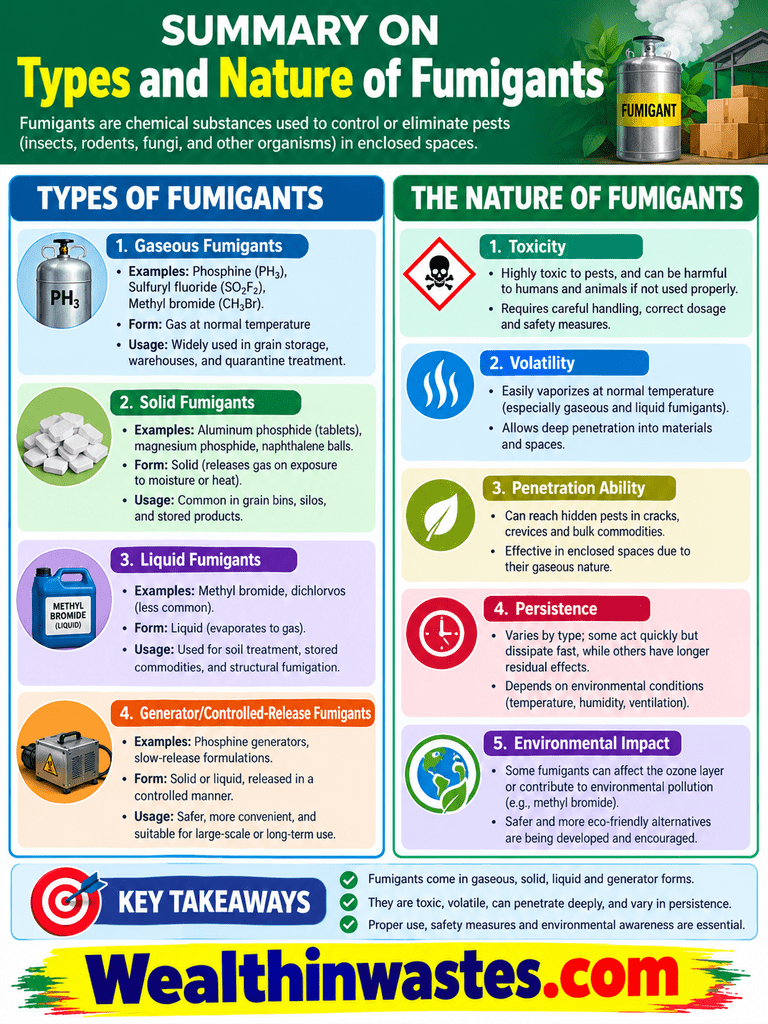
| Aspect | Summary |
|---|---|
| Nature | Fumigants are highly penetrating pesticides that act mainly through gases or vapours. |
| Forms | They may occur as gases, volatile liquids, or solids that generate toxic gas. |
| Methyl Bromide | A powerful fumigant historically used for soil and commodity treatment, with significant regulatory and environmental restrictions. |
| Chloropicrin | A toxic fumigant and irritating warning agent associated with methyl bromide and other specialized uses. |
| Phosphides | Aluminum and magnesium phosphide release highly toxic phosphine when they contact moisture. |
| Sulfuryl Fluoride | A colourless, odourless structural and commodity fumigant requiring specialized monitoring and controlled use. |
| Dichlorvos | An organophosphorus insecticide with contact, stomach, and some fumigant activity. |
| Ethylene Oxide | A toxic and flammable fumigant used for certain commodities and specialized applications. |
| Main Risks | Major concerns include inhalation poisoning, chemical reactions, environmental movement, food residues, and hazardous waste. |
| Safe Management | Use authorized products, follow labels, control access, monitor gases, ventilate properly, and dispose of waste responsibly. |
Frequently Asked Questions About Types and Nature of Fumigants: Key Classes and Uses
1. What are fumigants?
Fumigants are pesticides that control pests by producing gases or vapours capable of penetrating enclosed spaces, commodities, soil pores, cracks, and other difficult-to-reach locations.
2. What are the main types of fumigants?
The main forms include gaseous, liquid, and solid fumigants, while applications commonly involve space fumigation, commodity fumigation, soil fumigation, and specialized structural treatments.
3. Why are fumigants considered hazardous?
Many fumigants are highly toxic by inhalation, and some can also injure the skin, react dangerously with moisture or other materials, or contaminate environmental resources.
4. What is the purpose of chloropicrin?
Chloropicrin can function as a fumigant and, at certain concentrations, as a warning agent because its strong irritating odour helps indicate the presence of hazardous fumigant conditions.
5. What do aluminum and magnesium phosphide produce?
These solid formulations react with moisture and release phosphine gas, a highly toxic fumigant that can control stored-product pests and other organisms when legally applied.
6. Why must fumigants remain properly contained?
Containment helps maintain effective treatment concentrations while preventing dangerous gas escape, accidental exposure, environmental contamination, and unauthorized entry into areas under fumigation.
7. How should fumigant products be stored?
Storage should follow the product label and local regulations, with secure conditions that protect fumigants from unauthorized access, excessive heat, moisture, food, feed, and incompatible materials.
Do you have any questions, suggestions, or contributions? If so, please feel free to use the comment box below to share your thoughts. We also encourage you to kindly share this information with others who might benefit from it. Since we can’t reach everyone at once, we truly appreciate your help in spreading the word. Thank you very much for your support and for sharing!
Read Also: Principles of Pesticide Application for Stored Agricultural Produce Protection