


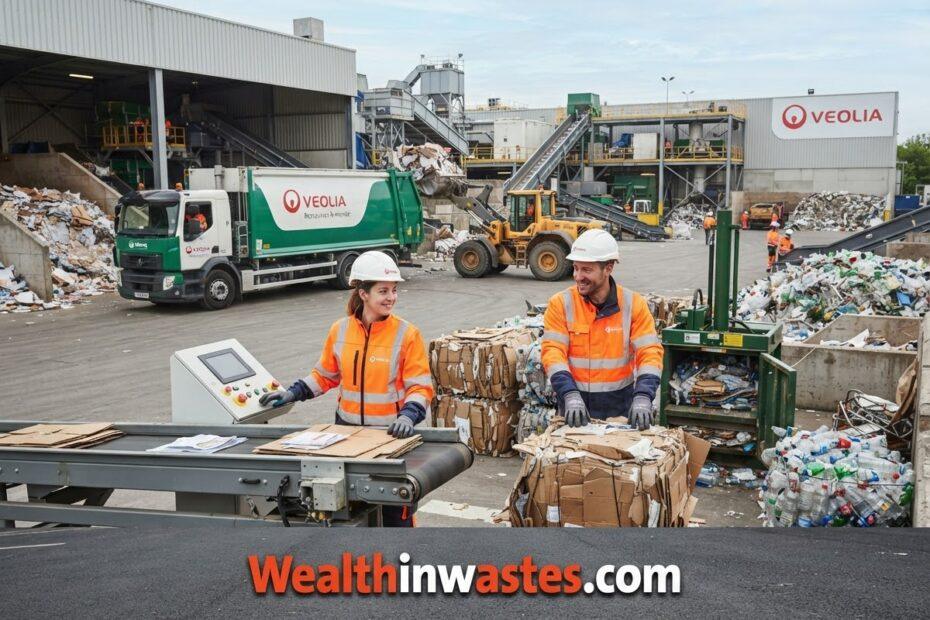
Veolia Environmental Services operates within Veolia Group, providing environmental solutions that help municipalities and businesses manage waste, water, and energy more responsibly. Its services connect everyday operations with broader sustainability goals.
The company’s work spans waste collection, sorting, recycling, treatment, and recovery, alongside water and energy services. These activities can reduce pollution, preserve materials, and improve operational efficiency when projects suit local needs.
Veolia’s story dates to 1853, when Compagnie Générale des Eaux began with water supply in France. Over time, the business broadened into environmental services and developed a global operational footprint.
Today, the Veolia name is closely associated with ecological transformation: practical efforts to decarbonize operations, control pollution, and protect resources. The group combines technical expertise with long-term service partnerships for clients.
This guide explains what Veolia Environmental Services does, how its waste, water, and energy activities fit together, and what organizations should assess before selecting an environmental services partner for ongoing operations.
Veolia Environmental Services: History and Core Mission
1. Founding and Origins: Veolia’s roots reach back to Compagnie Générale des Eaux, founded in France in 1853 to provide water services. That origin explains the group’s longstanding focus on essential resources and public services.
2. Corporate Evolution: By 1989, the group’s waste activities operated under Onyx Environnement; in 1999, Vivendi Environnement brought waste, water, and energy operations together, later adopting the Veolia Environnement name.
3. Core Mission: Veolia’s broader model connects collection, treatment, and environmental protection. Understanding the objectives of solid waste management helps explain why organized waste systems matter to communities and businesses.
4. Waste Stream Planning: Effective planning depends on the types and sources of solid waste, accurate classification of solid waste, and the hierarchy of waste management, which prioritizes prevention and recovery before disposal.
Read Also: Waste Pro Baton Rouge: Your Local Guide to Waste Services
Waste Collection, Treatment, and Resource Recovery
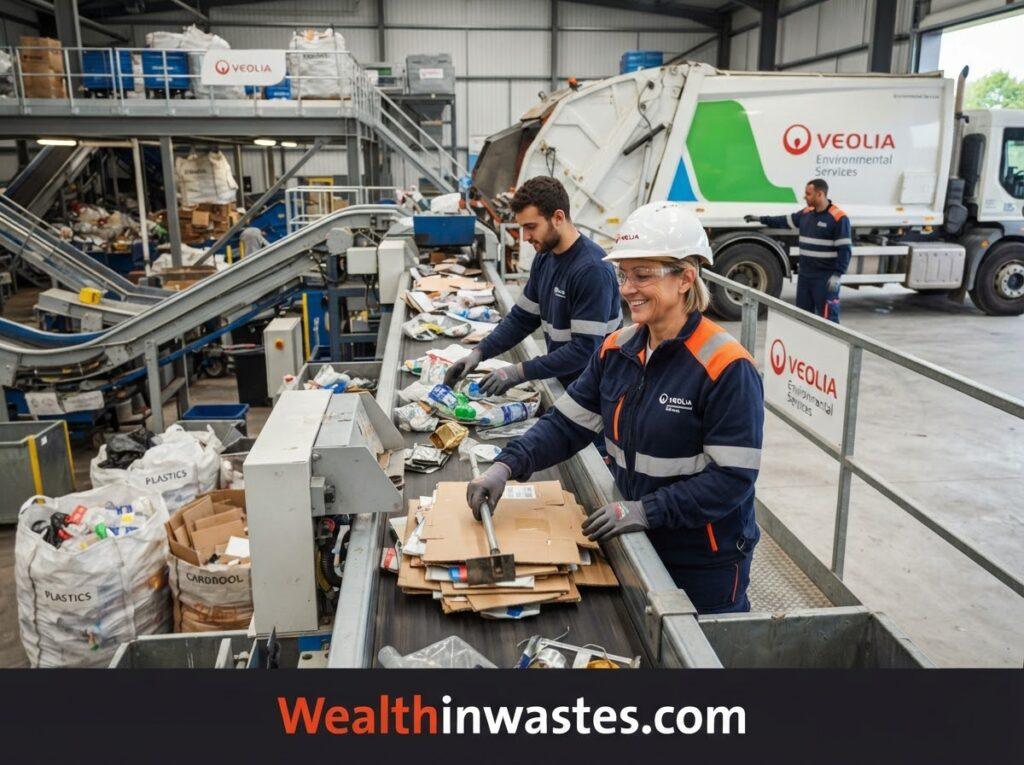
1. Collection and Sorting: Veolia can collect streams from homes, businesses, and industrial sites. Accurate sorting keeps recyclables separate and gives operators clearer information for safe handling and downstream processing.
2. Waste Classification: Reliable waste determination methods help identify hazardous and non-hazardous materials before transport, treatment, or disposal, reducing misclassification risks and supporting safer choices from collection to final handling.
3. Treatment and Recovery: Special and industrial wastes may need physical, chemical, or thermal treatment. Safe handling and treatment methods and a proper waste recycling process should match each material’s properties, hazards, and local rules.
4. Material Recovery: Facilities can return paper, glass, metals, plastics, and other usable materials to production. Effective waste resource recovery techniques can conserve raw materials and reduce disposal needs.
Water and Energy Management Solutions
Although the keyword often suggests waste services, Veolia’s broader resource-management model also covers water and energy. These connected activities can help cities and industrial sites use resources more efficiently across daily operations.
Organic residues can sometimes support resource recovery when they suit a controlled treatment pathway. Composting kitchen waste illustrates how suitable organic material can become a useful input instead of mixed refuse.
Energy services can focus on heating and cooling networks, efficient buildings, and lower-carbon energy options, depending on the location and project. Practical environmental management tips for reducing waste complement these larger efficiency measures.
Resource projects also depend on sound economics, reliable markets, and long-term planning. Research on economic incentives for recycling shows how policy and financial signals can encourage material recovery and support participation across supply chains.
Veolia Environmental Services and Ecological Transformation
1. Pollution Control: Veolia’s waste services can manage residual materials after prevention and recovery options. The different types of landfills illustrate why disposal sites need suitable design, monitoring, and controls.
2. Material Recovery: Recycling keeps usable resources in circulation and can lower demand for newly extracted materials. A practical guide to waste recycling and its advantages helps explain the environmental and operational case.
3. Local Disposal Planning: Disposal arrangements differ by jurisdiction, waste type, and available facilities. Checking how to locate a suitable landfill supports informed planning, but hazardous materials may require specialist routes.
Benefits for Businesses and Communities
For businesses, a coordinated service arrangement can simplify waste handling, improve records, and support compliance planning. Product design matters too: creating recyclable products helps keep materials easier to recover after use.
Clear material rules help employees avoid contamination and distinguish recoverable items from residual waste. Reviewing items that cannot be recycled can reduce rejected loads and help staff follow local collection guidance.
Plastic acceptance varies with local infrastructure and polymer type, so organizations should verify what each service accepts. A list of plastics that cannot be recycled helps teams avoid assuming every plastic item belongs in recycling.
Benefits depend on actual service coverage, waste composition, contamination controls, and transparent reporting. Organizations should set measurable goals, review results regularly, and adjust collection or treatment arrangements as operations change.
Choosing Veolia Environmental Services
When evaluating a provider, check whether its services match your waste streams, operational needs, and local regulations. A suitable agreement should clarify accepted materials, collection schedules, treatment routes, reporting, and responsibilities.
Resource recovery also deserves attention. Converting glass waste into fiberglass can turn recovered material into a useful input when technology, quality requirements, and buyers support the process.
Cardboard recovery similarly depends on clean sorting, consistent volume, and processor capacity. Converting cardboard waste into packaging materials shows how material markets can influence collection choices and recovery outcomes.
Ask for clear data on recovered quantities and final destinations. Examples such as paper waste converted into tissue paper show why local processing capacity, material quality, and dependable buyers matter.
Read Also: Environmental Monitoring and Programme
Summary on Veolia Environmental Services: Leading the Ecological Transformation
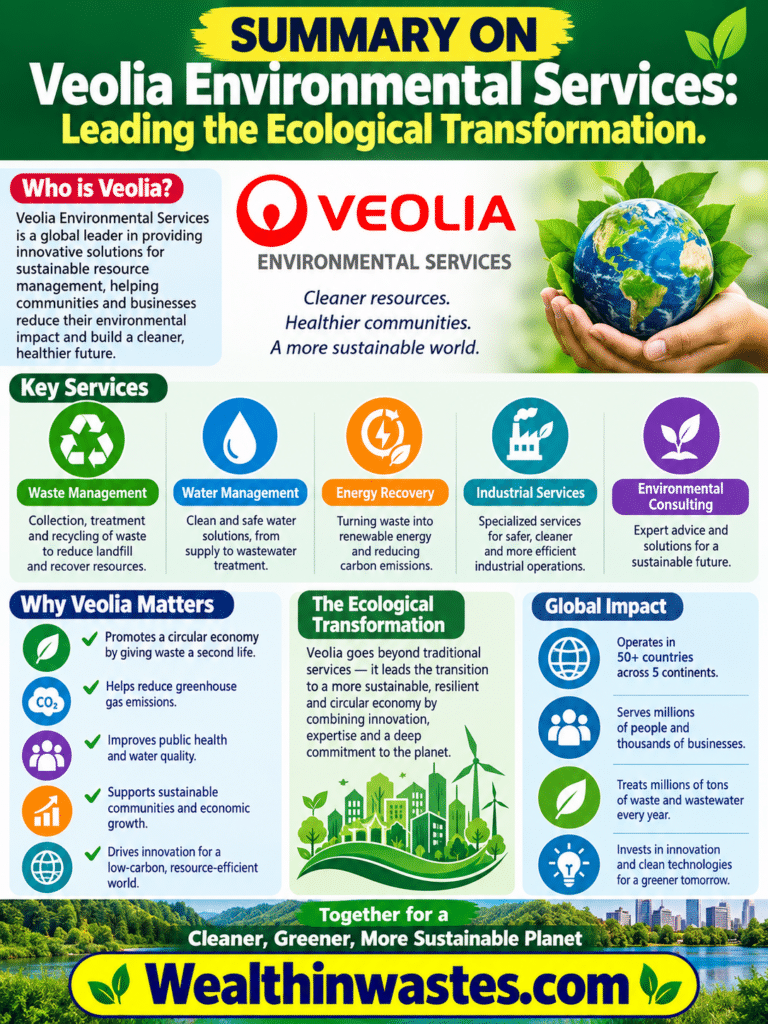
| Topic | Key Information | Potential Benefit |
|---|---|---|
| Company History | Veolia’s roots trace back to Compagnie Générale des Eaux, established in France in 1853. | Reflects a long history of resource management and environmental services. |
| Waste Management | Services include collection, sorting, treatment, recycling, and recovery. | Can reduce landfill dependence and improve material recovery. |
| Water Services | Activities can include drinking water supply, wastewater treatment, and reuse. | Supports water resource management and pollution control. |
| Energy Services | Solutions may include energy efficiency, heating networks, cooling networks, and alternative energy. | Can improve efficiency and support emissions reduction. |
| Ecological Transformation | Integrated environmental services address waste, water, energy, and pollution challenges. | Supports resource conservation and more sustainable operations. |
| Service Selection | Customers should assess service scope, safety procedures, regulatory requirements, and reporting. | Helps organizations choose services suited to their needs. |
Frequently Asked Questions About Veolia Environmental Services: Leading the Ecological Transformation
1. What does Veolia Environmental Services do?
It provides environmental services covering waste management, recycling, treatment, water management, and energy efficiency.
2. Is Veolia involved in recycling?
Yes. Its waste management activities can include sorting, recycling, material recovery, and converting suitable waste into useful resources.
3. Does Veolia provide water services?
Yes. The wider group provides water-related services that can include drinking water supply, wastewater treatment, and water reuse.
4. How does Veolia support ecological transformation?
It combines environmental services that aim to recover resources, manage pollution, improve efficiency, and support lower-emission operations.
5. Does Veolia manage hazardous waste?
Its waste activities include specialized hazardous waste treatment and recovery, subject to local regulations and available services.
6. Can Veolia help businesses reduce waste?
Its services can help businesses organize waste collection, separate recyclable materials, and identify suitable recovery and treatment routes.
7. Where does Veolia operate?
Veolia operates internationally, although the availability and scope of individual services vary by country, region, and customer requirements.
8. What should businesses consider before choosing Veolia?
Businesses should check service availability, accepted waste types, safety procedures, regulatory compliance, pricing, and environmental performance reporting.
Do you have any questions, suggestions, or contributions? If so, please feel free to use the comment box below to share your thoughts. We also encourage you to kindly share this information with others who might benefit from it. Since we can’t reach everyone at once, we truly appreciate your help in spreading the word. Thank you very much for your support and for sharing!
Read Also: How to Identify Aquatic flora and Fauna