



Environmental services help people protect the natural resources that support everyday life, including clean air, safe water, fertile soil, healthy ecosystems, and useful materials. Their value reaches homes, businesses, schools, farms, communities, and industries.
These services cover practical activities such as waste collection, recycling, pollution control, environmental assessment, conservation, sanitation, and resource management. Together, they create systems that reduce environmental damage while encouraging healthier and more responsible ways of living.
Modern communities face growing pressure from population growth, urban development, industrial activities, resource consumption, and increasing waste generation. Strong environmental services help communities respond to these challenges through organized planning, professional management, public education, and sustainable practices.
Environmental services also connect environmental protection with human wellbeing. Proper waste handling can reduce exposure to harmful substances, while clean water, cleaner air, green spaces, and responsible resource use support healthier communities and stronger local economies.
The power of environmental services comes from collective action. Government agencies, private organizations, environmental professionals, businesses, community groups, and individuals can each contribute by reducing waste, preventing pollution, conserving resources, and supporting practical environmental solutions.
What Environmental Services Include
Environmental services bring together coordinated activities that help communities prevent pollution, manage resources, control waste, and protect ecosystems. Their scope changes according to local needs, regulations, infrastructure, environmental risks, and available resources.
Environmental management provides the framework: Effective environmental services depend on clear planning, monitoring, compliance, and continuous improvement. Strong environmental management practices help organizations understand impacts and choose practical solutions.
Sustainable practices guide daily decisions: Individuals and organizations can reduce unnecessary environmental pressure by conserving materials, preventing waste, and using resources efficiently. These responsible environmental approaches support cleaner operations and stronger long-term sustainability.
Innovation improves environmental outcomes: New technologies, better data, efficient systems, and changing professional practices continue shaping environmental work. Current environmental management trends increasingly emphasize resource efficiency and circular systems.
Read Also: Aluminum Recycling: Everything you Need to Know
Environmental Services And Public Health
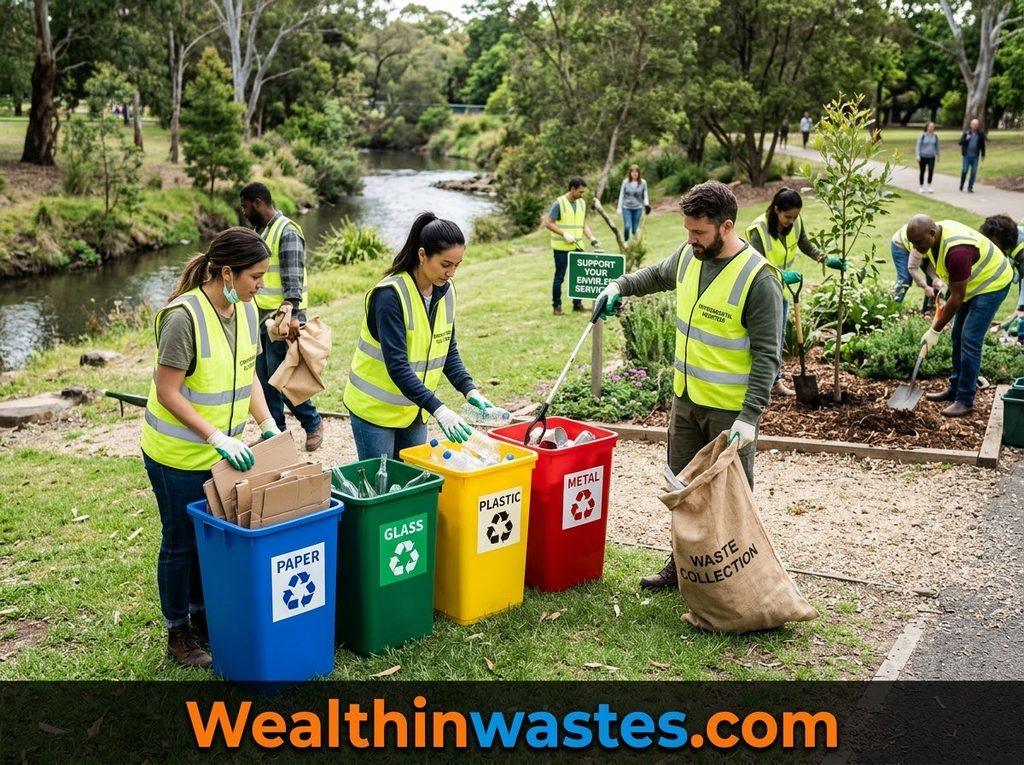
Environmental services directly influence public health because poor waste disposal, polluted water, unhealthy air, and unsafe surroundings can increase exposure to environmental hazards. Preventive services reduce risks before they become widespread community problems.
Proper sanitation remains one of the most important environmental health measures because it supports hygienic surroundings and safer communities. Reliable waste management for environmental sanitation helps control waste-related risks.
Water protection also matters because polluted water can affect households, agriculture, wildlife, and local industries. Understanding wastewater sources and characteristics helps communities choose suitable collection, treatment, monitoring, and disposal practices.
Environmental services can also address hazards associated with harmful chemicals, smoke, contaminated land, untreated wastewater, and poorly managed waste. Preventive measures protect vulnerable populations while supporting safer homes, workplaces, schools, and public spaces.
Clean surroundings can improve community comfort, reduce unpleasant odours, support recreation, and encourage healthier habits.These benefits show why environmental protection should remain part of public-health planning rather than operating as a separate activity.
Environmental health programs become stronger when professionals work with communities. Public education can explain safe waste handling, water conservation, pollution prevention, hygiene practices, and responsible disposal while encouraging residents to participate actively.
Environmental services also help communities identify risks early through inspections, sampling, monitoring, reporting, and assessment. Early action can prevent small environmental problems from becoming expensive emergencies that threaten health, infrastructure, or livelihoods.
For long-term public health protection, environmental services must combine infrastructure with education, enforcement, community participation, and reliable maintenance. This integrated approach creates healthier conditions while reducing the environmental pressures that repeatedly produce avoidable risks.
Waste Management And Resource Recovery
Waste management forms a major part of environmental services because communities generate household, commercial, agricultural, industrial, construction, and institutional waste every day. Proper systems prevent uncontrolled disposal and recover useful materials wherever possible.
1. Waste Collection: Reliable collection keeps waste from accumulating around homes, markets, roads, schools, and workplaces. Organized collection schedules, suitable containers, and efficient transportation improve cleanliness while reducing opportunities for dumping and burning.
2. Waste Treatment: Different wastes require different treatment methods because their physical, chemical, and biological characteristics vary. Following proper waste treatment and disposal methods reduces environmental risks.
3. Recycling And Recovery: Recycling converts suitable discarded materials into useful resources, reducing demand for some virgin materials. Communities can strengthen resource recovery by following practical waste recycling systems.
4. Waste Reduction: Preventing unnecessary waste is often more effective than managing waste after generation. Households and businesses can reduce waste through careful purchasing, reuse, repair, composting, and improved production practices.
Pollution Control And Environmental Protection
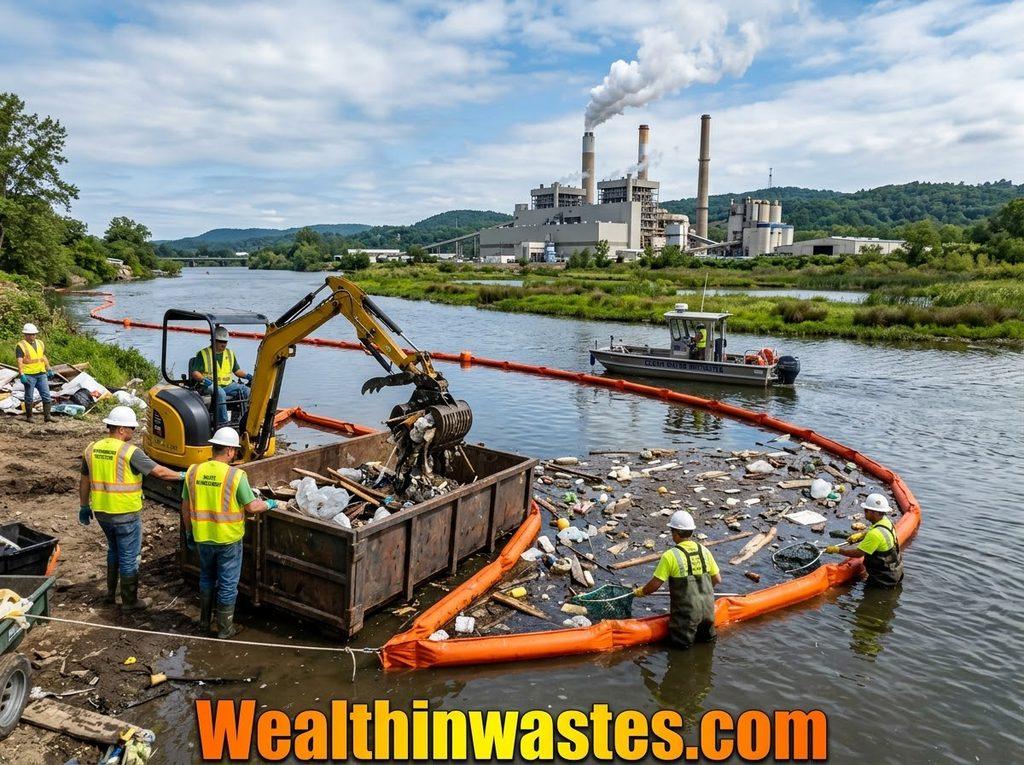
Pollution control focuses on preventing harmful substances from entering air, water, and soil. Environmental services support this goal through monitoring, source reduction, treatment systems, compliance programs, environmental assessment, and responsible waste handling.
Industrial operations can generate wastes containing oils, chemicals, metals, suspended solids, and other pollutants. Understanding industrial waste and its environmental effects helps businesses select suitable control measures.
Waste generation can create broader environmental problems when collection and disposal systems cannot keep pace with demand. Studying the effects of waste on the environment highlights the need for prevention.
Pollution control institutions can establish standards, monitor environmental quality, coordinate responses, and encourage responsible practices. Effective institutional arrangements for pollution control improve accountability and environmental performance.
Environmental protection also requires careful decisions about where facilities operate and how contaminated materials move. Site assessments consider soil, water, climate, access, ecosystems, and surrounding land uses before disposal infrastructure becomes established.
Appropriate disposal planning reduces the chances of contamination reaching groundwater, surface water, nearby communities, or sensitive ecosystems. Strong environmental disposal-site assessments support safer facility decisions.
Pollution prevention should remain a priority because preventing contaminants at their source often reduces treatment costs and environmental damage.Cleaner production, material substitution, efficient processes, and responsible handling can support this objective.
Environmental services become especially valuable when prevention, monitoring, enforcement, treatment, restoration, and public awareness operate together. This coordinated approach helps communities protect natural resources while reducing long-term costs associated with pollution.
Sustainable Environmental Services For Communities
Communities need environmental services that address waste, water, energy, transportation, land use, green spaces, and pollution as interconnected issues. Coordinated planning helps local authorities improve environmental quality while supporting economic and social development.
Cities can strengthen sustainability through organized waste collection, recycling systems, cleaner transport, green spaces, water conservation, and pollution monitoring. Practical environmental management strategies for cities can guide these improvements.
Climate considerations should also influence community planning because extreme weather can affect infrastructure, water systems, agriculture, waste facilities, and livelihoods. Strong climate sustainability measures help communities prepare.
Residents can support community sustainability through practical choices such as reducing consumption, reusing useful products, recycling appropriate materials, saving energy, conserving water, and supporting environmentally responsible businesses.
Sustainable living becomes more effective when personal actions connect with reliable public systems. Guidance on sustainable environmental practices can help households turn environmental awareness into everyday routines.
Green spaces also strengthen communities by providing recreational areas, supporting biodiversity, moderating local conditions, and improving the visual character of neighbourhoods. Their protection should therefore form part of broader environmental planning.
Community participation can improve environmental programs because residents understand local conditions, priorities, habits, and challenges. Public consultations, environmental education, clean-up activities, recycling initiatives, and local reporting systems encourage shared responsibility.
Successful community environmental services require funding, skilled personnel, suitable infrastructure, transparent management, monitoring, and consistent public cooperation. When these elements work together, communities can achieve cleaner surroundings and stronger environmental resilience.
Read Also: The Benefits of Amarillo Recycling
Environmental Services For Businesses
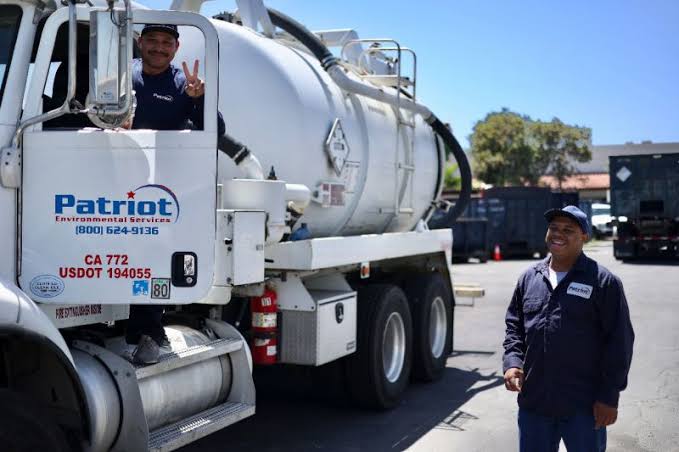
Businesses depend on environmental services to manage waste, meet environmental responsibilities, reduce operational risks, conserve resources, and improve sustainability performance. Responsible environmental management can also strengthen public trust and support long-term operational stability.
An Environmental Management System can help organizations organize environmental objectives, responsibilities, monitoring, procedures, and improvement activities. Businesses can learn more through Environmental Management Systems and apply structured approaches.
Compliance also matters because environmental requirements can affect waste handling, pollution prevention, facility operations, water use, emissions, and reporting. Understanding environmental management laws and regulations helps organizations act responsibly.
Businesses can reduce environmental costs by identifying material losses, improving energy efficiency, minimizing waste, maintaining equipment, preventing spills, and choosing efficient production methods. These measures can support both environmental protection and operational performance.
Professional environmental teams also contribute through impact assessments, sustainability reporting, regulatory coordination, environmental monitoring, and improvement planning. Skilled specialists help organizations identify risks and develop realistic measures that fit their operations.
The sector provides opportunities for people with interests in science, engineering, agriculture, waste management, conservation, planning, public health, and sustainability. Exploring environmental management careers reveals many professional pathways.
Businesses can also strengthen sustainability by training workers, setting measurable goals, reviewing environmental performance, and communicating responsibilities clearly. Employee participation makes environmental policies more practical because workers influence daily operations and resource use.
Ultimately, environmental services help businesses move beyond basic compliance toward prevention, efficiency, innovation, and responsible growth. Organizations that integrate environmental thinking into operations can reduce risks while creating stronger relationships with customers and communities.
How Individuals Can Support Environmental Services
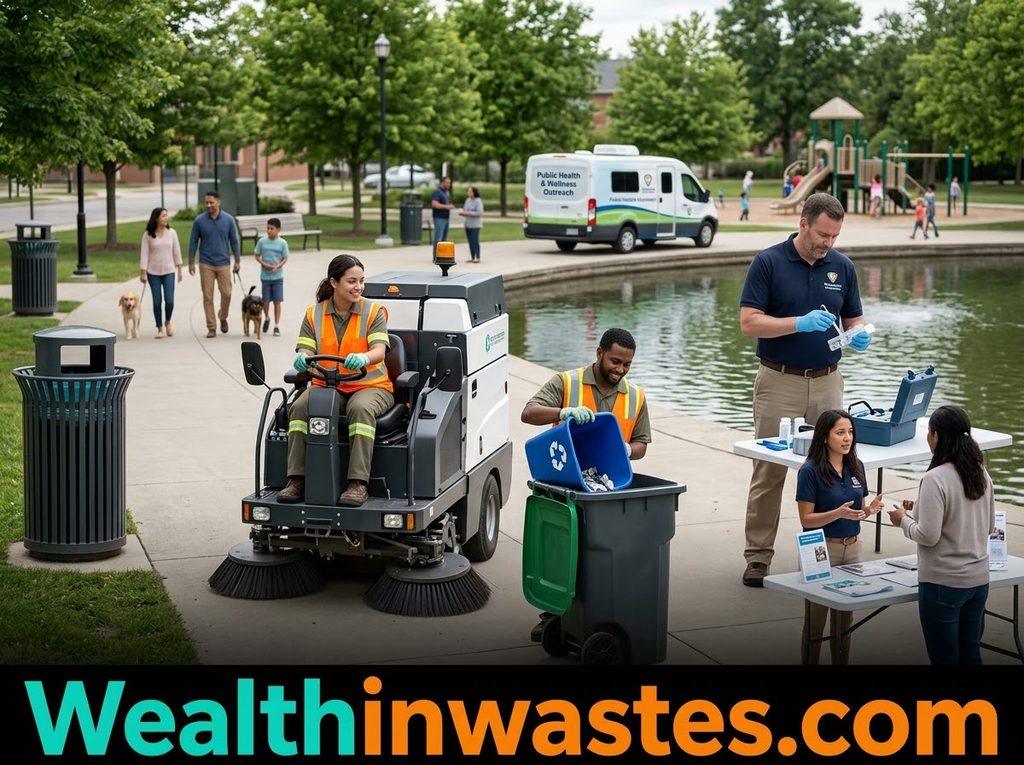
Individuals may not operate large treatment plants or recycling facilities, but daily choices strongly influence waste generation, resource consumption, pollution, and environmental quality. Personal responsibility therefore remains an important part of successful environmental services.
1. Reduce Unnecessary Waste: Buy only what you need, choose durable products, avoid excessive packaging, and reuse useful items. Consistent waste reduction complements professional environmental services by lowering the volume requiring collection and treatment.
2. Save Energy: Switch off unused appliances, improve energy efficiency, use suitable lighting, and consider cleaner energy options where practical. Applying energy-saving environmental practices can reduce unnecessary consumption.
3. Improve Household Practices: Homes can conserve water, separate recyclable materials, avoid indiscriminate dumping, and maintain clean surroundings. Following guidance on environmental management for homes makes sustainability easier to practice daily.
4. Participate In Community Action: Join neighbourhood cleanups, recycling programs, tree planting, environmental education, and local conservation projects. Collective participation increases awareness and helps communities maintain environmental improvements after initial campaigns.
People can also report illegal dumping, pollution incidents, blocked drainage, unsafe disposal practices, or other environmental concerns to appropriate authorities. Reporting helps responsible agencies identify problems and respond before impacts become larger.
Environmental responsibility also includes teaching children and young people about conservation, waste reduction, cleanliness, biodiversity, and resource protection. Early education can shape habits that continue throughout adulthood and influence wider community behaviour.
Consumers can encourage responsible business practices by supporting companies that reduce waste, conserve resources, and manage environmental impacts responsibly. Market choices can influence production methods and encourage wider adoption of sustainable business practices.
Everyday actions may appear small, but millions of consistent choices can create meaningful environmental improvements. When individual responsibility combines with professional environmental services, communities gain stronger systems for protecting resources and maintaining healthier surroundings.
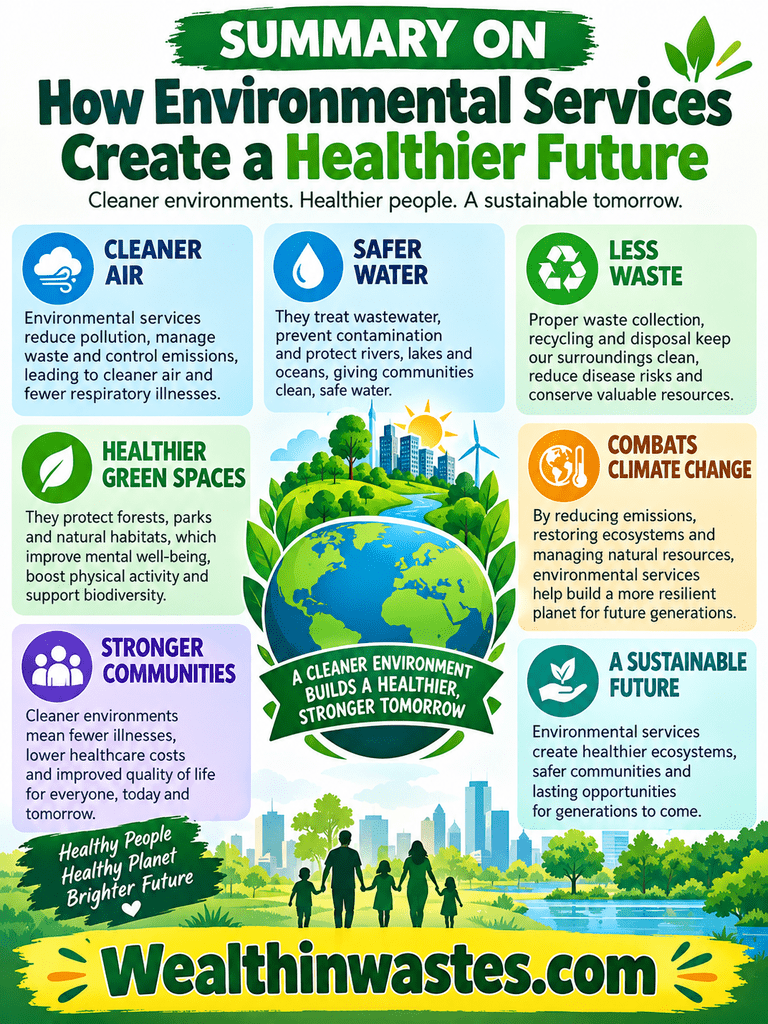
Summary on How Environmental Services Create a Healthier Future
| Area | Key Role |
|---|---|
| Environmental Management | Plans, monitors, and improves activities that affect natural resources. |
| Public Health | Reduces environmental hazards and supports safer surroundings, water, and sanitation. |
| Waste Management | Collects, treats, recycles, recovers, and responsibly disposes of waste. |
| Pollution Control | Prevents harmful substances from damaging air, water, soil, and ecosystems. |
| Community Sustainability | Supports cleaner cities, conservation, resilience, green spaces, and responsible resource use. |
| Business Support | Helps organizations manage environmental responsibilities, risks, compliance, and sustainability. |
| Individual Action | Encourages waste reduction, energy conservation, community participation, and responsible consumption. |
Frequently Asked Questions About Environmental Services: How They Create a Healthier Future
1. What are environmental services?
Environmental services are activities that protect natural resources, manage waste, control pollution, conserve ecosystems, support sanitation, and promote healthier and more sustainable communities through organized environmental practices.
2. Why are environmental services important?
They help reduce pollution, protect public health, manage waste safely, conserve resources, support biodiversity, improve community cleanliness, and strengthen environmental resilience against growing human and climate-related pressures.
3. How do environmental services support public health?
They reduce exposure to environmental hazards through sanitation, waste management, pollution control, water protection, monitoring, public education, and responsible handling of materials that could threaten community health.
4. What role does waste management play?
Waste management prevents uncontrolled dumping, supports collection and treatment, increases recycling and recovery, reduces pollution, and helps communities manage discarded materials more safely and efficiently.
5. Can environmental services benefit businesses?
Yes. Environmental services can help businesses reduce waste, manage pollution risks, meet environmental responsibilities, conserve resources, improve efficiency, strengthen sustainability performance, and maintain better relationships with communities.
6. How can individuals support environmental services?
Individuals can reduce waste, reuse products, recycle suitable materials, conserve water and energy, avoid littering, report pollution, participate in community activities, and support environmentally responsible organizations.
Do you have any questions, suggestions, or contributions? If so, please feel free to use the comment box below to share your thoughts. We also encourage you to kindly share this information with others who might benefit from it. Since we can’t reach everyone at once, we truly appreciate your help in spreading the word. Thank you very much for your support and for sharing!
Read Also: Health Benefits of Spinach (Spinacia oleracea)