


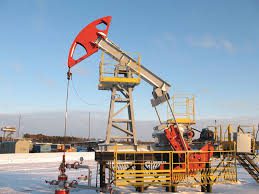
As earlier explained, petroleum begins with organic material deposited in ancient sedimentary environments and preserved beneath accumulating layers. Geological time, burial, heat, and pressure gradually transform this material into petroleum-generating compounds.
Marine plankton, algae, microorganisms, and some terrestrial plant material can contribute organic matter to sediments. The resulting source material varies chemically, so different source rocks can generate crude oils with different properties.
Burial increases temperature and pressure while reducing exposure to oxygen and biological activity. Under these changing conditions, complex organic molecules progressively reorganize, creating kerogen and later hydrocarbon compounds that form petroleum.
The petroleum transformation process therefore links biological remains with geological conditions. It does not happen suddenly; instead, a sequence of chemical changes gradually converts organic matter into oil and natural gas.
The transformation pathway also depends on source-rock composition, burial history, temperature, pressure, time, and available migration routes. These factors determine whether generated hydrocarbons mature sufficiently and eventually accumulate economically underground.
Organic Matter And Petroleum Formation
1. Organic Matter Deposition: Petroleum begins with organic remains settling into sediments, especially oxygen-poor marine environments. Rapid burial can protect this material from complete decomposition and preserve carbon-rich compounds for later geological transformation in sediments.
2. Source Rock Development: Compacted sediments gradually become source rocks containing organic matter capable of generating hydrocarbons. Their richness, mineral composition, and thermal history strongly influence the quantity and quality of petroleum eventually produced underground.
3. Geological Burial: Continued sediment accumulation buries source rocks progressively deeper. Increasing temperature and pressure promote chemical rearrangements while geological time allows slow reactions to continue across enormous periods before petroleum generation becomes substantial naturally.
4. Kerogen Formation: During early alteration, biological molecules lose some water, oxygen, nitrogen, and other components. This process concentrates resistant organic material into kerogen, the principal precursor from which thermal petroleum generation later occurs underground.
These early changes agree with the broader explanation of natural resources and their formation, because petroleum originates as a naturally occurring geological resource before extraction, processing, and economic utilization.
Source-rock conditions also influence the final chemistry of petroleum. The relationship between organic precursors and crude composition becomes clearer when examining the chemical composition of crude oil generated from different geological settings.
Read Also: Composition of Crude Oil
Diagenesis Stage Of Petroleum Transformation

Diagenesis represents the earliest stage of petroleum maturation. It begins soon after deposition and operates at relatively low temperatures, allowing microbial activity and chemical alteration to modify newly buried organic matter.
During this stage, microorganisms consume easily degradable compounds while remaining organic material becomes increasingly resistant to decomposition. Compaction and chemical changes also reduce water and oxygen, preparing the material for deeper maturation.
Kerogen forms through complex reactions involving proteins, carbohydrates, lipids, and other biological components. Its eventual type and composition depend strongly on the original organisms, depositional environment, preservation conditions, and sediment chemistry.
Because diagenesis does not usually generate large quantities of mature crude oil, it mainly prepares the organic material for higher-temperature reactions that follow during catagenesis and later stages of petroleum maturation.
The environmental setting surrounding buried organic matter matters because soil, sediment, water, and geological materials influence chemical transformations. These relationships can be understood further through the study of Earth as the natural environment.
Catagenesis And The Oil Window
1. Thermal Maturation: Catagenesis begins when burial subjects kerogen to substantially higher temperatures. Chemical bonds break progressively, producing petroleum-range hydrocarbons while continued heating can generate increasingly lighter products from the original organic material.
2. Oil Window: The oil window describes the temperature interval where thermal cracking of suitable kerogen commonly generates liquid petroleum in significant quantities. Actual boundaries vary with kerogen type, burial history, pressure, and geological setting.
3. Hydrocarbon Generation: As catagenesis advances, kerogen molecules break through numerous parallel reactions. Some products form liquid oil, while others produce wet gas and related compounds depending on temperature and the original kerogen structure.
4. Continued Cracking: With further heating, previously generated oil can crack into smaller hydrocarbon molecules, increasing gas production. Excessive thermal maturity eventually reduces the proportion of recoverable liquid petroleum within the source system.
The hydrocarbons generated during catagenesis belong to the broader group of hydrocarbon fuels and petroleum products, which later provide energy and raw materials for transportation, industrial operations, and petrochemical manufacturing.
As temperatures continue increasing, the products can shift toward gaseous hydrocarbons. This relationship connects petroleum maturation with the characteristics explained in gaseous fuel and natural gas resources found in underground geological systems.
Metagenesis And Advanced Hydrocarbon Maturity

Metagenesis marks advanced thermal maturation after catagenesis. Very high temperatures transform remaining kerogen and previously generated hydrocarbons, shifting the system toward methane-rich gas and carbon-rich residual material rather than liquid oil.
At extreme maturity, the source material contains fewer compounds capable of producing conventional crude oil. Generated hydrocarbons may become increasingly gaseous as heat breaks larger molecules into smaller, more stable molecules.
Metagenesis helps explain why deeply buried or intensely heated source rocks may contain dry gas rather than abundant liquid petroleum. Geological temperature history therefore strongly controls the final hydrocarbon phase present.
The three maturation stages form a continuous sequence rather than isolated events. Diagenesis prepares organic matter, catagenesis produces most liquid hydrocarbons, and metagenesis advances the system toward gas and carbon-rich residues.
The distinction between liquid and gaseous products becomes clearer when examining petroleum fractions and their components, because refining later separates hydrocarbons according to boiling characteristics and molecular composition.
Advanced petroleum maturity also reflects the finite nature of fossil resources. Petroleum belongs among classified natural resources because geological processes form these deposits over periods far longer than ordinary human economic cycles.
Conditions For Petroleum Transformation
1. Organic-Rich Source Rock: A productive petroleum system requires source rock containing enough preserved organic matter. The material must also possess suitable composition and maturity so thermal transformation can generate petroleum in meaningful quantities.
2. Adequate Heat History: Petroleum generation depends on a suitable thermal history rather than temperature alone. Burial depth, geothermal conditions, and geological time determine how long organic matter remains exposed to temperatures capable of generating hydrocarbons.
3.Sufficient Geological Time: Transformation develops over very long periods because petroleum generation involves many chemical reactions. Time allows burial, heating, molecular breakdown, hydrocarbon expulsion, and maturation to proceed through successive geological stages underground.
4. Effective Petroleum System: Generation alone cannot create a recoverable accumulation. A successful system also needs migration pathways, suitable reservoir rocks, and seals or traps that retain hydrocarbons after movement away from source rocks.
These requirements demonstrate why petroleum qualifies as a non-renewable resource. The principles discussed in fundamentals of environmental resource management help explain why resources formed through extremely long geological periods require careful management.
Petroleum also fits the broader classification of non-renewable natural resources, since geological processes cannot restore extracted commercial quantities within a human lifetime.
The economic importance of these geological resources also depends on availability, accessibility, technology, and extraction costs, concepts explored in discussions of resource conservation and natural-resource value.
Reservoir Rock And Petroleum Storage
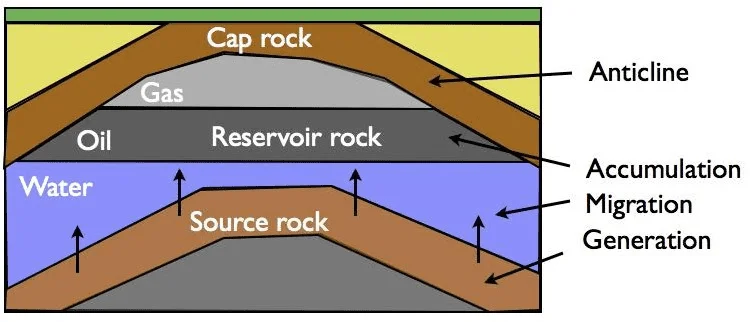
Reservoir rock stores petroleum after generated hydrocarbons leave their source rock. A useful reservoir needs connected pore spaces that can contain fluids and pathways that allow hydrocarbons to move during accumulation and production.
Common storage spaces include pores between mineral grains, fractures, joints, solution openings, and cavities associated with fossils. Interconnected pores provide effective storage, while isolated openings contribute little to recoverable petroleum volume.
Sandstone and carbonate rocks commonly serve as reservoirs because geological processes can create substantial pore networks. However, reservoir quality differs widely according to grain size, cementation, dissolution, fracturing, and other alterations.
Petroleum accumulation becomes commercially useful when reservoir properties, trap geometry, fluid pressure, and hydrocarbon volume combine favorably. Exploration therefore examines both the rock itself and the entire petroleum system surrounding it.
Figure: Diagram illustrating the formation, migration and accumulation of crude oil (Sourced Online)
The connection between petroleum and geological materials also appears in soil and mineral resource management, where extraction activities can interact with land, water, ecosystems, and other natural resources.
The classification of petroleum as a valuable geological reserve also relates to discussions of resource definitions and concepts, especially the distinction between naturally existing stocks and economically recoverable resources.
Porosity And Permeability In Reservoir Rocks
Porosity measures the proportion of a rock occupied by pore space, so it represents fluid-holding capacity. Reservoir porosity can vary considerably, and interconnected pore space usually matters more than total pore volume.
Permeability describes how readily fluids pass through connected pores or fractures. A rock may contain many pores but transmit fluids poorly when those openings lack effective connections or become blocked by mineral cement.
Porosity and permeability often occur together but do not have a fixed quantitative relationship. Rock texture, pore geometry, fractures, and diagenetic alteration can produce high porosity with modest permeability or the reverse.
Small core samples may not represent the whole reservoir because pore sizes and fracture networks can vary across geological distances. Engineers therefore combine core measurements with well logs, pressure data, and geological interpretation.
The environmental consequences of petroleum extraction make reservoir development especially important. Existing research on oil drilling and ecosystem impacts shows why geological exploration must consider environmental risks alongside resource recovery.
Oil-bearing formations can also influence surrounding land and water when production or transportation systems fail. The broader discussion of oil pollution, sources, effects, and fate explains how released petroleum can spread through environmental compartments.
Large petroleum accidents demonstrate that extraction risks extend beyond the reservoir itself. The documented environmental and economic impacts of major oil spills show how petroleum releases can affect ecosystems, fisheries, communities, and national economies.
Read Also: Mechanisms of Petroleum Migration and Petroleum Occurrence
Petroleum Migration And Accumulation
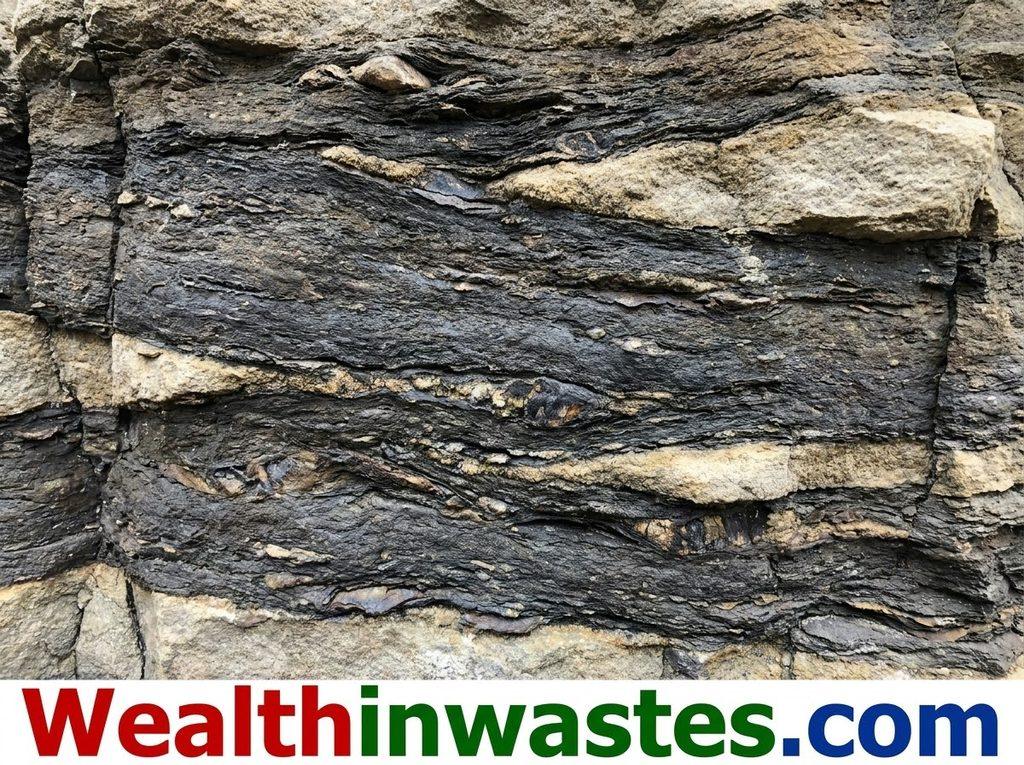
1. Primary Migration: Newly generated hydrocarbons can leave mature source rocks through pressure changes, molecular diffusion, microfractures, and other pathways. This movement transfers petroleum from generation sites toward larger carrier beds or porous rocks.
2. Secondary Migration: After entering permeable carrier or reservoir rocks, hydrocarbons can move farther through interconnected pores, fractures, and faults. Buoyancy often drives upward movement because petroleum is generally less dense than formation water.
3. Trapping And Sealing: Hydrocarbons accumulate when geological structures or stratigraphic conditions create traps and impermeable seals. These barriers stop continued migration and allow oil, gas, and water to separate into distinct subsurface zones.
4. Exploration And Recovery: Geologists identify promising petroleum systems by combining source-rock maturity, migration pathways, reservoir quality, traps, and seals. Drilling then tests the accumulation, while production methods bring recoverable hydrocarbons to the surface.
The movement of petroleum resembles other contaminant transport processes because fluids can move through connected pores, fractures, and environmental pathways. Similar principles appear in studies of movement and absorption through soil systems.
Once petroleum reaches the surface through natural seepage or human activities, environmental effects can develop rapidly. Understanding pollution sources and environmental pathways helps explain the consequences of uncontrolled petroleum releases.
The combustion of extracted petroleum creates another stage of environmental concern. The wider effects described in the consequences of burning fossil fuels show that petroleum impacts continue beyond geological formation and extraction.
Petroleum production also creates wastes and byproducts that require appropriate management. Guidance on managing fossil-fuel byproducts highlights the importance of controlling wastes generated during petroleum use and processing.
Industrial petroleum operations can produce contaminated water requiring treatment before discharge. This issue connects with the procedures described for industrial wastewater treatment, especially where oil, grease, chemicals, and other pollutants enter industrial effluent.
Effective petroleum development therefore requires attention to geology, engineering, environmental protection, and resource conservation. These combined considerations help reduce losses while protecting ecosystems surrounding exploration, production, transportation, and processing activities.
Summary on Petroleum Transformation Process
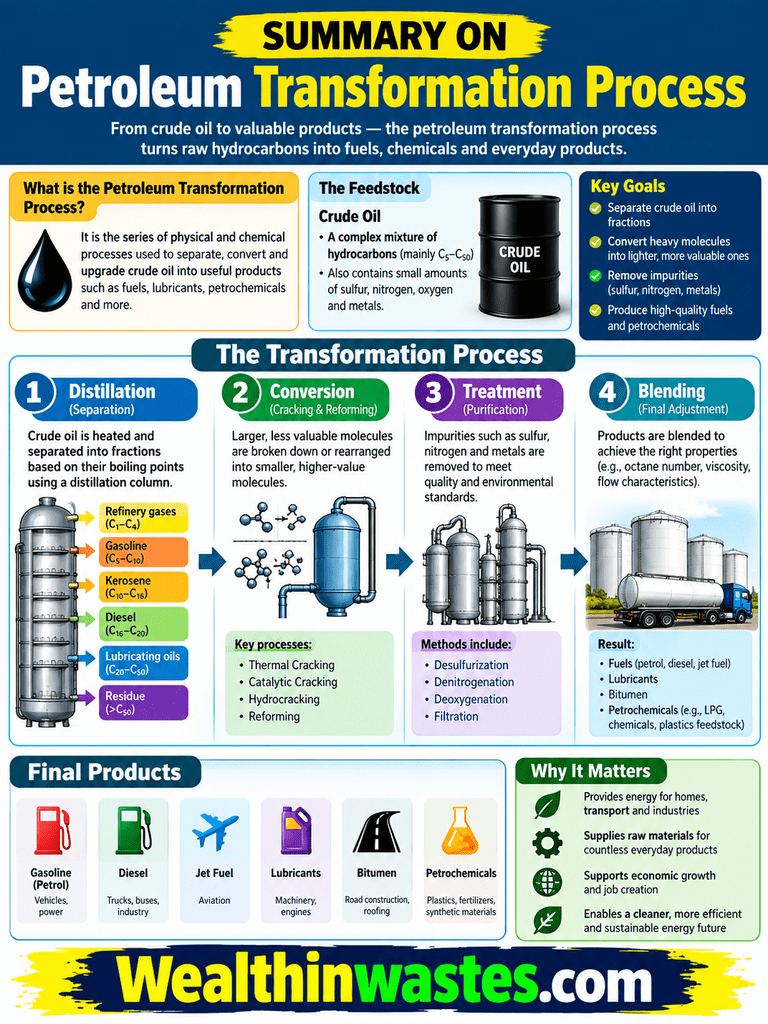
| Stage or Feature | Main Process | Importance |
|---|---|---|
| Organic Deposition | Plant, animal, plankton, and microbial remains enter sediments. | Provides the original organic material. |
| Diagenesis | Early biological and chemical alteration forms kerogen. | Prepares organic matter for thermal maturation. |
| Catagenesis | Kerogen thermally cracks into liquid and gaseous hydrocarbons. | Generates most petroleum and associated gas. |
| Oil Window | Suitable temperatures promote substantial liquid-oil generation. | Marks the main zone of conventional oil formation. |
| Metagenesis | Advanced heating produces increasingly methane-rich gas. | Represents late-stage thermal maturity. |
| Migration | Hydrocarbons move through pores, fractures, and carrier rocks. | Transfers petroleum away from source rocks. |
| Reservoir | Porous and permeable rocks store hydrocarbons. | Provides recoverable underground accumulation. |
| Trap And Seal | Geological barriers prevent continued migration. | Allow petroleum accumulation and preservation. |
Frequently Asked Questions About Petroleum Transformation Process: From Kerogen to Crude Oil
1. What is the petroleum transformation process?
The petroleum transformation process is the geological sequence that converts preserved organic matter into kerogen, crude oil, and natural gas through burial, heating, pressure, and chemical reactions.
2. What is kerogen?
Kerogen is complex, insoluble organic material formed from altered biological remains in sediments. It serves as the principal precursor for petroleum generated during thermal maturation.
3. What happens during diagenesis?
Diagenesis involves early biological and chemical alteration of buried organic matter. Microbial activity, compaction, and chemical reactions progressively convert preserved organic material into more stable kerogen.
4. What is catagenesis?
Catagenesis is the main thermal maturation stage where increasing temperature breaks kerogen molecules into liquid petroleum, wet gas, and other hydrocarbon products.
5. What is the oil window?
The oil window refers to the geological temperature range where suitable kerogen commonly generates significant quantities of liquid petroleum. Its exact limits vary with geological conditions and kerogen type.
6. What is metagenesis in petroleum formation?
Metagenesis represents advanced thermal maturity. Strong heating converts remaining organic material and hydrocarbons toward methane-rich gas and carbon-rich residues rather than substantial liquid crude oil.
7. What properties make a good reservoir rock?
A productive reservoir generally needs adequate porosity for storing fluids and sufficient permeability for transmitting hydrocarbons through connected pores or fractures.
8. How does petroleum reach a reservoir?
Generated hydrocarbons leave mature source rocks through primary migration and then travel through carrier beds, pores, fractures, or faults during secondary migration until they encounter suitable traps.
9. Why is petroleum called a non-renewable resource?
Petroleum requires extremely long geological periods to form naturally. Human extraction occurs far faster than natural petroleum generation, so commercial reserves cannot replenish within ordinary human timescales.
10. Why are traps and seals important?
Traps and impermeable seals stop migrating hydrocarbons from continuing upward or escaping. They allow oil and gas to accumulate in reservoir rocks where drilling can eventually recover them.
Do you have any questions, suggestions, or contributions? If so, please feel free to use the comment box below to share your thoughts. We also encourage you to kindly share this information with others who might benefit from it. Since we can’t reach everyone at once, we truly appreciate your help in spreading the word. Thank you very much for your support and for sharing!
Read Also: Agricultural Marketing Strategies