


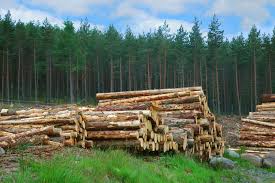
Environmental Resource Management is a foundation of environmental studies because human societies depend on land, water, air, forests, minerals, energy, and living organisms for survival, production, livelihoods, and economic development.
These resources do not have equal availability, renewal rates, or economic value, so careless extraction can reduce supplies, damage ecosystems, increase pollution, and create problems that affect communities across generations.
Effective management therefore requires people to understand how resources occur, how natural systems replenish them, and how human activities alter their quantity, quality, distribution, and usefulness across different periods and locations.
The subject also connects environmental science with economics, conservation, planning, technology, law, agriculture, and community participation because resource decisions influence livelihoods, public welfare, ecosystem health, and long-term national development strategies.
This article explains the fundamentals of Environmental Resource Management, including resource types, management principles, major challenges, practical strategies, institutional responsibilities, and the benefits of using environmental resources sustainably for present and future generations.
What Is Environmental Resource Management?

A resource is anything from the natural environment that people or other organisms can use to satisfy needs, support life, produce goods, or provide services. Resources become valuable through availability and usefulness.
From an ecological perspective, resources include air, water, soil, vegetation, wildlife, sunlight, minerals, and energy. Natural resource classifications help explain their different characteristics and management requirements in practice and policy.
Resources also differ according to how nature replaces them. The nature of natural resources includes land, water, atmospheric resources, forests, wildlife, soils, minerals, and solar energy, each requiring appropriate stewardship.
Renewable resources can replenish naturally within useful periods when people manage them carefully, while nonrenewable resources form slowly and may become depleted. Natural resource types help planners distinguish these categories.
Another useful distinction separates stock, resource, and reserve. Stock refers to the total amount present in nature, resource describes the portion usable under conditions, while reserve identifies economically recoverable quantities with available technology.
Environmental economists emphasize that resource estimates can change as technology, prices, knowledge, and social priorities change. A material once considered unusable may become a resource after improved methods make extraction practical and affordable.
Some resources occur directly in usable forms, such as sunlight, fresh air, flowing water, fertile soil, and wild foods. Others require investment, processing, technology, infrastructure, or careful management before people can use them effectively.
Read Also: How to Reduce the Amount of Wastes Produced
Types of Environmental Resources

1. Renewable Resources: Renewable resources include forests, freshwater, fertile soils, fish, and vegetation that can recover through natural processes. Their continued availability depends on use rates, ecosystem conditions, and responsible conservation.
2. Nonrenewable Resources: Nonrenewable resources include crude oil, natural gas, coal, and mineral deposits that replenish extremely slowly. Their management emphasizes efficient extraction, reduced waste, recycling, substitution, and preparation for eventual scarcity.
3. Potentially Renewable Resources: Potentially renewable resources can remain available indefinitely when consumption stays within regenerative capacity. Sustainable harvesting, habitat protection, and resource conservation practices help maintain their productive potential.
4. Perpetual Resources: Perpetual resources such as solar radiation, wind, tides, and wave energy remain available on human time scales. Although access requires technology, responsible development can reduce dependence on depleted fuels.
5. Resource Availability: Resource availability changes with location, quality, technology, price, infrastructure, and access. Resource management approaches therefore consider both natural supply and the conditions that make resources usable efficiently.
Why Environmental Resource Management Matters
Environmental Resource Management matters because natural systems support food production, water supply, climate regulation, energy generation, transportation, recreation, and livelihoods. Damage to one resource can create problems across several connected systems.
Ecosystems often provide services without direct monetary payments, including pollination, nutrient cycling, flood regulation, soil formation, and water purification. Managers protect these functions by maintaining habitats and limiting harmful pressures on natural systems.
Water demonstrates this connection clearly. Water resource management must consider availability, seasonal variation, competing uses, pollution, and ecosystem needs because households, farms, industries, and wildlife depend on shared supplies worldwide.
Resource management also supports economic stability because industries require reliable supplies of raw materials, energy, land, and water. Efficient use reduces production losses, limits costs, and encourages technologies that create more value from fewer inputs.
Social considerations remain essential because communities may depend directly on forests, fisheries, grazing land, farmland, and freshwater sources. Resource conservation conflicts can emerge when different groups seek competing benefits from the same resource.
Poor management can trigger soil erosion, habitat loss, water contamination, declining biodiversity, resource depletion, and waste accumulation. These pressures can weaken ecosystem resilience and increase the cost of restoring damaged environmental systems later.
Good management therefore seeks a balance between present use and future availability. Resource conservation and management provide a practical framework for maintaining productive ecosystems while meeting legitimate human needs effectively.
Principles of Environmental Resource Management
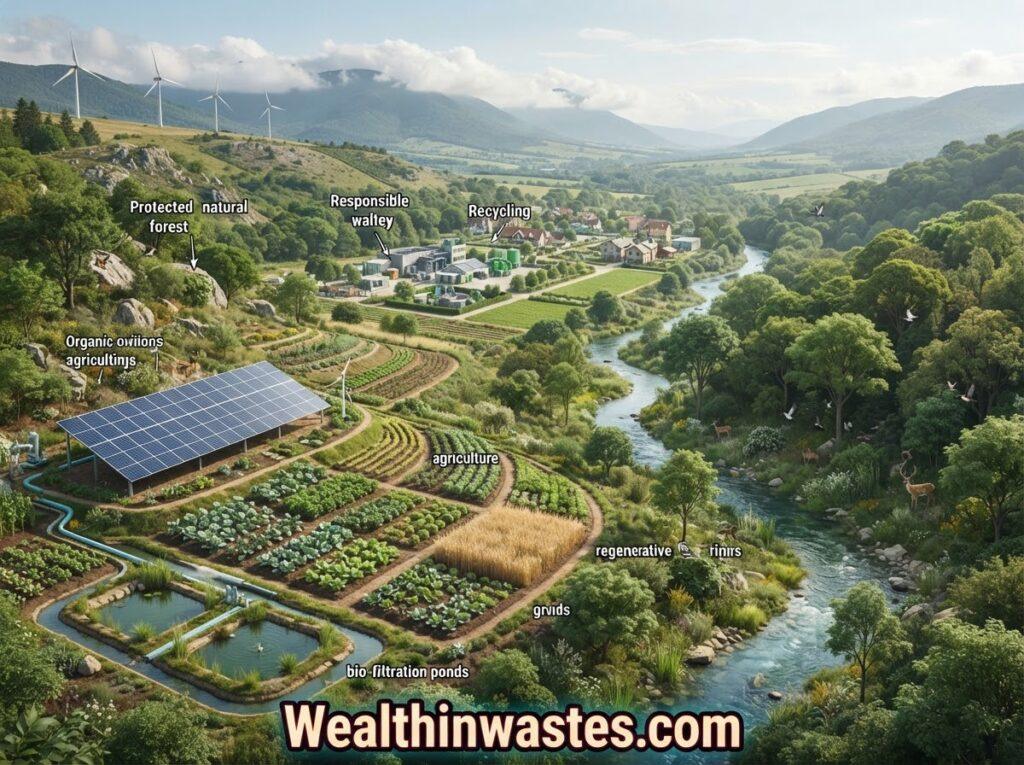
1. Sustainability: Management should keep resource use within levels that natural systems can support. The principles of ecological sustainability connect present resource use with long-term ecosystem stability and renewal over time.
2. Integration: Environmental decisions should consider ecological, economic, social, and technological factors together. Responsible environmental use encourages development choices that protect resources while supporting legitimate human needs and community welfare.
3. Precaution: Managers should reduce serious environmental risks even when complete scientific certainty is unavailable. Early action can prevent irreversible damage, especially where pollution, habitat destruction, or resource depletion threatens sensitive ecosystems.
4. Participation: Communities, businesses, government institutions, researchers, and resource users should contribute to decisions affecting shared resources. Sustainable development planning becomes stronger when stakeholders understand responsibilities, processes, and expected benefits.
5. Equity: Resource decisions should consider both present needs and future generations. Fair access, transparent rules, and attention to vulnerable communities can reduce disputes and improve acceptance of conservation measures and environmental policies.
Challenges in Environmental Resource Management
1. Resource Depletion: Rapid population growth, high consumption, and inefficient production can push extraction beyond natural replacement rates. Overharvesting fisheries, clearing forests, and excessive groundwater pumping illustrate this pressure clearly.
2. Pollution: Wastewater, industrial emissions, agricultural chemicals, plastics, and poor waste disposal can reduce resource quality. Understanding major water pollution sources helps managers identify contamination pathways and reduce environmental risks.
3. Climate Pressure: Rising temperatures, changing rainfall, droughts, floods, and extreme weather can alter resource availability and ecosystem productivity. climate change impacts therefore require adaptation alongside conservation and efficient resource use.
4. Governance Challenges: Weak enforcement, limited environmental data, unclear property rights, competing interests, and inadequate funding can undermine management. Effective institutions need clear rules, monitoring systems, technical capacity, public accountability, and sustained investment.
5. Land-Use Change: Urban expansion, infrastructure development, intensive agriculture, mining, and deforestation can transform habitats and reduce ecological functions. Careful land-use planning helps balance development needs with resource protection and ecosystem resilience.
Strategies for Sustainable Resource Management

1. Resource Assessment: Managers first identify available resources, their quantity, quality, location, renewal rate, users, and risks. Reliable inventories and monitoring data provide evidence for planning, allocation, conservation targets, and corrective action.
2. Efficient Resource Use: Efficiency reduces unnecessary extraction and waste by improving production methods, repairing equipment, recycling materials, conserving water, and using energy carefully. Circular practices can keep valuable materials productive for longer periods.
3. Pollution Prevention: Preventing contamination at the source is usually more effective than cleaning polluted systems later. Effective waste management supports safe handling, treatment, recycling, recovery, and responsible disposal safely.
4. Restoration and Conservation: Damaged ecosystems require measures such as reforestation, erosion control, habitat protection, wetland recovery, and soil improvement. environmental management best practices help coordinate these actions with prevention and monitoring.
5. Monitoring and Adaptation: Managers should track resource conditions and compare results with established goals. Regular evaluation reveals emerging problems, measures the success of interventions, and allows management plans to change when environmental conditions shift.
Who Manages Environmental Resources?
Environmental Resource Management cannot succeed through government action alone. Resource users make daily decisions about farming, fishing, energy consumption, waste disposal, land use, water use, and habitat protection across communities.
Communities contribute local knowledge about seasonal changes, resource conditions, traditional conservation practices, and environmental risks. Their participation can improve planning because residents often understand local resources more closely than distant institutions and experts.
Governments establish laws, standards, protected areas, permits, monitoring requirements, and enforcement systems. They also coordinate development planning so resource extraction, infrastructure expansion, agriculture, and industrial activities consider environmental limits effectively.
Farmers and land managers have important and practical responsibilities because soil, water, vegetation, and wildlife support food production. Forest and rangeland protection can strengthen watersheds, soil stability, biodiversity, and rural livelihoods.
Industries should improve resource efficiency, control emissions, treat wastewater, manage hazardous materials, and reduce unnecessary waste. Regular environmental audits can help organizations identify weaknesses and track progress toward resource conservation and pollution prevention.
Researchers provide data that reveal resource trends, ecosystem responses, pollution levels, and emerging risks. Water quality assessment is one example of evidence that supports better decisions about human use and ecosystem protection.
Successful governance also requires transparency, cooperation, adequate funding, and continuous monitoring. Water source protection shows how planning, community needs, and preventive measures can work together effectively to secure critical resources.
Read Also: Guide on Environmental Management Tips for Reducing Waste
Benefits of Environmental Resource Management

Effective Environmental Resource Management protects ecosystems while allowing societies to obtain essential goods and services. It can reduce unnecessary extraction, maintain productive land, conserve water supplies, and preserve habitats for future use.
Healthy resource systems support agriculture, fisheries, forestry, tourism, and other economic activities. Better management also reduces disruptions caused by scarcity, degradation, contamination, and ecosystem failure, helping communities build more stable livelihoods.
Public health can improve when managers protect drinking water, reduce pollution, control hazardous waste, and maintain clean environments. Preventive action often costs less than responding after contamination causes widespread health, ecological, or economic damage.
Efficient resource use can increase productivity because organizations obtain more useful output from available materials, energy, land, and water. Reducing losses also supports innovation and can encourage cleaner technologies and circular production models.
Poor waste practices can undermine these gains by contaminating resources and creating additional cleanup costs. Waste impacts on the environment show why prevention, recovery, and responsible disposal matter within broader resource planning.
Environmental damage can also carry substantial economic consequences through reduced productivity, healthcare costs, damaged infrastructure, ecosystem losses, and declining income. The economic costs of pollution strengthen the case for preventive management.
Ultimately, strong management builds resilience by protecting natural capital and maintaining options for future generations. Environmental effects of waste demonstrate why resource protection must accompany production, consumption, and waste decisions.
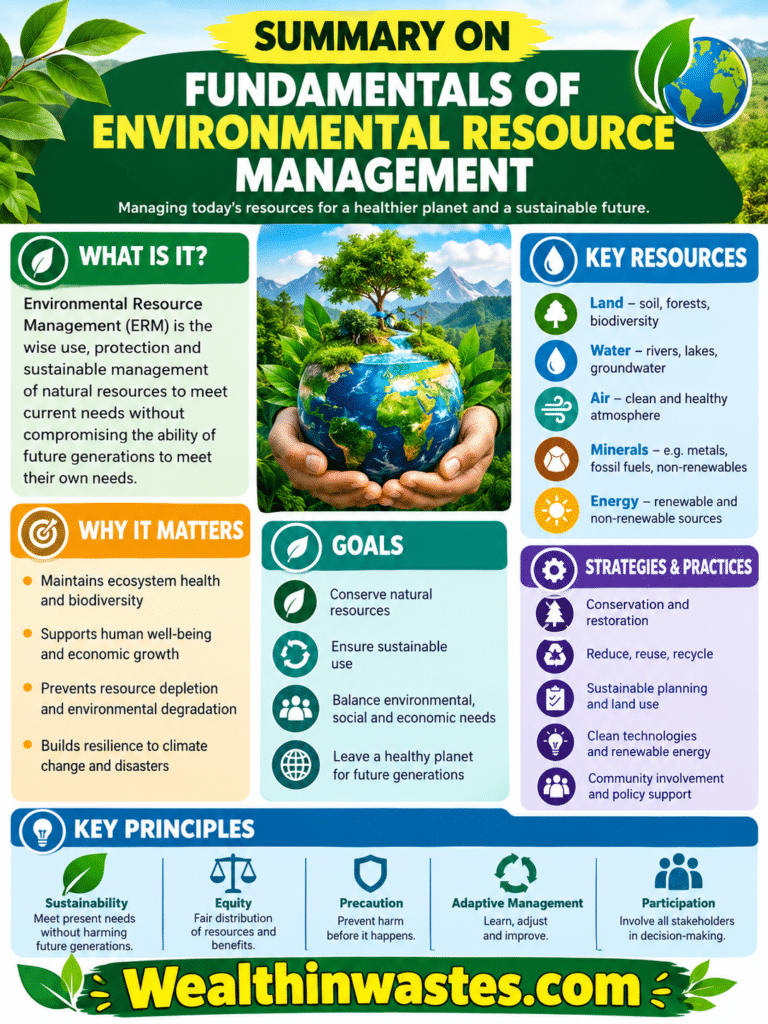
Summary on Fundamentals of Environmental Resource Management
| Topic | Key Point |
|---|---|
| Resource | Any useful natural material, condition, or service that supports life and human needs. |
| Resource Types | Renewable, potentially renewable, nonrenewable, and perpetual resources require different management approaches. |
| Management Purpose | Balance resource use, ecosystem protection, economic needs, and future availability. |
| Core Principles | Sustainability, integration, precaution, participation, and equity guide responsible decisions. |
| Major Challenges | Depletion, pollution, climate pressure, governance weaknesses, and land-use change threaten resources. |
| Key Strategies | Assessment, efficiency, pollution prevention, restoration, conservation, monitoring, and adaptation improve outcomes. |
Frequently Asked Questions About Fundamentals of Environmental Resource Management
1. What is Environmental Resource Management?
Environmental Resource Management is the organized planning, use, protection, monitoring, and restoration of natural resources to meet human needs while maintaining healthy ecosystems and future resource availability for society effectively.
2. Why is Environmental Resource Management important?
It helps societies use land, water, energy, forests, minerals, and biodiversity efficiently while reducing depletion, pollution, ecosystem damage, economic losses, and conflicts over scarce resources within local communities and regions.
3. What are the main types of environmental resources?
Major categories include renewable, potentially renewable, nonrenewable, and perpetual resources. Their different renewal rates, availability, quality, and usefulness determine suitable conservation and management approaches for resource users under specific conditions.
4. What is sustainable resource use?
Sustainable resource use keeps consumption within levels that natural systems can replace or support, allowing present users to benefit without undermining ecological functions or future resource availability over time appropriately.
5. What challenges affect resource management?
Common challenges include population growth, resource depletion, pollution, climate change, land-use change, weak enforcement, limited data, competing interests, and inadequate financial or technical capacity within institutions available to them nationally.
6. How can communities support resource management?
Communities can conserve water and energy, reduce waste, protect habitats, participate in planning, report environmental problems, adopt sustainable livelihoods, and apply locally appropriate conservation practices every day responsibly and consistently.
7. What role does government play in resource management?
Governments develop environmental laws, standards, permits, protected areas, monitoring systems, development plans, and enforcement mechanisms while coordinating different sectors and supporting meaningful public participation in environmental decisions across different sectors.
8. How does resource management benefit future generations?
It protects natural capital, maintains ecosystem services, reduces environmental risks, and preserves options for future societies by preventing unnecessary depletion and supporting long-term ecological resilience for communities everywhere over generations.
Do you have any questions, suggestions, or contributions? If so, please feel free to use the comment box below to share your thoughts. We also encourage you to kindly share this information with others who might benefit from it. Since we can’t reach everyone at once, we truly appreciate your help in spreading the word. Thank you very much for your support and for sharing!
Read Also: Conservation and Management of Natural Resources in Agriculture