


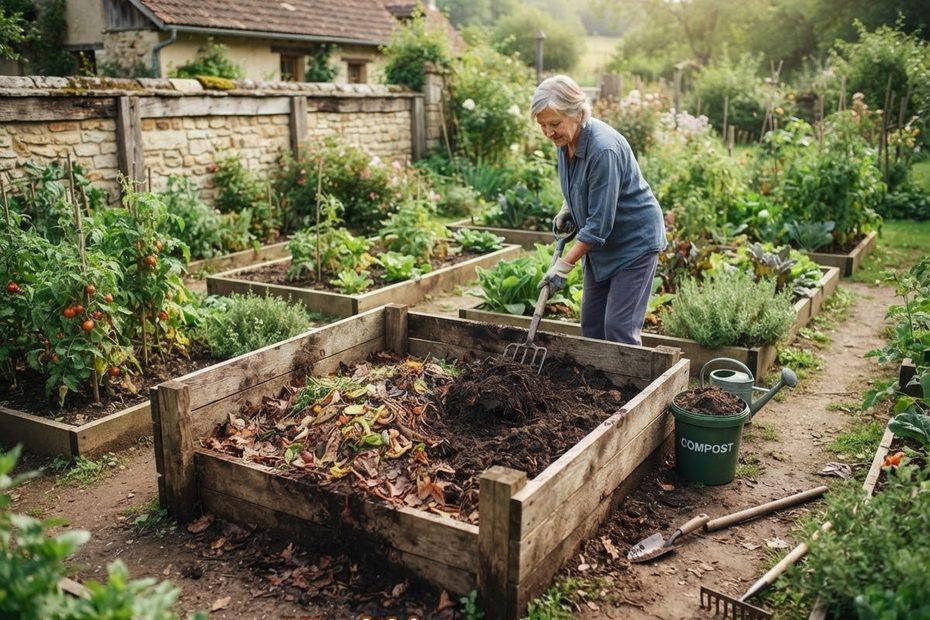
Household level composting is a simple and practical method of managing biodegradable waste generated from homes, particularly in rural communities where organised collection services may be limited, irregular, or completely unavailable.
The method converts household organic refuse such as food residues, cattle dung, straw, leaves, grass, and agricultural wastes into useful compost through natural biological decomposition processes under carefully managed conditions.
Instead of allowing biodegradable refuse to accumulate around homes, households can separate suitable materials and place them inside properly prepared pits, heaps, or composting tanks designed for gradual decomposition.
This approach supports proper solid waste management while reducing unpleasant smells, uncontrolled dumping, insect breeding, visible litter, and environmental contamination around residential areas and surrounding community spaces.
When the composting process is properly managed, decomposed organic matter becomes a useful soil amendment that can improve soil condition, support moisture retention, and return valuable nutrients for agricultural production.
Household Level Composting Basics
Household level composting begins with separating biodegradable refuse from materials that cannot safely decompose, creating a cleaner input stream and reducing contamination that could lower the usefulness of finished compost.
Suitable materials commonly include vegetable scraps, fruit residues, leaves, straw, grass, crop residues, and appropriate animal manure because these materials contain organic matter that microorganisms can gradually break down.
Families should maintain separate containers for biodegradable and non-biodegradable materials because plastics, metals, glass, batteries, chemicals, medical waste, and hazardous substances should remain outside ordinary composting systems.
A two-unit approach makes household composting easier because one pit, heap, or tank receives fresh materials while the filled unit remains protected and undisturbed during the maturation period.
Composting works through biological activity, and the decomposition process depends upon moisture, temperature, oxygen availability, material composition, and effective management throughout the composting period.
Households can learn more about composting kitchen waste because food residues provide useful organic material when they are properly separated and combined with suitable dry materials.
Animal manure or appropriately prepared dung slurry can provide microorganisms and nitrogen-rich material, while dry leaves, straw, and plant residues can contribute carbon and improve the overall mixture.
The finished material should be sufficiently decomposed before use, appearing dark, crumbly, and relatively free from recognisable fresh materials that indicate incomplete breakdown within the composting system.
Read Also: Composting (Manure Pit) Description
Underground Composting Pit Management
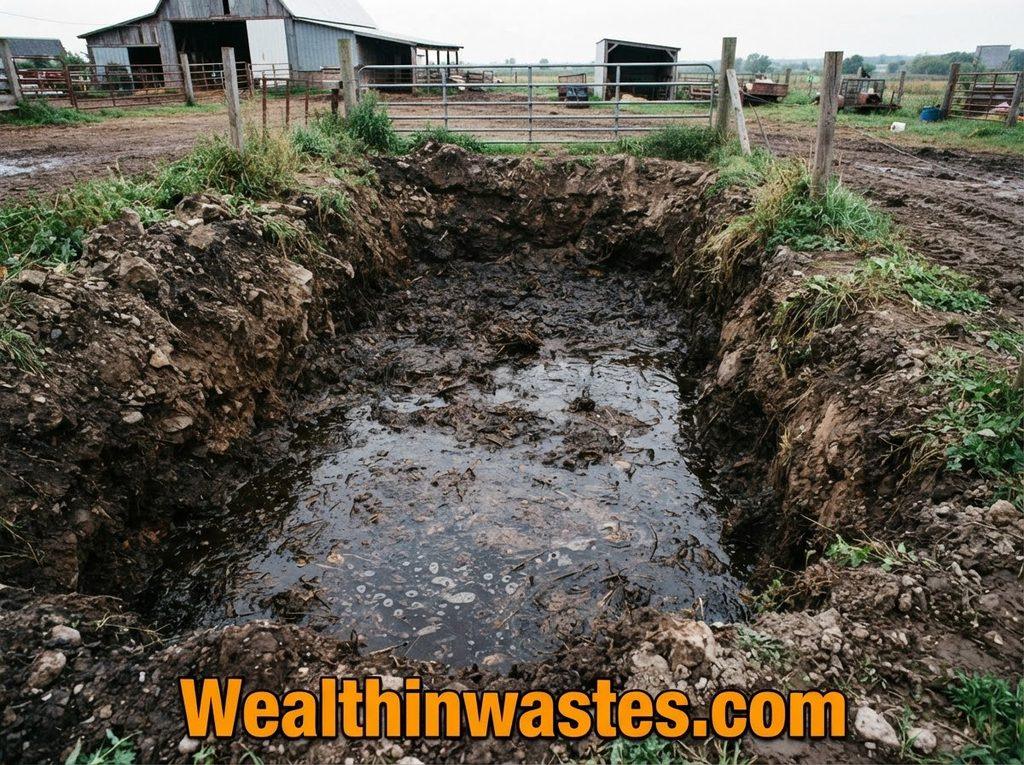
The underground unlined manure pit is mainly appropriate for rural locations with relatively low rainfall, suitable soil, sufficient open space, and conditions that permit safe management around household activities.
1. Suitable location: Select a safe area away from wells, streams, springs, flood-prone ground, drainage channels, and heavily used household spaces where decomposing materials could create contamination or nuisance.
2. Pit dimensions: The source material recommends two pits measuring approximately one metre long, one metre wide, and one metre deep, with capacity adjusted according to household refuse generation.
3. Pit foundation: A single layer of broken bricks can be placed across the bottom, providing a stable base while retaining conditions that allow liquids to move naturally through surrounding soil.
4. Protective ridge: Form a compacted ridge using soil or mud around the pit perimeter because this helps prevent surface runoff from entering the composting chamber during rainfall.
5.Waste addition: Place only biodegradable household refuse into the pit, keeping unsuitable materials outside because contamination can reduce compost quality and create unnecessary environmental management problems.
6. Slurry application: When the accumulated material reaches approximately 150 millimetres, suitable dung slurry can be added, mixed with the refuse, and levelled before another waste layer is introduced.
7. Soil covering: A very thin soil layer should be spread approximately once weekly to help reduce unpleasant odours and discourage flies from concentrating around the composting materials.
8. Maturation and harvesting: When the pit becomes full, allow the material to settle, cover the surface with soil, leave it undisturbed for approximately three to six months, then harvest the mature compost.
Households seeking a broader understanding of waste composting methods can compare manure pits with other approaches and understand how decomposition transforms biodegradable refuse into useful organic material.
An underground unlined pit requires careful consideration because excessive rainfall can introduce water, reduce aeration, and create conditions that interfere with effective decomposition and increase potential contamination risks.
Brick-Lined Pit Construction Benefits
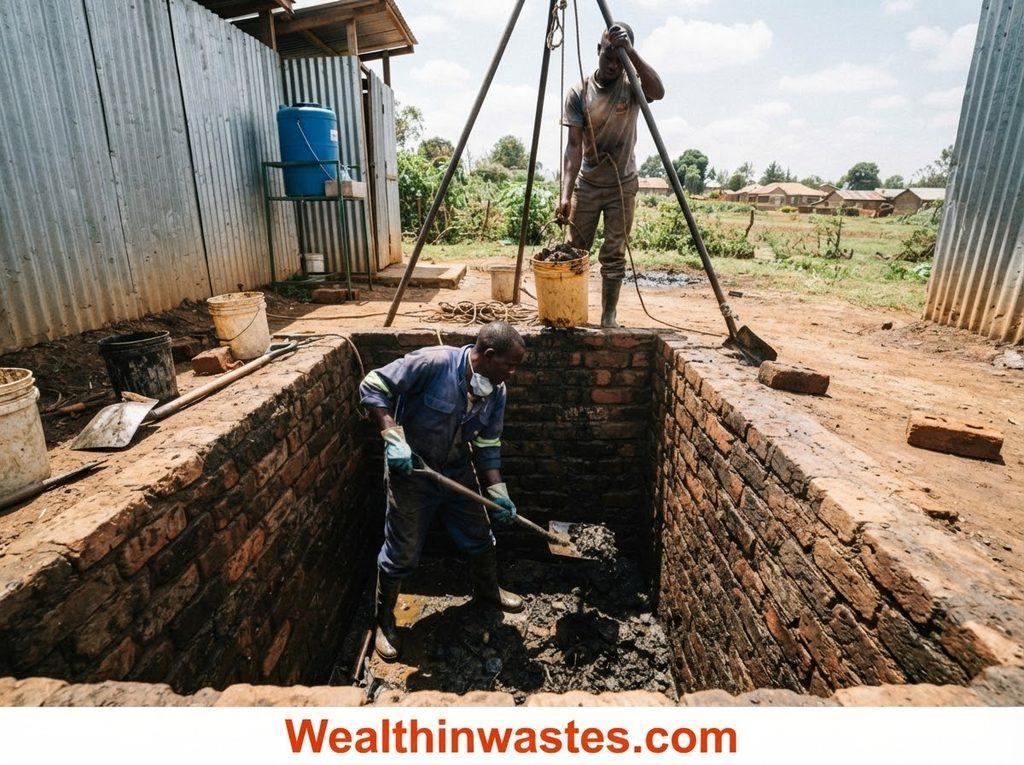
The underground brick-lined manure pit provides additional structural support and can be useful where loose soil makes unsupported excavation difficult or increases the possibility of collapsing pit walls.
1. Appropriate rainfall: The method is principally suited to relatively low-rainfall locations because excessive water infiltration can interfere with underground composting and make management more difficult.
2. Available space: Households should provide approximately seven square metres of suitable open space, allowing enough room for construction, movement, maintenance, and safe handling of composting materials.
3. Soil support: Brick lining strengthens the excavation where surrounding soil is loose, helping maintain the shape of the chamber and providing greater structural stability during continued household use.
4. Pit arrangement: Two pits can be established so one receives newly generated biodegradable refuse while the second remains closed and undisturbed until its contents mature sufficiently.
5. Pit construction: The source material describes pits approximately 1.1 metres in diameter and one metre deep, with a circular internal brick structure of approximately one metre diameter.
6. Brick masonry: Honeycomb brick masonry can be used around the excavated chamber, creating a supportive wall while maintaining a practical structure for repeated household composting operations.
7. Raised structure: The brick wall should extend slightly above surrounding ground level to reduce surface runoff entering the chamber and to help retain composting materials securely.
8. Bottom treatment: The base should remain uncemented according to the source method, preserving suitable drainage characteristics while the composting material undergoes biological decomposition inside the lined chamber.
Read Also: Waste Composting (Manure Pit) and Advantages of Composting
Above-Ground Household Composting Options
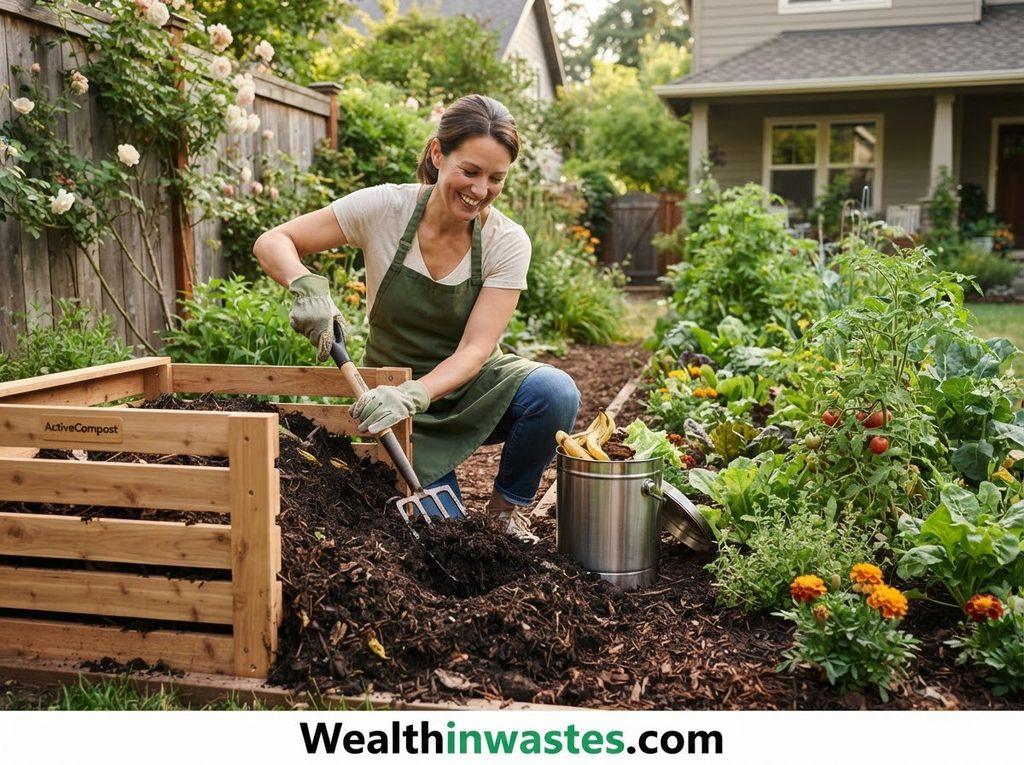
Above-ground composting is particularly useful in rural areas experiencing high rainfall or rocky terrain, where excavation may be difficult and underground pits may receive excessive water.
1. Raised platform: Prepare an approximately one-metre by one-metre platform using firmly compacted soil or suitable paving bricks, ensuring that the area remains stable during repeated waste additions.
2. Organic materials: Place only biodegradable household refuse on the prepared platform, arranging materials in manageable layers that remain stable and allow decomposition to progress throughout the heap.
3.Moisture control: Maintain suitable moisture because microorganisms require water for biological activity, while excessive water can reduce air movement and create poorly aerated composting conditions.
4. Slurry use: Where suitable manure is available, dung slurry can be applied periodically and mixed with organic materials, supplying nitrogen-rich matter and microorganisms that support decomposition.
5. Soil covering: Spread a thin layer of soil approximately once weekly to reduce unpleasant odours, discourage flies, and provide a cleaner surface around the developing compost.
6. Heap height: Continue layering until the heap reaches approximately one metre according to the household method described, allowing materials to remain manageable and reasonably stable.
7. Settling period: After fresh additions stop, allow several days for the heap to settle naturally before applying protective soil across the surface to support maturation.
8. Maturation process: Leave the covered heap undisturbed for approximately three to six months, then remove mature compost and transport it carefully to appropriate agricultural fields or gardens.
Above-ground household composting fits broader organic waste conversion practices because household residues can be transformed into an agricultural resource instead of being discarded with general refuse.
Compost Tank Operation and Maintenance
The over-ground brick-lined compost tank provides a more permanent structure for household composting and can be valuable in areas where high rainfall or rocky terrain makes underground construction unsuitable.
1. Site selection: Choose a well-drained position where rainwater cannot easily accumulate around the structure and household members can conveniently deposit and remove composting materials.
2. Tank dimensions: Two tanks may be constructed to approximately 1.1 metres in diameter and one metre high, with final dimensions adjusted according to household waste generation.
3. Brick construction: A circular or square tank can be made using honeycomb brick masonry, creating a durable above-ground container capable of holding biodegradable household refuse during decomposition.
4. Raised walls: The tank should extend above surrounding ground level to reduce surface runoff entry and provide a practical containment structure for household composting materials.
5. Surface finishing: The upper brickwork can be plastered appropriately to improve durability and protect the structure against deterioration caused by prolonged exposure to weather conditions.
6. Waste placement: Place suitable biodegradable materials inside the tank and distribute them reasonably evenly, avoiding excessive compaction that could restrict the movement of air through compost.
7. Layer management: Continue alternating organic materials, suitable manure slurry, and thin soil coverings while maintaining appropriate moisture and leaving sufficient air spaces for microbial decomposition.
8. Maturation and removal: After the tank becomes full, allow settling, cover the surface with soil, leave it undisturbed for approximately three to six months, then remove mature compost.
Careful separation is important because household waste contains different material categories, and understanding solid waste classification helps families identify organic materials that belong inside composting systems.
Composting tanks should be inspected periodically for damaged brickwork, blocked drainage, excessive moisture, unsuitable materials, and signs that the structure requires repairs or improved environmental protection.
The household can operate two tanks in rotation, keeping one available for fresh biodegradable materials while the second remains closed so microorganisms can continue decomposing and stabilising its contents.
This arrangement avoids premature disturbance of immature compost while maintaining continuous household waste management, particularly where organic refuse is generated every day and external collection services remain limited.
Households can strengthen their overall management approach by learning about effective waste management practices and applying appropriate separation, handling, recycling, composting, recovery, and disposal decisions.
Household Composting Management and Benefits

Successful household composting depends upon choosing a suitable method, separating waste correctly, maintaining moisture, encouraging aeration, protecting water sources, and allowing sufficient time for compost maturation.
1. Waste separation: Keep biodegradable materials apart from plastics, metals, glass, batteries, chemicals, medical waste, and other unsuitable substances that could contaminate the finished compost.
2. Moisture management: Composting organisms require adequate moisture, but excessive water can fill air spaces, restrict oxygen movement, and create poorly aerated conditions that slow decomposition.
3. Aeration control: Avoid unnecessary compaction because microorganisms need access to air, while poor aeration can slow decomposition and contribute to unpleasant smells within composting materials.
4. Odour control: Thin soil coverings, suitable mixtures, appropriate moisture, and sufficient airflow can help households reduce unpleasant smells and maintain cleaner surroundings during biological decomposition.
5. Water protection: Composting structures should be located carefully to reduce the possibility of contaminated liquids reaching wells, streams, springs, drainage channels, or other household water sources.
6. Maturity monitoring: Compost should be sufficiently decomposed before agricultural application because immature organic material may continue breaking down after incorporation and interfere with crop establishment.
7. Resource recovery: Composting converts suitable household refuse into a useful soil amendment, supporting resource recovery from organic waste instead of sending all biodegradable materials toward conventional disposal.
8. Agricultural application: Mature compost can be applied to fields, gardens, and planting beds, returning organic matter and useful nutrients to soil while supporting broader agricultural soil management.
Household composting can reduce the volume of biodegradable refuse requiring collection, transportation, or final disposal, thereby complementing broader waste reduction practices at household level.
It can also improve household sanitation because exposed organic refuse commonly contributes to unpleasant smells and conditions that attract insects and rodents around residential environments.
Mature compost contributes organic matter to soil and can support improved structure, moisture retention, biological activity, and general soil condition when it is properly incorporated.
Households can also reduce disposal pressure by directing recyclable materials toward appropriate recovery channels rather than mixing them with compostable refuse inside manure pits or compost tanks.
The broader waste recycling process complements composting because materials such as paper, metals, plastics, and glass require different handling routes from biodegradable organic materials.
Composting also connects household waste management with agriculture because food residues, leaves, grass, straw, crop residues, and animal manure can become useful inputs rather than remaining unwanted refuse.
The agricultural value of these materials becomes clearer when households understand agricultural waste sources and characteristics and recognise that many residues can be recovered through appropriate management.
Summary on Manure Pit Methods and Benefits for Household Composting
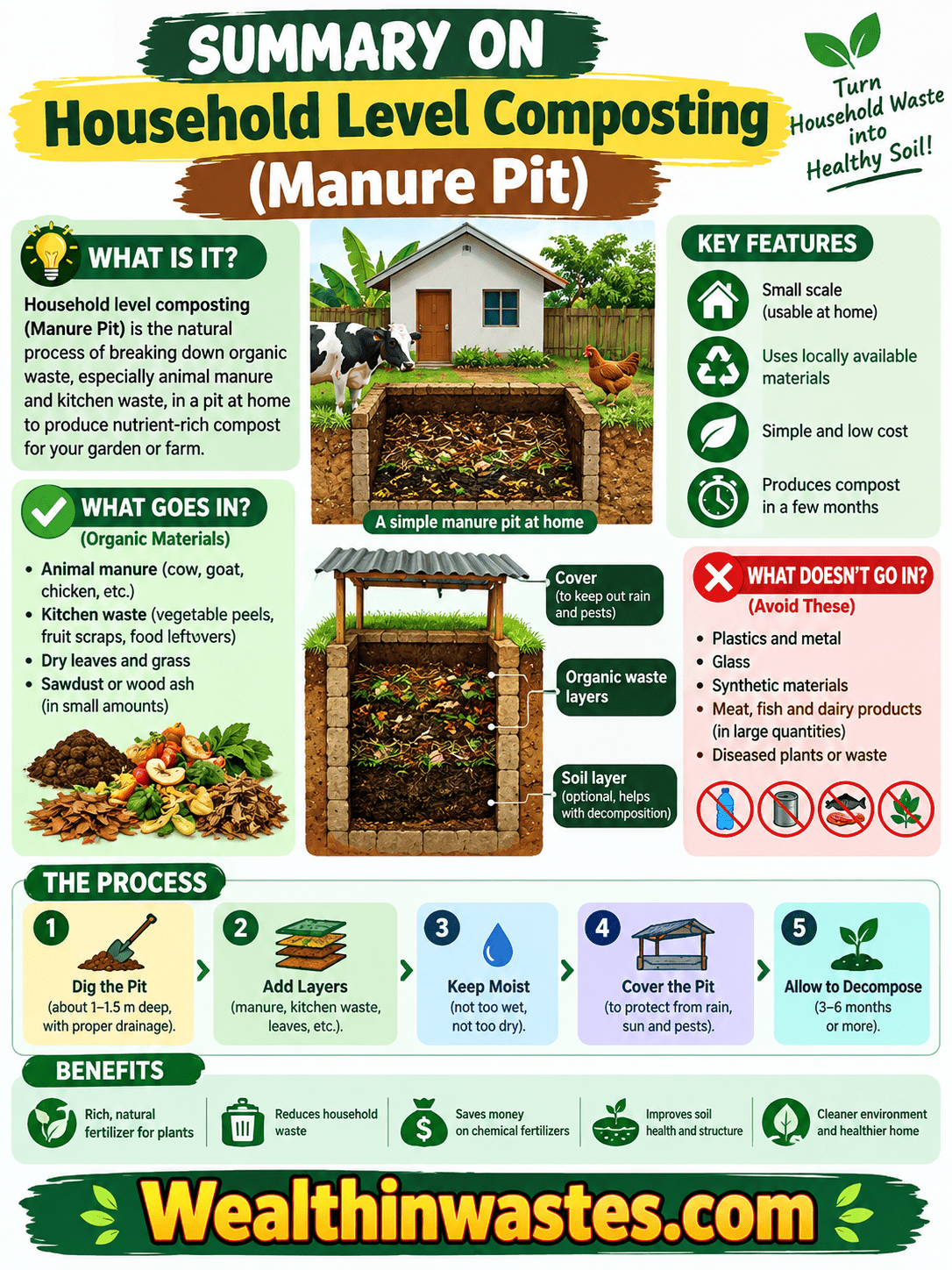
| Aspect | Summary |
|---|---|
| Purpose | Household composting manages biodegradable refuse and transforms organic materials into useful compost for agricultural and gardening applications. |
| Main materials | Suitable materials include food residues, leaves, straw, grass, crop residues, and appropriate animal manure. |
| Unlined pit | Best suited to relatively low-rainfall rural locations with suitable soil, adequate space, and proper water-source protection. |
| Brick-lined pit | Provides stronger structural support and can be useful where surrounding soil is loose but rainfall remains relatively low. |
| Over-ground heap | Suitable for high-rainfall or rocky areas where underground excavation presents practical difficulties. |
| Compost tank | Provides a more permanent above-ground structure for household management of biodegradable waste. |
| Waste separation | Plastics, metals, glass, batteries, chemicals, medical waste, and hazardous materials should remain outside ordinary composting systems. |
| Maintenance | Appropriate moisture, aeration, soil covering, layering, waste separation, and protection from excessive water support decomposition. |
| Maturation | Compost generally requires several months to mature, depending upon material composition and management conditions. |
| Agricultural use | Mature compost can return organic matter and useful nutrients to fields, gardens, planting beds, and other suitable soils. |
Frequently Asked Questions About Household Level Composting: A Practical Manure Pit Guide
1. What is household level composting and why is it useful for rural households managing biodegradable waste?
Household level composting is the controlled decomposition of suitable biodegradable household materials, producing mature organic compost that can support agricultural soil management while reducing unmanaged organic refuse.
2. Which materials are suitable for household composting, and which materials should households deliberately keep outside the composting structure?
Suitable materials include food residues, leaves, straw, grass, crop residues, and appropriate animal manure, while plastics, metals, glass, chemicals, batteries, medical waste, and hazardous substances should remain excluded.
3. Why does the household level composting method commonly use two pits, heaps, or tanks instead of one continuous operating unit?
Two units allow one structure to receive fresh biodegradable waste while the filled structure remains undisturbed for maturation, making continuous household waste management possible without disturbing developing compost.
4. Which household composting system is generally more suitable for locations experiencing high rainfall or rocky ground conditions?
Above-ground heaps and brick-lined compost tanks are generally more practical for high-rainfall or rocky locations because they avoid many excavation difficulties and provide greater opportunities for managing surface water.
5. How long should household compost normally remain undisturbed before it is removed and applied to agricultural soil or garden beds?
The supplied method recommends approximately three to six months of maturation after filling and covering, although actual decomposition can vary according to materials, moisture, temperature, aeration, and management.
6. Why is dung slurry added during household composting, and how should it be incorporated into the developing compost material?
Dung slurry can provide microorganisms and nitrogen-rich material that support decomposition, particularly when combined with suitable dry, carbon-rich household and agricultural materials within balanced composting layers.
7. Why should household composting structures be located away from wells, streams, springs, drainage channels, and flood-prone areas?
Careful siting reduces the possibility that decomposing materials or associated liquids will contaminate household water sources, while avoiding flood-prone locations helps prevent physical disturbance and unwanted movement of waste.
8. What are the major agricultural and environmental benefits households can obtain from properly managed composting systems?
Proper composting reduces biodegradable waste, improves household sanitation, supports resource recovery, returns organic matter to soil, and produces a useful amendment for fields, gardens, and planting beds.
Do you have any questions, suggestions, or contributions? If so, please feel free to use the comment box below to share your thoughts. We also encourage you to kindly share this information with others who might benefit from it. Since we can’t reach everyone at once, we truly appreciate your help in spreading the word. Thank you very much for your support and for sharing!
Read Also: Management of Nigerian Soils in Agriculture